Overview of the Islamic Golden Age Period
The expression Islamic Golden Age commonly describes intellectual and cultural activity flourishing from approximately the eighth through thirteenth centuries, although historians dispute its boundaries and emphasize continuing developments afterward.
Its settings included Abbasid-ruled lands, al-Andalus, Persianate courts, and other connected societies, whose populations spoke diverse languages and followed multiple religious traditions across extensive commercial networks.
Translation, scholarship, urban life, and courtly literature helped circulate inherited stories alongside religious learning, creating conditions for supernatural motifs to travel without forming one unified mythology.
Cultural and Religious Worldviews
Dominant Belief Systems
Islamic theology shaped public cosmological language, particularly through belief in God, angels, human beings, and jinn, beings mentioned in the Quran and interpreted in varied ways.
Jewish, Christian, Zoroastrian, and other communities maintained distinct doctrines and inherited narratives within the same broad period, preventing any single account of supernatural belief from representing everyone.
Astrology, medicine, philosophy, and natural history sometimes addressed beings or forces beyond ordinary perception, but their learned explanations differed from devotional teachings and popular narratives.
Role of Myth in Daily Life
Stories about extraordinary beings could communicate expectations concerning hospitality, caution, justice, or religious conduct, although their meanings depended on the specific narrative and its audience.
Folkloric accounts also helped communities interpret unfamiliar landscapes and misfortune; surviving evidence rarely establishes how consistently particular stories shaped everyday behavior across social groups.
Descriptions of prescribed religious observances belong to identifiable legal and devotional traditions, not automatically to folklore; conflating these categories obscures historical distinctions between practice and narrative.
Mythological Beasts and Supernatural Entities
Common Types of Mythical Creatures
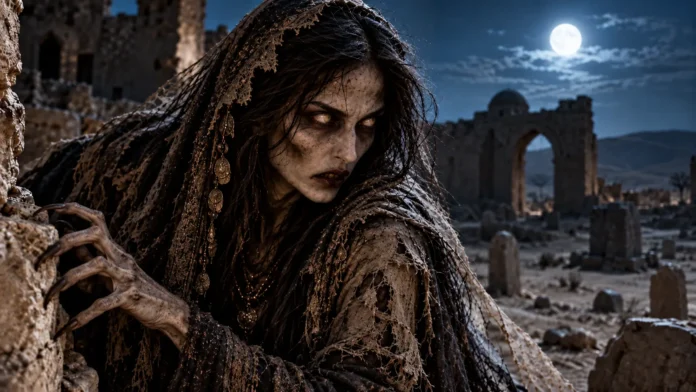
Jinn constitute a significant category in Islamic supernatural thought, with Quranic presence supporting their religious importance rather than merely their later appearance in entertaining stories.
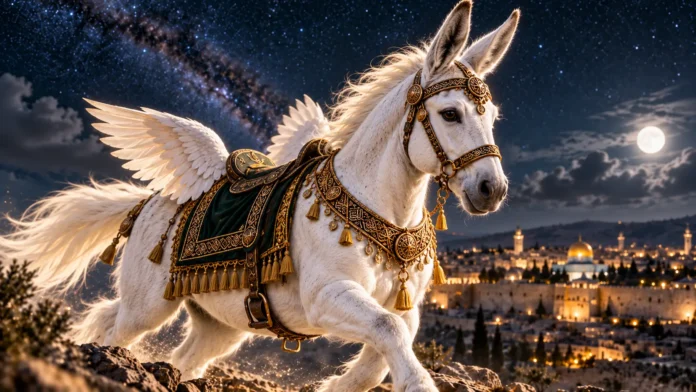
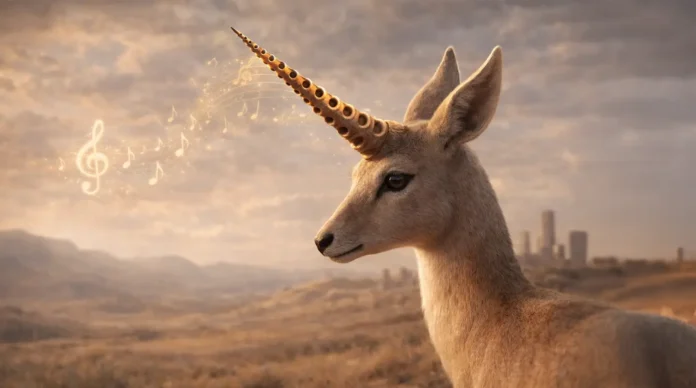
Other materials include demons, angels, monstrous animals, and wondrous creatures inherited from older literary traditions; these categories carried different theological standing and cannot be treated interchangeably.
Persian and Arabic literature preserved accounts of fabulous animals, including the simurgh in Persian tradition, whose meanings varied across literary settings and historical periods.
Popular tales later associated with Arabic storytelling include jinn and enchanted beings, but collection dates and textual transmission complicate claims that every motif originated during the period.
Symbolism and Meaning
Jinn could represent an unseen order of created beings within Islamic cosmology, but specific accounts assigned them differing moral qualities rather than one fixed symbolic function.
Monstrous animals in geographical and natural-history writing sometimes marked the limits of reported knowledge, reflecting textual conventions as well as uncertain observations about distant regions.
Persian literary representations of the simurgh could convey wisdom or sovereignty in particular works, yet interpretations require attention to each text rather than universal symbolic claims.
Folklore Traditions and Storytelling
Oral and Written Transmission
Oral performance transmitted tales through recitation and social exchange, but the surviving written record provides only partial evidence for performers, audiences, and local variation.
Manuscripts preserve literary adaptations, compilations, and learned discussions; their dates document particular written witnesses, not necessarily the first appearance of the stories they contain.
Religious texts supplied authoritative frameworks for some supernatural beings, while literary works reshaped motifs for entertainment, instruction, or courtly expression without sharing identical purposes.
Regional Variations
Arabic-speaking regions developed narratives within Islamic and local contexts, whereas Persian literature retained distinctive pre-Islamic cultural inheritances that were adapted rather than simply erased.
In al-Andalus, Arabic literary culture encountered Iberian settings and communities, but surviving evidence does not justify treating every local supernatural motif as a shared regional belief.
These differences matter taxonomically: a jinn discussed through Quranic interpretation belongs to a different evidentiary context than a fabulous bird appearing in Persian poetry.
Relationship Between Humans and the Mythical World
Fear, Protection, and Reverence
Accounts of harmful supernatural beings could express perceived vulnerability to illness, isolation, or unfamiliar places, although historians cannot infer uniform emotional responses from narrative descriptions.
Islamic sources also present jinn as morally accountable beings, distinguishing them from simple monsters and locating their significance within a broader theological account of creation.
Claims that particular creatures served as guardians or messengers require evidence from specific texts; no verified sources describe this for every regional context.
Influence on Art and Material Culture
Figural imagery in Islamic-period objects and buildings varies by region, medium, and patronage; animal forms alone cannot establish that an image represented a supernatural creature.
Manuscript illustrations sometimes visualized fabulous beings in literary settings, offering evidence for artistic interpretation rather than direct proof of popular religious belief.
Architectural ornament, ceramics, textiles, and metalwork incorporated animal motifs, but identifying them as mythological requires comparison with inscriptions, literary descriptions, and the object’s historical context.
Transition and Legacy of the Islamic Golden Age Period
Later Arabic and Persian storytelling continued to circulate supernatural motifs, with repeated copying and retelling transforming details across languages, regions, and changing literary conventions.
The collection commonly known as One Thousand and One Nights took shape through layered transmission; its surviving forms cannot be assigned wholesale to a single Golden Age moment.
Jinn remained significant in later Muslim societies through religious interpretation and folklore, though beliefs and narrative functions changed across communities and historical periods.
Continuity therefore indicates adaptation, not an unchanged canon: later storytellers selected older materials while incorporating settings and concerns belonging to their own times.
Historical Reliability and Interpretation
Historians distinguish evidence for a story’s circulation from evidence that audiences regarded its beings as physically present, a distinction rarely settled by literary texts alone.
Manuscript survival is uneven, and later copies may preserve earlier material while also introducing revisions, making precise dating of individual motifs difficult.
Religious statements, philosophical arguments, poetry, and entertainment literature answer different questions; reading them as equivalent records of belief risks misclassification.
Symbolic interpretations remain strongest when grounded in a specific text, image, or documented context, while broader psychological explanations require caution and explicit acknowledgment of uncertainty.
The period is best classified as a diverse arena of transmission and reinterpretation, not as the origin of one coherent bestiary or a uniform supernatural worldview.