
Introduction
Frozen is Disney’s snowy fantasy series about two sisters, Anna and Elsa, and a kingdom called Arendelle. The first film (2013) stays close to a fairy tale vibe: castles, songs, and a winter curse.
Frozen 2 (2019) widens the world. The story moves beyond the palace and into forests, mountains, and dark water.
It starts asking bigger questions about the past and about what the land remembers.
What makes these movies stand out is how “Northern” they feel. The look of the landscapes, the clothes, and the buildings all echo Norway and nearby Nordic regions.
The music also hints at traditions from the far north, including Sámi influences.
But the strongest folklore fingerprints show up through the creatures. Frozen and Frozen 2 use beasts that feel like they walked out of Scandinavian stories.
Some are clear matches, like trolls and the Nøkk, a dangerous water spirit from Nordic folklore. Others are inspired by the idea that nature itself can be alive and powerful.
This article tracks those beasts one by one. For each creature, we compare the Disney version to older folklore versions.
Along the way, we will see how Disney softens scary tales into something adventurous, while still keeping the North’s wild, mysterious mood.
How Disney Did Research
Frozen did not try to copy real history. Disney built a made-up kingdom and then added real Nordic details so it would feel like it belongs in the North.
For Frozen (2013), the team looked closely at Norway. They pulled ideas from fjords, mountain valleys, wooden buildings, and old town styles.
That is why Arendelle feels like a real place you could visit.
Frozen 2 (2019) needed a different kind of homework. The story leaves the castle behind and spends more time in wild nature.
So the research shifted toward forests, cliffs, fog, rivers, and the kind of places that show up in folk stories.
Frozen 2 also took culture more seriously in a direct way. The film draws inspiration from Sámi life and aesthetics through the Northuldra.
The Sámi are an Indigenous people of northern parts of Norway, Sweden, Finland, and Russia.
Because this is living culture, Disney worked with Sámi representatives during production. The goal was to avoid lazy stereotypes and get important details right.
This matters when you look at the beasts. In many northern stories, nature is not just scenery. It has a presence.
It can warn you, test you, or push back when people cross a line.
Frozen 2 turns that idea into the core of the movie. The spirits feel like guardians of a living landscape, not random fantasy pets.
Joik, Nature, and Story Mood
Frozen 2 sounds different from the first film. It feels less like a royal stage show and more like the land itself is singing.
One of the strongest cultural hints is the way the movie uses northern vocal tradition as a mood cue, often connected in discussion to Sámi joik. Joik is not just a song about something.
It is more like voicing the essence of a person, animal, or place.
That idea matches Frozen 2’s message. The film treats nature like it has a personality. The wind seems playful.
The water feels proud and dangerous. Fire feels small but unpredictable. Earth feels ancient and heavy.
So the music does more than decorate the scenes. It helps the audience feel that nature is a character with its own presence.
This lines up with a common thread in Scandinavian and northern storytelling. The landscape does not sit quietly in the background.
Lakes can deceive. Storms can punish. Forests can hide what they want to protect.
Frozen 2 keeps that older mood, but makes it readable for everyone. Nature stays powerful, but the story frames it as something you can understand if you approach it with respect.
That is why the beasts work so well. The sound tells you the world is alive, and the creatures are the proof.
Beasts We Cover and Why
For this article, a “beast” means a non human creature with a myth or folklore feel. We are not covering Elsa, Anna, or other main characters as beasts.
We are looking at creatures that act like characters. They make choices, they block the path, they test people, or they guard something important.
Regular animals in the background do not count.
This gives us two groups.
First are beasts with clear Scandinavian folklore roots. Disney may change their personality or soften the danger, but the older creature type is still there.
Second are nature spirits built for Frozen 2. These are not always one famous named figure from a single old tale, but they match a very Nordic idea: the land and the elements have power and presence.
The main beasts we will cover are the rock trolls from Frozen and the Nøkk from Frozen 2. Then we look at the elemental spirits from Frozen 2: wind, fire, earth, and water.
Each beast chapter follows the same pattern. We start with the Frozen version: what it looks like and what it does in the story.
Then we switch to folklore: what older tales and traditions say. Last, we connect them and explain what Disney kept, what it changed, and why.
That way, even if you have never read a Nordic folk tale, you can still follow the link between real tradition and what shows up on screen.
Rock Trolls: Film vs Folklore
In Frozen, the rock trolls live hidden in the mountains. They look like boulders until they move. They heal Anna, give advice, and act like a strange but caring community.
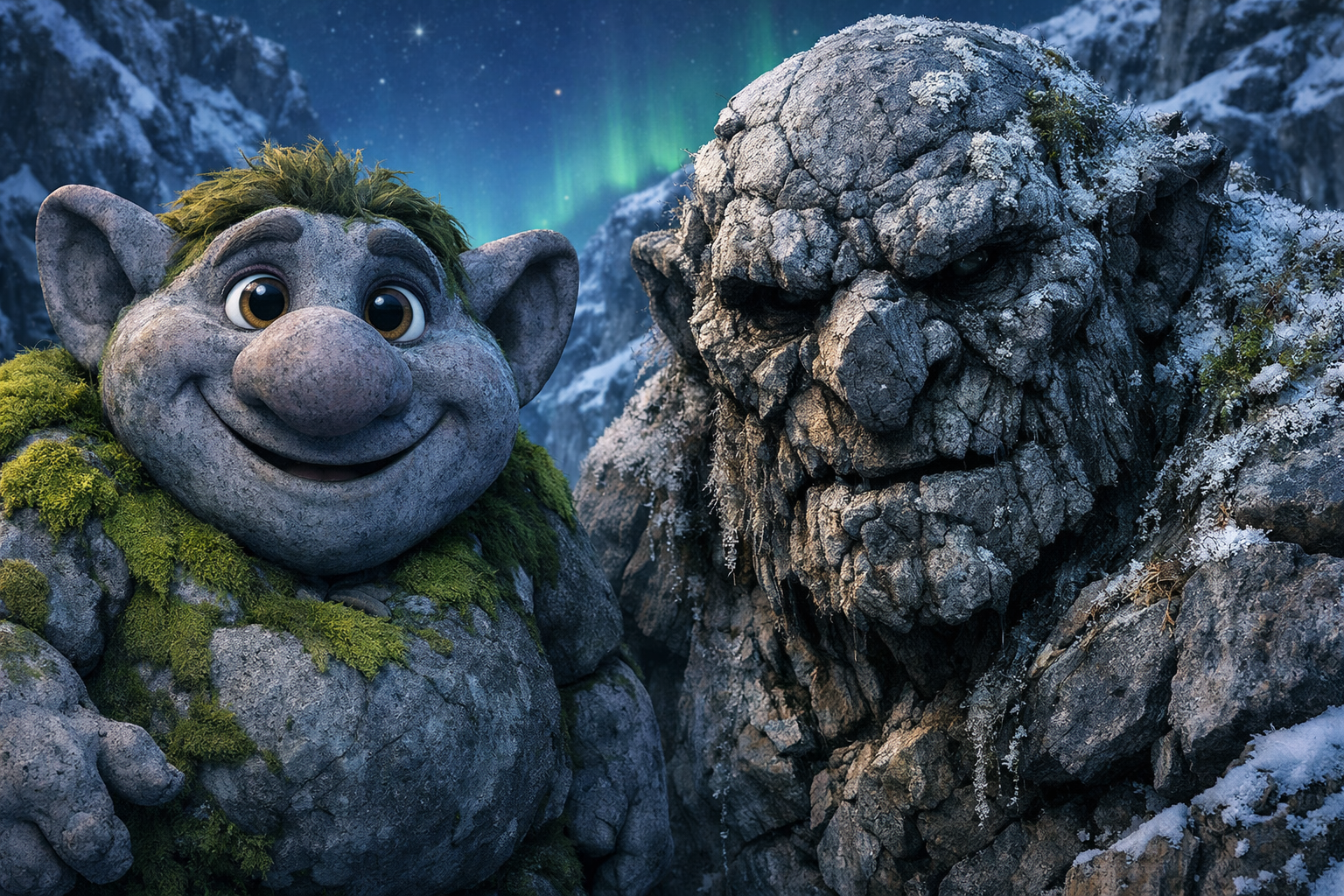
They also feel safe. Even when they are pushy or chaotic, the movie treats them as helpers, not a real threat.
In Scandinavian folklore, trolls can look very different. Some stories describe them as huge and dangerous. Others make them more like tricky neighbors in the wild.
But a common thread stays the same: trolls belong to places humans should respect, like mountains, cliffs, caves, and deep forests.
Older tales often paint trolls as part of the untamed world. They can steal, curse, or punish people who wander too far or act rude.
In some traditions, they also fear things connected to order and religion, like church bells or daylight. You do not casually invite a troll into your home.
So why does Frozen make them friendly?
Disney keeps the core vibe, trolls as beings of stone and wilderness, but changes the role. Instead of warning you to stay away from the mountains, Frozen uses trolls to show that the land has its own people and its own kind of wisdom.
It also fits the movie’s tone. Frozen is not trying to scare kids with cautionary tales. It wants wonder, humor, and warmth.
Turning trolls into healers and matchmakers helps the story stay hopeful, while still giving Arendelle a strong Nordic folklore flavor.
This is the key pattern you will see again and again. Frozen borrows the shape of folklore, then softens the danger into a challenge or a lesson that fits a family adventure.
The Nøkk: Man, Music, and Horse
In Frozen 2, the Nøkk shows up as a raging water horse in the Dark Sea. It attacks Elsa, blocks her path, and forces her to prove she can face the ocean.
Once she does, the Nøkk shifts from enemy to ally and carries her across the water.
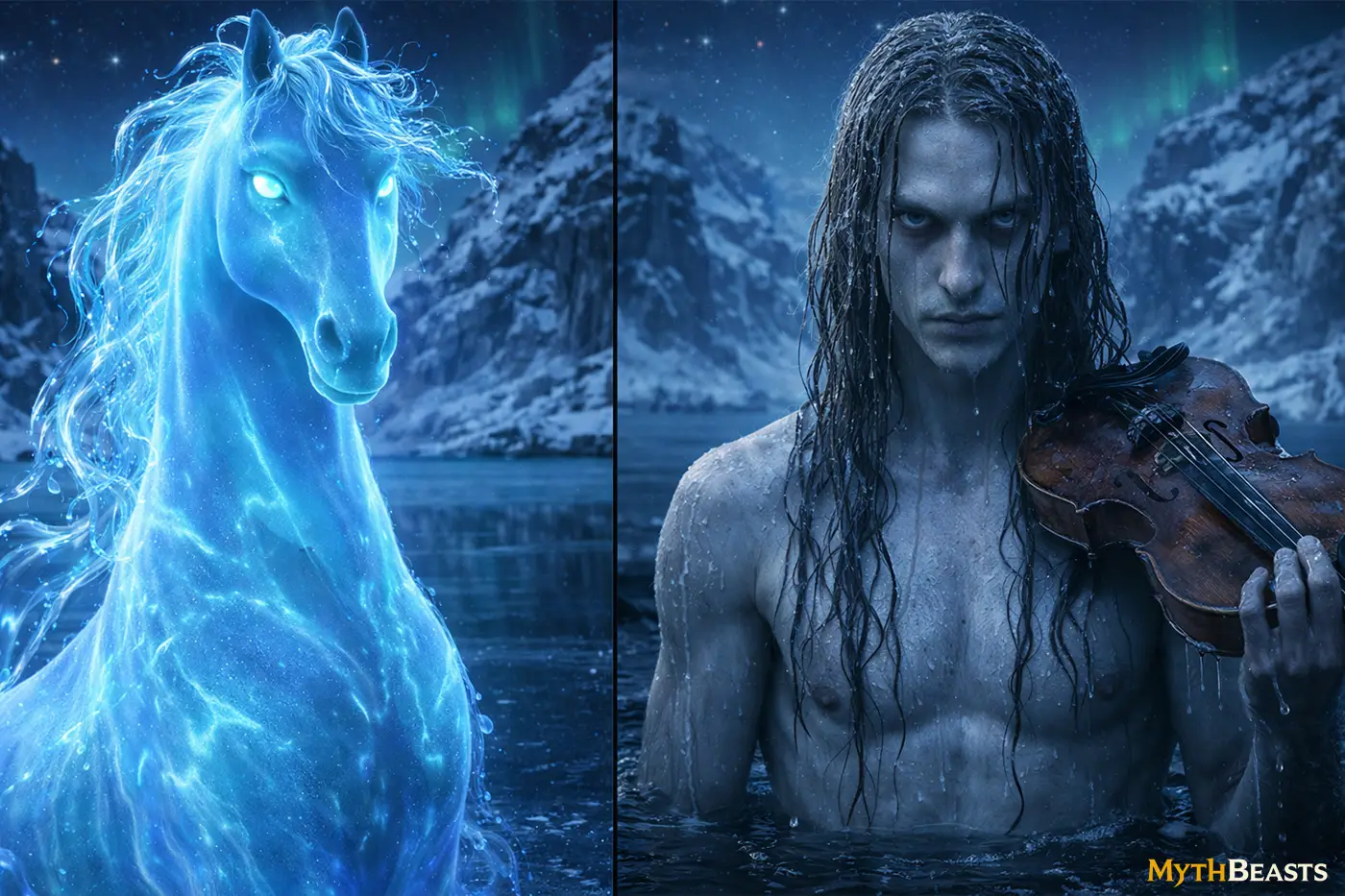
Disney did not pick the horse shape at random.
In Scandinavian folklore, the Nøkk (also called Näcken or Nøkken) is mainly a freshwater spirit linked to rivers, streams, and lakes. Most stories describe it in a humanlike, male-presenting form near the water.
Often it appears as a striking man, sometimes described as handsome, and the most famous detail is the music. The Nøkk plays fiddle or violin so beautifully that people stop, listen, and drift closer to the shoreline.
That beauty is the danger.
The point of the story is not just “monster attacks.” It is “you get drawn in.” You follow the sound, step onto unsafe ground, and the water takes you.
Many tellings use the Nøkk as a clear warning about isolated water places, especially at dusk or when you are alone.
But the Nøkk does not stay locked into one look.
Across the wider Scandinavian water-spirit tradition, the same kind of being can also change shape. One well known animal form is the horse, a perfect trick because horses feel familiar and safe.
In some stories, a horse appears near the water and turns deadly once someone trusts it. This overlaps with other northern “water horse” tales, including Scotland’s kelpie stories.
The details shift by place and storyteller, but the lesson stays the same: do not trust what looks friendly at the water’s edge.
So why does Frozen 2 lean into the horse?
Because it is a fast, visual way to combine both sides of the folklore idea. The Nøkk is still a water spirit, still dangerous, still something you must respect.
The horse shape also connects to a real tradition where water beings use animal forms to lure or trap humans.
What Frozen 2 changes is the outcome.
In older stories, getting close to the Nøkk often ends badly. Frozen 2 turns the warning into a trial.
Instead of being lured by music, Elsa gets tested by force. And instead of tragedy, the story ends with partnership, as if the water itself says: you earned the right to pass.
Nøkk in folklore compared to Nøkk in Frozen 2
| Aspect | Nøkk in folklore | Nøkk in Frozen 2 |
|---|---|---|
| Origin of character | The Nøkk originates from ancient Scandinavian folklore as a water spirit. | In Frozen 2, the Nøkk serves as a guardian of the enchanted forest. |
| Role in story | In folklore, the Nøkk is often depicted as a malevolent entity. | The film portrays the Nøkk as a noble and protective creature. |
| Cultural significance | The Nøkk represents deep-rooted Nordic myths about nature's spirits. | Frozen 2 emphasizes themes of harmony with nature through the Nøkk. |
| Appearance description | Folklore describes the Nøkk as a shapeshifter, often appearing as a horse. | In the film, the Nøkk appears as a majestic water horse. |
| Powers and abilities | The Nøkk possesses the ability to control water and create illusions. | In the movie, the Nøkk showcases its power by manipulating water. |
| Connection to water | In folklore, the Nøkk lures victims to watery graves. | The film's Nøkk helps characters navigate challenges rather than harm them. |
Earth Giants: Sleeping Stone Power
In Frozen 2, the earth giants look like walking cliffs. They sleep for ages, then wake up and shake the ground like an earthquake.
When they get angry, they throw huge boulders and can smash anything in their way.
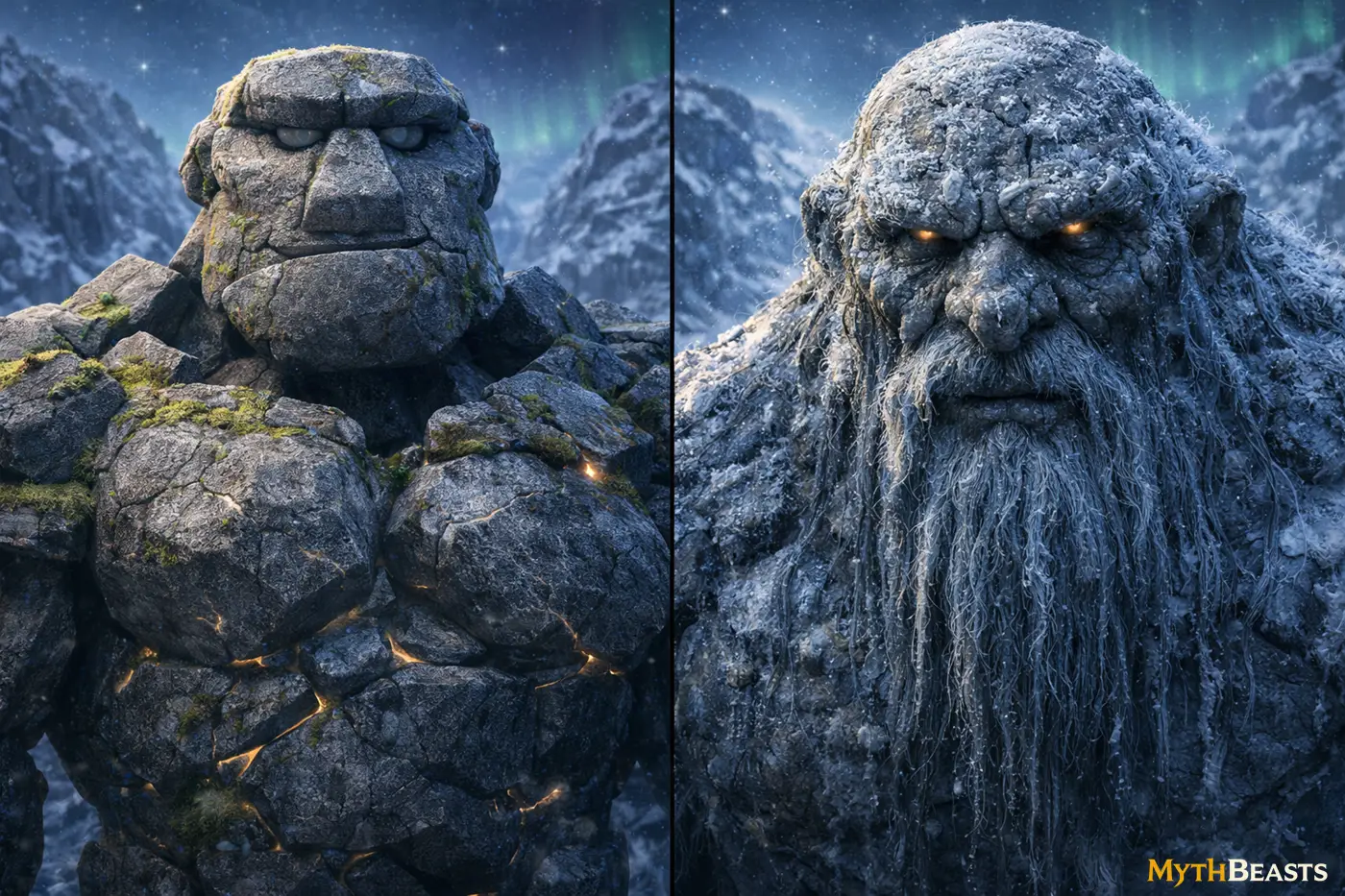
In the movie, they act like the land’s muscle. They do not speak. They do not negotiate.
They are nature’s strength in the purest form.
This idea fits a long northern tradition of giants.
In Norse myth and later Scandinavian folklore, giants often represent raw forces that humans cannot control. They can be tied to mountains, storms, winter, and wild places far from farms and towns.
Sometimes they feel like enemies of order. Other times they feel like the older world itself, something that existed before humans built rules and borders.
Frozen 2 does not copy one specific named giant from old stories. Instead, it borrows the basic role giants often play in Nordic tradition: ancient, powerful beings linked to the landscape.
The big Disney change is clarity.
In older stories, giants can be clever, cruel, funny, or tragic. They might bargain, trick, or talk. Frozen 2 strips that away and turns the giants into a simple message you can understand instantly: do not underestimate the earth.
That choice also supports the film’s main theme. The past is not dead. The land remembers.
When something old gets disturbed, it can wake up in a way that feels unstoppable.
So the earth giants are not just cool action creatures. They are the movie’s reminder that the ground under your feet is part of the story, and it has power of its own.
Gale: The Wind That Thinks
In Frozen 2, Gale is the wind spirit. You do not see a full creature body most of the time.
You see leaves swirl, snow spin, and trees bend like something invisible just ran past.
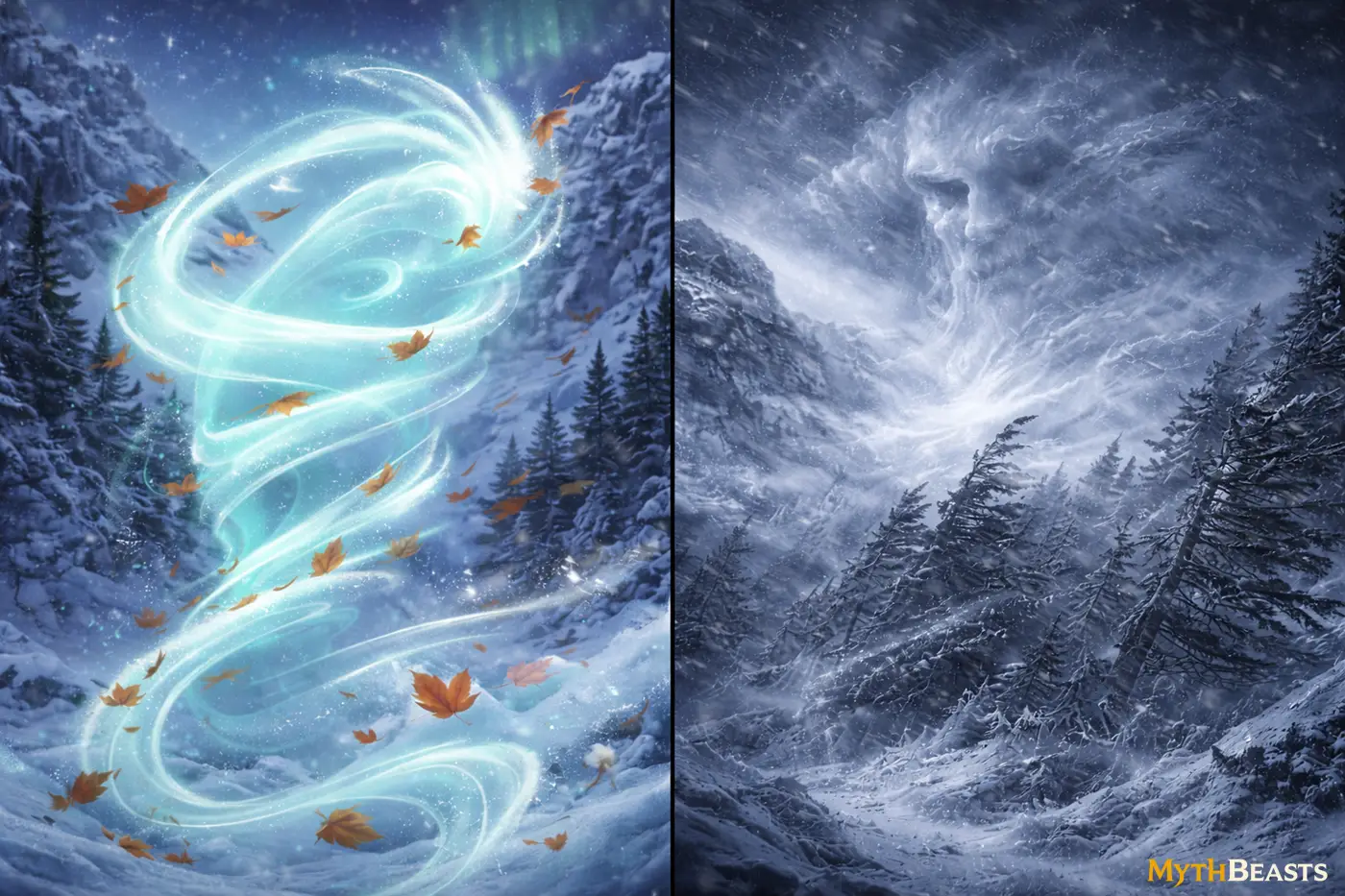
Gale also acts like a personality. It plays. It teases. It gets curious. It can help, but it can also knock you down if you are in the way.
That idea fits a very old Northern way of thinking about nature.
In a lot of Scandinavian folk belief, the wild is not only a place. It is a presence.
People tell stories where forests have moods, storms feel targeted, and certain valleys or lakes seem to “want” you to leave. You can read this as spirits, as luck, or as a warning system built into stories.
Either way, the message is the same: do not treat nature like it is yours.
Frozen 2 turns that mood into an actual character.
Gale is not a direct copy of one famous named wind creature from a single legend. Instead, it feels like a mash-up of Nordic nature-spirit thinking: invisible forces that respond when humans cross a line.
Disney also makes one big change. In older tales, invisible forces often stay mysterious and scary. In Frozen 2, Gale becomes readable.
You can tell when it is joking or angry. That makes it easier for kids to follow and helps the movie keep its theme clear: nature is powerful, but it can also be a relationship if you act with respect.
So Gale works like a translator. It turns the idea of “living weather” into something you can watch, feel, and understand in a family story.
Bruni: Fire as a Creature
In Frozen 2, Bruni is the fire spirit. It looks like a tiny salamander made of flame and sparks.
It can set things burning by accident, but it also feels playful, like a wild animal you cannot fully control.
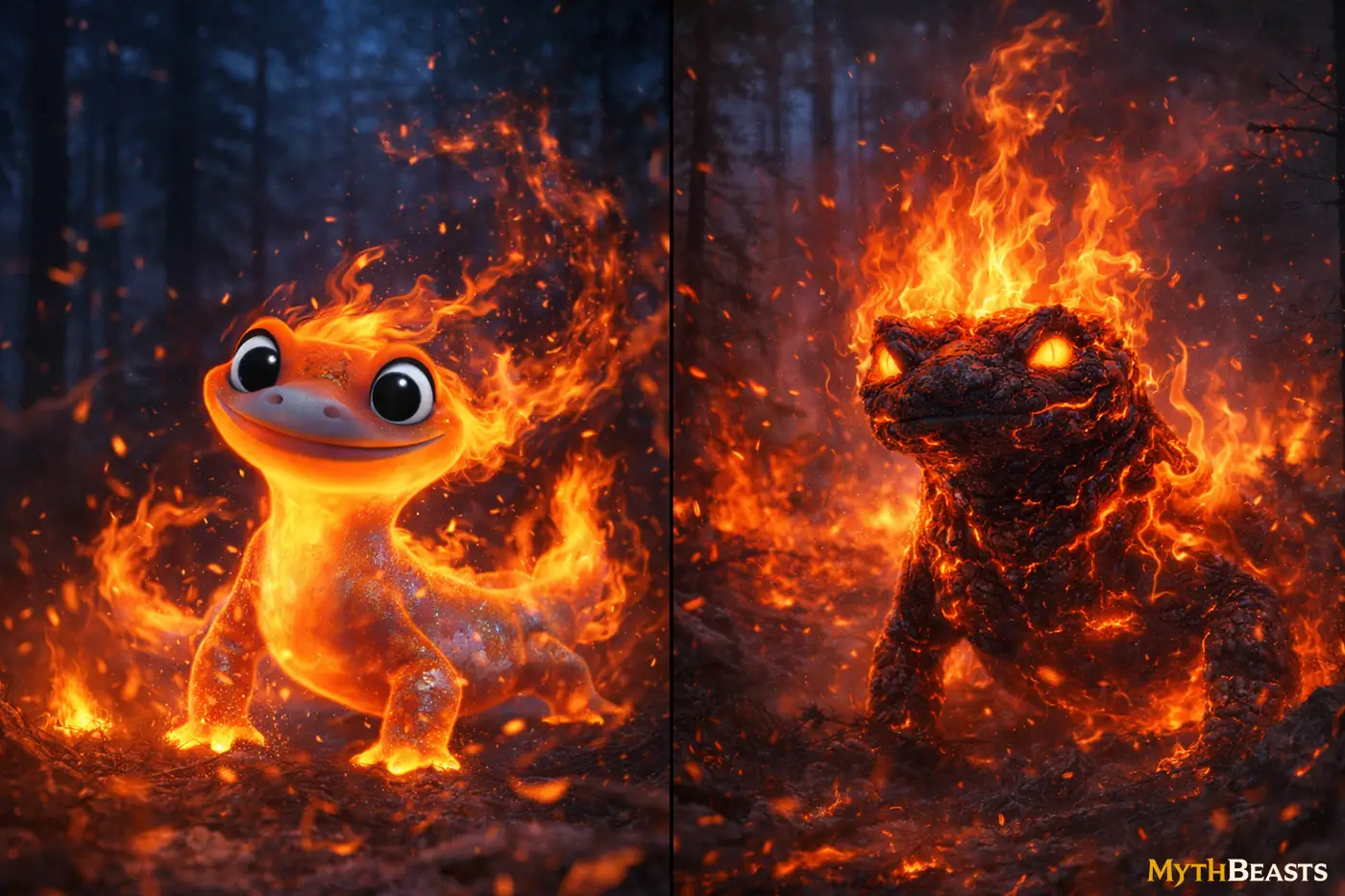
In the movie, Bruni represents fire’s double nature. Fire can warm you and light your way, but it can also spread fast and destroy a whole forest.
Bruni’s shape is not a direct pull from one famous Scandinavian beast the way the Nøkk is. Disney chose a salamander because, across European tradition, salamanders have long been linked to fire and heat.
People once believed salamanders could live in flames or come from fire, which made them a natural symbol for a fire spirit.
That makes Bruni a smart shortcut. You see a fire salamander and you instantly get the idea: this is living fire.
Frozen 2 then gives that old symbol a Nordic setting. Instead of a creature in a wizard’s lab or a medieval legend, Bruni becomes one of the forest’s elemental guardians.
It belongs to the land, not to humans.
The Disney change is tone.
Older fire lore often treats fire beings as strange and dangerous, sometimes even demonic. Frozen 2 keeps the danger, the forest can burn, but it wraps it in a cute design and a clear lesson: fire needs care, not fear, and it cannot be handled with force alone.
So Bruni is less “a Scandinavian folklore character” and more “a European myth symbol” remixed into a Nordic nature-spirit system.
Conclusion
Frozen and Frozen 2 use mythical beasts for more than cool action scenes. The creatures help make Arendelle feel like a place shaped by Northern stories, where mountains, forests, and water have their own rules.
Some of the links to Scandinavian folklore are direct. The trolls echo the old idea that wild stone places can hide beings that are not human.
The Nøkk connects to a real water spirit tradition built around warning, temptation, and the danger of getting too close to the shoreline.
Other creatures work more like inspiration than direct copies. The wind, fire, and earth spirits turn a bigger Nordic mood into characters: nature is alive, powerful, and not something you control with titles or weapons.
Across all of them, Disney keeps one key theme from older stories. Respect matters. If you act careless in the wild, the wild pushes back.
But Disney also changes the ending. Folklore often ends in punishment. Frozen turns fear into understanding.
The beasts start as obstacles, then become signs that the world can be balanced again.
That is why these creatures matter. They are the bridge between a modern animated adventure and the older Northern idea that nature is not just scenery.
Nature is part of the story.
Further Reading
Radio Times, “Trolls, Nokks and Joik singing: the Nordic cultural artefacts that inspired Frozen 2” (2019)
A direct, readable overview of the creative team’s Scandinavia research trip and the specific Nordic cultural cues viewers can spot, including the Nøkk and joik mentions. (Radio Times)
Arctic Council, “Behind the scenes of Frozen 2: How Sámi representatives cooperated with Disney” (2020)
An interview-style piece centered on how Sámi representatives worked with Disney, what was considered “Sámi” in the film, and why consultation mattered. (Arctic Council)
Saami Council, “Sámi language translation of Frozen 2” (2019)
A primary announcement that documents the consultation setup, the North Sámi dub, and includes an on-record quote from producer Peter Del Vecho about the research trip and collaboration. (Sámiráđđi)
Visit Norway via MyNewsdesk, “Frozen 2: The Norwegian Inspiration” (2019)
A tourism board press release, but still useful because it lists where the team traveled and frames “Nordic folklore and storytelling” as part of the research process. (Mynewsdesk)
University of Washington, Department of Scandinavian Studies, “Crossing North 10: Myth and Fairytale in Frozen 2” (2019)
An academic-hosted event page describing a talk by Frozen 2 story leadership (Marc E. Smith) and explicitly connecting the Nordic research trip to the film’s myth and fairytale direction. (scandinavian.washington.edu)
The Nerds of Color, “Interviewing the Crew Behind Frozen II” (2019)
Long-form interview material with crew voices that you can quote for process and intent, including how Iceland and Norway helped them think “mythic” versus “fairy tale.” (The Nerds of Color)
ArcticToday, “Sámi groups hope Disney warms to collaboration on Frozen sequel” (2018)
Useful as pre-release context: it shows that Sámi institutions were already pushing for consultation early, and why cultural accuracy and benefits mattered. (ArcticToday)
Kvidal-Røvik and Cordes, “Into the unknown [Amas Mu Vuordá]? Listening to Indigenous voices on the meanings of Disney’s Frozen 2 [Jikŋon 2]” (PDF, 2020)
A scholarly article (PDF) focused on Indigenous voices and meanings around Frozen 2, including discussion of the Sámi-Disney collaboration and how it was received and debated. (ashleycordes.github.io)
Store norske leksikon (SNL), “nøkken” (latest update visible on page, 2025)
A reliable Norwegian reference entry on the Nøkk/Nøkken: habitat (waters), shapeshifting, luring humans, and protective counters in folk belief. Great for your “Frozen version versus folklore version” comparisons.
Store norske leksikon (SNL), “troll” (latest update visible on page, 2026)
A reliable overview of trolls across Norse mythology and later Scandinavian folklore genres. Helpful for grounding Frozen’s rock trolls against older tradition. (Store norske leksikon)
Hämäläinen et al., “Sami yoik, Sami history, Sami health: a narrative review” (2018, PubMed Central)
A peer-reviewed overview of yoik’s cultural role and historical pressures against it, useful background for explaining why “joik singing” in Frozen 2 is a big cultural signal, not just a musical texture. (PMC)
Visit Norway, “The rebirth of the joik” (page undated, but stable reference)
A practical cultural explainer, with strong quotable lines about joiking a person, animal, or place, which maps nicely to how Frozen 2 treats nature as alive and personal. (Visit Norway)
Smithsonian Folkways, “Lappish Joik Songs from Northern Norway” (album page, 1956 release documented on Smithsonian site)
A museum-grade cultural source that anchors yoik in recorded history, and gives you a credible way to talk about joik forms and presentation without relying on pop summaries. (Smithsonian Folkways Recordings)