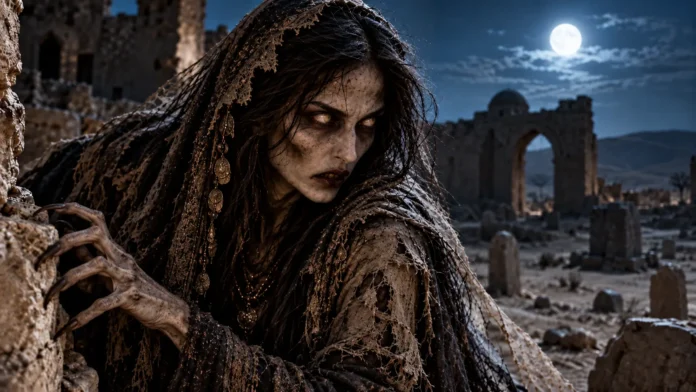
Mortality – Overview
Mortality, as a mythological weakness, is the condition of being subject to finite existence rather than possessing unrestricted or permanent life within a particular cosmological order.
Its defining limitation is not simply eventual death; it is the exposure of a being’s existence to boundaries that superior status, extraordinary ancestry, or exceptional power cannot necessarily remove.
Mythological systems make this vulnerability structurally significant by using finite life to distinguish kinds of beings, mark the reach of divine authority, and locate human existence within an ordered cosmos.
Defining Characteristics of the Weakness
Nature of the Limitation
Mortality is chiefly an existential constraint because it makes continued existence conditional rather than permanent, even when a being possesses unusual capacities or occupies an elevated social position.
Physical vulnerability can express mortality, but it is not equivalent to it; bodily susceptibility matters taxonomically when it signifies a broader limit on continued existence.
Metaphysical restriction appears when a tradition distinguishes finite beings from deathless gods, though the distinction varies and does not establish one universal definition of divinity.
Mortality may also function as a cosmological boundary, separating human, heroic, divine, and ancestral conditions without making every being within any category uniformly vulnerable.
Conditions of Exposure
Mortality becomes relevant where a tradition represents life as bounded by an established cosmic order, rather than as an endlessly renewable possession of each individual.
Symbolically, finite existence becomes especially legible when a myth contrasts human duration with divine permanence; that contrast does not itself imply moral inferiority or punishment.
Moral conditions can shape an account of death when conduct receives consequences, yet mortality remains distinct from the specific judgment or offense described by that account.
Environmental settings may frame vulnerability through famine, wilderness, or dangerous travel, but these circumstances are not mortality itself unless the tradition connects them to finite life.
Mythological Role and Function
Function Within Mythological Systems
Mortality regulates power by preventing exceptional strength, heroic descent, or worldly status from automatically granting unlimited duration within the represented order of existence.
Its systemic function is not necessarily to punish; a mortal condition can be presented as ordinary, inherited, or cosmologically established without moral blame.
When a powerful figure remains mortal, that limit permits downfall to register as a consequence of finite status rather than as proof that power never existed.
Mortality can preserve cosmic order by maintaining distinctions between divine and human conditions, although particular traditions differ about whether gods themselves can die or change.
Symbolic and Cultural Meaning
In many mythological settings, mortality makes inevitability culturally intelligible by placing individual life within a larger temporal order that exceeds personal intention.
Some narratives connect death with moral consequence, but that association is tradition-specific and should not be generalized into a universal claim that mortality signifies guilt.
The contrast between limited life and divine permanence can signify sacred boundaries; its meaning depends on the local account of gods, humans, and cosmic authority.
Mortality may also constrain hubris where a story criticizes claims to limitless status, though such an interpretation requires evidence from the particular narrative and context.
Distinction from Related Mythological Weaknesses
Conceptual Boundaries
General mortality names the broad condition of being capable of death; the taxonomic weakness concerns how that condition specifically limits a being’s status or existence.
Physical injury describes bodily damage or vulnerability, whereas mortality concerns finite existence; an injury may expose mortality without defining the concept by itself.
Divine punishment is an imposed consequence attributed to divine agency, while mortality may be an ordinary condition that precedes any particular act or judgment.
Taboo violation identifies a breach of culturally defined prohibition; mortality is not interchangeable with that breach, even when a myth links transgression with death.
Situational defeat concerns a specific failure within an episode, whereas mortality classifies a continuing existential limit that can remain relevant beyond one encounter.
Common Sources of Misclassification
Readers may equate every death with mortality as weakness, overlooking whether the source presents death as an ordinary boundary, a punishment, or an exceptional event.
Comparative study distinguishes these categories by examining each tradition’s terms, narrative setting, and account of agency rather than assuming identical meanings across cultures.
Translation can obscure distinctions when different concepts of death, afterlife, and divine status are rendered through one modern vocabulary of mortality.
Classification also becomes unreliable when a single episode is treated as a general rule without evidence that the tradition gives it broader cosmological significance.
Canonical Beings Defined by Mortality
Gilgamesh
In Mesopotamian epic tradition, Gilgamesh is a king of exceptional stature who confronts human finitude; without mortality, his search for enduring life loses its central premise.
Achilles
In Greek epic tradition, Achilles is a hero of divine parentage who remains vulnerable to death; removing mortality would erase the boundary distinguishing his heroic status from immortality.
Heracles
Greek tradition presents Heracles as born mortal through Alcmene, despite Zeus’s paternity; his eventual divine status depends on a prior mortal condition and its transformation.
Sisyphus
In Greek myth, Sisyphus is a mortal king whose attempted evasion of death defines his exceptional narrative role; without mortality, that evasion becomes unintelligible.
Historical Distribution and Cultural Context
Accounts of finite life appear across ancient Mediterranean, Mesopotamian, South Asian, and East Asian traditions, though their dates, textual forms, and theological implications differ considerably.
Such accounts occur in societies with varied understandings of ancestors, divine beings, rulers, and afterlife; shared concern with death does not establish shared doctrine.
Scholarly Interpretation and Uncertainty
Variation in Interpretation
Some traditions distinguish gods from humans through deathlessness, while others permit divine death or transformation; therefore mortality cannot serve as a fixed cross-cultural test of divinity.
Historical readings may treat death as a literal event within a narrative, while symbolic readings examine how that event organizes social or cosmological distinctions.
Comparative frameworks use mortality to identify recurring structural limits, but responsible scholarship retains local categories rather than treating resemblance as proof of common origin.
Interpretations also change across periods when inherited stories are retold, translated, or incorporated into new religious and literary settings.
Limits of the Evidence
Evidence survives unevenly across cultures, and fragmentary records can make it difficult to determine whether a being’s mortality was central or incidental.
No verified sources describe this for contexts where surviving evidence does not specify a being’s relation to death, so classification should remain withheld.
Modern comparative terms such as “mortality” may group different historical concepts; their analytical usefulness does not establish that ancient communities shared one category.
Scholars can identify explicit contrasts between mortal and deathless beings, but broader claims about universal symbolism remain interpretive rather than directly documented.
Mythological Function Across Cultures
Mortality recurs because communities repeatedly confront finite human life, making it a durable subject for accounts of kinship, authority, succession, and cosmic order.
Recognizing mortality as a classificatory constraint helps comparison distinguish existential boundaries from punishment, bodily vulnerability, and episode-specific defeat without collapsing cultural differences.