Introduction
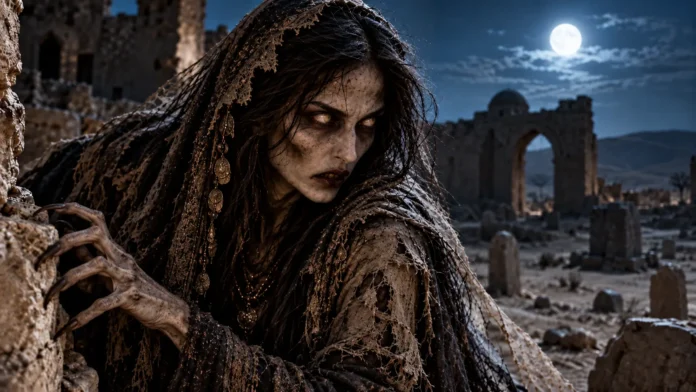
The ghoul, Arabic ghūl, is a supernatural being associated with wilderness, deception, and danger to travelers. In Arabic folklore, it may change shape, mislead people in isolated places, and attack them.
Its defining threat is often the encounter with something whose appearance cannot be trusted.
Its precise classification varies. Some traditions connect the ghūl with jinn or devils; others describe it as a distinct monster.
Historical accounts also disagree about its gender. These differences belong to the tradition itself, rather than representing errors that can be resolved into one fixed species.
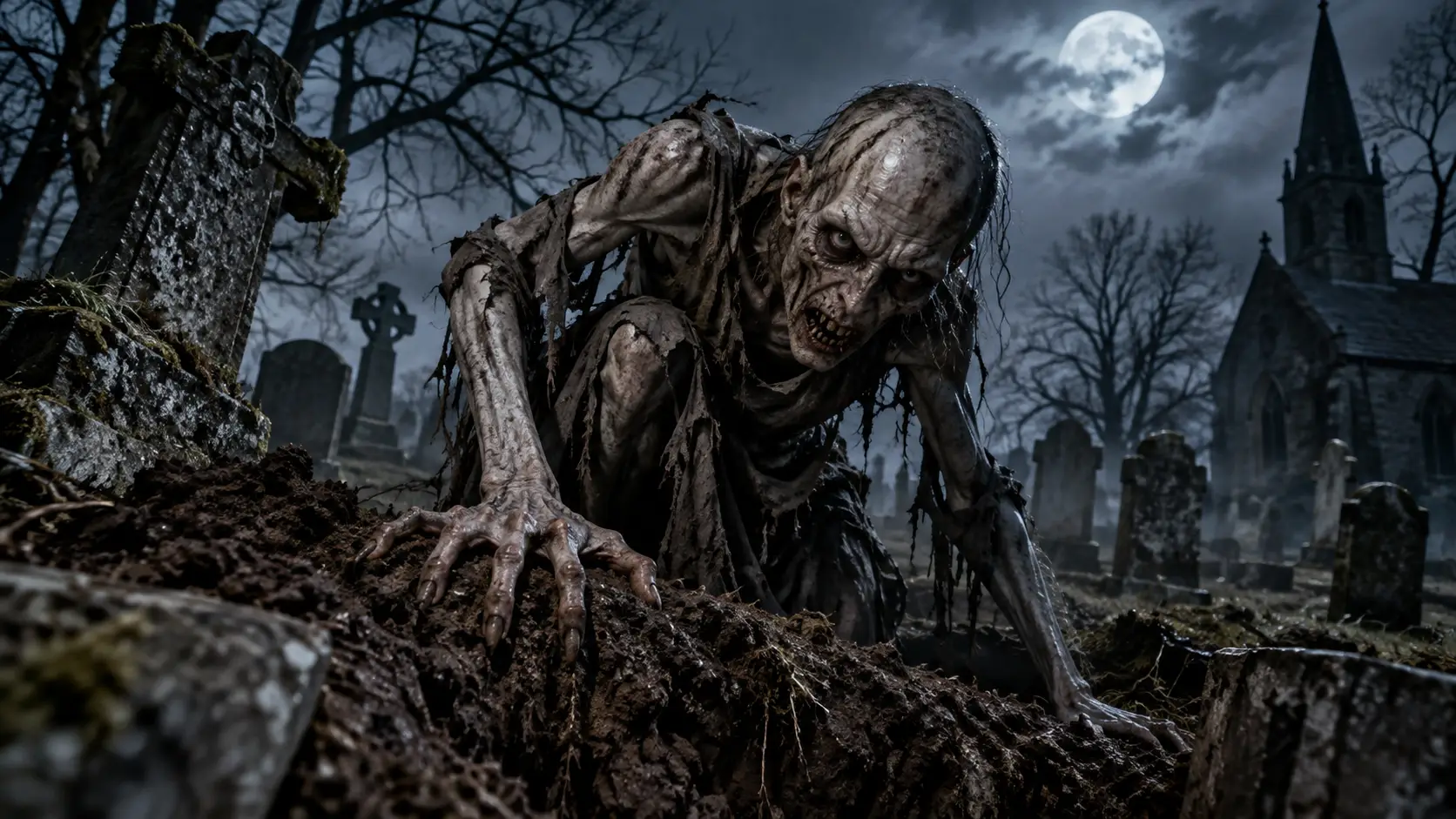
The familiar English-language image of a grave-robbing corpse-eater captures only part of this history. Cemeteries and consumption of the dead appear in particular literary versions, especially influential translations of the Thousand and One Nights.
They should not replace the broader Arabic pattern of transformation and traveler-luring.
The ghoul matters both as an enduring figure of Arabic storytelling and as an example of mythology reshaped through translation. Its history connects early poetry, medieval literary collections, religious debate, and European reception, with each setting emphasizing different aspects of the same unstable supernatural threat.
The Orginal Arabic Ghūl vs the Later Western Ghoul
| Category | Original Arabic Ghūl | Western Ghoul |
|---|---|---|
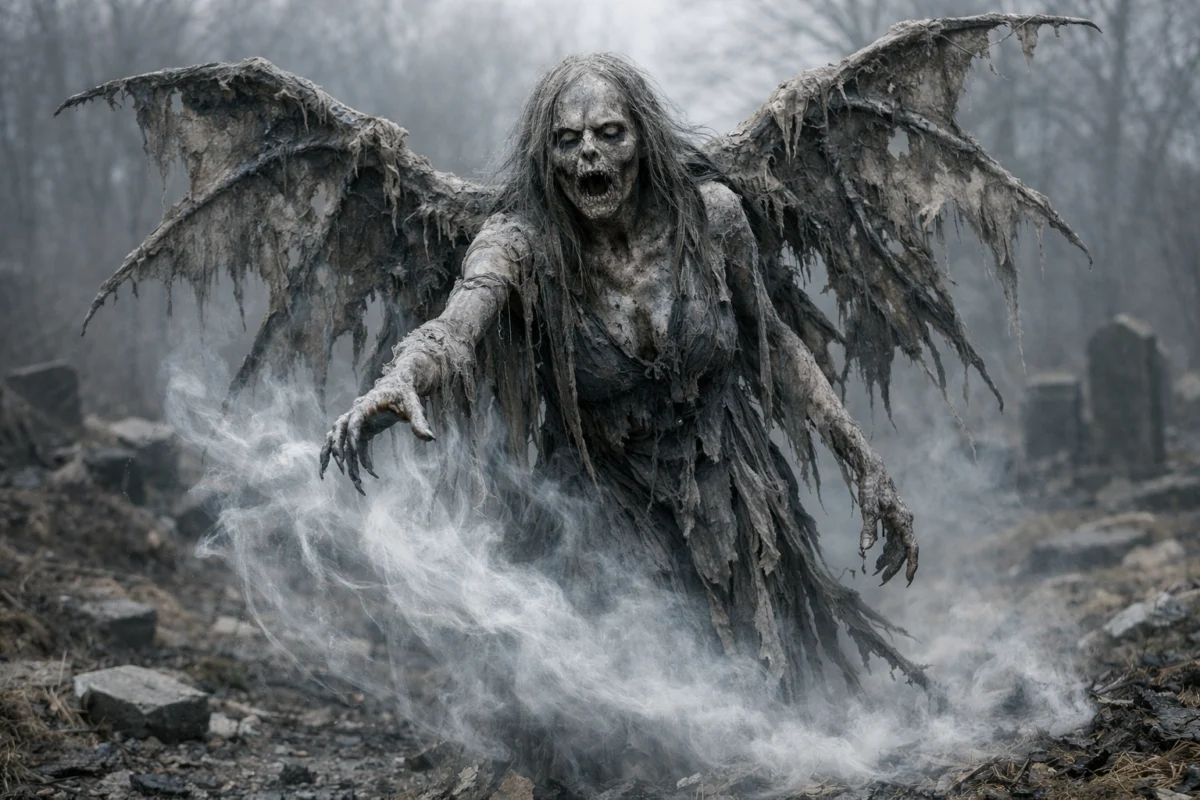
| Appearance | A shapeshifter that may appear human, animal, or monstrous, often with subtle unnatural features such as strange feet, eyes, or limbs. | Usually a fixed, corpse-like humanoid with pale skin, claws, distorted features, and an obviously monstrous body. |
| Habitat | Deserts, wilderness, lonely roads, caves, ruins, and places far from settlements. | Cemeteries, crypts, graves, abandoned churches, tunnels, and other Gothic settings. |
| Behavior | Deceives travelers, changes form, mimics voices, lures victims away from safety, and may attack or devour them. | Often scavenges corpses, digs into graves, stalks intruders, and attacks through direct physical violence. |
| Abilities | Shapeshifting, human disguise, animal forms, mimicry, and trickery are central to the tradition. | Usually relies on strength, speed, claws, resilience, and predatory movement rather than transformation. |
| Main Fear | The danger that an apparently ordinary stranger in the wilderness is actually a supernatural predator. | The horror of disturbed graves, violated corpses, and a creature feeding on the dead. |
History/Origin
The ghūl belongs to traditions associated with pre-Islamic Arabia, although its first emergence cannot be dated securely. Early Arabic poetry and later collections preserve references to it.
These witnesses establish an old literary and folkloric presence, not a single identifiable moment when the creature was invented.
The ninth-century writer al-Jāḥiẓ discussed the ghūl in Kitāb al-Ḥayawān, drawing attention to its place in pre-Islamic poetry and popular belief. His work is an important early witness, but it also illustrates how knowledge of older traditions often reaches readers through later scholarly and literary mediation.
A particularly significant encounter concerns the pre-Islamic poet Taʾabbaṭa Sharran. A narrative preserved in the tenth-century collection al-Aghānī recounts his confrontation and fight with a ghūl.
The episode places the creature within the dangerous landscape of heroic storytelling, rather than making burial grounds its necessary habitat.
With the development of Islamic literature, the ghūl remained a subject of discussion rather than receiving one universally accepted status. Reports and interpretations differed over whether it represented superstition, a harmful supernatural being, or deception associated with such beings.
Folkloric continuity therefore did not imply uniform religious acceptance.
A possible connection with the Akkadian gallu, an underworld demon, has been proposed in modern scholarship. This is a comparative hypothesis, not a demonstrated origin.
Similar names and threatening supernatural roles cannot, by themselves, establish an uninterrupted line of transmission from Mesopotamia to Arabic folklore.
European reception subsequently shifted the creature’s emphasis. Ahmed Al-Rawi argues that Antoine Galland’s French Nights translation helped establish corpse-eating as a standard Western characteristic. Nineteenth-century English versions, including Richard F.
Burton’s, reinforced that association. Their influence is historically important, but their descriptions do not define every earlier Arabic ghūl.
Name Meaning
The Arabic name is ghūl, commonly written with the definite article as الغول, al-ghūl. The spellings ghūl and gūl reflect different transliteration conventions, while English usually uses “ghoul.”
Recorded Arabic plural forms include ghīlān and aghwāl, rather than simply an English plural ending.
The term is conventionally connected with the Arabic root gh-w-l. Its associated meanings include seizing, overwhelming, and destroying, sometimes with a sense of sudden or concealed harm.
Historical lexicographic discussion therefore links the name with dangerous action rather than with one particular bodily form.
Edward William Lane’s Arabic-English Lexicon belongs to the historical reference tradition used to examine these meanings. No single English gloss captures their full range.
Translating ghūl simply as “corpse-eater” would confuse a prominent later characterization with the broader linguistic associations of the Arabic word.
The distinction between name and description is especially important here. A ghūl may mislead a traveler, assume a deceptive shape, or attack without any cemetery appearing in the account.
The root’s associations with destructive harm fit this wider narrative role better than a narrowly defined diet.
Appearance
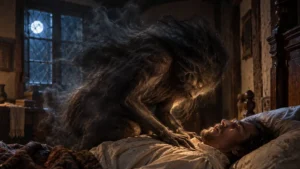
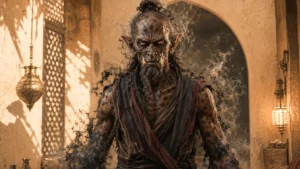
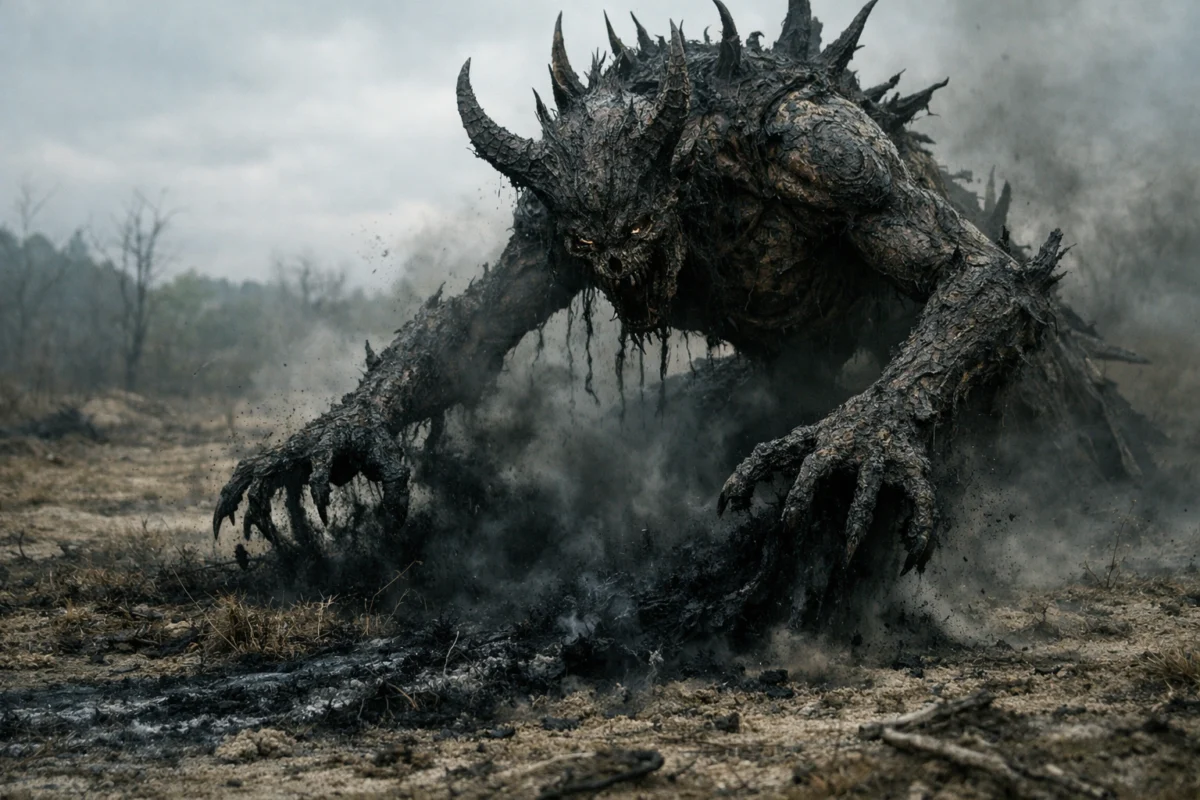
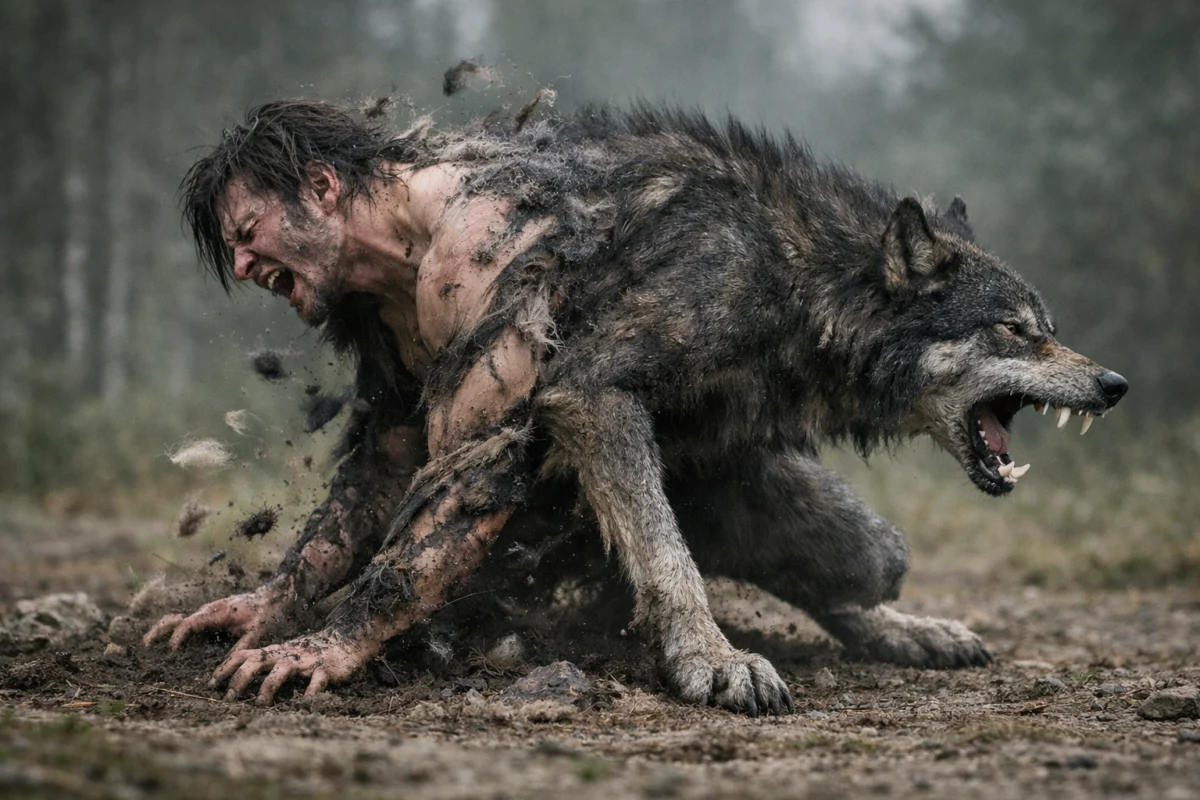
The ghūl has no single established anatomy across Arabic tradition. Transformation is more consistently supported than any fixed arrangement of limbs, teeth, or facial features.
It may appear frightening or deceptively human, making uncertainty about what the traveler sees central to the encounter.
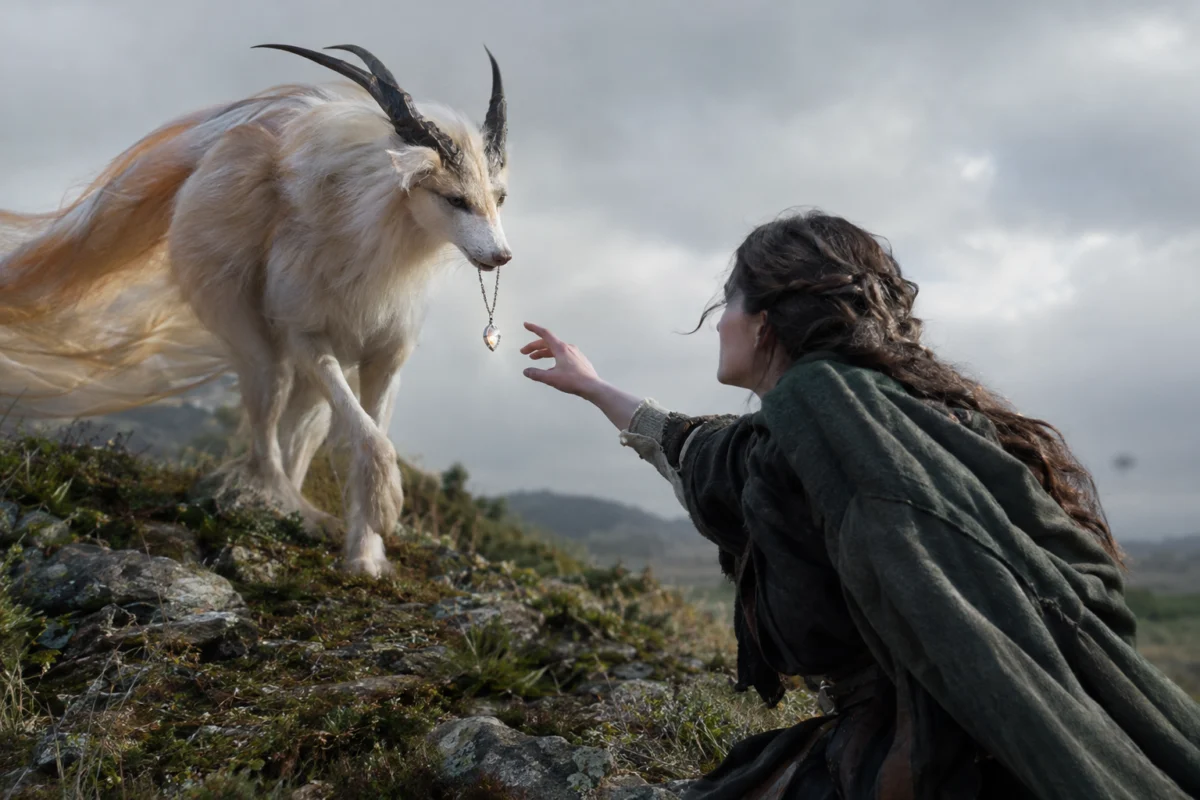
Some narratives give it an attractive human disguise, including the appearance of a woman. Such a form allows the creature to approach or lure its victim without immediately revealing danger.
These episodes do not establish that all ghouls are female, or that a female disguise is obligatory.
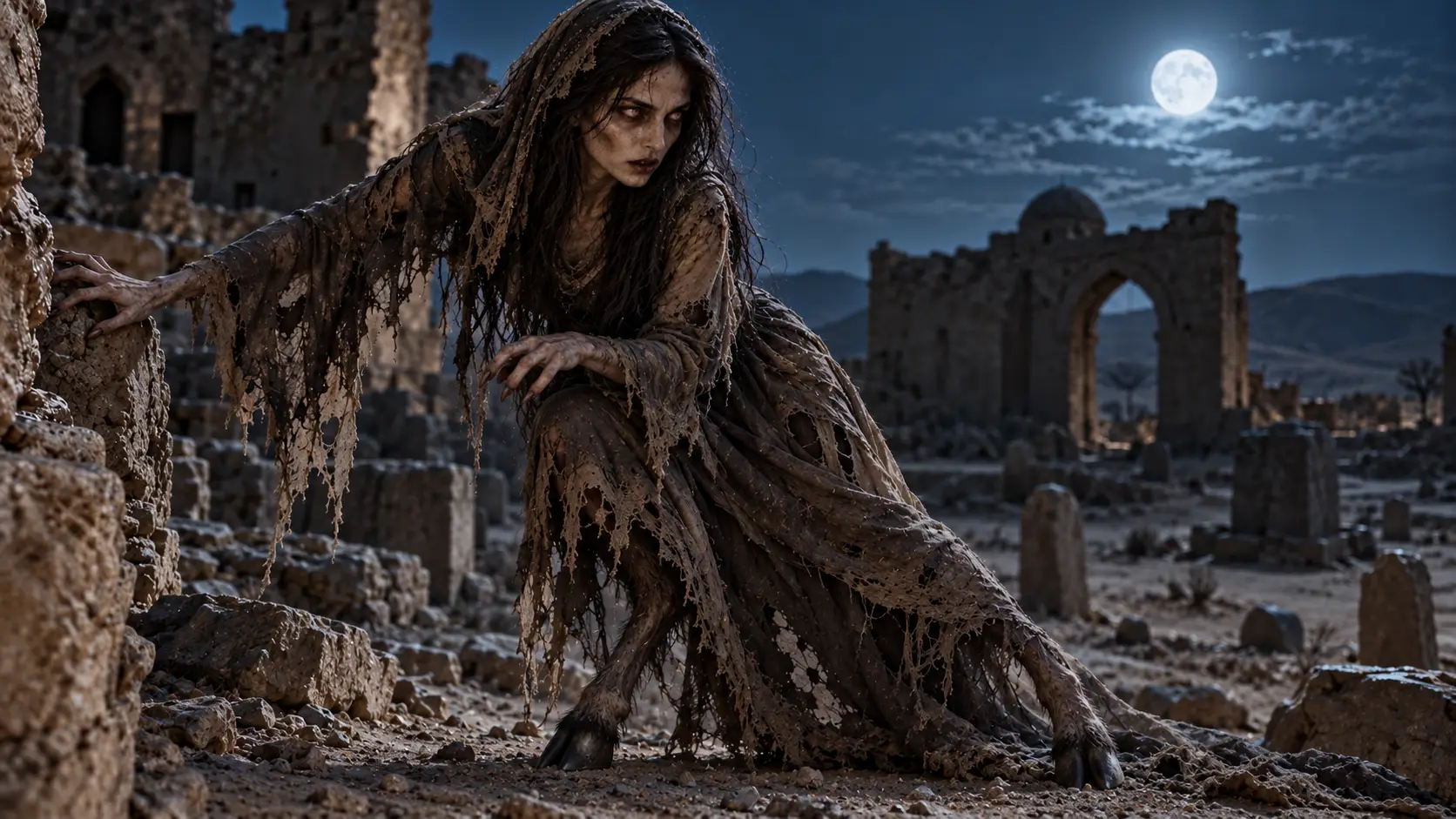
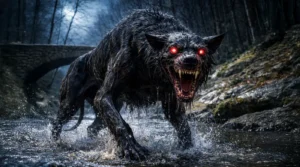
Other historical descriptions emphasize ugliness, fangs, or a generally terrifying form. These features make its predatory nature visible rather than concealed.
They belong to particular descriptions, however, and should not be assembled into a supposedly standard monster body shared by every version of the tradition.
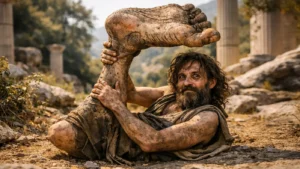
One distinctive account summarized in the TDV İslâm Ansiklopedisi gives the ghūl feet resembling those of a donkey. Although the being changes form, its feet remain unchanged.
This reported motif provides a recognizable flaw in the disguise, but it is not a universal anatomical rule.
The apparent contrast between beautiful disguise and hideous monster is consistent with a shape-changing threat. In narrative terms, the danger lies partly in the gap between outward appearance and actual intention.
A reassuring human form can therefore express the creature’s menace as effectively as visible monstrosity.
Graveyard imagery belongs to a different emphasis within its representation. Burton’s English Nights associates ghouls with consuming travelers and the dead, but that characterization concerns behavior and habitat more than a settled physical design.
It cannot establish an originally corpse-like appearance for the Arabic ghūl as a whole.
Background Story
The ghūl’s background is a network of recurring encounters rather than a continuous biography. Its most strongly supported setting is the isolated landscape, where travelers risk being deceived, disoriented, abducted, or attacked.
The creature gives supernatural form to the possibility that an encounter away from familiar surroundings may be dangerous.
Wilderness is not merely scenery in these accounts. Isolation makes misdirection consequential: following a deceptive figure or losing the route can separate someone from safety.
The ghūl’s transformation fits this narrative setting because the traveler must judge appearances without dependable knowledge of the being encountered.
Its variable relationship to jinn reflects overlapping ways of describing supernatural danger. Calling a ghūl jinn-related places it within a broader cultural world, but does not make “ghūl” another word for all jinn.
Its distinctive role remains the deceptive, threatening encounter, particularly in remote places.
The account involving Taʾabbaṭa Sharran gives that threat a heroic setting. A poet’s confrontation with a ghūl turns the dangerous encounter into a test of prowess.
Its preservation in al-Aghānī also shows how the creature’s history was shaped by literary collection, not only by anonymous oral storytelling.
The Sidi Nuʿman and Aminah episode shifts the setting from wilderness to a disturbing discovery about a spouse. In Burton’s English version, Sidi Nuʿman sees his bride enter a cemetery and sit with a ghūl.
This particular narrative brings the supernatural threat into an intimate human relationship.
These episodes reveal different uses of the figure: an adversary in a remote landscape and a participant in concealed cemetery activity. Later translation favored the second association so strongly that it often overshadowed the first.
Understanding that shift preserves both the older traveler-threatening profile and the documented corpse-eating variant.
Famous Folklore Stories
The ghoul survives in documented encounter accounts, literary episodes, and recurring stories of dangerous journeys. These records do not form one continuous mythology.
The headings below describe particular episodes or motifs rather than claiming that each has an authenticated traditional folktale title.
Taʾabbaṭa Sharran’s Encounter with a Ghūl
An encounter account associated with the pre-Islamic poet Taʾabbaṭa Sharran tells of his meeting and fighting a ghūl. Preserved in the tenth-century collection al-Aghānī, the episode connects the creature with the older Arabic poetic world of hazardous travel and encounters beyond settled places.
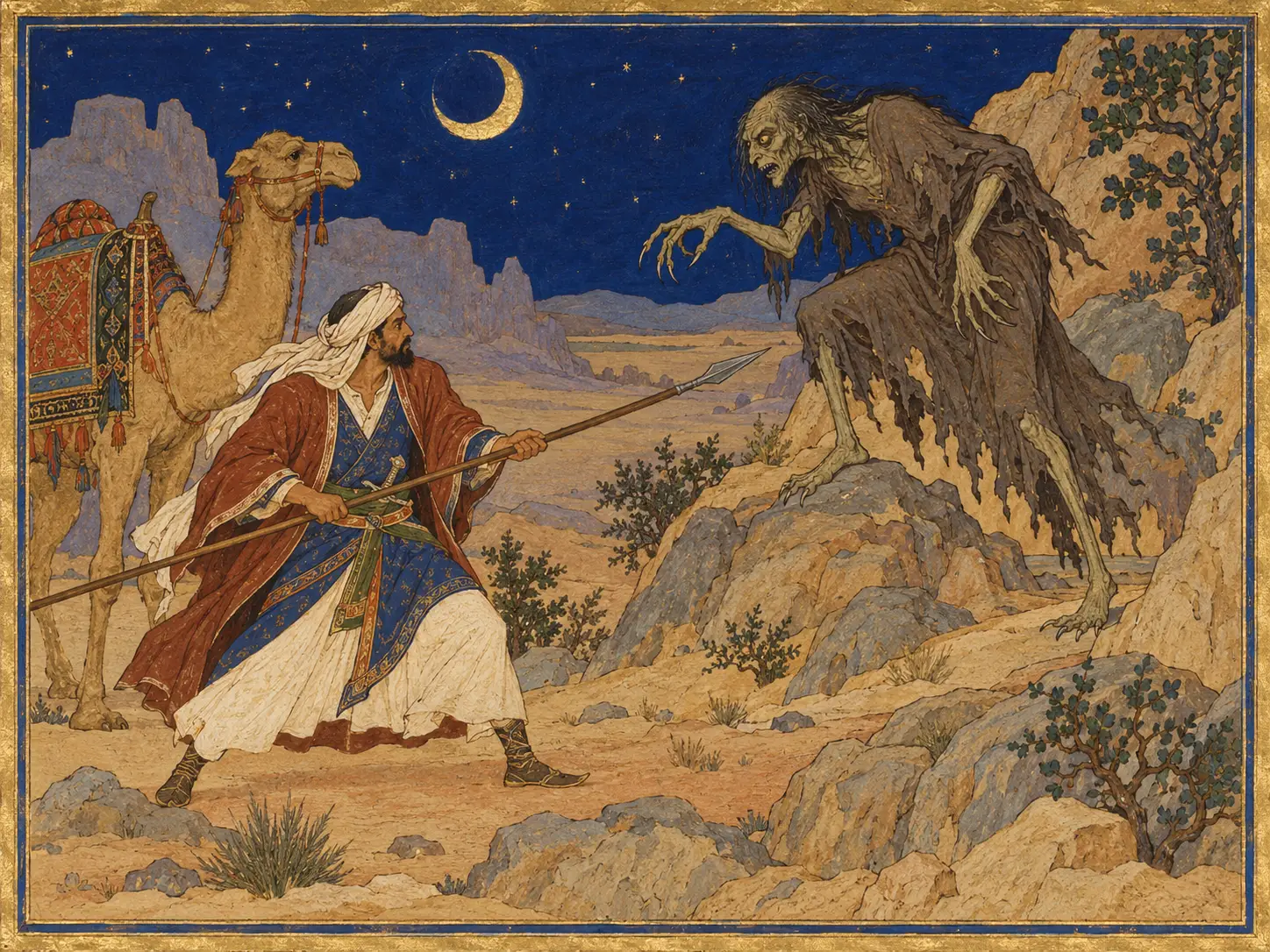
This is a literary account, not an independently verified event in the poet’s life. Its importance lies in the ghoul’s role as an adversary that can be confronted.
It also demonstrates that the tradition extends beyond the cemetery scenes familiar from later English-language retellings.
Sidi Nuʿman and Aminah
In Richard F. Burton’s English version of the Nights, Sidi Nuʿman follows his bride Aminah to a cemetery and sees her sitting with a ghūl. The episode brings a supernatural threat into a marriage, making a familiar person’s hidden activities the focus of horror.
Burton’s explanatory framing explicitly associates ghūls with eating travelers and digging up the dead. Those details belong to this influential English-language presentation.
They document a genuine corpse-eating variant, but cannot establish that cemetery dwelling or feeding on corpses defines every Arabic ghoul tradition.
The Deceptive Wilderness Encounter
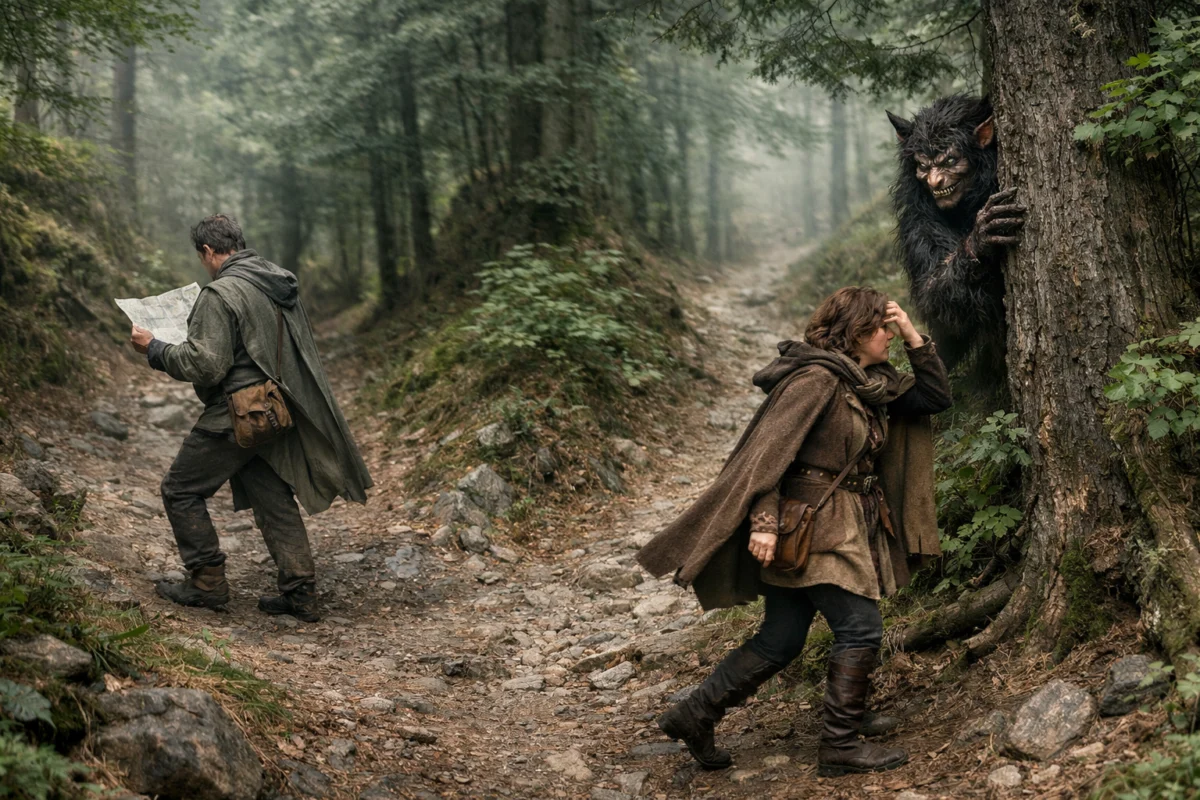
A broader tale pattern places the ghūl in an isolated landscape, where it misleads, disorients, or attacks a traveler. Transformation makes the encounter especially dangerous: the threatening being need not initially look monstrous, and some accounts give it an apparently attractive human disguise.
In one reported description, donkey-like feet remain unchanged despite the creature’s transformations, providing a clue to its identity. This recognition motif should remain separate from versions without it.
Neither the disguise nor the revealing feet constitute a universal sequence shared by every encounter story.
Cultural Impact
Within Arabic literary and folkloric tradition, the ghūl gives supernatural form to danger beyond familiar settlements. Its characteristic deception makes uncertainty central to the encounter: a traveler must recognize a threat whose appearance may conceal its intentions rather than openly announce them.
The figure also appears in Persian and broader Middle Eastern discussions, although circulation does not imply identical beliefs everywhere. Variable classifications, genders, and appearances show a flexible supernatural category rather than a creature governed by one stable description across languages and literary traditions.
European translations of the Nights helped shift attention toward cemeteries and corpse-eating. Ahmed Al-Rawi’s study of the ghoul’s cultural history argues that Antoine Galland’s French translation was especially influential in establishing this narrower image for Western readers and subsequent reference works.
The English word “ghoul” consequently evokes grave-robbing and feeding on the dead more strongly than the broader Arabic profile of transformation and danger to travelers. This change illustrates how a translated episode can become a general definition, obscuring other well-attested narrative roles.
Modern scholarship therefore treats translation as part of the creature’s history, not merely a transparent window onto an unchanged original. Comparing Arabic lexical material, encounter narratives, and European retellings reveals how selection and explanatory glosses helped reshape the ghoul’s cultural identity.
Similar Beasts
Baobhan Sith

The Baobhan Sith are vampiric fae in Scottish folklore who prey on travelers at night. Their seductive approach disguises predatory intentions, placing apparent attraction at the center of a dangerous encounter.
They resemble ghoul accounts involving attractive human disguises and vulnerable travelers. Their vampiric feeding distinguishes them from the ghūl’s wider, less uniform supernatural identity.
Read more about Baobhan Sith
Kishi
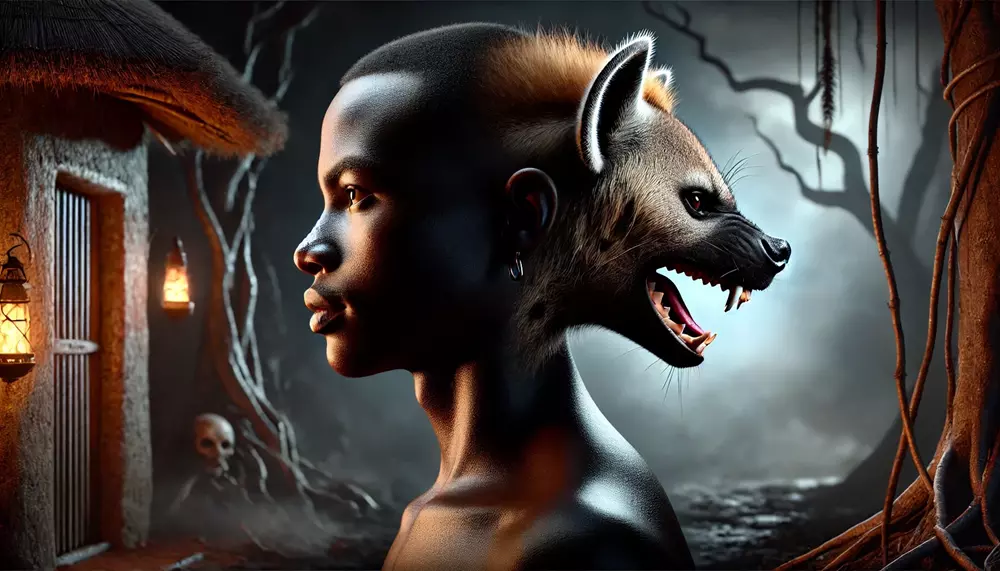
The Kishi of Angolan folklore presents a handsome human face while concealing a hyena visage behind it. Charm draws victims close before the creature’s concealed jaws reveal its predatory nature.
The comparison concerns deceptive appearance and human predation, not common ancestry. Its two-faced anatomy differs from the ghoul’s variable disguises and capacity for transformation.
Read more about Kishi
Skinwalker
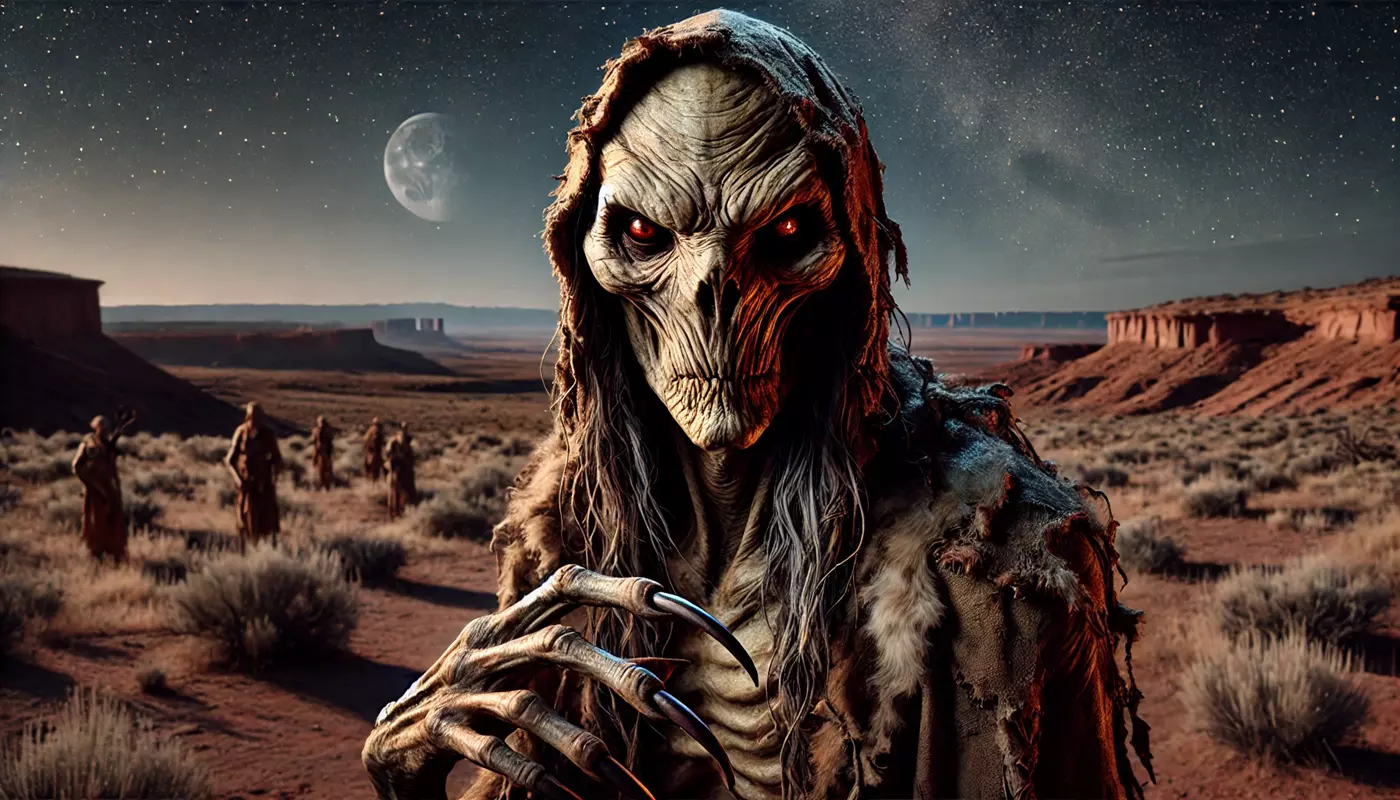
In Navajo tradition, Skinwalkers are malevolent witches described as capable of taking animal forms. Their identity centers on harmful sorcery and transformation rather than membership in a general category of wilderness monsters.
Shape-changing provides the strongest parallel with the ghūl. The distinction remains important: a witch using transformation is not automatically equivalent to an independently encountered supernatural being.
Read more about Skinwalker
Qutrub
The qutrub is separately named in Arabic lexicographic and folkloric accounts. Some descriptions characterize it as a male ghoul-like creature, placing it close to discussions of the ghūl’s disputed gender and classification.
This is a comparison within related Arabic supernatural vocabulary, not an alternate spelling. The recorded overlap does not justify treating qutrub and ghūl as interchangeable names.
Religion/Ritual
The ghūl is not directly mentioned in the Qur’an. The related Arabic word appearing in Qur’an 37:47 does not name this folkloric being.
Similarity of vocabulary therefore cannot establish a scriptural description of the creature or settle its religious classification.
Hadith reports and later Muslim interpretations do not produce one uniform position. Some readings reject the ghoul as an inherited superstition, while others interpret the reports as allowing harmful supernatural beings or addressing claims about their ability to deceive people.
Reported protective traditions include prayer or Qur’anic recitation. These belong to particular accounts of religious protection, not to a universally prescribed ghoul ritual.
They should also be distinguished from an assertion that every Muslim scholarly tradition accepts the creature’s existence.
The religious evidence chiefly concerns interpretation and protection rather than a dedicated cult. The supplied record does not establish ghoul-specific offerings, annual observances, or an organized worship practice.
Assigning such practices would confuse the presence of supernatural folklore with evidence of ritual devotion.
Scientific or Rational Explanations
The ghoul is documented as a folkloric and literary being, not a scientifically verified species. Its changing forms and inconsistent classifications are features of transmitted accounts.
They do not provide an anatomical description from which a zoological identification could reliably be made.
A social interpretation can connect wilderness encounters with the vulnerability of travelers outside familiar surroundings. The stories repeatedly combine isolation, uncertain appearances, and deception.
This reading explains their narrative relevance without claiming that a particular environmental event originally created the belief.
Translation history offers a more directly documented explanation for differences between portrayals. A cemetery episode and its accompanying glosses could influence later definitions disproportionately.
The resulting corpse-eating stereotype reflects the circulation of selected texts rather than proof that all older accounts shared that emphasis.
Historical collections also require a distinction between the period attributed to an encounter and the date of its preservation. Taʾabbaṭa Sharran’s story belongs to a pre-Islamic poetic setting, but its later collection is evidence of literary transmission, not contemporary verification of supernatural combat.
No single natural explanation is established for the whole tradition. Identifying the ghoul with an animal, hallucination, or desert illusion would require evidence tied to a specific account.
The strongest supported analysis instead concerns narrative function, changing classifications, and the effects of translation.
Modern Cultural References
Modern adaptations use the ghoul in horror, children’s fiction, graphic storytelling, and oral-tale performance. These works demonstrate its continuing appeal, but their individual designs and plots should not be mistaken for a single traditional description of the Arabic ghūl.
Ghoul, television series (2018)
Patrick Graham’s Indian horror series follows events at a remote military interrogation center. Its supernatural threat adapts the ghoul for contemporary screen horror rather than documenting Arabic folklore.
Netflix
The Ghoul, picture book (2019)
Taghreed Najjar’s story, illustrated by Hassan Manasra, follows a boy meeting a one-eyed, hairy purple creature.
Inspired by Arab folklore, this appearance belongs to the adaptation, not every tradition.
Simon & Schuster
Ghoul, graphic novel (2025)
Kasey Iris’s graphic novel features a monstrous cartoon ghoul emerging from a comic book.
It uses the figure creatively within contemporary visual storytelling, rather than reconstructing historical folkloric descriptions.
Penguin Random House
Fatna & The Ghoul, podcast episode (2025)
Hana Baba’s Sudanese-folklore episode tells of a sneaky ghoul trying to trick Fatna.
The performance carries the creature’s deceptive narrative role into a contemporary audio storytelling format.
Folktales from Sudan
Fallout 76, video game (2018)
Bethesda’s multiplayer role-playing game features ghouls in its post-apocalyptic world, and a 2025 update introduced playable ghoul characters.
Fallout’s ghouls are radiation-transformed humans, not the shape-changing supernatural beings of Arabic folklore.
Fallout 76 on Steam

Fallout, television series (2024)
Walton Goggins plays Cooper Howard, known as The Ghoul, a bounty hunter and one of the series’ lead characters.
His radiation-altered appearance and survival connect him to Fallout’s fictional ghouls rather than directly reproducing the Arabic ghūl.
IMDb
Conclusion
The ghoul is best understood as a variable supernatural figure of Arabic folklore, especially associated with isolated places, deception, and danger to travelers. Shape-changing makes its threat more than physical: an apparently familiar person or inviting encounter may conceal something hostile.
Its gender, appearance, and relationship to jinn differ across accounts, so no single anatomy or classification captures the whole tradition. The recurring concern is the traveler’s vulnerability when ordinary signs of safety and recognition can no longer be trusted.
Later translations and adaptations extended that tradition while changing its emphasis. The cemetery-dwelling corpse-eater became particularly influential in Western reception, but it should not replace the broader Arabic figure of the deceptive wilderness threat.
Keeping these versions distinct reveals how folklore develops through storytelling, translation, and creative reuse. The ghoul’s lasting cultural relevance lies in that adaptability: it can express fear of unfamiliar places, uncertainty about appearances, and the possibility that danger hides behind a seemingly recognizable form without becoming one universally fixed monster.
Further Reading
Richard F. Burton, Supplemental Nights to the Book of The Thousand and One Nights, Gutenberg
In an English Nights version, Sidi Nuʿman watches his bride Aminah enter a cemetery and sit with a ghūl.
Burton’s translation adds explicit explanatory claims about ghūls eating.
(gutenberg.org)
Ahmed Al-Rawi, Supernatural Creatures in Arabic Literary Tradition, Api.pageplace
A narrative preserved in al-Aghānī recounts the poet Taʾabbaṭa Sharran encountering and fighting a ghūl.
The heading here is descriptive; it is not asserted to be the tale’s.
(api.pageplace.de)
Ghoul, penguinrandomhouse.com
graphic novel 2025 A published graphic novel featuring a monstrous cartoon ghoul who emerges from a comic book; this is a contemporary creative use of the figure.
(penguinrandomhouse.com)
GHOUL, about.netflix.com
television episode 2018 Netflix describes the series as an Indian horror story about a prisoner at a remote military interrogation center and identifies its supernatural threat as a.
(about.netflix.com)
Fatna & The Ghoul, folktalesfromsudan.org
podcast episode 2025 A published Sudanese-folklore storytelling episode, dated April 20, 2025, in which a sneaky ghoul tries to trick Fatna.
(folktalesfromsudan.org)
The Ghoul, simonandschuster.com
published fiction 2019 A picture-book narrative inspired by Arab folklore in which a boy meets the ghoul, portrayed as a one-eyed, hairy purple creature.
The publisher lists it.
(simonandschuster.com)
“The Mythical Ghoul in Arabic Culture”, Cultural Analysis
Studies Arabic cultural accounts and how translation shaped the Western corpse-eating image.
(ocf.berkeley.edu)
“Ghūl”, Enciclopedia Italiana, Treccani
A historical reference summary describing the ghūl’s association with deserts, transformations, travelers, and variants in Arabic and Muslim folklore.
(treccani.it)