Shapeshifting
Explore shapeshifting, a mythological skill allowing beings to change form, featured in tales from various cultures worldwide.
Relevant Beasts
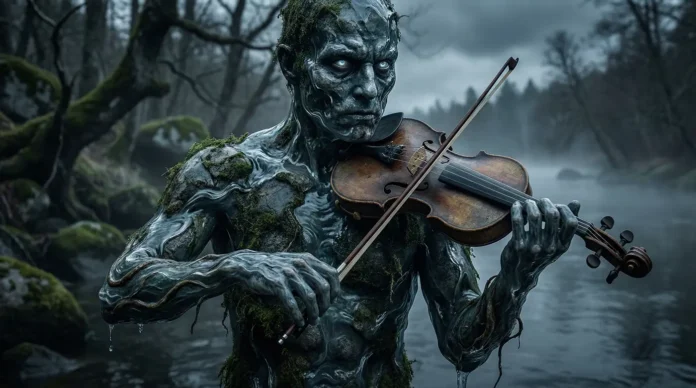
The Näcken is a water spirit from Scandinavian folklore, known for its enchanting musical abilities and shapeshifting nature.

Cailleach Bheur, the ancient winter hag of Celtic lore, ruled storms and sculpted mountains with frost and stone, embodying...

The Kelpie is a shape-shifting water spirit from Scottish folklore, known to appear as a horse and lure victims...

Baobhan Sith are vampiric fae from Scottish folklore who prey on travelers at night, seducing them before feeding. Active...

The Huli Jing is a shapeshifting fox spirit from ancient Chinese mythology, known for its illusion powers, beauty,...
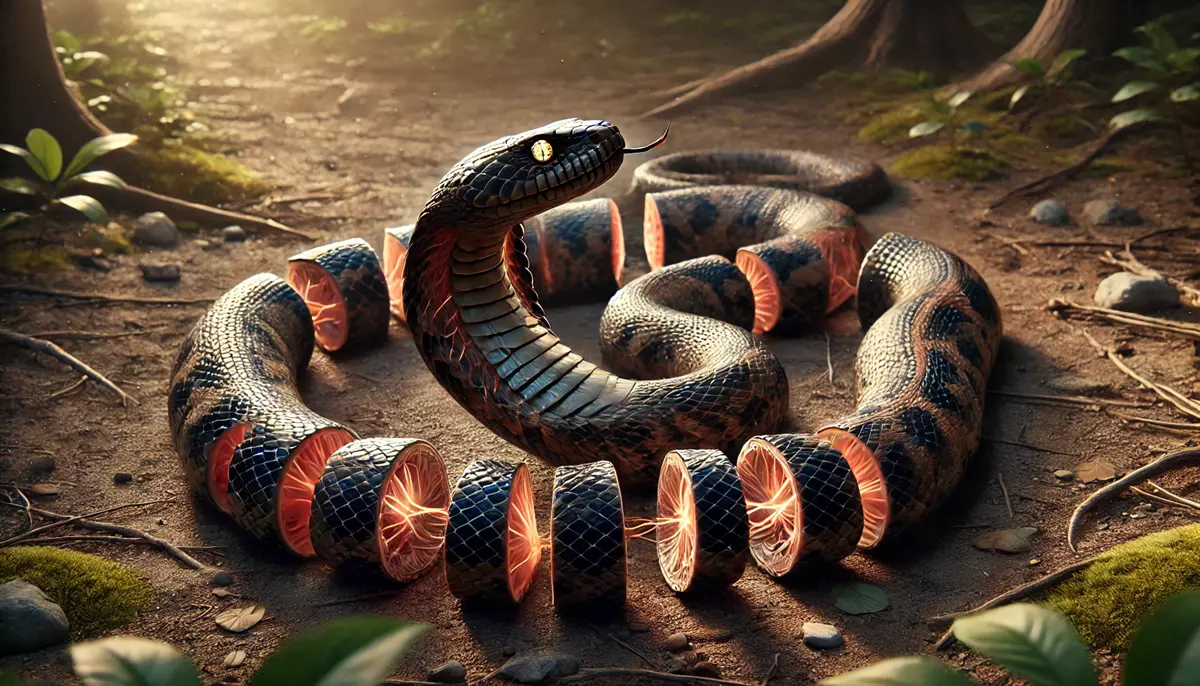
A mysterious serpent from North American folklore, the Joint Snake is known for its ability to reassemble itself after...
Sub Categories
Animal Morphing
Animal Morphing is the mythological ability to transform from a human into an animal. This skill often symbolizes the fluidity of identities and the blurring of natural boundaries. It is frequently associated with shamanic traditions, where the practitioner gains insights or powers by adopting animal forms. Transformations may be temporary or permanent, depending on the mythological context.In many cultures, Animal Morphing serves as a bridge between the human and animal worlds, allowing communication and understanding. This ability can reflect the inherent connection between humans and nature, often conveying lessons about adaptability and survival. Mythological narratives sometimes depict this transformation as a divine gift or curse, emphasizing its profound impact on personal and communal identity.
Beast Transformation
The ability to transform into a powerful or mythical beast, gaining its strength, abilities, and combat prowess. This power is often wielded by demigods, warriors, or shapeshifters who take on the form of fearsome creatures like dragons or lions.Beast Transformation allows for dominance in battle through sheer physical might.
Chimeric Transformation
The ability to combine traits from multiple creatures or species into a hybrid form. This skill allows the user to adopt attributes like the wings of a bird, the strength of a lion, or the venom of a snake, creating a composite creature.Chimeric Transformation is common in mythological creatures like chimeras or gods who combine multiple forms for combat or intimidation.
Disguise
The mythological skill of disguise enables beings to alter their appearance, concealing their true identity or nature. This transformation can affect physical form, voice, or even scent, allowing seamless integration into different environments. Disguise often serves as a tool for deception, protection, or infiltration, blurring boundaries between reality and illusion.In mythology, disguise is frequently used by gods, spirits, or shapeshifters to achieve specific goals without detection. It challenges perceptions and tests the discernment of humans and other beings, often leading to pivotal events or moral lessons. This skill emphasizes the fluidity of identity and the complexities of perception within mythological narratives.
Elemental Mimicry
The ability to mimic the properties of natural elements (such as turning into water or fire) while maintaining a humanoid form. This power is often wielded by elemental beings or magical creatures that adopt the traits of elements without fully transforming.Elemental Mimicry allows for creative combat strategies, such as becoming invulnerable to certain attacks.
Elemental Shapeshifting
The ability to transform into one of the natural elements (fire, water, earth, or air), taking on its properties. Elemental Shapeshifting allows the user to become intangible (air), highly durable (stone), or destructive (fire).This ability is often wielded by elemental spirits, gods, or powerful sorcerers who can merge with nature itself.
Flesh Warping
The power to reshape or alter the physical form of others, either enhancing or deforming them. Flesh Warping is often wielded by dark sorcerers, gods of chaos, or shapeshifters who can warp the bodies of their victims, granting them new forms or disfiguring them.Flesh Warping symbolizes control over both the user’s and others’ physical essence.
Gaseous Form
The power to transform into a mist or vapor, becoming intangible and able to move through small spaces or escape danger. This skill is often wielded by vampires, spirits, or magical beings who can dissolve into gas to avoid capture or harm.Gaseous Form allows for stealth and mobility in restricted environments, making the user hard to contain.
Hybrid Form
The ability to adopt a form that combines both human and animal traits, often seen in creatures like werewolves, centaurs, or demigods. Hybrid Form allows the user to retain human intelligence while gaining the physical strength or abilities of animals.This form is often used in battle to leverage both human and bestial traits for greater combat efficiency.
Inanimate Object Transformation
The ability to transform into an inanimate object, allowing the user to hide in plain sight or avoid detection. This skill is often used by trickster gods, spirits, or shapeshifters who wish to remain unseen.Transforming into objects like rocks, statues, or furniture gives the user a unique method of blending into the environment.
Metamorphosis
The power to undergo a complete transformation into a new form, often symbolizing growth or rebirth. Metamorphosis is commonly seen in nature-based creatures, gods, or magical beings who shift from one stage of life to another (e.g., caterpillar to butterfly).Metamorphosis represents the evolution and adaptability of the user.
Mirror Walking
The ability to step into a mirror and use it as a portal to move between reflective surfaces. This form of shapeshifting allows the user to enter one mirror and exit from another, often traveling great distances or moving unseen.Mirror Walking is frequently used by spirits or trickster beings with access to otherworldly realms.
Partial Shapeshifting
The ability to transform specific parts of the body into other forms, such as growing wings, claws, or fangs. This skill is often used by hybrid creatures or demigods who can adopt selective animal traits without fully transforming.Partial Shapeshifting allows for the integration of new abilities without changing the entire form.
Shadow Form
"Shadow Form" is a mythological skill that enables transformation into a shadowy entity. This form allows one to move undetected, blending seamlessly with darkness and obscuring presence. In this state, physical boundaries become permeable, permitting passage through walls or barriers that would otherwise be impassable.In mythology, Shadow Form often symbolizes the thin veil between worlds, embodying the mysterious and the unseen. It can affect perception, inducing fear or confusion in those who encounter it. This skill underscores themes of invisibility and the hidden, often associated with deities or spirits linked to night and secrecy.
Shape Shifting
The power to transform into different physical forms, such as animals, humans, or mythical creatures. Gods, demigods, and magical beings often use this skill to deceive enemies, blend into different environments, or gain new abilities.Shape Shifting allows for total control over one’s appearance and identity, making it a versatile ability.
Shape Stealing
The power to assume the physical appearance of another being, often after subduing or killing them. Shape Stealing is frequently used by shapeshifters or dark creatures who wish to impersonate others to deceive or infiltrate.Shape Stealing combines mimicry with transformation, allowing the user to become a perfect copy of their target.
Shapeshifting Mastery
Shapeshifting Mastery refers to the ability to alter one's form at will, a skill found in various mythologies worldwide. Practitioners can transform into animals, other humans, or even inanimate objects, blurring the lines between different entities and challenging the natural order. This ability is often attributed to deities, spirits, or magical beings, symbolizing their fluid nature and dominance over physical boundaries.In mythological narratives, Shapeshifting Mastery serves as a tool for deception, evasion, or adaptation to new environments. It allows beings to interact with the world in versatile ways, reflecting themes of identity and transformation. These transformations are sometimes temporary, with the shapeshifter retaining their original consciousness, while in other myths, the change may be permanent or involve a complete alteration of mind and body.
Size Alteration
The ability to change one’s size at will, growing larger for increased strength or shrinking to avoid detection. This skill is commonly associated with mythical giants, titans, or gods who can increase their size to overpower enemies.Size Alteration grants versatility in combat and mobility, offering both power and stealth.
Temporary Transformation
The ability to temporarily transform into a different form or creature for a limited period, after which the user reverts back. This power is often seen in creatures like werewolves or demigods who shift during specific times or under certain conditions.Temporary Transformation provides a surge of strength or new abilities during crucial moments.
Weapon Shapeshifting
The power to transform parts of one’s body into weapons, such as turning arms into swords or creating bladed limbs. This ability is frequently used by magical warriors or shapeshifting creatures who adopt combat forms to enhance their fighting abilities.Weapon Shapeshifting ensures the user is always armed and ready for battle.