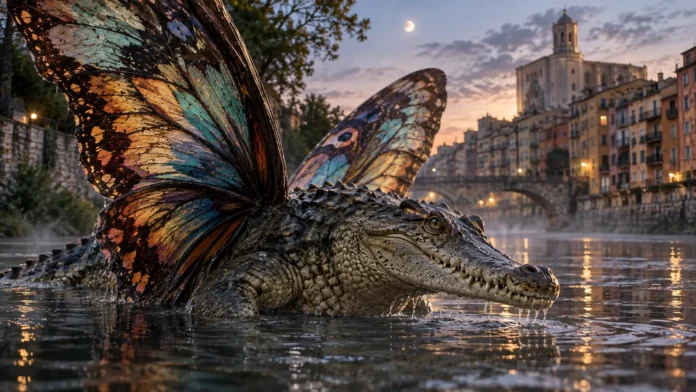
Beast Transformation – an Overview
Beast Transformation names a mythological function in which a human, divine, or other being becomes an animal in a tradition’s account of bodily or recognizable identity.
Its classification depends on animal change being central to the being’s identity or narrative role, rather than incidental disguise, animal symbolism, or supernatural influence.
Historical traditions do not share one universal category called Beast Transformation; this entry compares documented motifs without implying a single ancient theory or common origin.
The function is distinct from metamorphosis generally because its defining boundary is animal embodiment, not every alteration of shape, substance, age, or appearance.
Traditions recognize this category through accounts that treat animal form as consequential, such as changed social identity, altered relations with humans, or changed status.
Such classification remains analytical rather than necessarily indigenous, since surviving sources rarely establish that communities grouped every animal-changing account under one shared concept.
Manifestation and Constraints
How Beast Transformation Is Expressed
In Greek myth, Ovid’s Metamorphoses presents Lycaon’s change into a wolf as an observable bodily outcome following Zeus’s judgment, not as an abstract animal comparison.
The narrative makes animal form legible through recognizable wolf traits, allowing transformation to mark a changed identity within the story’s moral and divine framework.
European werewolf traditions describe human beings as wolf-shaped, but accounts vary across regions and periods; no single physical description represents all historical sources.
In medieval Icelandic saga literature, the Völsunga saga associates animal skins with changed bodily appearance, yet its episode should not be generalized to every werewolf belief.
Animal transformation may affect a being’s place among people, but specific consequences depend on the source rather than a universal consequence of the motif.
Limits and Conditions
In Ovid’s account, Lycaon’s wolf form follows divine punishment, making the change conditional on a particular offense and judgment within that narrative.
That episode does not demonstrate a general Greek rule that wrongdoing invariably causes animal transformation; the evidence supports only the story’s specific framing.
European werewolf accounts connect transformation variously with inherited conditions, accusation, misfortune, or deliberate action, so historical explanations cannot be collapsed into one system.
Descriptions of selkies in Scottish and Irish folklore center on seal skins as the condition of human appearance, a constraint specific to those narratives.
Environmental setting can shape transformation accounts, especially where animal forms belong to local landscapes, but a universal ecological law is not evidenced.
Mythological Role and Meaning
Symbolic and Cultural Significance
Lycaon’s wolf form in Ovid connects animal change with divine punishment, giving transformation a moral meaning anchored in one Roman literary narrative.
That moral framing differs from selkie stories, where seal identity and human appearance often organize relationships between people and the sea-bound beings.
Folkloric transformation can make uncertain human-animal boundaries narratively explicit, although interpretation as psychological symbolism is modern unless historical evidence supports that reading.
In some European werewolf trials, accusations reflect social fears and legal proceedings; they do not independently verify physical transformation as a historical event.
Animal embodiment may therefore carry moral or social significance, but the meaning must be established separately for each tradition and source.
Beast Transformation in Myth and Folklore
In Ovid’s Metamorphoses, Lycaon’s change establishes divine authority by making Zeus’s response visible in the king’s altered bodily identity.
The episode’s function is specific to its literary context; it should not be treated as a standard explanation for animal transformations in other cultures.
Selkie narratives use the seal-human boundary to organize stories of contact between terrestrial communities and beings associated with marine life.
European werewolf narratives vary in whether transformation signals danger, affliction, accusation, or narrative disguise, preventing one stable interpretation across historical periods.
These examples show transformation structuring boundaries differently, rather than confirming a shared moral code or a universal account of animal change.
Beasts with Beast Transformation
Werewolf
European werewolf traditions describe a human becoming wolf-shaped; without transformation, the category would be reduced to ordinary wolves or unrelated human-animal comparisons.
Selkie
Scottish and Irish folklore presents selkies as seal beings able to appear in human form; transformation is central to their distinct seal-human identity.
Kitsune
In Japanese folklore, kitsune are foxes associated in many accounts with assuming human appearance; without that change, their folkloric role becomes merely zoological.
Cultural Interpretations and Regional Emphasis
Ovid’s Roman literary presentation frames Lycaon’s change as punishment, whereas selkie traditions center a seal-human boundary without the same judicial structure.
This contrast concerns particular sources, not entire cultures: neither Ovid nor collected folklore represents every belief held across a region or historical period.
Japanese kitsune accounts frequently associate fox transformation with concealment or human interaction, a narrative emphasis distinct from Lycaon’s punitive outcome.
These divergent functions caution against treating animal form as a universal symbol of evil, transgression, or spiritual elevation across traditions.
Regional interpretation also depends on genre, including literary myth, oral folktale, legal record, or later collection, each preserving different kinds of evidence.
Similar or Related Mythological Functions
General metamorphosis is adjacent because it changes bodily form, but it exceeds this category whenever the resulting form is not animal.
Animal disguise resembles transformation at the level of appearance, yet sources may describe concealment rather than a changed bodily identity.
Therianthropy describes human-animal combination in religious imagery or accounts, while Beast Transformation specifically emphasizes a change between forms.
Possession may alter conduct or perceived identity without animal bodily change, so it remains analytically separate unless a source explicitly connects them.
Animal ancestry and descent explain kinship or origin rather than bodily conversion, despite sometimes linking human groups with animal beings.
Historical Interpretation and Evidence Limits
Historical interpretation distinguishes a source’s stated bodily change from modern symbolic explanations, which require explicit labeling as later analytical readings.
Ovid’s literary account documents a Roman mythic representation, not independent evidence that historical people witnessed Lycaon’s physical transformation.
Trial records concerning werewolf accusations document legal and social beliefs, but their claims cannot establish that accused people became wolves.
Folklore collections may preserve valuable regional narratives, yet recording choices and dates limit conclusions about earlier versions or community-wide consensus.
Terminology varies across languages and sources, so applying one taxonomy risks obscuring distinctions between animal identity, disguise, punishment, and bodily change.
No verified sources describe a universal historical doctrine uniting these cases; comparison remains a modern classificatory method grounded in documented differences.