back to top

Ritual Weak

Ritual Weak denotes an intrinsic susceptibility in mythic beings, often linked to specific ceremonies or rites as a core limitation.

Relevant Beasts

Navajo
Human-Animal Shifter
Skinwalker - Native American Folklore
Navajo

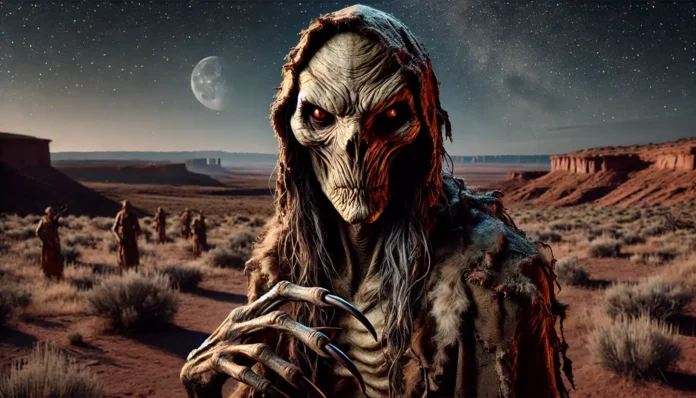
Skinwalker

Skinwalkers are terrifying figures from Navajo folklore, described as malevolent witches who possess the power to shape-shift into animals....

  • Skills
Animal MorphingPhysical Strength
  • Weaknesses
Holy GroundRitual Weak
Asia
Aquatic Hybrid
Kappa - Japanese folklore
Japan

Kappa

a Japanese river imp known for its mischief and deadly tricks. Recognizable by its turtle-like shell, webbed limbs, and...

  • Skills
StrengthTrickery
  • Weaknesses
Dry Land HarmHeatwave Harm
Asia
Human-Animal Shifter
Jorogumo - Japanese Folklore
Japan

Jorogumo

The Jorogumo is a captivating yet terrifying creature from Japanese folklore. Known for her ability to shapeshift into a...

  • Skills
HypnosisMental Powers
  • Weaknesses
Fire VulnerablePiercing Kill
Asia
Revenge Spirit
Gashadokuro - Japanese Folklore
Japan

Gashadokuro

Gashadokuro are giant skeletons in Japanese folklore, created from the bones of those who died from famine or war.
  • Skills
Fear InducementIllusions & Perception
  • Weaknesses
Divine RestrictionsExorcism
Akkadian Empire
Hybrid Creature
Mushussu
Akkadian Empire

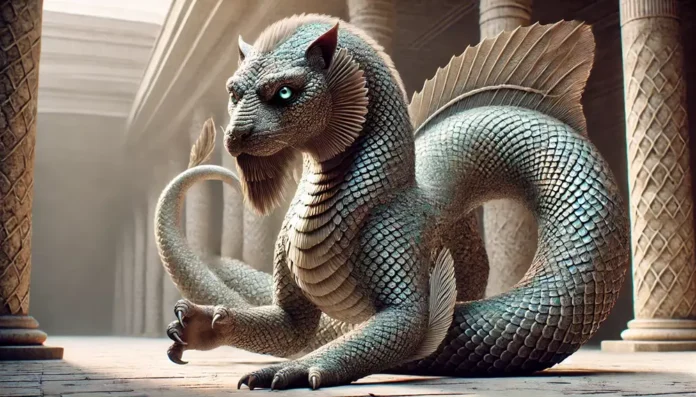
Mushussu

The Mushussu, a guardian beast from ancient Mesopotamian mythology, is known for its lion-dragon-serpent form and its role as...
  • Skills
Element ControlFire Breathing
  • Weaknesses
Divine BarrierMagic Boundaries
Akkadian Empire
Demonic Form
Lamashtu - Mesopotamian Mythology
Akkadian Empire

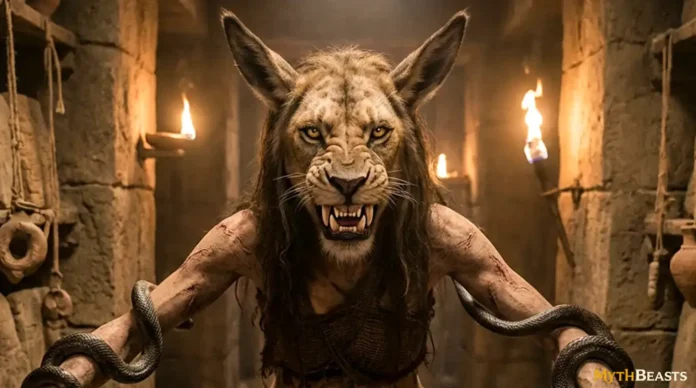
Lamashtu

Lamashtu is a terrifying demoness from Mesopotamian mythology, known for preying on mothers and infants. She has a lioness-like...

  • Skills
Disease ManipulationShape Shifting
  • Weaknesses
Amulet BlockHoly Symbol

Ritual Weak – Overview

Ritual Weak refers to a mythological category of vulnerability that is defined by its dependence on specific ceremonial or ritualistic conditions. It implies that certain beings or forces are susceptible to weakening or defeat when particular rites are performed. This weakness is not considered incidental but is an intrinsic part of the mythological system’s structure. It underscores the balance and limitations within the cosmos, reflecting the notion that power must be checked through specific ritual means.

Defining Characteristics of the Weakness

Nature of the Limitation

Ritual Weak represents a metaphysical restriction rather than a physical vulnerability. It often involves cosmological boundaries where the weakness is activated through ceremonial acts. These acts are prescribed within the mythology and are essential to upholding the cosmic order. In many traditions, these limitations are depicted as existential constraints that govern the balance of power, ensuring that no entity can achieve absolute dominance without consequences.

Conditions of Exposure

Ritual Weak becomes relevant under distinct symbolic and cosmological conditions within mythological narratives. Symbolically, it may be triggered by moral transgressions or when sacred laws are invoked. Cosmologically, the weakness is often embedded in the environmental context, such as specific times, locations, or natural events. This reflects the interconnectedness of mythology and natural phenomena, emphasizing the importance of time and place in activating these vulnerabilities.

Mythological Role and Function

Function Within Mythological Systems

Within mythological systems, Ritual Weak operates as a mechanism to regulate power dynamics and enforce balance. It ensures that mythological beings do not exceed their ordained roles within the cosmos. By imposing limitations through ritual means, it prevents absolute dominance, thus maintaining cosmic order. This structural function highlights the importance of rituals in sustaining equilibrium and preventing chaos within the mythological framework.

Symbolic and Cultural Meaning

Ritual Weak symbolically represents the inevitability of moral consequence and the enforcement of sacred law. Across cultures, it embodies the limitation of hubris, reminding individuals and deities alike of their place within the cosmic scheme. It serves as a cultural marker for the boundaries of power and the necessity of ritual observance. The weakness thus becomes a profound representation of mortality, emphasizing that no entity can transcend the fundamental laws governing existence.

Distinction from Related Mythological Weaknesses

Conceptual Boundaries

Ritual Weak differs from general mortality or divine punishment as it is not merely a result of physical injury or taboo violation. It is specifically activated through ceremonial acts, distinguishing it from situational defeat. Unlike other vulnerabilities, this weakness cannot be overcome by mere strength or cunning; it requires adherence to precise ritualistic conditions established within the mythology.

Common Sources of Misclassification

Misclassification of Ritual Weak often occurs when it is oversimplified as mere narrative convenience. Unlike other vulnerabilities, this weakness involves complex ceremonial contexts rather than straightforward physical limitations. Comparative mythology clarifies this distinction by emphasizing the ritualistic nature of this weakness. Understanding its unique role within mythological systems prevents conflating it with other forms of vulnerability that lack ceremonial context.

Canonical Beings Defined by Ritual Weak

Vampires

In European folklore, vampires are often constrained by rituals involving holy symbols or sacred objects. Their existence is vulnerable to specific rites that symbolize moral and sacred boundaries, emphasizing their dependency on ritual conditions.

Yokai

Japanese mythology features yokai whose influence can be restricted through rituals. These beings are often contained by sacred spaces or ritualistic practices, highlighting a cosmological boundary where ritual acts define their limitations.

Djinn

In Middle Eastern lore, djinn are susceptible to control through incantations or binding spells. Ritual Weak for djinn underscores their dependency on magical or religious rites to limit their power, reflecting cultural views on supernatural order.

Historical Distribution and Cultural Context

Ritual Weak is pervasive across various cultures and historical periods, reflecting its deep-rooted significance in mythological thought. In ancient civilizations, such as Egypt and Greece, ritual practices were central to religious life, often defining supernatural interactions. Similarly, indigenous and shamanistic traditions around the world emphasize ceremonial acts to interact with spiritual realms, illustrating the widespread cultural environments where Ritual Weak is recognized. This consistency across diverse belief systems suggests a universal recognition of the integral role rituals play in regulating mythological forces.

Scholarly Interpretation and Uncertainty

Variation in Interpretation

Interpretations of Ritual Weak vary significantly across cultures and scholarly frameworks, from literal ritualistic practices to symbolic readings. Some traditions emphasize the literal efficacy of rituals, while others view them as symbolic enactments of cosmic principles. These variations reflect historical developments and cultural nuances in understanding the role of ritual within mythological systems. Scholars often debate whether Ritual Weak operates primarily as a literal constraint or as a metaphorical construct, leading to diverse interpretations.

Limits of the Evidence

The evidence for Ritual Weak is often fragmented and culturally specific, leading to debates over its historical and comparative understanding. While some interpretations are widely accepted, others remain speculative due to limited textual or archaeological evidence. The lack of comprehensive documentation in some cultures leaves gaps and ambiguities, challenging scholars to piece together its role across mythologies. Despite these challenges, established interpretations continue to provide valuable insights, while acknowledging the uncertain or contested readings that persist in scholarly discourse.

Mythological Function Across Cultures

Ritual Weak recurs across mythological traditions due to shared human concerns about power, control, and cosmic balance. By recognizing this weakness, mythologies convey symbolic needs to regulate supernatural forces, ensuring harmony within the universe. Rituals act as mediators between the mortal and divine realms, reinforcing the boundaries necessary to maintain order. Understanding Ritual Weak enriches comparative mythology by highlighting these common threads, offering insights into the universal themes that underpin diverse belief systems. This recognition fosters deeper appreciation of how mythologies address fundamental questions about existence and the role of ritual in cosmic governance.