Introduction: The Same Story Under Different Skies
Comparative mythology without the textbook fog
Comparative mythology asks a simple question with a strange answer: why do cultures that lived far apart often tell stories that feel connected?
A flood destroys the old world. A serpent fights divine order. A trickster breaks the rules.
A ghost refuses to stay silent. A blood-drinker feeds on the living. A monster waits in the forest, sea, mountain, graveyard, or desert.
These stories are not identical, and they should not be treated as one global myth soup. A Chinese dragon is not a European dragon.
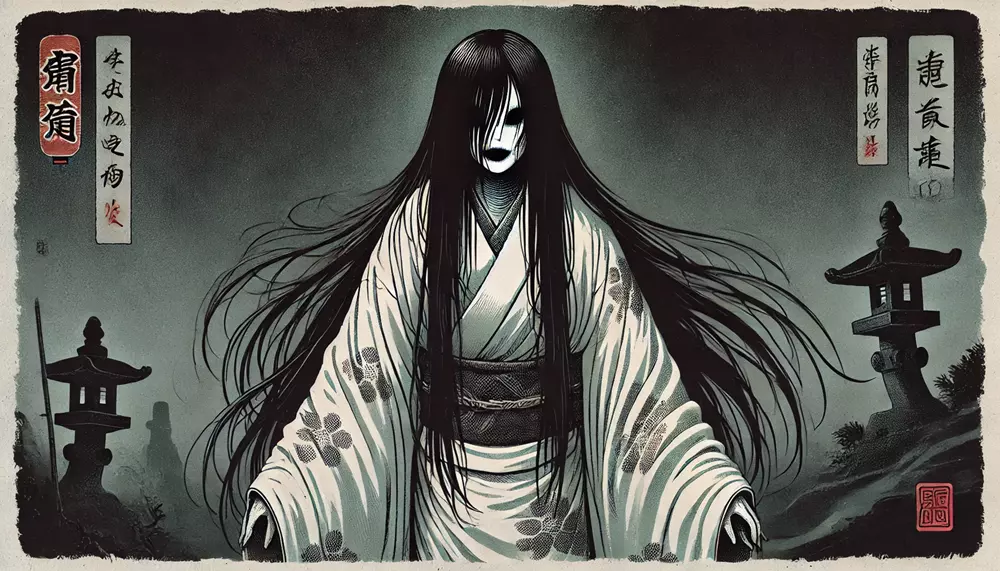
A Banshee is not a Yurei. A West African forest spirit is not Count Dracula. Local meaning matters.
But the pattern is still real. Humans keep facing the same big pressures: death, hunger, sickness, storms, floods, violence, social conflict, and fear of the unknown.
When people do not have a clean explanation, they build one through story.
Myth is not just old entertainment. It is how cultures turn pressure into meaning. A beast gives a face to something too large to hold in normal language.
The sea becomes Leviathan. Chaos becomes Tiamat. Winter hunger becomes Wendigo.
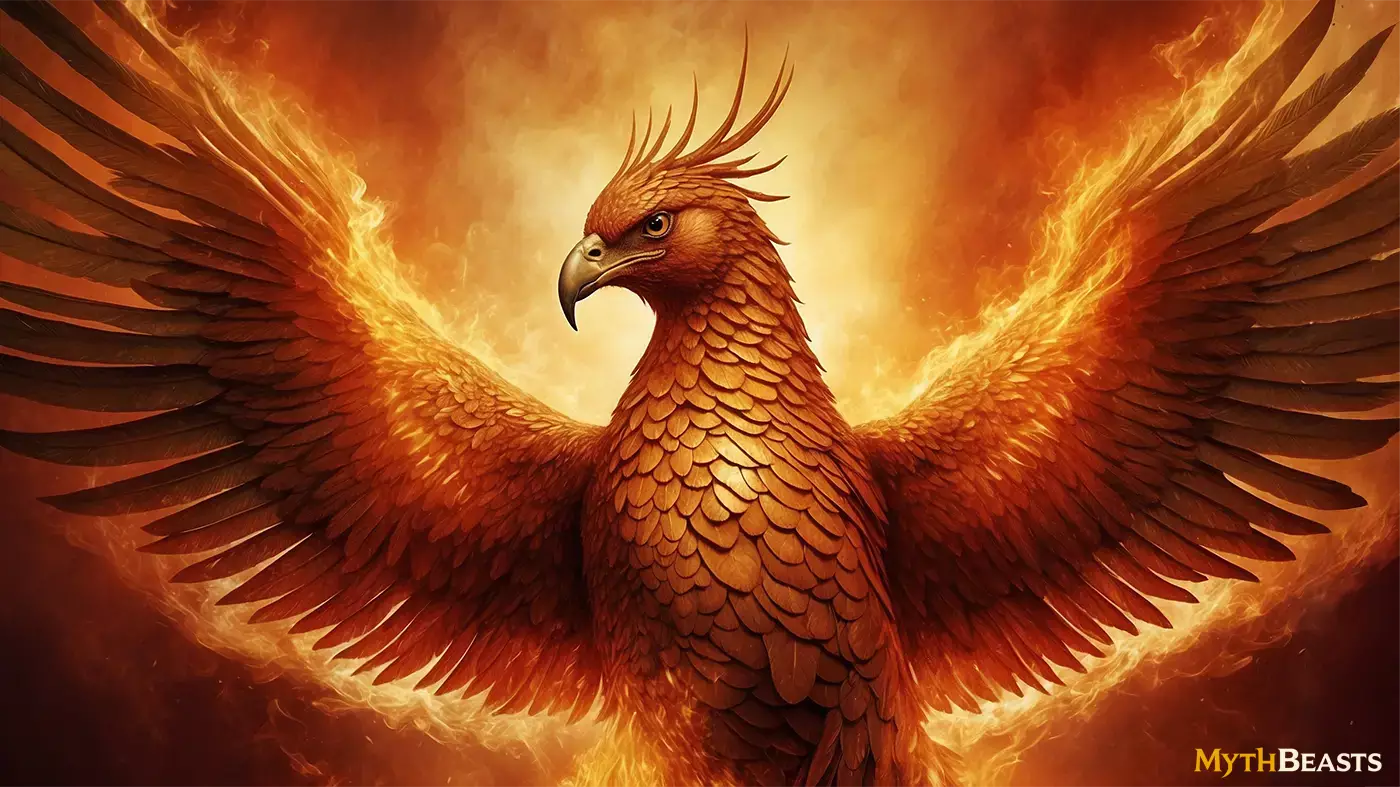
Death becomes Banshee. Rebirth becomes Phoenix.
The same fears return because humans return to the same questions. What made the world? Why does nature destroy us?
What happens after death? What happens when people lose control? What lives outside the safe border?
That is where ancient myths begin to echo.
From Ancient Fear to Modern Screens
Stories move because people move
Some myths repeat because people carried them. Traders, migrants, priests, soldiers, enslaved communities, colonizers, travelers, translators, and storytellers moved beliefs across borders.
Myths rarely stay locked in one place. They travel, change language, absorb new gods, and pick up new fears.
This is why similar ideas can appear in different cultures for more than one reason. Sometimes they share an old root.
Sometimes one tradition influences another. Sometimes people face the same natural danger and build a similar answer on their own.
Flood myths are a good example. Rivers overflow in many places. Coastal storms happen in many places.
Long periods of rain can destroy crops, homes, and memory. One culture may explain this as divine judgment.
Another may explain it as cosmic reset. Another may turn it into a survival story about warning, wisdom, and renewal.
The event can be local. The fear is global.
The same process still happens now, just faster. In the past, a legend might move by ship, caravan, conquest, or oral storytelling.
Today, a monster can travel through cinema, games, anime, streaming platforms, fan art, and social media in a single week.

Vampires show this perfectly. The older vampire was often a frightening corpse tied to death, disease, family fear, and the grave.
Then literature and cinema reshaped it. Bram Stoker’s Dracula turned the vampire into a gothic figure with aristocratic danger.
Later films made the vampire elegant, romantic, tragic, stylish, and sometimes even heroic.
That does not erase the old fear. It updates it.
The vampire still means hunger, death, infection, desire, and the body crossing a forbidden line. Modern culture just gives it better lighting and a dramatic soundtrack.
Even robots and artificial intelligence already carry mythic fear. They are not ancient beasts, but they repeat an old pattern: the created thing becomes too powerful for the creator.
That fear appears in stories from golems to modern machine uprisings. New technology creates new monsters, but the question underneath is ancient: what happens when our own creation stops obeying us?
Why Cultures Turn Conflict Into Beasts
Myths organize what people cannot solve
A myth often appears when a culture needs to explain conflict. Not only conflict with nature, but conflict inside society: sacred against forbidden, human against animal, reason against madness, religion against older folklore, order against chaos.
Mircea Eliade argued that myth does not act like ordinary fiction in religious cultures. It explains beginnings, sacred time, and why rituals matter.
“myth relates a sacred history; it relates an event that took place in primordial Time.” (Mircea Eliade, The Sacred and the Profane, 1957)
That idea helps explain why mythical creatures feel so important. They do not only decorate a story. They help explain why the world has rules.
A beast can say: do not enter the forest alone. Do not break the taboo. Do not ignore the dead.
Do not let hunger turn you into something else. Do not cross the boundary between human and monster.
Claude Lévi-Strauss took the idea in another direction. For him, myth helped cultures think through contradictions.
“the purpose of myth is to provide a logical model capable of overcoming a contradiction.” (Claude Lévi-Strauss, “The Structural Study of Myth,” 1955)
That sounds academic, but the idea is easy. Myth lets a culture hold two opposite truths at once.
Water gives life, but floodwater destroys. Fire protects, but fire burns. The forest feeds people, but it hides danger.
The dead are gone, but grief makes them feel present. Humans are civilized, but violence still lives inside them.
A monster can hold that contradiction in one body.
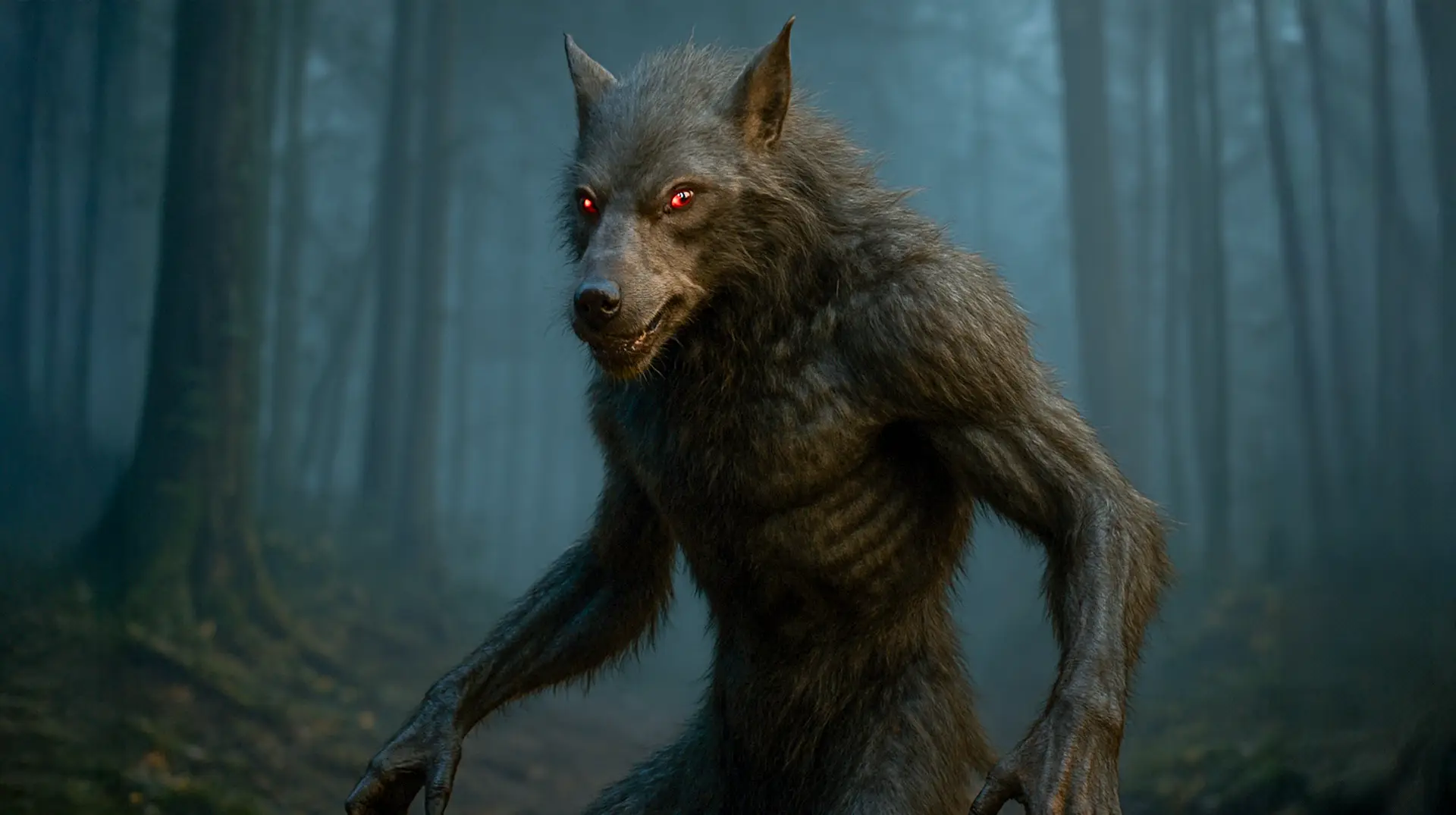
The Werewolf is human and animal. The Vampire is dead and alive. The Phoenix is destruction and rebirth.
Medusa is terror and protection when her face becomes a warding symbol. Kitsune can be animal, spirit, lover, trickster, or divine messenger.
The creature becomes a bridge between categories.
The monster helps define the normal
Michel Foucault is useful here, but we do not need to force a quote into the article. His work on madness shows how societies often define reason, order, and normality by separating them from what they call madness, disorder, or exclusion.
A monster can work in a similar way. The beast is wild, so the village is civilized. The demon is corrupt, so the believer is pure.
The outsider is dangerous, so the community feels safe. The creature becomes a mirror with teeth.
Mary Douglas gives another important angle. She studied purity, taboo, pollution, and disorder. For Douglas, things become powerful and frightening when they do not fit the system.
“It symbolises both danger and power. Ritual recognises the potency of disorder.” (Mary Douglas, Purity and Danger, 1966)
That is why mixed beings hit so hard. Human-animal hybrids, undead bodies, shapeshifters, cursed women, sacred monsters, and blood-drinkers all break normal categories.
They are dangerous because they refuse to stay in one box.
This is also why religion and folklore keep rewriting each other. A local spirit may become a demon under a new religion.
A pagan custom may survive as a folk practice. A monster may move from sacred warning to horror icon.
The beast survives because it can change masks.
Floods, Serpents and World-Reset Myths
Flood stories explain disaster and renewal
Flood myths repeat because floods are terrifying in a very specific way. They do not only kill. They erase boundaries. Roads vanish. Fields vanish. Homes vanish.
The world people knew becomes water.
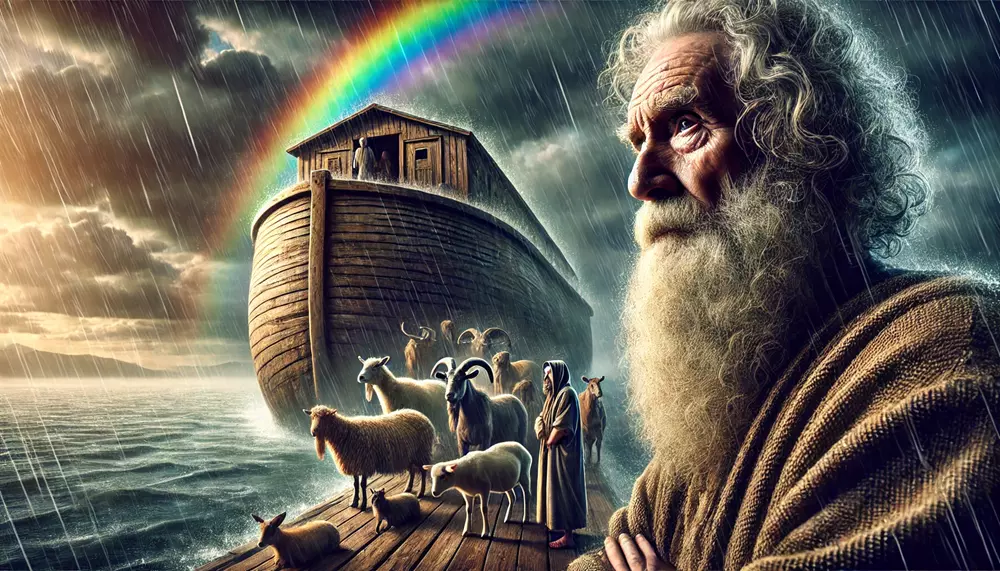
That is why flood stories often become stories about judgment, cleansing, survival, and starting over.
In Mesopotamian tradition, the flood story appears in The Epic of Gilgamesh, where Utnapishtim survives a divine flood by building a boat. In Greek myth, Deucalion and Pyrrha survive a flood sent by Zeus and help repopulate the earth.
In Hindu tradition, Manu survives with help from Matsya, the fish form of Vishnu.
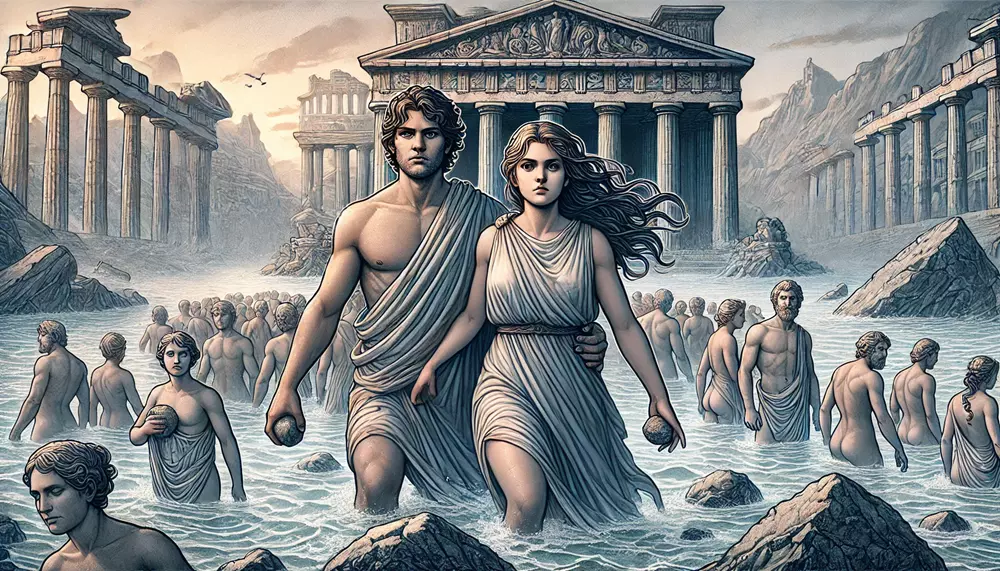
Chinese flood traditions often move in a different direction. They focus less on total world destruction and more on controlling water, restoring order, and building civilization.
The threat is still water, but the solution becomes engineering, leadership, and social order.
The connection is not that all these stories are the same. They are not. The connection is that each culture used water to explain crisis.
Water is life when controlled. Water is chaos when it breaks limits.
Serpents and dragons make chaos visible
Serpents and dragons repeat for a similar reason. They are perfect bodies for danger. They move silently, strike fast, shed skin, vanish into holes, live near water, and look ancient even when they are real animals.
So mythology stretches them into cosmic form.

Tiamat in Mesopotamian myth is not just a monster. She is primordial chaos connected to creation. Leviathan and Rahab in biblical tradition belong to sea-monster language and divine power.
Hydra in Greek myth turns danger into multiplication: cut off one threat and more appear.
The European dragon often guards treasure or threatens civilization. The Chinese dragon can represent rain, power, blessing, and imperial authority rather than pure evil.
The Qilin, often linked with good omens and wise rule, shows that not every scaled or hybrid creature belongs to the same moral category.
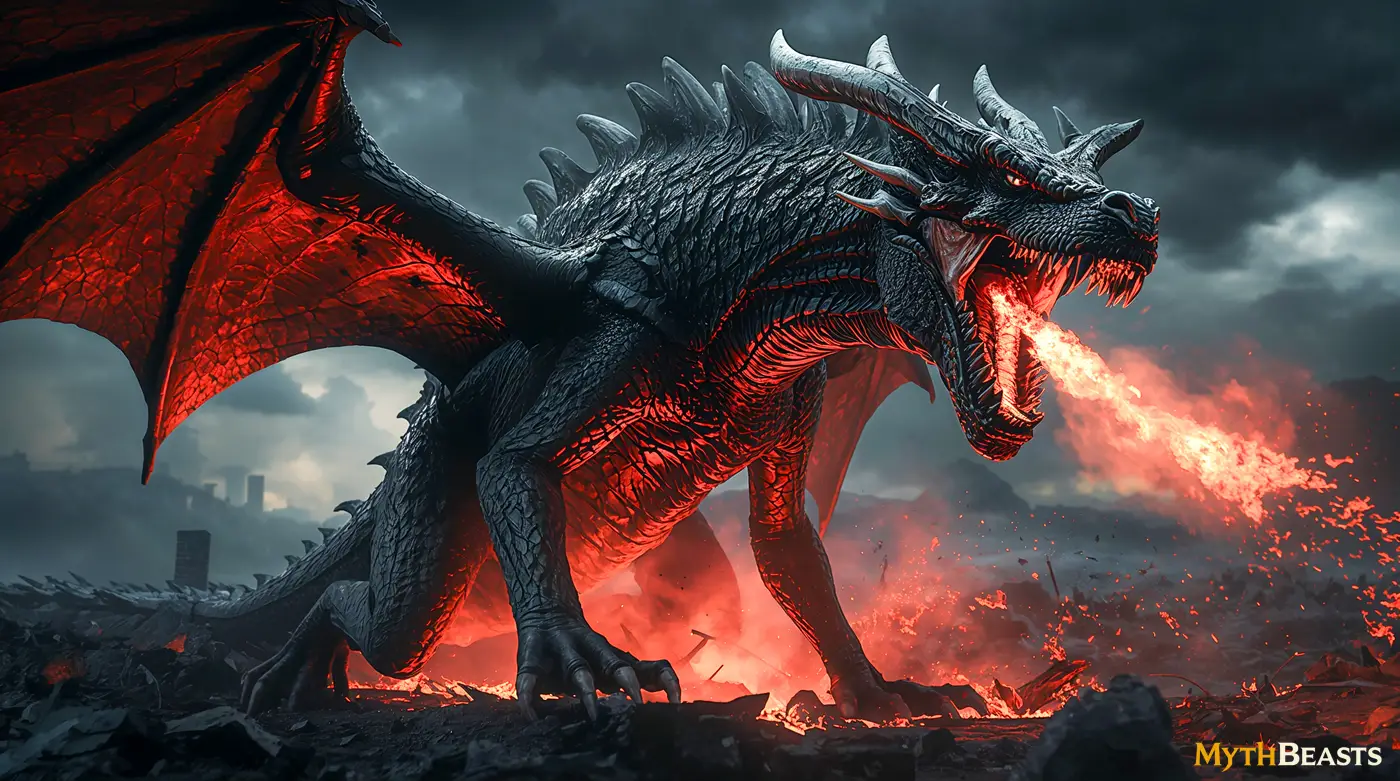
This is what comparative mythology does well. It does not say, “all dragons mean the same thing.” It asks why so many cultures used serpent-like forms to imagine power too large for humans to control.

The answer is simple but strong: the body of the serpent already feels mythic. It is close to the ground, close to water, close to poison, close to transformation.
When a culture needs a shape for chaos, the serpent is waiting.
Blood-Drinkers and the Fear of the Body
Vampires are not only European
The vampire is one of the best examples of a repeated mythic pattern. Blood-drinking beings appear in many forms across the world, even when they are not vampires in the modern Dracula sense.
In Eastern Europe, vampire folklore often grew around the dead returning, sickness spreading, and families fearing that the grave had not stayed closed. The vampire was not always romantic.
It was a corpse problem, a disease problem, and a fear of the dead still feeding on the living.

In Akan and broader West African folklore, figures such as the Sasabonsam appear as dangerous forest beings associated with predation, taboo, and human vulnerability. The British Museum describes the Sasabonsam as rooted in traditional Ghanaian beliefs, living in the bush and the tallest trees, and dangerous to humans.
In Mapuche and Chilote traditions of southern Chile, the Piuchén or Peuchén is a blood-sucking creature often imagined through serpent, bird, bat, or shapeshifting features. Some versions connect the fear to animals and rural danger, but folklore turns that fear into a supernatural body.
These examples are not identical. That is the point.
The connection is blood.
Blood is life, family, injury, death, sacrifice, infection, inheritance, and desire. A creature that drinks blood attacks the boundary between bodies.
It turns the living into food. It makes death intimate.
That is why blood-drinkers appear in places that never needed Dracula. The fear was already there.
Modern vampires turned fear into style
The modern vampire changed because modern media changed it. Dracula gave the vampire a powerful literary shape. Stage adaptations and early cinema made it visual.
Later movies, novels, and TV turned the vampire into many things at once: predator, lover, outsider, aristocrat, teenager, antihero, monster, and symbol of forbidden desire.

That flexibility is why vampires keep returning. Every period gets the vampire it needs.
In a disease-focused age, the vampire spreads infection. In Victorian gothic fiction, the vampire becomes forbidden desire. In cinema, the vampire becomes visual style.
In teen fantasy, the vampire becomes dangerous romance. In modern horror, the vampire can return to older folklore and become frightening again.
The vampire repeats because the body remains scary. Hunger remains scary. Death remains scary.
Desire remains complicated.
Ghosts, Tricksters and Border Beasts
Death omens give grief a voice
Death myths repeat because death is the one border every culture has to explain.

Cerberus guards the Greek underworld, turning the border of death into a beast. The Banshee warns of death in Irish tradition, giving grief a voice before the loss arrives.
Japanese Yurei stories often show spirits trapped by grief, betrayal, or unfinished emotional force. The Jewish Dybbuk turns spiritual unrest into possession, guilt, and a crisis of identity.
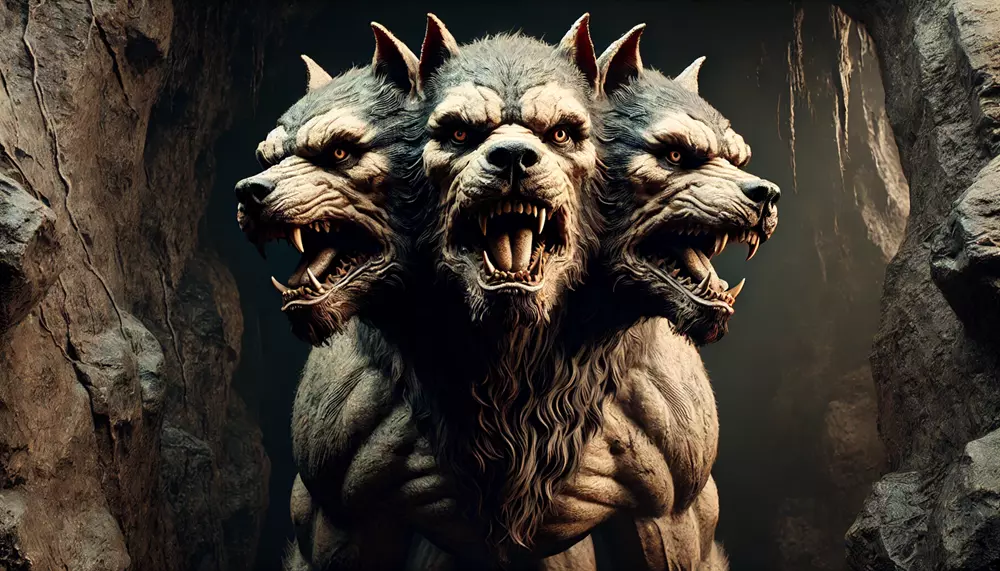
These beings are not the same, but they answer related fears. Where do the dead go? Can they return?
Do they want justice? Can grief become dangerous? Can the living be touched by what should be gone?
Death spirits make absence feel present. They give the living a way to speak to the wound.
Tricksters show why rules need pressure
Tricksters repeat for another reason. Every society has rules, and every society knows rules can fail.
Anansi in West African and Caribbean storytelling uses cleverness to defeat stronger forces. Kitsune in Japanese tradition can be wise, loyal, dangerous, seductive, or deceptive.
Raven in many Indigenous North American traditions can create, steal, trick, teach, and disrupt. Loki in Norse myth pushes divine order toward chaos and consequence.
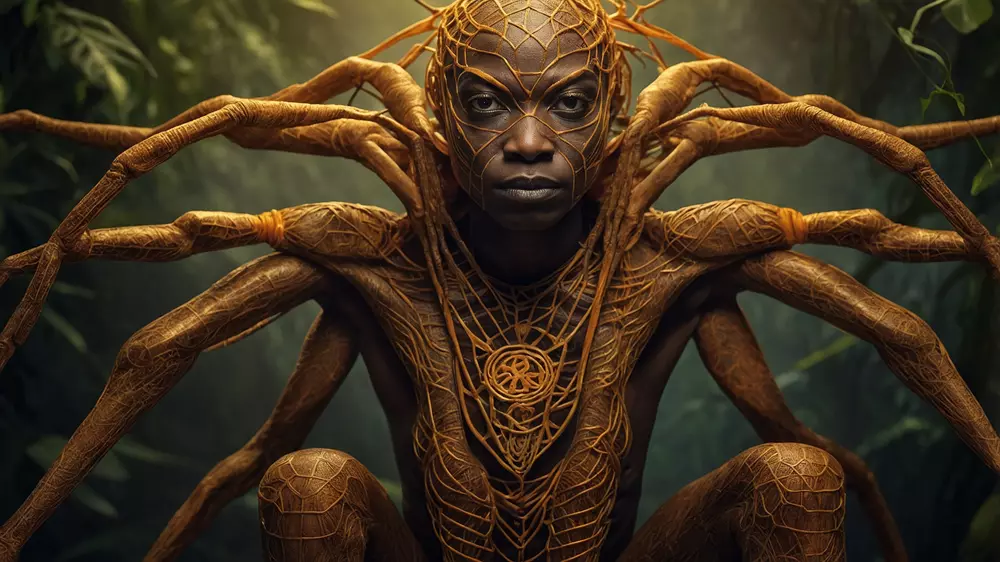
The trickster is not just comic relief. The trickster exposes the system.
They show that power can be fooled, rules can be bent, and intelligence can survive where strength fails. They also warn that cleverness without limits becomes destructive.

That is why tricksters feel modern. They are hackers before computers, pranksters before social media, chaos agents before cinema gave them a soundtrack.
They remind us that culture needs order, but too much order becomes brittle.
Conclusion: Same Questions, Different Monsters
Myth repeats because humans repeat
Ancient myths repeat around the world because humans keep facing the same pressures in different places. Nature overwhelms us.
Death scares us. Hunger changes us. Blood unsettles us.
Outsiders worry us. New beliefs rewrite old ones. Technology creates fresh versions of old fear.
Comparative mythology matters because it shows the pattern without erasing the culture. A flood myth is never just a flood myth.
A dragon is never just a dragon. A vampire is never just a vampire. Each belongs to a specific language, landscape, ritual, and memory.
Still, the echoes are real.
Dragon, Leviathan, Tiamat, Hydra, Phoenix, Vampire, Banshee, Yurei, Wendigo, Anansi, Kitsune, Cerberus, and Medusa still feel alive because they explain problems that never fully disappeared.
The names change. The masks change. The fear underneath keeps coming back.
Further reading
Encyclopaedia Britannica, “Flood myth.” Useful for comparing worldwide flood narratives, destruction, renewal, divine judgment, and cultural memory, especially when explaining why water becomes both life source and cosmic threat across cultures today and history. https://www.britannica.com/topic/flood-myth
Encyclopaedia Britannica, “Dragon.” Helpful for checking cross-cultural dragon definitions, serpent imagery, European and Asian contrasts, and the article’s claim that dragon-like creatures can be destructive or protective in different mythic systems worldwide today. https://www.britannica.com/topic/dragon-mythological-creature
Encyclopaedia Britannica, “Vampire.” Supports the blood-drinker chapter by explaining undead traits, blood consumption, disease fears, old folklore, and the long shift from corpse terror to pop culture icon in modern media across generations. https://www.britannica.com/topic/vampire
British Library, “Bram Stoker’s Dracula.” Useful for the modern vampire section because it places Dracula in Victorian gothic literature, social anxiety, science, superstition, sexuality, and later screen traditions that reshaped vampire imagery for global audiences. https://www.bl.uk/works/dracula
Columbia University, Mircea Eliade excerpt from The Sacred and the Profane, 1957. Supports the introduction’s idea that myth acted as sacred history, explaining origins, ritual meaning, supernatural acts, and why traditional stories mattered beyond entertainment within religious cultures and symbolic memory systems. https://www.columbia.edu/itc/religion/f2001/edit/docs/Eliade1.html
JSTOR, Claude Lévi-Strauss, “The Structural Study of Myth,” 1955. Supports the theory chapter by framing myth as a structure for resolving contradictions, useful for floods, dragons, ghosts, tricksters, shapeshifters, and category-breaking beasts across cultures without flattening local meanings away. https://www.jstor.org/stable/536768
MIT, Mary Douglas, Purity and Danger, 1966. Supports the border-beast argument by explaining disorder, danger, power, purity, taboo, pollution, and why mixed or misplaced beings become culturally intense inside religious and social classification systems across communities worldwide. https://web.mit.edu/allanmc/www/douglas.powersdangers.pdf
British Museum, “Sasabonsam figure.” Supports the West African forest-being example with museum context for Sasabonsam as a dangerous Ghanaian supernatural figure rooted in traditional belief and visual culture linked to bush and trees lore. https://www.britishmuseum.org/collection/object/E_Af1935-1212-1
Pueblos Originarios, “Piuchén.” Useful for the Chilean blood-drinker example because it explains Piuchén meanings, Mapuche naming, blood-sucking behavior, and its role in southern Chilean legendary traditions including rural fear and animal symbolism themes. https://pueblosoriginarios.com/sur/patagonia/mapuche/piuchen.html