
back to top

Hebrews

Hebrews emphasize covenant relationships and divine law as central to their mythological worldview, shaping societal values and spiritual beliefs.

Relevant Beasts

Hebrews
Sentient Plant
Hebrews

Mandrake

Duda'im, the mystical plant-like being, is a symbol of fertility and divination in ancient Hebrew lore, known for its...
  • Skills
Healing & LifeHealing Touch
  • Weaknesses
Dry Land HarmEnvironmental Limits
Hebrews
Death Messenger
Samael - the angle of death
Hebrews

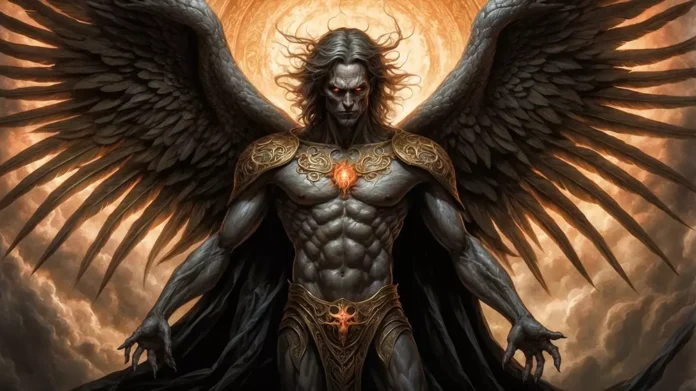
Samael

Samael, the Angel of Death, is a figure of divine judgment and moral complexity in Jewish lore, known for...

  • Skills
Death & NecromancyDeath Touch
  • Weaknesses
Divine LightDivine Restrictions
Hebrews
Demonic Form
Hebrews

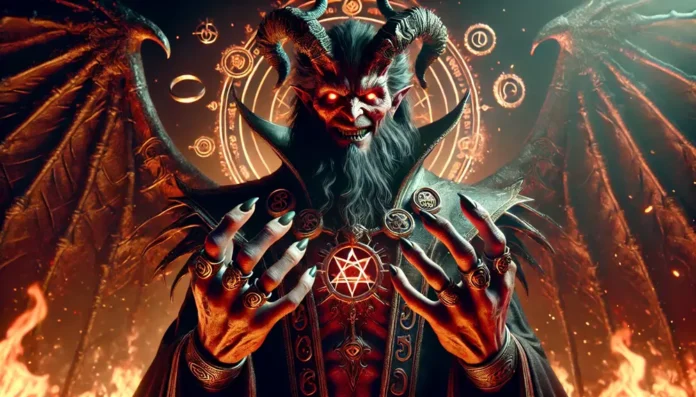
Azazel

Azazel is a powerful demon in Jewish mythology, known for his role in carrying away sins and spreading forbidden...

  • Skills
Forbidden KnowledgeMind Control
  • Weaknesses
Blessed WeaponDivine Restrictions
Hebrews
Giant Humanoid
Hebrews

Nephilim

Nephilim are giant humanoids from ancient Hebrew mythology, often depicted as the offspring of angels and humans. Their presence...
  • Skills
Physical Strength
  • Weaknesses
Divine Restrictions
Hebrews
Dark Spirit
Asmodeus - the king of Shedim - Hebrew folklore
Hebrews

Asmodeus

Asmodeus, rooted in Hebrew demonology, is a king of demons known for lust and chaos, feared in Jewish lore...

  • Skills
Magic & DivinityShapeshifting Mastery
  • Weaknesses
Divine RestrictionsHoly Water
Hebrews
Forest Giant
Hebrews

Adnei haSadeh

The Adnei haSadeh are feral humanoids of ancient Hebrew lore. They live apart from civilization, embodying primal nature...

  • Skills
Nature Manipulation
  • Weaknesses
Environmental Limits

Hebrews – an Overview

The Hebrews represent an ancient cultural and mythological source significant to the development of Western religious traditions. Their history spans the Bronze Age through the early Iron Age, primarily in the Levant. Reflecting a complex interplay of nomadic and settled lifestyles, their narrative includes migration and settlement. This foundational culture contributed to subsequent religious frameworks, influencing Judaism, Christianity, and Islam. Their mythological and cultural narratives are preserved in texts like the Hebrew Bible, which serves as a key historical source, although its exact dating remains debated. Archaeological findings complement these textual sources, offering additional context.

Historical and Environmental Context

Time Frame and Location

The Hebrews are primarily associated with the Levant region, present-day Israel, Palestine, and surrounding areas. Their significant historical period spans from the second millennium BCE, with notable archaeological sites providing evidence of their presence. The precise dating of their cultural genesis is complex due to overlapping regional histories and limited material culture. However, records from neighboring civilizations, like the Egyptians and Assyrians, often reference them, establishing a broader historical framework.

Contact and Cultural Exchange

The Hebrews engaged in significant cultural exchanges with neighboring civilizations, including the Canaanites, Egyptians, and Babylonians. Such interactions influenced their religious and cultural practices, evident in shared motifs and adapted technologies. Trade and conflict facilitated these exchanges, providing both material and ideological influences. However, unique elements within Hebrew culture also indicate periods of relative cultural isolation, emphasizing their distinct identity within the region. This dual characteristic of interaction and isolation shaped their mythological and social development.

Mythological Framework

Worldview and Cosmological Concepts

Hebrew cosmology is characterized by a monotheistic worldview, emphasizing the existence of a singular, omnipotent deity, Yahweh. This belief marked a departure from neighboring polytheistic traditions. The creation narrative, as depicted in Genesis, outlines a structured universe created by divine command. This cosmological order emphasizes moral accountability and divine law. However, the Hebrews’ understanding of the cosmos also includes elements like the firmament, Sheol, and the spiritual realm, reflecting a multifaceted belief system.

Spiritual or Supernatural Categories

Hebrews categorize spiritual entities into angels, demons, and human souls. Angels serve as divine messengers, while demons represent malevolent forces. This duality underscores a moralistic universe where good and evil are constantly in contention. Human souls are believed to exist beyond physical life, with implications for ethical behavior. The belief in resurrection and judgment further illustrates their understanding of spiritual continuity. These supernatural categories reinforce the Hebrews’ broader theological framework.

Folklore and Narrative Tradition

Recurring Mythological Themes

Hebrew narratives frequently explore themes of covenant, exile, and redemption. These motifs are rooted in their historical experiences and reflect deeper theological convictions. The covenant theme underscores a binding relationship with the divine, with narratives like those of Abraham and Moses exemplifying this. Exile and return appear prominently, symbolizing both physical journeys and spiritual renewal. Such themes articulate a vision of divine justice and mercy, resonating through their cultural memory.

Transmission and Preservation

Hebrew mythological traditions were preserved through oral transmission and later codified in written form. Texts like the Hebrew Bible serve as primary sources, preserving a blend of historical accounts and moral teachings. The process of textual preservation involved meticulous scribal practices, ensuring continuity and fidelity. Oral traditions, meanwhile, allowed for communal participation in storytelling, fostering a shared cultural identity. The intergenerational transmission of these narratives was crucial for maintaining their cultural heritage.

Mythological Beasts and Non-Human Entities

Leviathan

Leviathan, a formidable sea creature, is integral to Hebrew mythology, symbolizing chaos subdued by divine power. Its descriptions in texts like Psalms and Job reflect a struggle between order and disorder. This entity cannot be fully understood outside the Hebrew context, where it embodies existential threats and divine dominance. Comparing Leviathan with regional myths of chaos creatures highlights its unique adaptation within Hebrew thought.

Behemoth

Behemoth is another significant Hebrew mythological creature, often depicted as a land-based counterpart to Leviathan. It represents the raw power of nature, subject to divine will. The depiction of Behemoth in the Book of Job underscores themes of human limitation and divine sovereignty. Without the Hebrew cultural context, the symbolic nuance of Behemoth would be lost. Its role in Hebrew mythology emphasizes the balance and order imposed by a monotheistic framework.

Symbolic Roles of Creatures and Forces

Symbolically, mythological creatures like Leviathan and Behemoth embody forces of chaos and nature. They highlight divine authority over both the spiritual and material worlds. These entities illustrate the Hebrews’ belief in a universe governed by a just and omnipotent deity. They serve as allegories for human struggles and divine intervention. Through them, the Hebrews articulated moral and existential concerns, reinforcing their cultural narratives and theological constructs.

Internal Variation and Temporal Change

Over time, Hebrew myths have evolved, reflecting social and political changes. Variations in narrative emphasis and interpretation can be observed in texts across different periods. For instance, post-exilic writings demonstrate shifts in themes of hope and restoration. Regional influences also contributed to subtle narrative adjustments. Despite these changes, core themes remained consistent, underscoring a resilient cultural identity. This balance between continuity and change highlights the adaptability of Hebrew mythological traditions.

Related Cultural Origins and Myth Sources

Hebrew mythological traditions share similarities with Canaanite and Mesopotamian sources, yet maintain distinct characteristics. For example, creation narratives parallel Enuma Elish, but with monotheistic reinterpretation. Such parallels reflect historical interactions while underscoring unique developments. Comparative studies reveal both shared motifs and divergent theological innovations. This analytical approach enriches understanding of the Hebrews’ place within a broader cultural and mythological tapestry.

Evidence Limits and Scholarly Uncertainty

Significant gaps exist in the archaeological and textual record concerning Hebrew mythology. While the Hebrew Bible provides rich sources, its historical accuracy and dating are debated. Some narratives lack corroborating archaeological evidence. Interpretations often rely on comparative mythology and historical reconstruction. Scholars continue to debate the origins and development of certain traditions. Therefore, caution is necessary when drawing conclusions about Hebrew mythological frameworks.