back to top

Iron Cut

Iron Cut is an inherent constraint in mythological beings, often leading to exposure or vulnerability when encountered.

Relevant Beasts
Europe
Water Dwelling Creature
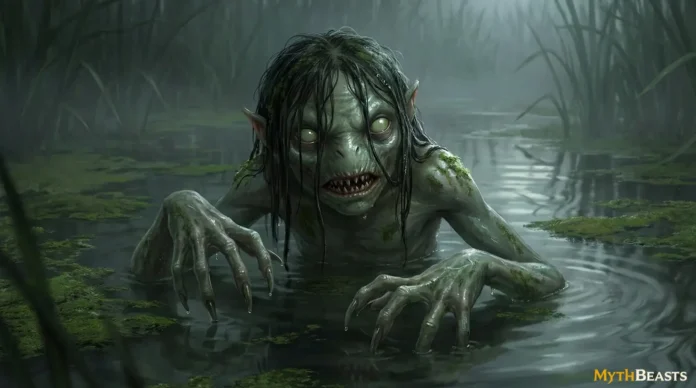
Grindylow - water spirit from 18th-century English folklore
United Kingdom

Grindylow

Grindylow, a sinister water spirit from 18th-century English folklore, haunted marshes and ponds, snatching children who strayed too close...
  • Skills
CamouflageFog Generation
  • Weaknesses
BeheadingFire Vulnerable
Achaemenid Empire
Hybrid Creature
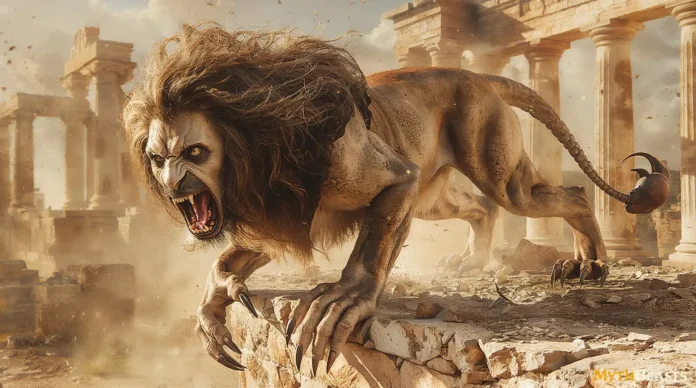
Manticore - Persian Mythology
Achaemenid Empire

Manticore

Hybrid Persian man-eater with human face, lion body and barbed tail, famed in Greek and later bestiaries as a...

  • Skills
Nature ManipulationPhysical Strength
  • Weaknesses
BeheadingBlessed Weapon
Greece
Hybrid Creature
Griffin – Classical Greece mythology
Greece

Griffin

A majestic hybrid of lion and eagle, the Griffin is a legendary guardian from Classical Greece, known for its...

  • Skills
Enhanced AgilityFlight
  • Weaknesses
Iron CutPhysical Limits
Celtic
Forest Spirit
Ghillie Dhu - Scottish folklore
Celtic

Ghillie Dhu

The Ghillie Dhu is a solitary forest spirit in Scottish folklore, kind to children and clothed in moss. A...

  • Skills
CamouflageHealing & Life
  • Weaknesses
Element SensitivitiesIron Cut
Asia
Cursed Being
Taotie - Chinese Folklore
China

Taotie

The Taotie is a monstrous entity known for its insatiable hunger, symbolizing greed and excess in Chinese culture.

  • Skills
Energy AbsorptionFear Inducement
  • Weaknesses
Hunger WeakIron Cut
North America
Crypt Shade
Hidebehind
USA

Hidebehind

An American cryptid known to lurk behind trees and avoid being seen by humans, making it almost impossible to...

  • Skills
CamouflageStealth
  • Weaknesses
Iron CutLight

Iron Cut – Overview

Iron Cut is a mythological weakness characterized by its systemic and recurring nature across diverse traditions. It represents a structured limitation, rather than a situational flaw or accidental failure, within mythology. This weakness often addresses deep-seated vulnerabilities that are integral to maintaining mythological balance and order. It emerges in narratives to enforce boundaries, prevent unchecked power, and emphasize the importance of cosmic harmony. Iron Cut’s universality underscores an essential mythological constraint, signifying the inevitability of limits within the metaphysical and moral universe.

Defining Characteristics of the Weakness

Nature of the Limitation

Iron Cut primarily manifests as a metaphysical restriction within mythological systems. It may represent an existential constraint, acting as a fundamental boundary beyond which entities cannot move. This limitation is not merely a physical vulnerability but is deeply tied to cosmological structures. It delineates realms of influence and power, ensuring that even the mightiest beings cannot transcend certain inherent boundaries. The persistence of Iron Cut across cultures highlights its role in enforcing cosmic balance.

Conditions of Exposure

Iron Cut becomes relevant under specific symbolic or cosmological conditions. These conditions often include moral transgressions, violations of sacred laws, or the hubris of seeking forbidden knowledge. The weakness is activated not through tactical maneuvers but through breaches of fundamental mythological principles. Such breaches result in the exposure of vulnerabilities that are otherwise dormant, emphasizing the moral and cosmic order underpinning mythological narratives. Iron Cut reinforces the inevitability of certain failures when divine or natural boundaries are overstepped.

Mythological Role and Function

Function Within Mythological Systems

Within broader mythological systems, Iron Cut operates to regulate power and maintain equilibrium. By enforcing balance, it prevents any entity from achieving absolute dominance, thus preserving cosmic order. This weakness ensures that even the most powerful beings remain subject to universal laws, preventing chaos and imbalance. It is a crucial mechanism for enabling downfall and preventing the hubris of unchecked power. Iron Cut acts as a systemic regulator, aligning mythological forces with cosmological principles and sustaining harmony across narratives.

Symbolic and Cultural Meaning

Symbolically, Iron Cut represents the inevitability of limitations and consequences within mythological frameworks. It often reflects moral boundaries and sacred laws, highlighting the dangers of transgression. This weakness underscores the theme of mortality and the limitation of hubris, reminding beings of their place within the cosmic hierarchy. Across cultures, Iron Cut serves as a boundary enforcement mechanism, reinforcing the sacred order and emphasizing the universality of certain ethical and metaphysical limits. It reflects the collective cultural understanding of inevitable constraints.

Distinction from Related Mythological Weaknesses

Conceptual Boundaries

Iron Cut differs from general mortality or physical injury by emphasizing systemic constraints rather than individual vulnerabilities. Unlike divine punishment or taboo violation, it is not a reactive force but a foundational aspect of mythological order. Iron Cut is distinct in its role as a structural boundary, not merely a situational defeat. This classification highlights its unique function within mythological taxonomies, ensuring it cannot be conflated with other, more transient weaknesses. It is a critical component for understanding mythological systems.

Common Sources of Misclassification

Iron Cut is often misunderstood due to its abstract nature, leading to conflation with other vulnerabilities. Comparative mythology helps distinguish Iron Cut by focusing on its role as a cosmological constraint rather than a narrative device. Misclassification arises when Iron Cut is perceived as a mere physical or situational limitation, overlooking its integral role in enforcing mythological laws. Scholarly interpretation clarifies these distinctions by emphasizing its enduring presence across cultures as a symbol of inherent limitations.

Canonical Beings Defined by Iron Cut

Balor of Irish Mythology

Balor, a giant in Irish mythology, is constrained by Iron Cut as his own destructive eye ultimately leads to his downfall. This weakness is crucial for understanding his vulnerability and narrative role.

Achilles of Greek Mythology

Achilles, the Greek hero, is defined by Iron Cut through his heel, the single point of vulnerability that leads to his demise. This constraint is essential for interpreting his mythological significance.

Siegfried of Norse Mythology

Siegfried, a hero in Norse mythology, is rendered vulnerable by a singular spot on his back. This Iron Cut highlights his mortality and prevents him from achieving invulnerability, central to his narrative.

Historical Distribution and Cultural Context

Iron Cut appears across numerous cultures and historical periods, reflecting a shared human preoccupation with limitations and balance. In Greek and Norse traditions, it is often linked to heroic narratives and the inevitability of defeat. In Irish mythology, it underscores cosmic justice and the balance of power. Across these contexts, Iron Cut functions as a constant reminder of the constraints that govern existence, transcending specific myths and becoming a universal motif in mythological storytelling.

Scholarly Interpretation and Uncertainty

Variation in Interpretation

Interpretations of Iron Cut vary between cultures and scholarly frameworks, with some viewing it as a metaphor for moral boundaries. Others see it as a literal representation of cosmic order. These variations highlight the complexity of mythological systems. In some traditions, Iron Cut is interpreted symbolically, emphasizing ethical limitations. In others, it is seen as a literal cosmological boundary. Such diversity illustrates the richness of mythological interpretation.

Limits of the Evidence

Despite its prevalence, evidence for Iron Cut is sometimes ambiguous, leading to debates among scholars. While established interpretations exist, some readings remain contested. The lack of uniformity in sources means that certain interpretations are subject to scholarly debate. No verified sources describe all aspects of Iron Cut across every tradition. These ambiguities necessitate cautious interpretation and acknowledgment of the limits within historical records.

Mythological Function Across Cultures

Iron Cut recurs across mythological traditions due to shared human concerns about power and limitation. Its symbolic role addresses the need for balance and cosmic order. Recognizing Iron Cut enhances comparative mythology by illuminating the universal themes of constraint and consequence. This weakness reflects a collective understanding of the boundaries that govern existence, transcending individual myths. It underscores the importance of recognizing inherent limits within mythological systems, offering insights into the cultural and symbolic significance of vulnerability.