Spirit – Overview
Spirit is a comparative category for beings understood as nonordinary presences whose identity depends on immaterial, incorporeal, or otherwise superhuman existence within a particular cultural worldview.
Unlike a single species in a shared mythology, this category groups locally distinct beings through their relationship to invisible agency, not through one universal appearance or genealogy.
Its classification as a beast is taxonomic rather than culturally universal, since many traditions treat relevant beings as persons, ancestors, divinities, or environmental presences instead.
Defining Characteristics
Physical Form and Morphology
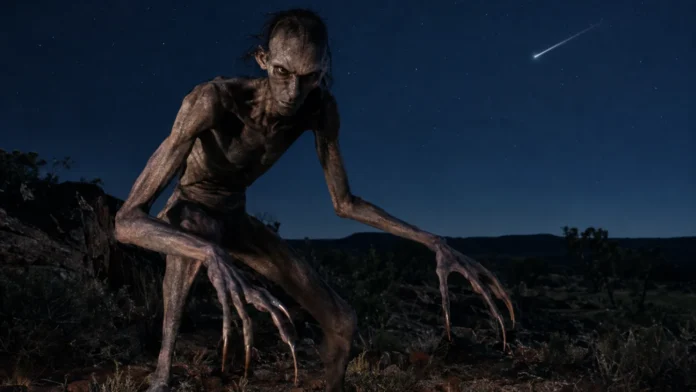
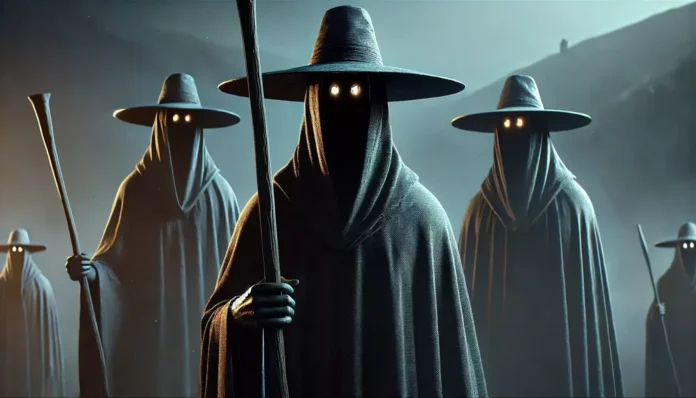
Descriptions range from invisible presences to localized apparitions and recognizably embodied figures, so no fixed anatomy reliably identifies every being classified as spirit.
When visible, a spirit may resemble a human, animal, ancestral figure, or unusual presence; such appearances reflect specific traditions rather than a common biological form.
Ontological Nature
Many traditions distinguish spirits from ordinary living organisms by attributing agency that does not depend on a human or animal body.
That distinction does not establish one cross-cultural metaphysics: spirits may be understood as ancestors, independent beings, divine attendants, or presences associated with places.
Mythological Role and Function
Place in Mythological Systems
Spirits can occupy relations among human communities, ancestors, deities, and particular environments, making them intermediaries within locally defined cosmological arrangements.
Their position varies: Japanese kami include revered presences associated with natural features, whereas many Christian accounts of ghosts concern departed human dead.
Perception and Meaning
Communities may interpret particular spirits as protective, dangerous, commemorative, or explanatory, but those meanings belong to identifiable traditions rather than a universal spirit symbolism.
In Japanese religious contexts, kami may receive reverence as powerful presences; Christian ghost traditions more often frame apparitions through death, memory, or unresolved earthly concerns.
Distinction from Related Beast Types
Conceptual Boundaries
Elemental beings are classified by association with a natural substance or process, whereas spirit denotes a broader ontological category that need not be elemental.
Undead entities are specifically linked to death or postmortem return; spirits may instead be deities, place presences, ancestors, or beings without human biography.
Common Sources of Confusion
Translation encourages conflation because words rendered as spirit, ghost, or demon carry different religious histories and do not map neatly across languages.
Comparative analysis therefore examines each being’s local name, attributed origin, social role, and relation to the dead before assigning a broader category.
Canonical Beasts Associated with This Beast Type
Jinn
In Islamic tradition, jinn are beings created from smokeless fire and possess moral agency distinct from humans; their independent, nonhuman nature supports classification as spirits.
Daimon
In ancient Greek thought, daimones were supernatural beings or agencies distinct from Olympian gods and mortals; their intermediate status makes them a historically grounded spirit example.
Domovoi
In East Slavic folklore, the domovoi is a household presence associated with domestic space and family fortunes; its nonhuman agency grounds its classification as a spirit.
Historical Distribution and Cultural Context
Accounts of spirits occur in historically diverse settings, including ancient Greek religious thought, Islamic scripture and commentary, and East Slavic oral folklore.
These examples do not demonstrate a single tradition spreading unchanged; they show distinct communities explaining nonhuman agency through different religious and domestic frameworks.
Scholarly Interpretation and Uncertainty
Variation in Definitions
Religious historians may reserve spirit for incorporeal beings, while folklorists may use it comparatively for localized supernatural agents described in community traditions.
Such analytical usage must not erase indigenous distinctions among ancestors, gods, ghosts, household beings, and other presences within a given historical culture.
Limits of Available Evidence
Oral traditions often survive through later collection, translation, or literary adaptation, leaving uncertainty about earlier wording, regional variation, and historical change.
No verified sources describe this for every individual community or period; claims about universal spirit beliefs therefore exceed available evidence.
Mythological Role Across Cultures
Spirit categories recur partly because communities use them to describe agency beyond ordinary human visibility, while preserving culturally specific explanations of that agency.
These beings can make relations with ancestors, landscapes, households, or divine orders intelligible without implying that all societies share one metaphysical system.
Comparative classification is most useful when it identifies these limited similarities while retaining differences in origin, moral status, embodiment, and social function.