Introduction
Namorrodor is a dangerous spirit associated with Aboriginal traditions of Arnhem Land in northern Australia. Commonly described as a thin, humanlike being with long claws, it belongs to a world in which nighttime encounters, illness, and unusual appearances in the sky can carry spiritual significance.
Its best-known association is with meteors, often called shooting stars. These brief lights may signal the spirit’s movement or presence.
Namorrodor is also remembered as a predator of human beings, with accounts emphasizing its appetite for human hearts and the particular vulnerability of children.
The figure should not be treated as a creature shared uniformly across Aboriginal Australia. Arnhem Land contains numerous languages, communities, and bodies of knowledge.
Spellings, descriptions, and explanations circulating in English can bring together material whose local distinctions are important to preserve.
Namorrodor’s significance therefore extends beyond its frightening appearance. It connects the visible night sky with dangers understood to operate close to human life.
Reading it simply as a fantasy monster loses the relationship between landscape, community knowledge, spiritual agency, and the interpretation of extraordinary events.
History/Origin
Namorrodor belongs to Indigenous oral traditions rather than to a story with an identifiable author or composition date. Its history cannot be reconstructed as the invention of a single individual.
The appearance of its name in written records marks documentation, not the beginning of the tradition.
The relevant cultural setting is Arnhem Land, particularly the northern Australian traditions represented in ethnographic accounts of dangerous spirits and celestial phenomena. These accounts preserve connections between threatening beings and meteors, but they do not establish one standardized version accepted throughout the region.
Written descriptions emerged through the unequal circumstances of colonial collecting and ethnography. Collectors recorded Indigenous knowledge in English, often using broad categories such as “spirit,” “devil,” or “ghost.”
Such labels can communicate danger while obscuring distinctions that matter within the original language and cultural setting.
That history affects how Namorrodor should be classified. “Demon” is convenient in popular reference writing, but it imports associations from other religious traditions.
“Dangerous spirit” is a more restrained description, allowing for its humanlike appearance and predatory behavior without assigning it a foreign theological identity.
Later discussions of Aboriginal astronomy have given the meteor connection particular prominence. In that setting, Namorrodor illustrates how a short-lived celestial event can be understood through social and spiritual relationships.
The light is not merely an unusual object to observe; it can communicate danger.
Modern summaries often separate the being from this context and present a compact monster profile. That approach makes the figure recognizable, but can flatten regional variation.
Its historical development is better understood as the transmission and translation of local knowledge, rather than a straightforward progression from ancient myth to modern fiction.
Name Meaning
Namorrodor is the spelling widely encountered in English-language accounts of this spirit. Related forms, including Namorodo and Namorrorddo, appear in discussions of northern Australian supernatural beings.
These spellings require care: resemblance alone does not establish that every account concerns precisely the same local conception.
Differences can arise when Aboriginal words are written through different transcription systems or adapted to English spelling. Repeated consonants and unfamiliar letter combinations may represent meaningful sound distinctions rather than decorative variations.
Removing them for convenience can make a name easier to read while reducing linguistic precision.
A secure literal translation of “Namorrodor” is not established by the general reference material available here. Descriptions such as “meteor spirit,” “evil spirit,” or “heart-eating spirit” explain its associations and behavior.
They should not be presented as demonstrated word-for-word meanings of the name.
The safest approach is therefore to retain the name and explain the figure separately. Its connection with shooting stars is an important feature of the tradition, but that connection does not by itself prove that the name means “shooting star” or identify the language elements from which it was formed.
Appearance
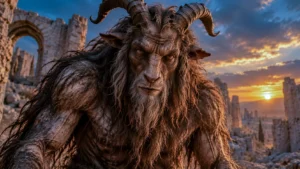
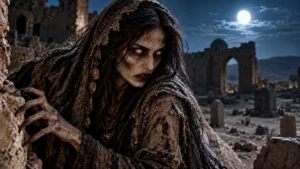
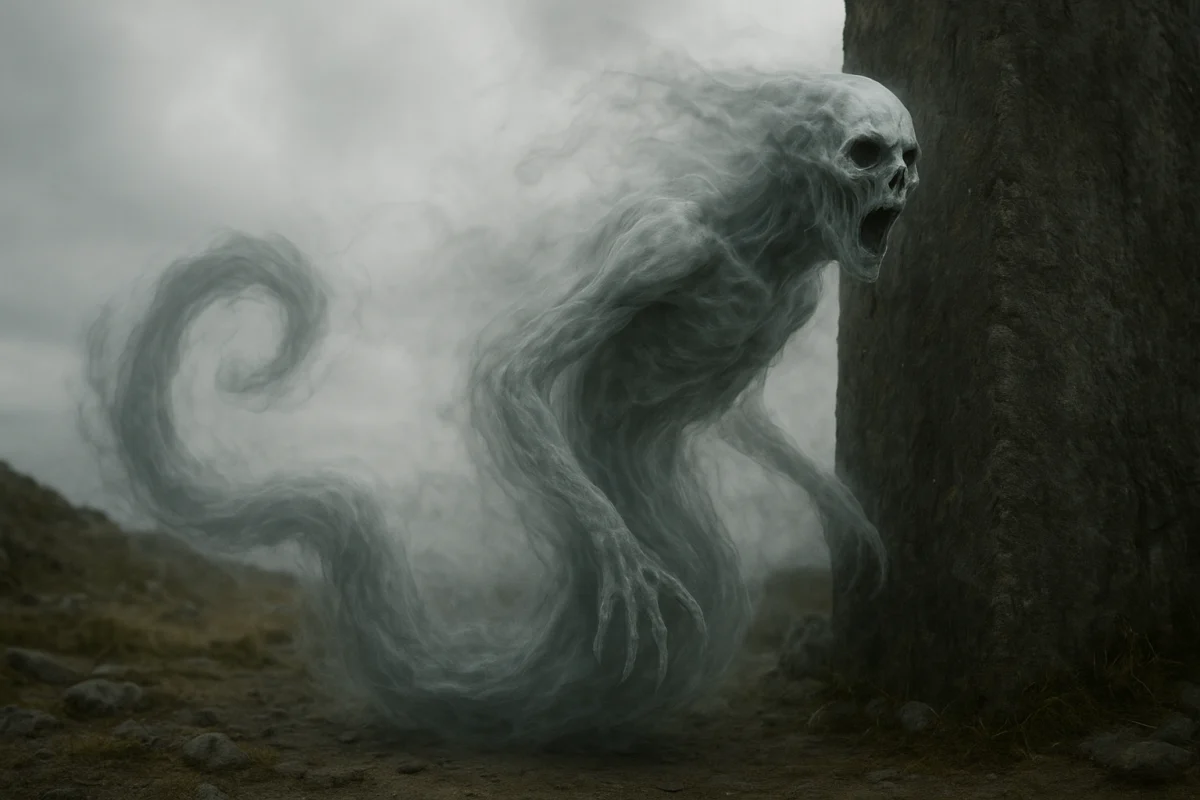
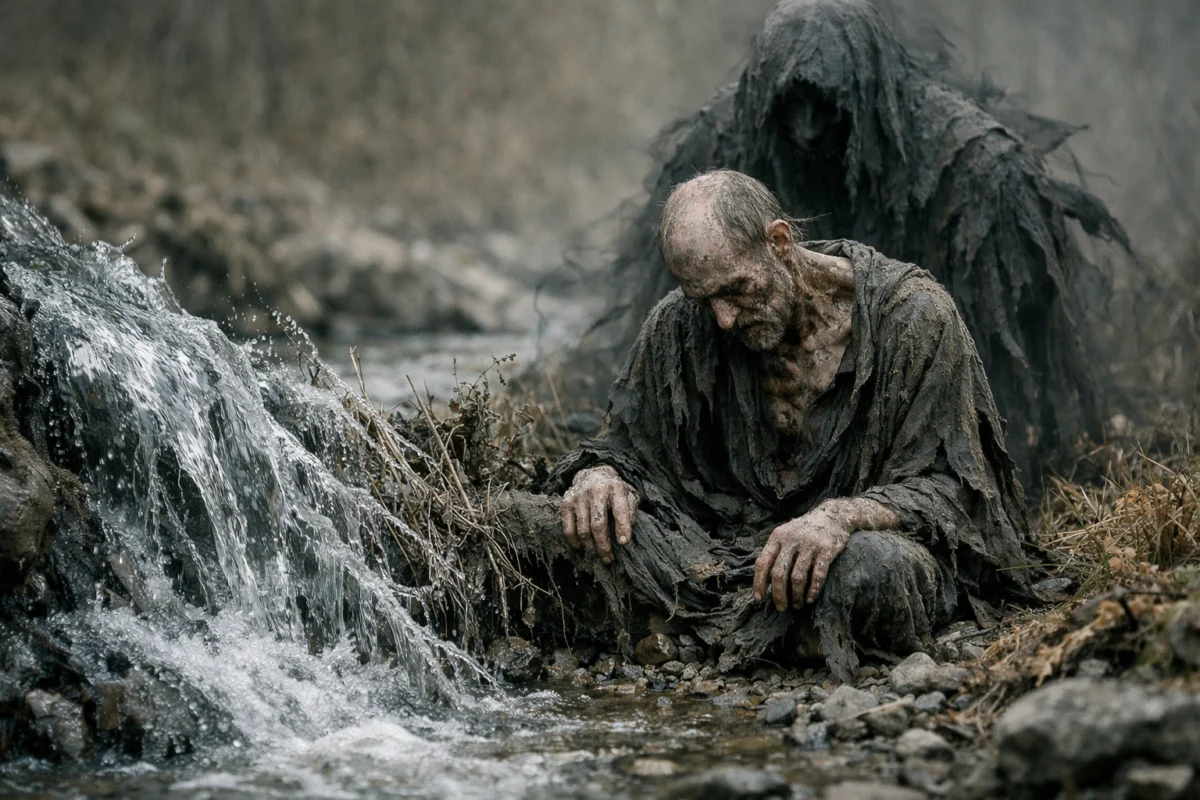
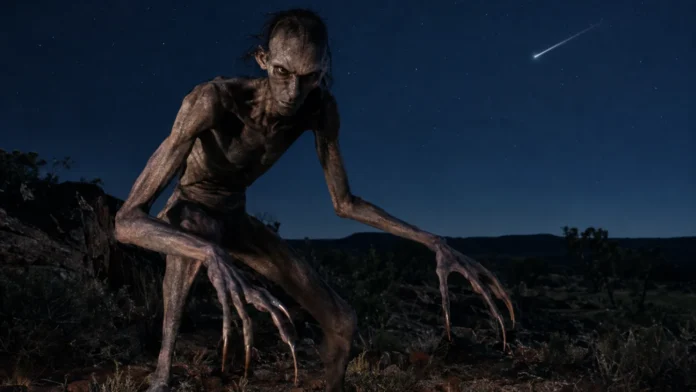
Namorrodor is generally presented as humanlike rather than as an ordinary animal enlarged to monstrous size. Its thin or skeletal appearance distinguishes it from a muscular giant.
The impression is of an unnaturally spare body whose danger comes from its supernatural capacities and threatening extremities.
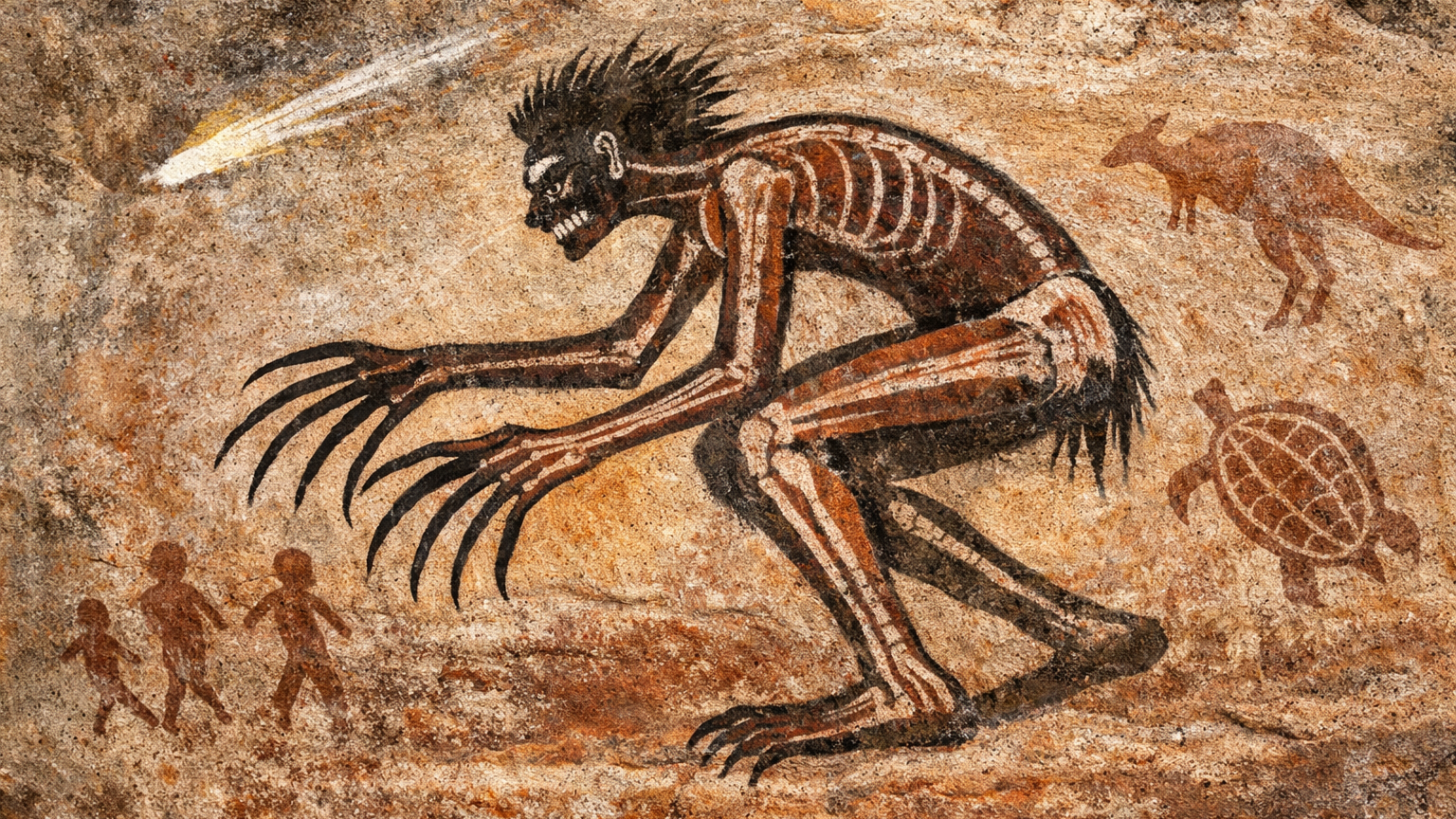
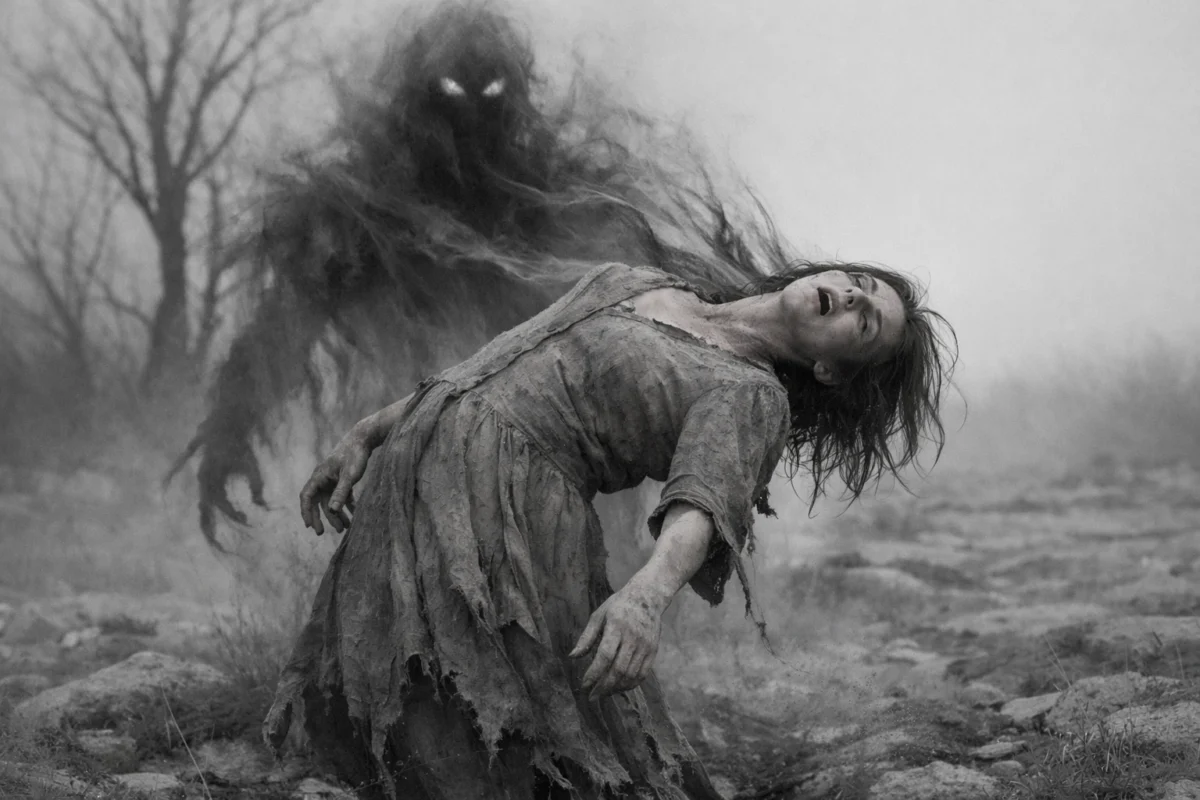
Long fingers and elongated claws are among its most recognizable physical features. These make its predatory character immediately visible.
They also connect its appearance with accounts of attacks on human bodies, although a description of the claws should not be expanded into an invented anatomical explanation of those attacks.
Some descriptions add a covering of hair. This is best treated as a variable feature rather than a requirement for every representation.
The more consistent outline is a lean, humanlike spirit with conspicuously long claws, not a creature with one universally fixed coat, coloration, or facial pattern.
Its movement is as important as its bodily shape. Namorrodor is associated with flight at night and with the passage of meteors.
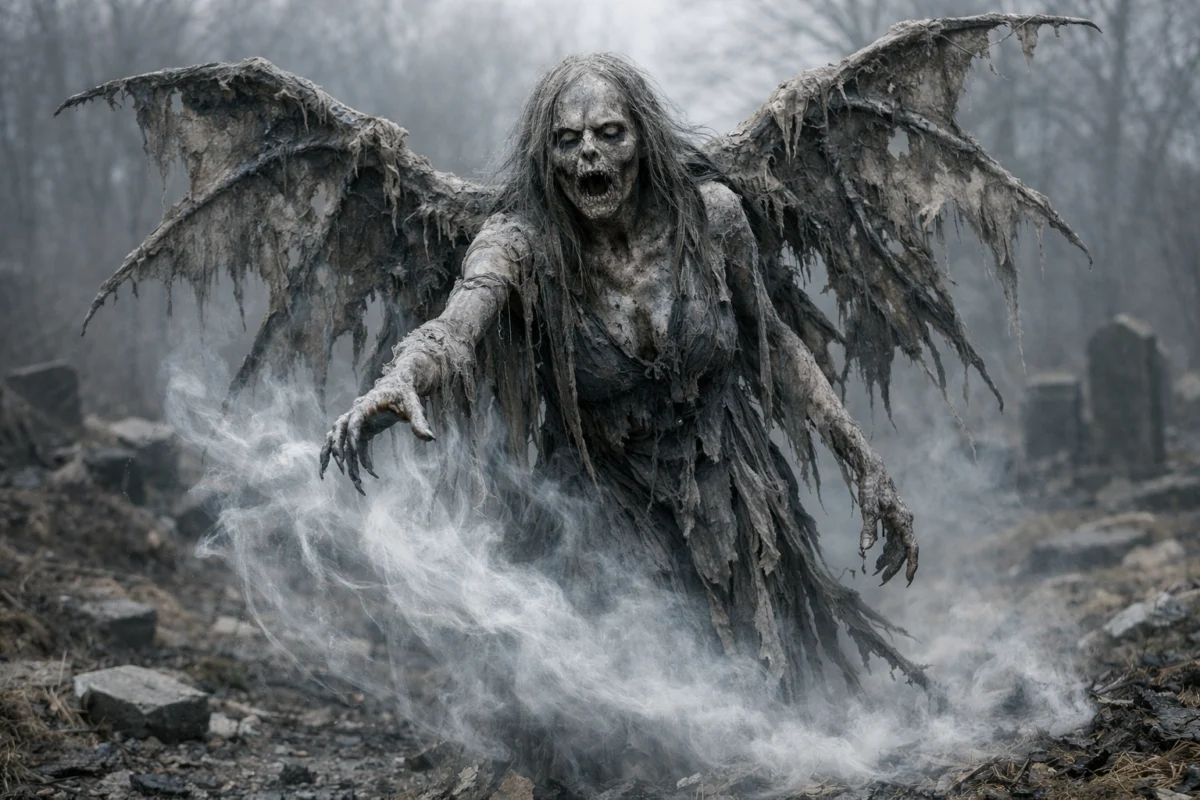
That association does not require wings: supernatural movement should not be converted into birdlike anatomy unless a particular account actually supplies it.
The meteor connection also needs visual restraint. A shooting star can indicate a spirit’s passage without functioning as a detailed portrait of its body.
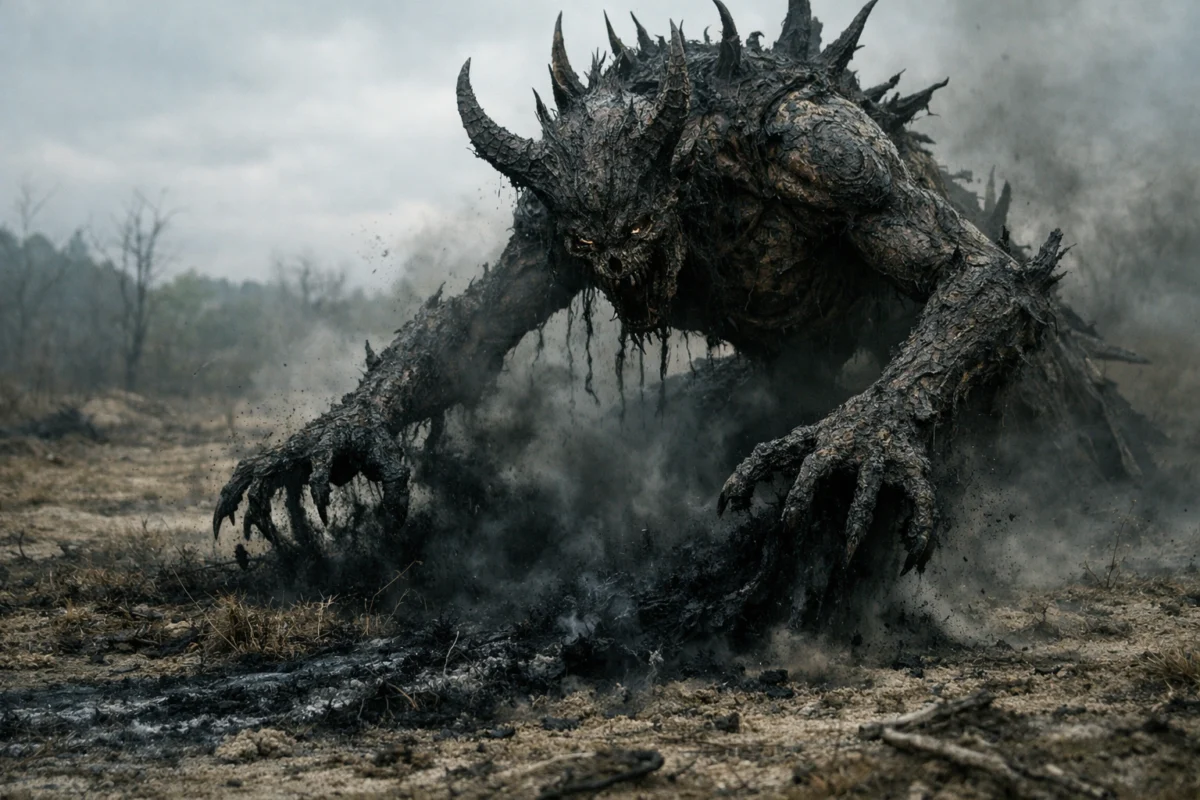
Describing Namorrodor as permanently burning, composed entirely of fire, or equipped with a comet-like tail would go beyond that basic relationship.
There is consequently no sound basis for assigning it a standardized height, eye color, number of teeth, or other bestiary measurements. Its identifying appearance rests on a small group of meaningful traits: humanlike form, extreme thinness, long claws, and the uncanny ability to move through the night.
Background Story
Namorrodor does not need an invented birth, childhood, or transformation story to explain its place in tradition. Its background lies in relationships between people and dangerous spiritual powers.
The relevant question is less where an individual monster came from than how its presence becomes recognizable.
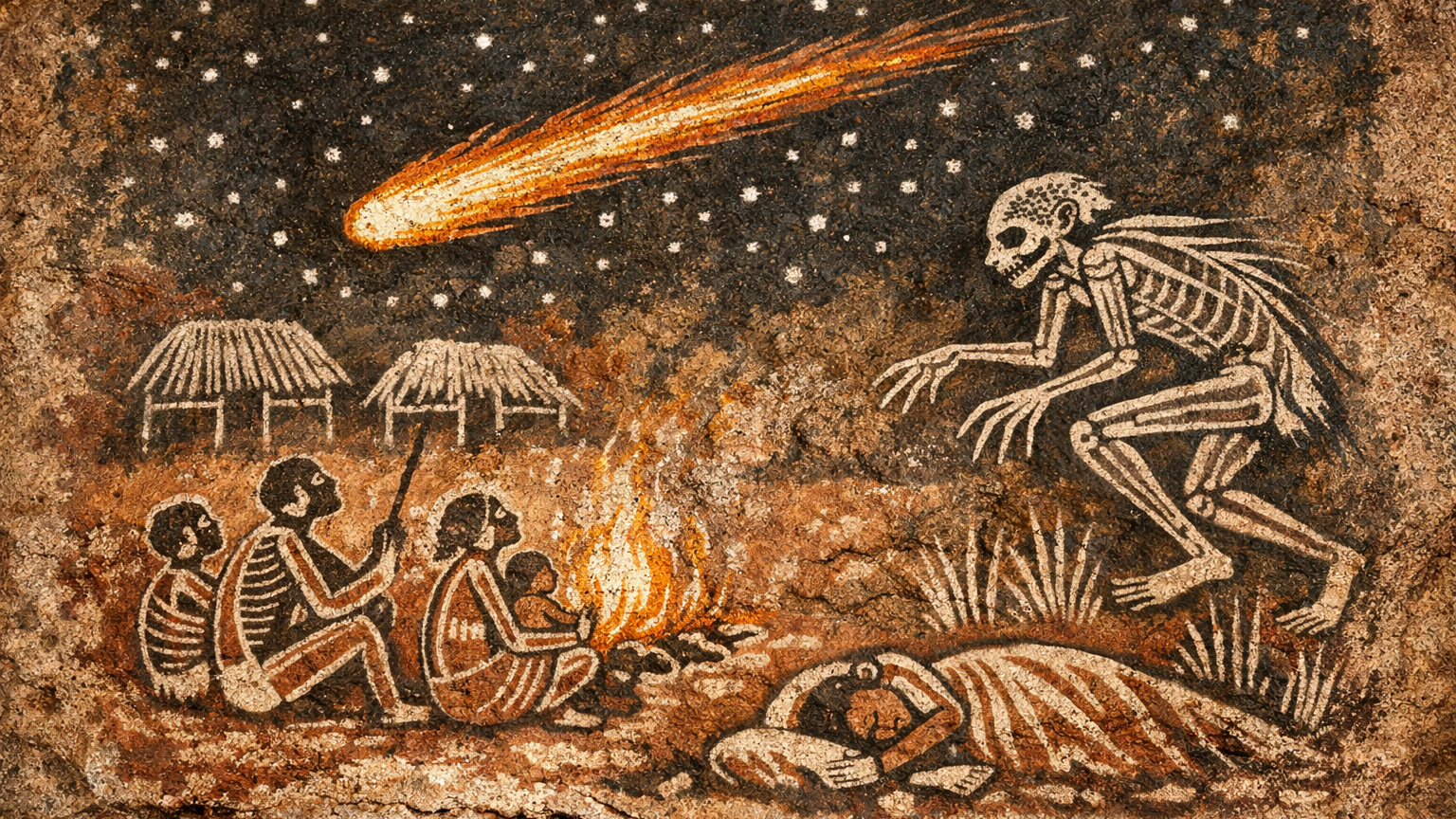
The night sky supplies one of those signs. A meteor appears suddenly, crosses familiar darkness, and disappears before it can be closely examined.
Within the traditions associated with Namorrodor, that brief event can belong to a meaningful pattern of spiritual movement rather than an isolated spectacle.
Its appetite for human hearts makes the danger intimate. The threat is directed toward the living person, not simply toward possessions or territory.
Accounts emphasizing children sharpen that vulnerability, placing the spirit within concerns about protecting those least able to defend themselves against an unseen attacker.
These features bring celestial distance and bodily closeness together. Something witnessed high above the landscape can imply a presence capable of approaching a camp or harming a person.
Namorrodor consequently links the interpretation of distant light with the practical seriousness of danger near home.
This relationship should not be reduced to a claim that people invented the spirit merely to frighten children. Warnings can have protective and educational functions while remaining part of sincerely held spiritual knowledge.
A social explanation alone does not exhaust what the being means within its cultural setting.
Nor should Namorrodor be made representative of every Aboriginal interpretation of meteors. Different communities connect celestial events with different beings, messages, and circumstances.
Its background is most clearly understood through that local relationship between a dangerous spirit, vulnerable human life, and a striking phenomenon in the night sky.
Famous Folklore Stories
The available evidence supports a discussion of recurring motifs rather than a catalogue of authenticated, named tales. Namorrodor belongs to Aboriginal traditions of northern Australia, but the supplied record does not establish complete narratives with identifiable storytellers, collection histories, or traditional titles.
The Shooting-Star Association
A recurring association connects Namorrodor with shooting stars. A light crossing the night sky can signify a dangerous supernatural presence rather than merely a distant celestial event.
This connection places the being within an interpretation of the sky that joins visible phenomena with threats to human life.
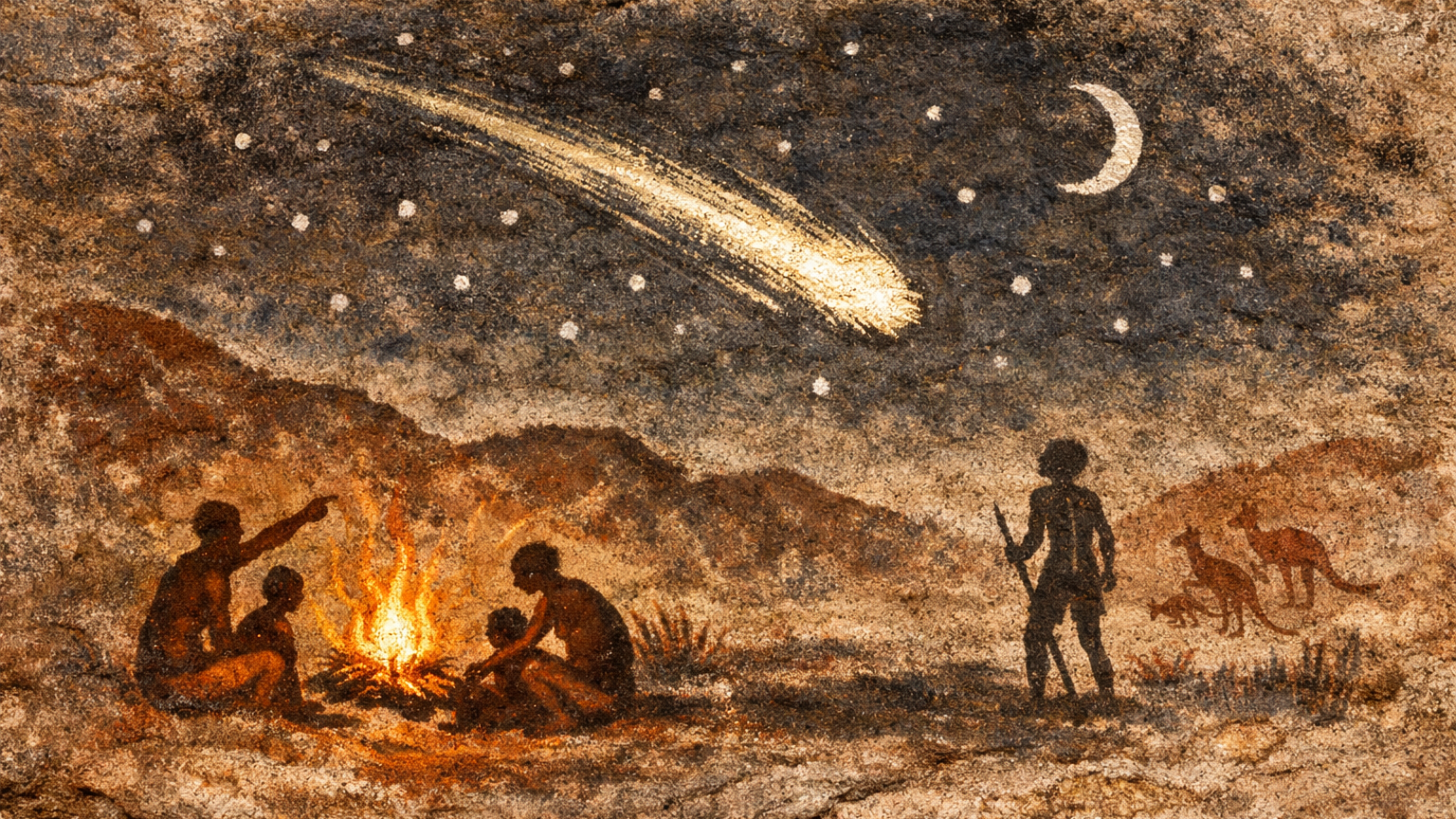
This is a belief motif, not a fully documented encounter story in the present evidence. It should not be expanded into an invented sequence of arrival, pursuit, and escape.
Nor does the association establish that every meteor carried the same meaning throughout northern Australia.
Predation on Vulnerable People
Namorrodor is also represented as a threatening predator, with accounts emphasizing attacks on people and the consumption of hearts. Some summaries particularly associate the danger with infants or children.
These elements establish its frightening narrative role without supplying a single authoritative plot.
The distinction matters because descriptions of a being’s behavior are not necessarily separate folktales. Heart consumption and danger to children can be discussed as recurring themes, but they do not justify inventing named victims, heroic rescuers, or a traditional explanation of the creature’s origin.
Cultural Impact
Namorrodor’s cultural significance lies in the connection between supernatural danger and ordinary vulnerability. Its threatening presence brings the night sky, bodily life, and the safety of dependent people into the same field of meaning.
This is more specific than a generic image of an Australian monster.
The celestial association also shows why separating “nature” from “belief” can distort the tradition. A shooting star may be understood simultaneously as something seen and something socially meaningful.
Its significance cannot be captured solely by describing the object’s movement or brightness.
A modern comparative reading might interpret the emphasis on vulnerable victims as expressing concerns about protection and sudden death. That is an analytical possibility, not proof that the tradition was created to discipline children or explain a particular medical condition.
Popular monster catalogues can make locally situated beings appear interchangeable by giving each a fixed appearance, powers, and weaknesses. Namorrodor is better presented with attention to provenance and variation.
A compact modern description should not be mistaken for the complete knowledge of the communities concerned.
Similar Beasts
Adze

The Adze belongs to Ewe folklore and is a vampiric being associated with transformation into a firefly. Its nocturnal activity and draining of victims make a small flying form the vehicle of supernatural danger.
Both beings connect predation with something encountered in darkness. The Adze’s firefly transformation, however, should not be transferred to Namorrodor or confused with its shooting-star association.
Lamia
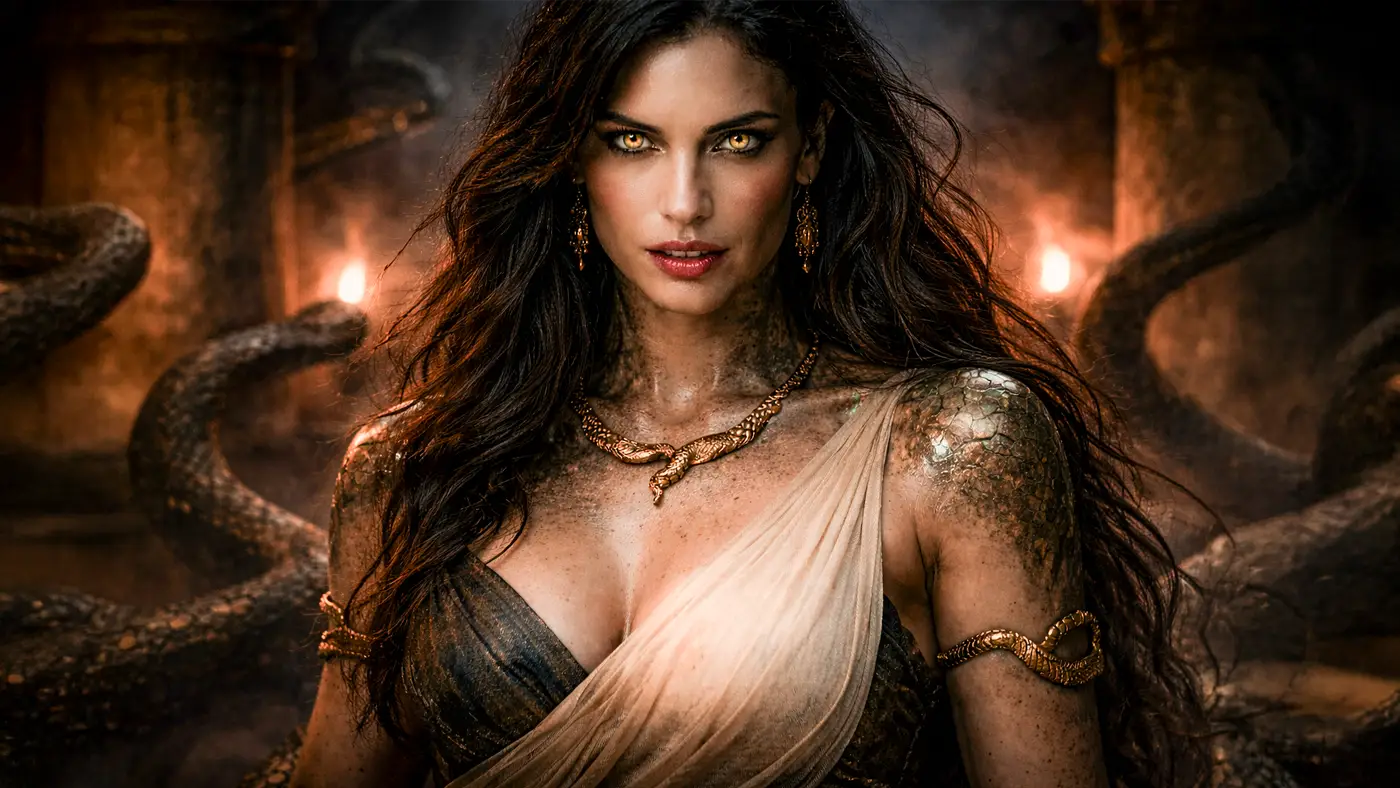
Lamia is a Greek mythological figure remembered for transformation into a child-eating creature. Later representations often give her serpentine features, although her appearance and narrative identity are not uniform across the tradition.
The comparison concerns danger to children, not identical anatomy or biography. Lamia’s transformation narrative cannot supply a missing origin story for Namorrodor.
Bogeyman
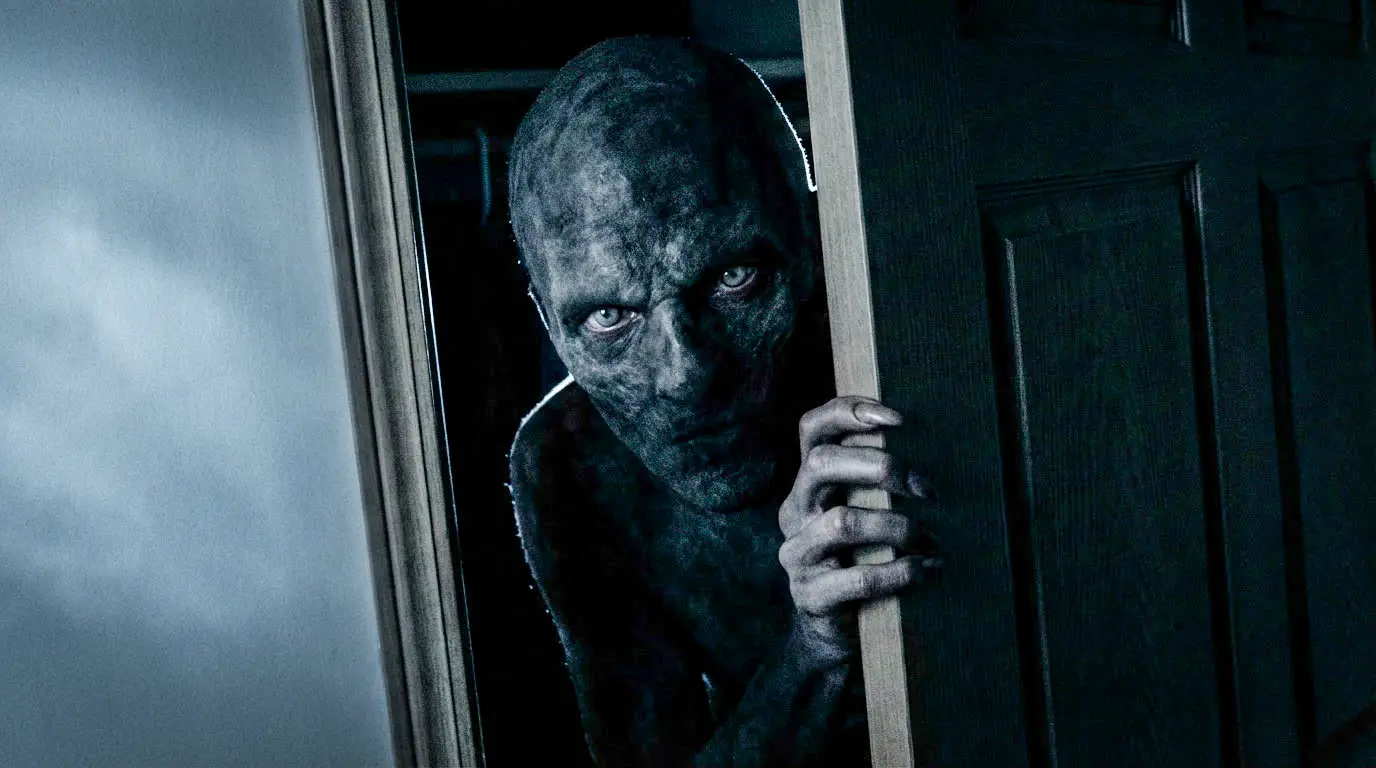
The Bogeyman is a variable fear figure rather than one creature with a stable identity. In English-speaking traditions, the name can encompass imagined threatening beings whose descriptions change with storytelling and social context.
This offers a comparison in frightening narrative function. Calling Namorrodor merely a bogeyman, however, would obscure its particular cultural setting and celestial associations.
Religion/Ritual
The supplied evidence does not verify a named ceremony, offering, invocation, or protective rite specifically associated with Namorrodor. Its place in supernatural belief does not by itself establish worship, priesthood, or a ritual calendar, and none should be reconstructed from its frightening reputation.
Descriptions of danger must also be distinguished from instructions for responding to it. A reported association with a spirit is not sufficient evidence for a universal taboo.
Detailed claims about customary protection require locally grounded testimony rather than extrapolation from neighboring traditions.
Scientific or Rational Explanations
The shooting-star association has a straightforward astronomical context. Meteors are produced when material entering Earth’s atmosphere generates a luminous trail.
This explains the visible phenomenon, but it does not explain away the cultural significance attached to a particular sighting or establish how the tradition developed.
Sudden brightness and rapid movement make meteors conspicuous nighttime events. As a general interpretive hypothesis, those qualities could help make them effective signs of danger.
The present evidence does not demonstrate that such perceptual features were the historical cause of Namorrodor beliefs.
A social interpretation could examine how accounts of predatory beings express the vulnerability of children and other dependent people. Such an approach concerns narrative meaning, not a diagnosis of the storytellers.
It should not reduce an entire tradition to fear, ignorance, or behavioral control.
The heart-eating motif may likewise be examined as an image of catastrophic injury or the destruction of life. That is a possible symbolic reading.
Without fuller narrative and linguistic evidence, it cannot establish what particular speakers meant by the motif or whether its meaning remained consistent.
Documentation introduces another limitation: a short English summary can detach an account from its speaker, occasion, and language. Apparent certainty about appearance or behavior may reflect editorial compression rather than agreement within the tradition.
Responsible interpretation therefore distinguishes reported motifs from reconstructed explanations and avoids treating either as a complete account.
Modern Cultural References
Namorrodor, TV 2006
A modern reference item documented through iview.abc.net.au. This source helps trace how Namorrodor appears, is adapted, or is discussed in later culture.
(iview.abc.net.au)
The Curse, TV 2006
A modern reference item documented through games.abc.net.au. This source helps trace how Namorrodor appears, is adapted, or is discussed in later culture.
(games.abc.net.au)
Cleverman, “Sun and Moon”, TV 2016
A modern reference item documented through tv.apple.com. This source helps trace how Namorrodor appears, is adapted, or is discussed in later culture.
(tv.apple.com)
Namorrodor, 1994
A modern reference item documented through flickr.com. This source helps trace how Namorrodor appears, is adapted, or is discussed in later culture.
(flickr.com)
Namorrodor, Ode to Olive, 2024
A modern reference item documented through autogenesis1er.bandcamp.com. This source helps trace how Namorrodor appears, is adapted, or is discussed in later culture.
(autogenesis1er.bandcamp.com)
Conclusion
Namorrodor belongs within the Aboriginal traditions of northern Australia, rather than within a universal catalogue of interchangeable monsters. Its significance rests on the relationship between a feared supernatural presence and the cultural setting that gives that presence meaning.
Reading it only as a frightening creature risks overlooking that relationship. A responsible account therefore keeps regional context central and distinguishes documented beliefs from the simplified descriptions through which unfamiliar beings often reach wider audiences.
The figure also illustrates why restraint matters in mythological writing. A name, an unsettling appearance, or a recurring supernatural motif does not justify inventing a complete biography, a fixed set of powers, or a collection of famous adventures.
Namorrodor is best understood through the particular traditions and accounts that preserve it, with differences left visible rather than forced into agreement. Its lasting importance lies in that cultural specificity, not in an artificially expanded mythology or an unsupported modern media history.
Further Reading
Namorrodor, iview.abc.net.au
television episode 2006 A dedicated animated Dust Echoes episode portraying Namorrodor as its central subject; ABC’s listing provides the episode and describes the creature, and ABC iview currently.
(iview.abc.net.au)
The Curse, games.abc.net.au
television episode 2006 A separate Dust Echoes animated story in which Namorrodor is summoned and appears in the narrative.
ABC’s episode study guide describes the creature materializing and.
(games.abc.net.au)
Cleverman, “Sun and Moon”, tv.apple.com
television episode 2016 The series episode features the Namorrodor as an active creature in the story.
Apple TV verifies the episode title, season and episode number, and release.
(tv.apple.com)
Namorrodor, flickr.com
artwork 1994 A named acrylic-on-canvas work depicting Namorrodor, documented by Djilpin Arts with the artist, date, medium and dimensions.
(flickr.com)
Namorrodor, Ode to Olive, autogenesis1er.bandcamp.com
other 2024 A music release/track titled exactly “Namorrodor,” listed by the artist on Bandcamp as released February 6, 2024.
The page confirms the title and release, though it.
(autogenesis1er.bandcamp.com)