Introduction
The Drude is a threatening night-being in German-speaking folklore, especially associated with southern German traditions. Usually understood as female, it troubles sleepers through oppressive nocturnal visits.
Its identity overlaps with the nightmare spirit, the witch, and the human woman believed capable of attacking others supernaturally.
Rather than belonging to a single, consistent species of monster, the Drude occupies a shifting category of folk belief. In some descriptions it is an independent spirit; in others, the attacker is a woman whose supernatural activity takes place while other people sleep.
Its defining feature is therefore not a fixed appearance but an encounter: a sleeper experiences an unwelcome presence, bodily pressure, fear, or difficulty moving. The Drude gives these disturbing sensations an intentional cause, turning an obscure nighttime experience into an attack by a recognizable being.
The figure also survives in the German word Drudenfuß, literally “Drude’s foot,” a name for the pentagram used as a protective sign. Together, the nocturnal attacker and its associated countermeasures reveal a tradition concerned with vulnerable bodies, household boundaries, and the uncertain relationship between human beings and spirits.
History/Origin
The Drude belongs to German-speaking folklore, especially southern German traditions. Its name has medieval roots, but the age of the word does not establish when the associated beliefs began.
Rather than a single origin story, the surviving evidence reveals overlapping ideas about harmful spirits, witches, and threatening nighttime visitors.
The Frühneuhochdeutsches Wörterbuch includes a passage dated before 1382 that mentions trutten alongside alpen and elben among condemned supernatural beliefs. This documents medieval use of the name without supplying a complete description of the being.
A more specific example from Augsburg in 1571 identifies the Drut as a kind of night spirit believed to press upon people, providing clear early evidence for its oppressive nocturnal role.
Later historical usage remained broad. Adelung’s dictionary, in its 1811 edition, records Upper German meanings encompassing witches and sorcerers, harmful spirits, apparitions, and the nightmare being called the Alp.
The Drude also belongs to the wider network of sleep-related beliefs surrounding the Mahr. These names and characteristics could overlap without making every regional account identical.
An attacker could therefore be understood as an independent spirit, a witch, or the supernatural manifestation of a living person. These interpretations do not establish successive stages in a single development from ancient spirit to later witch.
Nor do the surviving references establish an original goddess or an unchanged pagan monster.
Modern films and podcasts continue to reshape the Drude through new bodies, powers, and narratives. These adaptations belong to its later cultural history, but their fictional details do not establish the age or original character of the traditional figure.
Name Meaning
The German name Drude has a documented history reaching back to Middle High German trute and trut, terms associated with uncanny or malevolent supernatural beings. Historical forms also include drud and trut.
Their recorded meanings encompass witches, harmful spirits, and nocturnal beings believed to oppress sleepers. A 1571 German dictionary even describes the Drut as a type of night spirit said to press upon people.
The terminology was predominantly feminine, although masculine forms also occurred.
The word’s ultimate origin remains uncertain. Friedrich Kluge suggested a possible connection between Middle High German trute and traut, meaning “dear” or “beloved.”
Under this interpretation, the threatening being may have received a reassuring or euphemistic name, much as other feared supernatural figures were addressed through favorable titles. Kluge presented this as a possibility, not an established derivation.
Jacob Grimm proposed another historical connection. In Deutsche Mythologie, he associated Trude with the Old Norse name Þrúðr, also found in traditions concerning Valkyries and Thor’s daughter.
Grimm interpreted the later witchlike figure as a possible survival of older Germanic supernatural traditions. This remains a nineteenth-century mythological interpretation rather than demonstrated linguistic or religious continuity.
Johann Christoph Adelung offered a different linguistic explanation. His dictionary compared Drud with Gothic thriutan and Swedish tryta, words associated with exhaustion, distress, or causing trouble.
Adelung also questioned the common assumption that Drude derived from Druide, the German word for a Celtic druid. His proposed alternatives illustrate the uncertainty surrounding the name rather than resolving it.
The resemblance between Drude and Druide nevertheless appears in historical writing. The Frühneuhochdeutsches Wörterbuch documents a separate priestly use of drude in the sixteenth-century writings of Johannes Turmair, also known as Aventinus.
Turmair used forms such as druten and drudden while discussing ancient priests, teachers, and prophets. The dictionary identifies this particular overlap as specific to Turmair.
It demonstrates a learned historical association but does not establish that the nightmare spirit originated as a Celtic priestess.
The compound Drudenfuß literally means “Drude’s foot,” with Fuß meaning “foot.” It became an established name for the pentagram used as a protective sign against harmful supernatural forces.
Some historical accounts also associated Druden with birdlike feet, but these interpretations do not establish a universal physical characteristic. The term is most securely documented as the name of a protective symbol.
Appearance
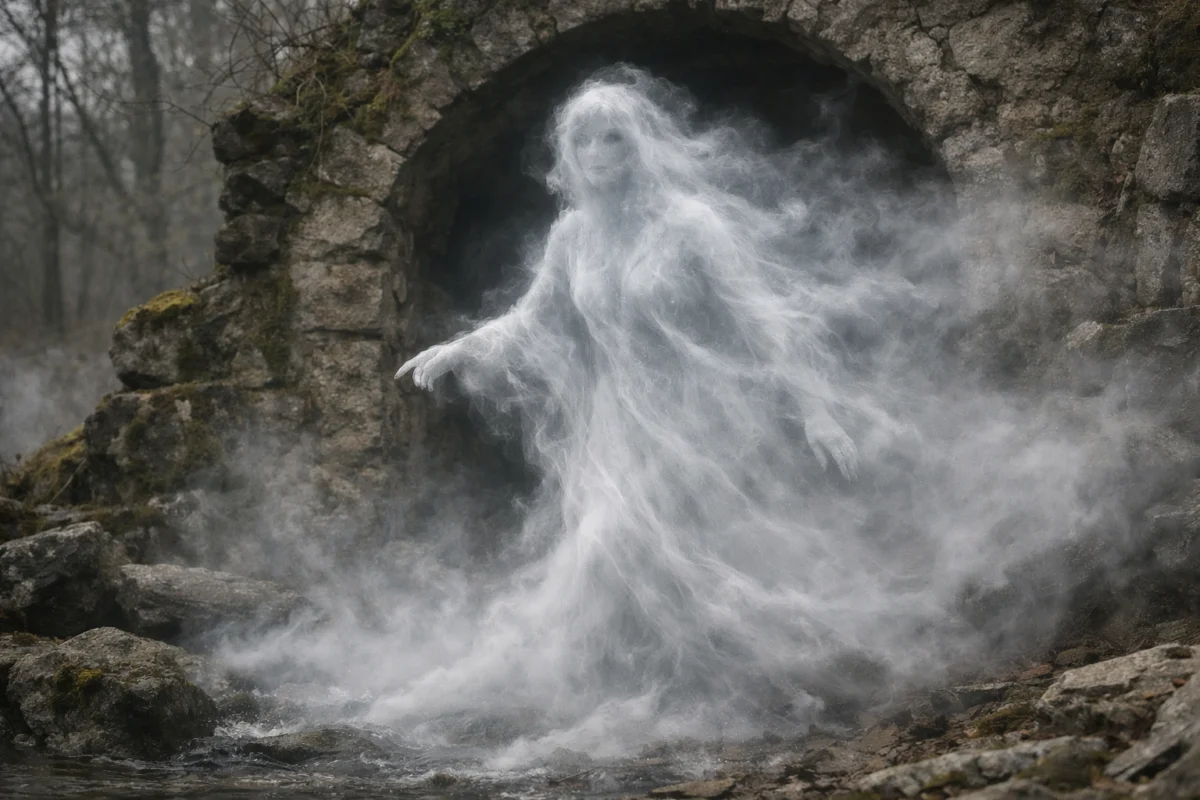
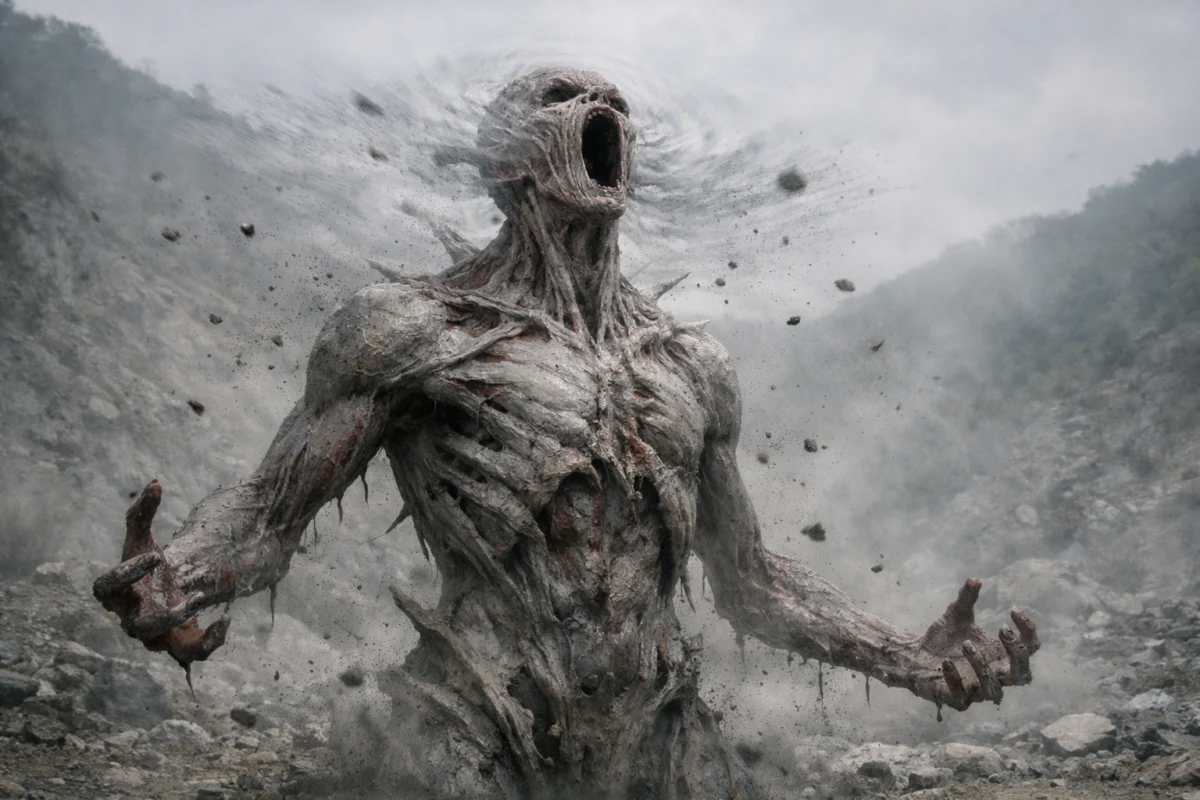
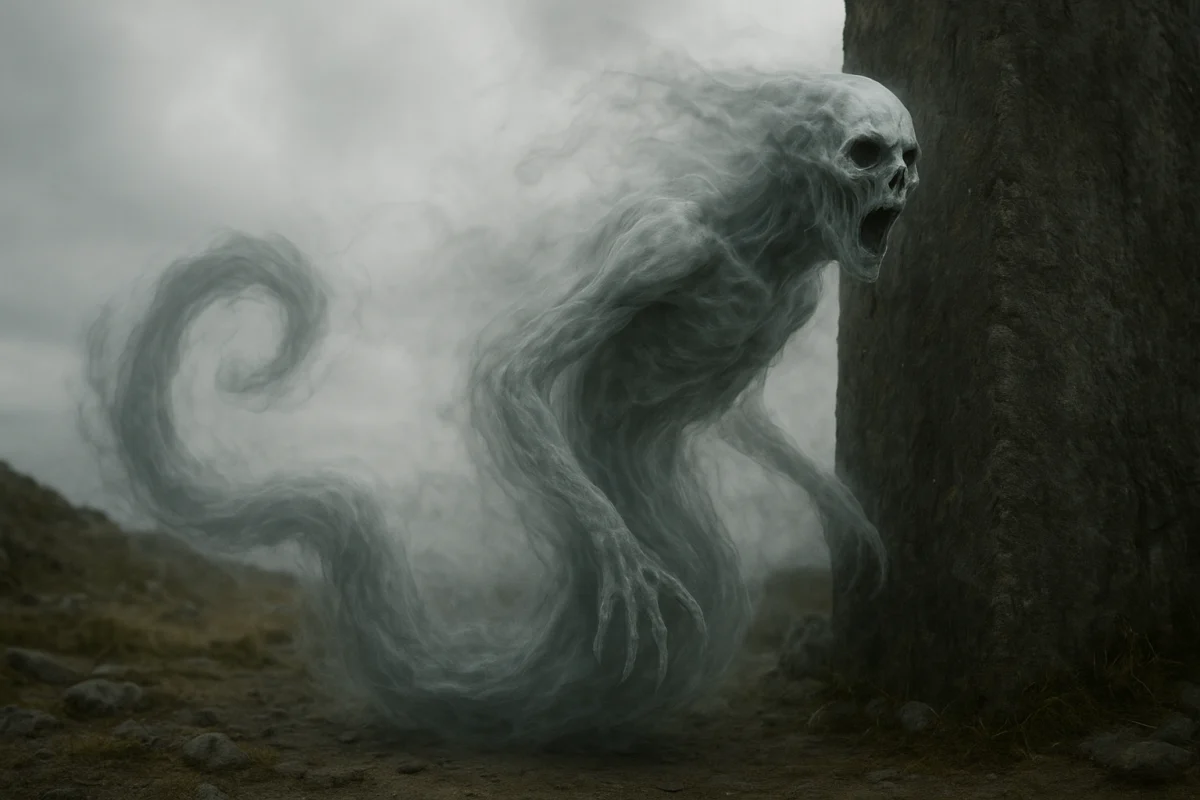
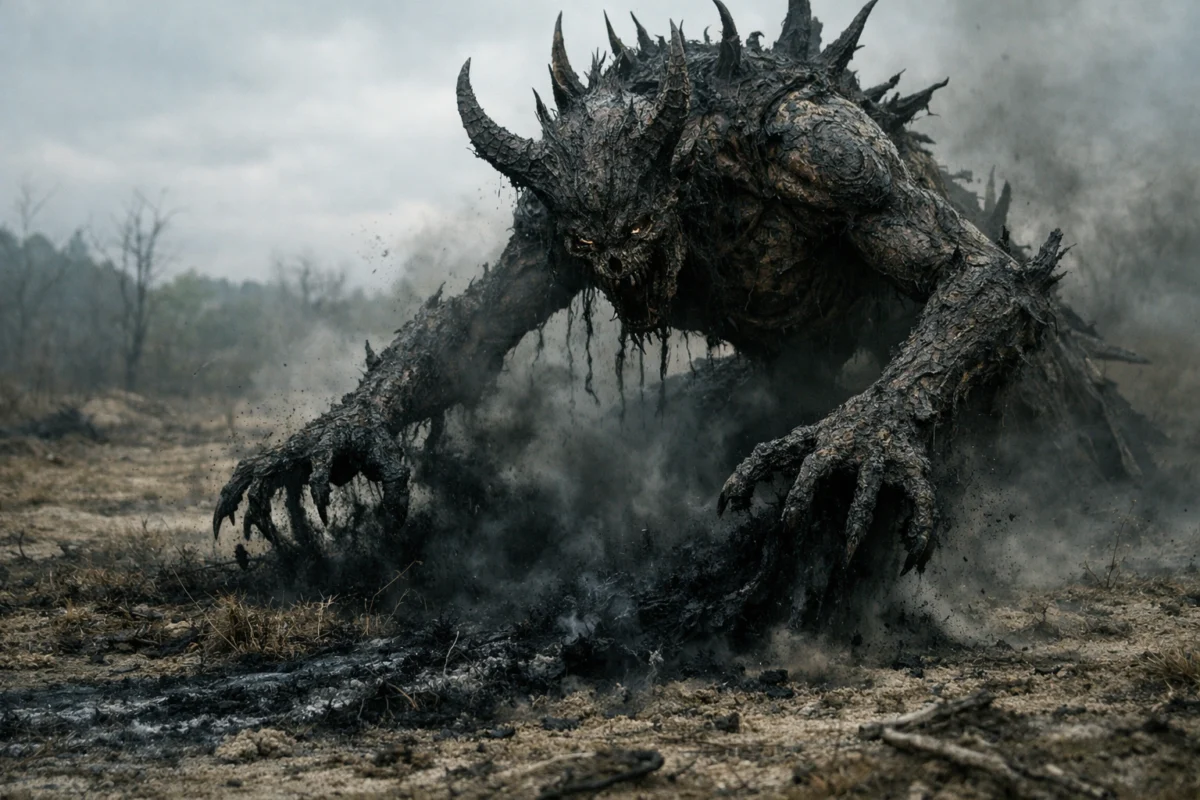
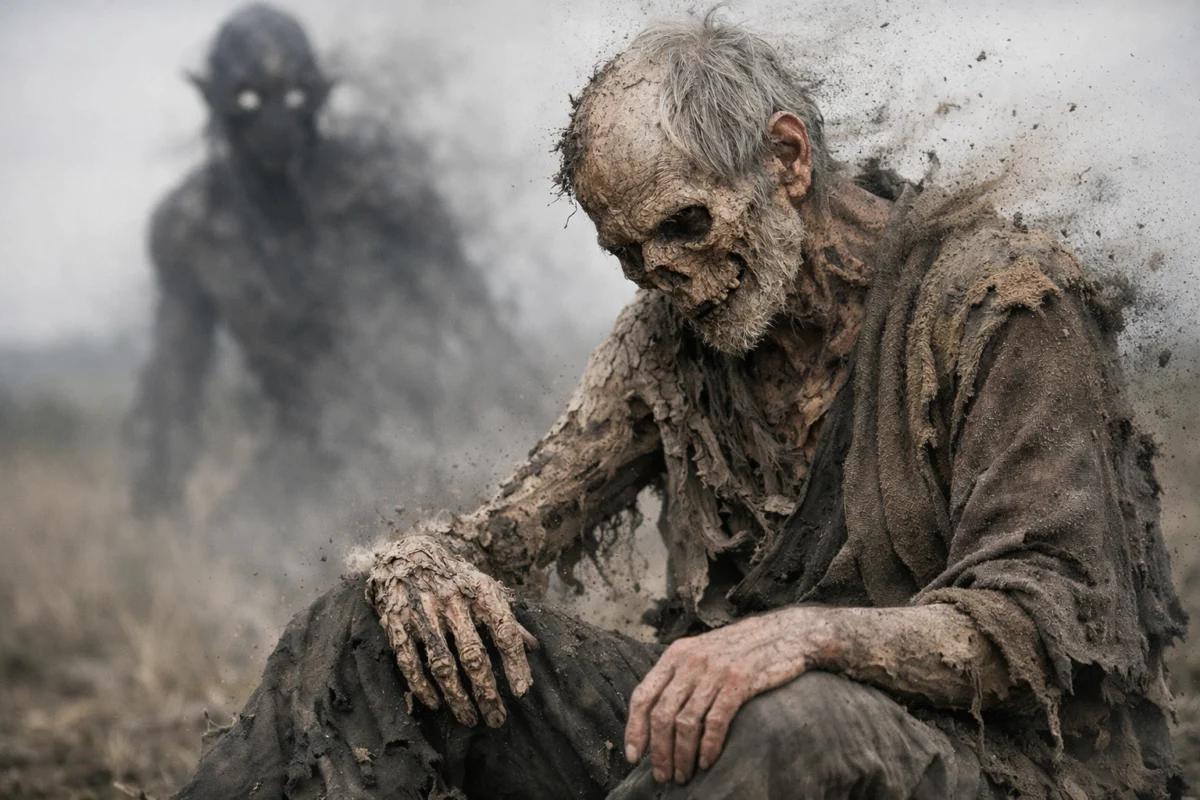
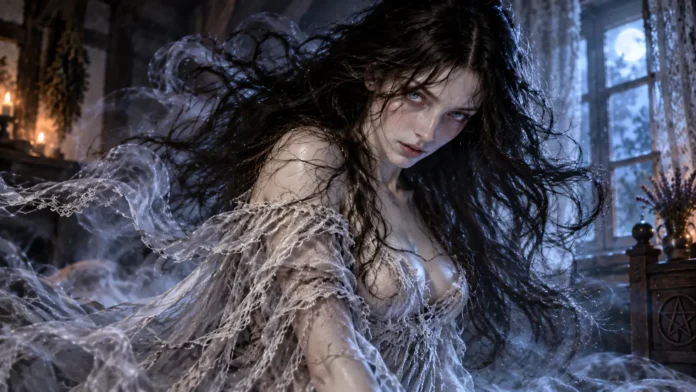
The Drude has no single, consistently documented body. Its most stable characterization is female, but even that leaves considerable room for variation: the visitor may be imagined as a woman, a witchlike presence, or a spirit apprehended chiefly through its effect on the sleeping victim.
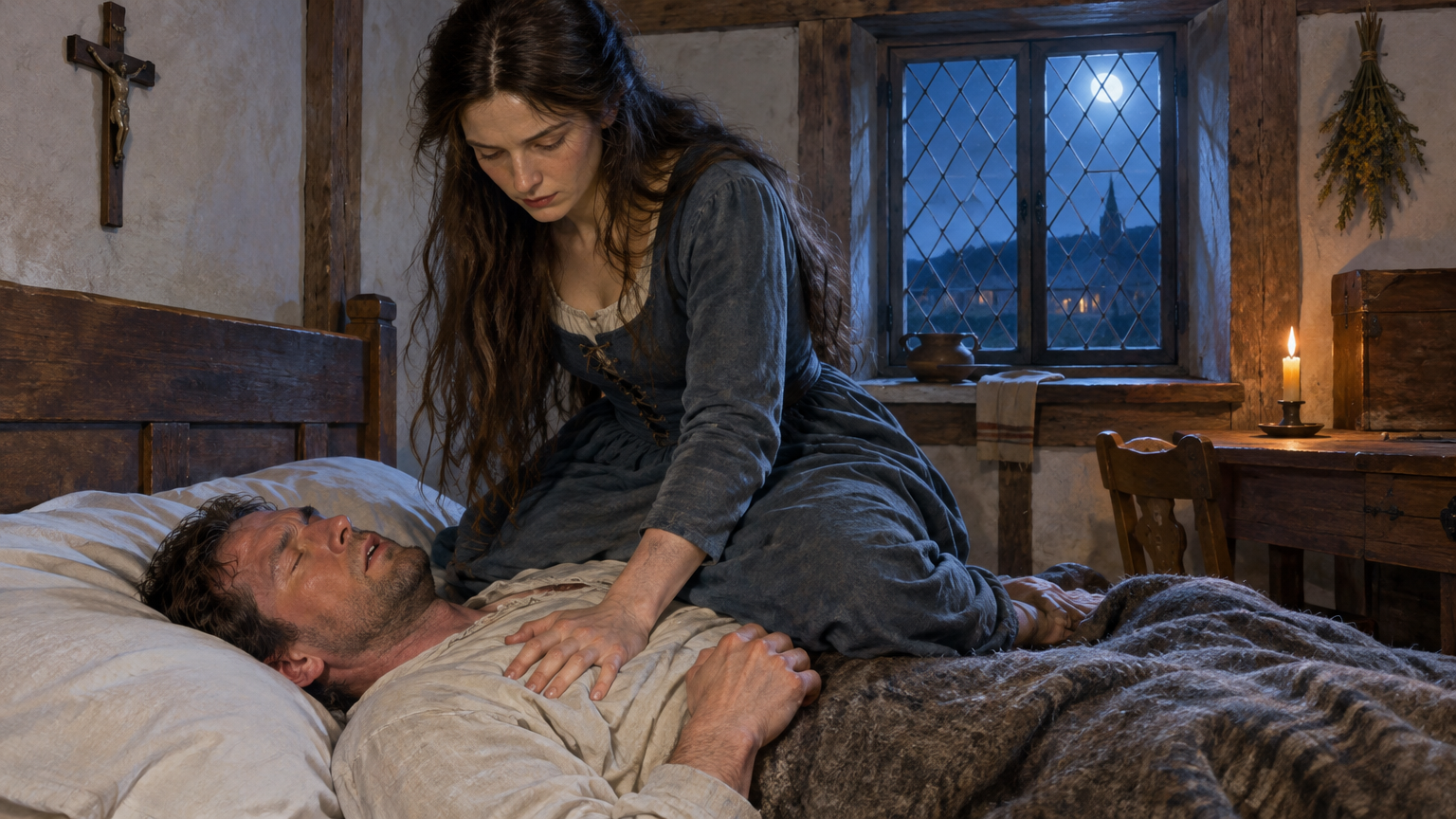
Where the Drude is identified with a human woman, an ordinary daytime appearance is compatible with an extraordinary nighttime role. The frightening distinction lies in what she is believed to do, not necessarily in visible deformity.
This makes the figure different from monsters recognized immediately by a fixed combination of bodily features.
Descriptions emphasizing an oppressive presence need not provide a clear view of the attacker at all. Weight, constriction, and the sensation of someone sitting or pressing upon the sleeper matter more than clothing, complexion, or stature.
The encounter is frequently understood through bodily experience rather than through detailed visual observation.
Shape-changing and unusual bodily forms belong to the wider network of witch and nightmare traditions surrounding the Drude. Such material requires regional care: an animal form or peculiar feature recorded for a related being should not automatically become a universal characteristic of every figure called a Drude.
The pentagram provides a particularly important distinction between the creature and its imagery. A Drudenfuß can represent protection against dangerous supernatural intrusion without depicting the intruder.
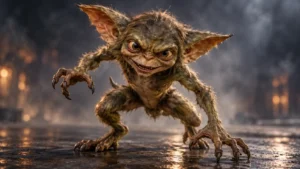
For an historically restrained portrayal, a female nocturnal presence and an oppressive encounter are firmer foundations than elaborate claws, wings, costumes, or a standardized monstrous face.
Background Story
The Drude’s background is domestic rather than heroic. Its characteristic setting is the place where people sleep, a space expected to offer safety but temporarily occupied by someone unable to defend themselves.
The figure expresses the unsettling possibility that an enclosed household cannot completely exclude supernatural danger.
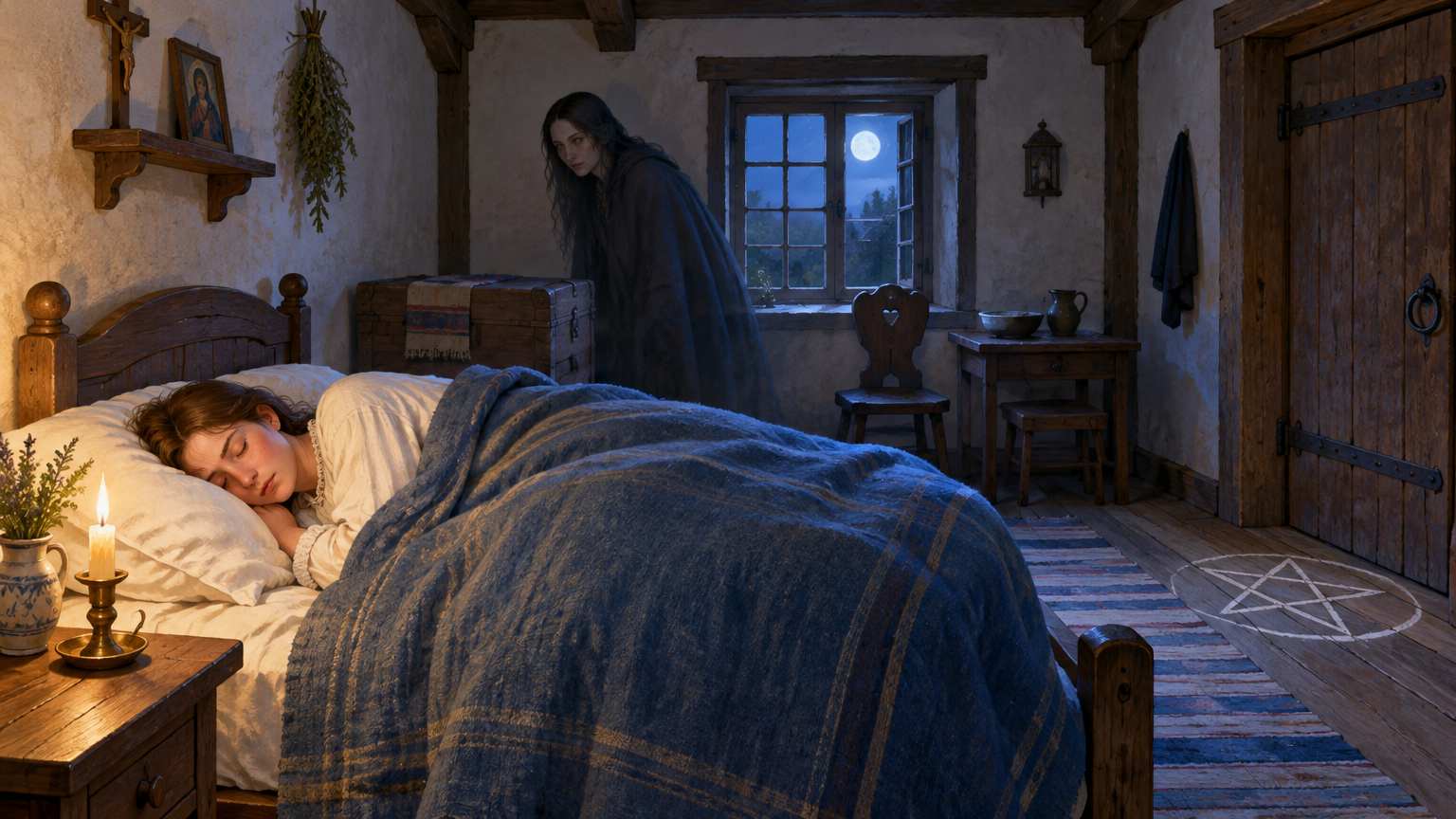
Sleep also creates uncertainty about agency. A person may appear physically inactive while being suspected of supernatural activity elsewhere; another may awaken with intense sensations but little visible evidence of an attacker.
The Drude connects these uncertainties by allowing a familiar human being and an elusive night visitor to occupy overlapping roles.
This overlap gives the tradition a social dimension. When a harmful presence could be identified with a living woman, an unexplained experience might become suspicion directed toward someone in the community.
That possibility belongs to the wider history of witch belief, although it does not make every Drude account a formal witchcraft accusation.
Protective signs supplied a complementary response to the threatening visitor. The association between the Drude and the pentagram belongs to a broader practice of defending vulnerable spaces through meaningful marks.
Here, the important narrative relationship is between intrusion and exclusion, rather than a fully developed struggle between named supernatural characters.
Goethe gave the Drudenfuß a famous literary setting in Faust, Part One, where a pentagram at the threshold obstructs Mephistopheles. This is a literary use of the protective sign, not an appearance by a Drude.
It nevertheless preserves the underlying idea that a seemingly small household boundary can have supernatural force.
Famous Folklore Stories
The Drude is better approached through recurring nightmare motifs than through a single famous narrative. The available evidence does not establish a named tale cycle.
Two closely connected patterns are most useful: an oppressive nighttime visitor and an attacker understood as a witch.
The Oppressive Nighttime Visitor
The central encounter involves a sleeper experiencing a threatening presence and bodily oppression. Rather than confronting a monster while awake, the sufferer becomes vulnerable in bed.
The Drude supplies an intentional attacker behind sensations that might otherwise seem invisible, inexplicable, or difficult to describe.
In this pattern, pressure matters more than a detailed physical appearance. The experience of being weighed down gives the encounter its narrative shape.
A person sleeps, suffers an assault, and understands the disturbance as the work of something acting upon the body.
This is a recurring belief motif, not a reconstructed traditional story with a fixed ending. It should not be expanded into an adventure involving named victims, elaborate pursuits, or a standardized defeat of the creature.
Such details require individual, documented versions.
The Witch as Nighttime Attacker
Another strand brings the Drude closer to a witch than to an independent species of spirit. Here the important difference is the attacker’s identity: nighttime harm can be attributed to a being connected with human witchcraft, rather than simply to an unfamiliar supernatural presence.
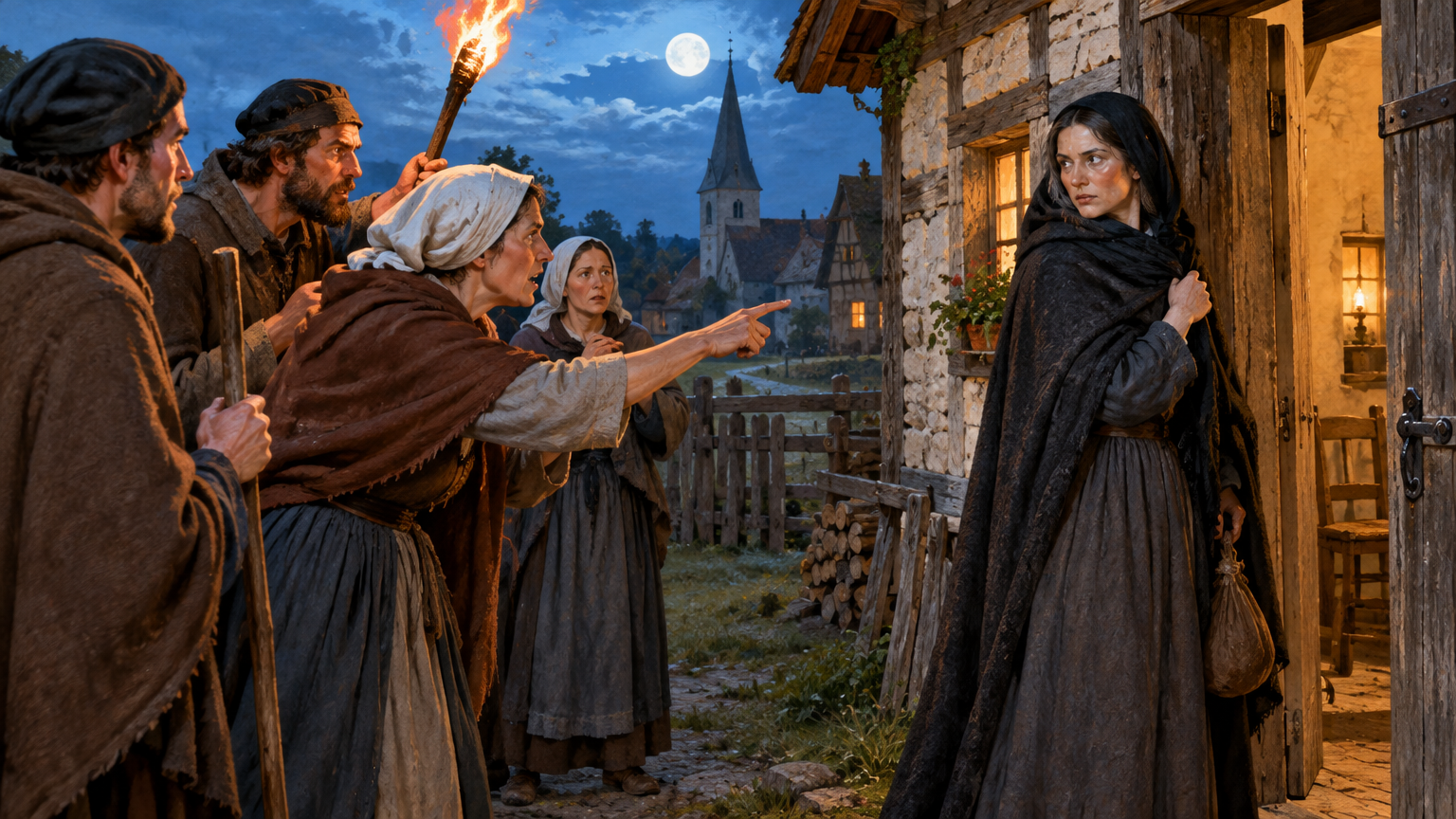
These interpretations overlap, but they should not be made identical. Calling the Drude a nightmare spirit emphasizes the experience of an external presence.
Calling it a witch connects that experience with beliefs about people capable of harming others through concealed supernatural means.
The distinction changes the social meaning of the encounter. Fear of an unknown visitor concerns the boundaries of the sleeping body and household.
Suspicion of witchcraft can also concern relationships among living people. Neither interpretation establishes one universal explanation for every regional use of the name.
Cultural Impact
The Drude gave a recognizable form to the vulnerability of sleep. A bed ordinarily promises security, yet the nightmare encounter turns it into a place where movement, speech, and self-defense may fail.
The figure makes that reversal understandable through the actions of a hostile visitor.
Its cultural significance therefore lies partly in explanation rather than entertainment. A frightening bodily experience could become something that could be named and discussed.
Shared supernatural vocabulary allowed people to connect an intensely private disturbance with beliefs understood by their household or community.
The association with witchcraft also placed nighttime suffering within a wider language of hidden harm. This does not mean that every account became an accusation against a neighbor.
It means that bodily distress and fears about malicious supernatural activity could occupy the same interpretive framework.
The word also survives in the German term Drudenfuß, literally “Drude’s foot,” associated with the pentagram. This connection belongs to the figure’s protective symbolism.
It should not be treated as evidence that the Drude necessarily possessed a five-pointed foot or another fixed anatomical feature.
Modern interpretations often place the Drude alongside other nightmare beings and discuss the tradition in relation to sleep paralysis. That approach highlights a meaningful comparison, but it changes the question: historical believers sought the identity of an attacker, while modern researchers investigate experiences and their cultural interpretation.
Similar Beasts
Alp
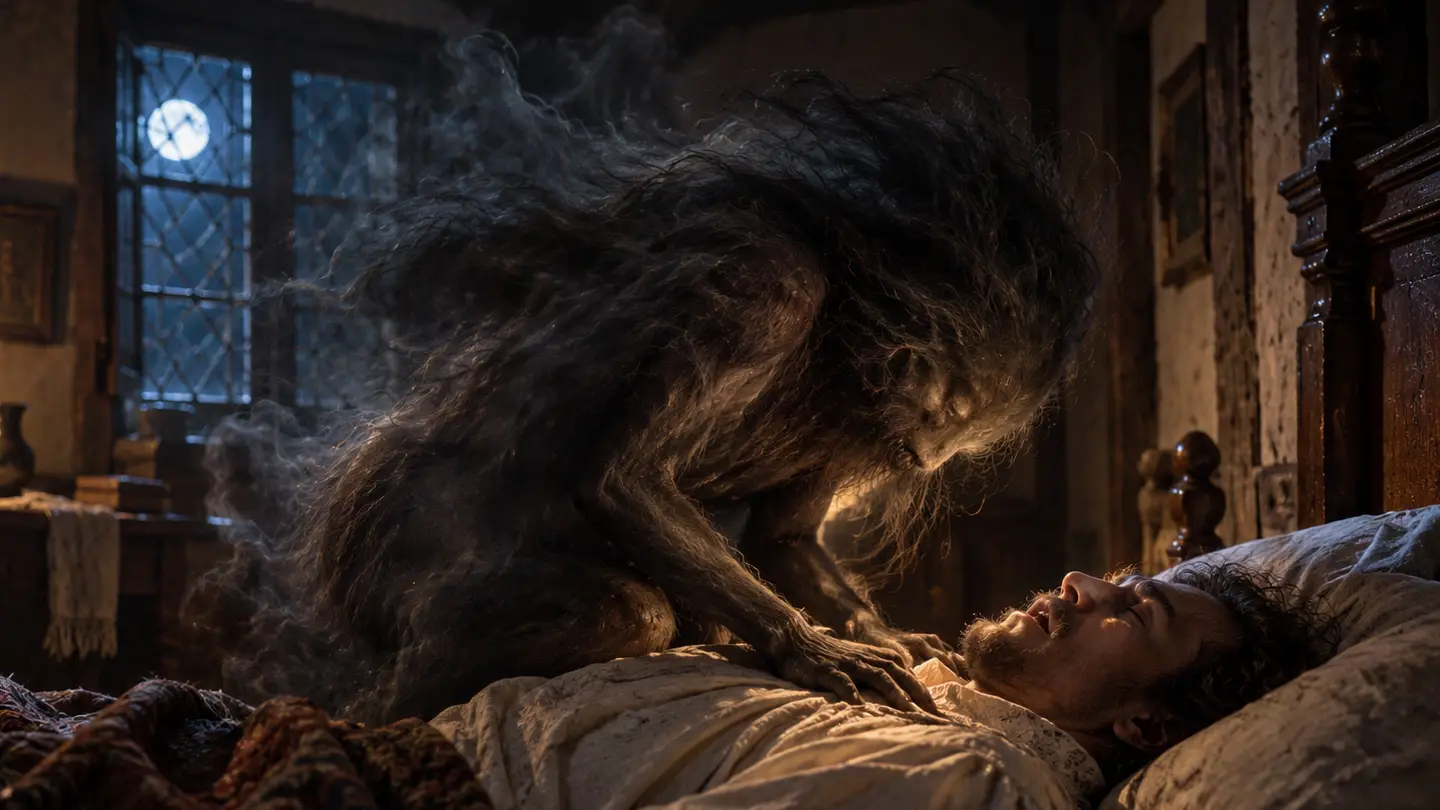
The Alp is a nightmare being from German folklore, associated with disturbing sleep and oppressive nocturnal experiences. It provides the closest comparison here because its supernatural function substantially overlaps with that of the Drude.
The comparison concerns shared experiences and narrative roles, not a rigid taxonomy. Related nightmare terminology can overlap without making every local description of the two figures interchangeable.
Bogeyman
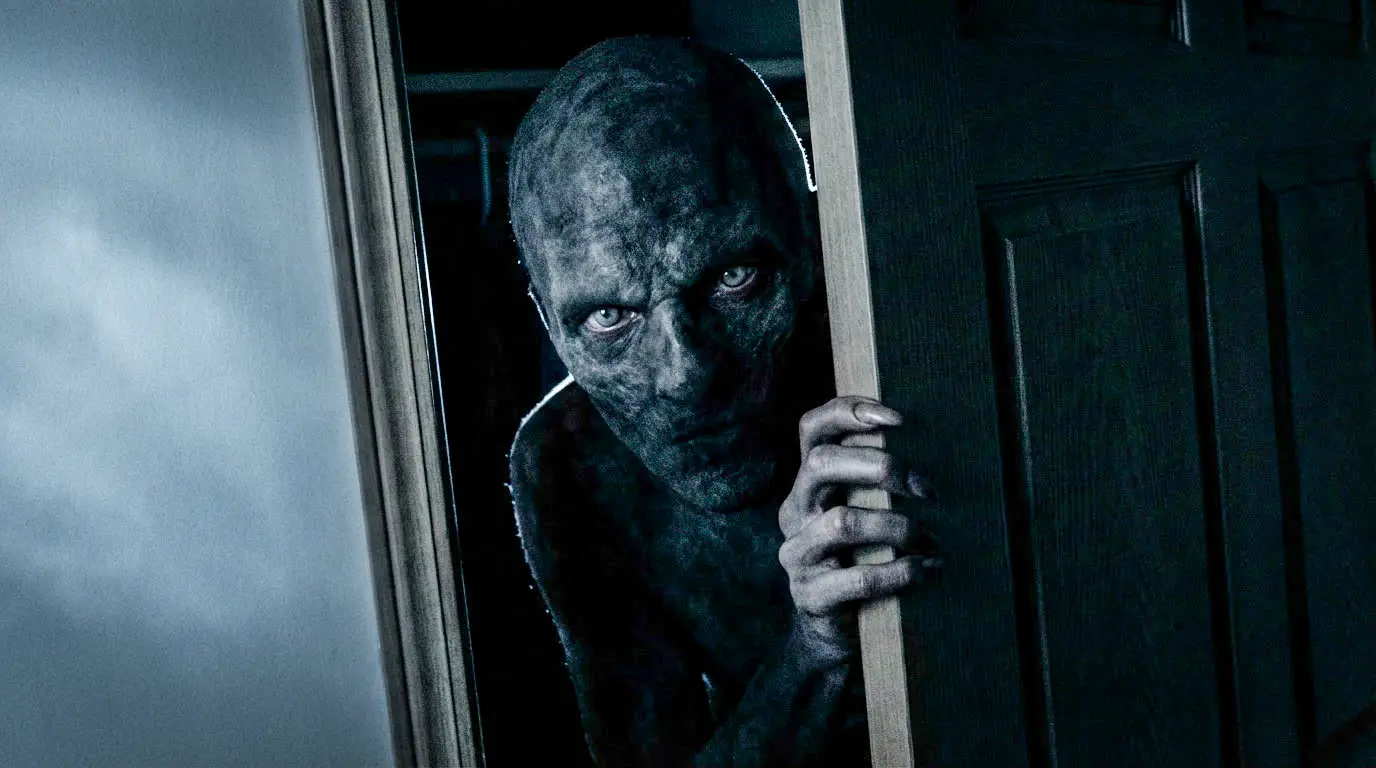
The Bogeyman is a flexible fear figure rather than a creature with one stable appearance or biography. In English-speaking traditions, the name can designate an imagined threatening presence shaped by particular social circumstances.
Like the Drude, it demonstrates how fear can acquire a recognizable supernatural agent. The difference is emphasis: the Drude is more specifically connected with oppressive sleep experiences.
Dybbuk

The Dybbuk belongs to Jewish folklore and is understood as a spirit that possesses a living person. Its threatening role centers on intrusion into human life and the distress associated with that occupation.
Both figures make bodily vulnerability intelligible through supernatural agency. However, possession is not the same as nightmare oppression, and the Dybbuk’s religious setting should remain distinct from German Drude traditions.
Religion/Ritual
The Drude’s clearest connection with protective custom is the Drudenfuß, literally “Drude’s foot,” a name for the pentagram. This five-pointed sign was associated with protection against harmful supernatural influence, including the defense of households and stables.
Its purpose was defensive rather than devotional: protection from a feared presence, not an offering to it.
The sign’s name alone does not establish exactly how individual households used it. Nor does its protective role establish a universally recognized holy symbol or a fixed vulnerability shared by every Drude tradition.
Particular materials, spoken formulas, placement rules, offerings, and observances require evidence from specific local accounts rather than reconstruction from the pentagram’s name.
Scientific or Rational Explanations
Sleep paralysis offers a plausible modern comparison for the Drude’s oppressive nighttime visits. During an episode, awareness can return while the temporary muscular inhibition associated with rapid-eye-movement sleep persists.
A person may feel awake but remain unable to move or call out.
Some episodes also involve a sensed presence, frightening imagery, or sensations interpreted as pressure on the chest. These features help explain why an experience can feel like an assault by an external agent rather than an ordinary dream, especially when the bedroom itself seems visible.
This comparison is not a retrospective diagnosis of every Drude account. Historical descriptions may combine nightmares, interrupted sleep, illness, remembered stories, and supernatural interpretation.
Without detailed testimony about an individual episode, its precise physiological cause cannot be established merely from the creature’s name.
A cultural explanation complements rather than replaces the physiological one. People interpret unfamiliar experiences through concepts available to them.
Where oppressive sleep is associated with a Drude, the experience may be remembered and communicated as an encounter with that being rather than described in medical terms.
Memory also limits reconstruction. An account told after waking is not a direct recording of everything experienced during sleep.
Sensations, dream imagery, and later interpretation may become difficult to separate, particularly when the event is frightening and the teller already knows related supernatural explanations.
The most useful rational approach therefore distinguishes three questions: what the sleeper experienced, how that experience was understood, and how it became a story. Sleep science can illuminate the first, while folklore and social history help explain the second and third without treating them as identical problems.
Modern Cultural References
The Field Guide to Evil, “A Nocturnal Breath” segment, film
In The Field Guide to Evil’s “A Nocturnal Breath” segment, a Drude possesses a young woman, leaving her unconscious when its spirit departs her body to spread disease.
Her brother confronts the threat while trying to protect her.
Source · More info
In Its Wake, Drude, film
In the 2023 horror film In Its Wake, a winged Drude from Germanic folklore is unleashed into the world.
The nocturnal spirit attacks stranded travelers, swooping down on its prey with claws and teeth.
Source
Conclusion
The Drude belongs to a tradition in which the vulnerability of sleep becomes an encounter with a threatening presence. Its importance rests less on a fixed appearance or a single authoritative story than on the relationship between nocturnal experience and supernatural explanation.
Read in that context, the figure connects intimate bodily fear with a wider language of spirits, witches, and unseen interference. Its variability is part of its folkloric character, not a gap that requires an invented definitive description.
A careful account therefore preserves the distinction between recurring beliefs and later attempts to organize them into a stable creature profile. The Drude is most useful to understand as part of a changing supernatural vocabulary, rather than as a monster with a universally agreed biography.
Its enduring symbolic force lies in making an invisible nighttime threat imaginable. Preserving the limits of the surviving evidence allows that significance to remain clear without turning uncertain details into established tradition or unsupported modern appearances.
Further Reading
The following sources document the Drude’s historical descriptions, linguistic origins, supernatural associations, and protective customs in German-speaking folklore. Historical dictionaries and folklore collections preserve earlier interpretations, some of which remain uncertain or disputed.
Modern fictional adaptations are included separately and should not be treated as evidence of traditional beliefs.
Drude, Frühneuhochdeutsches Wörterbuch (Early New High German Dictionary)
A specialist historical dictionary entry documenting the Drude through written examples dating back to 1382.
It records early associations with female supernatural beings, witches, night spirits, and oppressive nocturnal encounters.
https://fwb.sub.uni-goettingen.de/go/drude.s.1f_1777467990
Der Drud, Grammatisch-kritisches Wörterbuch der hochdeutschen Mundart, Johann Christoph Adelung (1811 edition)
An early German dictionary entry documenting regional meanings of Drud and Drude, including witches, harmful spirits, goblins, and nightmare beings.
It discusses the phenomenon of nocturnal oppression and historical etymological interpretations.
https://lexika.digitale-sammlungen.de/adelung/lemma/bsb00009131_6_1_1158
Der Drudenbaum, Grammatisch-kritisches Wörterbuch der hochdeutschen Mundart, Johann Christoph Adelung (1811 edition)
A historical dictionary entry describing trees, particularly large oaks, associated with supposed gatherings of Druden or witches in southern German popular belief.
Useful for examining the figure’s wider supernatural associations.
https://lexika.digitale-sammlungen.de/adelung/lemma/bsb00009131_6_1_1159
Drude, An Etymological Dictionary of the German Language, Friedrich Kluge (1891)
A historical linguistic examination connecting Drude with Middle High German trute and related forms.
It discusses the uncertainty surrounding the word’s origin and proposes possible, rather than established, etymological explanations.
https://en.wikisource.org/wiki/An_Etymological_Dictionary_of_the_German_Language/Annotated/Drude
Druden, Meyers Konversations-Lexikon, Fourth Edition (1886)
A nineteenth-century encyclopedia entry describing Druden as female supernatural beings associated with witchcraft and nightmares.
It also records older interpretations involving unusual feet, Walpurgis Night, and Germanic mythology.
https://de.wikisource.org/wiki/MKL1888:Druden
Drudenfuß, Meyers Konversations-Lexikon, Fourth Edition (1886)
A historical explanation of the Drudenfuß, or pentagram, and its use as a protective symbol against supernatural harm.
It documents associations with magical traditions and household or stable protection.
https://de.wikisource.org/wiki/MKL1888:Drudenfu%C3%9F
Der Alp, Deutsche Sagen, Brothers Grimm (1816)
A collected German folk narrative describing the Alp, a closely related nightmare being, entering homes through small openings and troubling sleepers.
Valuable comparative material, although it does not establish that every Alp tradition concerns the Drude.
https://de.wikisource.org/wiki/Der_Alp
In Its Wake, Film Threat, Anthony Francis (2024)
Review of the 2023 horror film featuring a winged monster identified as a Drude from Germanic folklore.
Its attacking creature illustrates a modern cinematic interpretation, not a standard traditional appearance.
https://filmthreat.com/reviews/in-its-wake/
The Field Guide to Evil, Nocturno, Davide Comotti
Review of the 2018 horror anthology, including “A Nocturnal Breath,” in which a Drude possesses a young woman and spreads illness.
The segment offers a fictional dramatization rather than historical documentation.
https://nocturno.it/movie/the-field-guide-to-evil/
The Night Elf – Horror Documentary for Sleep, Beasts of the Ancient World: Field Notes, Sascha Schmidt (2026)
A fictional natural-history horror podcast episode that includes the Drude among folkloric beings reimagined as a single organism.
Its documentary-style biological framework is a creative premise, not traditional belief or scientific evidence.
https://rss.com/podcasts/beasts-of-the-ancient-world-field-notes/3021934/