Water Guardian – Overview
Water Guardian is a comparative category for mythological beasts whose defining identity depends on protecting, controlling, inhabiting, or regulating a particular body of water or aquatic passage.
The category describes a recurring function, not a universal species. Its members differ in shape, status, and temperament, so classification depends on documented water-related roles rather than resemblance alone.
Water is central to these beings because their authority or significance is attached to a river, lake, spring, sea, or other aquatic domain. Without that relationship, the classification loses its basis.
Defining Characteristics
Physical Form and Morphology
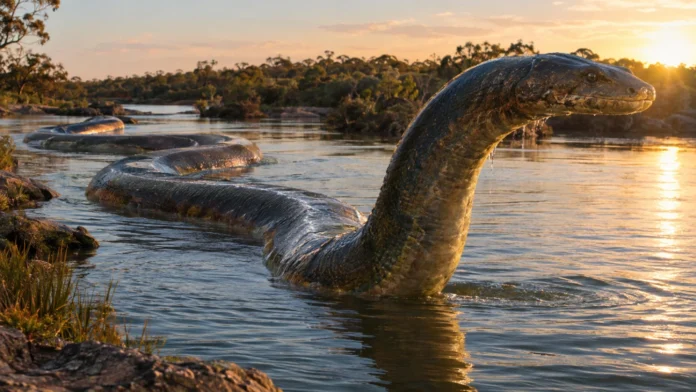
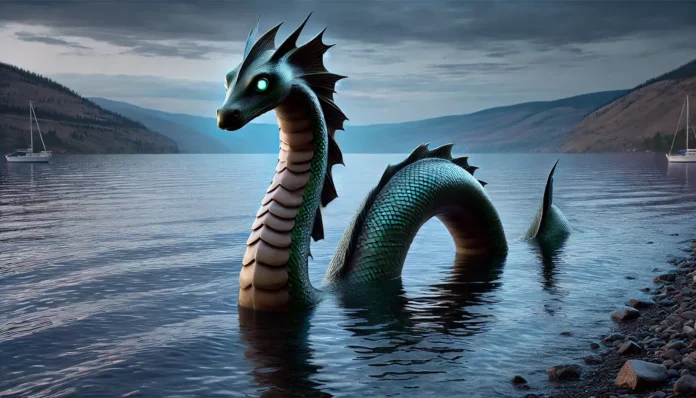
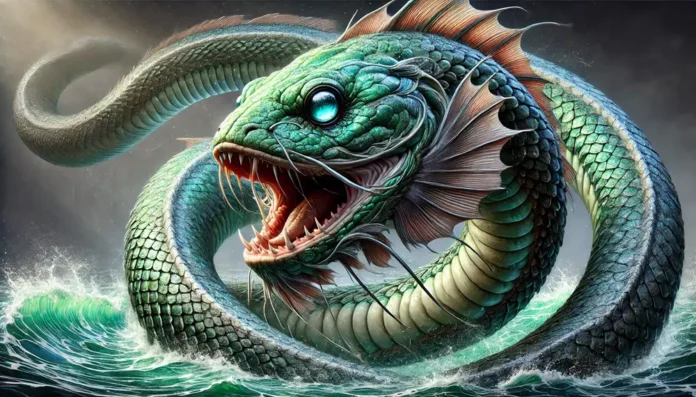
Serpentine bodies recur among water-associated guardians, especially in Asian traditions where dragons or nāgas connect aquatic environments with supernatural authority. This pattern is common, but not required for classification.
Other traditions describe guardians through animal, hybrid, or partly human forms. Their visible anatomy may distinguish a local being, although appearance alone cannot establish a protective or regulatory role.
Ontological Nature
These beings are generally represented as more than ordinary animals because stories assign them agency over water, access to hidden domains, or relationships with divine and human communities.
Their status varies: a being may be divine, spiritual, monstrous, or locally numinous. Comparative classification should preserve those distinctions instead of treating every water presence as one ontology.
Mythological Role and Function
Place in Mythological Systems
Water guardians often mark boundaries between inhabited land and dangerous or inaccessible waters. Their presence gives a supernatural dimension to crossings, settlement, resource access, and the limits of human control.
In some traditions, they are linked to rainfall, fertility, or water supply; elsewhere, their narratives emphasize danger and territorial authority. These functions reflect distinct cosmologies rather than a single system.
Perception and Meaning
Communities may understand a guardian as protective when it safeguards a place or its people. The same being can be feared when its authority makes entry or conduct hazardous.
Such ambivalence is especially clear in Māori accounts of taniwha, whose roles can include protection or danger. This differs from traditions foregrounding dragons as auspicious regulators of water and rain.
Distinction from Related Beast Types
Conceptual Boundaries
An elemental being may personify water generally, whereas a Water Guardian is classified through a specific relationship to an aquatic place, resource, boundary, or community.
Animal-based creatures qualify only when cultural evidence gives them a guardian function. A water-dwelling animal or monster without that role remains outside this category.
Common Sources of Confusion
Conflation occurs because water-dwelling, water-controlling, and water-protecting beings can share imagery. Those traits are related, but they do not establish identical mythological functions.
Comparative analysis therefore considers local names, narratives, and attributed responsibilities. It distinguishes a guardian from an omen, a generic spirit, or a dangerous aquatic creature lacking protective authority.
Canonical Beasts Associated with This Beast Type
Nāga
In Hindu and Buddhist traditions of South Asia, nāgas are serpent or serpent-bodied supernatural beings associated with waters and subterranean realms. Their protective associations make water central to this classification.
Chinese Dragon
Chinese long are dragons connected in historical tradition with rain, rivers, and other waters. Their authority over aquatic conditions makes them representative guardians, although their roles exceed protection alone.
Taniwha
In Māori traditions of Aotearoa New Zealand, taniwha are powerful beings associated with particular waters and places. Accounts describe protective as well as dangerous roles, grounding their inclusion.
Historical Distribution and Cultural Context
Water-guardian figures appear across South Asian, East Asian, and Polynesian traditions, among others. This distribution reflects distinct local histories, not evidence for a single shared origin.
In societies dependent on rivers, coasts, or seasonal rainfall, aquatic beings could express relationships with essential resources. The details remain culturally specific rather than interchangeable environmental responses.
Written and oral evidence survives unevenly across regions and periods. Consequently, broad distribution is more securely established than a uniform chronology for the category itself.
Scholarly Interpretation and Uncertainty
Variation in Definitions
Researchers may define guardians narrowly as protectors of particular waters, or more broadly to include beings regulating aquatic forces. The broader definition risks obscuring local distinctions.
Names such as dragon or serpent do not determine category membership. Historians and comparativists must examine each tradition’s evidence for the being’s relationship to water and its attributed role.
Limits of Available Evidence
Oral traditions change through transmission, and surviving records may reflect later documentation rather than an unchanged ancient account. Specific historical interpretations therefore require caution.
No verified sources describe a universal Water Guardian species, shared origin, or common institution. The term is a modern comparative label, not an established name used across cultures.
Mythological Role Across Cultures
Water guardians recur partly because water sustains communities while also presenting hazards beyond ordinary control. Mythic agency offers culturally specific ways to interpret that dependence and uncertainty.
Comparing these figures is useful when it identifies both recurring concerns and meaningful differences. It shows how communities place supernatural authority within landscapes without collapsing separate traditions into one mythology.