Introduction
Wagyl is a Noongar ancestral serpent being associated with Country, freshwater, and the creation and continuing care of waterways in south-western Western Australia. Particularly well-documented traditions belong to Whadjuk Country, where the Swan River, or Derbarl Yerrigan, carries enduring cultural and spiritual significance.
The serpent’s movements connect ancestral activity with the shapes of the landscape. River channels, bends, and particular waters are understood through these journeys.
Wagyl is therefore more than a creature inhabiting water: the being helps explain how water and the living country are connected.
Creation is only one aspect of this identity. Other accounts emphasize the keeping of freshwater and its relationship to life, family, and Noongar law.
The ancestral presence is not confined to a completed episode in the remote past, but remains associated with particular places.
Wagyl is sometimes called a Rainbow Serpent, including in Noongar tellings, but that description should not erase its local identity. Spellings, gender, and narrative details vary between accounts.
The Swan and Canning river traditions offer specific examples rather than one definitive story for all Noongar communities.
History/Origin
Wagyl belongs to Noongar ancestral tradition rather than a literary mythology with a known author or composition date. In a recorded account, elder Noel Nannup situates the stories within nyitting, the ancestral creation context in which the formation of Country is understood.
The history of the tradition must be distinguished from the history of its written documentation. Contemporary recordings preserve knowledge expressed by Noongar people, while institutional summaries transmit selected accounts to wider audiences.
Neither recording nor publication marks the beginning of the tradition itself.
In the State Library of Western Australia’s Walking on Water recording, Nannup discusses Wagyl through serpent-like movement, while Marie Taylor relates the being to the creation of the Swan River. Their contributions preserve distinct emphases within a shared relationship between ancestral presence and waterways.
Another account, preserved on the library’s archived The Waugul page, quotes Len Collard on Waakal as creator and keeper of freshwater. The page also retains a river journey associated with the Swan’s bends and Mount Eliza.
These accounts emphasize both landscape formation and continuing custodianship.
Historical language collections provide a separate documentary trail. The University of Western Australia’s 2014 bibliography of archival Noongar language sources includes an 1886 Perth contribution by C. F. Armstrong. That bibliographic record does not itself establish an early Wagyl definition or the first published Wagyl narrative.
Place-based accounts also preserve the tradition’s historical setting. A Whadjuk account attributed to elder Barry Maguire connects Wagyl with Gooninup and the area now known as Kings Park.
Such associations show why the being’s history cannot be separated from named places and the people holding their knowledge.
Name Meaning
Noel Nannup explains Wagyl as meaning “serpent” in the State Library recording and gives the pronunciation cue “Wau-gyl.” This is a directly attributed explanation from a Noongar knowledge holder, rather than an etymology reconstructed from the appearance of the English-language spelling.
Recorded forms include Wagyl, Waugal, Waugul, Waagal, and Waakal. These spellings occur in accounts with different local and linguistic contexts.
They should not be arranged into a hierarchy in which one English rendering automatically becomes correct and all others become errors.
The variation also matters when comparing stories. Len Collard’s freshwater account uses Waakal, while other recorded narratives use Wagyl or Waugal.
Recognizing their related cultural setting does not mean that every spelling, pronunciation, or accompanying account is interchangeable across Noongar communities.
“Rainbow Serpent” is a broader descriptive label, not a demonstrated literal translation of the name Wagyl. Marie Taylor uses that description in her telling, whereas Nannup’s explanation emphasizes “serpent.”
Preserving both statements distinguishes the name’s attributed meaning from terminology used to describe the ancestral being.
Appearance
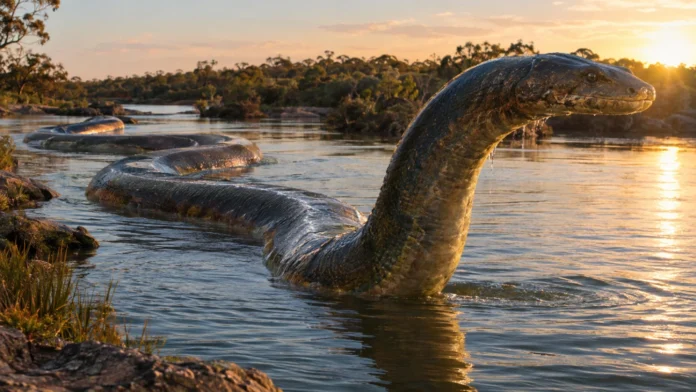
The best-supported physical form is a large, snake-like ancestral serpent. Its defining visual feature is the serpentine body, whose movement is associated with the course of waterways.
The accounts establish this broad form more clearly than they establish a detailed anatomical portrait.
Movement is especially important to understanding that appearance. In Marie Taylor’s river-creation account, Wagyl travels through Country and makes channels that subsequently fill with water.
The serpent’s passage, rather than an elaborate catalogue of bodily features, provides the connection between its form and the landscape.
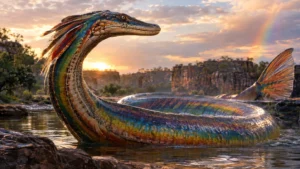
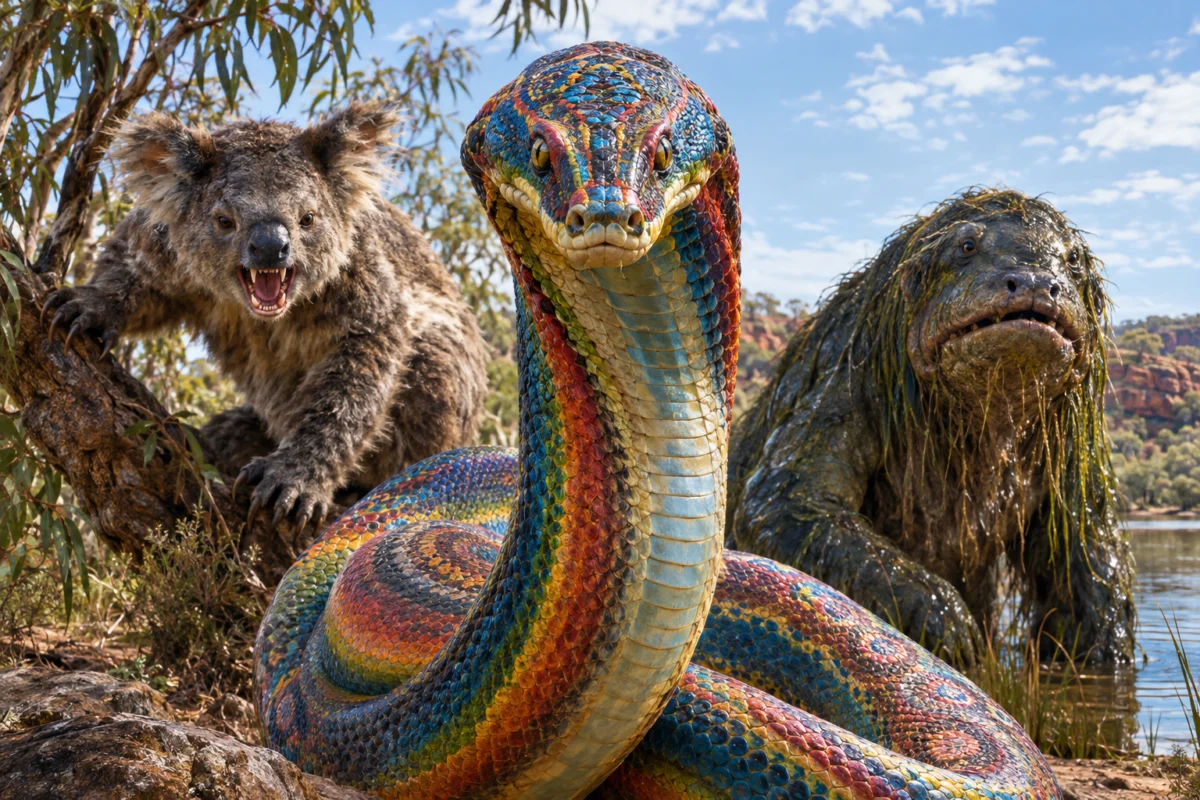
No single canonical colour, scale pattern, measured size, or facial design is established by the core accounts. Calling Wagyl a Rainbow Serpent does not, by itself, demonstrate a rainbow-striped body.
Horns, wings, limbs, and other ornamental features would likewise exceed the descriptive evidence available here.
Gender is also account-specific rather than a universal visual attribute. Taylor describes male and female Rainbow Serpents in a local Swan–Canning telling.
That detail belongs to her account and should not be converted into a rule assigning every Wagyl tradition one gender or one bodily form.
The Crocodile Spirit in a documented river-mouth episode is a separate being, not evidence that Wagyl has crocodilian anatomy. In that telling, the crocodile’s tail helps explain a landscape feature.
Combining the two figures into a snake-crocodile hybrid would misrepresent their distinct narrative roles.
Water and place are consequently essential to an informed visual understanding of Wagyl. A serpent associated with a river channel reflects the documented relationship between body, movement, and Country.
Any more detailed artistic design remains an interpretation unless its features are grounded in a particular authorized account.
Background Story
The background shaping Wagyl is the relationship between ancestral action, living Country, and freshwater. The figure does not require an invented birth, childhood, or personal biography.
Its significance emerges through waterways and places whose formation and continuing life are connected with ancestral presence.
In Marie Taylor’s telling, travelling serpents make channels through the country, and water later fills those channels to become rivers. The account links the shape of the landscape to purposeful ancestral movement, bringing the Swan and Canning waterways into a local creation framework.
Len Collard’s description of Waakal places a different emphasis on the same water-linked setting: freshwater is created and kept. The associated relationships encompass land, family, and law or knowledge.
Here the being’s importance extends beyond explaining river shapes to sustaining the conditions of life.
Specific places give these relationships their local character. The account attributed to Barry Maguire connects Wagyl with Gooninup, Kings Park, and ceremonial significance.
This is not simply a serpent story attached to an interchangeable river setting, but knowledge associated with particular Whadjuk Country.
A distinct river-mouth telling, summarized in the Western Australian Museum’s A Trek Through Time, involves a fight between Wagyl and a Crocodile Spirit. The crocodile’s tail separates fresh and salt water and explains the estuary and a former rocky sandbar.
This is one documented local version.
These accounts emphasize different relationships: the making of channels, the keeping of freshwater, and the boundary between river and sea. They should remain distinguishable rather than being joined into a single continuous adventure.
Together, they show how Wagyl’s identity is shaped by water, place, and Noongar responsibility to Country.
Famous Folklore Stories
Documented Wagyl narratives connect ancestral movement with particular waterways and landforms. The headings below describe recorded episodes rather than authenticated traditional story titles.
These accounts preserve different local emphases and should not be joined into a single supposedly definitive Noongar creation story.
The Journey That Shapes River Channels
In Marie Taylor’s recorded telling, Wagyl travels through Country, making channels that become rivers when water fills them. The journey connects the serpent’s movement with the formation of waterways, placing ancestral action within the landscape of the Swan River region.
Taylor also describes male and female Rainbow Serpents in a local Swan–Canning account. This detail belongs to her telling; it does not establish a universal gender for Wagyl or require every Noongar account to describe the same number of ancestral beings.
A separate archived river-journey account connects Waugal with the Swan River’s bends and Mount Eliza. Both accounts associate ancestral movement with identifiable geography, but their details should remain distinct.
Their significance lies in relationships with particular places, not simply in a general serpent motif.
The Encounter with the Crocodile Spirit
One documented encounter narrative places Wagyl in conflict with a Crocodile Spirit at the Swan River mouth. Preserved in the Western Australian Museum’s educational resource A Trek Through Time, this is a particular local telling, not an authenticated traditional folktale title.
In this version, Wagyl uses the crocodile’s tail to separate fresh water from salt water. The episode explains the estuary and a former rocky sandbar through the encounter between ancestral beings.
The river mouth is therefore central to the narrative, rather than an incidental setting.
The museum account is a teaching summary, whereas Taylor’s river narrative is preserved as named elder testimony. That difference matters when comparing versions.
The crocodile episode should neither override the elder’s account nor supply crocodile anatomy for Wagyl’s otherwise serpent-like identity.
Cultural Impact
Wagyl’s cultural importance begins with the relationship between Noongar people and Country. Rivers and freshwater places are not merely scenery surrounding the stories.
They are places where ancestral presence, life, knowledge, and responsibility remain connected in the accounts shared by Noongar knowledge holders.
At Gooninup and Kings Park, a place account attributed to elder Barry Maguire connects Wagyl with Whadjuk Nyungar ceremonial significance. It also identifies meaningful stones and objects.
These associations show that cultural importance attaches to specific places and features, not only to an abstract serpent symbol.
Recorded oral testimony gives these relationships a public presence without making them exclusively historical. Noel Nannup and Marie Taylor discuss the river through living Noongar knowledge.
Their participation helps distinguish community-held understandings from anonymous summaries that detach Wagyl from the people and Country concerned.
Modern public art translates selected waterway narratives into contemporary visual forms. Creating Waterways, for example, represents Waugul gliding through the Canning River and making waterways.
Such representation brings an ancestral landscape relationship into public space, but does not establish a canonical appearance for the being.
Rod Garlett’s painting Wagyl Kep Dreaming provides another contemporary interpretation, depicting sacred tunnels formed as Wagyl travelled carrying fresh water. Its inclusion in an environmental planning document places cultural knowledge alongside present-day landscape management.
The painting remains a particular artist’s representation, not a substitute for diverse community accounts.
Similar Beasts
Yacumama
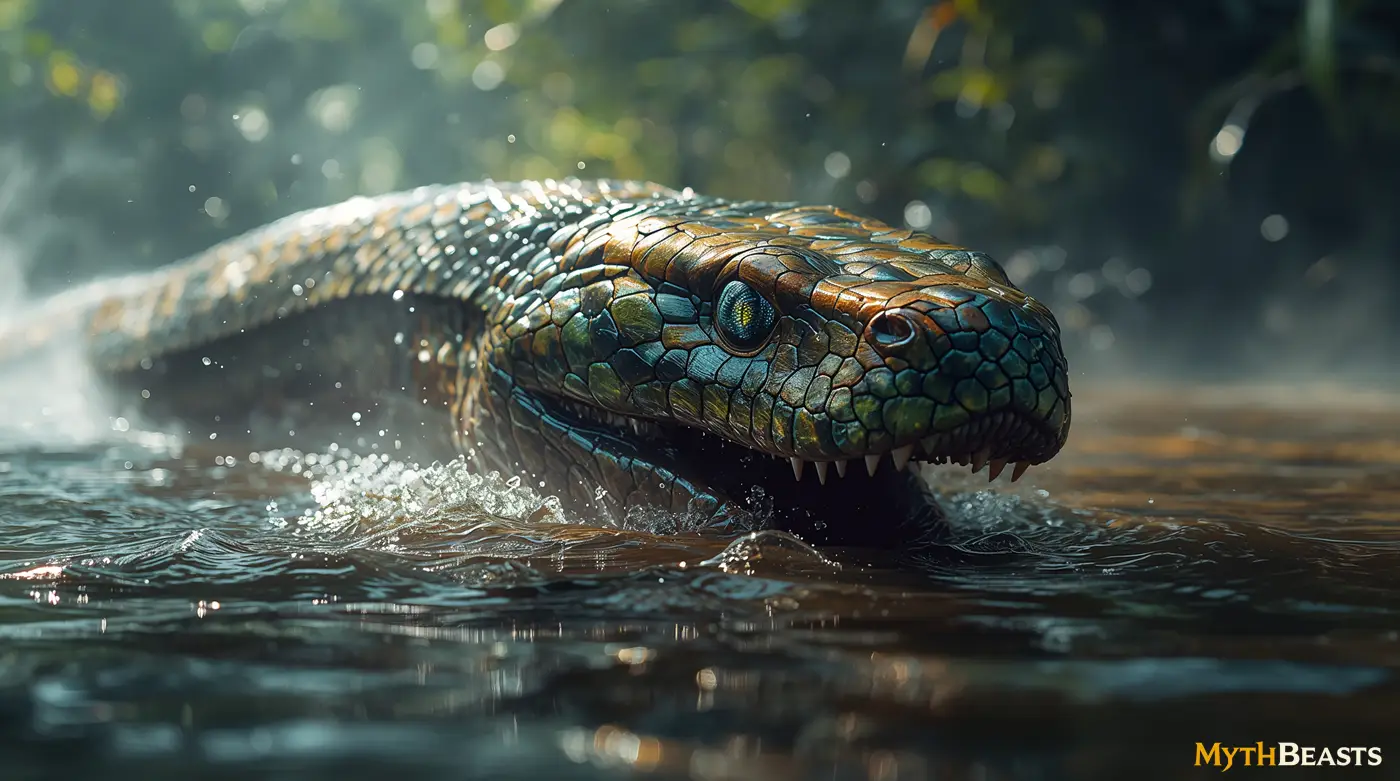
Yacumama is an Amazonian water serpent in Indigenous folklore, associated with the supernatural guardianship of rivers. Its aquatic setting makes it a useful comparison among serpent traditions.
The resemblance concerns serpent form and river guardianship. It does not establish shared origins or make Yacumama interchangeable with Wagyl’s specifically Noongar ancestral identity.
Mishipeshu

Mishipeshu is a powerful water spirit in Anishinaabe tradition, often represented with lynx-like and serpentine features. It guards water bodies and expresses both destruction and abundance.
Like Wagyl, Mishipeshu connects supernatural power with water. The comparison is primarily functional: its composite appearance and Anishinaabe cultural setting remain distinct from Noongar tradition.
Nyami Nyami

Nyami Nyami belongs to Tonga traditions associated with the Zambezi River. Described with a snake’s body and fish’s head, the being embodies protection and the river’s destructive power.
Both beings connect river environments with continuing spiritual significance. Nyami Nyami’s hybrid anatomy, however, should not be transferred to Wagyl or treated as a universal water-serpent feature.
Ngatyi
Ngatyi belongs to a distinct Barkandji Rainbow Serpent tradition. Its cultural meaning is grounded in Barkandji relationships with Country rather than in a single Australian-wide serpent mythology.
This is a closer regional comparison, but not an alternative name for Wagyl. Shared serpent imagery does not erase different communities, places, narratives, or custodial authority.
Religion/Ritual
Wagyl’s spiritual role extends beyond an account of how rivers first formed. In Len Collard’s attributed explanation, preserved on the State Library’s archived page, Waakal is both creator and keeper of freshwater.
That role links water with land, family, and law or knowledge.
Creation and continuing custodianship are therefore related but distinguishable emphases. An account focused on ancestral travel explains the formation of waterways; an account focused on keeping freshwater describes an enduring relationship.
Neither emphasis should automatically replace the other across Noongar communities.
The Gooninup and Kings Park material establishes ceremonial significance, but the supplied public records do not provide verified ritual instructions, offerings, or observance schedules. Their evidence supports discussion of sacred relationships and places, not a reconstructed ceremony or a generalized list of practices.
Scientific or Rational Explanations
The documented Wagyl tradition concerns an ancestral and spiritually present being, not an unidentified animal awaiting zoological classification. Treating it as a cryptid would change the nature of the evidence, replacing accounts of Country and responsibility with a question those accounts are not primarily addressing.
The narratives nevertheless engage closely with observable environments: river channels, bends, freshwater sources, an estuary, and a former sandbar. An environmental reading can examine how these features organize a telling.
It should be identified as an interpretation, rather than presented as the story’s complete meaning.
Physical explanations of waterways and Noongar accounts of ancestral action address different questions. Hydrology concerns water movement and river processes; the recorded traditions also concern presence, relationships, and law.
Describing one framework does not demonstrate that the other is simply an unsuccessful attempt at natural science.
Source differences offer a more useful historical question than speculation about a real giant snake. Named elder testimony, an archived attributed account, and a museum teaching summary have different purposes and levels of detail.
Variation between them does not by itself show that one account is mistaken.
Historical language archives likewise require restraint. The University of Western Australia’s bibliography identifies recoverable Noongar materials, including an 1886 Perth contribution, but does not itself establish an earliest Wagyl narrative.
A date attached to a language source cannot automatically date the ancestral tradition it might help researchers investigate.
Modern Cultural References
Wagyl’s documented contemporary representations include paintings, sculpture, installations, and public art integrated into urban spaces. These works often connect serpent movement with waterways and particular places.
Their different visual approaches are contemporary interpretations, not evidence of a single traditional appearance shared across Noongar communities.
Public artwork documented in “New public art for pocket park”, public artwork
Sandra Hill and Jenny Dawson created an artwork charting a journey through Subiaco’s public spaces.
It follows Wagyl from Postal Walk to a new pocket park.
(subiaco.wa.gov.au)
Creating Waterways, public artwork
This public artwork represents Waugul gliding through the Canning River and making waterways. Its subject connects the ancestral serpent’s movement with the formation of the local waterscape.
(pta.wa.gov.au)
Waugal Monoliths, public sculpture (1976)
Mark Le Buse’s commissioned Waugal Monoliths stand at Two Rocks in Western Australia.
The sculptures provide a documented twentieth-century example of the ancestral serpent’s representation in public art.
(inherit.dplh.wa.gov.au)
Wagyl Kep Dreaming, painting
Rod Garlett’s painting depicts a story of Wagyl travelling across the land carrying fresh water.
It connects that journey with the formation of sacred tunnels beneath Country.
(library.dbca.wa.gov.au)
Gorbal Beela (Body of Water) – Ngarngarnuditj, site-responsive installation (2024)
This collaborative installation at The Farm traces the journey of the Ngarngarnuditj Wagyl.
Its representation of the serpent at a natural soak connects the artwork directly with water and place.
(thefarmmargaretriver.com.au)
Karla Nara Gynning Bidi (Ellenbrook Track), public mural (2024)
Darren Hutchens and Nathan Corunna created this public mural at Ellenbrook Station.
It includes the Waugal and connects the ancestral serpent with the creation of local waterways.
(pta.wa.gov.au)
Conclusion
Wagyl is best understood as a Noongar ancestral serpent whose significance lies in relationships among Country, freshwater, life, and responsibility. The well-documented Swan and Canning river accounts offer particular expressions of that significance, rather than a complete or universal narrative.
Creation and continuing custodianship belong together in this understanding: waterways are not merely settings for an ancient story, but places where ancestral presence and cultural relationships endure. Reducing Wagyl to a generic monster or an Australian-wide serpent obscures those connections.
The surviving public accounts also require attention to variation. Spellings, gender, journeys, and local episodes differ, while the sources do not establish one canonical physical design.
Those differences should remain attached to their tellers and places rather than be assembled into an artificial standard version. Contemporary artworks extend Wagyl’s public visibility, but do not replace Noongar authority over the tradition.
Its lasting importance rests less on spectacular appearance than on the inseparability of water, Country, cultural knowledge, and living responsibility.
Further Reading
The Waugul, State Library of Western Australia
An archived page preserving attributed Noongar accounts of the Swan River and freshwater, including Len Collard’s explanation of Waakal as creator and keeper of freshwater sources.
Source
Walking on Water, State Library of Western Australia
Audio and transcript featuring Noongar elders Noel Nannup and Marie Taylor, including discussion of Wagyl’s name, ancestral movement, and the formation of river channels.
Source
A Trek Through Time, Western Australian Museum
An educational resource preserving a local telling of Wagyl’s encounter with a Crocodile Spirit at the Swan River mouth, involving the crocodile’s tail and the separation of fresh and salt water.
Source
Creating Waterways, Public Transport Authority
A public-art record documenting a representation of Waugul gliding through the Canning River and making waterways, connecting contemporary visual interpretation with a local ancestral narrative.
Source
Waugal Monoliths, inHerit, State Heritage Office
A heritage record documenting Mark Le Buse’s sculptures at Two Rocks, commissioned in 1976, with information about their history, physical setting, and associated Waugal signage.
Source
Wagyl Kep Dreaming, Department of Biodiversity, Conservation and Attractions library
A planning document featuring Rod Garlett’s painting and its account of sacred tunnels formed as Wagyl travelled across the land carrying fresh water.
Source
Gorbal Beela (Body of Water) – Ngarngarnuditj, The Farm, 2024
Documentation of a collaborative installation on Wardandi Country, tracing the Ngarngarnuditj Wagyl’s journey and representing the ancestral water-protecting serpent at a natural soak.
Source