Introduction
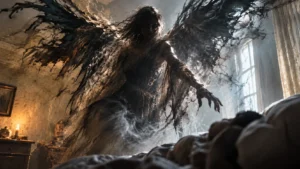
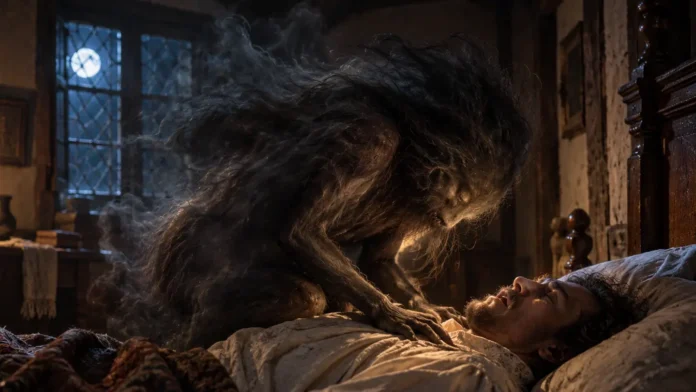
The Alp is a pressure spirit in German folklore, feared for nocturnal visits that leave sleepers feeling crushed, breathless, or overwhelmed by disturbing dreams. Its defining feature is the attack itself: an oppressive presence upon the chest, rather than a single recognizable animal or humanoid body.
The tradition belongs to a wider network of nightmare beliefs across German-speaking regions. Names such as Alb, Trud, Mahr, and Schratt sometimes overlap with it, although their meanings and associated stories vary locally.
These connections place the Alp within a family of related beings, not a uniform supernatural species.
Historical accounts preserve two connected interpretations: a supernatural visitor responsible for troubled sleep, and the frightening bodily experience called Alpdrücken. Later explanations increasingly emphasized the sleeper’s condition.
That development does not erase the older folklore or establish one medical explanation for every reported encounter.
The Alp’s importance also survives in language. German Alptraum and Albtraum mean nightmare, preserving the association between the being and distressing sleep.
Collected legends extend its activities beyond the bed, connecting it with household intrusion, night-ridden horses, tangled hair, and encounters in the rural landscape.
History/Origin
The Alp’s origins cannot be assigned to a single founding story or date. Its vocabulary reaches back into medieval German, while the more detailed surviving accounts belong to later dictionaries and folklore collections.
The history of the word is therefore older than many recorded encounter narratives.
By the late eighteenth century, the pressure-spirit interpretation was established enough to appear in Johann Christoph Adelung’s German dictionary, published in its second edition between 1793 and 1801. His entry connects the malevolent being with oppression during sleep and with an animal lying upon the sleeper.
Jacob and Wilhelm Grimm published “Der Alp” in the first volume of Deutsche Sagen in 1816. This entry brings together oral reports and references to earlier printed material.
It is an important early collection, but its publication date should not be mistaken for the beginning of Alp belief.
The Grimm material preserves a cluster of beliefs rather than one continuous tale. Tiny entry holes, human appearances, a white butterfly, nocturnal riding, and a borrowed boat occur within the same collected tradition.
Their coexistence shows how varied the Alp’s identity already was when these accounts entered print.
Related Austrian traditions group Alp and Alb with pressure spirits called Drud and Schratt. Regional protective customs accompany these names, demonstrating that the belief extended across German-speaking cultural settings.
Such evidence broadens the tradition’s geographical context without making every Austrian and German version interchangeable.
By the later nineteenth century, supernatural and bodily interpretations were visibly competing. The 1885–1890 Meyers encyclopedia discussed Alpdrücken as a terrifying sleep state involving pressure and inability to move or cry out.
Its physical explanation belongs to that period, documenting changing interpretation rather than settling the tradition’s origin.
Name Meaning
Alp, also written Alb, belongs historically to Germanic vocabulary associated with elves and supernatural beings. Middle High German alp or alb carried meanings connected with a spectre, an incubus, a nightmare, or nightmare oppression.
The recorded meanings encompass both an imagined agent and the distress attributed to it.
Friedrich Kluge’s etymological dictionary, available in an English edition from 1891, connects the German word with elf vocabulary. That linguistic relationship is significant, but it does not establish a standard elf-like appearance.
A word’s ancestry and a creature’s later narrative identity are related questions, not identical ones.
The compounds make the sleep connection especially clear. Alpdrücken refers to the oppressive experience associated with the Alp, with drücken expressing pressing or pressure.
Alptraum and Albtraum connect the same name with Traum, meaning dream. These words retain the folklore’s central association even outside supernatural belief.
Historical glosses such as incubus are best understood as comparisons for nocturnal oppression, not proof that the Alp and the incubus were identical. Likewise, regional names including Trud and Mahr indicate overlapping traditions rather than one settled etymology.
The apparent resemblance to Alpine place vocabulary does not establish a mountain origin.
Appearance
The Alp has no single canonical body in the strongest historical evidence. It is most consistently recognized by what it does to a sleeper: pressing upon the chest, hindering breathing, or producing terror.
In some accounts, the oppressive presence matters more than any clearly observed shape or physical description.
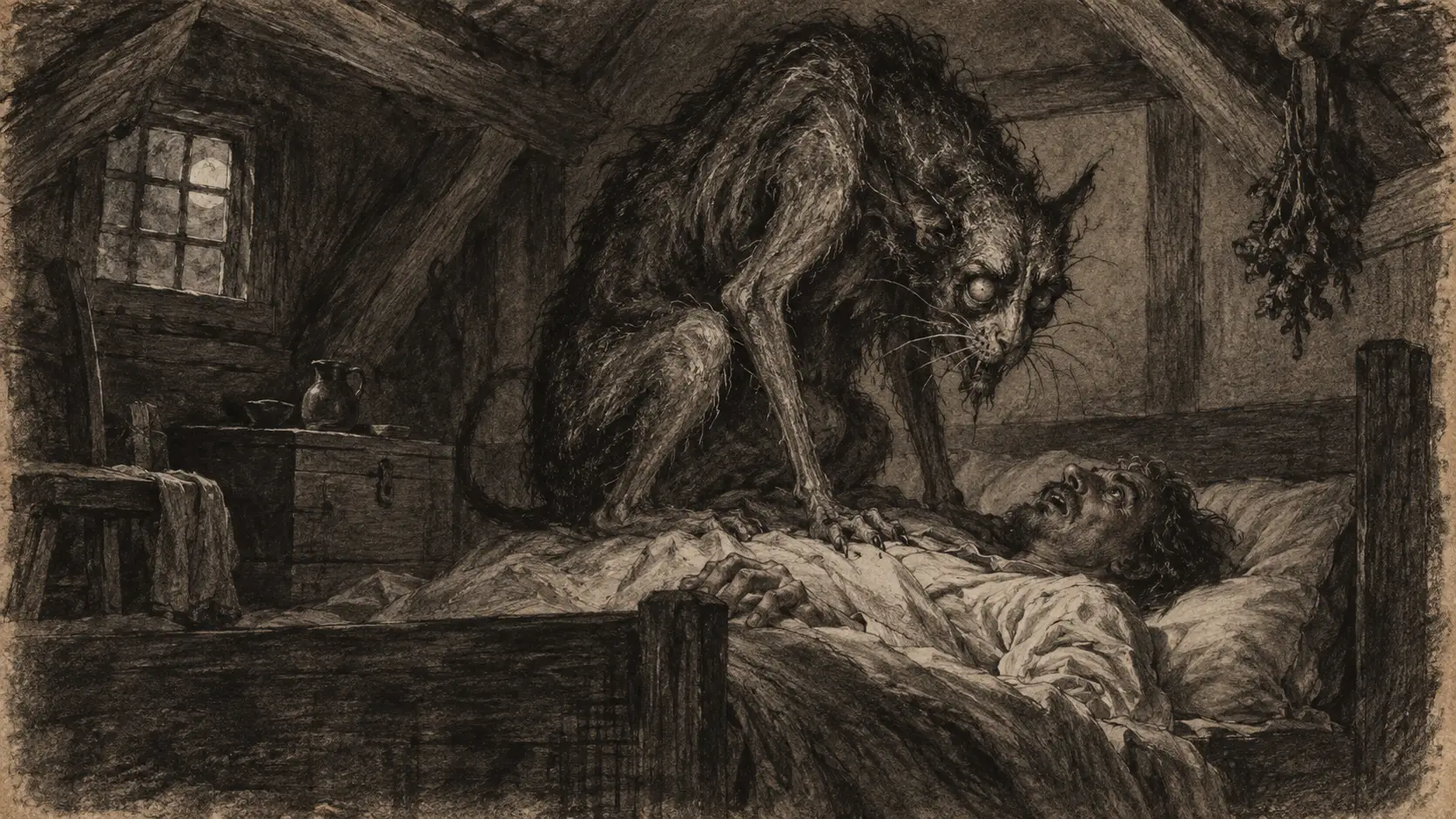
An animal form appears in Adelung’s dictionary, where the spirit may be imagined as a cat or another animal lying upon a person. This version gives the pressure a familiar bodily explanation within the supernatural story, but it does not establish the cat as the Alp’s universal appearance.
A particularly distinctive belief in the Grimm collection describes a small white butterfly. A person whose eyebrows join could supposedly send the Alp by thought; it emerged from the eyebrows and settled on another sleeper’s chest.
The butterfly belongs to this specific account, not to every manifestation.
Another collected episode connects the nocturnal attacker with a human appearance after a challenge to return the following day. Such a version brings the threatening visitor into the recognizable human world.
It differs from the animal and butterfly forms without requiring that one version cancel out the others.
The ability to enter through tiny holes also complicates any fixed anatomy. The accounts emphasize extraordinary access to closed rooms rather than a measurable body size.
A horned demon, vampire, or uniformly elf-like humanoid would therefore impose a consistency the early evidence does not provide.
Background Story
The Alp’s background lies in explanations of vulnerability during sleep and the belief that ordinary domestic boundaries could be crossed by unseen agents. A closed house offered no certain protection.
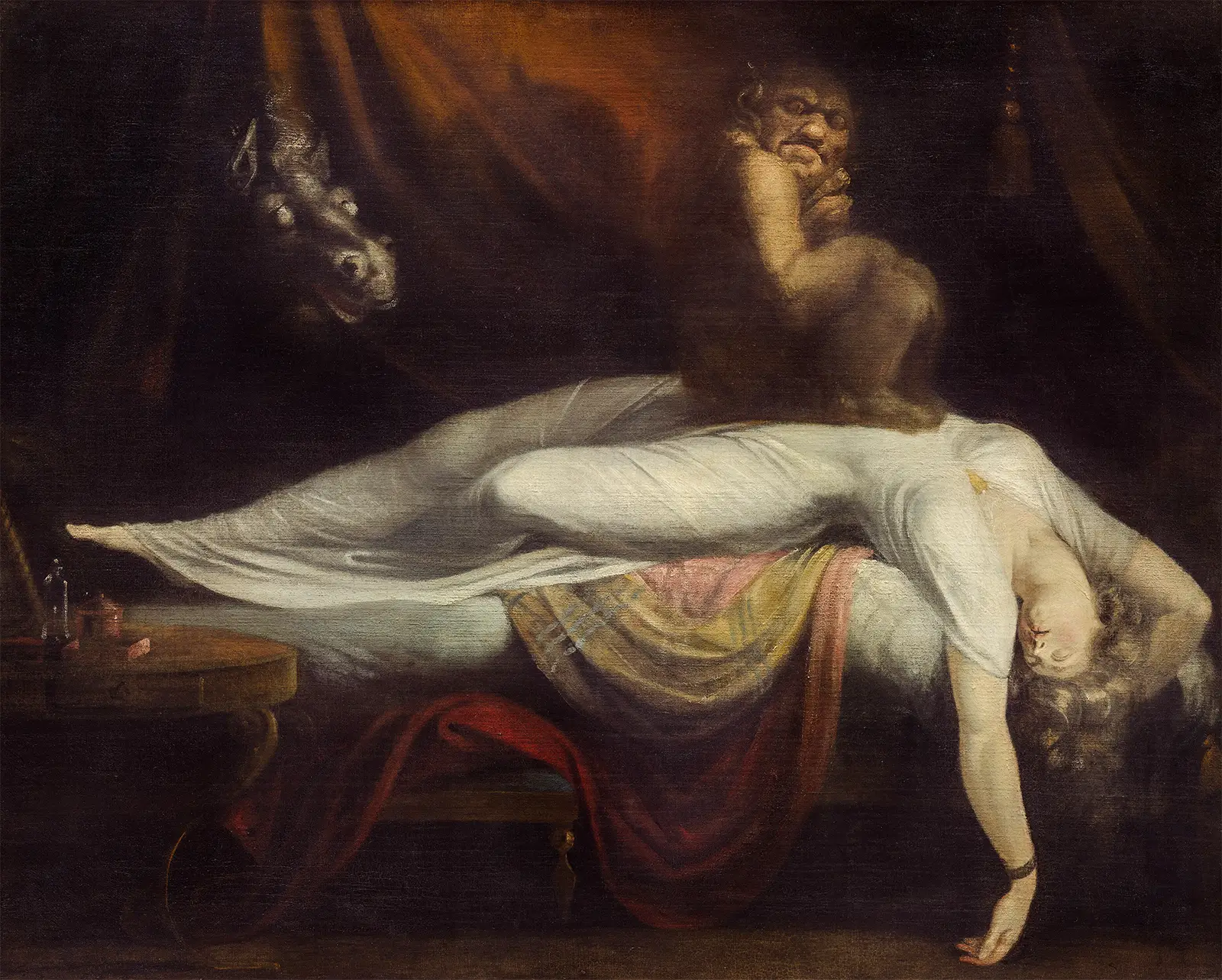
In the Grimm material, an Alp could enter through an opening far smaller than a normal visitor could use.
The same entry motif gives the intruder a peculiar limitation: plugging its opening could prevent escape even if the doors were subsequently opened. This is a narrative rule of the collected belief, linking supernatural intrusion to a particular passage rather than to unrestricted movement through the building.
The tradition also extends into rural work and animal care. Beliefs about night riding on horses and braiding or tangling sleepers’ hair connect the Alp with disturbances noticed after darkness.
Within these accounts, the being explains not only frightening sensations but also visible traces of nocturnal interference.
An episode involving herdsmen and a boat places the Alp outside the sleeping chamber. The visitor repeatedly crosses water and demands the boat’s return when it is removed.
Such encounters give the spirit practical dependencies and a capacity for speech, widening its role beyond that of an invisible weight.
The white-butterfly belief introduces a different relationship between people and nocturnal harm: the Alp can be sent by someone rather than acting entirely independently. Alongside human appearances in other episodes, this motif blurs the boundary between an external spirit and supernatural activity associated with a living person.
Regional protective customs further shaped this background. Austrian material records Alp blessings, a Drudenfuß placed at the bed’s foot, and protective plant material in a Palm Sunday bundle.
These practices locate the pressure spirit within household protection and local religious life, rather than within a single, organized mythology.
Famous Folklore Stories
The Brothers Grimm’s 1816 collection Deutsche Sagen preserves several encounter accounts and beliefs under the heading “Der Alp.” These are not a single continuous story.
The descriptive headings below identify documented motifs, rather than authenticated traditional titles for separate folktales.
Entry Through a Small Hole
One recorded belief explains how an Alp could penetrate an apparently secure house: it entered through an extremely small opening. Closed doors therefore offered little protection.
The supernatural intruder did not require the ordinary access available to a person or large animal.
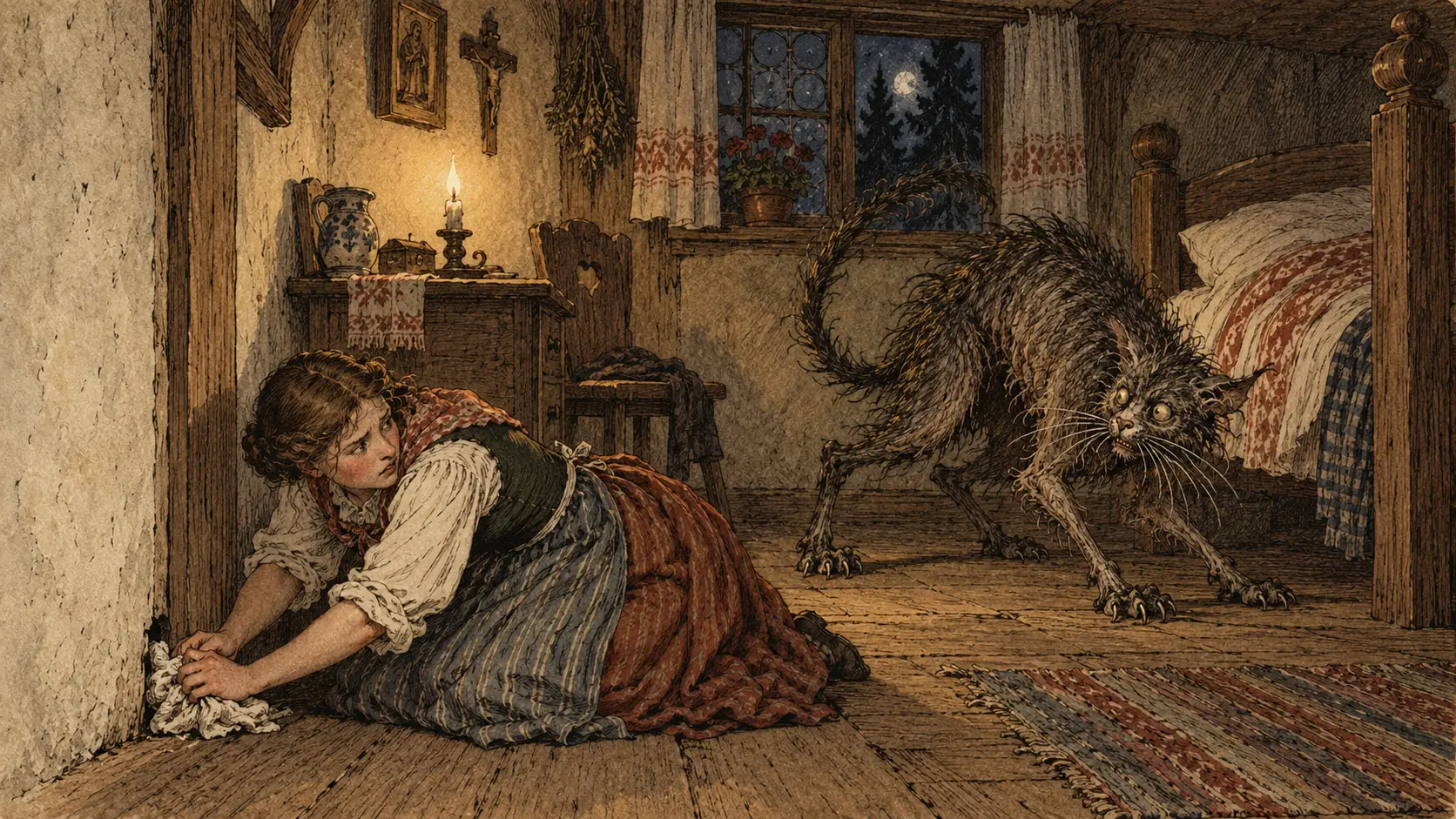
The same account gives this ability an unexpected limitation. If someone stopped up the opening while the Alp remained inside, it could not escape.
Even opening the doors would not release it, because its departure depended upon the tiny passage it had used.
This is a trapping motif rather than a tale with a named hero. Its distinctive feature is the contrast between an intruder capable of entering a closed house and one constrained by a particular opening.
The account does not establish this restriction for every Alp tradition.
The Boat Used to Visit Herdsmen
Another encounter account concerns herdsmen and an Alp, also called a Trud, that repeatedly crossed water in a boat to visit them. Instead of remaining an unseen bedroom presence, the being followed an observable route and depended upon an ordinary object.
The herdsmen took the boat away. Deprived of its means of crossing, the Alp complained and threatened them until they returned it.
The episode therefore presents resistance through interference with the visitor’s movements, rather than through a blessing or protective emblem.
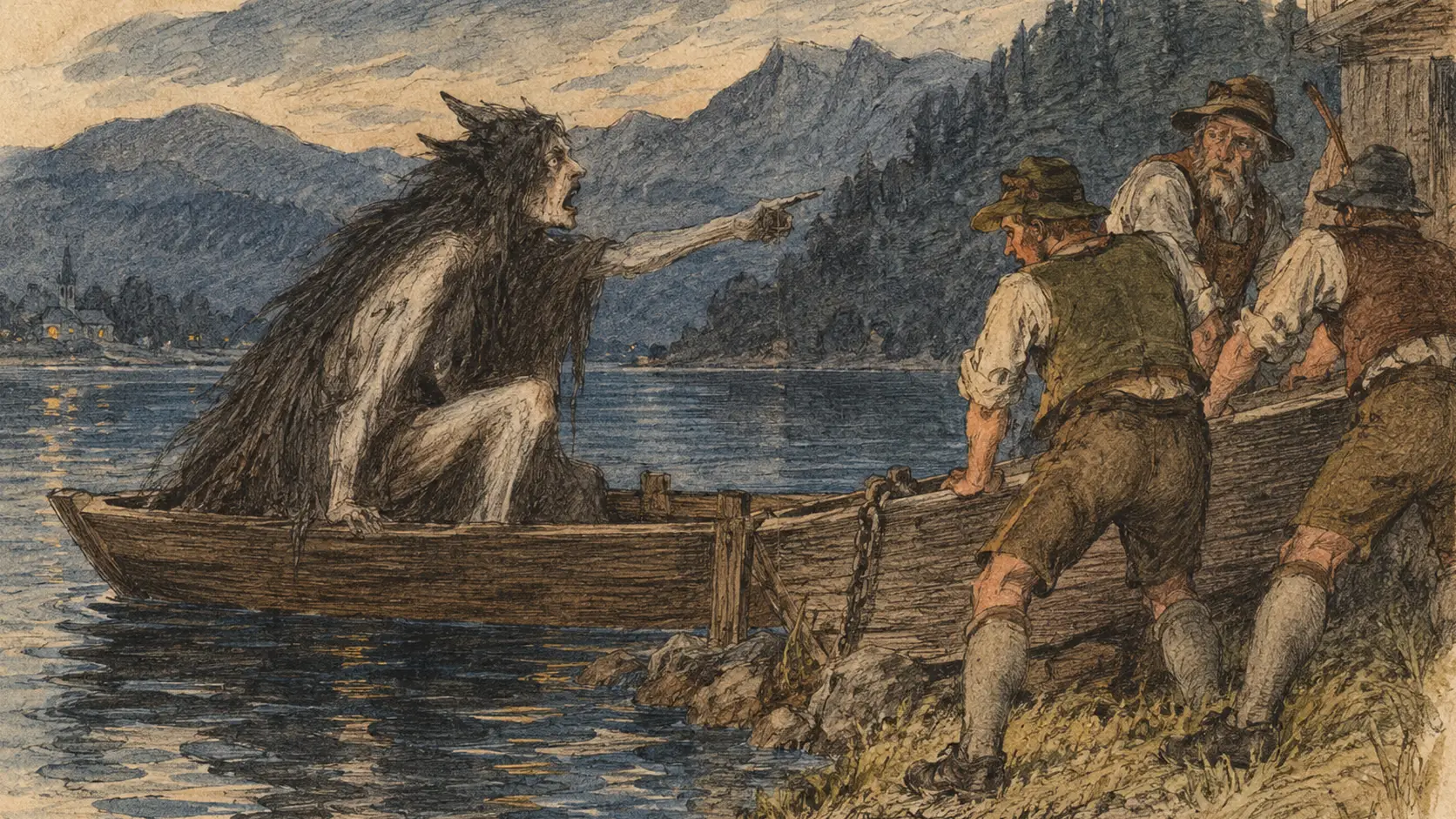
This account broadens the tradition beyond chest-pressure attacks. Its Alp speaks, travels, and reacts to human obstruction. Those details belong to this particular encounter narrative; they should not become universal claims that all Alpe require boats or habitually inhabit waterside places.
The White Butterfly Sent to a Sleeper
A particularly unusual belief connects an Alp with a person whose eyebrows meet. In this variant, the person could direct the being toward another sleeper through thought.
It emerged from the eyebrows as a small white butterfly and settled upon the intended victim’s chest.
The apparent harmlessness of the butterfly contrasts with the oppressive experience it produces. The account links a visible bodily feature, deliberate human agency, and a tiny supernatural visitor.
It does not describe an ordinary butterfly accidentally disturbing someone during sleep.
This is a recorded belief episode, not a named traditional folktale. Its butterfly form is important precisely because it differs from animal and human variants elsewhere in the tradition.
It supplies no basis for treating wings or white coloration as the Alp’s standard appearance.
Cultural Impact
The Alp’s clearest lasting cultural imprint is linguistic. German words such as Alptraum and Alpdrücken preserve the connection between troubled sleep and an oppressive presence.
Everyday language can retain that older association without requiring speakers to believe that a spirit actually visits their beds.
Historically, the figure gave frightening bodily sensations an intelligible agent. Pressure, breathlessness, and disturbed dreams could be understood as something done to a sleeper.
Encounter accounts then extended that explanation into stories about entry, capture, recognition, and resistance to the nocturnal visitor.
Regional vocabulary reveals a flexible belief tradition rather than a rigid supernatural classification. Alb, Trud, Mahr, Drud, and Schratt occur in overlapping contexts, but their meanings are not interchangeable everywhere.
Local naming could connect similar experiences while preserving different ideas about the being responsible.
The collection of these accounts also changed their cultural setting. Material preserved in nineteenth-century folklore collections and historical dictionaries became available for literary and comparative study.
Modern analysis distinguishes the reported sleep experience from its supernatural interpretation, while treating both as important parts of the record.
Similar Beasts
Bogeyman
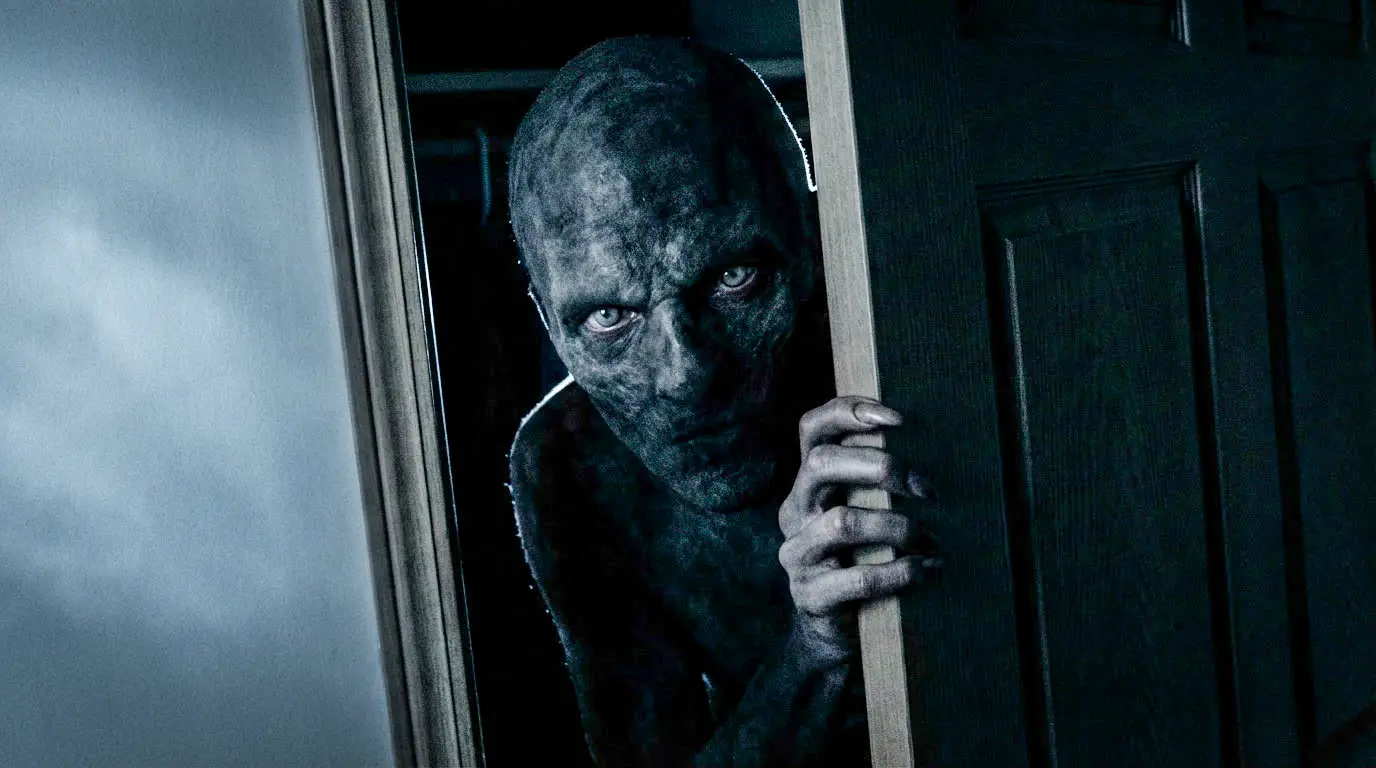
The Bogeyman is a variable fear figure in English-speaking traditions, rather than a creature with one fixed body or narrative. Its identity depends heavily upon the surrounding social context.
Like the Alp, it can embody fear without a consistent appearance. The distinction is functional: the Alp specifically explains oppressive sleep, rather than generalized frightening possibilities.
Adze

The Adze is a vampiric being in Ewe folklore that takes firefly form and drains victims at night. Its insect transformation makes it a useful, narrowly defined comparison.
Its firefly form recalls the Alp’s butterfly variant, but the similarity is limited. The Adze’s draining role differs from the German spirit’s characteristic sleep-pressure attack.
Mara
The Mara belongs to Northern European nightmare-spirit traditions and is associated with sitting on sleepers’ chests. It offers a close parallel in both nocturnal setting and oppressive action.
The shared chest-pressure motif makes comparison especially useful. Nevertheless, Mara is a separate comparative figure, not simply another spelling of Alp or proof of identical local traditions.
Incubus
The incubus is a distinct demon category associated with nocturnal encounters. Historical lexicographic descriptions use it when explaining nightmare oppression, providing a comparison rather than a complete identification.
The overlap concerns a supernatural presence troubling someone during sleep. Calling the Alp an incubus without qualification would obscure its regional names, variable forms, and broader encounter motifs.
Religion/Ritual
Protection against the Alp belongs chiefly to recorded household and regional practices, not to a unified religious cult. Austrian folklore material documents plant protection, spoken blessings, and a bedside sign.
These measures reflect particular traditions and should not be presented as universal German observances.
One Austrian practice included Schrattllaub in a Palm Sunday bundle. This places protection against a pressure spirit within a Christian seasonal setting.
The recorded plant name should be retained cautiously rather than expanded into an unsupported botanical identification or a standardized recipe.
Other Austrian protections included an Alpsegen, a blessing against the Alp, and a Drudenfuß at the foot of the bed. These combine spoken and material defenses.
The evidence establishes their protective purpose, but not one universal wording, method, or ritual sequence.
The Grimm collection also records turning shoes around and using spoken challenges against the visitor. Such measures differ from the Austrian Palm Sunday practice and should remain separate variants.
They document how people believed they could resist an Alp, not demonstrable supernatural effects.
Scientific or Rational Explanations
Some experiences attributed to the Alp resemble sleep paralysis: a person feels awake but cannot move, senses a threatening presence, or experiences pressure upon the chest. This is a useful modern comparison for part of the tradition, not a proven explanation for every recorded account.
A rationalizing interpretation already appears in the late nineteenth-century Meyers Konversations-Lexikon. Its discussion of Alpdrücken describes terrifying pressure, the apparent presence of a load, animal, or ghost, and an inability to move or cry out.
It treats the experience as bodily rather than supernatural.
The physical explanation offered there belongs to its historical period. Its value here is evidence that nightmare oppression could be discussed medically as well as folklorically.
It should not be substituted for current clinical knowledge or treated as authoritative advice about sleep symptoms.
The surviving narratives also contain elements that a sleep-state comparison cannot directly explain. Boats, blocked entry holes, and a butterfly dispatched by thought belong to stories and reported beliefs.
They show how an account of nocturnal distress could incorporate supernatural rules and human agency.
A careful interpretation therefore separates sensations, explanations, and narrative elaboration. Fear and pressure may have contributed to some reports; regional traditions supplied names, forms, and countermeasures.
The evidence supports examining that interaction, but does not establish one medical event as the origin of the entire Alp tradition.
Modern Cultural References
The Alp’s documented modern reception includes dedicated folklore podcasts that recast its nocturnal attacks for contemporary audiences. Their descriptions emphasize demons, nightmares, or sleep paralysis, while the historical tradition preserves a broader range of local identities and encounter motifs.
#372 German Sleep Paralysis Demon – The Alp, podcast episode (2024)
This Paranormal Life, hosted by Rory Powers and Kit Grier, devotes this episode to German nightmare folklore.
Its title explicitly connects the Alp with sleep paralysis.
(podcasts.apple.com)
THE ALP – Germany’s Nightmare Demon, podcast episode (2025)
Freaky Folklore, presented by Carman Carrion, dedicates this episode to the German nightmare spirit.
It brings the Alp’s association with frightening nocturnal experiences into contemporary supernatural storytelling.
(podcasts.apple.com)
Episode 3: The Drude – Mysterious Guardian, podcast episode (2023)
The Baba Yaga Show, presented by Xenia, explores the Drude as a Germanic nocturnal spirit.
This concerns a related regional figure, not an unqualified equivalent of every Alp.
(podcasts.apple.com)
Conclusion
The Alp is best understood as a German pressure spirit whose defining action is the oppression of a sleeper, rather than as a creature with one recognizable body. Chest pressure, breathlessness, fear, and troubled dreams connect its diverse accounts.
Animal, human, and butterfly appearances belong to particular recorded variants, not a universal design. This flexibility is central to the tradition: an alarming nighttime experience could acquire different supernatural forms while retaining the same threatening relationship between an unseen visitor and a vulnerable sleeper.
Its lasting significance lies in the meeting of bodily experience, language, and local storytelling. Historical connections with elf vocabulary, overlapping regional names, and recorded protective customs reveal a tradition that resists a single tidy classification.
Sleep paralysis offers a useful comparison for some sensations, but does not establish the origin of every account. Preserving these distinctions allows the Alp to remain both a documented folklore figure and an example of how communities gave narrative shape to frightening experiences at the boundary of sleep and waking.
Further Reading
Deutsche Sagen, vol. 1, “Der Alp”, Jacob and Wilhelm Grimm, Wikisource (1816)
An early collection of Alp beliefs and encounters, including entry through tiny holes, a trapped intruder, a borrowed boat, and the white-butterfly variant.
Source
Grammatisch-kritisches Wörterbuch der hochdeutschen Mundart, “Der Alp”, Johann Christoph Adelung, Bayerische Staatsbibliothek digital
Historical dictionary entry connecting the Alp with oppressive sleep, impaired breathing, animal appearances, and regional names.
Its etymological speculation should be distinguished from later linguistic research.
Source
An Etymological Dictionary of the German Language, “Alp”, Friedrich Kluge, Wikisource (1891 English edition)
Historical linguistic reference tracing the word’s nightmare and spectre meanings and its relationship to Germanic elf vocabulary, without establishing a fixed physical appearance.
Source
ABC zur Volkskunde Österreichs, “Alp”, Austria-Forum
Regional folklore overview explaining pressure-spirit names and Austrian protective customs, including Alp blessings, Palm Sunday plant protection, and the Drudenfuß at the foot of the bed.
Source
Night-Mares: Demons that Cause Nightmares, University of Pittsburgh
Comparative folklore resource presenting the Grimm Alp episodes alongside related nightmare-spirit traditions.
Useful for exploring shared motifs while keeping local names and variants distinct.
Source
#372 German Sleep Paralysis Demon – The Alp, This Paranormal Life, Apple Podcasts (2024)
A contemporary podcast episode devoted to the Alp and its association with sleep paralysis.
Useful as an example of modern reception, rather than historical evidence for traditional beliefs.
Source