
Middle East
Middle East embodies a rich tapestry of mythic narratives reflecting diverse spiritual cosmologies and cultural paradigms shaping human experience.
Relevant Beasts
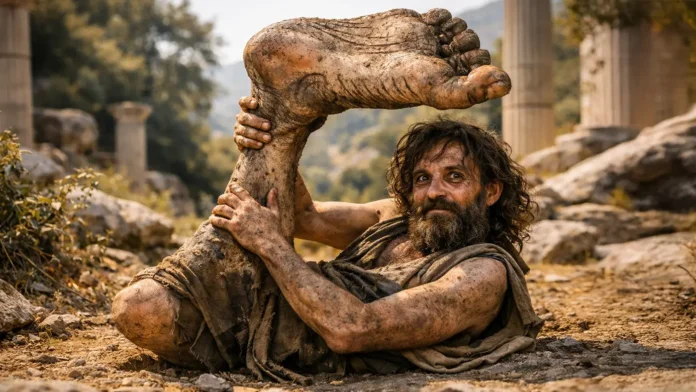
The Monopod (Sciapod) is a legendary one-legged humanoid from Greek and Roman texts, known for using its giant foot...
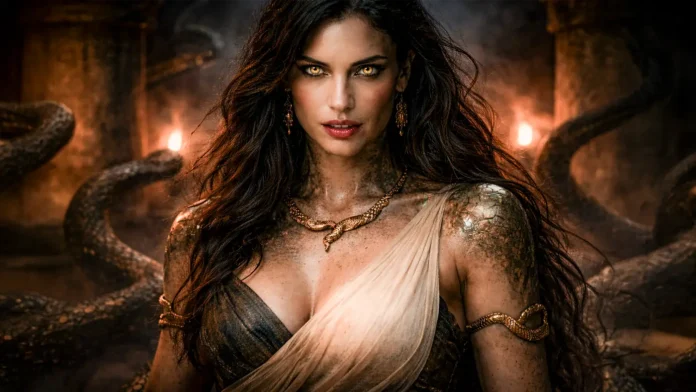
Lamia from Greek mythology, known for her tragic transformation into a child-eating creature, often depicted with a serpent-like body.
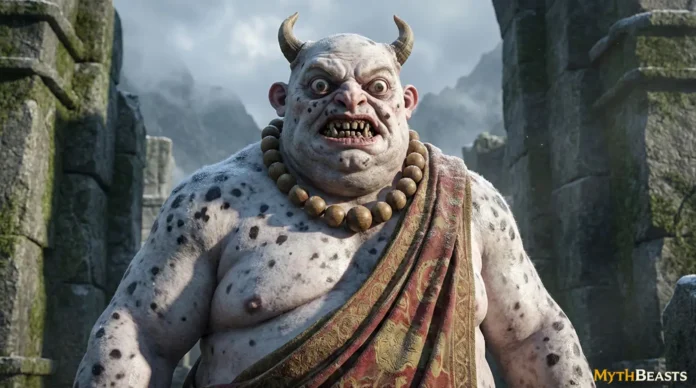
Div-e Sepid, the White Demon in Persian mythology, symbolizes chaos and evil. Known from the epic Shahnameh, it challenges...
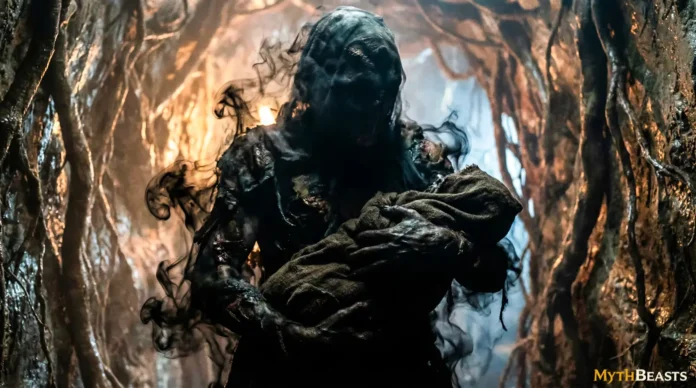
The Āl is a folkloric figure associated with childbirth danger in Iranian and Caucasian traditions, reflecting historical fears surrounding...
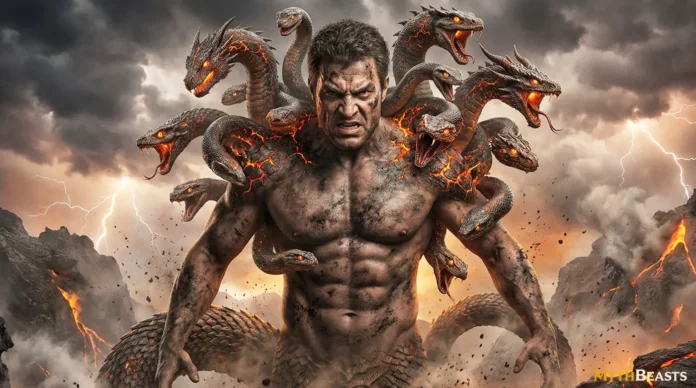
Typhon is a formidable figure in Greek mythology, often depicted as the most fearsome of all creatures. Known as...
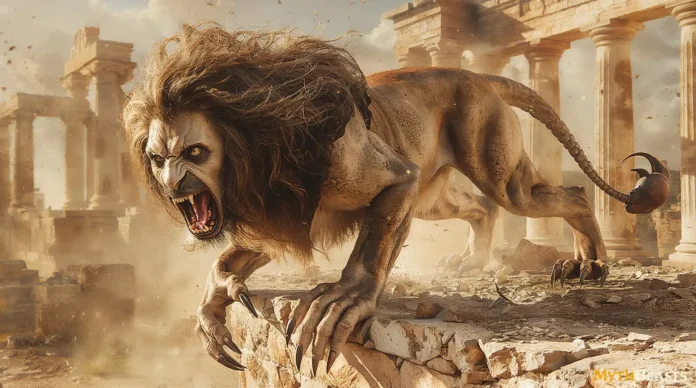
Hybrid Persian man-eater with human face, lion body and barbed tail, famed in Greek and later bestiaries as a...
Sub Categories
Akkadian Empire
The Akkadian Empire represents a significant cultural and historical entity in ancient Mesopotamia, influencing mythological traditions with its centralized power and administrative innovations. Emerging around the 24th century BCE, the empire unified various city-states.In myth and folklore, the Akkadian Empire contributed to the development of literary traditions that shaped subsequent Mesopotamian narratives. Its influence extended through language, governance, and religious practices across the region.
Assyrian Empire
The Assyrian Empire, from 2500 BCE to 609 BCE, was known for its powerful military and advanced infrastructure. At its height, Assyria controlled much of Mesopotamia, Egypt, and the Levant.Assyrian gods included Ashur and Ishtar, while mythical creatures like the Lamassu, a protective deity depicted as a winged bull with a human head, adorned their city gates.
Byzantine Empire
The Byzantine Empire was the continuation of the Roman Empire in the East, centered around its capital, Constantinople (modern-day Istanbul). It was known for its rich Christian traditions, blending Roman governance with Greek culture. Byzantine mythology and religion revolved around Christianity, and they contributed greatly to religious art and architecture.nnTheir empire lasted for over a millennium, playing a central role in preserving classical knowledge and spreading Christianity throughout Eastern Europe and Russia.
Carthaginians
The Carthaginians, originally a Phoenician colony, became a major power in the western Mediterranean from 814 BCE to 146 BCE. Their culture was heavily influenced by Phoenician and North African traditions. Carthaginian religion included gods like Baal and Tanit, who were central to their mythology.nnThe Carthaginians also had myths of sea monsters and creatures linked to their maritime trade routes. As fierce competitors of Rome, their eventual downfall in the Punic Wars left a deep mark on the history and mythology of the Mediterranean.
Egypt
Egypt, one of the oldest and most influential civilizations, has roots dating back to 3100 BCE and is renowned for its vast mythology, including gods like Ra, Osiris, and Anubis. Egyptian culture introduced iconic mythological figures and beliefs in the afterlife, which shaped the religious and cultural landscape for millennia.From monumental architecture to complex religious practices, Egypt's mythology remains a cornerstone in global cultural heritage. Egyptian myths and deities still influence modern storytelling and spiritual beliefs.
Elamite Civilization
The Elamites, from 2700 BCE to 539 BCE, were based in southwestern Iran, frequently clashing with Mesopotamian states. They contributed to the development of writing and metallurgy, leaving behind rich artistic and architectural heritage.Elamite mythology included gods like Inshushinak and protective serpentine dragons.
Greece
Greece is a significant origin of mythological traditions, known for its rich tapestry of myths and folklore. These narratives often explore themes of heroism, power, and the divine. The geographical landscape of Greece, with its mountains and seas, influenced the development of these stories, providing a backdrop for various mythological settings.Greek mythology has profoundly impacted Western culture, shaping literature, art, and philosophy. Its influence extends beyond Greece, contributing to the mythological frameworks of other cultures. These myths continue to be studied for their cultural, historical, and literary significance.
Hebrews
Hebrews in myth and folklore represent an ancient people whose narratives are central to several religious traditions. Their historical context is rooted in the ancient Near East, influencing regional cultures.The Hebrews' traditions have impacted mythological frameworks, contributing to religious texts and moral teachings. Their influence extends to the development of monotheistic religions and ethical principles in various societies.
Hejaz Kingdom
The Hejaz Kingdom, located in the Arabian Peninsula, was a central part of Islamic history, controlling the holy cities of Mecca and Medina. During the Industrial period, the kingdom experienced both Ottoman and British influence, but maintained its cultural and religious significance. Islamic mythology, including stories of the Prophet and sacred creatures, was deeply intertwined with the Hejaz identity.The region played a key role in the spiritual life of Muslims worldwide, and its traditions of pilgrimage and religious devotion remained constant throughout the industrial era.
Hittite Empire
The Hittite Empire, from 1600 BCE to 1178 BCE, was based in Anatolia (modern-day Turkey) and known for its advanced ironworking and military prowess. They fought numerous battles, including the famous clash with Egypt at Kadesh.In Hittite mythology, storm gods like Tarhun ruled the heavens, and the serpent Illuyanka symbolized chaos. Their mythological traditions influenced neighboring cultures.
Ionians
The Ionians were one of the four major tribes of ancient Greece, thriving between 1000 BCE and 500 BCE. They are known for their contributions to Greek philosophy, science, and art. Ionians worshipped the same gods as other Greeks, including Athena and Apollo, but their myths had a distinctive flavor.nnMythical creatures like the Cyclops and giants were central to Ionian myths, symbolizing the challenges faced by heroes in their stories. The Ionians also played a pivotal role in the spread of Greek culture across the Aegean.
Iran
Iran represents a rich tapestry of mythological and folkloric traditions, deeply influenced by its historical and geographical context. Its myths often reflect ancient cultural values and societal structures.The influence of Iran on mythological traditions extends beyond its borders, impacting neighboring regions. This cross-cultural exchange has contributed to the development of a diverse and interconnected mythological heritage.
Macedonians
The Macedonians, led by figures such as Philip II and his son Alexander the Great, dominated Greece and much of the known world from 359 BCE to 323 BCE. Macedonian culture was heavily influenced by Greek traditions, with gods like Zeus and Dionysus playing significant roles in their mythology.nnMythical creatures like Pegasus, the winged horse, and the Chimera featured in Macedonian stories. The influence of Macedonian conquests extended across Europe, Asia, and Africa, spreading Greek mythology and cultural practices.
Minoan
The Minoan civilization flourished on the island of Crete, known for its palaces like Knossos and its advanced art, architecture, and mythology. The Minoans were famous for the myth of the Minotaur and their extensive trade networks across the Mediterranean.Their rich culture influenced many later Greek traditions, with religious practices centered around goddesses and nature worship. The Minoans’ decline is linked to natural disasters and invasion.
Mycenaean
The Mycenaeans, known as the first Greeks, dominated mainland Greece. They are remembered for their fortified palaces, warrior culture, and the epic tales of Homer, such as the Trojan War.The Mycenaeans laid the foundation for classical Greek mythology. Their belief system was closely tied to heroic myths, with gods and goddesses playing central roles in both daily life and warfare.
Parthian Empire
The Parthian Empire, ruling from 247 BCE to 224 CE, acted as a cultural bridge between Rome and China. It occupied much of modern-day Iran and influenced trade along the Silk Road. The Parthians were skilled in horseback archery, and their military tactics were renowned throughout Asia and Europe.Parthian mythology incorporated elements from Zoroastrianism, with Ahura Mazda as a central deity. The empire’s mythological beings, such as the Simurgh, a benevolent bird, featured prominently in Persian legends, symbolizing wisdom and protection.
Persia
Persia in myth and folklore refers to the cultural sphere shaped by Iranian-speaking peoples, where religious ideas, heroic ideals, and cosmological speculation developed alongside imperial administration, legal traditions, and courtly literature. These narratives emphasized moral order, kingship, and the struggle between constructive and destructive forces, influencing neighboring regions through trade routes, conquests, and sustained intellectual exchange.Historically, Persia encompassed territories from the Iranian plateau into parts of Central, South, and Western Asia, creating a crossroads that integrated older Near Eastern, steppe, and local traditions. Persian mythological concepts circulated into Greek, Mesopotamian, Caucasian, and later Islamic-era storytelling, contributing frameworks for cosmic dualism, royal legitimacy, and ethical conduct that persisted across languages, religions, and changing political structures.
Phoenicia
Phoenicia, thriving from 1500 BCE to 300 BCE on the eastern Mediterranean coast, was known for its maritime trade and the creation of the Phoenician alphabet, which laid the foundation for many modern writing systems.Phoenician mythology involved gods like Baal and Melqart, and sea monsters were central to their oceanic legends.
Qajar Dynasty
The Qajar Dynasty ruled Persia from 1789 to 1925, introducing modern reforms while retaining traditional Islamic beliefs. The dynasty faced external pressures from Russia and Britain but aimed to modernize military, administrative, and educational institutions.Persian mythology, such as tales of the Simurgh and Zoroastrian legends, continued to influence cultural expressions, even as European art and architecture began to shape urban development. Literature, poetry, and artistic movements also thrived during this period.
Saudi Arabia
Saudi Arabia, founded in 1932, is deeply rooted in Islamic traditions. Myths surrounding the Kaaba, angels, jinn, and prophetic miracles continue to play a role in Saudi Arabian cultural and religious life, despite rapid modernization.These mythological figures remain vital in understanding Saudi Arabia’s spiritual landscape.
Seleucid Empire
The Seleucid Empire, founded by one of Alexander the Great’s generals, stretched across western Asia from 312 BCE to 63 BCE. It controlled territories from Anatolia to modern-day Iran, influencing trade and cultural exchange along the Silk Road.Greek mythology played a prominent role in the Seleucid Empire, blending with local traditions. Deities like Apollo and Dionysus were worshipped, while mythical creatures like centaurs and griffins were popular in Seleucid art.
Seljuk Empire
The Seljuk Empire, from 1037 CE to 1194 CE, spanned vast territories across the Middle East, Central Asia, and Anatolia. The Seljuks were instrumental in spreading Islam and fostering the Persian cultural renaissance.Islamic mythology, particularly stories from the Quran, was central during the Seljuk era. Angels, jinn, and legendary creatures like the Buraq, a heavenly steed, played important roles in the spiritual life of the empire.
Sumerians
The Sumerians were an ancient civilization located in Southern Mesopotamia, present-day Iraq. They are credited with developing one of the earliest known writing systems, influencing subsequent cultures.Sumerians played a foundational role in mythological traditions by establishing narratives that influenced neighboring regions. Their pantheon and cosmological ideas were integrated into later Mesopotamian cultures.
Thracian
Thracian tribes, located in modern-day Bulgaria, Greece, and Turkey, were known for their warrior society and complex mythological traditions. Thracian myths included gods like Sabazios and mythical beasts like the Mares of Diomedes.The Thracians were often depicted as fierce warriors, playing key roles in battles with their neighbors. Their rich oral traditions continue to influence regional folklore.
Turkey
Turkey, founded in 1923 after the dissolution of the Ottoman Empire, balances modern secularism with deep Islamic traditions. Turkish mythology of the gray wolf and the Simurgh, along with the legacy of the Hittites and Byzantines, continues to shape its cultural identity.The symbolism of these mythical creatures represents strength, rebirth, and leadership.