Amphibious Beast – Overview
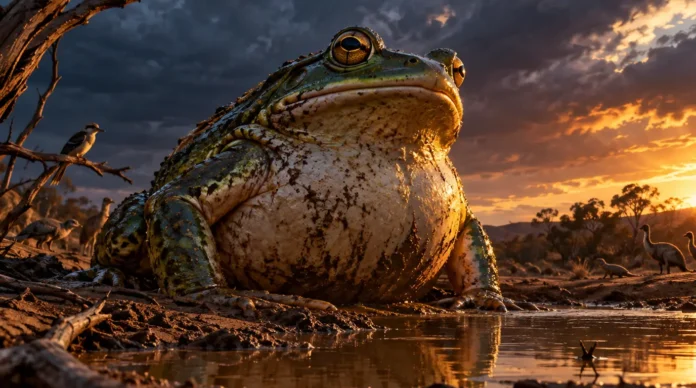
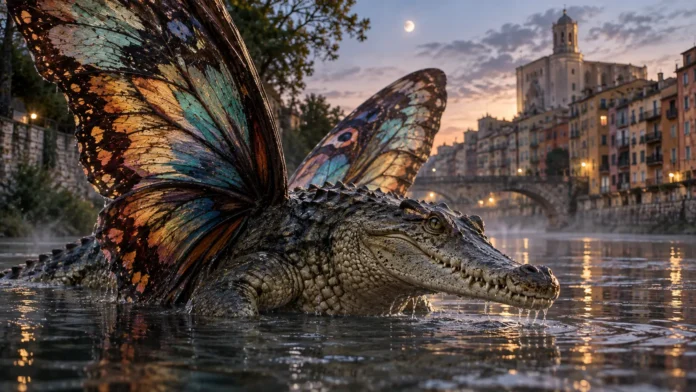
Amphibious Beast is a comparative category for mythological animals whose identities depend on meaningful relations with both water and land, rather than on biological classification alone. This category is analytical.
Its members may inhabit rivers, lakes, wetlands, shores, or imagined subterranean waters, yet remain connected to terrestrial settings through movement, encounters, or perceived influence. Aquatic residence alone is insufficient.
Across traditions, such beings can mark boundaries between human settlements and waters understood as dangerous, fertile, sacred, or socially regulated. Their meanings depend on specific cultural evidence.
Defining Characteristics
Physical Form and Morphology
Representations commonly give these beings bodies associated with swimming, submersion, or emergence, including scales, fins, webbed extremities, serpentine forms, or reptilian features. No single anatomy defines the category.
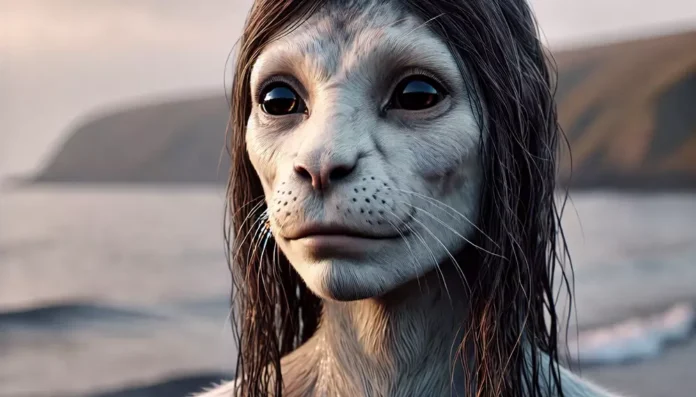
Some portrayals combine animal features rather than depicting recognizable natural species, while others preserve a relatively familiar animal shape. Classification rests on documented dual-domain significance, not appearance alone.
Ontological Nature
Mythological amphibious beings are not necessarily treated as ordinary animals. Particular traditions may regard them as supernatural inhabitants, shape-changing beings, divine associates, or creatures occupying a boundary within the cosmos.
Their relation to natural order varies by source. Water may be a material habitat, a sacred domain, or a dangerous threshold, but these interpretations cannot be generalized across cultures.
Mythological Role and Function
Place in Mythological Systems
Within some systems, amphibious creatures connect settled human space with waters beyond ordinary control. Their presence can locate a mythic boundary without making each creature a guardian or deity.
Where texts or oral records associate them with divine authority, that relationship must be established individually. Shared aquatic and terrestrial associations do not prove a common cosmological rank.
Perception and Meaning
Communities may represent particular beings as dangerous, protective, disruptive, or beneficial, depending on local narratives and historical context. The broad category itself carries no fixed moral character.
Water-related meanings can involve livelihood, flooding, fertility, or uncertainty in particular settings. Assigning any one symbolic function to all amphibious beings would exceed the evidence.
Distinction from Related Beast Types
Conceptual Boundaries
An elemental being is defined primarily through association with an element, whereas an amphibious beast requires a documented connection to aquatic and terrestrial domains. The categories can overlap.
Spirits and undead entities are classified through their spiritual or posthumous status, not their habitat. A water-dwelling ghost therefore does not qualify automatically as an amphibious beast.
Humanoid monsters are organized by humanlike form, while animal-based creatures are organized by animal identity. Either might qualify only when cross-domain significance is independently documented.
Common Sources of Confusion
Translations often render culturally distinct beings as monsters, dragons, serpents, or water spirits. Such labels can obscure local distinctions between animal form, supernatural status, and habitat.
Comparative analysis should therefore examine the original cultural setting and surviving descriptions before assigning a category. Similar appearances across regions do not establish shared origins or meanings.
Canonical Beasts Associated with This Beast Type
Kappa
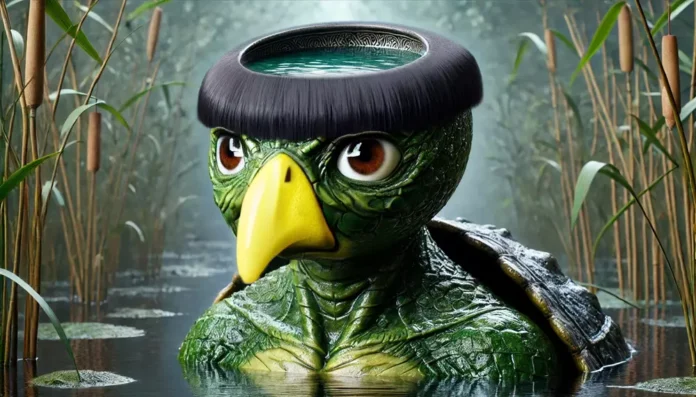
Japanese folklore describes the kappa as a water-associated being encountered near rivers and ponds, with stories also placing it in contact with people on land. This dual setting supports cautious classification.
Nāga
In South Asian traditions, nāgas are serpent beings connected with water, subterranean realms, and human-facing narratives. Their varied roles make aquatic-terrestrial relations relevant, though classifications differ across sources.
Makara
South Asian religious art and textual traditions depict the makara as a composite aquatic creature associated with rivers and water deities. Its terrestrial representation alongside aquatic identity supports inclusion.
Historical Distribution and Cultural Context
Beings fitting this category appear in geographically distinct traditions, including South Asian religious contexts and Japanese folklore. Their evidence belongs to separate cultural histories, not a unified ancient taxonomy.
Historical records vary from textual descriptions and religious imagery to later folkloric documentation. These materials differ in purpose, date, and detail, limiting direct comparisons across regions.
Water-centered livelihoods and settlement patterns provide relevant contexts for interpreting some traditions, but they do not establish why any particular being first emerged. Specific historical causes remain uncertain.
Scholarly Interpretation and Uncertainty
Variation in Definitions
Researchers may define amphibious beings narrowly through explicit movement between water and land, or broadly through sustained association with both domains. The broader approach risks weakening classification.
Terms such as beast, monster, and spirit carry different histories across languages and academic frameworks. Applying them comparatively requires attention to translation and source-specific categories.
Limits of Available Evidence
Surviving descriptions do not always clarify whether a creature leaves water, inhabits land, or merely affects human communities near shorelines. No verified sources describe this for this context.
For some traditions, evidence comes from diverse periods and genres rather than a single stable account. Conclusions about consistent traits or historical development must therefore remain qualified.
Mythological Role Across Cultures
The category recurs comparatively because water and land are distinct environments that human communities encounter, inhabit, and interpret. Mythological beings can give culturally specific form to that boundary.
Recognizing this shared structural feature helps comparison without erasing differences in religious status, moral meaning, or narrative function. Each association remains dependent on its own historical evidence.