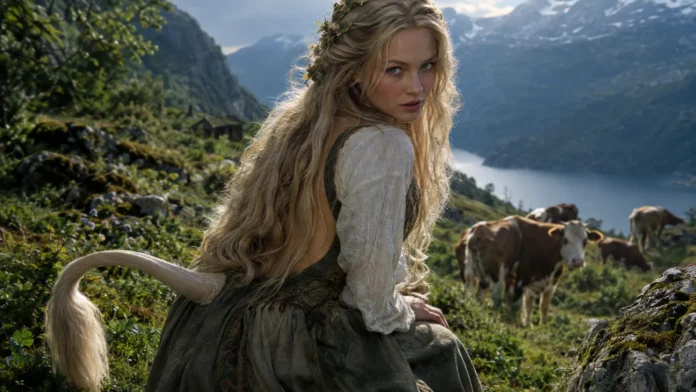
Overview of the Undated Oral Tradition Period
Undated Oral Tradition is a classificatory label, not a securely bounded historical era. It describes inherited narratives whose composition dates cannot be established from surviving evidence or reliable documentation.
Its scope therefore varies by culture and subject. Oral narratives may predate writing, continue alongside literate institutions, or survive through later written records that preserve only selected forms.
Communities across Africa, Asia, Europe, Oceania, and the Americas transmitted stories orally, but evidence differs greatly between regions. No single civilization or chronology defines this category.
Myths and accounts of supernatural beings helped communities interpret environmental uncertainty, social obligations, ancestry, and death. Their importance arose within particular settings, rather than from a universal system.
Cultural and Religious Worldviews
Dominant Belief Systems
No unified belief system characterized undated oral traditions. Communities maintained distinct accounts of divine powers, spirits, ancestors, sacred places, and relations between human life and the surrounding environment.
In ancient Greek religious practice, gods were associated with particular places, civic institutions, and natural forces. This evidence comes from texts, images, and material remains, not one uniform oral system.
Many Indigenous traditions understand particular animals, ancestors, or places through relationships specific to their own communities. Such accounts cannot responsibly be collapsed into a single global cosmology.
Oral transmission makes precise dating difficult, especially when narratives lack early written witnesses. No verified sources describe this for every tradition grouped under this label.
Role of Myth in Daily Life
Narratives could communicate expectations about kinship, hospitality, leadership, and responsibility. Their social force depended on local performance and interpretation, which varied among communities and historical circumstances.
In ancient Greek communities, myths connected deities with civic festivals and local identities. This relationship is documented unevenly, and surviving literary versions do not establish identical popular beliefs.
Among many Indigenous peoples, storytelling may convey community knowledge about ancestry, territory, or conduct. Specific meanings require community and source context; broad claims risk obscuring differences.
Mythological Beasts and Supernatural Entities
Common Types of Mythical Creatures
Recorded traditions include hybrid beings combining human and animal features, dangerous animals with supernatural attributes, and spirits associated with particular locations or domains.
Mesopotamian images and texts depict composite beings, including protective figures with mixed animal and human traits. Their functions must be interpreted within the relevant city, period, and artifact.
European folklore includes accounts of fairies, revenants, and other beings, but their recorded forms vary across languages and centuries. These categories are not interchangeable with ancient deities.
Some traditions describe animals as ancestors, messengers, or persons in their own right. These descriptions reflect distinct cultural frameworks, not merely variations on a universal monster category.
Symbolism and Meaning
A creature’s meaning depended on its narrative and cultural setting. A serpent, for example, could represent different powers across traditions; no single symbolic interpretation applies worldwide.
In ancient Egyptian religious contexts, animal forms could express attributes associated with deities. The meanings are supported by specific images and texts, rather than inferred from appearance alone.
Hybrid figures in some ancient Near Eastern contexts appear in protective or royal imagery. Their interpretation relies on archaeological context, while individual motifs may remain disputed.
Psychological explanations of beasts are modern interpretations, not direct evidence of earlier audiences’ thoughts. They may suggest questions, but cannot establish historical belief without corroborating sources.
Folklore Traditions and Storytelling
Oral and Written Transmission
Oral transmission depended on speakers, listeners, memory, and repeated performance. Variation was possible at each retelling, so a recorded version cannot automatically represent an original or fixed text.
Writing preserved some narratives in inscriptions, manuscripts, and literary works. These records document particular versions, often shaped by the purposes and conventions of their creators.
Later collectors sometimes recorded oral material long after its presumed circulation. Such collections are valuable evidence for their recording periods, but cannot independently date a story’s origin.
Material evidence can establish that a motif appeared in a particular context. It cannot, by itself, prove the complete spoken narrative or the audience’s interpretation.
Regional Variations
Greek accounts of monstrous beings belong to specific literary, religious, and local contexts. Comparing them with another culture requires evidence for each tradition, not superficial resemblance.
In parts of northern European folklore, beings such as elves appear in historically changing accounts. Their roles differ from Greek mythological figures, despite occasional similarities in supernatural classification.
Indigenous narratives across the Americas are culturally distinct, with community-specific languages and histories. Shared labels such as “spirit” may conceal major differences in meaning.
Regional comparison is most reliable when it tracks documented transmission, setting, and function. Resemblance alone does not establish borrowing, common origin, or equivalent belief.
Relationship Between Humans and the Mythical World
Fear, Protection, and Reverence
Some supernatural beings were represented as dangerous, particularly in narratives concerning wilderness, illness, or death. Such representations document narrative themes, not necessarily uniform personal fear.
Protective figures appear in several ancient societies, including Mesopotamian contexts where images guarded buildings. This specific archaeological function should not be generalized to every composite creature.
Beings associated with divine authority could serve as messengers or enforcers in particular traditions. Their moral roles depend on named narratives and cannot be presumed across cultures.
Reverence toward an animal or place may arise within a community’s own religious framework. Outsider classifications such as “beast worship” can distort that relationship.
Influence on Art and Material Culture
Mythological figures appear on seals, reliefs, vessels, and sculptures in several ancient societies. Images demonstrate artistic choices, but do not alone reveal how every viewer understood them.
Mesopotamian protective figures occur in architectural and artistic contexts. Their placement provides evidence about intended protection, although interpretations of particular symbols remain subject to scholarly debate.
Greek pottery depicts mythic encounters and beings, linking visual culture with recognizable narrative subjects. The images do not prove that every episode was accepted as literal history.
Clothing, tools, or ceremonial objects may carry animal imagery, but interpretation requires provenance and context. A motif’s presence alone cannot establish a supernatural belief or ritual.
Transition and Legacy of the Undated Oral Tradition Period
Oral and written forms often coexisted rather than replacing one another. Literacy altered preservation and circulation, while spoken performance continued to shape narratives in many settings.
Later religious traditions sometimes reinterpreted earlier beings as demons, saints, or legendary figures. Such changes are historically specific and require evidence of transmission between communities.
Folklore recorded in recent centuries may preserve older motifs, but age cannot be assumed from apparent archaism. Dating requires independent linguistic, textual, or historical evidence.
The label remains useful for identifying uncertain transmission histories. It should not imply a single ancient age, shared origin, or continuous unchanged tradition.
Historical Reliability and Interpretation
Historians distinguish evidence for a narrative’s circulation from proof that its supernatural claims occurred. Texts and artifacts document human representation, not the objective existence of beings.
Written records frequently reflect elite authors, religious institutions, or specific political settings. Their accounts may not represent oral variants or the beliefs of every social group.
Archaeological images permit analysis of form, placement, and date, but meanings may remain uncertain. No verified sources describe this for every artifact or cultural context.
Scholars compare versions, languages, artifacts, and historical settings to assess change. Conclusions remain provisional when documentation is late, fragmentary, or separated from the originating community.
Responsible classification preserves cultural distinctions and marks uncertainty explicitly. Undated Oral Tradition identifies limits in chronology; it does not establish that every associated account is equally ancient.