Introduction
The hulder is a female supernatural being in Norwegian folk belief, usually appearing as a beautiful, human-like woman. A cow’s tail and, in some descriptions, a hollow back reveal her otherworldly nature.
She belongs to folklore about hidden beings, not to zoological accounts of an unknown animal.
Her surroundings are often recognizably rural: forests, hills, mountain pastures, and places where people tend livestock. She is associated with the huldrefolk, or hidden people, whose unseen communities exist alongside human settlements.
An individual hulder should nevertheless be distinguished from that broader supernatural population.
Encounters with her do not follow a single moral pattern. She may attract, assist, or endanger people, and her beautiful voice and musical abilities can draw listeners toward the hidden world.
Some legends involve people being lured into mountains or held there.
The familiar image of a seductive forest woman captures only part of this tradition. Pastoral work, hidden households, and uncertain relations between supernatural neighbors are equally important.
Later literature also made the hulder a personification of Norwegian nature, adding another layer to her older legendary identity.
History/Origin
Hulder traditions circulated orally in premodern Norwegian farming and fishing communities before their extensive preservation in nineteenth- and twentieth-century collections. Their beginnings cannot be dated securely.
The surviving written record documents an established body of belief, rather than a clearly identifiable moment when the figure was invented.
Possible antecedents include Norse elf traditions, the landvættir associated with places in saga literature, and older beliefs concerning ancestors. These connections remain historical interpretations, not a demonstrated genealogy.
Similarities between supernatural inhabitants of the landscape do not establish that all were originally the same being.
A major publication landmark was Peter Christen Asbjørnsen’s Norske Huldreeventyr og Folkesagn, which began appearing in 1845. It placed supernatural legends within literary frames, presenting storytelling as part of encounters with particular people and environments rather than simply assembling detached accounts of marvelous events.
Some material had already appeared separately. “Berthe Tuppenhaugs fortellinger,” for example, was printed in 1843 before entering the 1845 collection.
Its publication history shows that the collection brought together previously presented material as well as giving oral belief a more enduring literary setting.
The title Huldreeventyr requires care. As the scholarly-edited Bokselskap introduction explains, it encompasses accounts of supposed encounters with hidden beings, not exclusively stories featuring a female hulder.
Reading every item as evidence about her would collapse a wider legendary world into one figure.
These publications preserved folklore while also reshaping its presentation. Asbjørnsen’s framed narratives are literary compositions, not verbatim field transcripts.
During the nineteenth century, national-romantic writing further developed the hulder as an embodiment of Norwegian nature, a documented literary meaning distinct from her role in encounter legends.
Name Meaning
The name hulder is connected with Old Norse hylja, meaning “to hide.” Concealment is therefore central to its linguistic background.
The association fits a being who belongs to an ordinarily unseen population and becomes perceptible through exceptional encounters with human beings.
Hulder is used as a general or indefinite form, while huldra is a Norwegian definite form, effectively “the hulder.” English retellings often use either spelling as the creature’s name.
Their coexistence does not indicate two separate kinds of supernatural woman.
Huldrefolk refers collectively to hidden people rather than functioning as a precise synonym for one female being. Related vocabulary can describe a broader supernatural society, including its livestock and dwellings.
Keeping the individual and collective meanings separate prevents communal traditions from becoming personal attributes of every hulder.
The word also acquired a poetic application to Norwegian nature in national-romantic literature, a usage documented in historical dictionary citations. That later meaning expands the name’s cultural range, but does not replace its folkloric reference to a female supernatural being encountered within the rural landscape.
Appearance
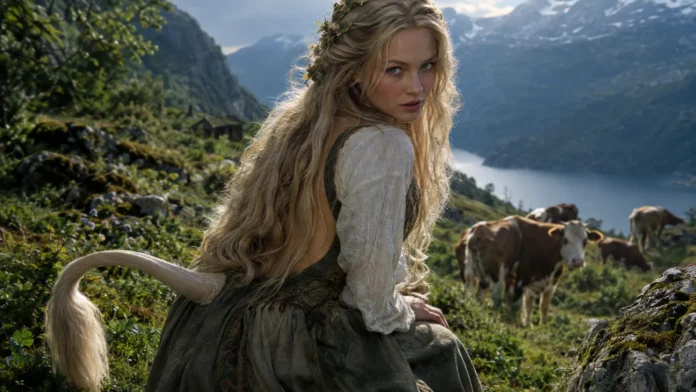
The representative hulder has a woman’s body and an exceptionally attractive human appearance. Some descriptions make her taller or more striking than ordinary women.
Her supernatural identity rests on particular revealing features rather than a wholly monstrous shape, making initial resemblance to a human important.
A cow’s tail is one of the clearest recurring markers in Norwegian descriptions. It identifies the beautiful stranger as something other than human without turning her into a fully bovine creature.
Horns, hooves, and an animal lower body are not standard features of this representative form.
A hollow back is another established feature, although it is not emphasized in every account. The contrast between an attractive human appearance and an uncanny bodily feature is characteristic of her portrayal.
Descriptions vary, so neither feature needs to be mentioned in every encounter narrative.
Her voice is also important to how she is recognized and experienced. Beautiful singing and musical skill recur alongside visual beauty, especially in accounts of attraction or luring.
An encounter may therefore depend as much on hearing an extraordinary performance as on seeing an unusual woman.
Long or flowing hair is familiar in later imagery, but it is less defining than the tail and hollow back. Likewise, an attractive woodland setting should not obscure her ties to mountain pastures and farm life.
The tradition is broader than an image of a solitary forest enchantress.
Fine, well-kept cattle belong to the surrounding huldrefolk tradition. They may accompany a hulder or suggest the presence of hidden neighbors, but they are not physical attributes of her body.
Their importance lies in connecting supernatural prosperity with the livestock familiar to rural storytellers.
Background Story
The hulder has no single continuous biography. Her background lies in traditions about human communities sharing a landscape with hidden inhabitants.
Forests, mountains, and pastures could therefore be imagined not as empty surroundings, but as places occupied by neighbors whose presence was only intermittently revealed.
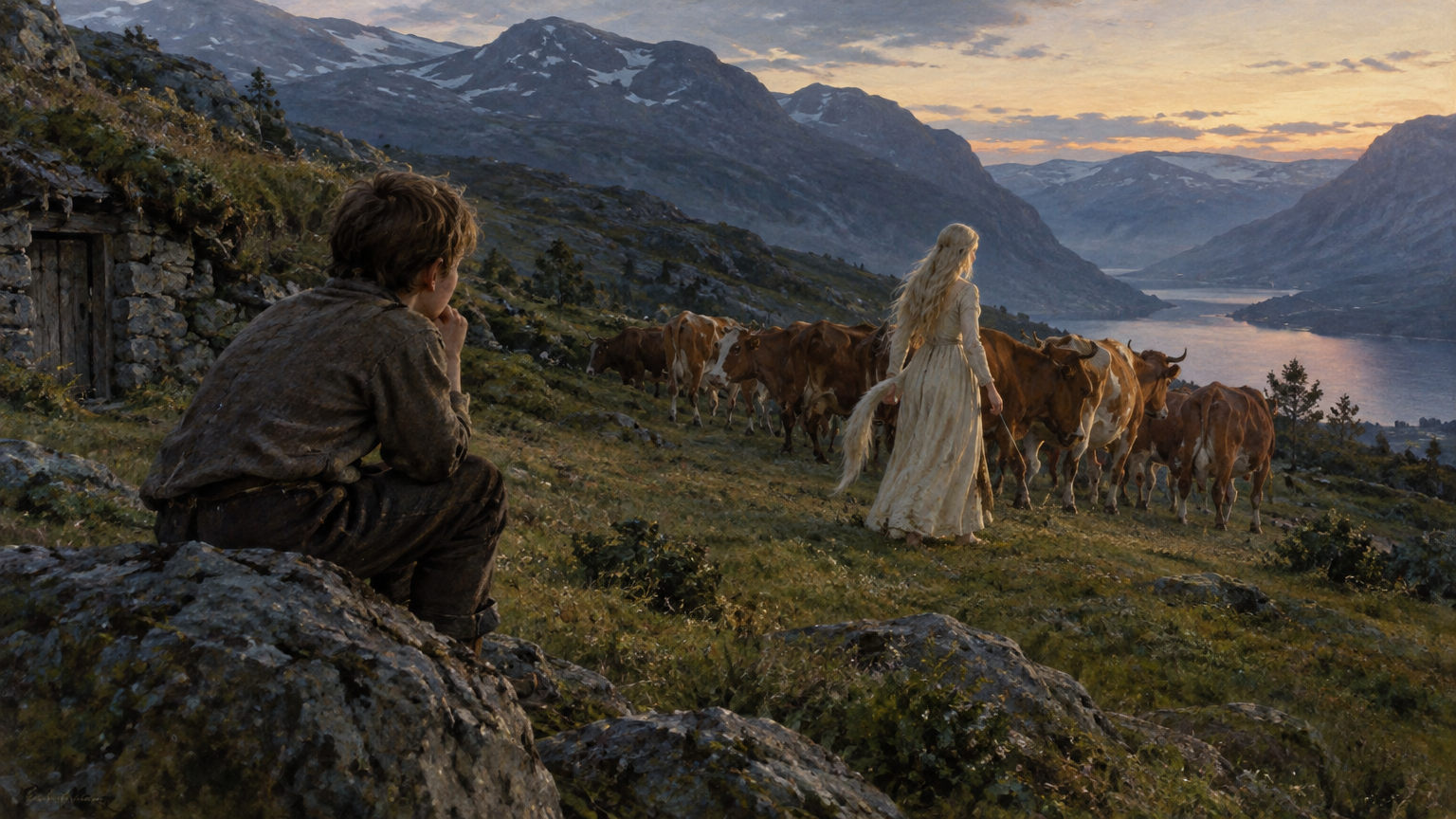
Seasonal pastoral life gives this relationship a particularly concrete setting. In Asbjørnsen’s “Huldreæt,” a boy remains at a mountain pasture to discover whether the hulder will arrive with her herd after people depart.
The episode connects supernatural expectation with the ordinary movement of people and cattle.
Such settings make the hidden world resemble human society without making it fully accessible. Livestock, households, and occupied places suggest parallel ways of life.
The hulder can consequently appear as more than a wandering temptress: she belongs to a wider conception of unseen social existence.
Attraction could nevertheless threaten the boundary between those worlds. Legends describe people being bergtatt, carried off or held within the mountain.
Song and beauty can participate in that movement away from human surroundings, although encounters with hidden beings are not uniformly dangerous or hostile.
A widespread Christianized origin legend explains the hidden people as Eve’s concealed children. When God asks to see her children, she hides those she has not washed; the concealed children are then condemned to remain hidden.
This concerns the hidden population collectively, not the hulder alone.
That legend places supernatural neighbors within a biblical framework, while other accounts emphasize encounters, cattle, or music rather than origins. Together, these strands explain why the hulder resists a single background story: her identity was shaped by rural experience, Christian storytelling, and later literary interpretation.
Famous Folklore Stories
The surviving record includes named literary presentations of oral belief as well as recurring legend motifs. These are not chapters in a single hulder mythology: some concern an individual supernatural woman, while others describe the hidden people collectively or preserve the circumstances of storytelling.
Huldreæt
In Asbjørnsen’s “Huldreæt,” a boy stays behind at a mountain pasture after the other people leave for home. He wants to discover whether the hulder will appear with her herd.
The episode places supernatural expectation within the familiar seasonal movement of people and livestock.
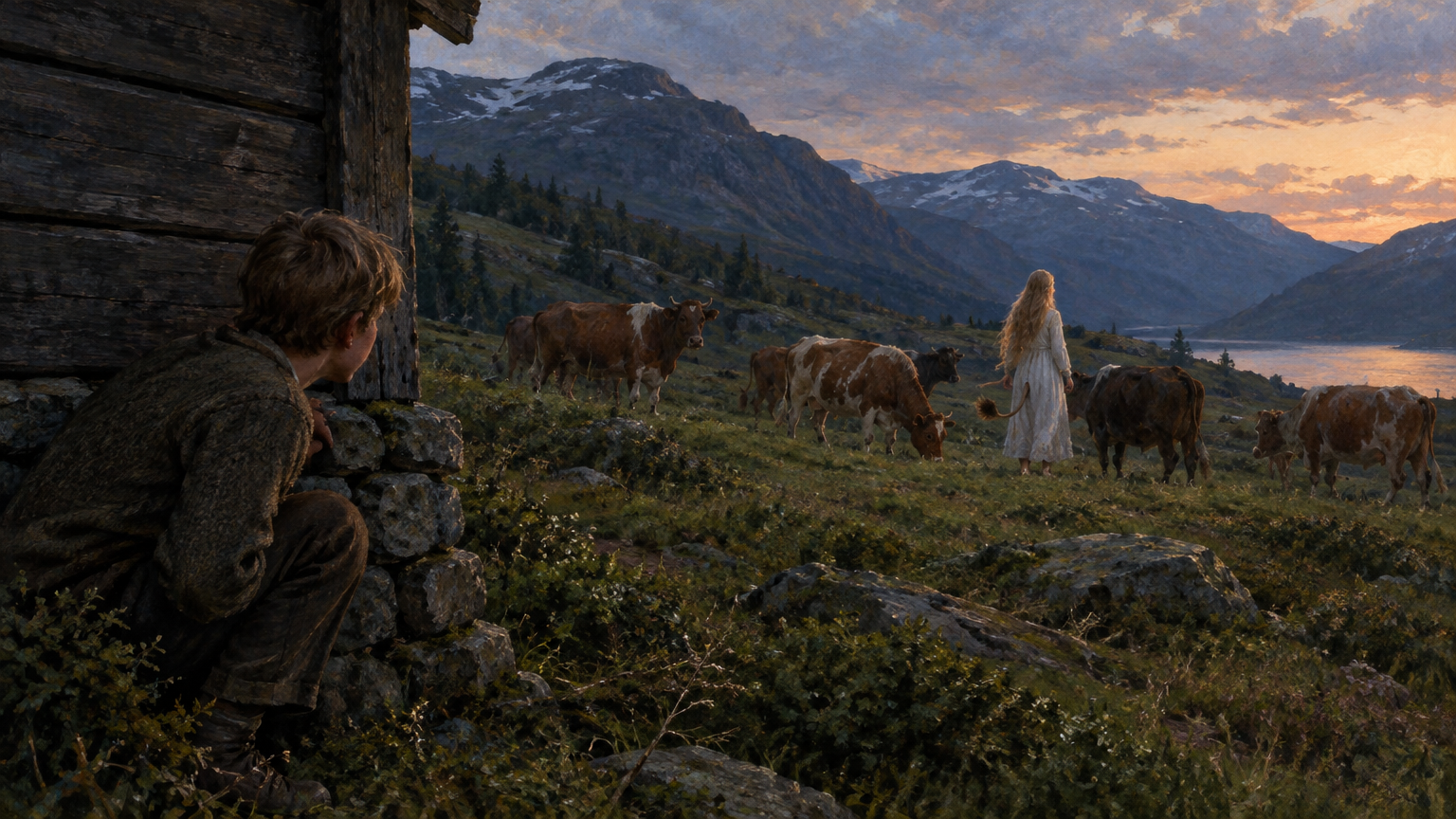
The pasture matters as more than scenery. A place occupied through human work can also become the setting for another community’s presence.
Rather than presenting the hulder only as a seductive stranger, this episode connects her with cattle, rural routines, and the possibility of unseen neighbors.
Berthe Tuppenhaugs fortellinger
“Berthe Tuppenhaugs fortellinger” was printed by Asbjørnsen in 1843 and subsequently included in his 1845 collection. It belongs to the framed storytelling tradition surrounding supernatural encounters and popular belief.
Its importance here is that narrative setting, rather than a simple explanation of the hulder’s origin.
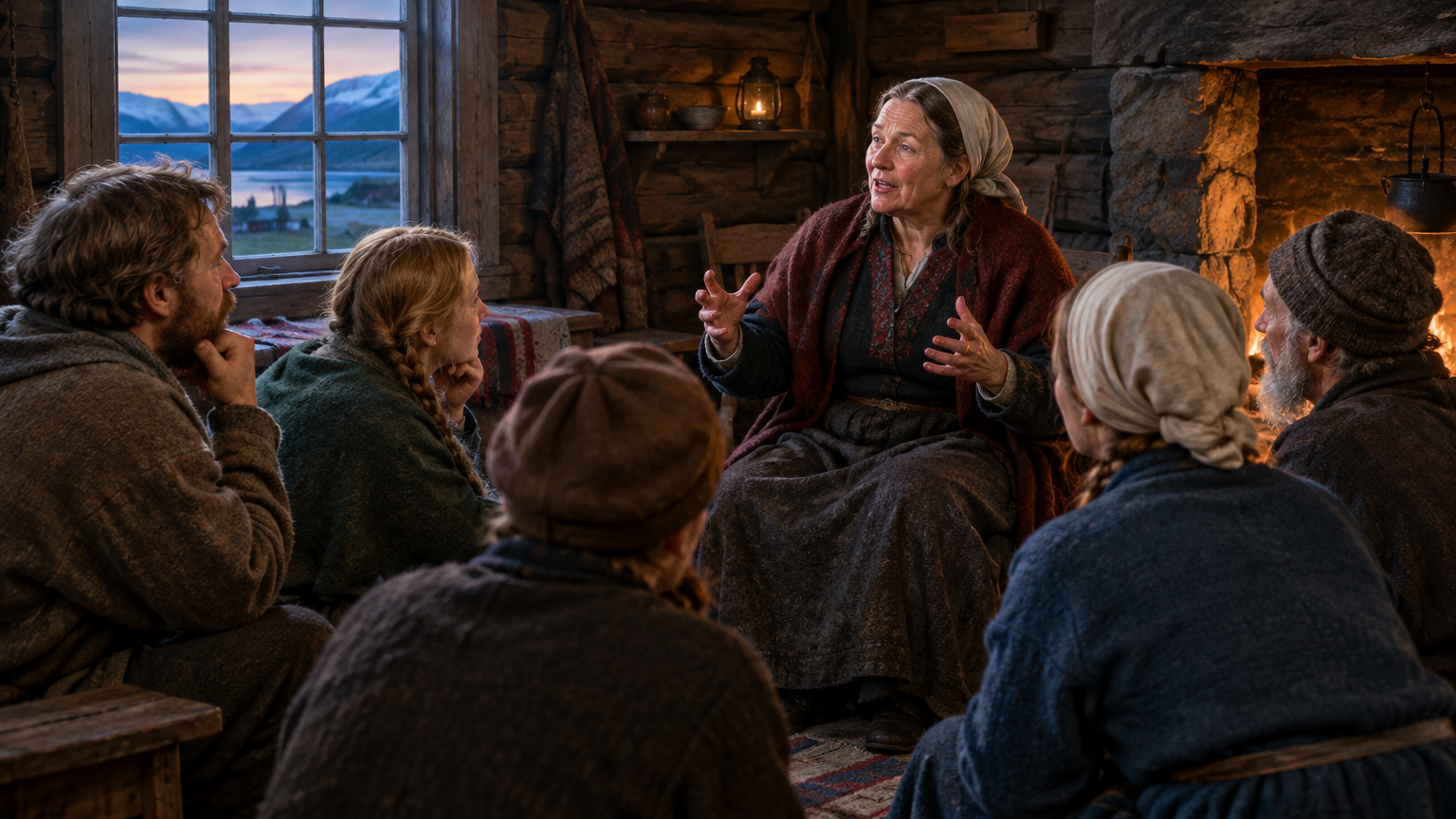
The distinction helps readers approach the collection accurately. Its title, Norske Huldreeventyr og Folkesagn, does not establish that every included narrative concerns a hulder.
The literary frames preserve an impression of people exchanging experiences and inherited stories, but they should not be treated as unedited transcripts.
Eve’s Concealed Children
A widespread Christianized origin legend explains the hidden people through Eve’s children. When God asks to see them, Eve conceals those she has not washed.
The children she keeps out of sight are condemned to remain hidden, accounting for the existence of an unseen population.
This is a collective origin legend, not a uniquely hulder episode or a biblical account. It gives hidden beings a place within a Christian understanding of the world while explaining their separation from ordinary humanity.
It should remain distinct from pasture encounters and stories of supernatural attraction.
Cultural Impact
Nineteenth-century national romanticism gave the hulder an additional role as a personification of Norwegian nature. Poems, plays, and literary tales could turn a locally encountered supernatural woman into an image of the landscape itself.
This symbolic use developed alongside, rather than replacing, folk belief.
The difference is important for interpreting her cultural image. A poetic embodiment of nature need not reproduce every feature of an encounter legend.
The traditional cow’s tail and sometimes hollow back identify an uncanny being, whereas literary treatments may emphasize beauty, attraction, or the mysterious landscape.
Music provides another connection between everyday culture and supernatural storytelling. Terms including huldreslått, huldrespel, and huldrelokk associate tunes or musical performance with hidden beings.
Stories could explain exceptional music as something learned through supernatural contact, although the terminology does not make every such tune an individual hulder’s composition.
Visual art also helped carry the figure beyond oral narration. Theodor Kittelsen’s treatment of supernatural Norwegian subjects belongs to this wider cultural reception.
An illustrated hulder is an artist’s interpretation, however, not independent evidence that all storytellers imagined the same appearance or setting.
Modern scholarship distinguishes these layers rather than treating them as one unchanged tradition. Oral encounter legends, edited literary collections, national-romantic symbolism, and later entertainment serve different purposes.
Together they explain the hulder’s cultural reach without making modern artistic choices authoritative descriptions of earlier rural belief.
Similar Beasts
Morgan le Fay

Morgan le Fay is a supernatural woman of Arthurian literature whose roles vary between texts. She can appear as a healer, an otherworldly ruler, or a dangerous enchantress.
Like the hulder, she resists a simple benevolent-or-malevolent label. Morgan is nevertheless a literary individual, rather than a category of beings encountered in Norwegian legend.
Kelpie

The kelpie is a shape-shifting water spirit in Scottish folklore, commonly associated with a horse form and with luring victims into water. Its apparent accessibility conceals a dangerous encounter.
Its comparison with the hulder concerns supernatural attraction and concealed danger. The kelpie’s aquatic, equine identity differs from the hulder’s human-like female appearance and pastoral associations.
Bannik
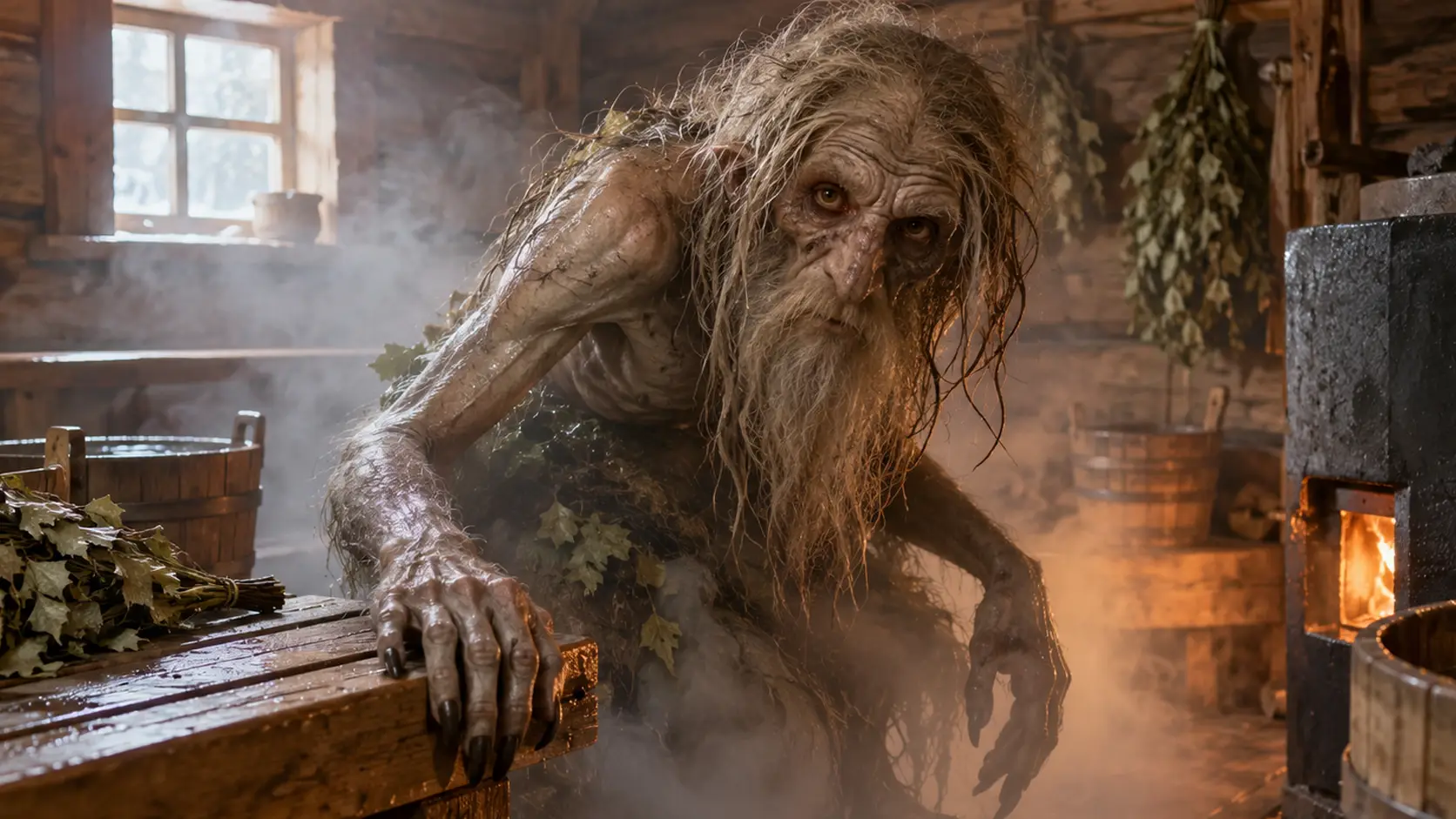
The bannik is a spirit of the traditional East Slavic bathhouse. It is imagined as an unseen owner or guardian that may tolerate respectful bathers but punish intrusive behavior.
Both traditions imagine human activity sharing space with supernatural occupants. The bannik belongs specifically to the bathhouse, unlike the hulder’s broader landscape and farming associations.
Fossegrimen
Fossegrimen is a distinct waterfall-associated being in Norwegian tradition, particularly connected with music and the teaching of instrumental skill. Its musical role makes it a useful comparison within Norwegian folklore.
The hulder likewise has associations with extraordinary music and song. This overlap links their narrative functions, but does not make Fossegrimen another name for her.
Religion/Ritual
Relations with hidden beings were not always understood through a strict division between good and evil. They could help or harm, making the maintenance of a good relationship important within folk belief.
This ambivalence distinguishes them from figures whose only narrative function is demonic hostility.
Christian relationships vary between legends. Some portray hidden people as avoiding Christianity; others imagine huldre churches and tusse priests, even while placing these beings outside human baptism and congregations.
Such differences preserve competing ways of imagining a supernatural society alongside the Christian community.
The available evidence documents beliefs and religious narratives rather than a standardized hulder cult. It does not establish a universal offering, ceremony, or calendar of observance.
Imagined churches among hidden beings are features of legend, not evidence of an organized human institution devoted to them.
Scientific or Rational Explanations
The hulder is documented as a figure of folklore, not as a biological species. Historical collections establish that people told and circulated encounter narratives.
They do not, by themselves, supply zoological evidence for a human-like woman with a cow’s tail or hollow back.
A historical reading begins with transmission. Oral stories were collected, arranged, and published, sometimes within carefully constructed literary frames.
Asbjørnsen’s presentations therefore require attention to both inherited belief and editorial shaping, rather than being read as a transparent record of every original speaker’s words.
The rural settings offer grounds for contextual interpretation. Seasonal pastures, livestock, and encounters away from settled homes connect supernatural narratives with working environments.
These associations help explain what the stories concern, without proving that a particular environmental event caused any recorded experience.
A social interpretation can also examine how hidden communities resemble human ones. Their cattle, music, and imagined religious institutions make the unfamiliar partly recognizable.
This is a way of reading the narratives’ structure, not proof that storytellers consciously invented them to communicate a single lesson.
More specific explanations require evidence that these records do not provide. It would be speculative to diagnose an individual narrator, identify a particular animal as the source of an encounter, or attribute the entire tradition to hallucination.
The strongest analysis distinguishes reported experience, inherited narrative, and later literary transformation.
Modern Cultural References
Thale, film (2012)
Aleksander Nordaas’s Norwegian fantasy-thriller develops an original supernatural story. Its hulder inspiration reworks traditional material rather than presenting an inherited legend directly, distinguishing cinematic invention from recorded folk narrative.
(rushprint.no)
Huldra i Kjosfossen, tourist performance
This staged attraction represents the hulder through song and dance at Kjosfossen. It brings the figure into a public landscape performance, documented in Norwegian Supreme Court records.
(domstol.no)
The Ash Lad: In the Hall of the Mountain King, film (2017)
Mikkel Brænne Sandemose directed this Norwegian fantasy adventure.
Ida Ursin-Holm plays Huldra, placing a named representation of the being within a modern cinematic treatment of Norwegian storytelling.
(tv.apple.com)
Hulder (Kire 1), novel (2013)
Tonje Tornes’s novel features Flora, a hulder girl, as a central character. The fictional portrayal carries the traditional being into contemporary young-adult fantasy rather than documenting folk belief.
(gyldendal.no)
S03 Episode 3: Mountain, Forest and Moor, podcast episode (2018)
This Mythos Podcast episode explores supernatural storytelling associated with mountain, forest, and moorland settings.
Its description explicitly includes huldra and stories involving hulder-folk, making the connection direct.
(metacast.app)
Episode 69: Succubus Roundup, podcast episode (2018)
This episode of Spirits discusses supernatural figures under a comparative theme.
Its treatment includes the hulder or huldra, offering a modern discussion rather than a traditional encounter narrative.
(spiritspodcast.com)
Conclusion
The hulder belongs first to Norwegian folk belief: a female supernatural being whose human beauty can conceal a cow’s tail and, in some descriptions, a hollow back. Her significance extends beyond those identifying features.
Encounters involving cattle, music, mountain pastures, and hidden communities place her close to ordinary rural life while leaving her outside its familiar boundaries. She can attract, assist, or endanger people, resisting any simple division between a benevolent nature spirit and a threatening monster.
Her tradition is well documented, but its ultimate origins remain uncertain, and neither later literary symbolism nor modern fantasy should replace that distinction. Collected encounter legends, national-romantic representations, films, fiction, and public performances preserve different aspects of her appeal.
Together they show how a locally rooted supernatural figure can acquire new meanings without becoming a single fixed character. Understanding the hulder therefore requires attention both to the recurring features that identify her and to the differences between oral belief, literary retelling, and contemporary adaptation.
Further Reading
Bokselskap, “Huldreæt”
A narrative in Asbjørnsen’s hulder collection includes a boy who stays behind at the mountain pasture to see whether the hulder will come with her herd after people.
(bokselskap.no)
Norske eventyr, “Berthe Tuppenhaugs fortellinger”
A framed narrative associated with Asbjørnsen’s collection of folk belief and legends. The editorial introduction notes that Asbjørnsen printed the account in 1843 and included it in the.
(norske-eventyr.no)
Thale, rushprint.no
film 2012 A Norwegian fantasy-thriller whose director described it as a newly invented story inspired by hulder legends; it is an adaptation and reinterpretation, not a traditional narrative.
(rushprint.no)
Huldra i Kjosfossen, domstol.no
tourist performance A documented staged performance representing the hulder through song and dance at Kjosfossen, showing a public cultural use of the figure.
(domstol.no)
The Ash Lad: In the Hall of the Mountain King, tv.apple.com
film 2017 The film’s cast listing identifies Ida Ursin-Holm as Huldra, confirming a portrayed hulder character.
(tv.apple.com)
Hulder (Kire 1), gyldendal.no
novel 2013 The publisher describes a fictional story featuring Flora, a hulder girl, as a central character.
(gyldendal.no)
A Curse Carved in Bone, penguinrandomhouse.com
novel 2025 The novel was published in 2025; its fictional narrative includes an encounter with a huldra.
The publisher confirms publication, while the encounter is described in a.
(penguinrandomhouse.com)
hulder, Det Norske Akademis ordbok
Lexicographic definition and historical literary citations that help distinguish traditional description from later poetic and national-romantic meanings.
(naob.no)