Introduction
Jenny Greenteeth is a supernatural figure of northwestern English folklore, particularly associated with Lancashire. Her most consistently recorded role is that of a water-dwelling child-scarer: a threatening presence said to seize children who venture too close to ponds, pools, and other dangerous water.
She belongs to a regional tradition of warnings rather than a single, fixed mythology. Parents invoked her around flooded pits, canals, rivers, and wells, making an otherwise hidden danger seem watchful and intentional.
Approaching the water meant risking an encounter with something waiting beneath it.
The name also belonged to the landscape itself. Pond vegetation, including duckweed and green surface growth, could be called Jenny Greenteeth.
Historical testimony preserves both meanings together, connecting a visible covering of greenery with an unseen being capable of dragging a child under.
Her familiar modern appearance as a green-skinned, long-haired hag represents only part of this tradition. Many early records give no physical description, while unusual local accounts assign her quite different activities.
The recurring waterside threat provides a firmer identity than any standardized monster design.
History/Origin
The beginnings of the tradition remain uncertain. In his 2019 study, “In Search of Jenny Greenteeth,” folklorist Simon Young identifies an 1850 newspaper article as the earliest published appearance he recovered.
That establishes a point in the surviving documentation, not the moment when people invented Jenny.
An obscure allusion from 1831 may indicate that the name was already familiar in Liverpool. Its interpretation is less secure than the later evidence, however.
It should therefore be treated as a possible earlier trace rather than an unquestionable first appearance of the fully recognizable water spirit.
Retrospective recollections strengthen the likelihood of earlier oral circulation. Writing in 1870, John Higson remembered mothers warning children about Jenny at flooded pits and pools near Gorton.
His account preserves a childhood warning attached to particular places, rather than an elaborate story transmitted through books.
Later nineteenth-century records place Jenny in several English counties, with Lancashire and the northwest forming the strongest concentration. These accounts do not reveal one original pond from which every version spread.
Instead, they show a shared name adapted to different waters, households, and local legends.
In 1904, Henry Brierley recorded East Lancashire usage in a letter to Notes and Queries. Jenny’s name designated pond moss, while adults also warned that she would drag children into ponds.
This period testimony directly establishes the coexistence of the vegetation name and the supernatural threat.
Twentieth-century reference works and illustrations subsequently helped consolidate a more recognizable monster. Katharine Briggs’s influential dictionary treatment emphasized the green-fanged child-drowner.
Young’s historical survey restores the wider variation that such compact descriptions can obscure, including Jennies whose activities extend beyond drowning.
Name Meaning
The recorded name varies between Jenny, Jinny, Jeannie, and Ginny Greenteeth. Other forms include Granny Greenteeth, Old Jenny Greenteeth, Jenny Green, and simply Greenteeth.
These variations belong to the documented tradition, but they do not establish a separate supernatural species for each spelling.
“Greenteeth” suggests a threatening mouth, and green teeth became a recognizable feature in later descriptions. Yet the transparent modern reading does not settle the name’s historical development.
The evidence does not establish whether a physical description, vegetation name, or another association came first.
The botanical connection is particularly substantial. Jenny Greenteeth could mean lesser duckweed, Lemna minor, as well as more loosely identified green pond growth.
The relationship received dedicated scholarly attention in the 1983 Folklore article “Lemna minor and Jenny Greenteeth,” rather than remaining merely a modern explanatory guess.
Historical terms such as “pond moss” should not automatically be treated as precise botanical identifications. Nor is the proposed derivation through Grindylow, Grendith, or Grinteeth established by the strongest specialist evidence.
Similar water-monster names invite comparison, but resemblance alone does not demonstrate a linguistic descent.
Appearance
Jenny’s historical appearance is less settled than her reputation. Numerous accounts explain where she waits and what she does without describing her face or body.
The strongest common image is therefore a concealed waterside presence, not a consistently documented combination of skin colour, hair, and teeth.
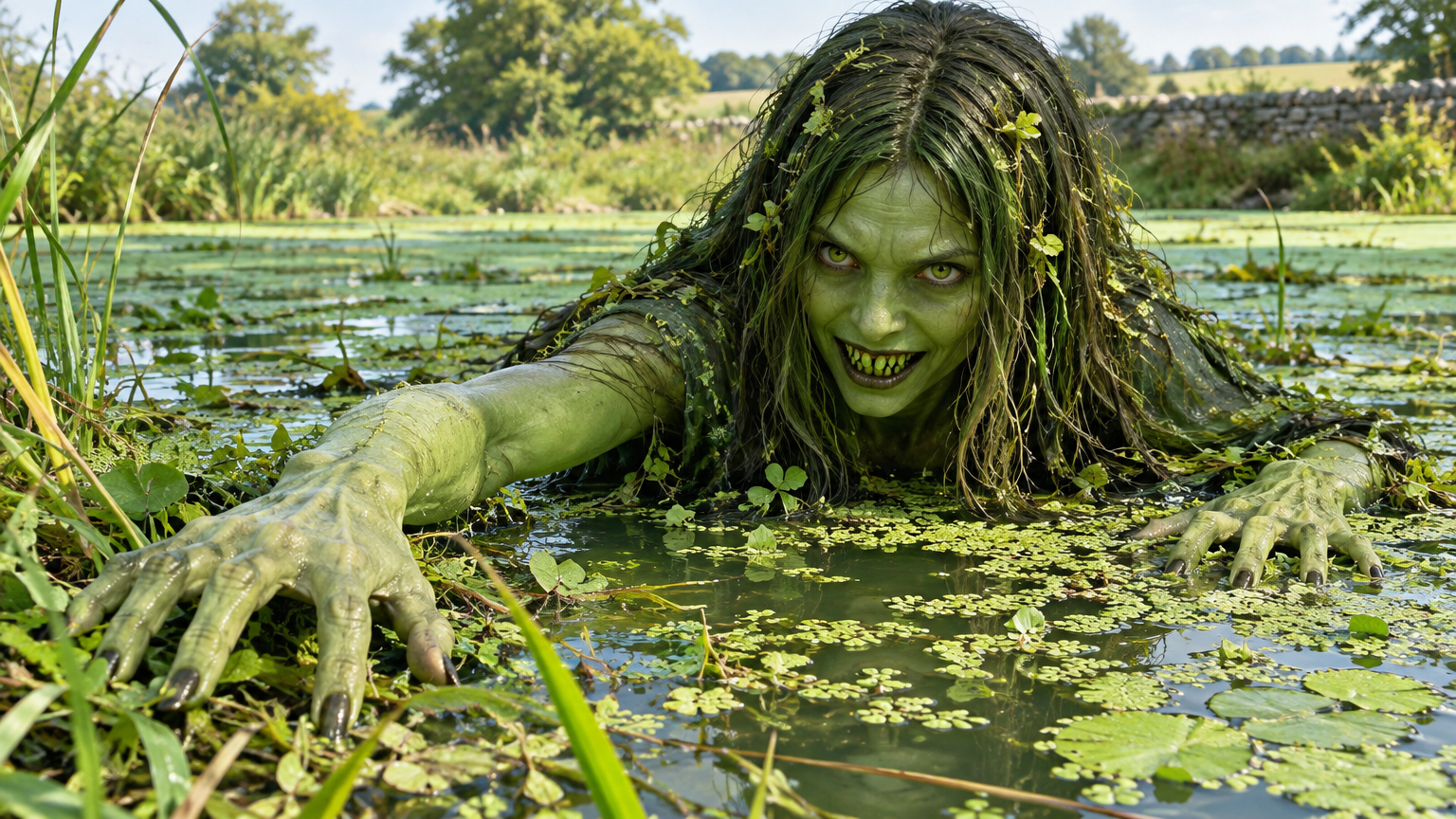
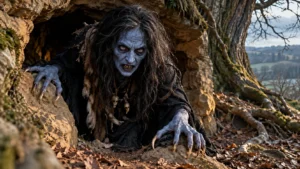
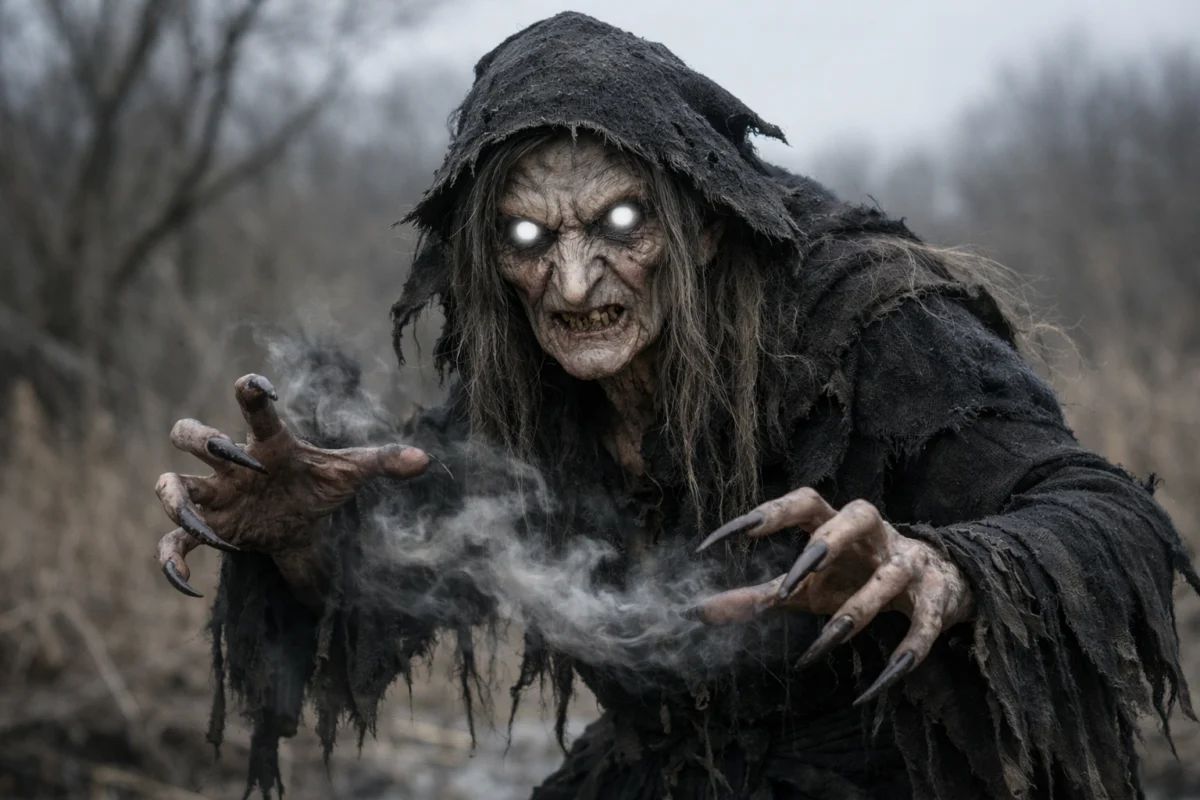
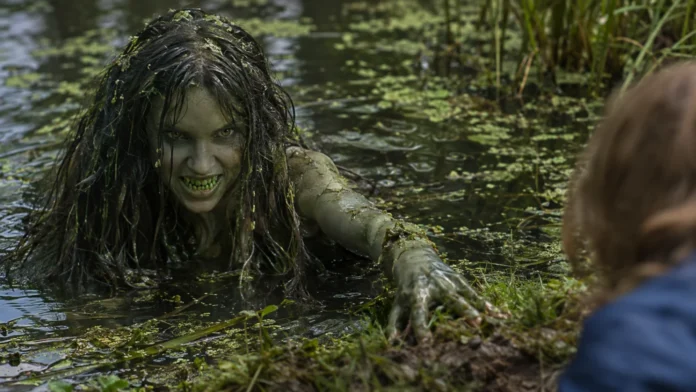
A familiar later portrayal gives her green skin or other green features, long hair, and sharp or green teeth. These details are recognizable parts of her reception, but they should not be projected backward into every nineteenth-century warning.
Different tellings offer different levels of visual definition.
Some accounts give Jenny long, sinewy arms capable of reaching out from the water. This feature makes the threat immediate: a child need not deliberately enter a pond to be caught.
The arms belong to a documented motif, rather than an anatomical requirement shared by every version.
Floating vegetation supplies another important visual element, although it is not necessarily part of her body. A green covering can conceal the water where she supposedly waits.
Where the same name denotes both greenery and spirit, the pond’s surface becomes closely associated with the threat beneath it.
Later illustration made the figure easier to picture. Brian Froud and Alan Lee’s Fairies, published in 1978, included an influential depiction identified in Young’s survey.
Such artwork helped establish a memorable visual identity, but its coherence should not be mistaken for evidence that older oral accounts agreed on her appearance.
Background Story
Jenny’s background lies chiefly in the relationship between children and hazardous water. Ponds and marl pits recur especially often, alongside pools, rivers, canals, and wells.
The warning attached an active pursuer to places where a careless approach could have serious consequences, even when the surface looked harmless.
Two recurring patterns explain how the danger operates. In one, a child mistakes a covering of weed for grass and steps onto it.
In another, Jenny reaches from the water and pulls the child under. These are related warning motifs, not successive episodes in one established narrative.
The distinction matters because the tradition worked without requiring a complete story. A parent could identify a particular pool as Jenny’s lurking place and forbid a child to approach.
The name, location, and threatened action supplied the warning; a detailed history of the creature was unnecessary.
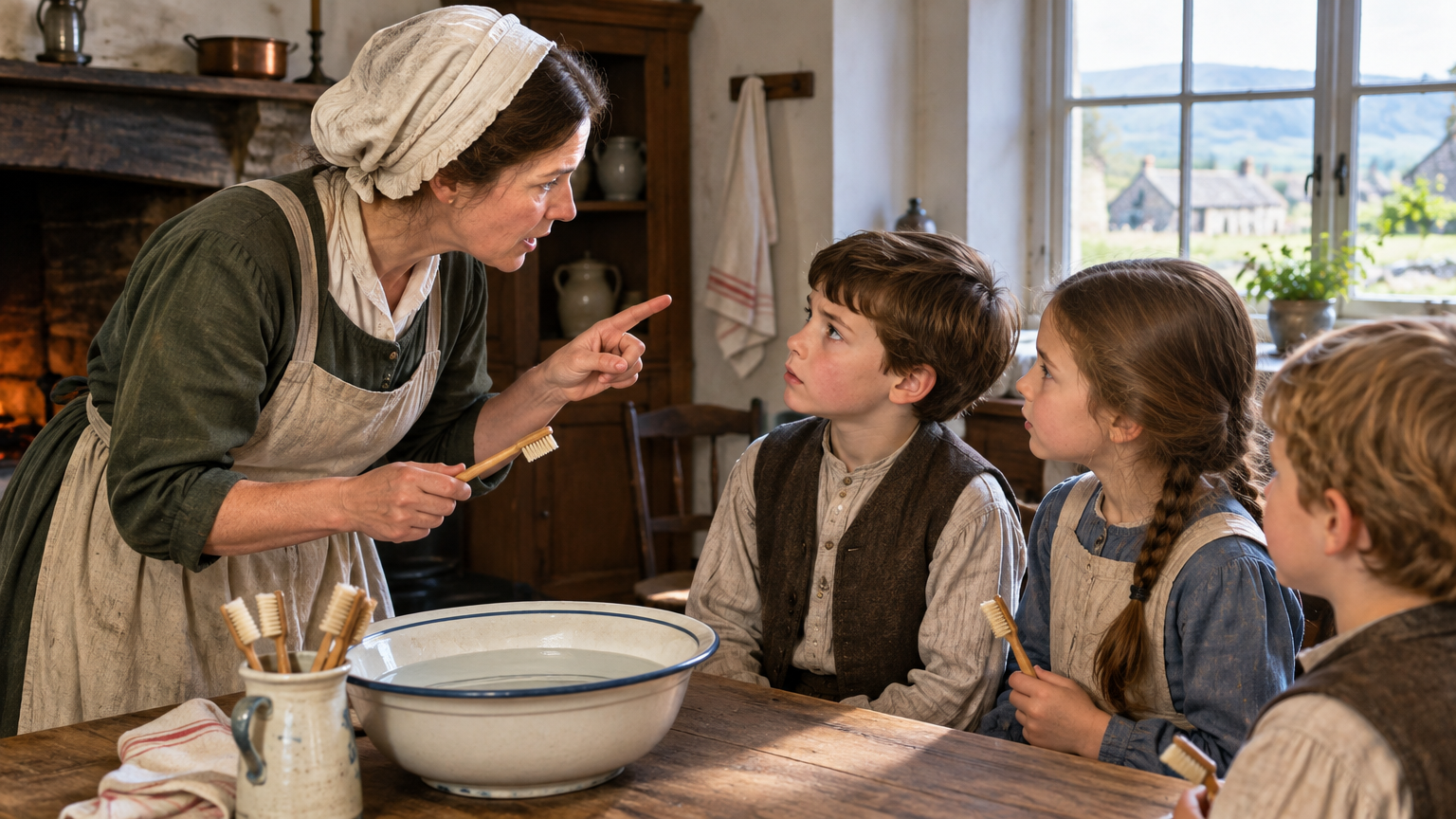
Her usefulness as a household bogey also extended beyond waterside behaviour. Brierley’s 1904 East Lancashire account records adults invoking Jenny to encourage children to keep their teeth clean.
Here the association with teeth served a different disciplinary purpose, showing that the name was not restricted to drowning threats.
Other local traditions depart still further from the central pattern. A Preston Jenny rides a broomstick above Lady Well; a Newton Chapelry account connects Jennie with buried treasure; and a Burnley variant concerns a woman thrown down a pit who returns as an apparition.
These remain distinct local developments.
The wider background is consequently one of adaptable regional folklore rather than a single recoverable biography. Jenny could personify dangerous water, lend her name to its green covering, or enter another local supernatural narrative.
The repeated child-drowning threat remains central without erasing these less typical uses.
Famous Folklore Stories
Jenny Greenteeth survives through parental warnings, local recollections, and occasional reported incidents rather than a single widely established narrative. The descriptive headings below identify documented motifs and accounts, not authenticated traditional folktale titles.
Their differences are part of the tradition.
Warnings at the Gorton Pools
In a recollection published in 1870, John Higson remembered mothers warning children about Jenny Greenteeth around flooded pits and pools near Gorton. She supposedly lurked in these waters, threatening children who ventured too close.
This is testimony about childhood warnings, not a reported sighting.
The account illustrates how the supernatural threat attached itself to recognizable local hazards. A child did not need an elaborate description of Jenny to understand the warning: approaching the water meant entering the reach of something dangerous beneath its surface.
Testing Jinny at the Canal
A newspaper report from 1931 described a boy rescued from a canal at Morecambe after testing whether Jinny Greenteeth would catch him. He had put his leg near the water and fallen in.
The episode is a reported accident involving folklore, not a supernatural encounter.
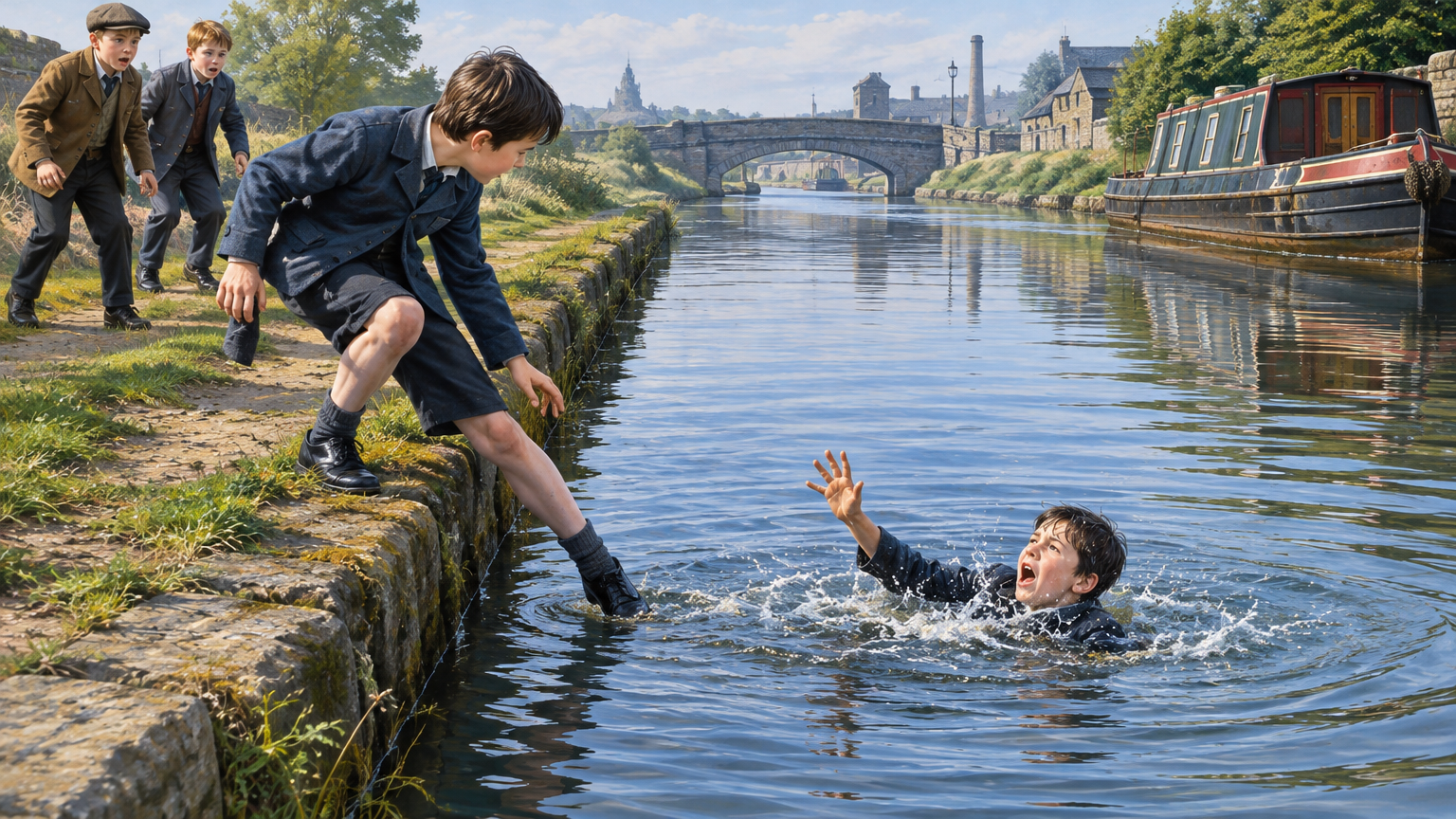
Preserved in Simon Young’s specialist survey, the incident reveals an unintended possibility within the warning tradition. Fear could encourage avoidance, but curiosity could also prompt a child to investigate.
Here, the attempt to test the story brought the boy into actual danger.
Unusual Local Jennies
A mid-nineteenth-century Preston account placed Jenny above Lady Well, riding a broomstick and performing capers. This local episode differs from the familiar threat beneath the water: the figure is airborne, and her behavior is not described simply as an attempt to drown children.
A separate account concerning Newton Chapelry in the 1840s associated Jennie Greenteeth with Back Lane and buried treasure. Here she appeared as a haunting presence and treasure guardian.
The recorded episode does not establish treasure guarding as a widespread feature of Jenny traditions.
These variants should remain distinct rather than becoming chapters in an invented biography. Together, they show that the name could identify different local supernatural presences.
Neither broomstick riding nor treasure guarding displaces the much more frequently documented waterside child-scarer role.
Cultural Impact
Jenny’s clearest historical cultural role was within everyday communication between adults and children. Naming a threatening presence gave a memorable form to warnings about ponds, pits, and canals.
The danger became personal and intentional, rather than merely a rule against approaching water.
The name also belonged to the language of the landscape. In East Lancashire testimony published in 1904, pond vegetation and the imagined being shared the same designation.
Ordinary descriptions of green-covered water could therefore overlap with stories about something waiting beneath it.
The same testimony records warnings intended to make children keep their teeth clean. This less familiar use shows how a recognizable bogey could serve more than one disciplinary purpose.
It also complicates any interpretation that explains every Jenny tradition exclusively through drowning hazards.
Later reference books and illustrations helped consolidate a more definite monster. Katharine Briggs’s influential summary and the imagery discussed in Simon Young’s survey contributed to a recognizable green-toothed figure.
That recognizable appearance should not be mistaken for uniformity in the older local record.
Modern fantasy has extended this process of adaptation. The 2014 Dungeons & Dragons adventure Tales Trees Tell uses the name Jeny Greenteeth for a hag.
Such fictional characterization gives the figure a defined role within a new setting, rather than preserving an unchanged regional belief.
Similar Beasts
Grindylow
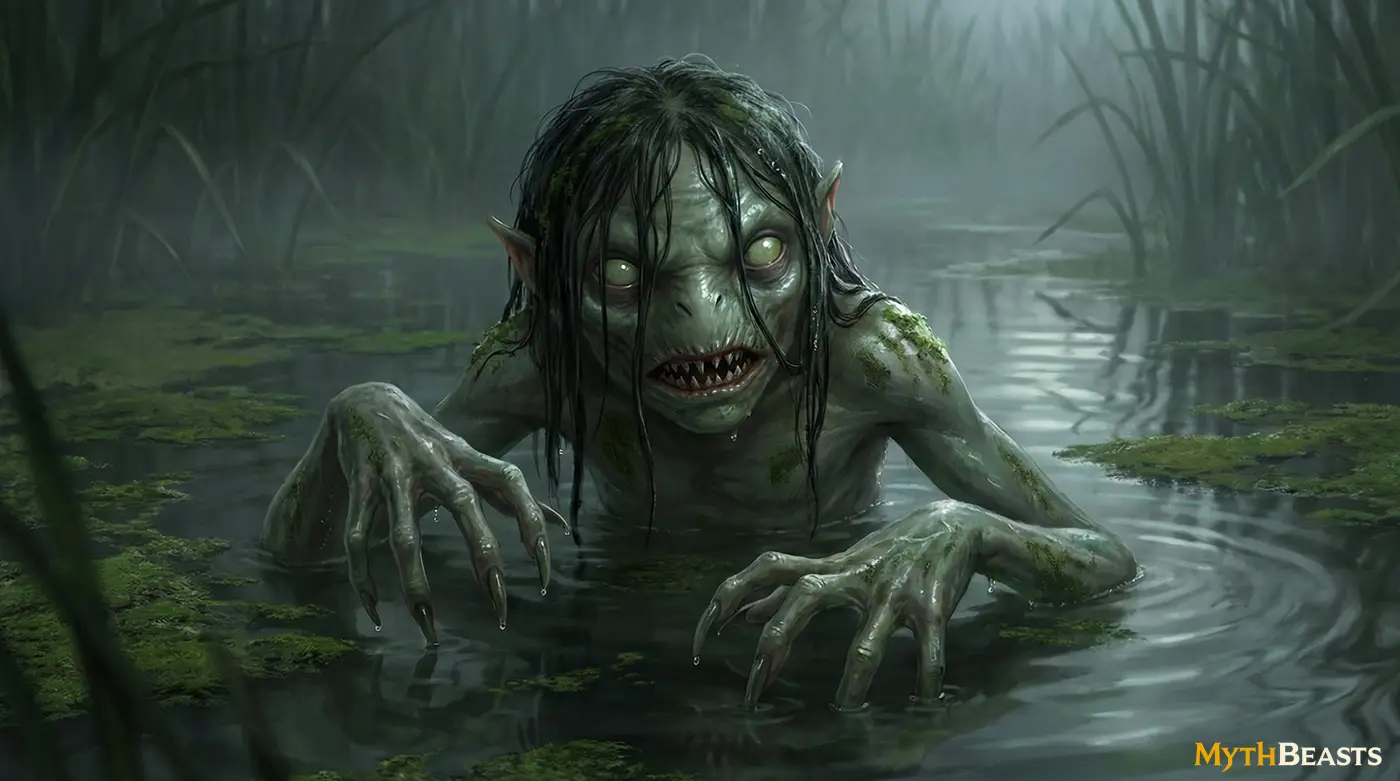
The Grindylow is a distinct northern English water-being, especially associated with Yorkshire lore. It threatens people near water and shares the motif of dragging victims beneath the surface.
This makes it a close functional comparison with Jenny. The resemblance does not establish that their names are interchangeable or that one derives from the other.
Bogeyman
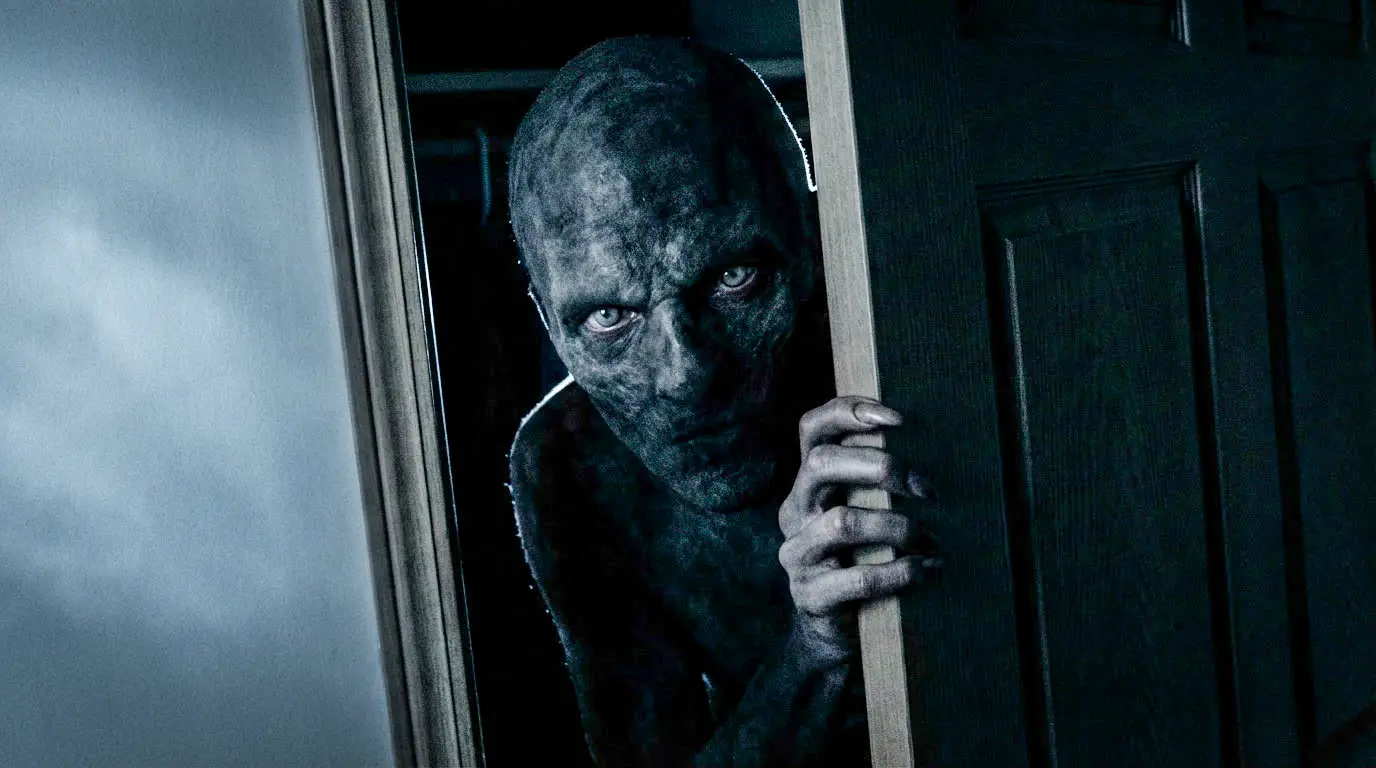
The Bogeyman is a broad fear figure rather than one creature with a fixed identity. Its variable character allows different communities and households to give threatening expectations a supernatural form.
Jenny’s use in warnings about water and tooth cleaning fits this child-scarer function, although her strongest regional identity remains more specifically connected with freshwater hazards.
Qalupalik
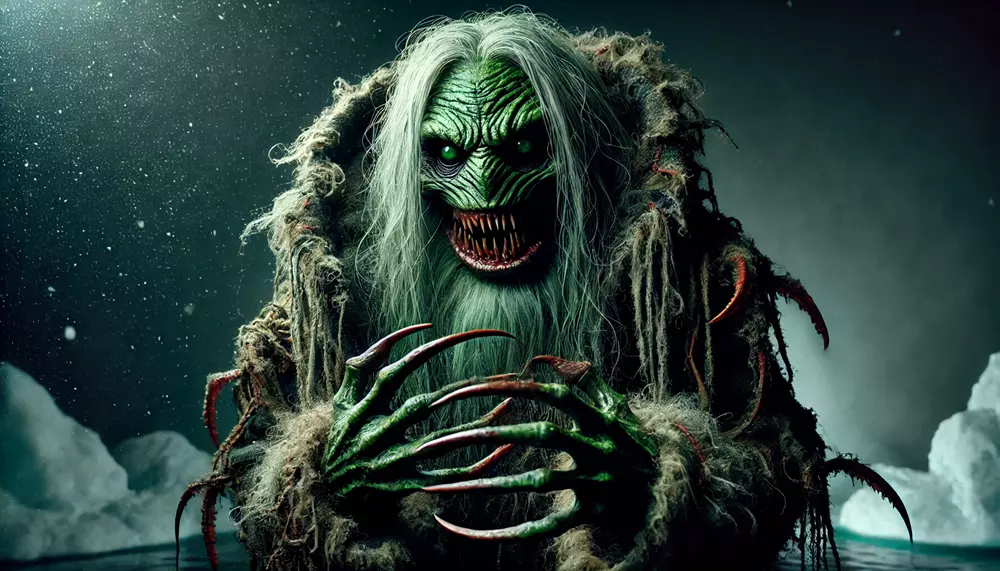
The Qalupalik belongs to Inuit tradition and is associated with dangerous icy waters. Stories about such beings threaten children who approach hazardous shorelines with being taken away.
The comparison concerns a shared cautionary role around water. It does not make the Qalupalik an English-style bogey or imply a historical connection with Jenny.
Peg Powler
Peg Powler is a separately named English water spirit associated with the River Tees. Like Jenny, she belongs among supernatural figures connected with waterside danger and warnings to children.
Their similarities are close, but their regional associations remain distinct. Peg should not be treated as another name for Jenny merely because both threaten people near water.
Scientific or Rational Explanations
The strongest practical interpretation concerns water safety. Threatening children with a hidden attacker could discourage them from approaching places where a fall might be fatal.
Historical testimony directly documents this warning function, although that does not prove it explains the tradition’s original creation.
Floating vegetation provides a more specific environmental connection. Some accounts involve a child mistaking weed-covered water for solid ground.
A green surface can obscure the boundary between bank and pond, making the warning relevant to an identifiable hazard rather than an abstract fear.
The botanical association deserves precision. Lesser duckweed is linked with the name, and the relationship received focused scholarly treatment in the 1983 article “Lemna minor and Jenny Greenteeth.”
Historical expressions such as pond moss or green scum, however, do not always identify one plant species.
The coexistence of vegetation names and supernatural warnings does not settle which came first. The figure may have helped people personify dangerous water, while the visible greenery reinforced her name.
That is a plausible interpretation, not a demonstrated sequence of linguistic or folkloric development.
Retrospective childhood memories also require careful handling. Higson’s recollection records an earlier warning through a later publication, rather than providing contemporary evidence of every detail remembered.
Similarly, a newspaper account of a boy testing Jinny establishes reported behavior, not the existence of a water spirit.
Finally, the variation itself argues against an overly simple explanation. Water hazards help explain Jenny’s most recurrent role, but not every treasure guardian, airborne figure, or tooth-cleaning threat.
A regional supernatural name could acquire additional uses without all of them sharing one origin.
Modern Cultural References
The Wee Free Men, novel (2003)
Terry Pratchett’s Tiffany Aching novel includes an encounter with a threatening water monster.
Jenny Green-Teeth brings the traditional waterside danger into the fictional world of Discworld.
(terrypratchettbooks.com)
Side Jobs, short-fiction collection (2010)
Jim Butcher’s collection gathers shorter adventures from the Dresden Files universe. Its story “Something Borrowed” features Jenny Greenteeth, adapting the folklore figure for contemporary supernatural fiction.
(penguinrandomhouse.com)
Tales Trees Tell, Dungeons & Dragons adventure (2014)
This official role-playing adventure features a hag named Jeny Greenteeth.
The character adapts the traditional name within a game setting rather than reproducing a documented Lancashire legend.
(media.wizards.com)
Pretty Jennie Greenteeth, short story (2016)
Leife Shallcross’s story appeared in the anthology Strange Little Girls and received an Aurealis Award.
It gives the traditional figure a creative treatment involving girls and monsters.
(leifeshallcross.com)
S1 Ep11: Jenny Greenteeth, podcast episode (2023)
The Wyrd Side presents scripted folk horror through its characters’ investigations and experiences.
This episode explores a possible encounter with Jenny Greenteeth through an audio-drama narrative.
(iheart.com)
Greenteeth, novel (2025)
Molly O’Neill’s fantasy novel makes a lake-dwelling monster its protagonist rather than merely an obstacle.
Jenny Greenteeth becomes the central character, substantially reworking her traditional threatening role.
(orbitworks.net)
Conclusion
Jenny Greenteeth is best understood as a variable regional water spirit, especially associated with Lancashire and northwestern England, rather than a monster with one fixed appearance or biography. Her most persistent role turns dangerous water into a personal threat: something waiting to seize a child who ventures too close.
The name’s additional use for pond vegetation strengthens that environmental association, but does not explain away the supernatural figure. Together, these uses show how everyday language, childhood warnings, and local landscapes could overlap.
Her lasting significance lies in the relationship between familiar surroundings and unseen danger. Historical accounts preserve different Jennies, while later illustrations and fiction have made particular versions more recognizable.
Keeping those layers distinct allows both the regional tradition and its creative afterlife to remain visible. Modern novels, games, and audio drama demonstrate the figure’s adaptability, not the existence of a single ancient canon.
Jenny endures because a named presence beneath the water gives memorable form to a hazard that otherwise remains difficult to see.
Further Reading
Jenny Greenteeth, Notes and Queries, reproduced at Wikisource
A period letter directly records East Lancashire use of the name for pond moss and as a warning to children.
(en.wikisource.org)
B41B4A08BA1D2A051E5AB9F175C92126
The home of academic content: Articles, Original sources The home of academic content: Articles, Original sources.
(cambridge.org)
Simon Young, “In Search of Jenny Greenteeth,” discussing John Higson’s account, Sussexfolktalecentre
John Higson recalled that mothers warned children that Jenny Greenteeth lurked in flooded pits and pools near Gorton and would prey on children who ventured too close. The.
(sussexfolktalecentre.org)
The Wee Free Men, terrypratchettbooks.com
novel 2003 Jenny Greenteeth appears as a monster in the Tiffany Aching novel; the author’s official book page verifies the work, and Simon Young discusses the appearance.
(terrypratchettbooks.com)
Tales Trees Tell, media.wizards.com
Dungeons & Dragons adventure 2014 The official adventure features Jeny Greenteeth as a hag, a modern fictional adaptation of the folklore name.
(media.wizards.com)
Greenteeth, orbitworks.net
novel 2025 A published fantasy novel featuring Jenny Greenteeth as its lake-dwelling monster protagonist; the publisher lists it on sale February 25, 2025.
(orbitworks.net)
The Wee Free Men, cdn.penguin.co.uk
novel 2003 The novel includes Jenny Green-Teeth as a water-dwelling monster; the publisher’s sample contains her name and the publisher lists the novel as available.
(cdn.penguin.co.uk)
Side Jobs, penguinrandomhouse.com
published fiction 2010 This Dresden Files short-fiction collection includes “Something Borrowed,” a narrative featuring Jenny Greenteeth.
The publisher confirms the collection’s publication; a contemporary review identifies Jenny’s role.
(penguinrandomhouse.com)