Introduction
Jengu is a water spirit associated with the Sawa communities of coastal Cameroon, especially the Duala and related peoples. The plural, miengu, refers to spirits connected with rivers and the sea, ancestral relationships, healing, protection, and religious practice.
Rather than a single creature with a fixed biography, Jengu belongs to a wider field of spiritual relationships. Its importance lies in communication between human communities and powers associated with water, including the ancestors.
Calling it simply a monster obscures this religious setting.
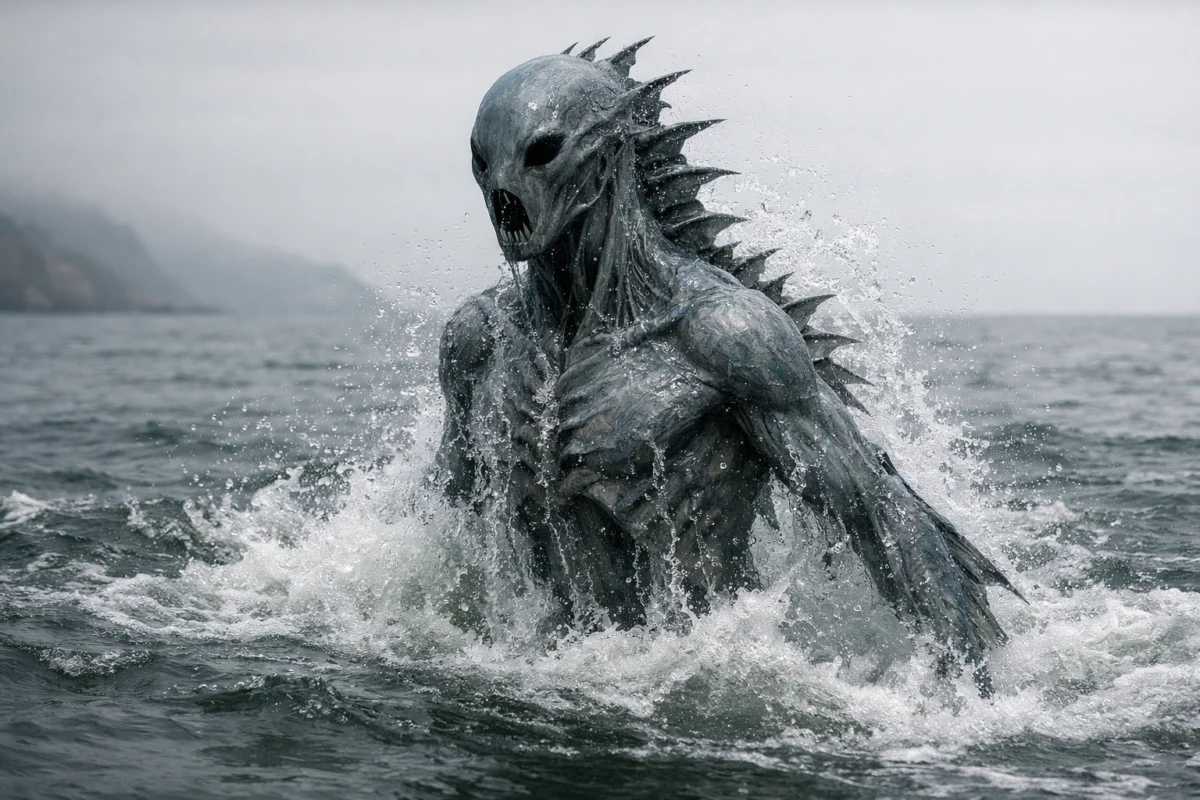
Its appearance is equally varied. Some accounts describe a small, humanlike being, while others combine human and fish features.
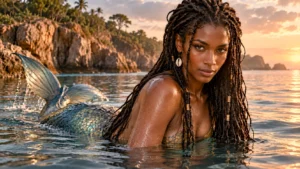
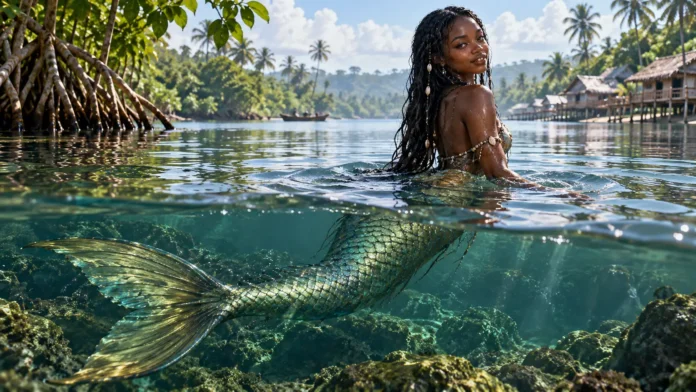
A recorded Batanga account includes a beautiful girl or mermaid-like figure. None of these descriptions establishes one anatomy shared throughout Sawa tradition.
Jengu is also associated with the cultural setting of Ngondo, the Sawa water-oracle tradition centered on the Wouri River. The two names are not interchangeable: Jengu names a spirit, while Ngondo encompasses communal observances and practices through which relationships with the aquatic spiritual world are expressed.
History/Origin
Jengu belongs to the religious and oral traditions of coastal Cameroon, rather than to a known founding text. Its historical setting includes Duala and related communities, alongside locally distinctive accounts such as those preserved among the Batanga.
These traditions should not be treated as completely uniform.
The available documentation does not establish a single beginning for Jengu belief. A later scholarly thesis references Johannes Ittmann’s 1958 discussion of the Djengu association on the Cameroon coast.
That reference provides a historical marker, but it does not establish the earliest observation or publication.
A substantial ethnographic landmark is René Bureau’s 1962 study, Ethno-sociologie religieuse des Duala et apparentés. Its catalog identifies material concerning the Jengu cult association.
This places Jengu within the study of religious institutions and social practice, not merely within a collection of supernatural creature descriptions.
Later documentation preserves other dimensions of the tradition. Éric de Rosny’s 1996 glossary connects Jengu with water ancestry and mystical relationships.
A Batanga account told by Desire Guifo, recorded on June 23, 2017, preserves oral testimony about the spirit’s manifestations, offerings, and communication.
Ngondo’s inscription on UNESCO’s Representative List of the Intangible Cultural Heritage of Humanity in 2024 provides a further institutional milestone. It recognizes a living Sawa water-oracle tradition, not the origin of Jengu belief.
Together, these records document religious institutions, vocabulary, and storytelling across different periods and communities.
Name Meaning
Jengu is the singular form, while miengu is the plural. The distinction matters because English summaries sometimes make Jengu sound like the personal name of one unique being.
In the documented tradition, the term can instead refer to a member of a class of spirits.
In Éric de Rosny’s Duala-related glossary, the meanings include “ancestor of the water” and “spirit of the water.” These glosses emphasize relationships with water and ancestry rather than a particular body shape.
They therefore convey more of the religious meaning than the shorthand translation “mermaid.”
The same glossary also records a mystical-spouse meaning in certain contexts. This adds a relational dimension to the word: its significance can concern a person’s spiritual bond, not simply the identification of an aquatic being.
It should not become a universal description of every Jengu encounter.
These are documented meanings, not a demonstrated reconstruction of the word’s linguistic origin. The available evidence does not justify splitting Jengu into supposedly ancient roots or assigning each syllable a meaning.
Keeping the gloss separate from etymology avoids presenting an attractive explanation as established linguistic history.
Appearance
The most consistent feature of Jengu is its association with water, not a fixed arrangement of human and animal parts. Humanlike forms recur, but descriptions differ substantially.
The familiar image of a fish-tailed woman represents one documented possibility rather than a universal Sawa model.
A description attributed to René Bureau, quoted in a 2020 Médias Africa account, presents a small, humanlike being with a somewhat feminine appearance. It swims like a fish and walks like a person.
Fishlike movement here does not, by itself, establish the presence of a tail.
A contrasting historical description, reproduced in the later thesis Developments and Reforms in Cameroon Land Since 1884, combines fish and human anatomy with reversed feet and a long beard. Because this reaches readers through a later synthesis, its unusual features should remain attached to that particular reported version.
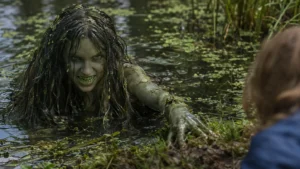
The Batanga account recorded from Desire Guifo offers another range of manifestations. Jengu may appear as a beautiful girl or a mermaid-like figure, with long hair and a gap-toothed smile.
These details belong to a documented oral account, not to a compulsory appearance for all miengu.
The differences are substantial: small stature and feminine traits in one account coexist with a beard and reversed feet in another. Combining them into a single composite creature would erase the variation.
Likewise, the beautiful Batanga manifestation should not displace the less familiar forms preserved elsewhere.
Background Story
Jengu’s background is better understood through relationships among water, ancestors, and communal well-being than through an individual origin story. Rivers and the sea are not merely scenery in these accounts.
They are settings for contact with spiritual powers concerned with human health, protection, and fortune.
The ancestral connection gives this aquatic world a social dimension. Miengu are associated with mediation between living people and ancestors, linking spiritual encounters to continuing relationships beyond ordinary human life.
The vocabulary of water ancestry makes that relationship especially clear without requiring every account to describe an identical ancestral being.
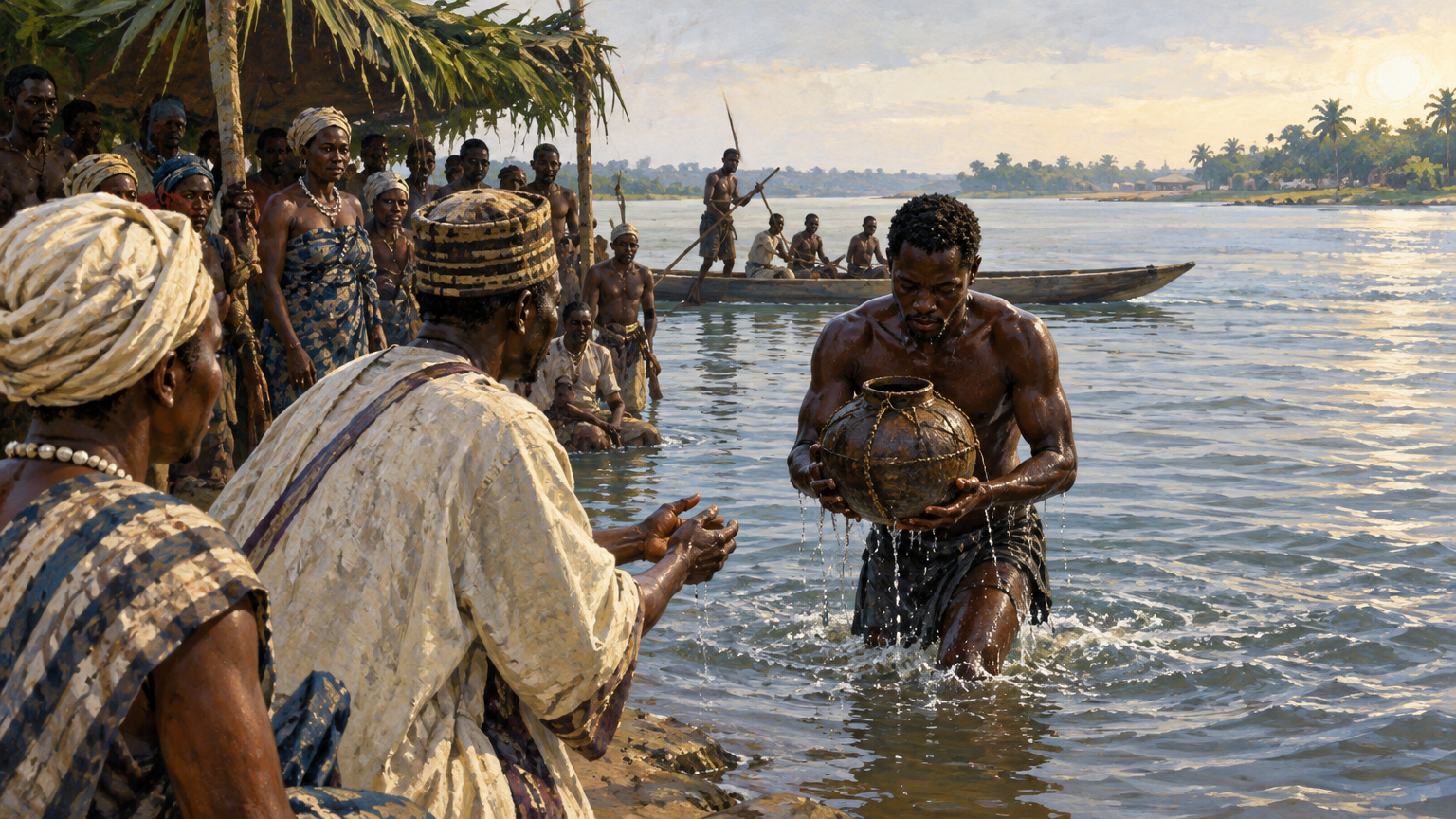
Ngondo provides a public expression of this wider setting. Accounts of its ritual describe a diver carrying a vessel into the Wouri River and returning with a message associated with the water oracles and ancestors.
The episode concerns communication for the community, rather than a solitary hero’s adventure.
That ritual setting also explains why a creature-centered summary can be misleading. Jengu traditions involve religious practice and forms of knowledge, some described as restricted to initiates.
Public accounts preserve important features, but they should not be expanded into a complete account of sacred procedures or hidden teachings.
The recorded Batanga testimony adds a more personal dimension through accounts of appearances, offerings, and communication. Alongside the communal setting of Ngondo, it shows that Jengu is encountered through more than one narrative framework.
The surviving material supports this diversity, rather than one universal biography or adventure cycle.
Famous Folklore Stories
Jengu narratives include recorded oral testimony and accounts of encounters with the water spirits. The examples below have no authenticated traditional story titles.
Their descriptive headings distinguish a Batanga storyteller’s account from the communal ritual narrative associated with Ngondo, rather than presenting them as episodes of one shared tale.
Changing forms in a Batanga encounter account
A Batanga account attributed to storyteller Desire Guifo, recorded on June 23, 2017, presents Jengu as capable of appearing in different forms. These include a beautiful girl and a mermaid-like figure with long hair and a gap-toothed smile.
This is recorded oral testimony, not a named traditional folktale.
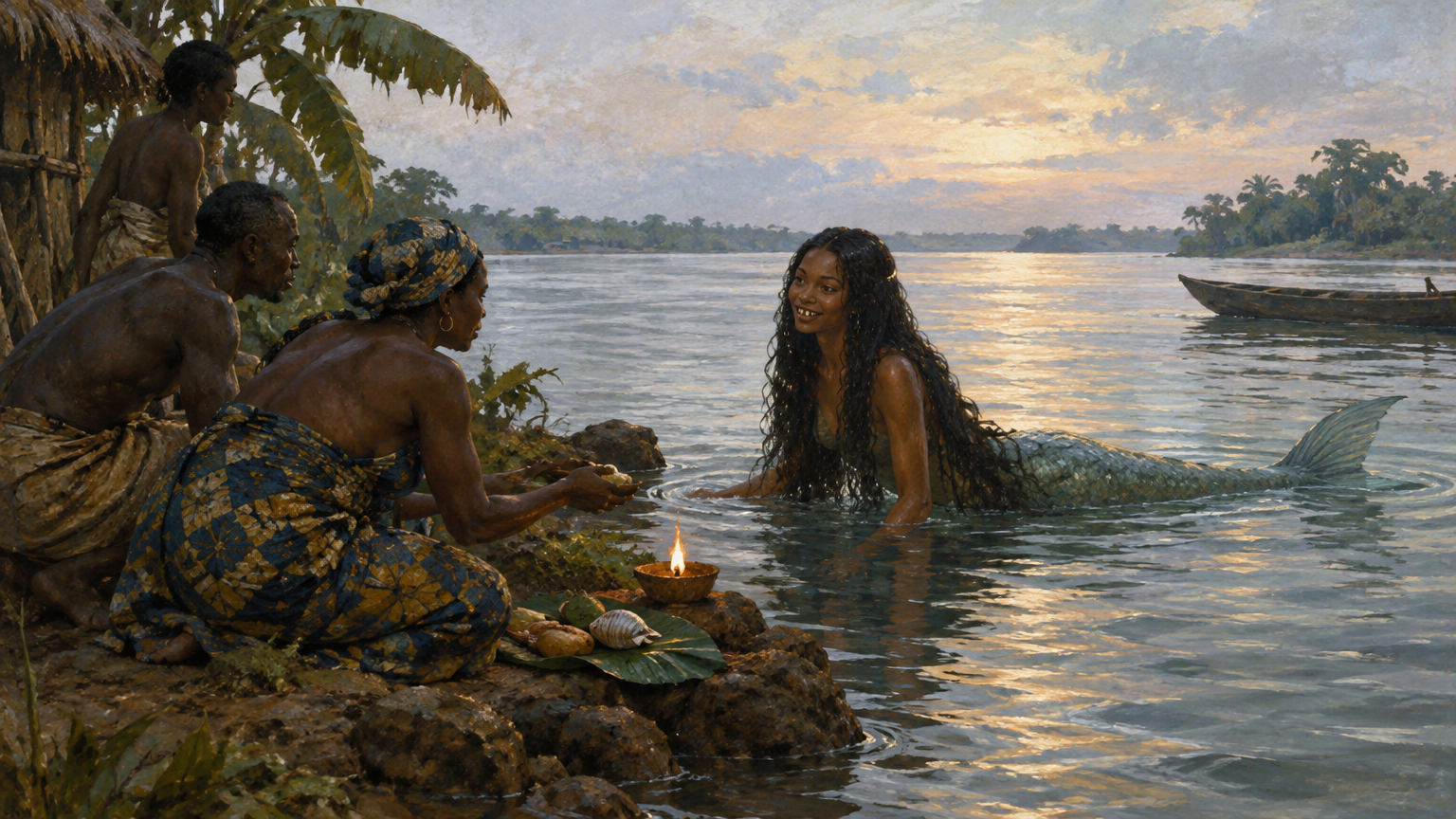
The account also concerns offerings and communication with the spirit. Its significance therefore extends beyond an unusual appearance: Jengu is someone with whom people may establish a relationship.
The narrative connects visible manifestation with religious interaction, rather than treating the spirit simply as a mysterious aquatic animal.
This Batanga version should retain its particular character. Its beautiful, mermaid-like appearance differs from descriptions elsewhere of smaller humanlike beings or bearded fish-human forms.
Those differences belong to the documented tradition; combining every feature would create a composite creature that no individual account actually describes.
The Ngondo diver and the water-oracle message
Public accounts of Ngondo describe a diver carrying a ritual vessel into the Wouri River. The descent is connected with the water spirits and ancestors, and the diver returns with a message for the assembled community.
This is a ritual account, not a titled Jengu adventure story.
The episode centres on communication between the gathered people and an unseen spiritual world. Its narrative movement is clear: a representative enters the water and returns bearing a message.
The importance lies in that exchange, rather than in a detailed description of an underwater creature.
Ngondo must nevertheless remain distinct from Jengu. It is a Sawa festival and water-oracle tradition, not another name for the spirit.
The diver’s episode belongs within that broader ceremonial setting and should not be turned into a universal account of how every Jengu encounter occurs.
Cultural Impact
Jengu’s cultural importance rests principally in relationships among coastal Sawa communities, water, spiritual protection, and ancestors. These connections make the figure more than an image from folklore.
Belief in miengu also belongs to ways of understanding wellbeing and maintaining relationships with spiritual powers.
The association with Ngondo places water-spirit traditions within a public expression of Sawa cultural identity. UNESCO’s recognition of Ngondo in 2024 concerns the wider water-oracle tradition and its associated cultural practices.
It does not establish one official version of Jengu belief or appearance.
Ethnographic documentation also preserves the institutional dimension of the tradition. René Bureau’s 1962 study of Duala religion includes material on the Jengu cult association.
This historical context matters because modern creature summaries can obscure the organized religious and social relationships surrounding the spirits.
Recorded storytelling preserves a different kind of cultural knowledge. The Batanga testimony retains a named narrator and a particular account, rather than an anonymous list of supernatural characteristics.
Read alongside ethnography, it demonstrates why local voices and circumstances remain essential to understanding the tradition.
Modern descriptions that translate Jengu simply as “mermaid” make comparison easy but narrow the meaning. An aquatic appearance is only one aspect of the figure.
Ancestor relationships, healing, protection, and communication are equally important to a culturally grounded account of what miengu represent.
Similar Beasts
Kianda
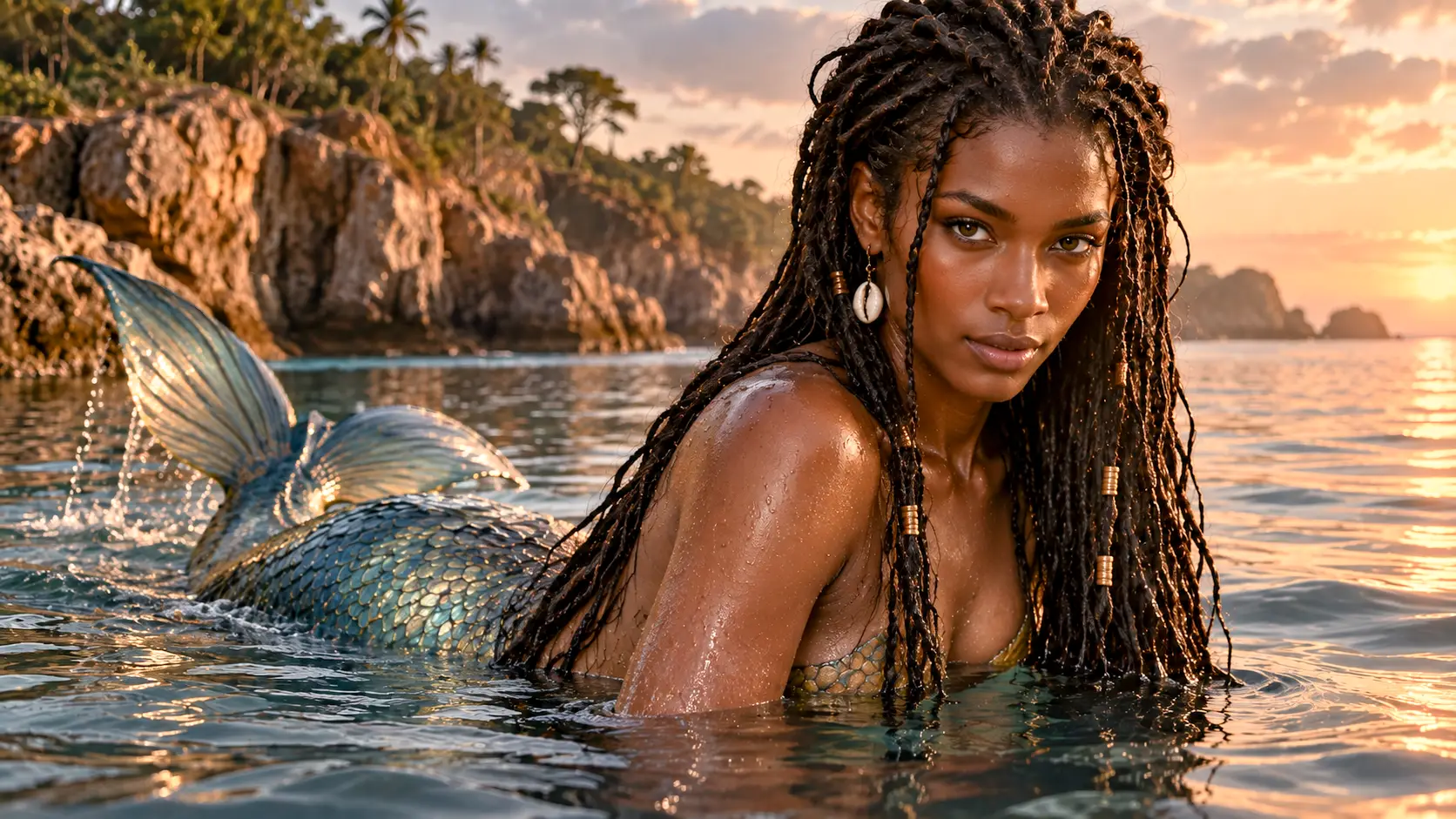
Kianda is a water spirit associated with Angola, particularly Kimbundu-speaking traditions. Although frequently translated as a mermaid, the name encompasses supernatural beings whose significance extends beyond one fixed aquatic appearance.
Like Jengu, Kianda illustrates why a familiar mermaid label can be incomplete. Their water associations invite comparison, but their cultural identities remain distinct.
Nyami Nyami

Nyami Nyami is a river deity in Tonga tradition, associated with the Zambezi. Common descriptions give this powerful being a serpent’s body and a fish’s head, combining protection with destructive river power.
The comparison concerns sacred water and protective power, not shared anatomy or identity. Jengu is a Sawa water spirit, rather than the Tonga river deity.
Mami Wata
Mami Wata belongs to a broader African water-spirit complex, distinct from the coastal Cameroonian traditions surrounding Jengu. Comparisons and associations occur, but neither name should automatically replace the other in descriptions of local belief.
Both concern powerful water spirits. Their relationship is useful comparatively, provided it does not erase Jengu’s particular Sawa setting or imply that all associated practices coincide.
Religion/Ritual
Miengu are associated with healing, protection, fortune, and mediation between living people and ancestors. These functions place them within religious practice rather than merely supernatural storytelling.
Their importance concerns what relationships with spirits can mean for individual wellbeing and the wider community.
The ancestral dimension is particularly significant. Éric de Rosny’s glossary connects Jengu with water ancestry and, in some contexts, a mystical spouse.
These meanings indicate relationships more intimate and complex than the generic English category “water creature” can adequately convey.
Offerings and communication appear in the recorded Batanga testimony, while ethnographic and later accounts discuss rites and cult institutions. These are related forms of religious engagement, but they should not be combined into a standardized ceremony supposedly practised identically throughout all Sawa communities.
Ngondo provides a public setting for communication associated with water oracles and ancestors. The diver’s vessel and returning message are documented elements of that setting.
They do not establish that every practice involving miengu requires the same objects, participants, or sequence of actions.
Some ritual knowledge is restricted to initiates. Public descriptions therefore provide only a partial account of sacred practice, not an instruction manual.
The available evidence supports discussing religious purposes and publicly described actions without supplying unverified offerings, initiation procedures, taboos, or ritual formulas.
Scientific or Rational Explanations
Jengu is documented as a religious and folkloric figure, not established as a zoological species. Ethnographic records and oral testimony provide evidence that people describe, interpret, and maintain relationships with these spirits.
They do not independently verify the supernatural claims expressed within those accounts.
An anthropological interpretation can examine how the tradition connects wellbeing, ancestry, water, and communal life. This approach addresses the meanings and social relationships surrounding Jengu without requiring either a literal biological explanation or the dismissal of practitioners’ experiences as meaningless mistakes.
The differing appearances also caution against treating every account as an attempted description of one animal. A small humanlike swimmer, a bearded fish-human being, and a beautiful mermaid-like figure are materially different representations.
The documented variation does not justify selecting one as a scientifically identifiable original.
Ritual accounts require a further distinction between publicly described actions and their spiritual interpretation. A diver entering the Wouri with a vessel belongs to the reported ceremony.
Communication with water spirits concerns the ceremony’s religious meaning and is a different kind of claim.
No specific animal-misidentification explanation is established by the evidence considered here. Attributing Jengu to a particular species would therefore add an unsupported origin theory.
The strongest grounded interpretation remains cultural and historical: a varied water-spirit tradition sustained through religious practice, oral testimony, and community institutions.
Modern Cultural References
Mboa Matanda, le tournoi des rois, film (2023)
Jules Kalla Eyango’s film places General Dibombè within a supernatural narrative.
He encounters Jengu, presented in this adaptation as the sea god, who gives him a mission.
(ouicoprod.org)
Jengu Project Work in Progress: Do It Yourself, public artwork (2010)
Bili Bidjocka and Yves Makongo’s SUD 2010 project used a map and 180 flags.
Its representation of Jengu connects the river’s water with the water spirit’s hair.
(sud-2010.blogspot.com)
Water Feë: Jengu (Episode 161), podcast episode (2025)
Ronel Janse van Vuuren’s dedicated episode explores Jengu’s folklore alongside her own writing.
It brings the Cameroonian water spirit into a contemporary podcast about faeries and folklore.
(ronelthemythmaker.com)
Jengu Poster, commercial illustration
An illustration by gatadelafuente is available as a poster and other products. Its presentation identifies Jengu as a Cameroonian mermaid or water spirit, adopting a recognizable mermaid interpretation.
(redbubble.com)
Conclusion
Jengu is best understood within the water-spirit traditions of coastal Cameroon, where rivers and the sea connect religious practice, ancestral relationships, healing, and protection. The figure’s importance does not depend on a single appearance or a fixed sequence of adventures.
Humanlike and mermaid-like descriptions belong to particular accounts, while the broader tradition concerns relationships between people and spiritual powers. Preserving that distinction keeps Jengu’s cultural significance visible rather than reducing a complex religious figure to a familiar fantasy creature.
The surviving documentation brings together ethnography, collected oral testimony, language glossaries, and accounts of public ritual. These materials establish a substantial tradition without supplying one universal origin story or complete account of sacred practice.
Modern film, public art, podcasts, and illustration extend Jengu’s visibility, but their portrayals remain interpretations rather than definitive statements of belief. Read together, the older documentation and contemporary adaptations show the continuing significance of water as a setting for ancestral presence, spiritual encounter, and communal identity.
Further Reading
Our Mythical Childhood Survey, Psh.ibi.uw.edu
A recorded oral account attributed to Batanga storyteller Desire Guifo describes Jengu as a water spirit that may appear in different forms, including a beautiful girl or a.
(psh.ibi.uw.edu.pl)
Jengu Project Work in Progress: Do It Yourself, sud-2010.blogspot.com
artwork 2010 A public-art project for SUD 2010 used a map and 180 flags; its creator’s project description explicitly identifies Jengu as the work’s subject and represents it.
(sud-2010.blogspot.com)
Jengu Poster, redbubble.com
product The product page identifies the depicted subject as a Cameroonian mermaid/water spirit called Jengu and offers the artwork as a poster and other products.
(redbubble.com)
Ethno-sociologie religieuse des Duala et apparentés, Institut de recherches scientifiques du Cameroun / IRD Horizon
An important ethnographic study of Duala religion and social practice, including a section identified in the catalog as concerning the Jengu cult.
The catalog record provides bibliographic context;.
(documentation.ird.fr)
La nuit, les yeux ouverts. Récit, glossary, Classiques des sciences sociales, Université du Québec à Montréal
Provides a French-language glossary entry for Jengu and miengu, including meanings tied to water ancestry and mystical relationships.
(classiques.uqam.ca)
Le culte du Jengu chez les Sawa du Cameroun, Médias Africa
A readable account of reported Jengu descriptions, rites, and cult practice that cites René Bureau’s 1962 ethnography.
(medias.africa)
Ngondo, worship of water oracles and associated cultural traditions among the Sawa, UNESCO Intangible Cultural Heritage
Provides institutional context for Ngondo and its place among Sawa water-oracle traditions; it is relevant cultural context rather than a full Jengu entry.
(ich.unesco.org)