Cocollona
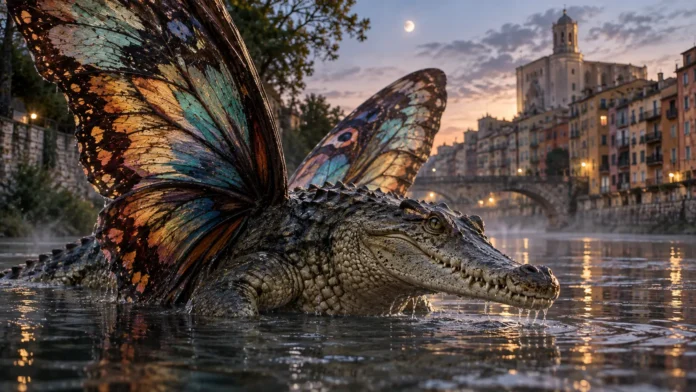
The Cocollona is a fantastic creature from Girona, Catalonia, imagined as an extraordinary hybrid with a crocodile’s scaled body and colorful butterfly wings. According to the legend, she emerged through the supernatural transformation of a young religious novice imprisoned beneath the city’s Mercadal district.
Unlike creatures inherited from medieval manuscripts or centuries of oral tradition, the Cocollona has a traceable modern origin. Girona writer Carles Vivó described the tale as an apocryphal legend that began among local friends before gradually escaping its creators and entering the city’s popular imagination.
Within the story, the Cocollona combines two contrasting transformations. Damp imprisonment changes the novice’s human body into a reptilian monster, while her goodness produces beautiful wings.
The resulting creature therefore joins physical corruption with spiritual purity rather than representing a straightforward evil or dangerous beast.
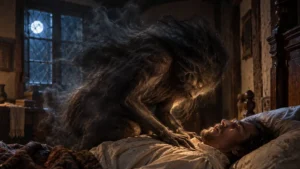
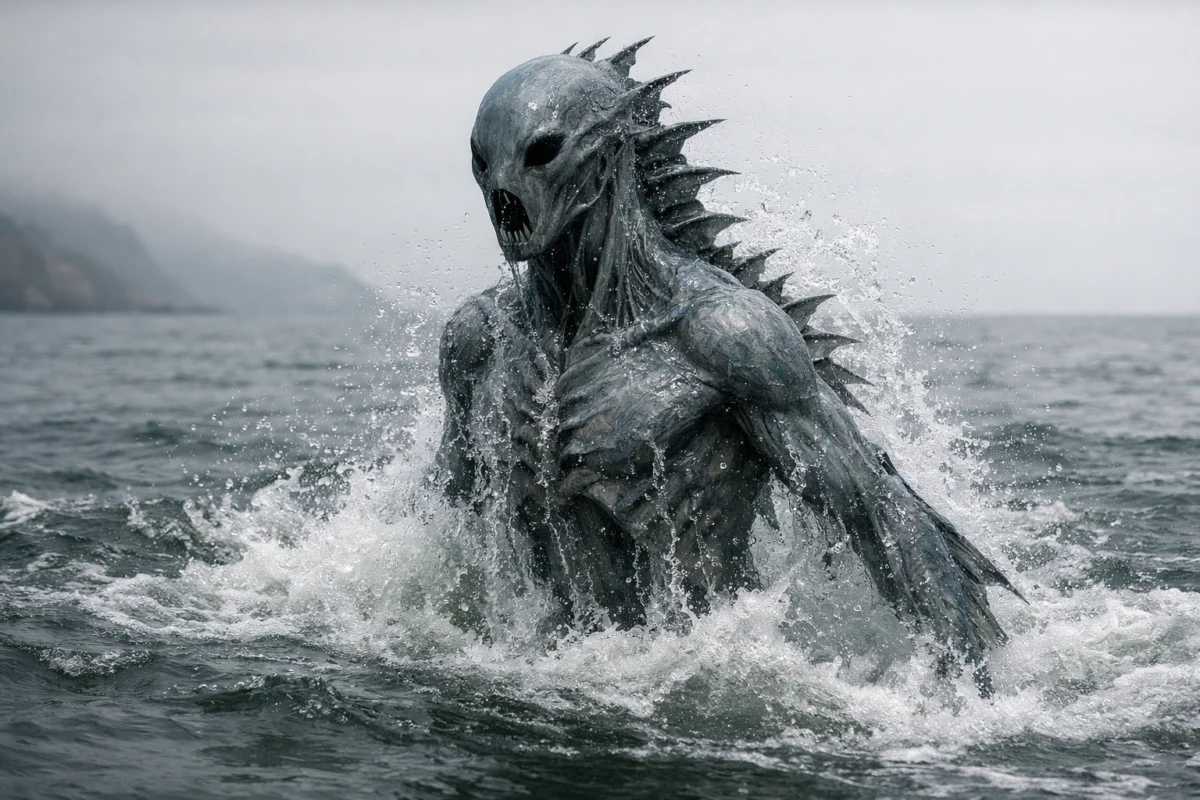
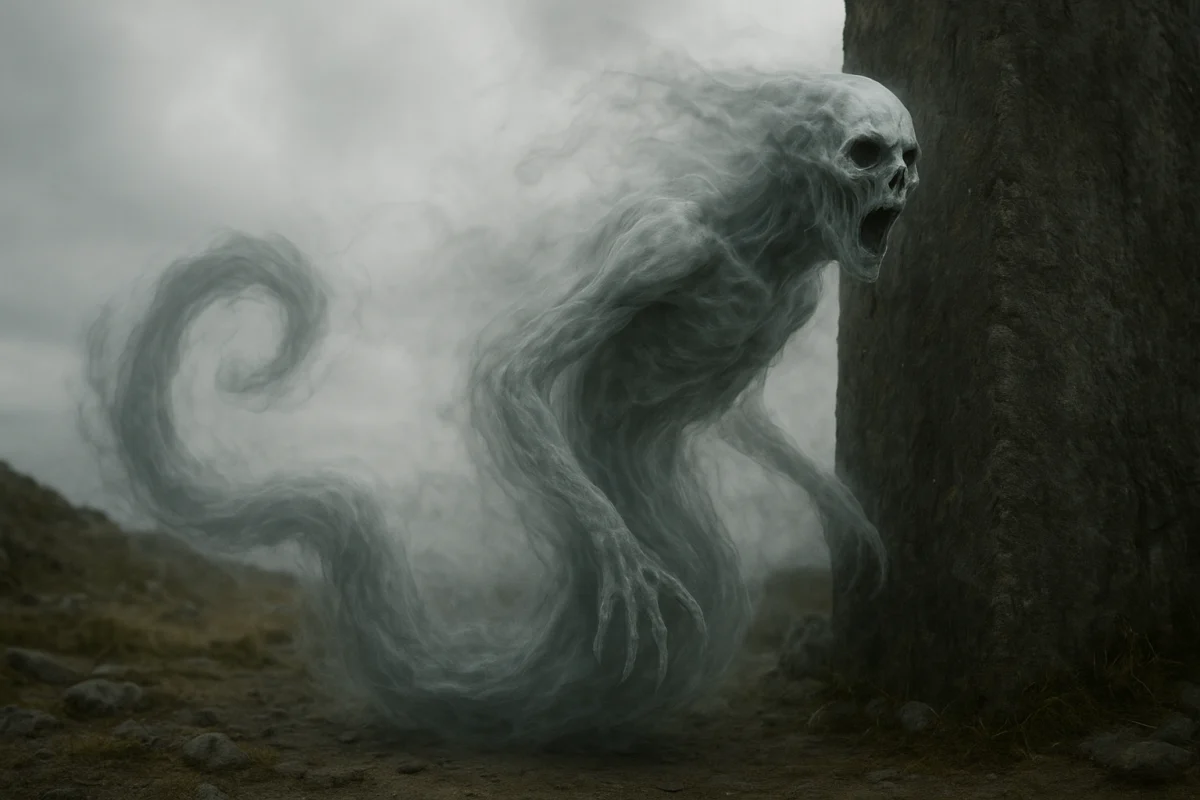
After the novice dies, the legend moves from underground confinement to the Onyar River. Her ghost supposedly swims through Girona on full-moon nights near dawn, appearing as a blurred, partly transparent crocodile with butterfly wings before disappearing when the day’s first sunlight reaches the water.
Today, the Cocollona belongs firmly to Girona’s cultural landscape. The municipal children’s tourism guide retells her story, while murals, puppets and other artistic interpretations have given the invented creature a visible public presence that demonstrates how quickly communities can adopt newly created folklore.
History/Origin
The Cocollona’s documented history differs sharply from the fictional history inside her legend. Carles Vivó’s Llegendes i misteris de Girona, published in 1989 by the Diputació de Girona and Caixa de Girona, explicitly presents the Cocollona as what he calls an apocryphal legend.
Vivó credits Girona photographer and cultural figure Emili Massanas with creating the character. According to Vivó, Massanas heard a young niece mispronounce a word as “cocollona” and immediately imagined that the strange expression could combine elements of the Catalan words for crocodile and butterfly.
The idea did not remain Massanas’s private joke. Vivó explains that conversations and gatherings among friends gradually enriched the character until collaborators established the recognizable legend.
A recent Diputació de Girona account by Jordi Mestre similarly remembers friends developing the story together around Girona.
This documented creative process matters because later retellings can make the Cocollona sound centuries old. The convent, imprisoned novice and supernatural transformation belong to the invented narrative.
Available reliable sources do not establish a historical medieval woman whose experiences inspired the creature or verify the legendary convent episode.
Vivó described how unexpectedly the invention spread: “What was originally a kind of joke gradually took root.” (Llegendes i misteris de Girona, Carles Vivó, 1989, translated from Catalan)
He notes that the Cocollona entered conversations beyond its creators’ circle, appeared in local printed stories and student publications, inspired puppet performances, and even supplied an editorial name and logo. What began as deliberate invention consequently acquired the social circulation associated with genuine urban folklore.
The legend’s successful adoption makes its recent origin especially interesting. Instead of preserving a story whose author disappeared centuries ago, Girona preserves a rare example of folklore developing almost within living memory, where researchers can identify creators while also observing the narrative become communal cultural property.
Name Meaning
Cocollona is not an old Catalan zoological or supernatural term documented in the sources used here. Vivó traces the name to a child’s unusual pronunciation heard by Emili Massanas, who interpreted the accidental word as a playful combination capable of suggesting an entirely new monster.
The wordplay combines parts of cocodril, Catalan for crocodile, and papallona, Catalan for butterfly. The creature’s anatomy then follows the invented name: its reptilian body represents the crocodile component, while the large colorful wings visually express the butterfly half of the linguistic combination.
Vivó summarizes that creative leap directly: “And thus was born the Girona monster that swims the Onyar River on full-moon nights.” (Llegendes i misteris de Girona, Carles Vivó, 1989, translated from Catalan)
This origin makes the name unusually important to the legend. The story did not simply describe a creature and later provide a label.
Instead, the accidental word inspired the hybrid concept, after which Girona storytellers constructed a narrative capable of explaining why such incompatible animal features existed together.
Appearance
The Cocollona’s defining appearance combines a crocodile with a butterfly. Her body carries reptilian scales and resembles a crocodile, while two beautiful butterfly wings rise from her back.
Traditional descriptions emphasize their many colors, creating a deliberate contrast with the creature’s heavy, monstrous body.
The physical contrast also carries the legend’s moral structure. Darkness, humidity, poor nourishment and imprisonment supposedly produce the novice’s scales and reptilian transformation.
Her continued goodness and religious devotion produce the wings, allowing her outward body and inward character to develop in opposite symbolic directions.
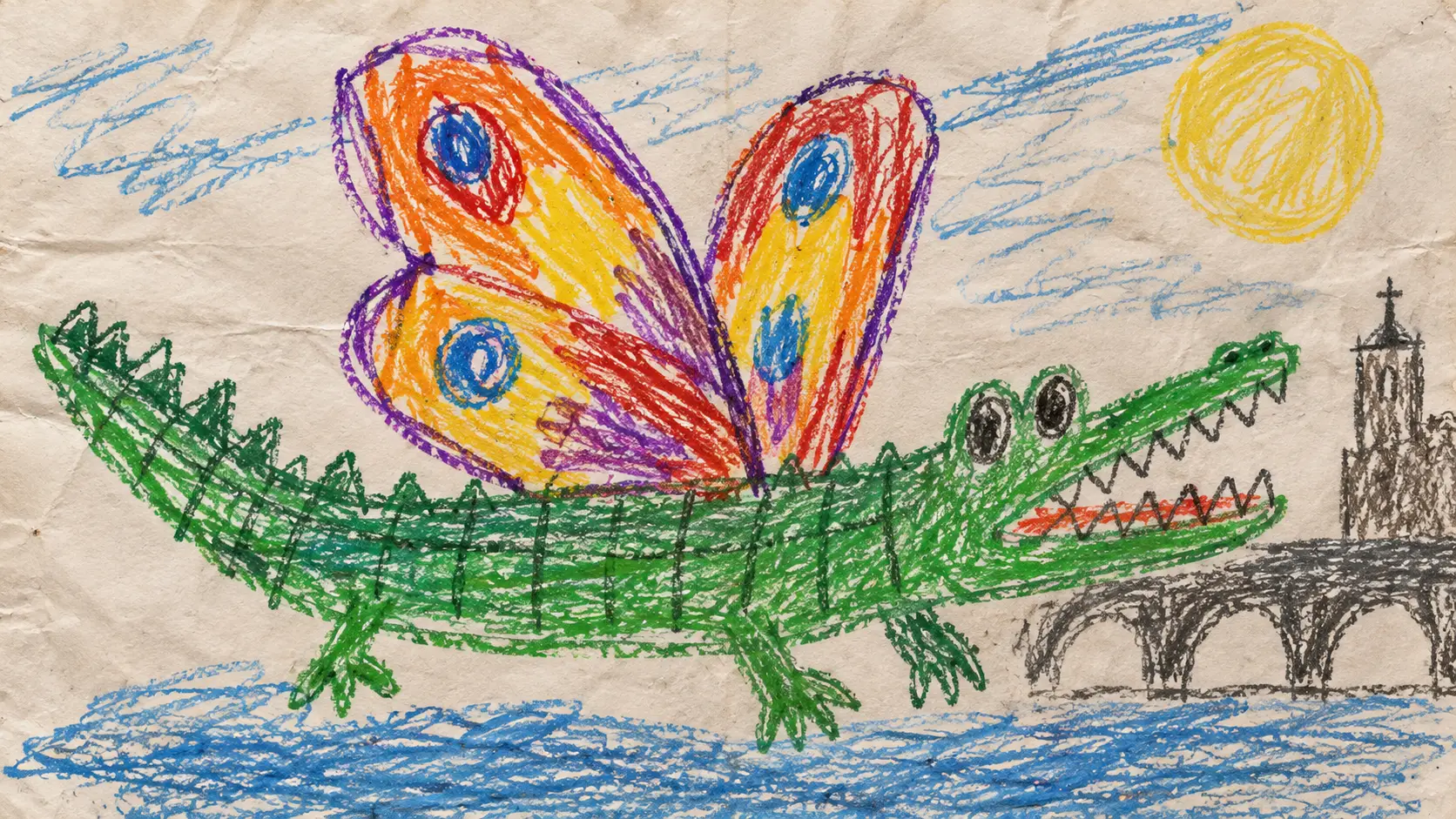
Carles Vivó’s song for a puppet performance gives the transformation its clearest first-person description: “With a crocodile’s body, and wings of a thousand colors, like those of a butterfly.” (Cocollona song, Carles Vivó, associated with a puppet performance)
After death, the Cocollona becomes more spectral. Vivó describes her apparition as partly transparent and blurred while swimming along the Onyar.
This ghostly version retains the crocodile body and butterfly wings, but its indistinct form separates the river apparition from a living physical animal.
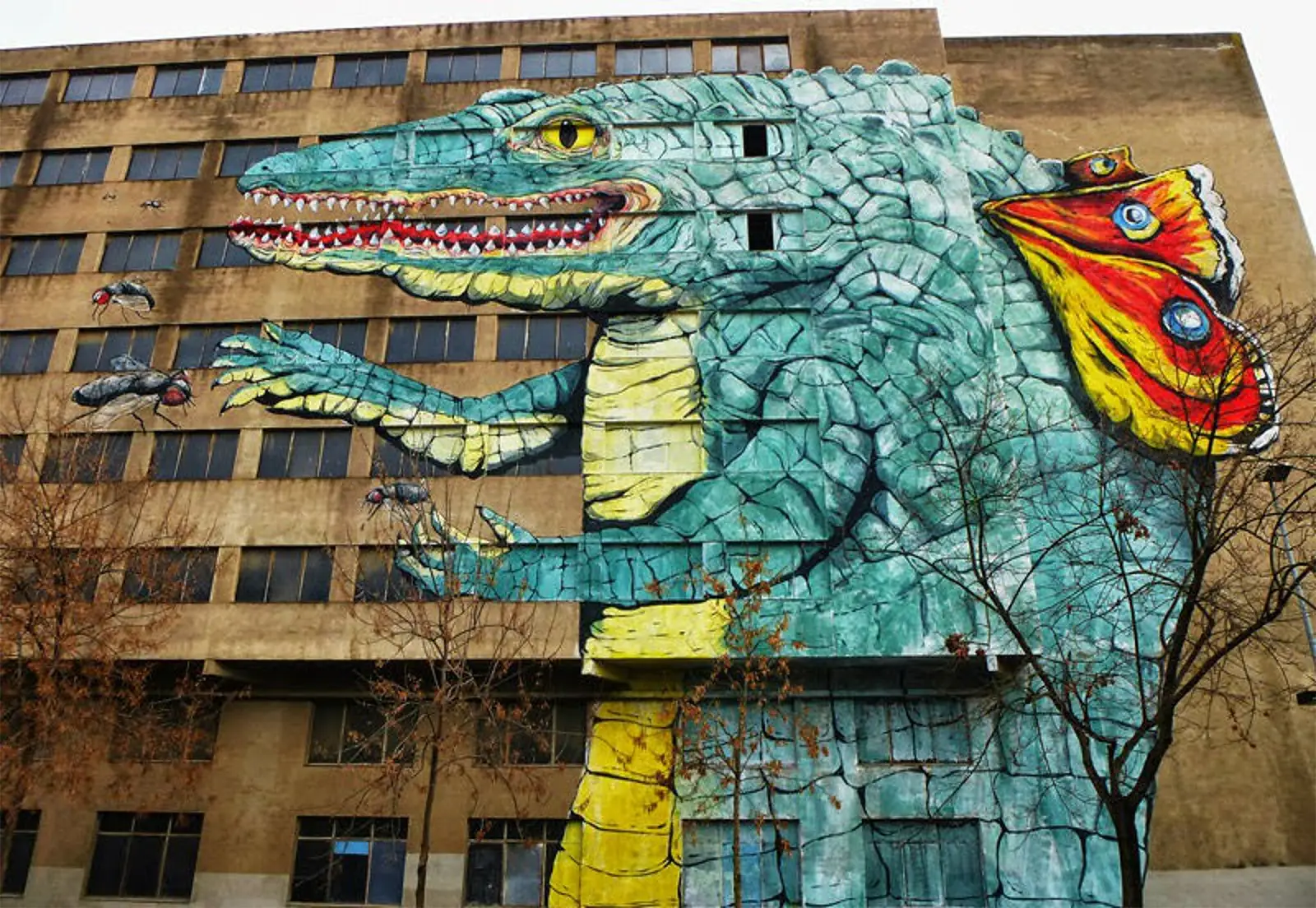
Later artists have interpreted the design freely. Carles Vivó created a Cocollona puppet, while Italian artist Erica il Cane painted a monumental Cocollona mural in Girona during the 2012 Milestone Project.
These works reinforce the hybrid anatomy without establishing one fixed canonical visual form.
Background Story
The legend places a convent on the left bank of the Onyar in Girona’s Mercadal district. Its nuns supposedly neglected the devotions and penances expected of them and lived disorderly lives.
Among them, however, lived a sincere novice committed to her religious vocation.
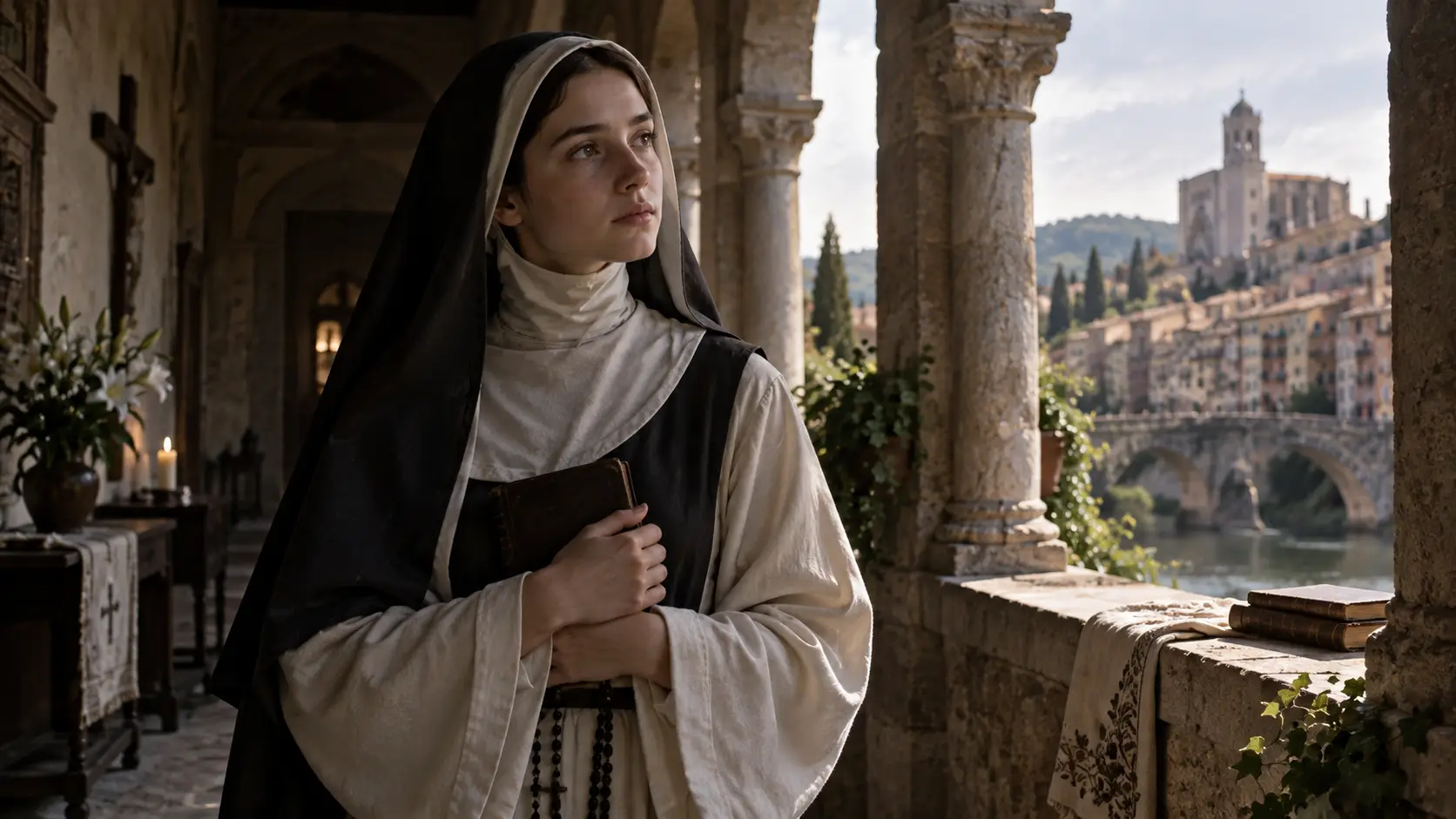
The novice refused to follow the other sisters and repeatedly criticized their behavior. Tired of hearing her objections, the nuns locked her inside an underground cell near the point where the Monar irrigation channel reached the Onyar, cutting her away from ordinary life.
Years of darkness, persistent damp and poor nourishment transformed the imprisoned woman’s body. Scales gradually covered her skin until she became reptilian, resembling a crocodile.
The punishment therefore altered her outward form, turning an innocent prisoner into something physically frightening and apparently monstrous.
Her character remained unchanged. According to the legend, the novice’s goodness produced a second transformation, and colorful butterfly wings grew from her back.
The Cocollona thus emerged as a contradiction: a body deformed through suffering joined with wings that represented the purity imprisonment could not destroy.
The novice eventually died alone and abandoned. Her death did not end the story, because her ghost supposedly entered the nearby Onyar.
The legend places later appearances around the river between the present Pont de Pedra and Pont de les Peixateries Velles.
On full-moon nights near dawn, especially sensitive people supposedly glimpse her translucent form swimming through the river. She travels up and down the Onyar as mist surrounds the water, but the apparition lasts only until the first sunlight arrives and causes her to vanish.
The story therefore turns a playful invented name into a compact tragedy about injustice, transformation and memory. Girona itself supplies the stage: the Mercadal, irrigation channel, bridges and Onyar anchor an impossible creature to recognizable locations, helping a deliberately invented tale feel like inherited local folklore.
Famous Folklore Stories
The Night the Cocollona Legend Took Shape
The Cocollona began with Emili Massanas entertaining his young niece by encouraging her to pronounce difficult words. According to photographer Jordi Mestre Vergés, she unexpectedly produced “cocollona,” inspiring Massanas to imagine a strange creature whose name combined crocodile and butterfly into one memorable invention.
The playful idea followed Massanas into Girona’s creative social circle. Mestre remembers that after leaving L’Arc late one night, friends continued developing the creature near the Eiffel Bridge.
Their improvised conversation transformed a funny invented word into the beginnings of a supposedly ancient Girona legend.
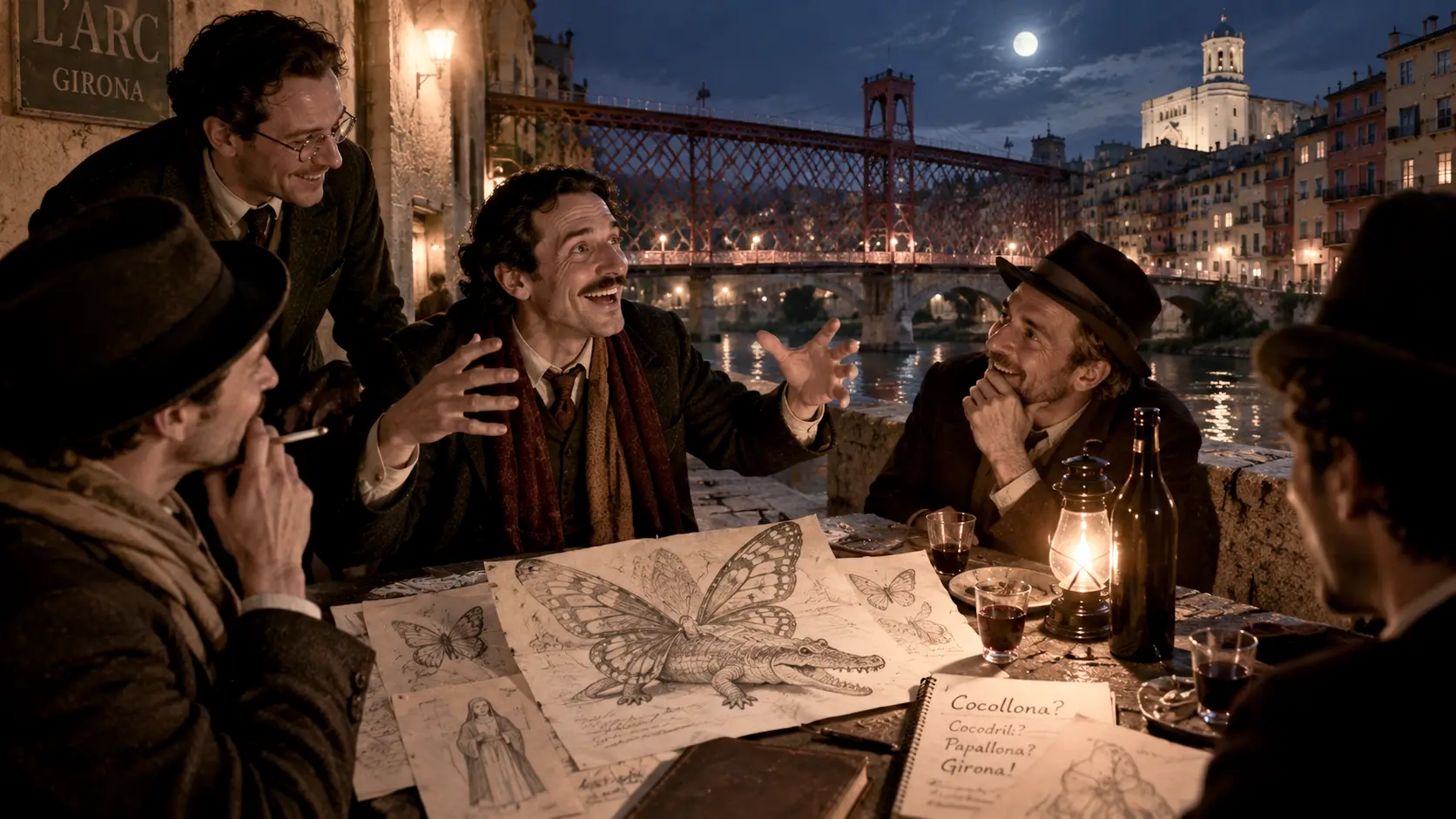
“Emili, delighted, began inventing the story of the Cocollona.” (L’Emili Massanas que vaig conèixer, Jordi Mestre Vergés, published by INSPAI, 2024, translated from Catalan)
Mestre recalls the friends imagining whether their creature might have been a nun from Girona’s Santa Clara convent. Carles Vivó later shaped the developing ideas into a definitive literary version, deliberately presenting the newly constructed narrative with the atmosphere and structure of inherited local folklore.
This origin story makes the Cocollona unusual among legendary beasts because witnesses to its creation remained identifiable. Instead of slowly reconstructing an unknown oral past, researchers can follow Girona artists deliberately building a legend and then watch their private invention become part of the city’s collective imagination.
The Ghost Swimming Through the Onyar
The most supernatural Cocollona episode begins after the transformed novice’s death. Carles Vivó’s published version says her ghost subsequently appeared in the Onyar near the place of her imprisonment, roughly between Girona’s present Pont de Pedra and Pont de les Peixateries Velles.
The apparition follows specific conditions. It supposedly emerges around dawn during full-moon nights, when mist helps make ghosts visible.
Particularly sensitive people can glimpse a blurred, half-transparent crocodile with butterfly wings swimming repeatedly along the river rather than encountering a solid creature on the riverbank.
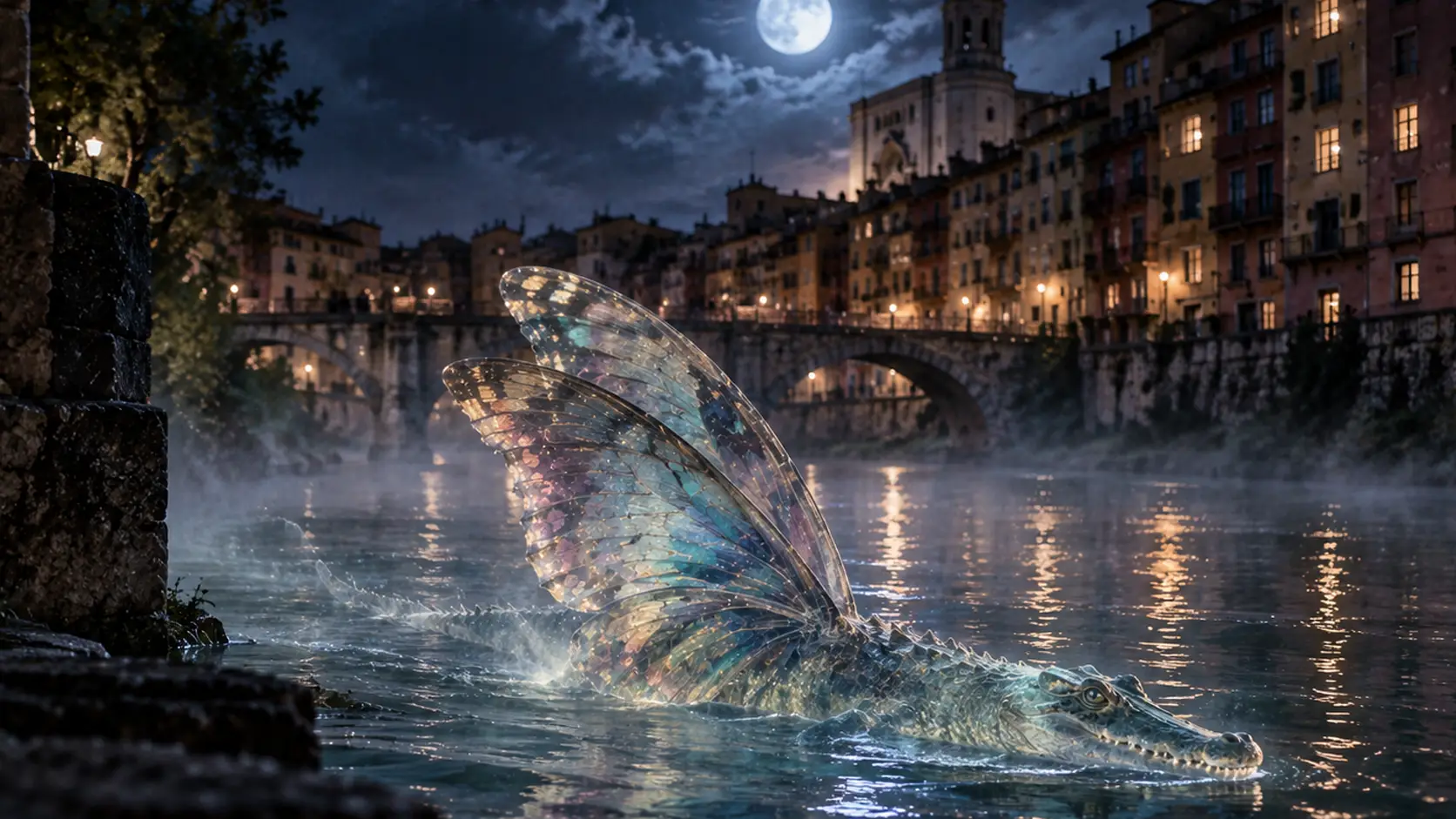
“Those Gironans who are truly sensitive can see the half-transparent and blurred specter of a crocodile with butterfly wings.” (Llegendes i misteris de Girona, Carles Vivó, 1989, translated from Catalan)
The encounter always ends with daylight. Vivó says the spectral creature continues moving upstream and downstream until the first ray of sunlight appears, when it vanishes.
This gives the Cocollona legend a recurring supernatural event rather than a single historical sighting with a fixed date.
Girona City Council preserves a gentler version for younger visitors, saying people with good hearts may see the creature swimming during full-moon nights. That variation shows how the apparition has moved beyond Vivó’s original wording while retaining its essential setting, timing, and elusive witness requirement.
The Cocollona Tells Her Own Story
Carles Vivó later transformed the legend into a first-person song for a puppet performance. Instead of an outside narrator describing the monster, the Cocollona introduces herself and recounts her identity directly, giving Girona audiences a theatrical version that turns the frightening apparition into a speaking character.
The song moves through the creature’s story in compact verses, but its most memorable section presents her final appearance. Vivó emphasizes the impossible combination that defines her, joining a crocodile’s body with brilliantly colored butterfly wings before having the Cocollona claim Girona’s Onyar as her home.
“With a crocodile’s body, and wings of a thousand colors, like those of a butterfly, I am the Cocollona.” (Cançó de la Cocollona, Carles Vivó, composed for a puppet performance, translated from Catalan)
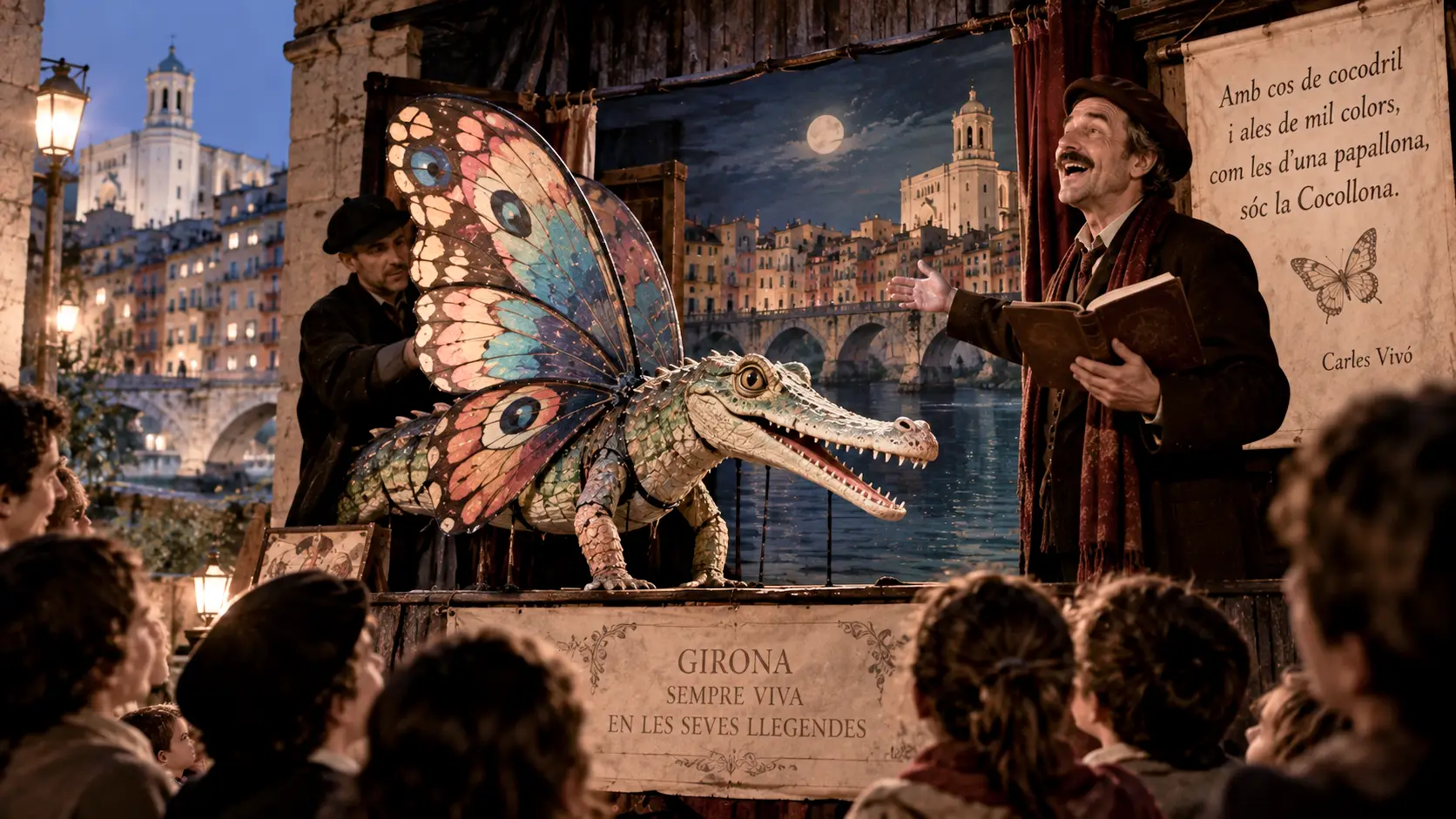
The puppet-song version helped the invented legend operate like living folklore rather than remaining confined to a printed account. Vivó also designed and created a Cocollona puppet, connecting his written narrative with performance and giving audiences a physical interpretation of Girona’s imaginary river creature.
This episode matters because the Cocollona’s history includes deliberate retelling from its earliest years. The song did not uncover an older tradition.
Instead, one of the legend’s creators actively reshaped his own story for performance, demonstrating how quickly modern folklore can develop additional forms.
Cultural Impact
The Cocollona demonstrates how quickly an invented legend can become part of local identity. Although Girona residents created the creature within living memory, cultural institutions now present her beside older city legends, making her recognizable as a symbol connected especially with the Onyar and Mercadal.
Her presence extends beyond storytelling into Girona’s streets, schools, tourism, festivals and visual arts. Girona City Council includes the Cocollona in children’s tourism material, while educational projects use her alongside other local legends to introduce younger generations to the city’s distinctive cultural traditions.
Artists have also transformed the creature into murals, puppets and festival imagery. These reinterpretations matter because the Cocollona has no centuries-old artistic tradition controlling her appearance.
Every new representation helps establish how Girona residents imagine a creature originally developed through conversations among twentieth-century friends.
Similar Beasts
Melusine
Melusine is a figure from medieval European romance and later folklore, typically portrayed as a woman who becomes serpentine or fish-tailed from the waist down, often with the transformation linked to secrecy, marriage, or a recurring taboo. She sits on the border between human and otherworldly, and her hybrid anatomy is central to how the story communicates lineage, legitimacy, and the price of hidden nature.
Like the Cocollona, Melusine is defined by transformation and a body that combines incompatible forms. The resemblance is structural rather than historical, because Melusine belongs to an older, widely circulated literary tradition, while the Cocollona is a modern Girona legend anchored to a specific city landscape.
Tarasque
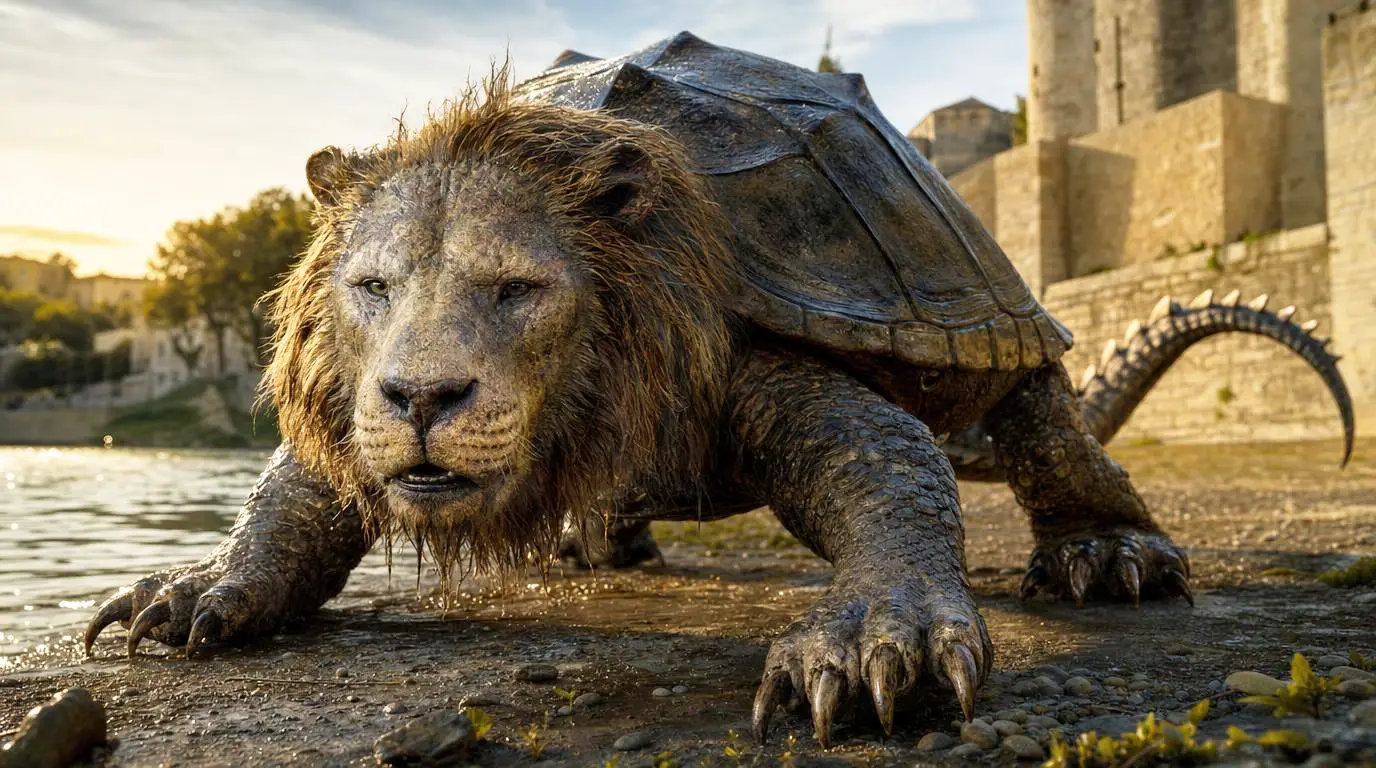
The Tarasque is a monster associated with Tarascon in southern France, usually described in medieval and later Christian legend as a composite beast with reptilian features and an established local identity. Its story-world often connects it to sanctity, civic memory, and public celebration, with the creature’s image becoming part of regional tradition.
The Tarasque parallels the Cocollona as a place-bound monster whose meaning is tied to a particular town and its storytelling. The difference is that the Tarasque’s best-known framing is explicitly Christian and medieval, while the Cocollona’s convent setting is part of a deliberately modern, traceable invention rather than a long-evolving saint legend.
Vouivre
The Vouivre is a serpentine creature from French folklore, frequently associated with water, remote landscapes, and the lure of treasure, sometimes imagined with wings and a jewel or precious object that becomes the focus of human desire. In many tellings it is less a single character than a recurring regional motif, shifting in details between places.
The Cocollona and the Vouivre overlap in watery settings and a broadly serpentine or reptilian imagination, with the added possibility of wings in some versions of the Vouivre. Their narrative roles diverge, since the Vouivre often functions as a dangerous or tempting presence tied to wealth, while the Cocollona’s core is a moral transformation story and a ghostly river apparition linked to Girona.
Cockatrice
The cockatrice is a well-known bestiary monster from medieval European tradition, commonly depicted as a hybrid with reptilian and birdlike traits and a reputation for extreme lethality, sometimes through venom or a deadly look. It is primarily a symbolic creature of moralized natural history rather than a localized civic legend.
The cockatrice provides a visual point of comparison, because both it and the Cocollona are defined by hybrid anatomy and a striking, unnatural combination of parts. The comparison stops at appearance, because the Cocollona is not characterized by a deadly gaze or a reign of terror, and her story is structured around tragic transformation and spectral sightings on the Onyar.
Cocollona compared to Cockatrice and Tarasque
| Aspect | Cocollona | Cockatrice | Tarasque |
|---|---|---|---|
| Origin | Cocollona originated from a modern apocryphal tale in Girona's local culture. | Cockatrice is rooted in medieval bestiaries and European folklore traditions. | Tarasque has origins in ancient legends from Provence, France, blending myth and history. |
| Physical Appearance | Cocollona features a crocodile body with colorful butterfly wings, symbolizing duality. | Cockatrice is often depicted with a rooster's head and a serpent's body. | Tarasque is described as a dragon-like creature with a turtle shell and multiple limbs. |
| Habitat | Cocollona resides in the Onyar River, emerging during full moons in Girona. | Cockatrice is said to inhabit dark, secluded areas, often in caves or ruins. | Tarasque is associated with the waters of the Rhône River and nearby lakes. |
| Role in Folklore | Cocollona represents transformation and the duality of good and evil in folklore. | Cockatrice symbolizes danger and death, often associated with petrifying powers. | Tarasque embodies protection and strength, often seen as a guardian figure. |
| Symbolism | Cocollona's story reflects themes of redemption and the complexity of human nature. | Cockatrice is often used in literature to illustrate the consequences of evil. | Tarasque is celebrated in festivals, symbolizing community and cultural heritage. |
| Modern Depictions | Cocollona has inspired modern art and literature, reflecting its local significance. | Cockatrice appears in various fantasy genres, influencing contemporary storytelling. | Tarasque is featured in local festivals and art, celebrating its mythological roots. |
Religion/Ritual
The Cocollona contains Christian imagery but has no documented religious cult, historical ritual, shrine or devotional practice. Carles Vivó’s version uses a convent, sinful nuns, spiritual purity and saintliness as narrative devices, creating a moral contrast between the novice’s transformed body and character.
Academic research concerning religion and secularism in Girona schools provides an especially useful distinction. One teacher described presenting the Cocollona alongside religious imagery specifically as a way of learning about Girona and local culture, demonstrating how the legend can function independently from religious belief.
Modern activities surrounding the Cocollona belong mainly to cultural celebration, education, tourism and entertainment. People may recreate her through costumes, puppets, artwork or festival displays, but available reliable evidence does not justify describing these activities as religious ceremonies or survivals of older supernatural worship.
Scientific or Rational Explanations
The Cocollona requires no zoological explanation because researchers can document its human creation. Emili Massanas developed the creature from a child’s accidental word, friends expanded the idea through conversation, and Carles Vivó eventually recorded its definitive literary form rather than documenting an unidentified animal.
Likewise, no reliable evidence establishes sightings of an unknown crocodile-like animal in the Onyar. Claims that sensitive people can glimpse a translucent winged creature during full moons belong inside the legend itself.
They should not be presented as biological observations or unexplained zoological reports.
Its apparent traditional age has a straightforward folkloric explanation. The creators anchored their invented monster to recognizable Girona locations and framed its narrative like an old local legend.
Repetition, publication, education and public art then allowed a knowingly modern creation to acquire traditional cultural familiarity.
Modern Cultural References
In 2012, Italian street artist Erica il Cane created a huge Cocollona mural on Carrer Bonastruc ça Porta for Girona’s Milestone Project. The large hybrid remains one of the clearest examples of the creature moving from storytelling into contemporary public art.
Milestone Project 2012 documentation
The Acocollona’t fantasy and horror film festival uses wordplay connecting its name with the Cocollona. In 2026, Catalan broadcaster 3Cat specifically described the Girona creature as an inspiration for the festival’s name, demonstrating her continuing connection with contemporary horror culture.
3Cat on the Cocollona and Acocollona’t
The upcoming Spanish JRPG Bestiario includes the Cocollona among creatures drawn from Spanish mythology and folklore. Its official Steam page describes her as a nun transformed into a crocodile with butterfly wings, adapting Girona’s local character for an international gaming audience.
Girona’s FEDAC Sant Narcís school created a Cocollona capgròs, a traditional oversized festival head, after students voted for a character representing their school and city. The project connects this recently invented creature with Catalonia’s established culture of giants and festival figures.
FEDAC Sant Narcís Cocollona project
The 2026 Girona Temps de Flors festival featured a large Cocollona created by artist Nuxu Perpinyà for a Gaudí-inspired Cathedral staircase installation. Its trencadís appearance connected the legendary Girona creature with one of Catalonia’s most recognizable architectural visual languages.
3Cat coverage of Temps de Flors 2026
Girocòmic selected the Cocollona as the central figure for its 2026 tenth-edition poster. Girona artist Adriana Von Hafen reimagined the creature as a colossal monster emerging from the Onyar, surrounded by characters inspired by classic American superhero comics and imagery.
Girocòmic 2026 poster documentation
Conclusion
The Cocollona occupies an unusual position between authored fiction and communal folklore. Its creators remain identifiable, its development can be traced through twentieth-century Girona cultural circles, and its earliest authoritative written account openly acknowledges that the supposedly traditional legend began as a playful invention.
Yet authorship has not prevented the creature from becoming genuinely meaningful to Girona. Public art, education, festivals, tourism and popular storytelling continually renew her presence, while the Onyar provides a recognizable geographical home that allows an imaginary monster to remain closely connected with place.
The Cocollona therefore shows that folklore does not require mysterious ancient origins. A compelling character can enter collective memory surprisingly quickly when people repeatedly retell, reshape and visualize it, turning a private joke into a distinctive cultural symbol recognized throughout its home city.
Further Reading
Llegendes i misteris de Girona by Carles Vivó i Siqués, Diputació de Girona, 1989
The foundational published source for the Cocollona, documenting its creation, legend, appearance, transformation, and connection with Girona.
https://www.ddgi.cat/publicacions/llibre/15/llegendes-i-misteris-de-girona.html
La Cocollona, Guia turística de Girona per a infants, Ajuntament de Girona
Official Girona tourism material retelling the Cocollona legend and connecting the creature with the Onyar River and local heritage.
https://www.girona.cat/turisme_infants/cat/index.php?idcat=867&idreg=1945
La Cocollona, Pedres de Girona
Detailed reference preserving material about Carles Vivó’s legend, including the Cocollona story, song, puppet, origins, and later interpretations.
https://pedresdegirona.cat/separata_cocollona.htm
Llegendes i misteris de Girona, Festes.org Mediateca
Bibliographic reference for Vivó’s original book, providing publication information and context for his collection of Girona legends and mysteries.
https://www.festes.org/ca/mediateca/1677
La Cocollona de Girona, Centre d’Estudis Mitològics de Catalunya, 2018
Catalan mythology reference discussing the creature’s unusual name, modern creation, transformation legend, and connection with Carles Vivó.
https://www.mitologicat.org/2018/01/la-cocollona-de-girona-mitologia.html
Una vida con muchos caminos: Carles Vivó, Museu d’Història de Girona
Museum material providing biographical context for Carles Vivó and his work documenting, interpreting, and promoting Girona’s legends and mysteries.
https://www.girona.cat/web/museuhistoria2/docs/VIVO.Castella.pdf