Introduction
The bannik is a spirit associated with the traditional East Slavic bathhouse, especially the Russian banya. Folklore usually presents it as the unseen owner or guardian of that building.
It could tolerate respectful bathers but punish people who entered at forbidden times, behaved improperly, or disturbed the bathhouse after human washing had ended.
The figure belongs to a wider group of Slavic spirits attached to particular domestic and agricultural spaces. Unlike a god with a standardized mythology, the bannik survives mainly through local beliefs, warnings, divination customs, and short supernatural episodes.
Details vary considerably, and much of the available written material reflects folklore recorded relatively late rather than evidence from early Slavic religion.
History/Origin
The precise origin of the bannik cannot be established. Bathhouses were important places for washing, healing, childbirth, and social activity, but they also stood apart from the main dwelling and contained fire, darkness, hot water, and heavy steam.
These practical conditions encouraged their treatment as dangerous boundary spaces.
The bannik is most clearly documented within the folklore of eastern Slavic communities, particularly Russian tradition. Related beliefs appear in neighboring Slavic regions, although names, behavior, and the degree of personification differ.
Published descriptions largely derive from folkloric and ethnographic collecting, so they should not automatically be projected unchanged into remote antiquity.
Later reference works sometimes present the bannik as a neatly defined creature with fixed habits. The traditional evidence is less uniform.
It is more accurate to understand the name as covering a cluster of bathhouse-spirit beliefs shaped by locality, household practice, and the storytelling choices of individual collectors.
Name Meaning
The Russian term bannik is formed from banya, meaning a bathhouse or steam bath, together with a suffix indicating association. The name therefore means, in straightforward terms, a being belonging to or connected with the bathhouse.
This transparent formation supports the interpretation of the bannik as a place spirit rather than a figure with an independent heroic biography. English sources use several transliterations, including bannik and bannick.
Such spelling differences do not necessarily identify separate beings.
Appearance
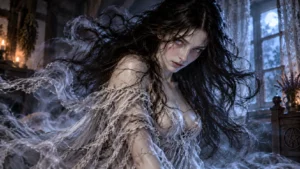
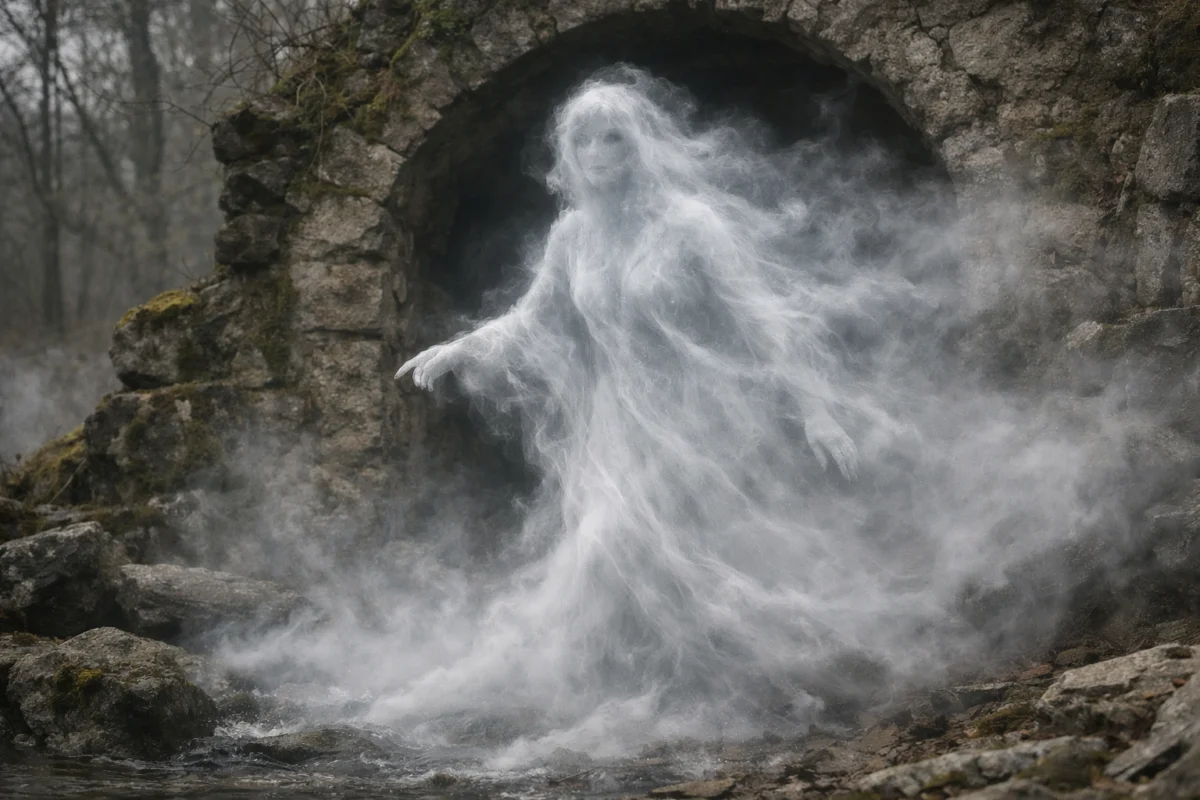
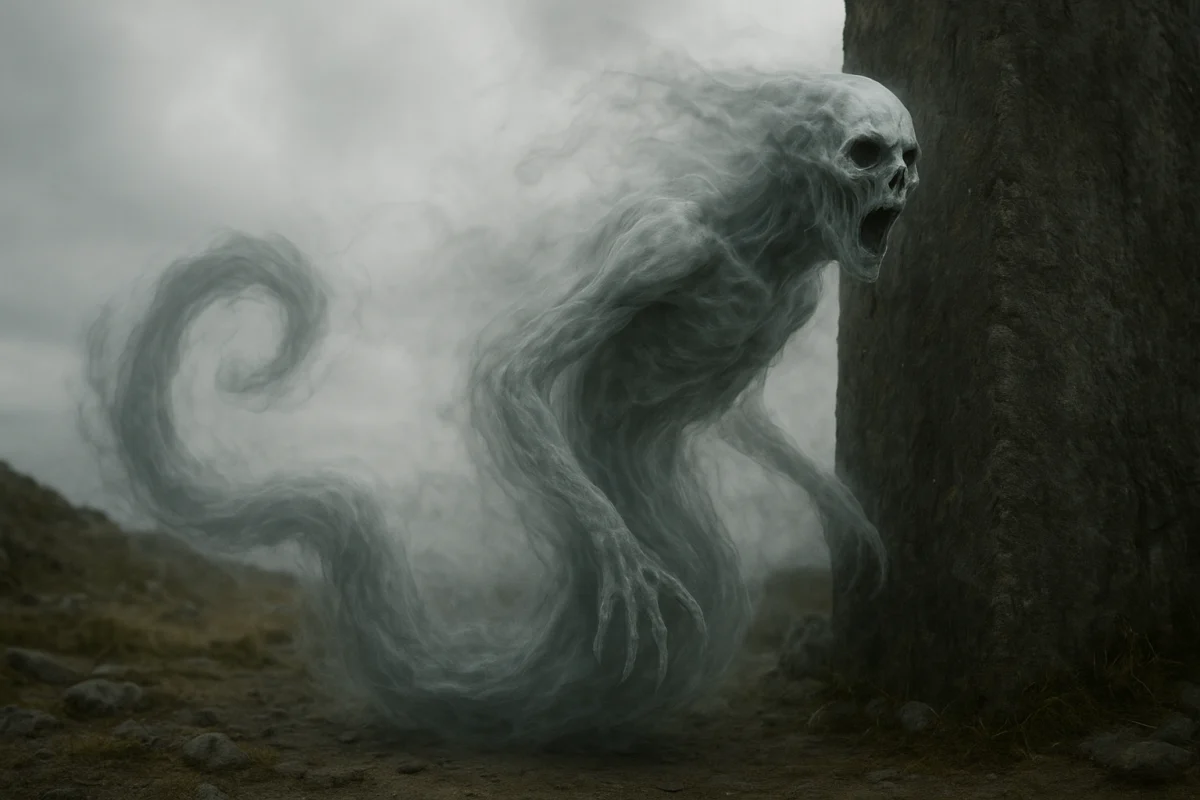
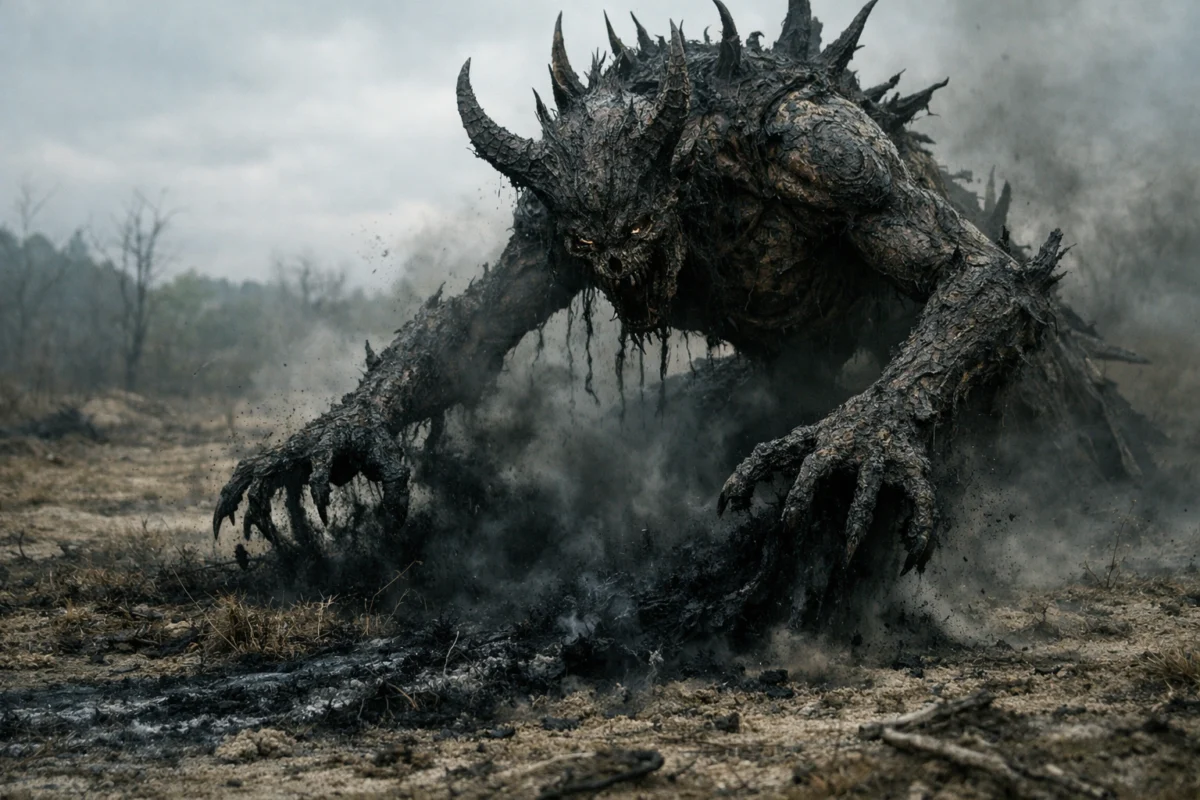
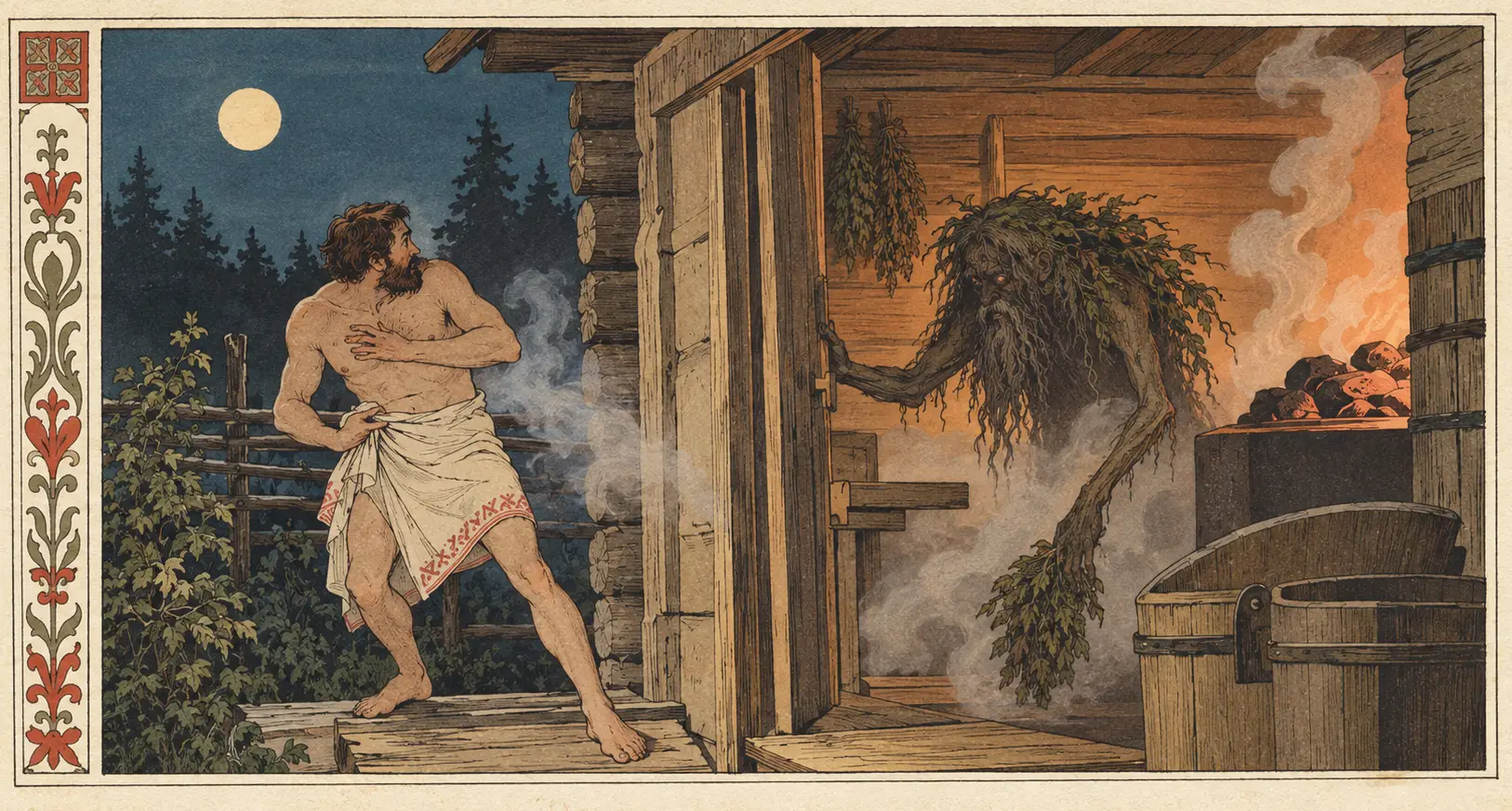
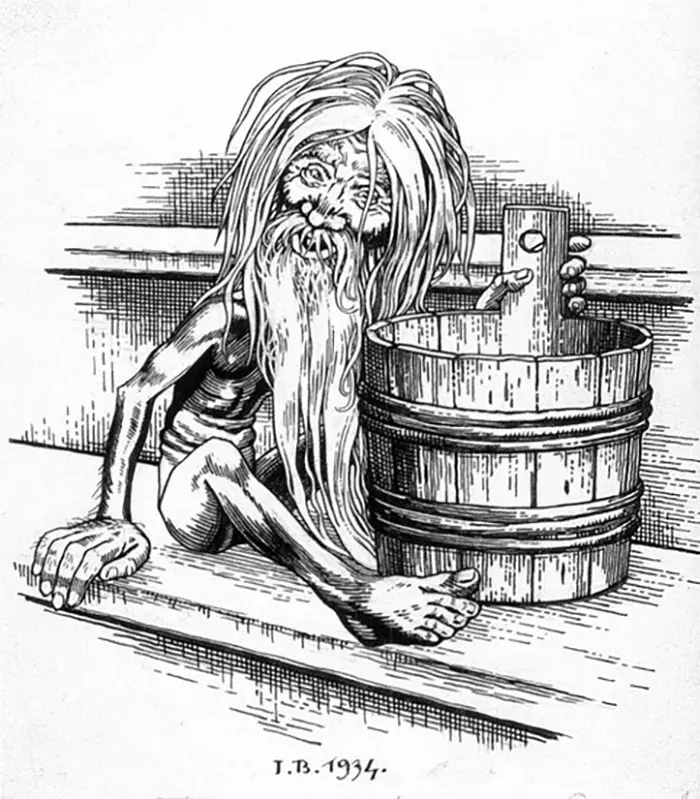
The bannik was often believed to remain invisible. When given a visible form in later folklore summaries, it may appear as a small or aged naked man, sometimes described as hairy, dark, sooty, or equipped with long nails.
These features are not consistent enough to constitute a universal portrait.
Its identity is more often communicated through effects than appearance: unexplained movement, knocking, laughter, scratching, oppressive heat, or a sudden attack in the steam. Some accounts blur distinctions between the bannik and other frightening beings imagined in unclean or marginal places, which further complicates attempts to define a single appearance.
Background Story
The bannik developed within a culture in which buildings could be understood as having supernatural occupants. The bathhouse was especially suitable for this belief.
It was commonly detached from the house because of fire risk, and its interior became hot, wet, smoky, slippery, and difficult to see inside. It was domestic but physically separate from ordinary household order.
The bathhouse also carried associations with bodily transitions. Washing accompanied illness, preparation for major occasions, and childbirth in some communities.
Divination could likewise take place there. Such uses positioned the building between cleanliness and pollution, health and danger, ordinary work and uncertain supernatural contact.
Within this setting, the bannik explained why the bathhouse demanded caution. Stories made the space morally legible by giving its hazards an owner who expected respect.
The spirit was not uniformly benevolent or evil. Its conduct depended on timing, etiquette, and local assumptions about who had the right to occupy the building.
Famous Folklore Stories
No widely established named narrative about the bannik can be confirmed from the supplied source briefing. Its folklore is better represented by recurring motifs found in short reports and cautionary tales rather than by a single canonical story.
The Forbidden Bathing Turn
A common motif holds that people should not bathe too late or after the final permitted group. The bannik and other spirits were then thought to claim the bathhouse.
A person who ignored the warning might be frightened, scratched, scalded, suffocated, or driven from the building. Accounts disagree over whether the prohibited turn was the third, fourth, or simply the last, demonstrating the local nature of the rule.
Bathhouse Divination
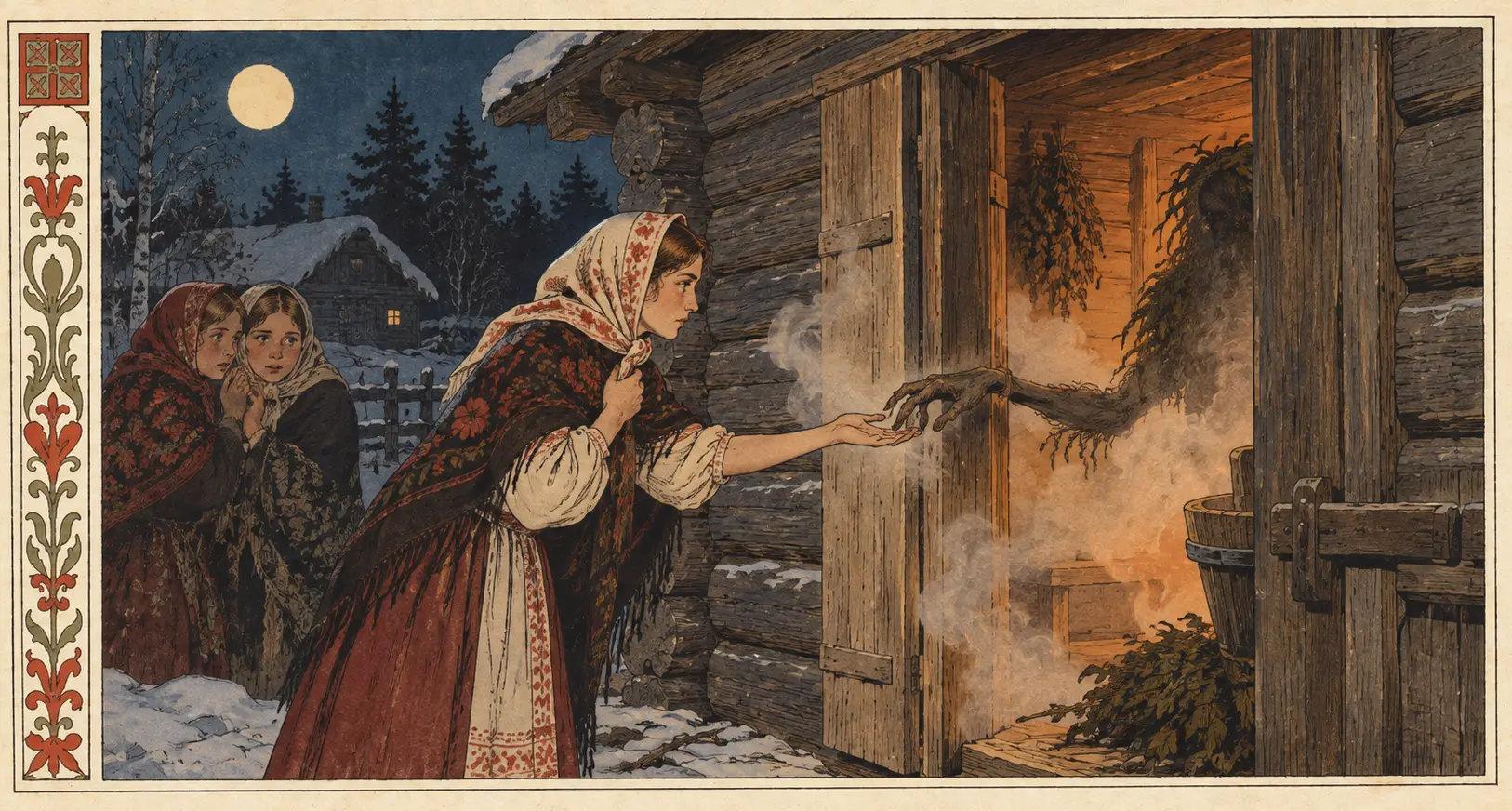
Another recurring motif concerns young women seeking signs about marriage or future fortune. In reported versions, a participant approached the bathhouse or exposed part of her body to an unseen touch.
A gentle or soft touch could be interpreted favorably, while a rough, clawed, or painful contact predicted hardship. Procedures and meanings vary, and modern summaries sometimes combine details that may originally have belonged to different local practices.
Cultural Impact
Bannik belief helped express practical rules about bathhouse use. It discouraged solitary visits, drunken behavior, excessive stays in dangerous heat, and entry after the fire and building had been left unattended.
Supernatural punishment gave memorable force to precautions that might otherwise have seemed optional.
The figure also illustrates how Slavic folklore organized familiar landscapes. The home, yard, barn, forest, water, and bathhouse could each have a distinct supernatural presence.
In later popular accounts, the bannik has become a recognizable example of the Slavic household or building spirit, although simplified retellings often make it more standardized than the historical evidence warrants.
Related Figures
Domovoi
The domovoi is an East Slavic domestic spirit associated with the household, family continuity, livestock, and the proper maintenance of order within the home.
Bannik compared to Trasgu and Domovoi
| Aspect | Bannik | Trasgu | Domovoi |
|---|---|---|---|
| Cultural Origin | The bannik originates from East Slavic traditions and bathhouse customs. | The trasgu is rooted in Iberian folklore, particularly in Spain and Portugal. | The domovoi is a spirit from Slavic mythology, linked to household protection. |
| Associated Space | This spirit is specifically tied to the Russian banya and bathhouses. | The trasgu is associated with homes, particularly in rural settings. | The domovoi is connected to domestic spaces, often found in homes. |
| Behavior Towards Humans | The bannik is known to tolerate respectful bathers while punishing the disrespectful. | The trasgu is mischievous, often playing tricks on those in its domain. | The domovoi is protective but can be vengeful if disrespected. |
| Punishment Methods | Punishments include scaring away intruders or causing misfortune. | The trasgu may steal items or create chaos in the household. | The domovoi can cause illness or mischief if angered. |
| Symbolism | The bannik symbolizes the dual nature of cleanliness and danger in bathing. | The trasgu represents the unpredictable nature of household spirits. | The domovoi symbolizes domestic harmony and the importance of respect. |
| Folklore Variations | Folklore about the bannik varies regionally, reflecting local beliefs. | Trasgu stories differ across regions, showcasing local customs and tales. | Domovoi legends vary, often influenced by family traditions and local lore. |
Like the bannik, it embodies ownership of a specific domestic space, but the domovoi usually belongs to the dwelling rather than the separate bathhouse.
Ovinnik
The ovinnik is a spirit connected with the drying barn, where grain, intense heat, fire, and valuable agricultural labor created both dependence and danger.
It resembles the bannik as a potentially hostile guardian of a heated outbuilding whose practical hazards were interpreted through rules, taboos, and supernatural punishment.
Kikimora
Kikimora traditions describe a troublesome domestic female spirit associated with nighttime disturbance, household disorder, spinning, noises, and anxiety, although regional characterizations vary substantially.
Its relationship to the bannik lies in the shared world of localized domestic spirits, not in identical functions, appearance, or a consistently documented kinship.
Trasgu
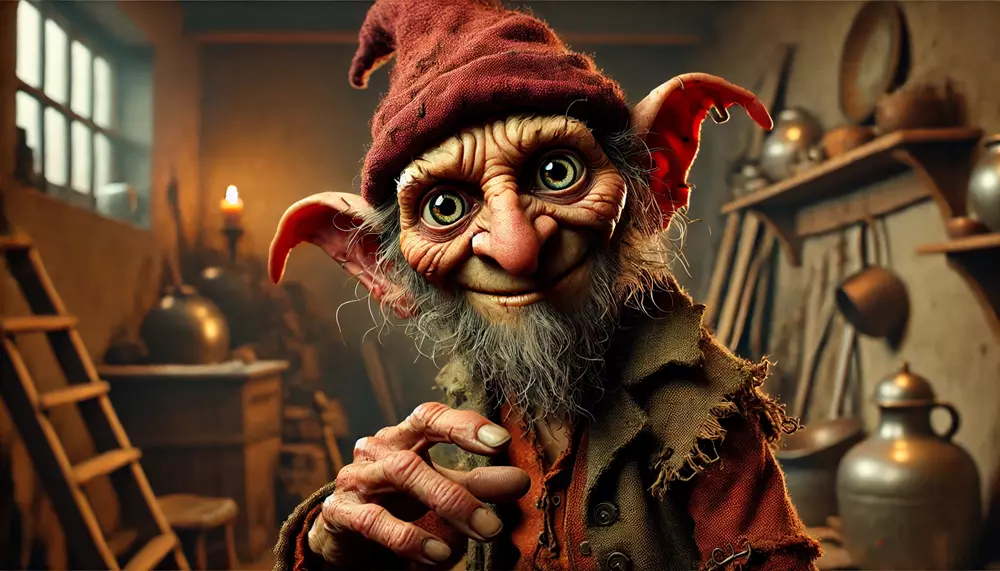
The Trasgu is a House Spirit from the folklore of northern Spain and Portugal, especially Asturias, Galicia, and Cantabria. Known for disturbing household objects and playing nocturnal tricks, it could also become helpful when treated kindly.
It represents the mischievous and unpredictable side of House Spirits rather than their purely protective role.
Religion/Ritual
Bannik customs belonged primarily to vernacular belief rather than formal Christian worship. The bathhouse often lacked the sacred objects associated with the main dwelling, contributing to its reputation as a place where ordinary protections and social rules were weakened.
Church authorities did not recognize the bannik as a legitimate religious being.
Folklore reports describe bathers showing respect by requesting permission, avoiding curses or disruptive conduct, and leaving the building before the spirit’s own supposed bathing time. Some accounts mention leaving water, soap, or a bath whisk for the unseen occupant.
These practices were regional and variable, not elements of a universal Slavic ritual system.
Divination connected with the bannik should likewise be treated cautiously. Recorded procedures differ, and collecting practices may have isolated striking details from their broader social setting.
The evidence supports the existence of bathhouse divination motifs, but not one standardized ceremony practiced everywhere.
Scientific or Rational Explanations
The bathhouse contained hazards capable of producing experiences attributed to a spirit. Excessive heat can cause dizziness, confusion, fainting, and panic.
Smoke, poor ventilation, and combustion gases can produce headache, weakness, altered awareness, or death. Boiling water, hot stones, slippery floors, and open flames create further risks.
Darkness and dense steam also reduce visibility. Ordinary sounds from settling timber, water, animals, wind, or other bathers could be misinterpreted, especially by someone already expecting a supernatural encounter.
Tactile divination conducted under tense conditions was particularly open to suggestion, practical jokes, and ambiguous sensations.
From a social perspective, bannik narratives reinforced safe schedules and protected a valuable shared structure from careless use. This interpretation does not prove that every story began as a safety lesson.
It explains why warnings about a supernatural owner could remain persuasive in an environment where invisible dangers were real.
Modern Cultural References
The Gentlemen – Guy Ritchie and Matthew Read, 2026 – TV Series
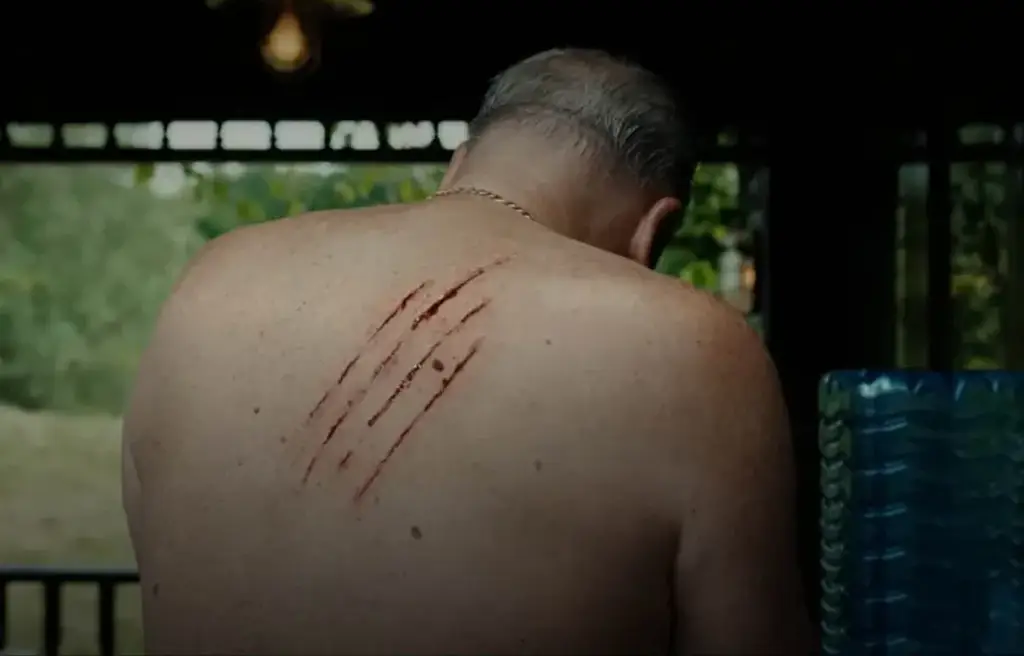
Season 2 of Netflix’s The Gentlemen gives the Bannik an unusually prominent modern screen role. Crime boss Bobby Glass believes the mysterious sauna spirit can predict the future and seeks its guidance when making decisions.
Jimmy Vee physically portrays the Bannik in three episodes, including “The Road to Kingdom,” “There’s a Rat in the Kitchen,” and “This Mad Circus.” The show’s creators deliberately drew the character from Slavic bathhouse folklore, gradually leaving open the possibility that Bobby’s supernatural adviser may actually be real.
https://www.imdb.com/title/tt13210838/
Nyurkina banya (Nurka’s Bath) – Oksana Cherkasova, 1995 – Animated Short Film
This Russian animated short places the Bannik directly inside a traditional bathhouse story rather than merely referencing the creature. Aunt Nyurka prepares the banya before a wedding and, with the help of the old household spirit Bannik, subjects the young couple and their relatives to a series of strange ritual trials.
The film draws heavily on Ural bathhouse traditions and presents the Bannik as an active supernatural participant in village life.
https://www.imdb.com/title/tt0262657/
Bannik – KnyazZ, Andrei Knyazev, 2017 – Song
Russian rock band KnyazZ devoted an entire song to the bathhouse spirit on the album Prisoners of the Valley of Dreams. Written by Andrei Knyazev, the song gives the Bannik his own voice, presenting him as an ancient bathhouse resident who welcomes respectful visitors but becomes dangerous when people ignore his rules.
Its lyrics directly reference traditional ideas about bathhouse etiquette, hot water, supernatural punishment, and the Bannik’s relationship with other household spirits.
https://knyazz.ru/releases/uzniki-doliny-snov
Tome of Beasts 3 – Kobold Press / Open Design, 2022 – Tabletop Role-Playing Game
The fantasy bestiary Tome of Beasts 3 adapts the Bannik as a playable fantasy-game creature for Fifth Edition role-playing games. Its version remains a bathhouse-dwelling supernatural being associated with steam, hot water, divination, offerings, and the traditional practice of exposing one’s back to receive a prediction.
The adaptation turns these folkloric characteristics into game abilities such as scalding attacks, control of steam, and supernatural fortune-telling.
https://www.5esrd.com/database/creature/bannik/
Rage Across Russia – White Wolf Publishing, 1993 – Tabletop Role-Playing Game Sourcebook
The Werewolf: The Apocalypse supplement Rage Across Russia includes the Bannik among Russia’s supernatural spirits. Its appendix treats Banniks as bathhouse spirits capable of prophecy and supernatural attacks, adapting traditional Russian folklore into the cosmology and game mechanics of the World of Darkness setting.
It is an early example of the creature entering English-language fantasy gaming culture.
https://www.amazon.com/dp/1565040775?lv=shuf&channelId=500&plpRedirect=mhFallback
The Bear and the Nightingale – Katherine Arden, 2017 – Fantasy Novel
Katherine Arden’s historical fantasy brings East Slavic household spirits into the everyday world of its characters. Arden specifically identifies the bannik among the spirits appearing in the Winternight books, alongside figures such as the domovoi, vazila, rusalka, and leshy.
The bannik remains tied to the bathhouse rather than being transformed into a generic fantasy monster.
https://www.penguinrandomhouse.com/books/251789/the-bear-and-the-nightingale-by-katherine-arden/
The Russian Stories / Rusalka Trilogy – C. J. Cherryh, 1989-1991 – Fantasy Novel Trilogy
C. J. Cherryh’s trilogy, beginning with Rusalka, builds an alternate medieval Rus’ shaped by Slavic supernatural traditions. The bannik appears among the lesser spirits inhabiting this world, together with beings such as the leshy and vodyanoy.
Cherryh uses these creatures as part of a broader folkloric environment rather than as isolated monsters.
https://www.goodreads.com/en/book/show/57101.Rusalka
Black Book – Morteshka, 2021 – Video Game
The folklore-driven role-playing game Black Book turns the bannik into an encounterable supernatural adversary. Its depiction keeps the creature inside the banya and connects it with heat, burning embers, and violent “cleaning” of intruders, adapting traditional bathhouse fears into the game’s combat system.
https://blog.fr.playstation.com/2021/08/09/black-book-the-mythical-beasts-and-creatures-of-cherdyn/
Slavic Monsters – Maria Theresa, 2016 – Webcomic
The horror webcomic Slavic Monsters presents illustrated creatures drawn from Slavic tradition. Its very first published episode is titled “The Bannik,” making the bathhouse spirit the opening subject of the series and translating the creature into a short-form modern visual horror format.
https://www.webtoons.com/en/canvas/slavic-monsters/list?title_no=22620
Krepost (The Fortress: By Shield and Sword) – Fyodor Dmitriev, 2015 – Animated Film
This Russian family adventure uses the bannik as a recognizable piece of traditional supernatural belief rather than its main monster. After the young Sashka is confined in an old bathhouse, he initially interprets the mysterious old man living there through the familiar idea of the bannik.
The reference shows the spirit surviving as part of folk vocabulary in children’s popular culture.
https://www.imdb.com/title/tt5172306/
Conclusion
The bannik personifies the traditional bathhouse as both necessary and dangerous. It belongs to an East Slavic pattern in which particular buildings and environments possessed unseen occupants whose favor depended on respectful conduct.
Its most persistent motifs concern forbidden bathing times, supernatural punishment, and uncertain divination.
Because the record is regional, comparatively late, and often filtered through summaries, no single description should be treated as definitive. The bannik remains culturally important less as a character with a continuous biography than as an expression of how communities interpreted heat, isolation, bodily vulnerability, and the boundaries of domestic space.
Further reading
Encyclopedia of Russian and Slavic Myth and Legend – Mike Dixon-Kennedy, 1998 – Encyclopedia. A broad English-language reference to Russian and Slavic mythology and legend, useful for placing the Bannik among domestic spirits, supernatural beings, regional traditions, and the wider Slavic folkloric tradition overall. https://www.bloomsbury.com/uk/encyclopedia-of-russian-and-slavic-myth-and-legend-9781576074879/
Russian Folk Belief – Linda J. Ivanits, 1989 – Scholarly Reference. A major scholarly study of Russian folk belief, including household and farmstead spirits, supernatural narratives, sorcery, healing, and the interaction between vernacular traditions and popular forms of Christianity in Russia. https://www.routledge.com/Russian-Folk-Belief/Ivanits/p/book/9780873328890
The Bathhouse at Midnight: An Historical Survey of Magic and Divination in Russia – W. F. Ryan, 1999 – Scholarly Reference.
A detailed historical study of Russian magic and divination, especially valuable for understanding the bathhouse as a setting for fortune-telling, ritual danger, supernatural encounters, and other occult practices in Russia. https://www.psupress.org/books/titles/0-271-01966-2.html
The Russian Bathhouse: The Old Russian Pert’ and the Christian Bania in Traditional Culture – Masha Vadeysha, 2005 – Academic Journal Article. A focused scholarly study of the Russian bathhouse in traditional culture, examining its ritual meanings, dangerous reputation, childbirth customs, healing, divination, supernatural ownership, and relationship with Christian belief and practice. https://journals.ku.edu/folklorica/article/view/3761