
Introduction
The succubus is a demon appearing in female form in medieval European Christian belief, associated especially with sexual encounters during sleep. Usually discussed alongside the male-form incubus, it belongs to a category of supernatural beings rather than a single character with a fixed biography.
Its defining feature is the encounter, not a consistent set of physical attributes. Demonological writers treated the succubus as a spirit capable of assuming a bodily appearance, making apparent femininity part of its activity rather than evidence of an ordinary female body.
Related female night demons appear in Jewish traditions, particularly those surrounding Lilith and the lilin. These provide important comparisons, but Lilith is not simply another name for every succubus.
Their histories overlap in interpretation without becoming one uniform tradition.
The figure brings together religious explanations of temptation, fears about sexuality, and disturbing experiences of sleep. Its historical importance lies in how such experiences were interpreted and organized into demonological arguments, not in evidence that supernatural sexual visitors actually existed.
History/Origin
The succubus category took shape within medieval Christian discussions of demons and their dealings with human beings. Its development cannot be reduced to one founding story or an identifiable first encounter.
Learned arguments and circulating accounts contributed to its place in European demonology.
A central problem concerned embodiment: how could an incorporeal spirit participate in physical activity? The distinction between incubi and succubi became part of attempts to explain this contradiction.
Their apparent bodies were treated as assumed forms rather than bodies belonging naturally to living creatures.
The late-fifteenth-century Malleus Maleficarum gives an especially explicit account of the pairing. It argues that a demon could act as a succubus to obtain human semen and subsequently as an incubus to bring about conception.
This was a theological explanation, not an observation of reproductive biology.
That argument also shows why the categories should not be understood simply as two supernatural sexes. Within this particular framework, the same demon could perform both roles.
The distinction concerned its assumed appearance and relationship to a human participant, rather than a permanent biological identity.
Jewish traditions preserve a separate history of nocturnal female demons. Rabbinic references to Lilith precede the Malleus, while later Jewish narratives developed her character in different directions.
Earlier attestation of a related figure, however, does not establish a straightforward origin for the Christian succubus category.
Later literary treatments reshaped this religious material into explorations of dangerous attraction and idealized desire. Scholarship on Remy de Gourmont’s erotic demon figures traces that reception, but these literary transformations should be distinguished from medieval theological claims and from the internal development of Jewish folklore.
Name Meaning
The word “succubus” is conventionally associated with Latin vocabulary for lying beneath. This explanation fits its pairing with “incubus,” associated with lying upon.
The contrast concerns the position imagined in a sexual encounter, rather than a description of wings, claws, or another visible feature.
The historical terminology also reflects classification by activity. In the demonological model that allowed one spirit to act in either role, “succubus” described how the demon supposedly approached a human being.
It did not necessarily designate a separate species of permanently female supernatural creatures.
The supplied sources do not establish a complete linguistic history or a securely documented first use of the term. The conventional Latin explanation therefore helps clarify the paired categories, but it should not be made to prove where the underlying beliefs first arose.
Related names require equal care. Lilith belongs to Jewish textual and folkloric traditions, while “succubus” belongs principally to the European Christian terminology discussed here.
Applying the latter word to Lilith can indicate a functional resemblance, but it can also obscure differences in narrative, religion, and historical setting.
Appearance
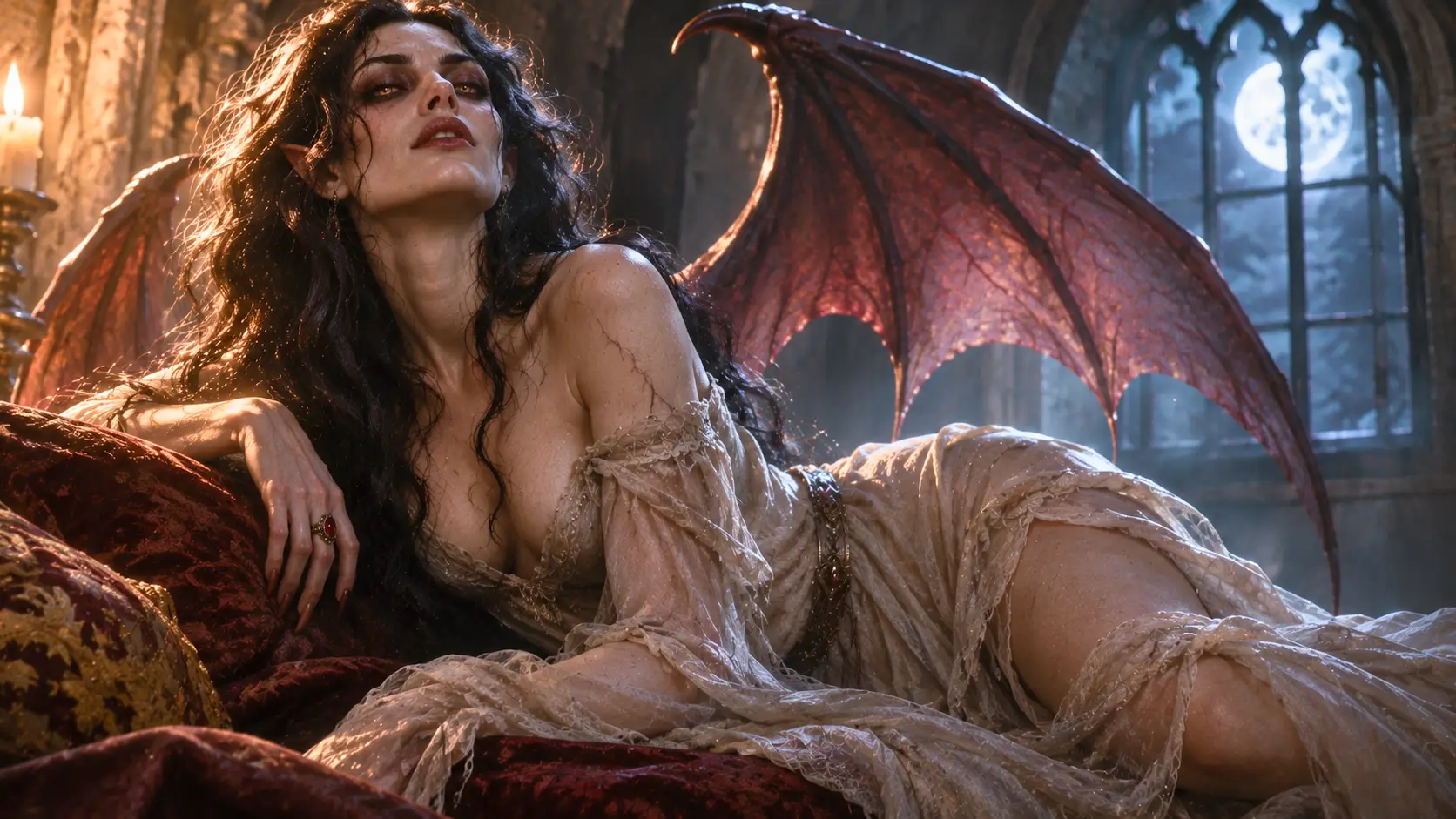
The most securely supported description is a demon assuming female form. Medieval discussions emphasize sexual contact and the possibility of bodily manifestation more than a standardized anatomy.
A recognizable woman could therefore be the apparent form of something understood as fundamentally nonhuman and spiritual.
This distinction matters because appearance was not necessarily identity. In the Malleus Maleficarum’s explanation of incubi and succubi, a demon could change its role in successive encounters.
Its feminine presentation belonged to an assumed form, rather than establishing an unchanging female body beneath the disguise.
Attractiveness belongs to the broader theme of sexual enticement, but the evidence does not establish one universal face, complexion, hairstyle, or costume for succubi. Treating the figure as a fixed visual species would impose greater consistency than the historical material supports.
A related but distinct description occurs in Jewish material about Lilith. The Jewish Encyclopedia brings together a rabbinic reference to her long hair and later traditions emphasizing seduction.
These details help explain comparisons with the succubus, but they should not become compulsory attributes of every female-form demon.
Other Lilith traditions include bodily features and associations that belong to her own developing mythology. They cannot simply be transferred wholesale to Christian demonology.
The comparison is most reliable at the level of nocturnal danger and sexual encounter, not as a shared anatomical portrait.
For historically grounded imagery, the essential contrast is therefore between an apparently human woman and the demonic identity attributed to her. Horns, batlike wings, a pointed tail, or any particular monstrous accessory should not be presented as defining medieval features on the evidence assembled here.
Background Story
The succubus has no single canonical childhood, genealogy, or transformation story. Its background lies instead in a religious framework that understood demons as hostile spiritual agents.
Sexual visitation became one setting in which questions about temptation, bodily vulnerability, and supernatural power could be explored.
Christian demonological reasoning tried to reconcile the spiritual nature of demons with accounts of physical encounters. Discussions of assumed bodies and transported human reproductive material answered problems within that framework.
They reveal the intellectual structure of the belief rather than a coherent biography for an individual monster.
The sleeping body supplied another important context. Medieval accounts of nocturnal attacks could combine fear, disturbed rest, bodily sensations, and a perceived hostile presence.
Historical research on anguish and insomnia places such experiences within contemporary understandings of health and religion, without treating every account as the same medical event.
Jewish demon-woman narratives developed within different communal and religious settings. Tamar Alexander’s study connects these stories with social norms and anxieties surrounding marriage and relations between men and women.
Their significance extends beyond seduction alone, involving the boundaries and vulnerabilities of household life.
Lilith’s changing traditions demonstrate why these materials should not be compressed into a universal origin story. Rabbinic references and later folklore contribute different elements to her identity.
Comparisons with the succubus are useful when they preserve those layers rather than treating all female night demons as interchangeable.
Later literary reshaping added another emphasis: the alluring supernatural woman could embody impossible desire as well as religious danger. This helps explain the figure’s adaptability.
Its continuing appeal rests on the tension between attraction and threat, although the meaning of that tension changes across religious and literary settings.
Famous Folklore Stories
Succubus traditions include recurring encounter motifs and alleged individual visitations recorded in demonological collections. These accounts do not form a single canonical story cycle.
They also differ in purpose: an encounter report presents a supposed experience, while a theological argument attempts to account for demonic activity.
The Nocturnal Visitor
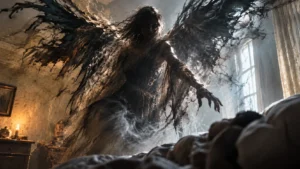
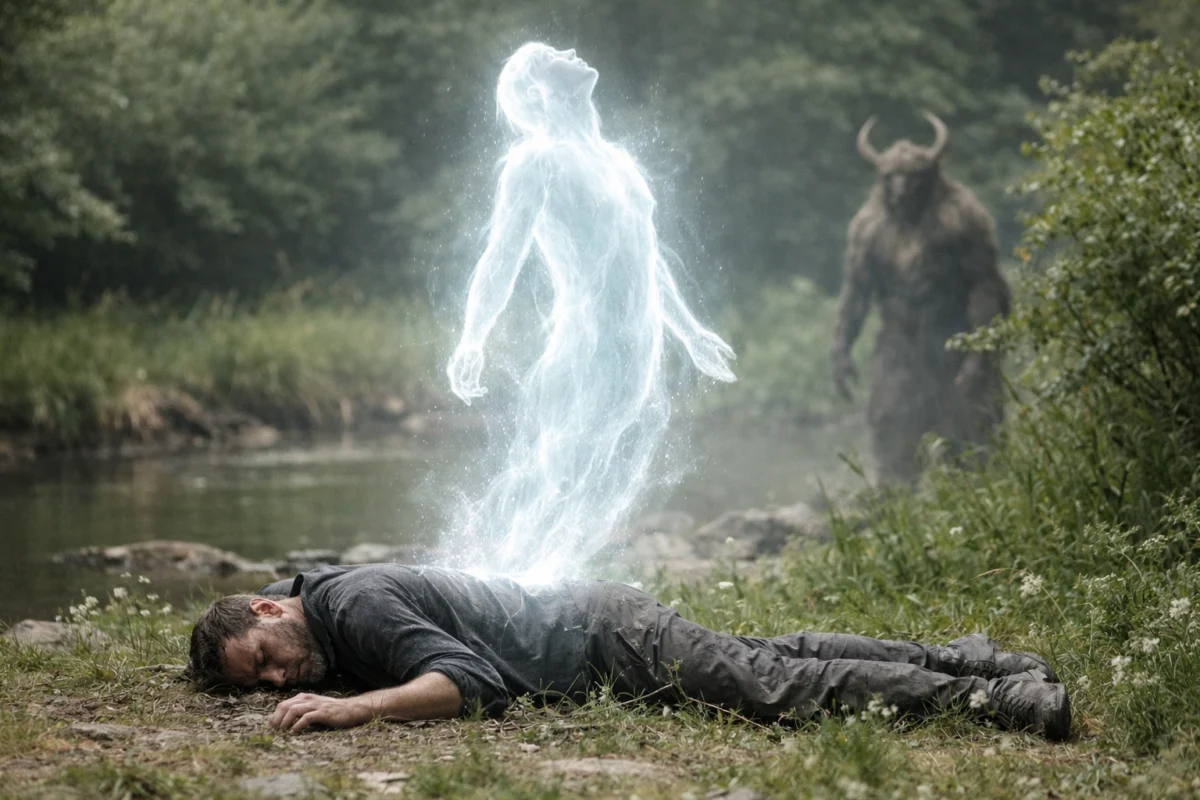
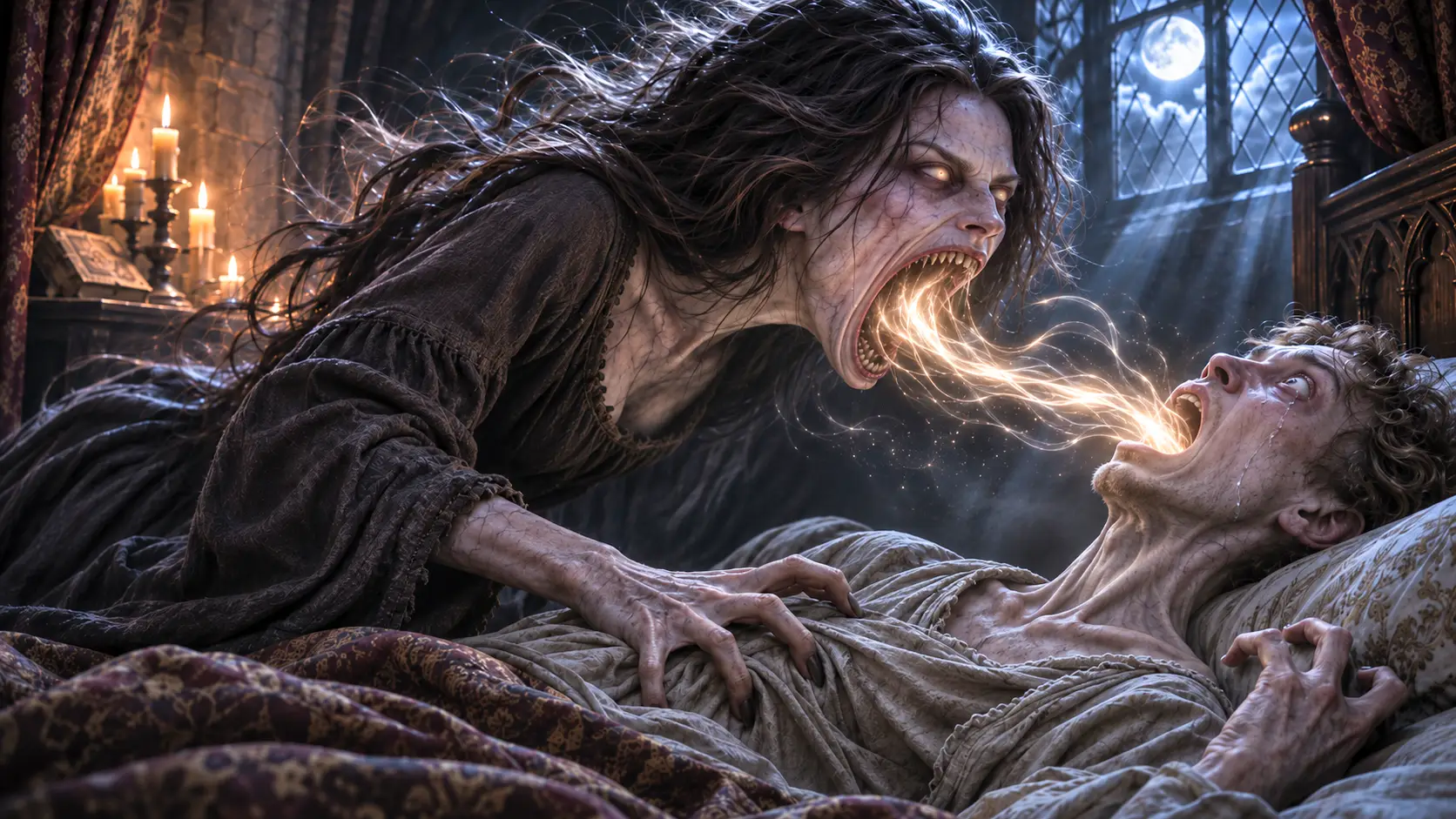
A central motif is an apparently bodily sexual encounter with a demon in female form, often associated with sleep. Within Christian demonology, experiences remembered from the night could be interpreted as encounters with an external spiritual adversary rather than as dreams.
Sexual visitation belonged to a wider landscape of troubled sleep, perceived presences, and nocturnal oppression. These experiences could overlap in interpretation, but not every nightmare or frightening nighttime presence was understood as a succubus.
Recorded Encounter Claims
The early modern Compendium Maleficarum, Book I, Chapter XI, preserves alleged succubus cases presented as contemporary testimony. Such accounts show that demonological writing included purported individual encounters, not only abstract discussions of what demons could do.
Their presentation as testimony does not establish that supernatural events occurred. They remain evidence of the claims religious writers collected and the demonic interpretations they gave those claims.
The Demon in Different Sexual Roles
The late-fifteenth-century Malleus Maleficarum develops a different kind of scenario. A demon could supposedly act as a succubus to receive human semen, then as an incubus to use it in bringing about conception.
Within this theological model, succubus and incubus designated assumed sexual roles rather than two permanently distinct supernatural sexes. The argument reconciled alleged bodily encounters with the belief that demons lacked reproductive powers of their own.
It is a documented demonological explanation, not a named folktale or a biological observation.
Cultural Impact
Succubus beliefs made the sleeping body a site of religious concern. Experiences that might otherwise remain private could become questions about temptation, responsibility, and spiritual danger.
The figure connected uncertainty about nocturnal sensations with broader efforts to explain human vulnerability to demonic influence.
Related Jewish demon-woman narratives also addressed domestic relationships, although they should not be absorbed into Christian succubus mythology. Tamar Alexander’s study examines how such stories could communicate social expectations and anxieties surrounding marriage and relations between men and women within particular storytelling traditions.
The cultural force of these narratives depended partly on their flexibility. A threatening supernatural woman could express concerns about intimacy or household stability without functioning identically in every community.
Similar narrative roles do not establish that different religious traditions shared one interchangeable demon.
Later literary treatments could shift the emphasis from spiritual danger toward fascination with an imagined supernatural lover. Scholarship on Rémy de Gourmont’s erotic idealism traces this literary reception, in which inherited demonic figures became material for aesthetic and philosophical exploration rather than straightforward warnings.
Modern scholarship consequently distinguishes several layers: religious classifications, stories circulated within communities, remembered experiences, and later literary reinterpretations. Separating these layers reveals how the succubus acquired changing meanings without treating a literary invention as evidence for an earlier popular belief.
Similar Beasts
Alp
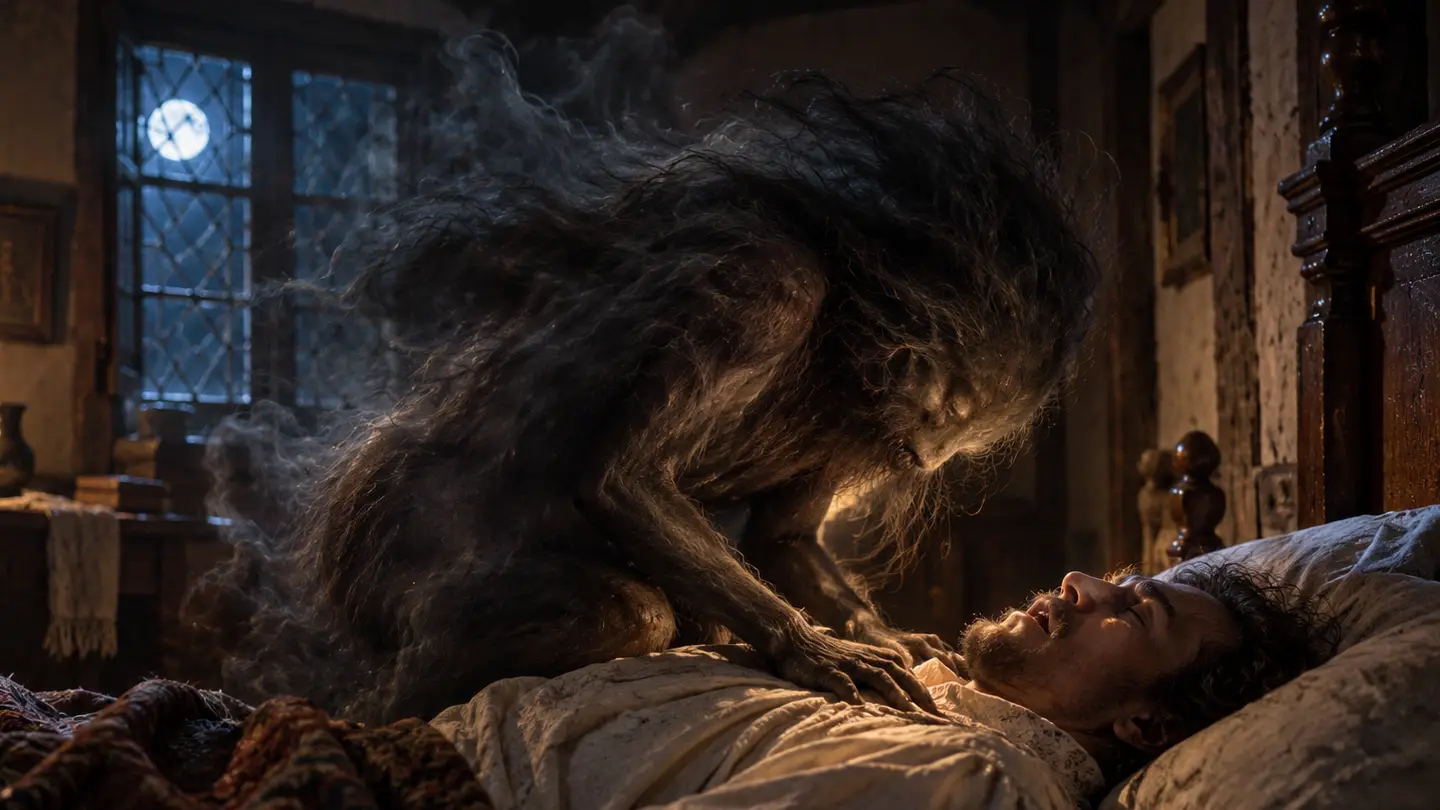
The Alp is a nightmare-associated being in German folklore, linked with oppressive nocturnal experiences and what is now discussed as sleep paralysis. Its defining context is disturbed sleep.
It resembles the succubus through its intrusion upon sleepers, but sexual encounter is not the defining feature of the Alp in the supplied account.
Drude
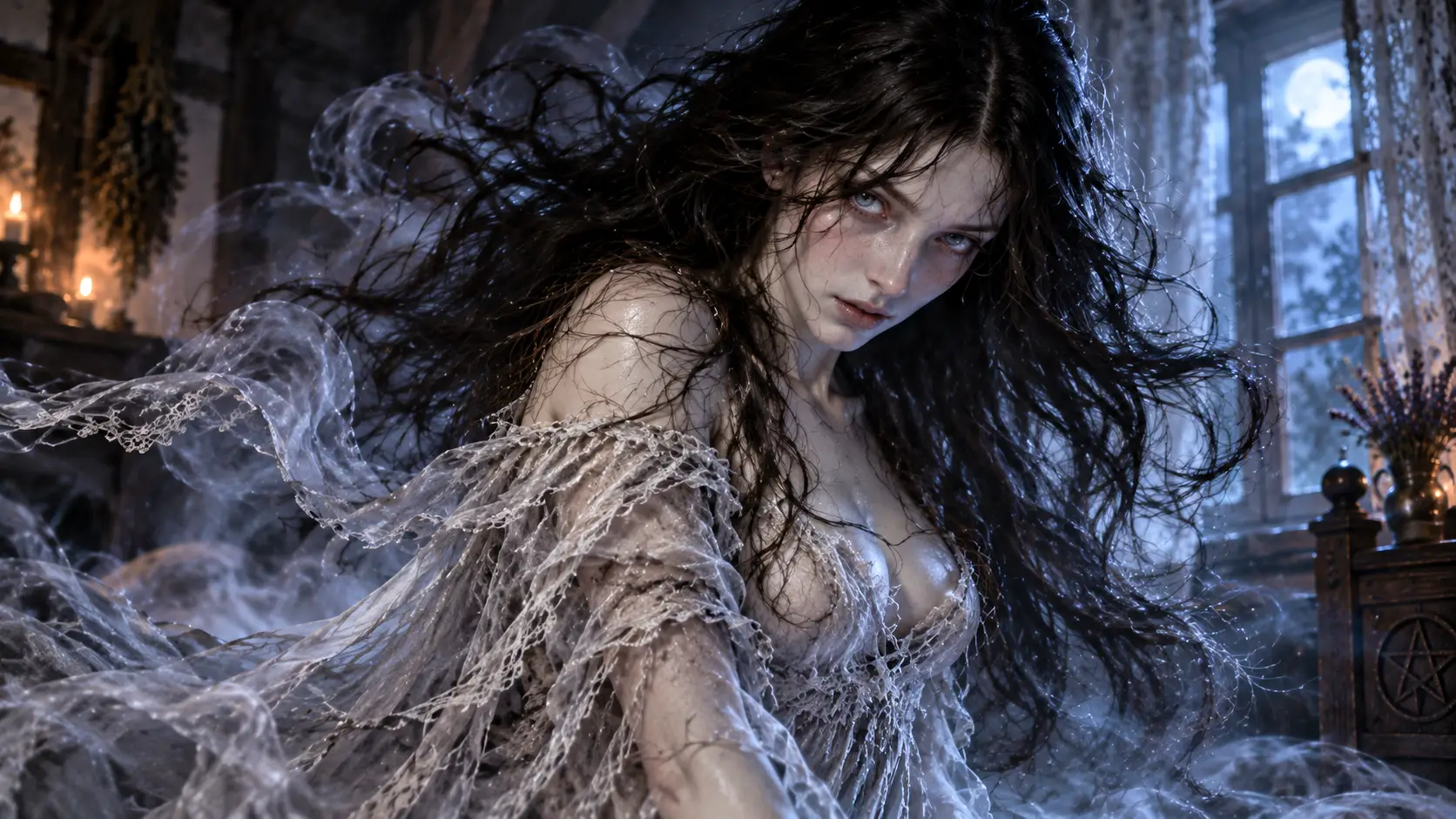
The Drude belongs to German-speaking folklore and is associated with oppressive dreams and troubled sleep. Accounts vary between an unseen presence and a more recognizably witch-like figure.
Like the succubus, it gives threatening agency to nighttime experiences. Its variable identity, however, should not be reduced to the Christian category of sexual demon.
Asmodeus
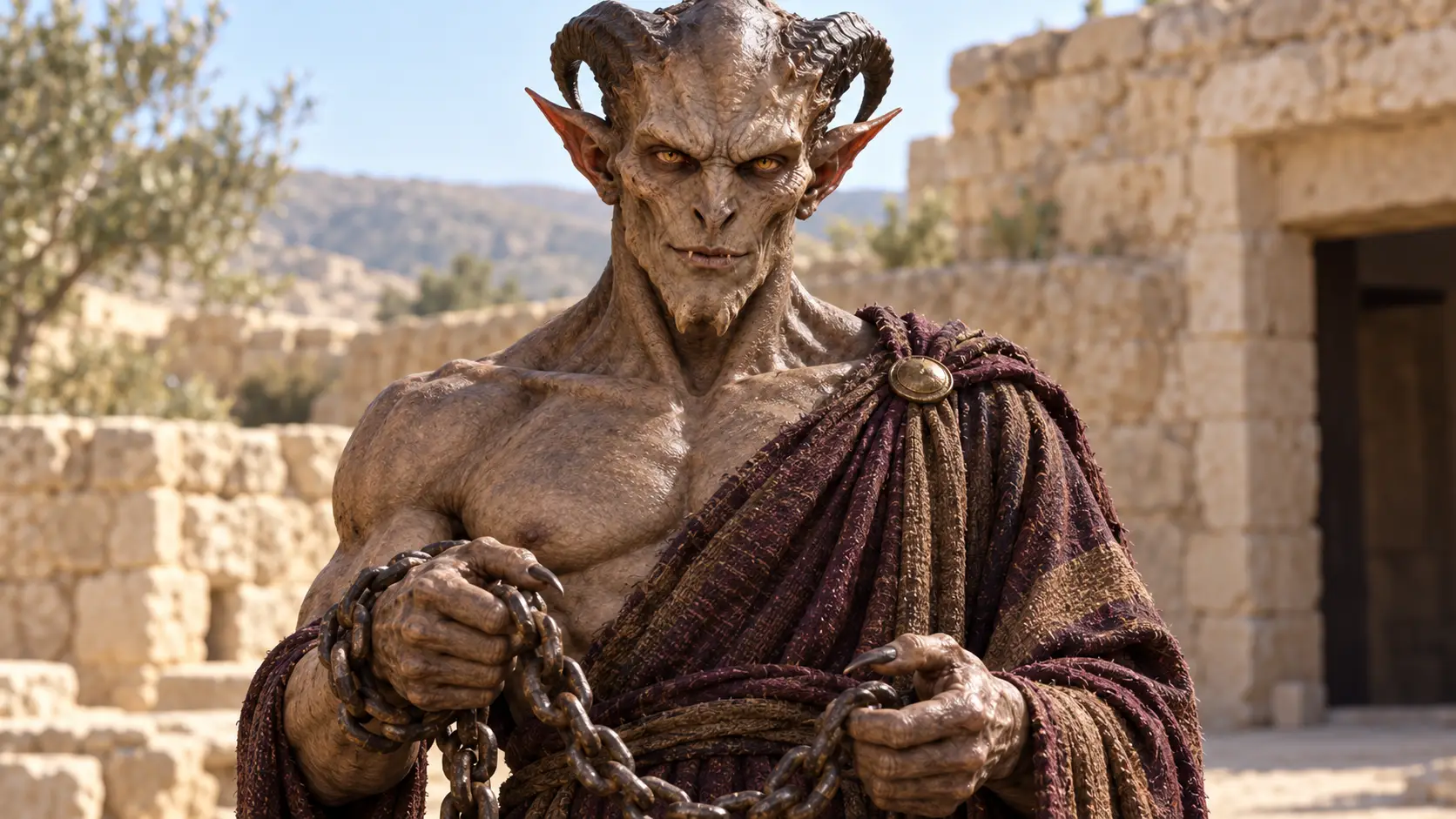
Asmodeus is a demon in Jewish legend and magical literature, associated with destructive interference in marriage. He also appears in traditions about Solomon and the governance of demons.
The comparison concerns supernatural danger within intimate relationships. Unlike a succubus, Asmodeus is a named figure with distinct narratives, not a category of female-form visitor.
Kishi
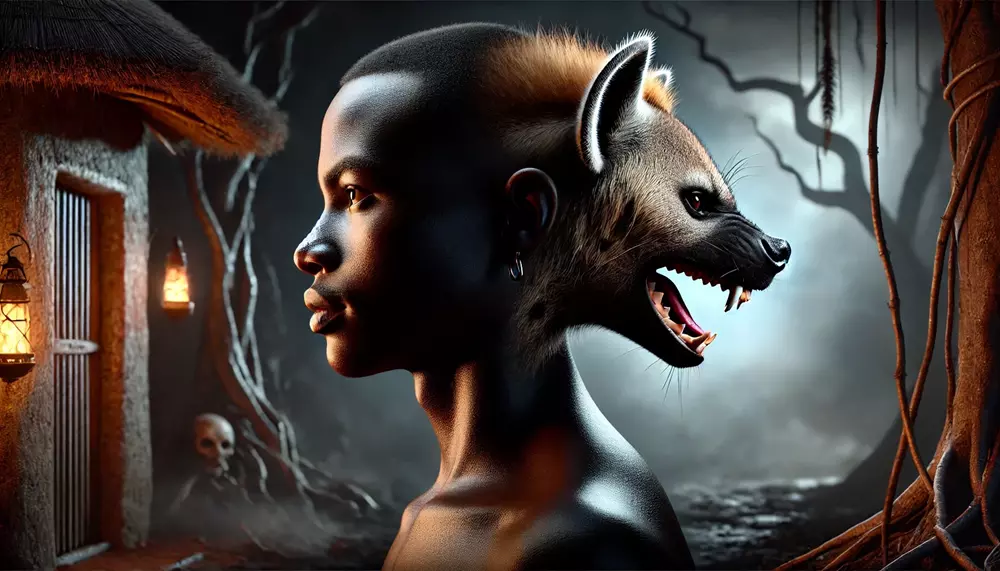
The Kishi of Angolan folklore presents an attractive human face while concealing a hyena visage behind it. Its charm draws victims toward a danger concealed by outward appearance.
Its resemblance to the succubus lies in deceptive attraction, not sleep visitation or shared religious origins. The Kishi’s predatory double appearance remains a separate motif.
Religion/Ritual
In Christian demonological writing, the succubus belonged to an argument about demons, embodied experience, and the limits of spiritual power. The Malleus Maleficarum embeds these questions within its broader witchcraft discourse; it is evidence of that framework, not verification of the encounters it discusses.
The material supplied here does not establish a distinctive, widely shared ritual directed specifically against succubi. It would therefore be misleading to assemble a supposed traditional remedy from generic exorcism practices, religious objects, or protective customs documented for other kinds of beings.
Direct protective evidence does exist in related Jewish traditions. Amulets and incantation texts sought protection against Lilith or lilin.
These practices addressed beings understood within Jewish religious and folkloric settings; their existence does not show that practitioners classified their targets as European succubi.
The distinction matters particularly where protection concerned mothers and infants rather than sexual encounters during sleep. Lilith traditions encompass threats beyond those defining the succubus category.
Their protective objects illuminate a neighboring religious world without supplying a universal ritual system for all female demons.
Scientific or Rational Explanations
Sleep-related experiences offer one possible explanation for some encounter reports. Sleep paralysis can involve temporary inability to move alongside vivid perceptions of a nearby presence.
Such experiences may feel external and physically immediate, even when they arise around transitions between sleeping and waking.
This comparison does not diagnose every historical report. A surviving account may omit essential details, combine several experiences, or reach readers through someone else’s interpretation.
Sexual dreams, frightening awakenings, and persistent insomnia should not automatically be treated as manifestations of a single sleep disorder.
Historical research on medieval anguish and insomnia emphasizes the relationship between distress, disrupted sleep, and culturally available explanations. A demonic interpretation could make a frightening night intelligible within its religious setting, without establishing that all people described or understood their experiences in the same way.
Religious expectations may also have influenced the language used to recall an encounter. Where demons were accepted explanations for bodily disturbance, an ambiguous experience could be narrated in those terms.
This is an interpretive possibility, not proof that a witness deliberately fabricated an event.
Theological texts introduce another filter: they arrange reports to answer doctrinal questions. Discussions of demonic reproduction, for example, reveal the explanatory concerns of their authors.
Their elaborate arguments cannot be treated as independent observations simply because they describe supposed supernatural processes in detail.
A careful explanation therefore separates experience from interpretation and transmission. Distress or unusual sensation may have been genuine, while its attribution to a succubus depended on religious assumptions and storytelling.
Neither supernatural certainty nor a single retrospective medical diagnosis adequately represents the surviving evidence.
Modern Cultural References
Succubus, film (2024)
Directed by R.J. Daniel Hanna, this horror film follows a man whose dating-app match becomes a seductive supernatural threat.
It relocates the demon motif into digitally mediated intimacy.
(tv.apple.com)
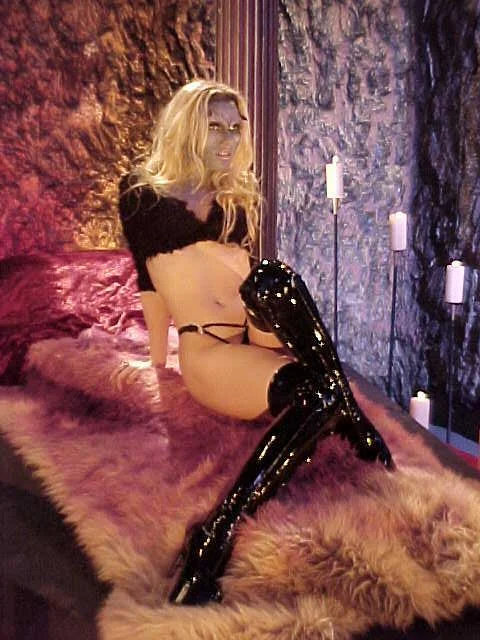
Succubus: A Love Story, novel (2026)
Kate Fox’s paranormal romance follows Tempest, whom the publisher identifies as a succubus.
It recasts the traditionally threatening demon as a romantic protagonist possessing her own perspective.
(us.macmillan.com)
Succubus Takes Manhattan, novel (2008)
Nina Harper’s novel centers on Lily, a succubus working for Satan while navigating supernatural complications.
It combines the older demonic category with contemporary urban fantasy and comedy.
(penguinrandomhouse.com)
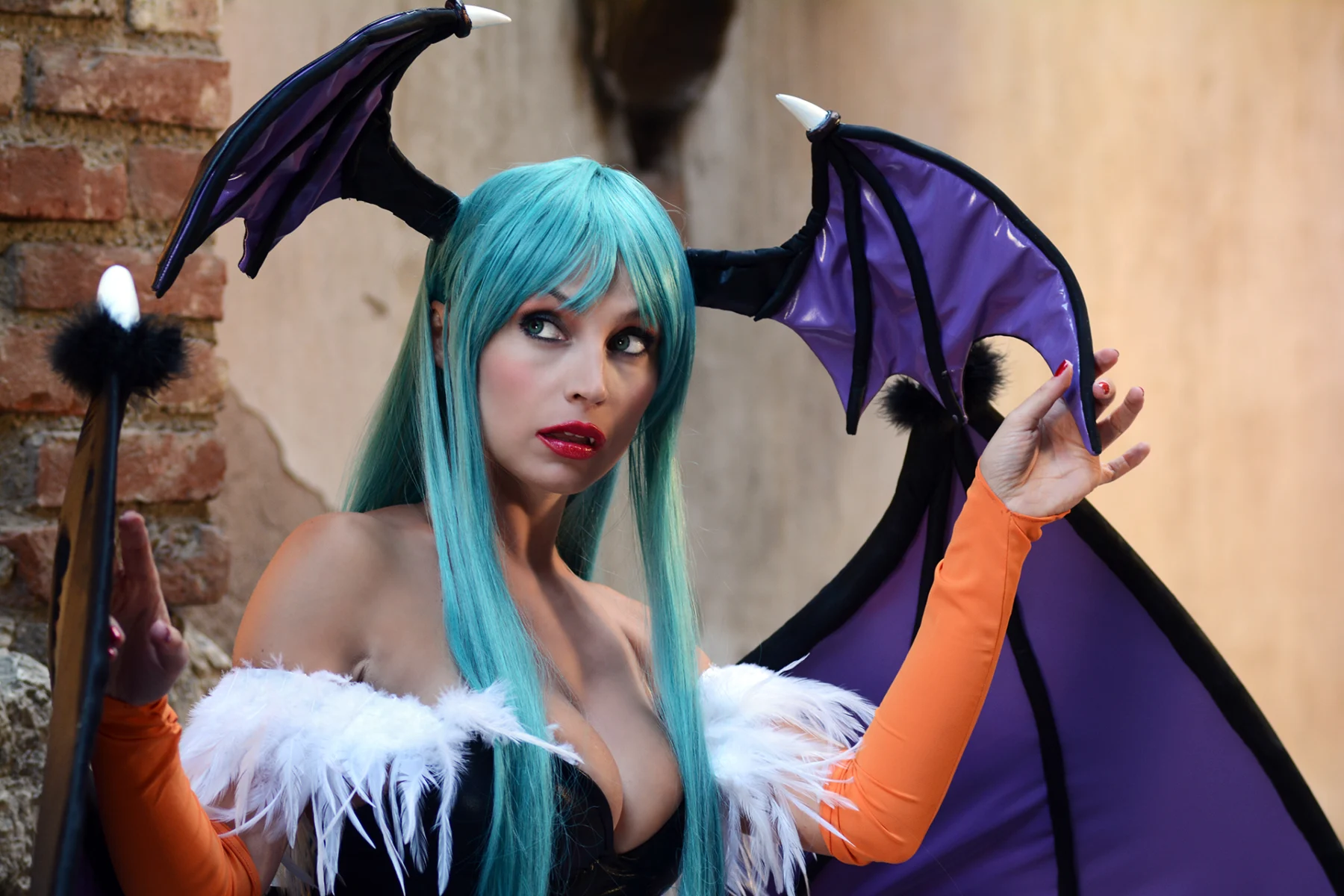 GiorgiaCosplay as the succubus Morrigan from the videogame Darkstalkers also known as Vampire Savior or Night Warriors, by Creamymami1977, 2014-08-28 17:44:17. (Source · CC BY-SA 4.0)
Conclusion
The succubus is best understood as a category of female-form sexual demon developed within medieval Christian demonology, usually in conjunction with the incubus. It is not a single character possessing one canonical origin, appearance, or biography.
Related Jewish traditions concerning Lilith and the lilin illuminate broader patterns of nocturnal demon belief, but treating Lilith as merely another name for the European succubus erases meaningful differences between distinct textual, religious, and folkloric histories.
Across demonological writing, folklore, and modern fiction, the succubus has embodied anxieties surrounding sexuality, temptation, sleep, vulnerability, and personal agency. Historical interpretations framed troubling nocturnal experiences in religious terms, while later literature and film transformed the figure into a flexible horror, fantasy, or romance character.
Its continuing adaptability explains its cultural endurance, yet responsible interpretation requires separating medieval belief from modern psychology and distinguishing documented traditions from later creative reinvention.
Further Reading
Compendium Maleficarum, Book I, Chapter XI, Wikisource
Early modern demonological text presenting alleged succubus cases as contemporary testimony; evidence of belief, not proof of events.
(en.wikisource.org)
Malleus Maleficarum, Wikisource
Primary demonological text with sections explicitly addressing incubi and succubi; consult as evidence of historical belief, not fact about supernatural beings.
(en.wikisource.org)
“Lilith,” Jewish Encyclopedia
Cites rabbinic passages, medieval developments, folklore reports, and protective amulet customs; distinguishes varying layers of tradition.
(jewishencyclopedia.com)
“Demonology,” Jewish Encyclopedia
Provides context for Lilith among Jewish demon traditions and references rabbinic and later sources.
(jewishencyclopedia.com)
“Demons,” YIVO Encyclopedia of Jews in Eastern Europe
Specialist overview of Jewish demon beliefs and reported protective customs, including those concerning Lilith.
(encyclopedia.yivo.org)
“Succubus” discussion in a UC San Diego scholarly thesis, eScholarship, University of California
Discusses Lilith as a succubus analogue and cites an incantation bowl; useful as a modern scholarly interpretation, not a primary source.
(escholarship.org)
The Woman Demon in Jewish Customs and Folktales, Ben-Gurion University Research Portal
Peer-reviewed study of Jewish demon-woman narratives, including examples from medieval and later folklore.
(cris.bgu.ac.il)
Historicising stress: anguish and insomnia in the Middle Ages, Medical Humanities / PubMed Central
Academic historical study discussing medieval accounts of nocturnal demonic attacks and their overlap with sleep distress.
(pmc.ncbi.nlm.nih.gov)