Introduction
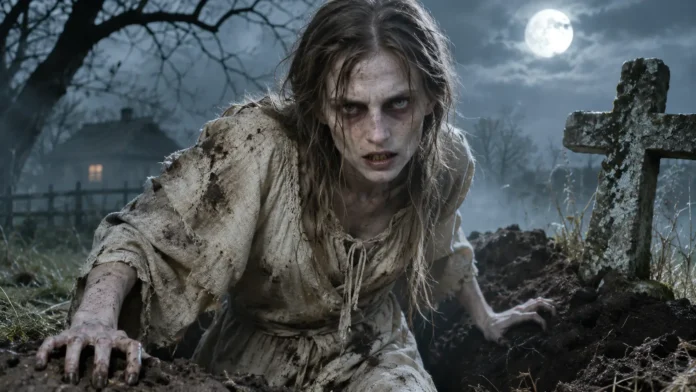
The strzyga is a revenant in Polish folk belief: a dead person, commonly a woman, who returns from the grave to frighten or harm the living. The closely related masculine form, strzygoń, belongs to the same varied tradition of dangerous returning dead.
These beings threaten familiar places rather than distant mythical kingdoms. Their stories concern graves, village homes, relatives, and neighbors.
Nocturnal appearances and attacks make death an unfinished separation, with someone already buried continuing to intrude upon the community of the living.
Descriptions differ between regions and kinds of narrative. Some accounts associate revenants with two souls, unusual teeth, or other bodily signs.
Others emphasize their return and harmful behavior without supplying an elaborate explanation of how a particular dead person became dangerous.
Although the name has associations with supernatural night birds and witches, the strongest Polish evidence supports a human revenant rather than a standard owl-shaped monster. Understanding that distinction preserves the figure’s place within local beliefs about death, burial, and the continuing power of the dead.
History/Origin
The strzyga has no securely established single origin. Its documented history combines regional accounts of returning corpses, dialect vocabulary, and literary storytelling.
The history of the name and the history of the beliefs overlap, but they cannot simply be treated as identical.
Chronicle traditions from Żywiecczyzna, the region around Żywiec in southern Poland, preserve revenant episodes associated with the seventeenth and eighteenth centuries. They concern recognizable members of local communities whose deaths supposedly failed to end their ability to attack or trouble others.
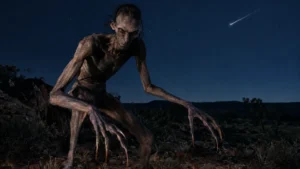
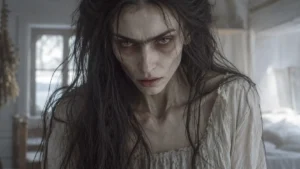
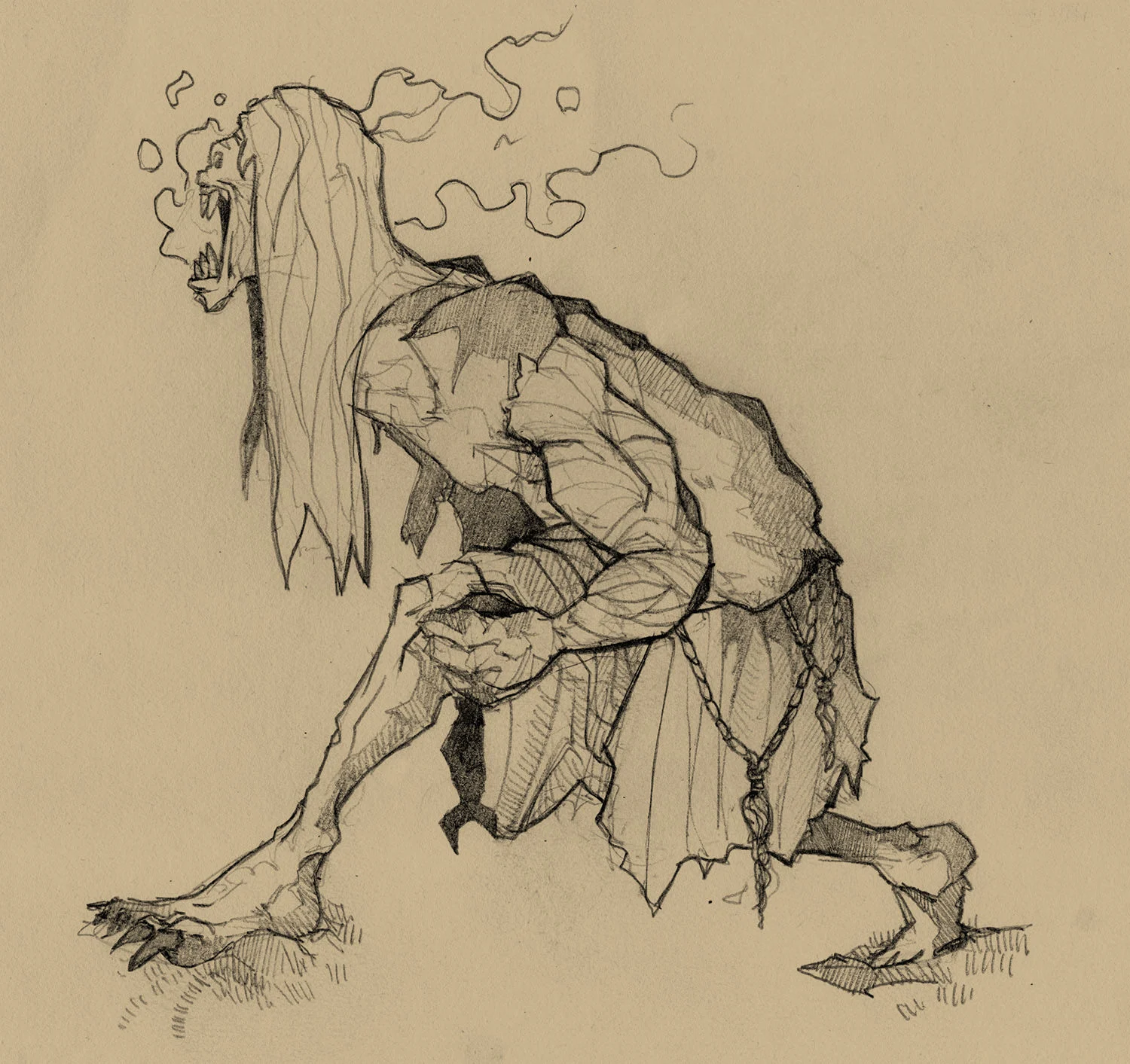 Artystyczna wizja postaci strzygi – demona słowiańskiego, podobnego do wampira., by Filip Gutowski, 2019-01-31. (Source · CC BY-SA 4.0)
One episode dated 1679 connects a dead woman with a succession of village deaths. After nineteen people had died, she was blamed for entering houses and suffocating inhabitants.
The account records communal accusations and action against a corpse, not independent evidence of supernatural events.
Nineteenth-century collecting preserved another layer of the tradition. Władysław Siarkowski’s 1874 ethnographic account from the Kielce area describes the strzyga as a corpse-spirit and records a protective practice involving poppy seeds.
This provides particularly useful early evidence for the revenant identity.
Literary publication followed a different path from ethnographic description. Roman Zmorski included a tale titled “Strzyga” in his 1852 collection, Podania i baśni ludu w Mazowszu.
It documents an early published treatment, but its particular narrative cannot stand for every regional belief.
Specialist folklore and dialect studies preserve these distinctions rather than reducing them to one original story. The resulting historical picture is of related beliefs transmitted through local usage, reports of feared encounters, and authored retellings, each preserving a different kind of evidence.
Name Meaning
The Polish name strzyga is commonly connected with Latin striga and strix, and ultimately with Greek strix. These words belong to a historical vocabulary involving night birds and supernatural beings.
They help explain the name’s associations without supplying a complete definition of the Polish creature.
In his 1927 etymological dictionary, Aleksander Brückner connected strzyga and strzygoń with vampire meanings while proposing this Greek and Latin background. His entry is evidence for an influential linguistic explanation, not proof that all Polish storytellers imagined the same birdlike being.
Dialect records include forms such as stryga, strygoń, and szczyga. Strzyga is generally feminine, while strzygoń is usually its masculine counterpart.
Regional meanings do not always fit a perfectly consistent classification, however, so grammatical gender alone cannot settle every account’s supernatural identity.
The dialect material assembled in Renata Dźwigoł’s Polskie ludowe słownictwo mitologiczne reinforces the importance of local usage. A name can retain older associations while acquiring different meanings in particular communities.
Translating strzyga simply as “owl” or “witch” would therefore obscure its well-documented revenant sense.
Appearance
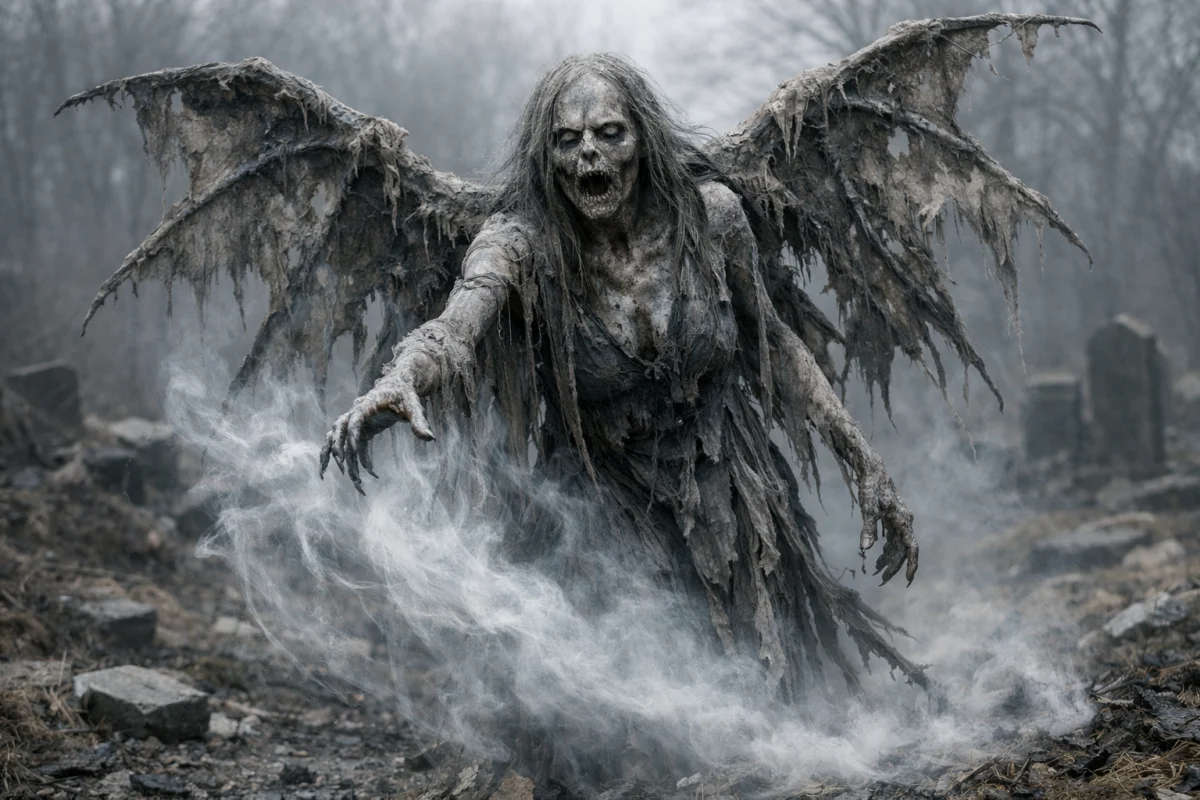
The most securely supported general form is human: a dead person who becomes active again. The strzyga need not possess a separate animal body or a fixed collection of monstrous features.
In many accounts, what identifies the being is its return after burial and its threatening behavior.
Female strzygi and masculine strzygonie occur within the wider tradition, so an exclusively female visual model leaves out related evidence. Individual narratives may identify the returning dead by their former social identity, such as a local woman or shepherd, rather than by an elaborate physical description.
Some regional beliefs associate potential revenants with two rows of teeth, two hearts, or birth in a caul, the membrane that sometimes surrounds a newborn. These are reported signs of an unusual person, not a checklist that every strzyga must display after death.
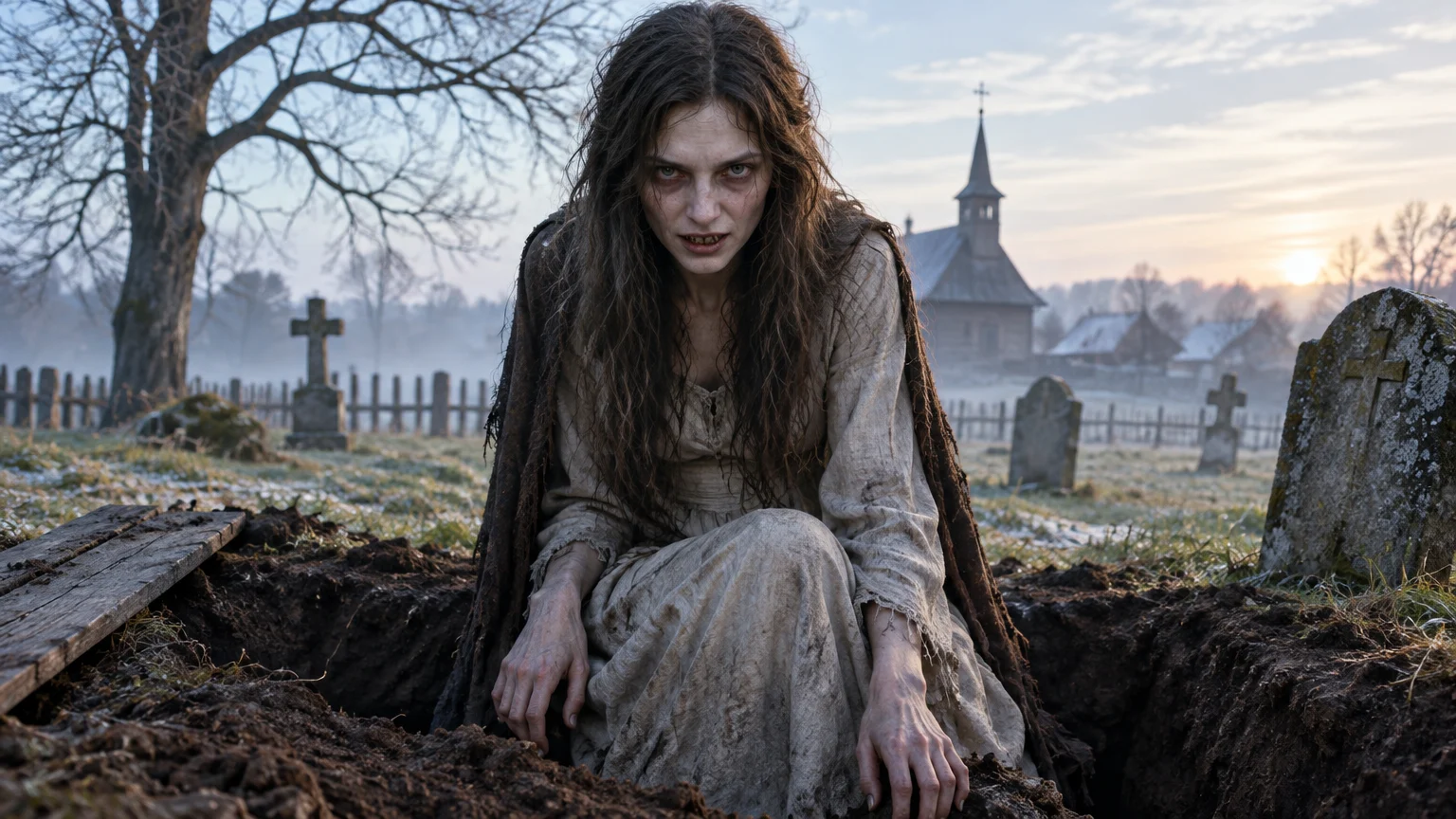
The two-souls motif also belongs to this group of explanations, but it is not a visible anatomical feature. Accounts invoking doubled souls or hearts should remain distinct from those describing unusual teeth or birth circumstances.
Combining every variant would create a composite monster unsupported by any general rule.
Owl and bird associations require similar care. They belong to the name’s proposed linguistic history and to some variant descriptions, rather than defining the standard body.
Graves, nighttime returns, and a human revenant offer a firmer representative image than wings, feathers, or an owl’s head.
Background Story
The strzyga’s background lies in beliefs about an unstable boundary between living people and their dead. Burial did not necessarily guarantee separation.
A deceased member of the community might still be imagined as returning to familiar households, threatening relatives, or spreading danger among neighbors.
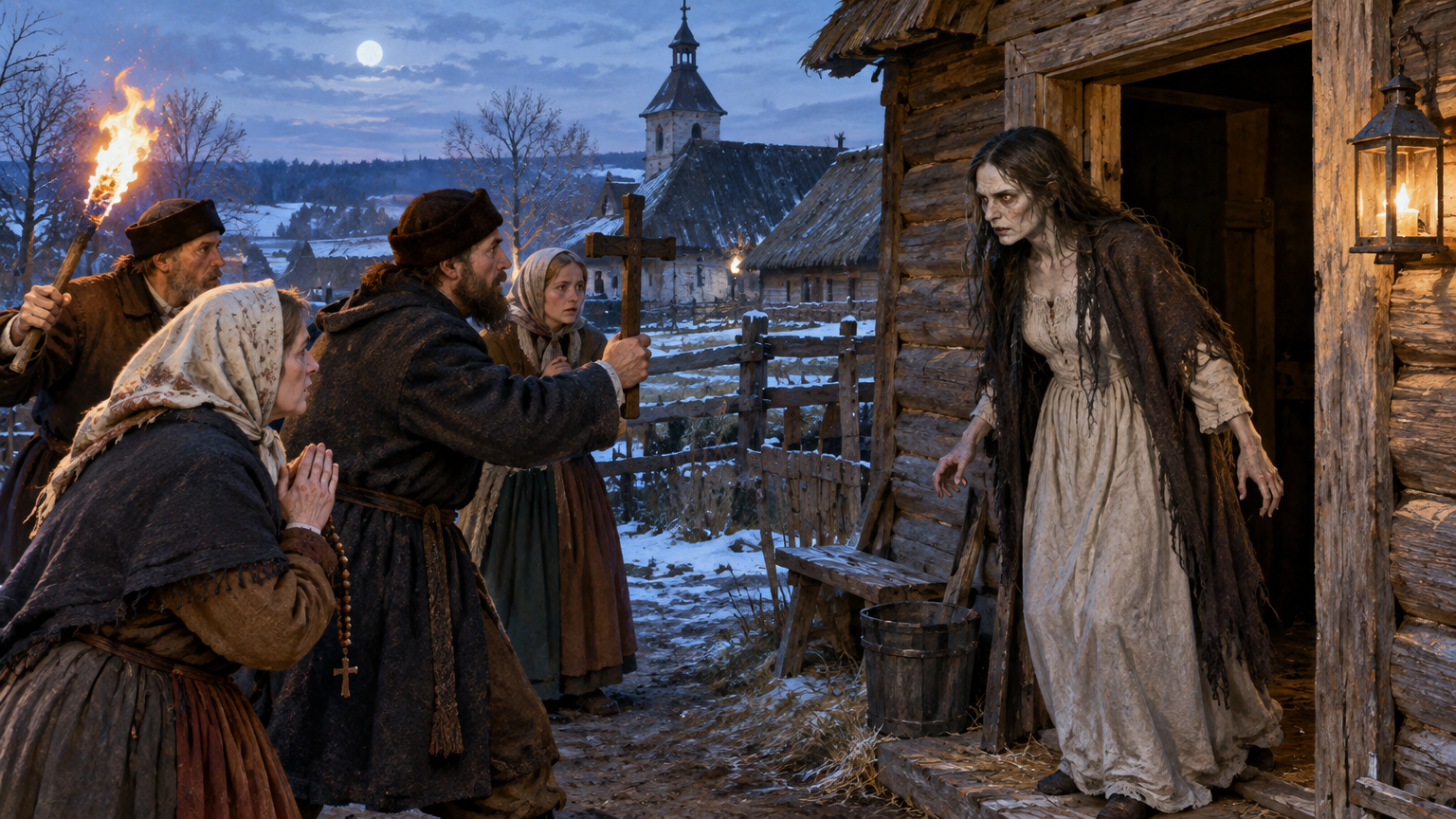
Unusual-birth traditions supplied one way of explaining that possibility. In some accounts, two souls or other exceptional characteristics marked a person as capable of becoming a revenant.
This located the source of posthumous danger within the person’s constitution, rather than requiring an outside monster to transform them.
Other accounts begin with misfortune after a death rather than with signs recognized at birth. The Żywiecczyzna episode of 1679 links an alleged revenant with repeated fatalities.
Its narrative makes collective suffering intelligible by assigning it to a particular dead person who supposedly remains active.
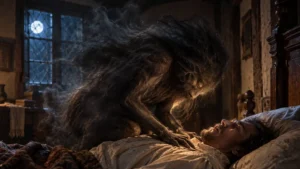
The threat is often physical and immediate. Recorded episodes describe entering houses, suffocating victims, or attempting to strangle residents.
“Vampire-like” is therefore a useful comparison, but blood-drinking should not replace these documented actions as though it were the defining behavior in every version.
Christian elements also entered the narrative setting: some tale variants use prayers, gestures, or sacred objects against the supernatural threat. Their presence shows how returning-dead beliefs could operate within Christian communities, rather than belonging only to a neatly isolated, recoverable pre-Christian mythology.
Literary retelling added another shaping influence. A published fairy tale could organize supernatural danger into a sustained plot, while local belief records preserved accusations, encounters, and protective responses.
Together these materials explain the strzyga’s varied character without requiring a single biography or universal transformation story.
Famous Folklore Stories
A dead woman blamed for nineteen deaths
A chronicle episode from Żywiecczyzna dated 1679 tells of nineteen village deaths attributed to a woman who had already been buried. She was accused of returning as a strzyga, entering houses, and suffocating their inhabitants.
Her corpse was reportedly exhumed and decapitated. In the community’s understanding, burial had not ended her ability to harm her neighbors.
The episode records an accusation and the treatment of human remains, not proof that the woman caused the deaths.
The Father Who Returned with Two Hearts
A Polish folk narrative recorded by Aleksander Saloni concerns a man who dies at the same time his son is born. Years later, the father begins returning to his former household at night, sitting beside the stove as though he still belongs among the living.
The family believes he possesses two hearts. Although one has died, the other continues functioning, allowing him to return.
This explanation belongs to the tale’s particular version of the strzygoń, the closely related masculine revenant.
When the son becomes a young man, he resolves to end the visits. He invites his dead father to play cards and, as the revenant prepares to leave, draws a sword and cuts off his head.
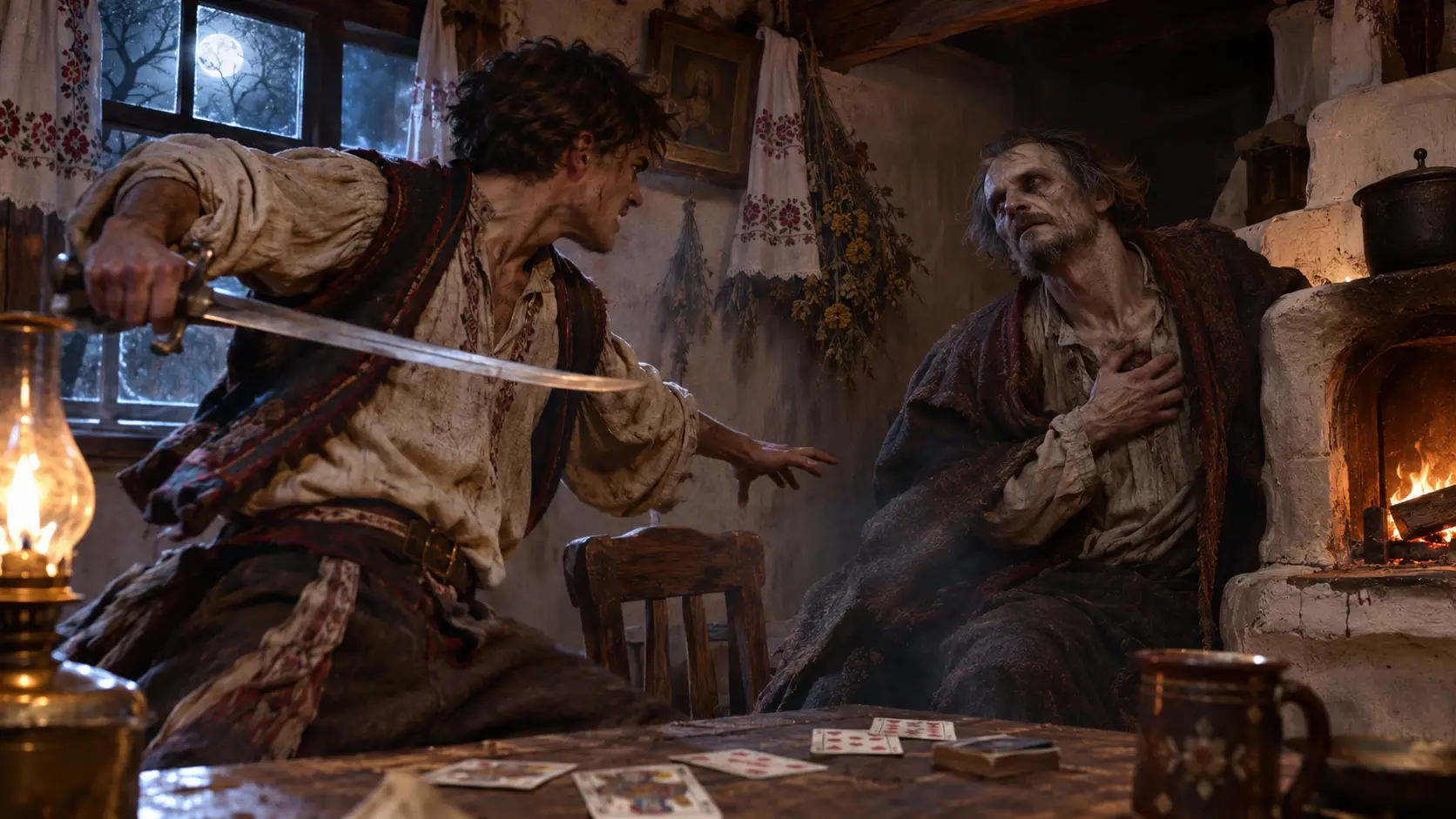
The ending turns the confrontation into an act of release: the father’s remaining supernatural essence thanks his son for freeing him from his restless condition. Rather than portraying the returning dead as simply malicious, the narrative presents a deceased relative whose continued presence troubles the household and prevents his own peace.
The shepherd revenant at Usoły
A regional account from Usoły concerns a dead shepherd said to return and attack residents, attempting to strangle them. This male revenant belongs to the closely related strzygoń tradition.
Decapitation reportedly failed to stop his appearances. His corpse was then dismembered and burned. The sequence records an escalating response to a feared returning dead person, not a universally effective remedy.
Alongside the account of the woman blamed for nineteen deaths, it shows that these regional fears were not confined to female revenants.
Strzyga, Roman Zmorski’s published tale
Roman Zmorski included “Strzyga” in his 1852 collection, Podania i baśni ludu w Mazowszu. It belongs to the enchanted-princess fairy-tale tradition, in which a royal daughter becomes a deadly supernatural being and a rescuer confronts the danger surrounding her burial place.
In this tale tradition, guards posted near the princess’s coffin fall victim to her nighttime attacks. The rescue unfolds over three nights and ends with the breaking of the enchantment.
Particular hiding places, protective actions, and explanations for the curse differ between versions and should not be combined into one supposedly universal story.
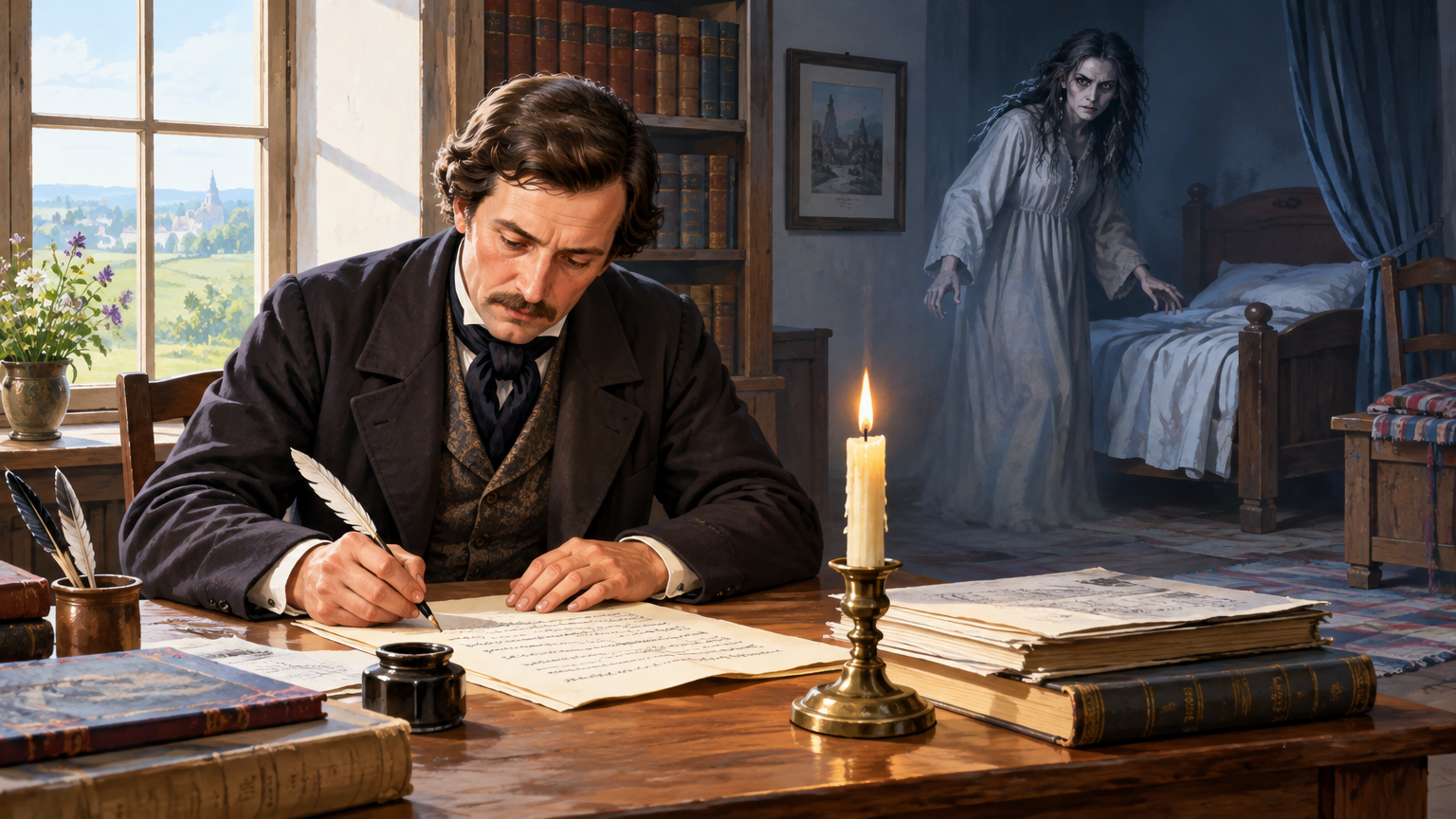
Zmorski’s published tale represents a literary strand distinct from accusations against particular deceased villagers. Read alongside the local episodes and Saloni’s collected narrative, it reveals several possibilities within the tradition: a feared neighbor, a restless family member, and an enchanted figure whose supernatural condition can be ended.
Cultural Impact
Strzyga belief gave communal misfortune a familiar face. A deceased relative or neighbor could become the suspected source of danger, making burial an uncertain boundary rather than a final separation.
Stories of the returning dead expressed fears about household safety and the continuing influence of people who had once belonged to the community.
Those fears could have material consequences. In the Żywiecczyzna account dated 1679, accusations against a dead woman led to the reported opening of her grave and decapitation of her corpse.
Such episodes show how supernatural explanations could justify action against human remains. They document the consequences of an accusation, not the reality of a revenant attack.
The tradition also preserved local differences in language and belief. Dialect material assembled in Renata Dźwigoł’s Polskie ludowe słownictwo mitologiczne records varied meanings and usage.
These differences matter culturally: the strzyga was not one standardized monster shared unchanged across Polish-speaking communities, but part of a regional vocabulary for understanding the supernatural.
Literary retellings gave these beliefs another form of continuity. Roman Zmorski’s 1852 tale “Strzyga” brought the figure into a published collection, preserving a particular narrative rather than a universal account.
Reading such tales alongside dialect records and historical reports reveals how local fears could become literature without making storytelling and recorded belief interchangeable.
Similar Beasts
Vampire

The vampire of Eastern European folklore is a dangerous undead being associated with attacks on the living and the draining of life. Disease and nocturnal fear recur around it.
Strzyga belongs near this revenant complex, but the comparison does not make blood-drinking mandatory or import every trait of the modern fictional vampire.
Drekavac
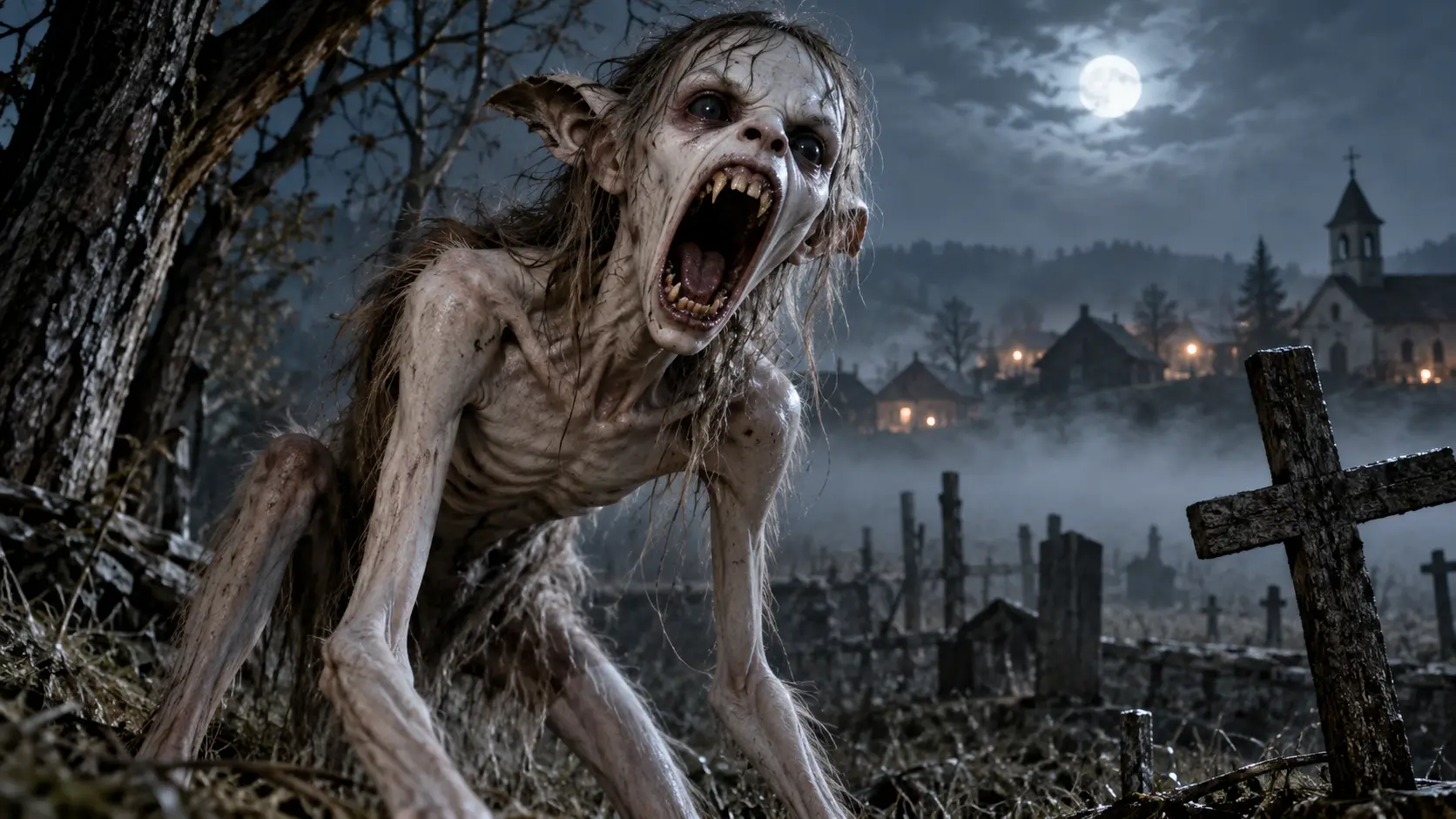
Drekavac is a South Slavic spirit often understood as the restless soul of an unbaptized child. Its cries warn of death or misfortune, and descriptions of its form vary.
Both traditions concern an unsettling relationship between death and the living. Drekavac’s warning cries, however, differ from the strzyga’s reported returns and direct attacks.
Drude
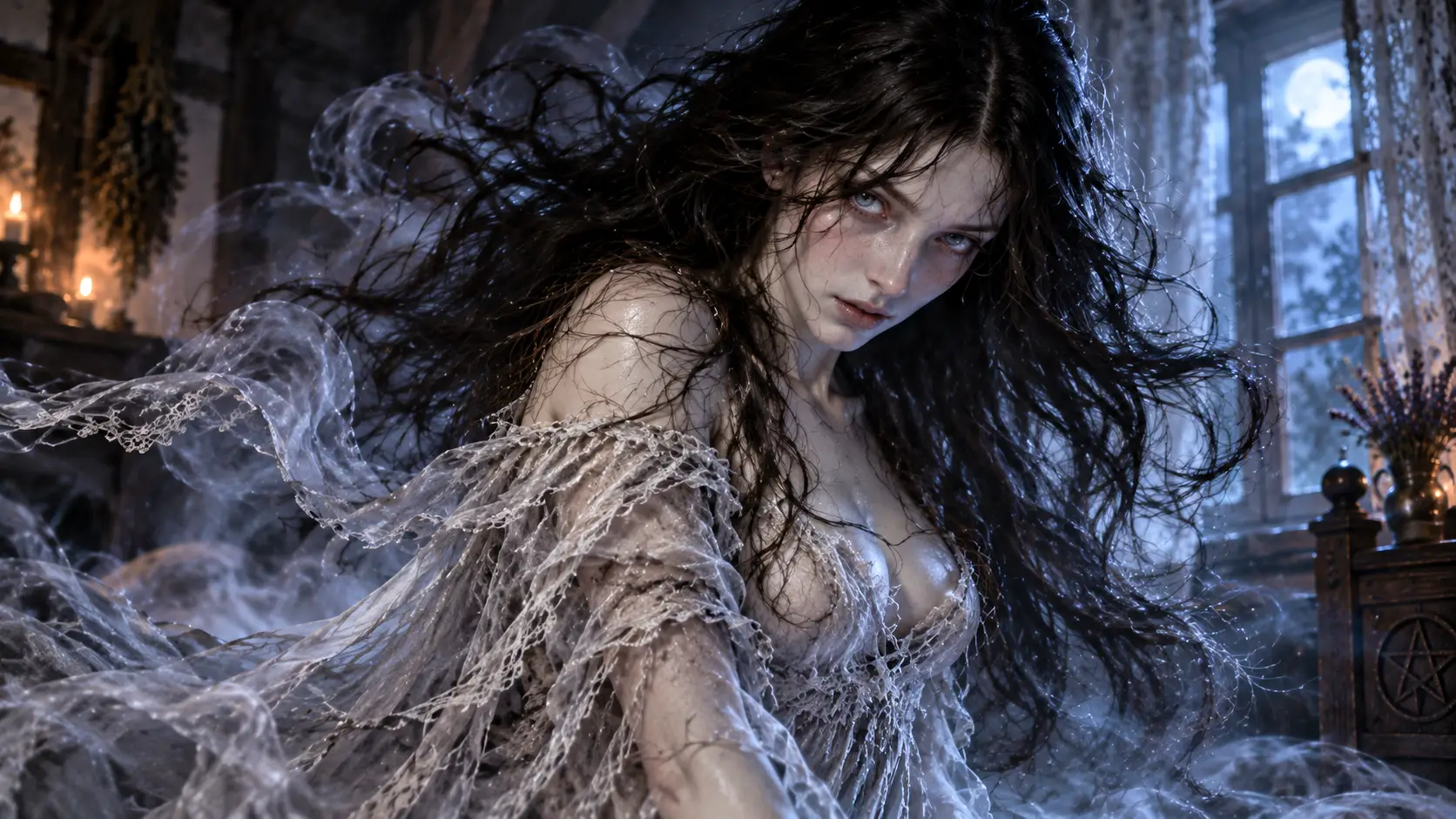
The Drude is a night spirit in German-speaking folklore, associated with oppressive dreams and disturbed sleep. Regional descriptions range from an unseen presence to a witch-like supernatural figure.
Its closest parallel is the experience of nighttime oppression. Unlike the Polish revenant baseline, a Drude need not be a corpse returning from burial.
Strigoi
Strigoi belong to Romanian revenant and vampire traditions. Their related name makes them relevant to comparison, but they remain a distinct folkloric category rather than another spelling of strzyga.
The strongest similarity is the threatening return of the dead. Shared terminology and comparable behavior do not establish identical origins, narratives, or protective practices.
Religion/Ritual
Recorded protective practices frequently addressed the suspected body itself. Piercing or otherwise altering a corpse was intended to prevent further returns.
Such measures belong to particular accounts and local traditions, rather than to a single prescribed ritual followed wherever strzyga belief occurred.
A more specific practice appears in Władysław Siarkowski’s 1874 ethnographic account from the Kielce area: poppy seeds were placed in a grave opening as protection against the revenant. This gives a regional example of a countermeasure that did not depend solely on mutilating the corpse.
The chronicle narratives from Żywiecczyzna document harsher responses, including decapitation and, in the shepherd episode, subsequent dismemberment and burning. These were reported interventions against an alleged threat.
Their occurrence in a narrative does not establish either supernatural effectiveness or general acceptance throughout the region.
Some tale variants also employ Christian objects, gestures, and prayers to withstand or pacify the being. Their presence shows Christian protective language operating within supernatural storytelling.
It does not make every associated burial practice an official religious rite or a uniform expression of church teaching.
Counting, Clothing, and Other Protective Practices
Not every protective measure against a strzyga or strzygoń involved damaging a corpse. Polish folk accounts also describe attempts to delay, distract, or prevent a revenant from returning to its burial place.
One belief held that placing numerous small objects inside a coffin could occupy a returning spirit with counting. Knots offered a similar distraction, forcing the being to untie them instead of troubling the living.
Other stories attributed special importance to possessions left behind by the dead. In one account recorded by Józef Kosiński, a church caretaker watches a strzygoń emerge from its grave and leave its shirt behind.
The caretaker takes the garment and runs toward the church tower. The story reflects a belief that possession of an item belonging to the revenant could interfere with its return to the grave.
These practices reveal the variety of practical responses imagined by local communities. Rather than confronting every revenant through force, some traditions relied on distraction, possession of personal belongings, or carefully arranged burial objects.
Scientific or Rational Explanations
The essential distinction is between evidence for belief and evidence for supernatural activity. Historical reports can establish that people accused a corpse, feared its return, or described protective actions.
They cannot establish that a dead person actually left the grave and attacked anyone.
The 1679 episode supports a cautious social interpretation: multiple deaths were attributed to one identifiable deceased person. Such an accusation could turn an otherwise diffuse crisis into a threat that seemed actionable.
This interpretation explains the response without validating the alleged cause.
Different records also require different kinds of reading. A chronicle report, an ethnographic collection, and a literary fairy tale do not preserve testimony in identical ways.
Their selection, wording, and narrative purposes matter when assessing what can be inferred about historical experience.
No single medical diagnosis is established for the varied strzyga accounts in this evidence. Reports of suffocation, unusual bodily traits, and repeated deaths should not be combined into a retrospective diagnosis.
Nor does one epidemic narrative justify identifying a specific disease without independent historical evidence.
The most secure rational account therefore remains historical and folkloric: communities interpreted danger through beliefs about returning dead, while storytellers and collectors preserved differing versions. Regional variation is part of the evidence itself, not a problem that must be solved by inventing one universal explanation.
Modern Cultural References
Strzyga, podcast episode (2023)
Chthonia devotes an episode to the strzyga’s folkloric origins and characteristics. The discussion introduces the figure to contemporary listeners through an exploration of Slavic supernatural tradition.
(metacast.app)
Strzyga, crime novel (2021)
Aldona Reich’s Polish crime novel combines a criminal investigation with supernatural revenge. Its synopsis presents a strzyga seeking retribution for a wrong suffered in a previous life.
(granice.pl)
The Strzygoń in Twentieth-Century Polish Literature
Polish writers continued adapting beliefs about returning dead long after nineteenth-century folklorists documented them. Their works preserved recognizable motifs while placing the revenant within new literary settings.
Stefan Grabiński’s 1921 one-act drama Strzygoń. Klechda zaduszna includes a rural community seeking religious help for a dead man’s second soul.
The story draws directly on the belief that one person’s death could leave another soul restless.
Czesław Miłosz’s 1955 novel The Issa Valley also portrays a community responding to a feared revenant. After the death of Magdalena, villagers subject her corpse to protective practices intended to prevent her return.
Edward Redliński’s novel Konopielka (1973) preserves a contrasting motif: a deceased husband returns at night and continues helping his widow with household work. The episode recalls regional traditions in which a strzygoń retains recognizable habits from life.
These literary appearances demonstrate that the Polish revenant was not limited to the blood-drinking monster familiar from modern vampire fiction. Writers also explored the dead person’s relationship with family, religious belief, and everyday village life.
Conclusion
The strzyga belongs most securely to Polish traditions of the returning dead: a deceased person, often female, believed to leave the grave and threaten the living. The closely related strzygoń shows that this fear was not confined to female figures.
Regional differences matter, however. Two souls, unusual birth signs, and particular protective measures belong to specific accounts rather than a universal definition.
Likewise, the name’s association with nocturnal birds should not replace the human revenant at the center of the strongest evidence.
Read together, historical episodes, regional belief records, and literary retellings reveal a figure shaped by anxieties about death, household safety, and the uncertain boundary between the living and the dead. Its significance lies partly in that variety: the strzyga could explain a feared return, embody a community’s suspicions, or become the antagonist of a crafted tale.
Contemporary fiction and audio discussion continue this reinterpretation. Preserving the distinctions between belief, accusation, and storytelling makes its lasting cultural relevance clearer without treating supernatural claims as established events.
Further Reading
Roman Zmorski, Podania i baśni ludu w Mazowszu, Pl.wikisource
Roman Zmorski’s 1852 published literary fairy tale bears this title.
It is a documented retelling, but should not be treated as the definitive form of all strzyga beliefs.
(pl.wikisource.org)
Słownik etymologiczny języka polskiego: “strzyga”, Wikiźródła
Historical etymological entry recording Brückner’s proposed links to Latin striga and Greek strix.
(pl.wikisource.org)
Muzeum Historii Polski, “Czarty, strachy, strzygi”, Muzhp
A regional chronicle tradition recounted that after 19 people died in a village in 1679, a dead woman called a strzyga was blamed for entering homes and suffocating people; the account describes exhumation and decapitation.
(muzhp.pl)
Strzygoń/strzyga, Słownik polskiej bajki ludowej, Nicolaus Copernicus University
Specialist synthesis of Polish tale and belief variants, regional distribution, revenant traits, and protective practices.
(bajka.umk.pl)
Polskie ludowe słownictwo mitologiczne, Pedagogical University repository
Dialect-focused lexicographic study that documents variant meanings and discusses the name’s etymology.
(rep.up.krakow.pl)
Królewna strzyga, Słownik polskiej bajki ludowej, Nicolaus Copernicus University
Specialist study of the enchanted-princess fairy-tale tradition, including Roman Zmorski’s version, the supernatural attacks, three-night rescue, and regional variations involving the breaking of the curse.
https://bajka.umk.pl/slownik/lista-hasel/haslo/?id=91
Serce, Słownik polskiej bajki ludowej, Nicolaus Copernicus University
Scholarly discussion of the heart motif in Polish folklore, including the recorded account of a two-hearted revenant whose son ends his supernatural return after death.
https://bajka.umk.pl/slownik/lista-hasel/haslo/?id=341