Introduction
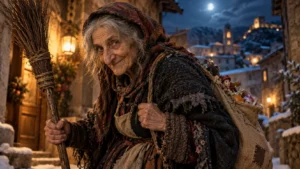
Nocnitsa is a Slavic night spirit associated especially with infants’ sleeplessness, persistent crying, and nocturnal distress. Often imagined as several beings rather than one individual, nocnitsas belong primarily to household folklore about children’s vulnerability and the unseen causes of interrupted sleep.
The name does not always distinguish a supernatural visitor from the trouble attributed to it. In some regional usage, related words designate sleeplessness or childhood illness itself.
The figure therefore stands between a personified affliction and an independently imagined night demon.
Related names occur across Slavic languages, but they do not identify an entirely uniform being. Local traditions describe invisible presences, female figures, and occasional animal forms.
Historical Polish usage also overlaps with witches and nightmare beings, associations that should not define every regional tradition.
Nocnitsa’s significance lies less in heroic adventures than in intimate domestic experience. A crying child, a darkened sleeping place, and a caregiver’s attempts to restore rest provide the recurring setting.
The surviving beliefs preserve explanations of distress alongside practical and ritual efforts to protect children.
History/Origin
Nocnitsa’s linguistic background reaches into the shared inheritance of Slavic languages. Related names derive from a formation built on the word for night.
This supports an old linguistic connection, but it does not establish when particular beliefs arose or prove that every regional description existed in Proto-Slavic times.
The documented tradition is geographically dispersed rather than traceable to one birthplace. East, West, and South Slavic evidence preserves overlapping meanings involving night spirits, disturbed sleep, and childhood illness.
Their distribution suggests a shared field of belief that developed differently within individual communities.
Much of the evidence consists of dialect vocabulary, brief descriptions of supernatural interference, household precautions, and incantations. These materials preserve how people named and addressed nocturnal distress rather than a continuous mythological history.
The spirit’s identity must therefore be reconstructed from several kinds of local testimony.
G. I. Kabakova’s entry in the 2004 ethnolinguistic dictionary Slavyanskie drevnosti brings these regional materials together, with child sleeplessness at their center.
Its comparative scope is important: striking descriptions from one locality belong within a broader tradition, not automatically at the head of it.
Historical Polish lexicography presents a partly different picture. As examined in Imagining Witchcraft in Early Modern Poland, nocnica could designate a female night demon or child bogey while overlapping with witches, flying demons, and an owl-like strix.
These categories were not consistently separated.
That Polish overlap records a particular history of classification rather than a universal identity. M. M. Valentsova’s comparative study of Slovak mythological vocabulary likewise shows that related names carry different regional meanings.
Shared terminology connects these traditions without making their spirits, symptoms, and supernatural categories interchangeable.
Name Meaning
The name’s clearest meaning is its connection with night. The specialist linguistic study by Dukova traces the word family to a Proto-Slavic night-derived formation with a feminine-forming suffix.
“Night spirit” is a useful contextual explanation, though not an exhaustive translation of every dialect meaning.
Related forms include Russian ночница, commonly transliterated as nochnitsa; Belarusian начніца, or načnica; Ukrainian нічниця, or nichnytsia; and Serbian and Croatian noćnica. These spellings reflect the languages’ different sound histories and writing systems, rather than names for clearly separate mythological species.
The lexical range extends beyond a named supernatural agent. Volume 25 of the Etimologicheskii slovar slavianskikh iazykov, published in 1999, records related meanings involving nightmare, apparition, and childhood illness, alongside non-supernatural senses.
Context is therefore essential when interpreting an occurrence of the word.
Plural forms are especially relevant to the folklore. A Polesian incantation addresses the beings as “nochnitsy-sisters,” while other regional names emphasize crying or screaming.
Such vocabulary foregrounds the disturbance and the beings addressed against it, rather than identifying one individual with a fixed personal name.
Appearance
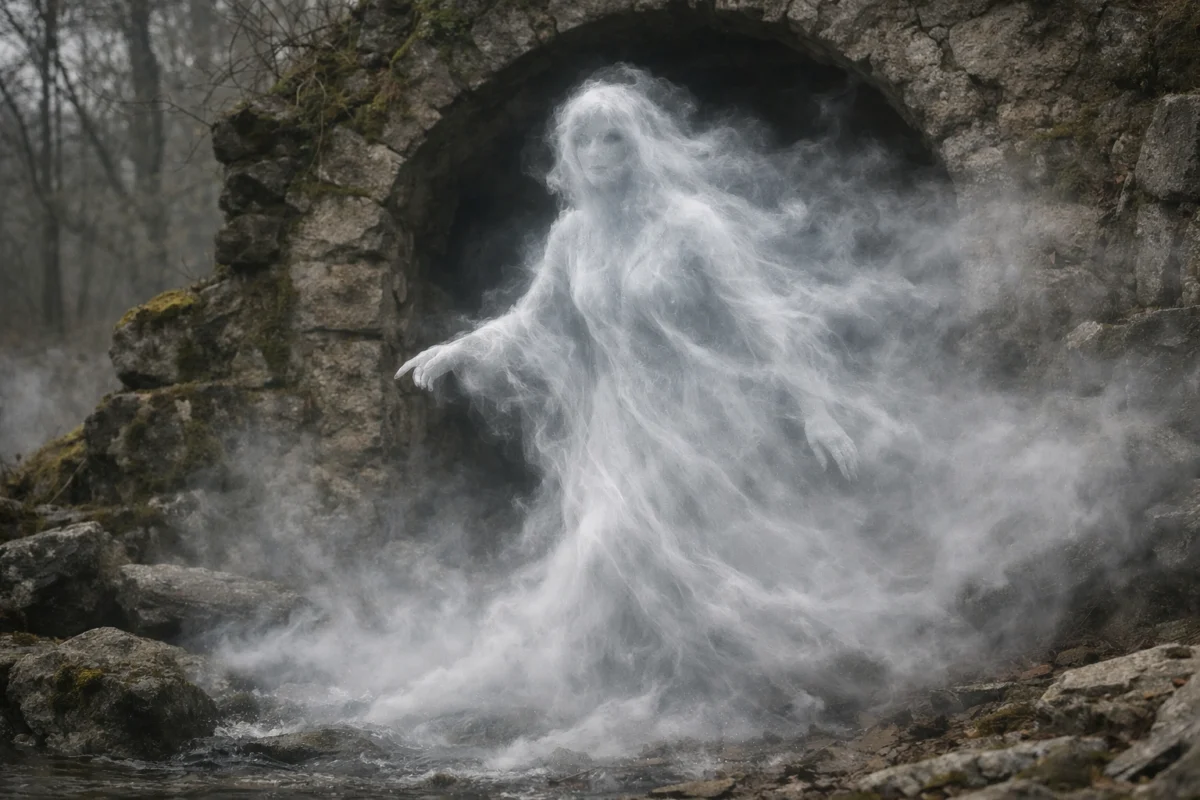
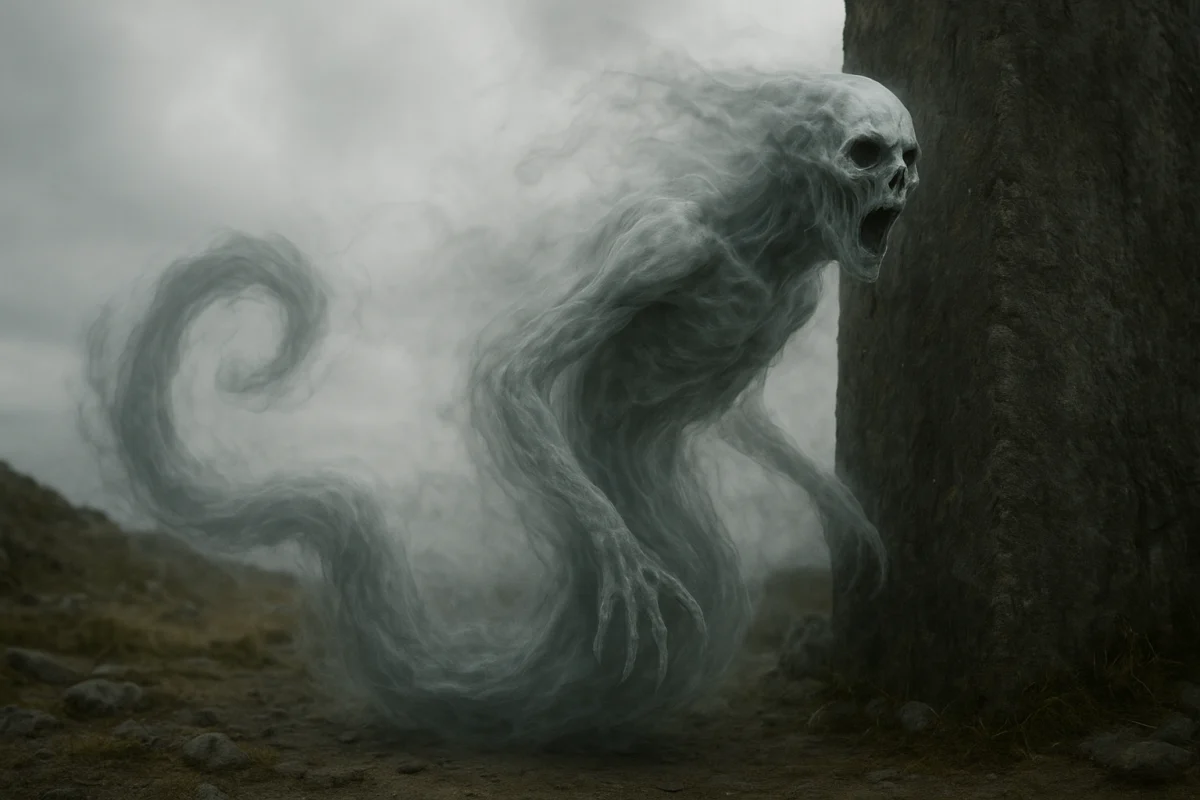
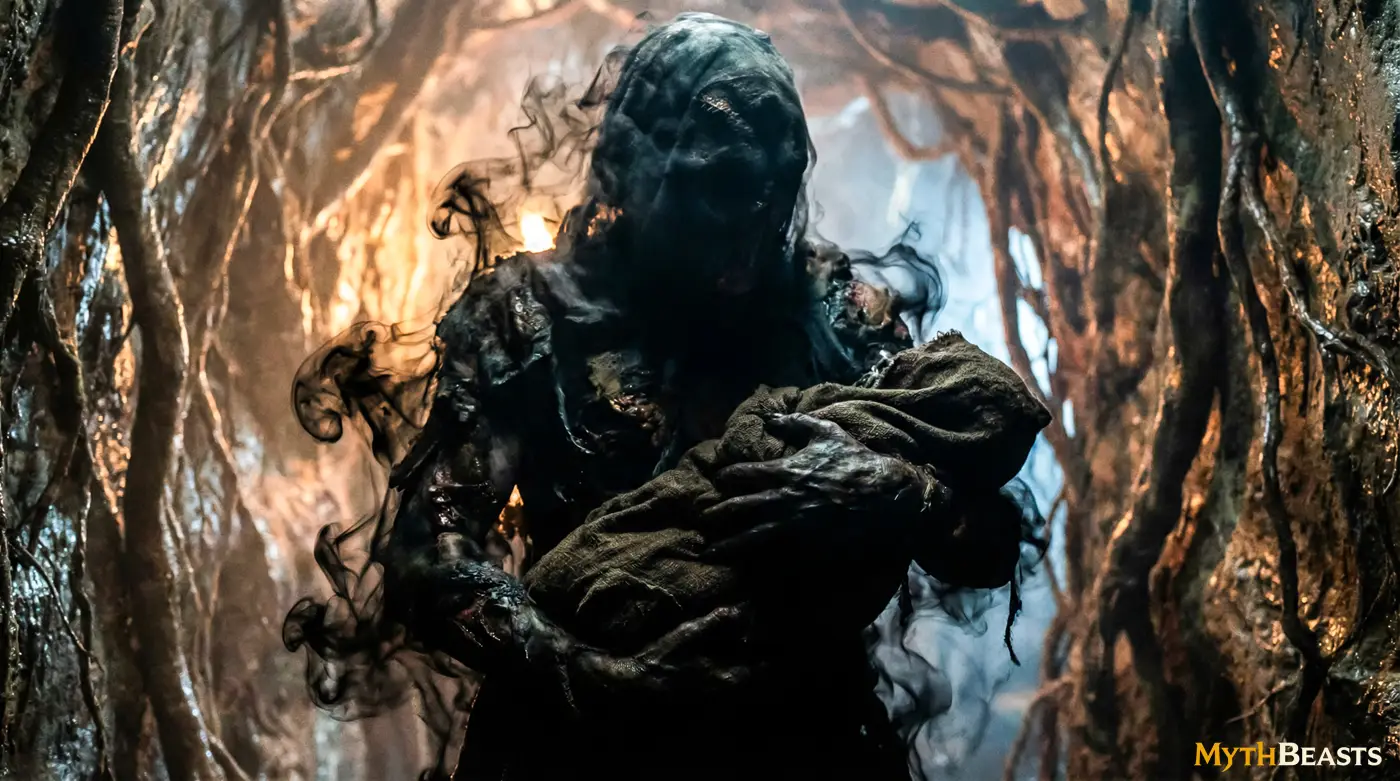
Nocnitsa has no stable anatomy shared across the documented traditions. The strongest general description is an invisible or indistinct night presence, recognized through its supposed effects on a child.
A detailed monster portrait would give visual certainty to beliefs that often supplied very little.
Female identity is more consistent than any particular face or body. Feminine names and incantation addresses support understanding nocnitsas as female beings, but grammatical gender and ritual address do not establish age, clothing, or physique.
Those details emerge only in particular regional descriptions.
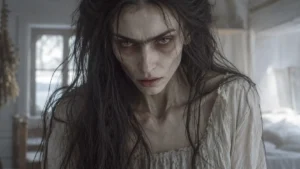
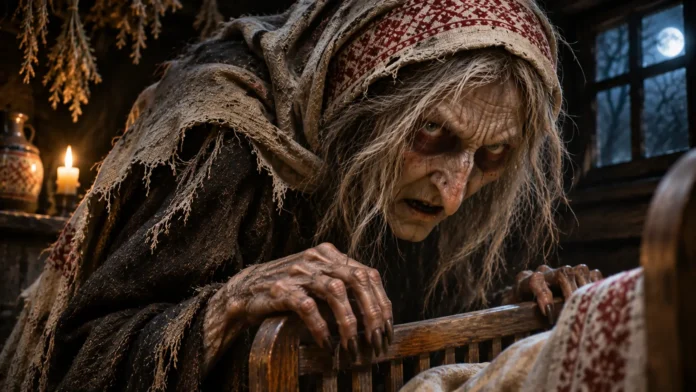
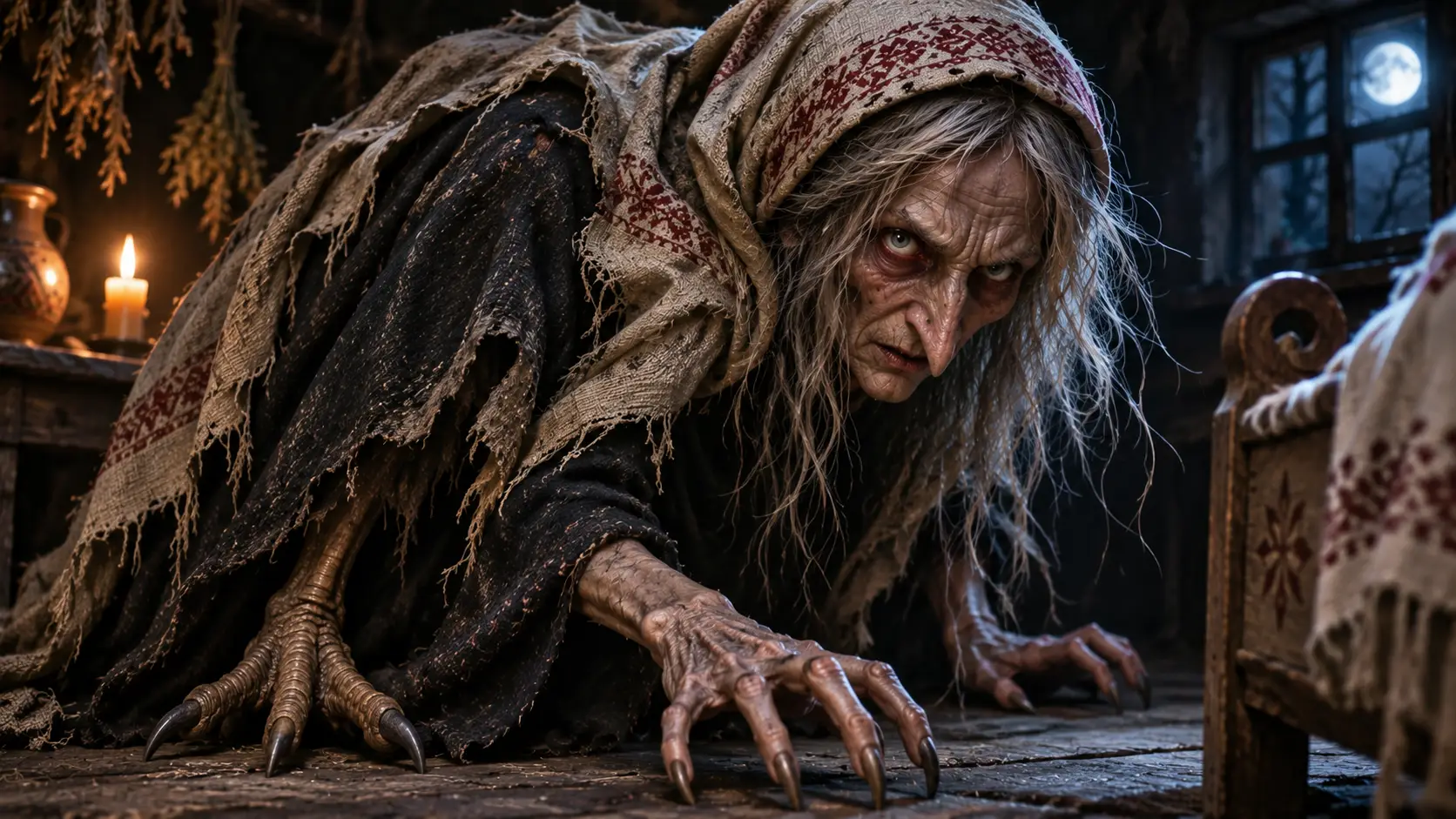
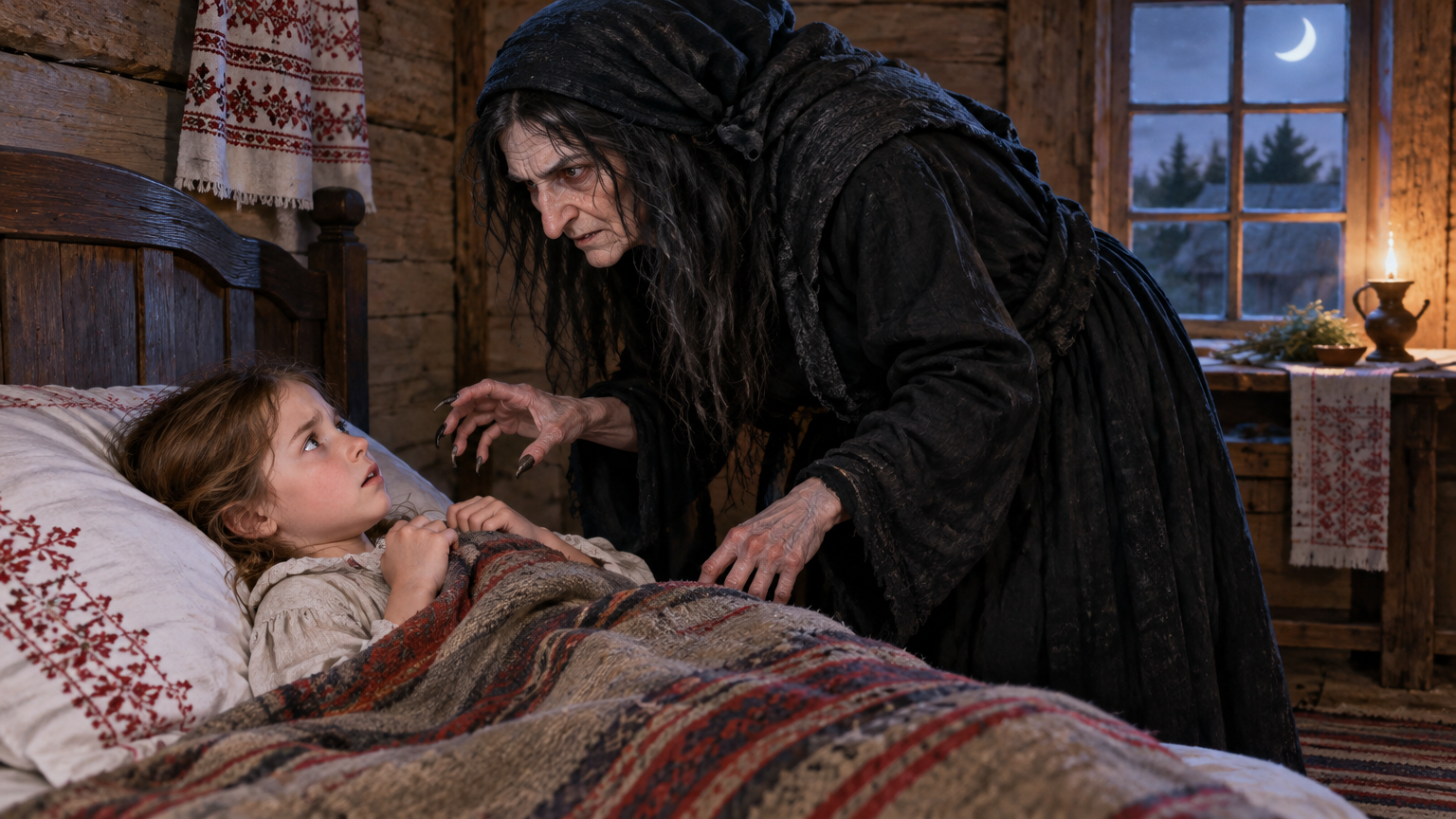
Eastern Serbian accounts describe ugly women dressed in black. Croatian accounts give female figures long hair and claws.
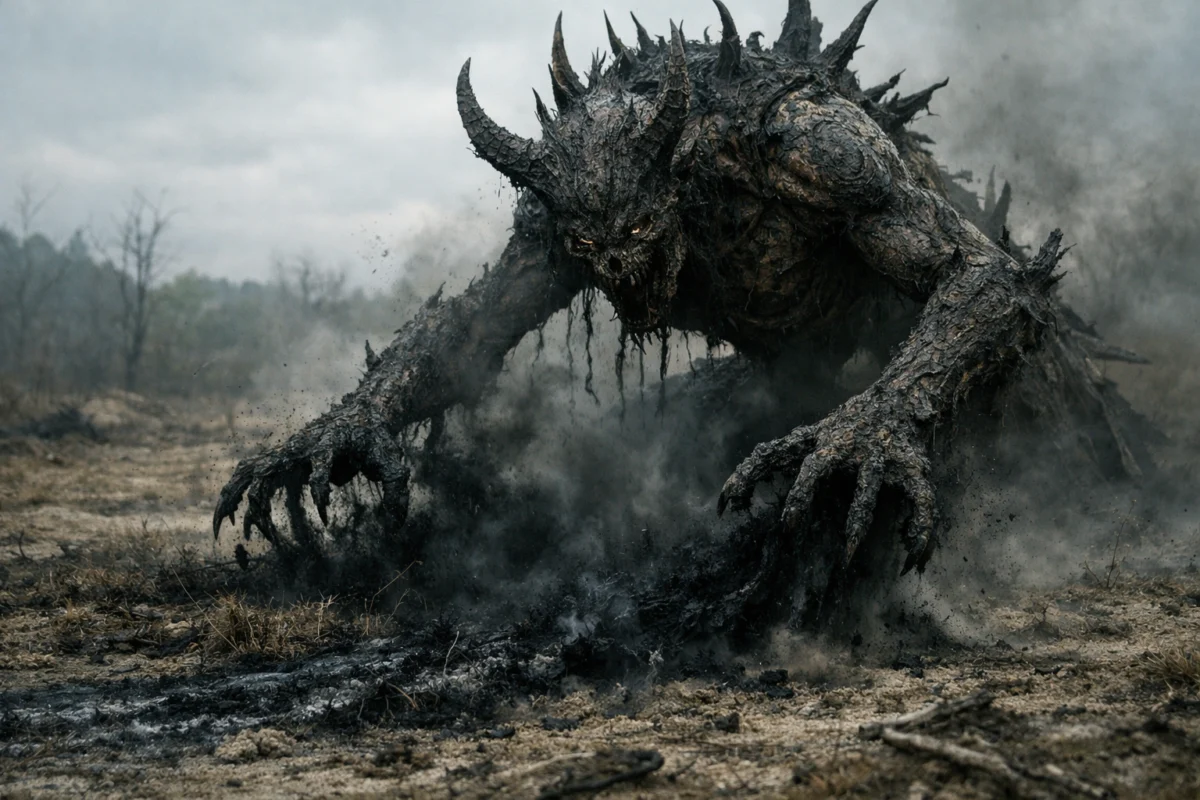
Both are documented humanlike forms, but neither should be expanded into a universal hag image or combined into a standard costume and set of features.
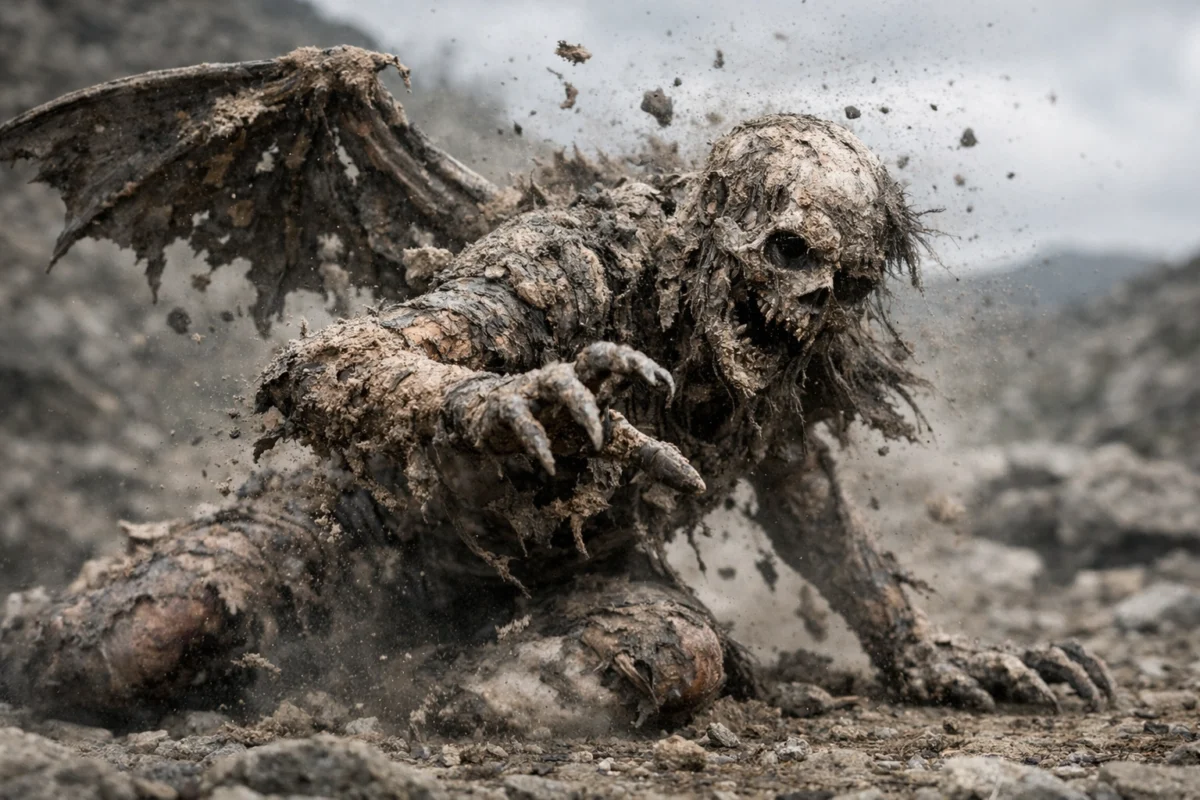
Other local reports depart markedly from human appearance. Isolated Polish descriptions give birdlike or batlike forms, while western Belarusian evidence includes a black hairy worm.
These are alternative regional manifestations, not evidence that every nocnitsa was believed to transform among all these shapes.
The owl-like associations in historical Polish lexicography also require care: they occur within overlapping classifications of witches and night demons. Across the wider tradition, the most representative setting remains a child’s sleeping place after dark, where an unseen presence matters more than a clearly observed body.
Background Story
Nocnitsa’s background is the household experience of a child who cannot settle at night. The folklore gives an agent to otherwise unexplained crying and wakefulness.
Its recurring concern is not a monster’s ancestry or adventures, but interference with the sleep and well-being of a vulnerable child.
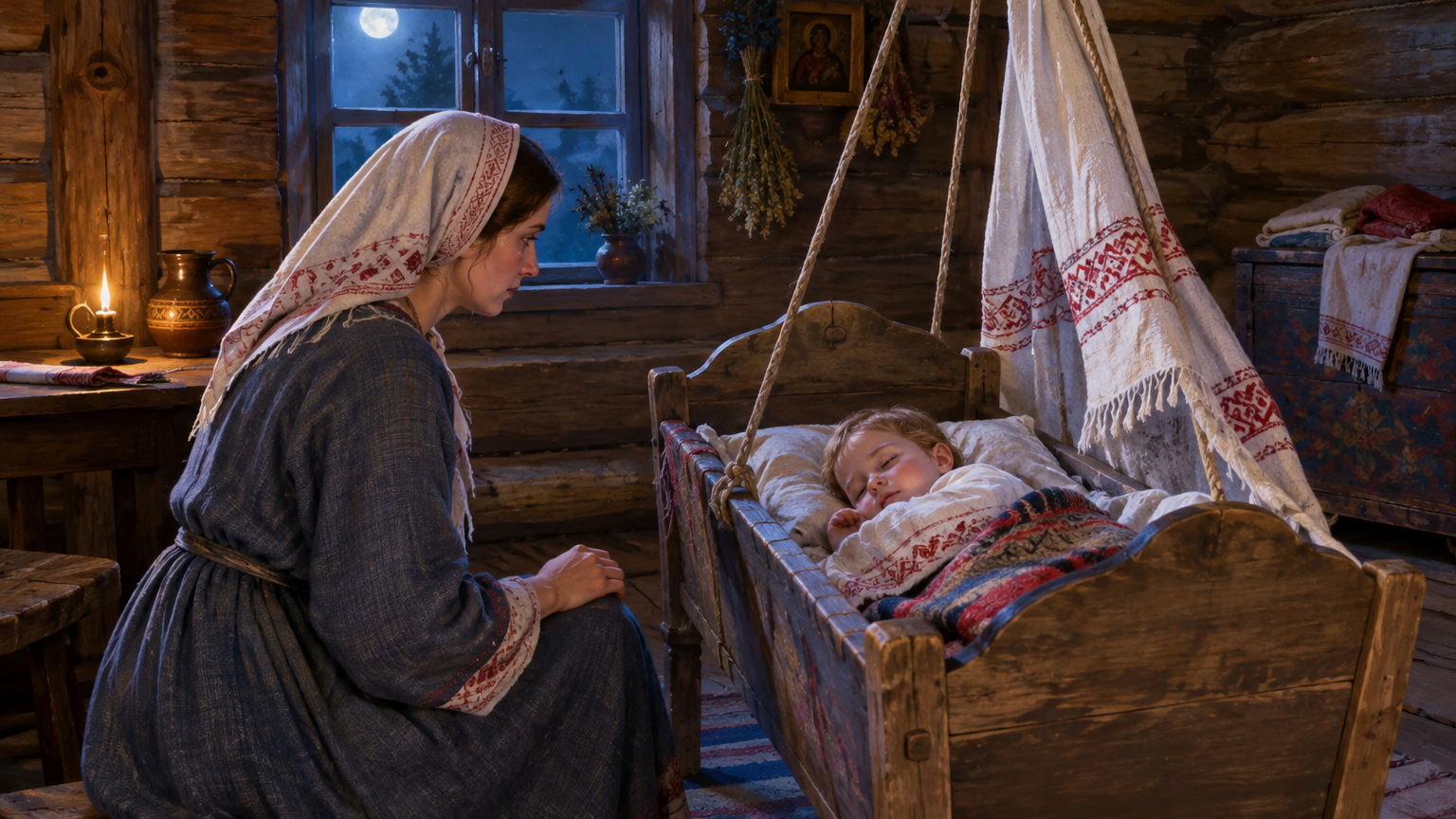
Northern Russian accounts make that interference physically specific. The spirit frightens or tickles the infant, pinches it, tugs its hair, or stands at the head of the bed.
These actions explain the child’s distress through an assailant whose presence need not be visible to caregivers.
A Bulgarian variant presents a different encounter: an unseen visitor, identified as nocnitsa or gorska maika, kisses a sleeping child, after which the child pines and cries. Here an apparently affectionate action becomes harmful, rather than the overt harassment emphasized in northern Russian accounts.
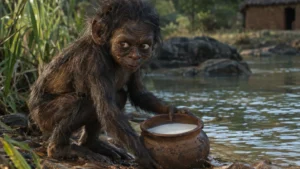
Milk-related beliefs introduce another regional strand. Belarusian and Serbian reports include spirits giving milk to a child or drawing milk from it.
These differing actions connect the night visitor with nourishment and bodily vulnerability, but they do not establish milk-taking as the creature’s defining activity everywhere.
Protective customs place these beliefs within everyday childcare. Restrictions concerning cradles and children’s linen, together with the use of cloth substitutes in some Slovak and Belarusian traditions, show how nocturnal danger was connected to familiar household objects.
Local responses varied alongside local explanations of the affliction.
Incantations further shaped the spirit as a being that could be addressed and asked to leave. Calling nocnitsas female beings or sisters made distress approachable through speech and ritual.
This background explains their flexible identity: both the night trouble itself and the imagined visitors responsible for it.
Famous Folklore Stories
Nocnitsa survives in documented accounts of nocturnal disturbance rather than a securely identified cycle of named folktales. The following headings describe regional motifs, not traditional story titles.
Each episode explains a child’s distress through the actions of an unseen night visitor.
Northern Russian accounts of a disturbed infant
In northern Russian belief, a baby’s nighttime crying could mean that nocnitsa was frightening or tickling it. Other explanations described pinching, hair-pulling, or a presence standing at the head of the bed.
These are recorded explanatory accounts, not episodes from a single continuous tale.
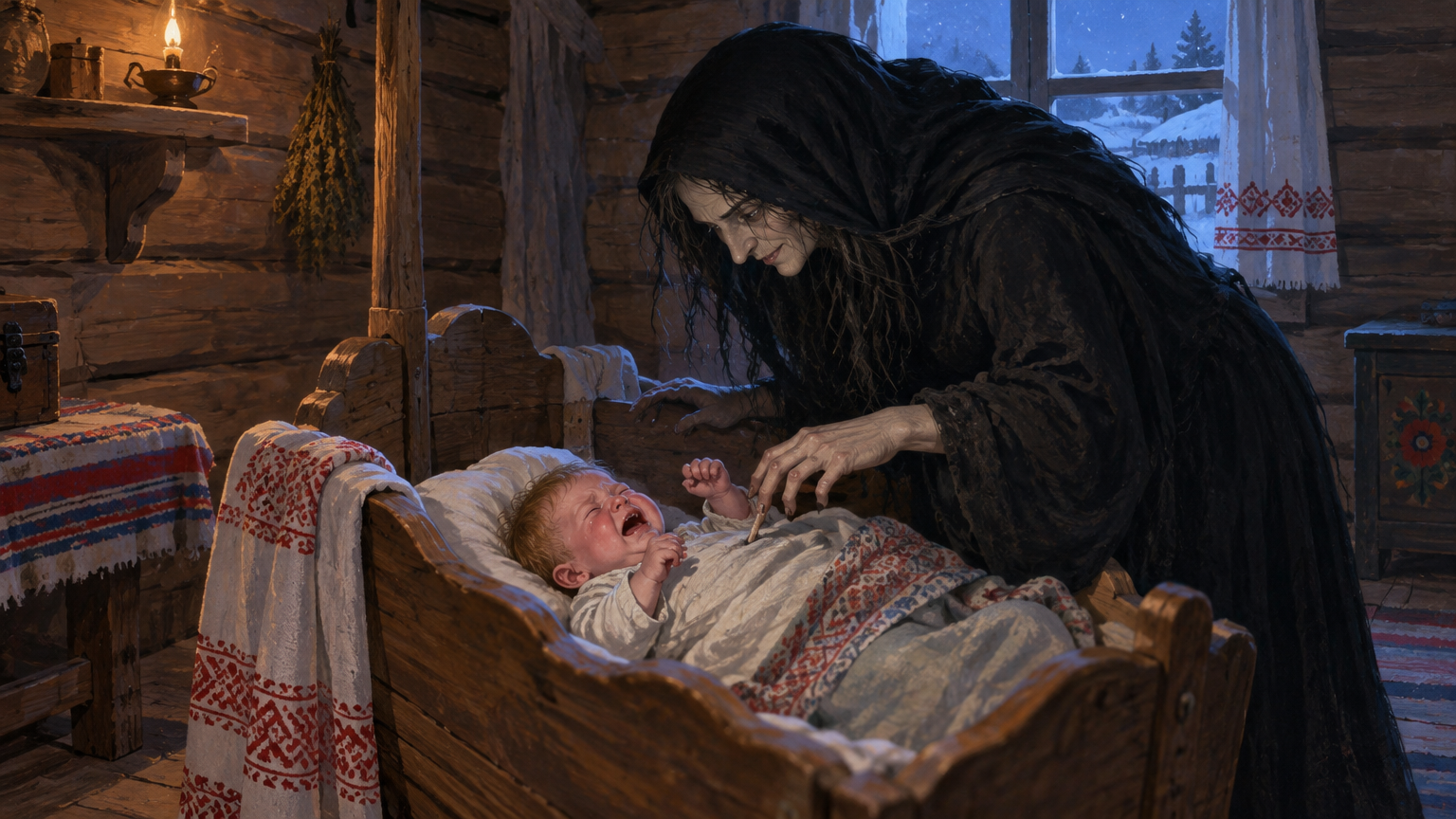
The different actions translate an infant’s distress into recognizable forms of harassment. They should remain alternatives rather than become a detailed attack sequence.
The account gives the disturbance a supernatural agent, but does not establish a named child, a particular encounter date, or an eventual confrontation.
The Bulgarian motif of the unseen kiss
A Bulgarian belief preserved in Slavyanskie drevnosti describes an unseen nocturnal visitor, called nocnitsa or gorska maika, kissing a sleeping child. Afterward, the child begins to pine and cry.
This is a regional belief episode rather than an authenticated, traditionally titled folktale.
Here the harmful action is a kiss rather than the pinching or frightening recorded farther north. Its apparent gentleness contrasts with the child’s subsequent decline.
The local association of names belongs to this account and does not make gorska maika interchangeable with nocnitsa throughout Slavic folklore.
Cultural Impact
Nocnitsa’s clearest cultural significance lies in household care rather than heroic storytelling. Beliefs about disturbed sleep influenced precautions surrounding infants, cradles, washing, and clothing.
The threat was understood through familiar domestic objects and routines, making the nursery an important setting for protective custom.
Restrictions on leaving children’s linen outdoors overnight connected ordinary laundry with nocturnal vulnerability. Avoiding the rocking of an empty cradle likewise placed limits on an everyday action.
These customs show how beliefs about unseen interference could shape household conduct even when no encounter was reported.
Cloth bundles or dolls used in some Slovak and Belarusian traditions gave protection a material form. As substitutes for the child, they offered another focus for the threatening presence.
Their regional distribution matters: they were particular responses, not equipment required by a universal Slavic tradition.
Historical Polish lexicography also brought nocnica into overlapping categories of child bogey, night demon, witch, and owl-like being. This overlap, examined in Imagining Witchcraft in Early Modern Poland, illustrates historical classification practices rather than proof that all these figures shared one identity.
Modern comparative scholarship treats such differences as evidence worth preserving. M. M. Valentsova’s comparison of Slovak vocabulary with other Slavic traditions places child-sleep beliefs beside regional variations in meaning.
The result is a picture of related household traditions, not a standardized supernatural species.
Similar Beasts
Zmora
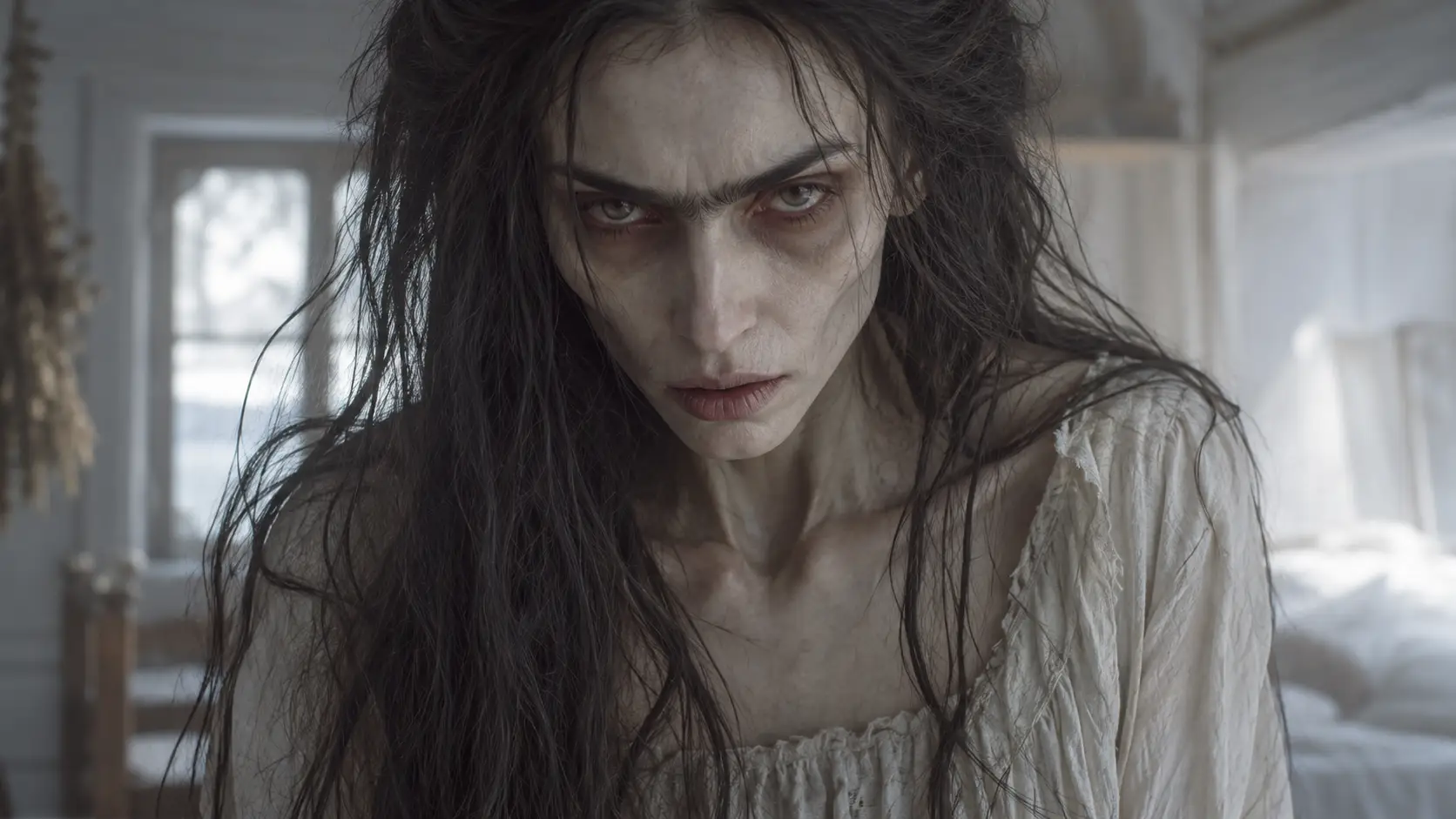
Zmora is a Slavic night spirit associated with oppressive attacks on sleepers, including pressure on the chest, nightmares, and loss of vitality. Its appearance varies between accounts.
Both figures explain disturbed nights through supernatural interference. Nocnitsa’s strongest documented association is infant crying and sleeplessness, rather than the chest oppression characteristic of zmora.
Drude
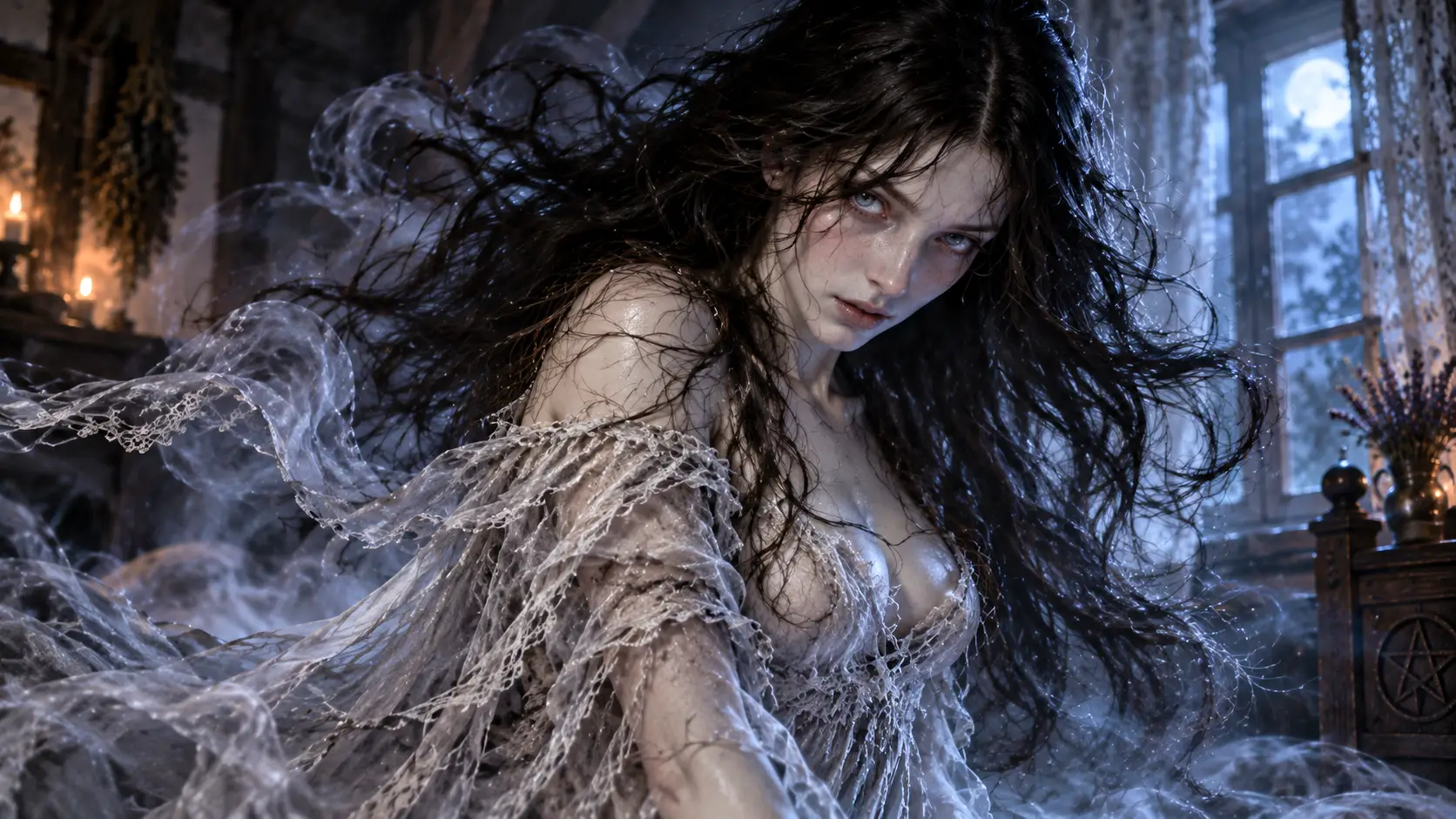
The Drude belongs to German-speaking folklore and is associated with oppressive dreams and disturbed sleep. Regional accounts present an unseen presence or sometimes a witch-like figure.
The resemblance concerns nighttime disturbance and an uncertain visible form. It does not establish shared origins or make the Drude a German name for nocnitsa.
Āl (Albastı)
The Āl is associated with childbirth danger in Iranian and Caucasian traditions. This threatening figure reflects fears surrounding the vulnerability of mothers and infants during a hazardous life transition.
Its relevance is the supernatural interpretation of danger around early life. Nocnitsa centers more specifically on children’s nocturnal distress, not on childbirth danger as such.
Lamashtu

Lamashtu is a Mesopotamian demoness who threatens mothers and infants. Her recognizable composite appearance includes a lioness-like head, claws, and birdlike talons, unlike an indistinct household presence.
Both figures connect childhood vulnerability with supernatural harm. Lamashtu’s distinct physical imagery should not be transferred to nocnitsa, whose appearance remains variable or entirely unseen.
Religion/Ritual
Incantations against infant sleeplessness directly address the disturbing beings and ask them to leave the child in peace. Some Polesian formulas address them as sisters.
This plural, feminine language is important: the ritual opponent need not be imagined as one individually named demon.
Protective practices included placing iron objects or needles near a cradle. These are documented historical customs, not recommendations for present-day childcare.
Their importance lies in the belief that an ordinary material object could defend the infant against an otherwise difficult-to-perceive nighttime threat.
Some Slovak and Belarusian practices used cloth bundles or dolls as substitutes for the child. The substitute belongs to a different protective approach from a metal cradle charm.
The records do not justify combining these objects into one elaborate ceremony supposedly practiced throughout Slavic communities.
Restrictions involving nighttime water, washing, and children’s laundry formed another part of household protection. Together with spoken charms, these practices document domestic ritual responses to sleeplessness.
They do not establish an organized cult, a common priesthood, or a single prescribed system of worship.
Scientific or Rational Explanations
The documented beliefs are historical explanations of infant crying and sleeplessness, not evidence that a supernatural visitor caused them. A modern reading must distinguish the observed problem, a distressed child at night, from the culturally specific explanation attached to that problem.
The vocabulary itself helps explain this relationship. Related words could designate a spirit, a nightmare, sleeplessness, or a childhood affliction.
The range assembled in the Etimologicheskii slovar slavianskikh iazykov shows why translating every occurrence as a discrete monster can misrepresent its meaning.
One anthropological interpretation is that personification made an obscure problem addressable. Crying became something caused by a being that could be spoken to, excluded, or diverted.
This interpretation concerns the function of the belief; it does not demonstrate what any particular caregiver privately thought.
Modern medicine recognizes many reasons for infant distress, including hunger, discomfort, illness, and developing sleep patterns. Such possibilities provide a general alternative to supernatural causation.
The brief folklore accounts, however, contain too little clinical information to diagnose the children retrospectively or identify one underlying condition.
Sleep paralysis is a more relevant comparison for traditions emphasizing chest pressure or an oppressive presence during sleep. It should not become a universal explanation for nocnitsa.
The principal child-crying accounts do not describe the defining experience of conscious immobility associated with that condition.
Regional variation also cautions against searching for one animal, disease, or perceptual mistake behind every account. Invisible visitors, localized bodily forms, and overlapping illness terms belong to different records.
The strongest explanation therefore remains plural: communities interpreted nighttime distress through inherited language, household custom, and supernatural belief.
Modern Cultural References
Nocnitsa (The Night Hag), published fiction (2019)
Andrea DeAngelis’s flash fiction appeared in The Molotov Cocktail, Volume 10, Issue 1.
It portrays Nocnitsa as a supernatural being, adapting the name for contemporary fictional storytelling.
(themolotovcocktail.com)
Nocnitsa, short film (2018)
Nathan Williams’s short film uses the spirit’s name as its title. Jamie-Lee Parker is credited as Nocnitsa, establishing a direct character portrayal rather than merely a thematic resemblance.
(imdb.com)
The Nocnitsa, short horror film (2019)
Andrew J. Taylor’s short horror film features Jasmine Sumner as The Nocnitsa.
The named role establishes a direct screen portrayal, rather than an unspecified resemblance to nocturnal folklore.
(imdb.com)
These examples establish a small but concrete presence in contemporary fiction and short filmmaking. Their titles and character credits demonstrate creative reception, not historical accuracy: a modern portrayal cannot establish a traditional appearance or make the label “night hag” universal across Slavic beliefs.
Conclusion
Nocnitsa is best understood as a Slavic night spirit, often imagined in the plural, associated especially with children’s crying and sleeplessness. Its significance lies less in a fixed monstrous body than in the disturbance attributed to an unseen nighttime presence.
The same word could also name the affliction itself, bringing supernatural agency and bodily distress into close association. Regional descriptions and household protections reveal a tradition concerned with vulnerable children, interrupted sleep, and the uncertain causes of suffering after dark.
Preserving those regional differences is essential to understanding the figure. Witchlike, animal-shaped, and nightmare-related variants belong to particular contexts, not to one standardized creature with a single biography.
Incantations and protective customs show how families responded to distress through the beliefs available to them, while contemporary fiction and film give the name new narrative settings. Nocnitsa’s lasting cultural interest therefore rests in the relationship between night, caregiving, and fear, rather than in a supposedly universal image of a night hag.
Further Reading
Etimologicheskii slovar slavianskikh iazykov, vol. 25, Proto-Slavic etymological dictionary archive
Useful lexical evidence for the range of related forms and meanings across Slavic languages.
(proto-slavic.ru)
Slavyanskie drevnosti: Ethnolinguistic Dictionary, vol. 3, Biblio.imli
A regional northern Russian account explains a child’s night crying by saying nocnitsa frightens or tickles the baby, pinches it, tugs its hair, or stands at the head of the bed.
This is an attested explanatory motif, not a traditional titled tale.
(biblio.imli.ru)
Slovak Mythological Vocabulary Against a Common Slavic Background, Institute of Slavic Studies library
Compares regional nocnica meanings and records related child-sleep beliefs and protective practices.
(nkslav.ru)