Introduction
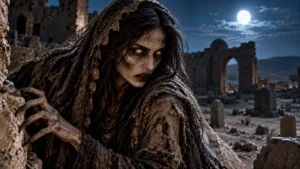
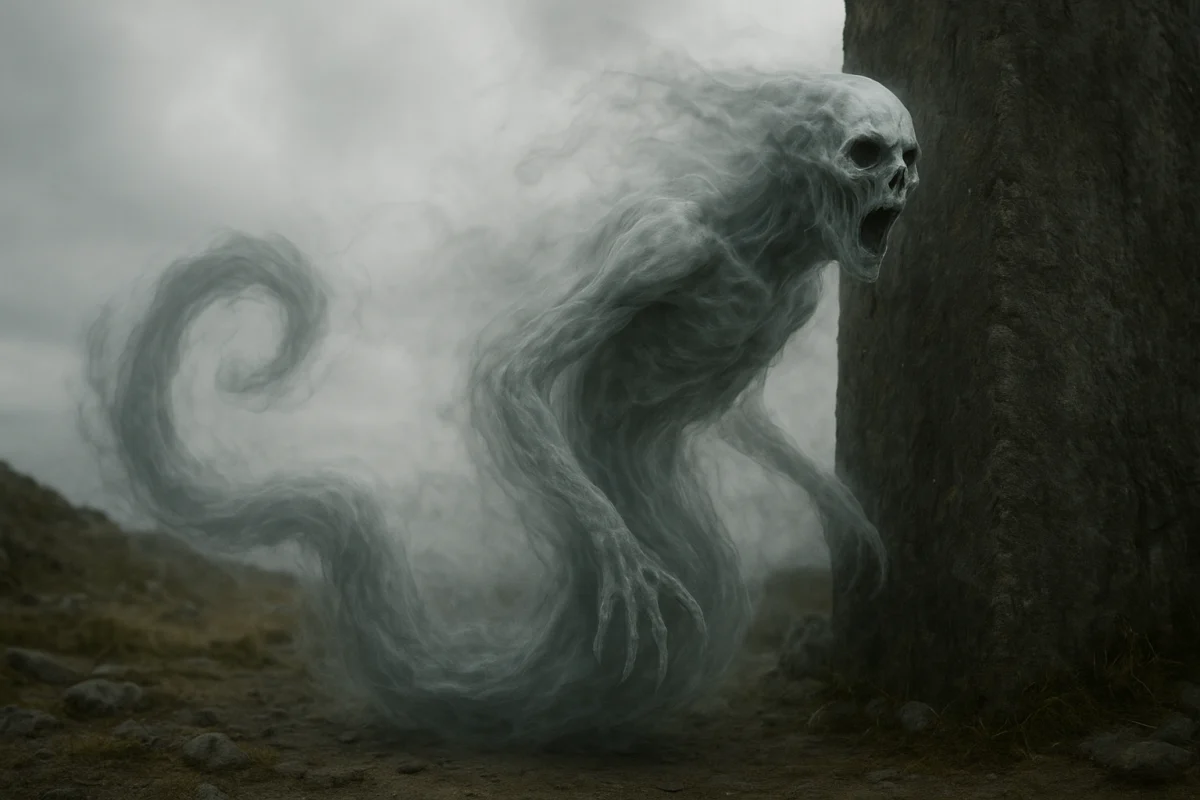
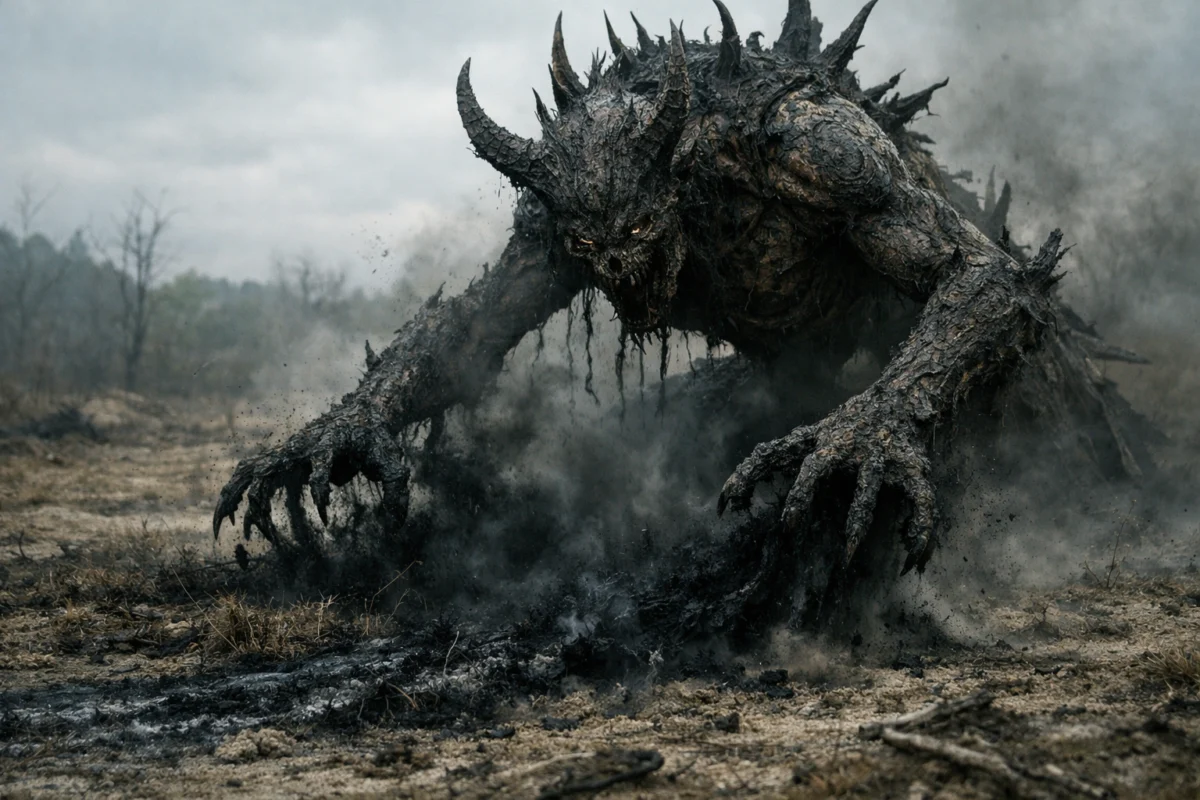
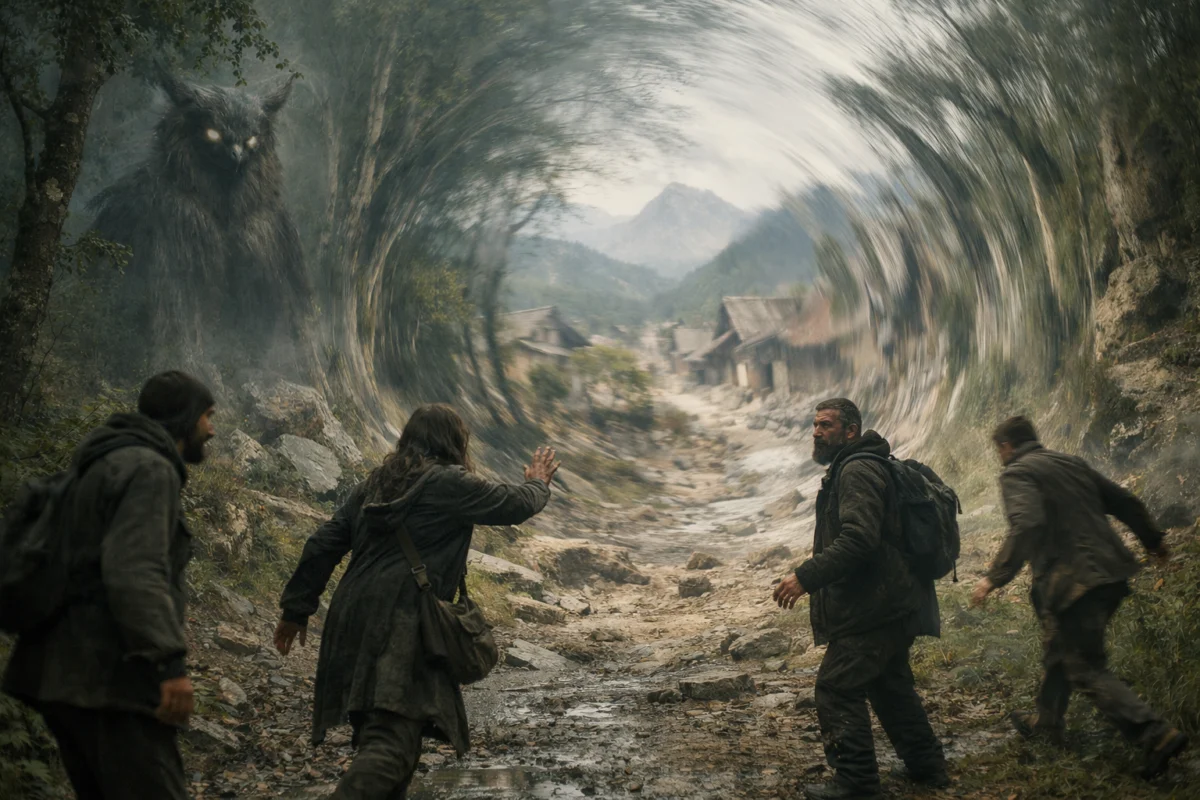
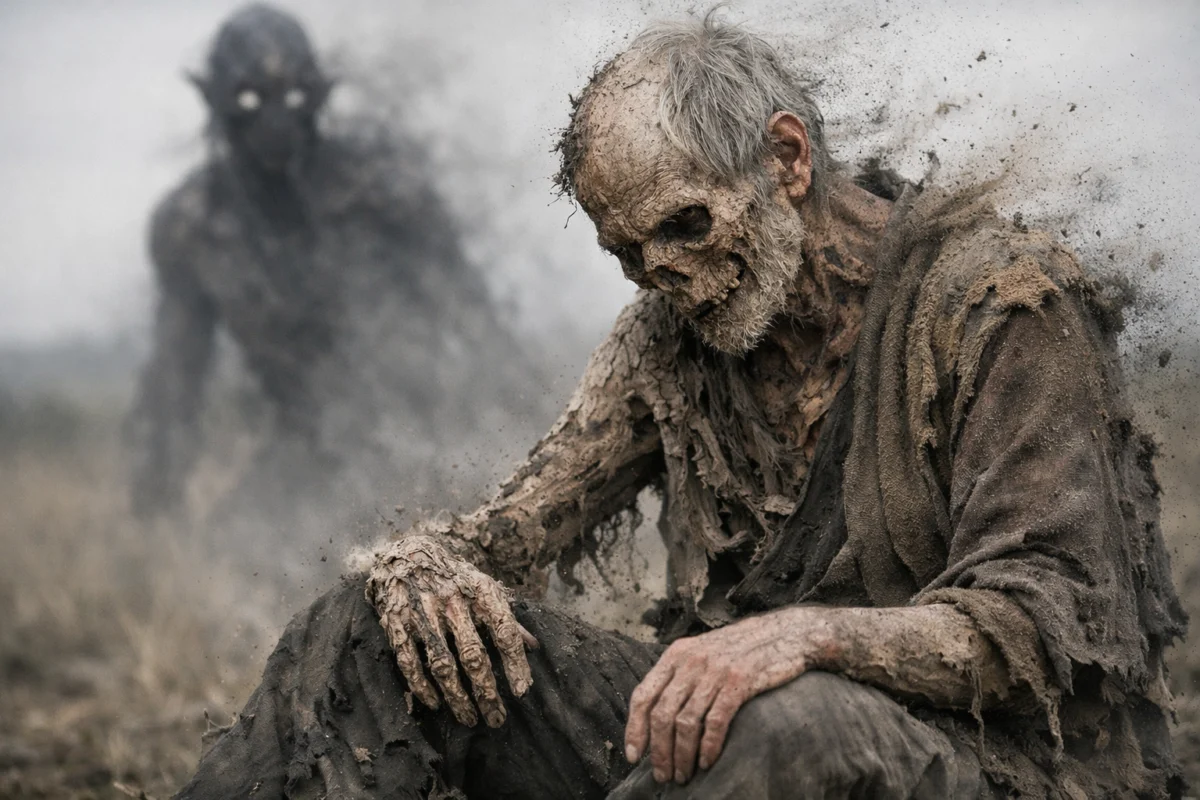
A rakshasa is a supernatural being belonging to a varied category in South Asian religious literature and storytelling, especially Sanskrit traditions. Often translated as “demon,” the term encompasses beings whose appearance, conduct, ancestry, and relationship with human society differ considerably between texts.
Early Vedic references associate related beings with dangers to sacrifice and ritual order. In the Rāmāyaṇa, rakshasas become named characters with families, political loyalties, extraordinary powers, and conflicting moral choices.
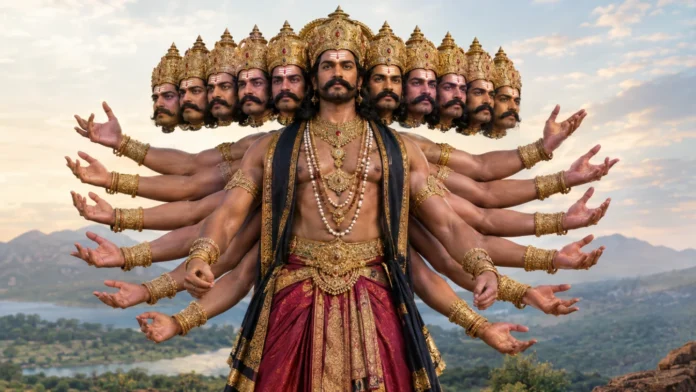
Rāvaṇa, the ruler of Laṅkā and abductor of Sītā, is their best-known representative.
Neither Rāvaṇa’s appearance nor his actions define every rakshasa. The epic category includes antagonists and figures who oppose wrongdoing within their own families.
Its members belong to a narrative world of kingdoms, forest hermitages, divine interventions, warfare, and obligations of kinship.
The name also appears outside supernatural narrative, notably as a technical designation for marriage by capture in Sanskrit legal literature. Understanding rakshasas therefore requires attention to context: Vedic ritual language, epic characterization, legal classification, and regional folklore preserve related but distinct uses.
History/Origin
The earliest evidence belongs to Vedic religious language rather than to a single surviving origin story. Ṛgveda 10.87 invokes Agni against hostile beings designated by the related term rakṣas.
Its setting is protective and adversarial, concerned with overcoming dangerous powers through divine assistance.
That usage should not be treated as a complete description of the later epic rakshasa. A hostile presence in a ritual hymn and an extensively characterized epic ruler occupy different literary settings.
The continuity of vocabulary does not establish that every attribute remained unchanged.
The Rāmāyaṇa gives rakshasas a more elaborate place within its inhabited universe. They have genealogies, rulers, settlements, and relationships with other supernatural beings.
Their conflicts with ascetics and princes develop the older association with threatened ritual into sustained episodes of protection, violence, and retaliation.
An origin account in the Uttarakāṇḍa, the epic’s final book, connects the first rakshasas with beings created by Prajāpati to safeguard the waters. Their undertaking to protect becomes the explanation for their name.
This is a mythic account of beginnings, not a historical reconstruction.
The placement of that account matters. The Rāmāyaṇa developed through a long textual history, and its concluding book is generally regarded as belonging to a later compositional layer.
Its genealogy should therefore be identified as a particular epic explanation rather than the original meaning behind every Vedic occurrence.
Regional storytelling supplies another kind of evidence. The 1909 collection Folklore of the Santal Parganas includes “The Killing of the Rakhas.”
Recorded through collection and translation, it documents a Santali narrative setting rather than simply reproducing the Sanskrit epic category unchanged.
Name Meaning
The conventional English spelling “rakshasa” represents Sanskrit rākṣasa. The feminine form is rākṣasī, commonly written “rakshasi.” These are category terms rather than the personal name of one monster, and their application depends on the grammatical and narrative setting in which they occur.
A familiar mythological explanation connects the name with the Sanskrit root rakṣ, “to protect” or “guard.” In the Uttarakāṇḍa’s creation narrative, the beings’ promise to protect the waters explains their designation.
This is an internal explanation supplied by the story, not an independently demonstrated linguistic history.
“Demon” is a useful shorthand in many passages, but it can suggest a more uniform moral or theological identity than the narratives support. “Ogre” emphasizes the threatening, sometimes human-eating figure of particular stories, while fitting other rakshasas poorly.
Neither English equivalent works universally.
In the Manusmṛti, rākṣasa names one of eight classified forms of marriage, involving forcible seizure of a woman. Here it is a legal designation, not a statement that the participants are supernatural beings.
Its later political interpretations form a separate history from epic monster narratives.
Appearance
Rakshasas have no single obligatory anatomy. Epic descriptions attach extraordinary features to particular individuals, while other scenes depend on disguise or transformed appearance.
The safest starting point is therefore the named character and episode, not a composite assembled from every monstrous detail in the tradition.
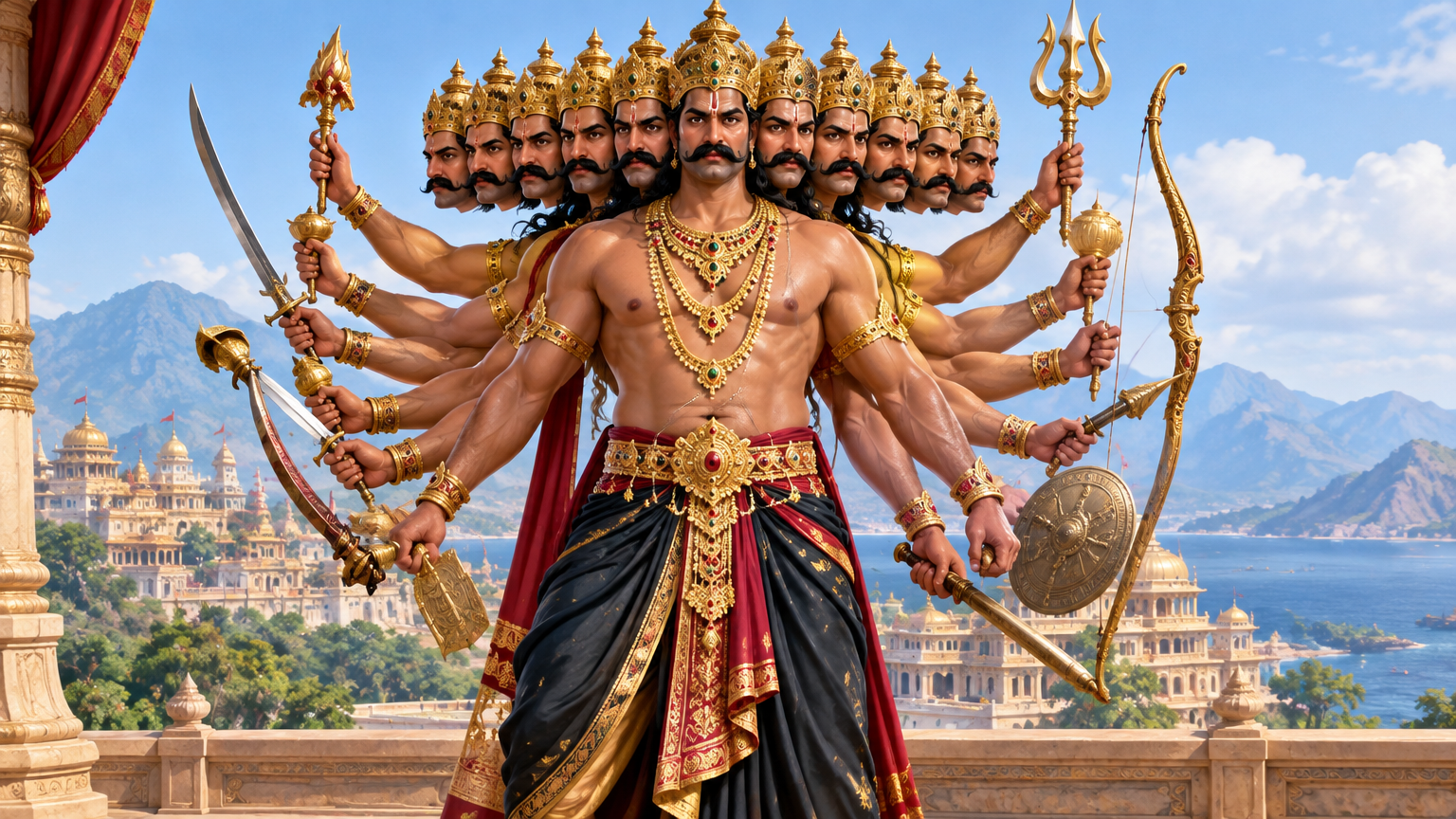
Rāvaṇa’s ten heads and twenty arms provide the most recognizable example of exceptional bodily form. These features belong to his individual representation, including the historical English translation of the Rāmāyaṇa supplied in the source record.
They do not establish that other rakshasas possess multiple heads or limbs.
Disguise is equally important to the epic’s visual language. When approaching Sītā before abducting her, Rāvaṇa assumes the appearance of an ascetic.
The encounter turns on the difference between an apparently respectable visitor and his concealed purpose, rather than on an immediately recognizable monstrous body.
Mārīca’s transformation into a remarkable golden deer provides another character-specific example. His attractive animal appearance draws attention and helps separate Sītā from her protectors.
The episode makes supernatural appearance a means of deception; it does not identify deer form as a normal rakshasa characteristic.
These contrasts explain why a single portrait cannot adequately represent the category. A many-headed ruler and an enchanting animal disguise serve different narrative purposes.
Appearance can advertise overwhelming power or conceal danger beneath beauty and familiarity, with the surrounding episode determining how the body should be understood.
Background Story
The rakshasa’s background lies partly in the protection of ordered religious activity against disruptive forces. Vedic hostility toward the rakṣas and later epic attacks on sacrifices share this broad concern, although they belong to different textual worlds and should not be treated as identical representations.
In the Rāmāyaṇa, Mārīca and Suvāhu threaten Viśvāmitra’s sacrifice, bringing the young Rāma into the role of armed protector. The episode links ascetic practice with royal responsibility: religious specialists undertake the rite, while a prince supplies the force needed to defend it.
The epic also gives rakshasas a place within prestigious genealogies. Rāvaṇa belongs to the line of the sage Pulastya, complicating any simple opposition between sacred ancestry and demonic identity.
Descent alone does not settle moral worth; conduct, allegiance, and the use of power remain decisive.
Kinship creates further tension within the category. Rāvaṇa’s brother Vibhīṣaṇa opposes his refusal to return Sītā and eventually joins Rāma.
Their disagreement prevents the conflict from becoming merely a contest between uniformly virtuous humans and uniformly wicked rakshasas: members of the same family make different ethical choices.
Rāvaṇa’s seizure of Sītā brings the category into a narrative about sovereignty, coercion, and obligations toward others. The legal expression “rākṣasa marriage” also concerns forcible capture, but it belongs to a distinct classificatory framework.
The shared association with violence should not erase the difference between legal prescription and epic action.
Collected Santali storytelling adds a regional setting beyond these Sanskrit frameworks. “The Killing of the Rakhas” shows the figure participating in another narrative repertoire.
Its presence supports a history of adaptation and circulation, without proving that all communities understood the creature through the same genealogy, appearance, or religious concerns.
Famous Folklore Stories
Rāma Defends Viśvāmitra’s Sacrifice
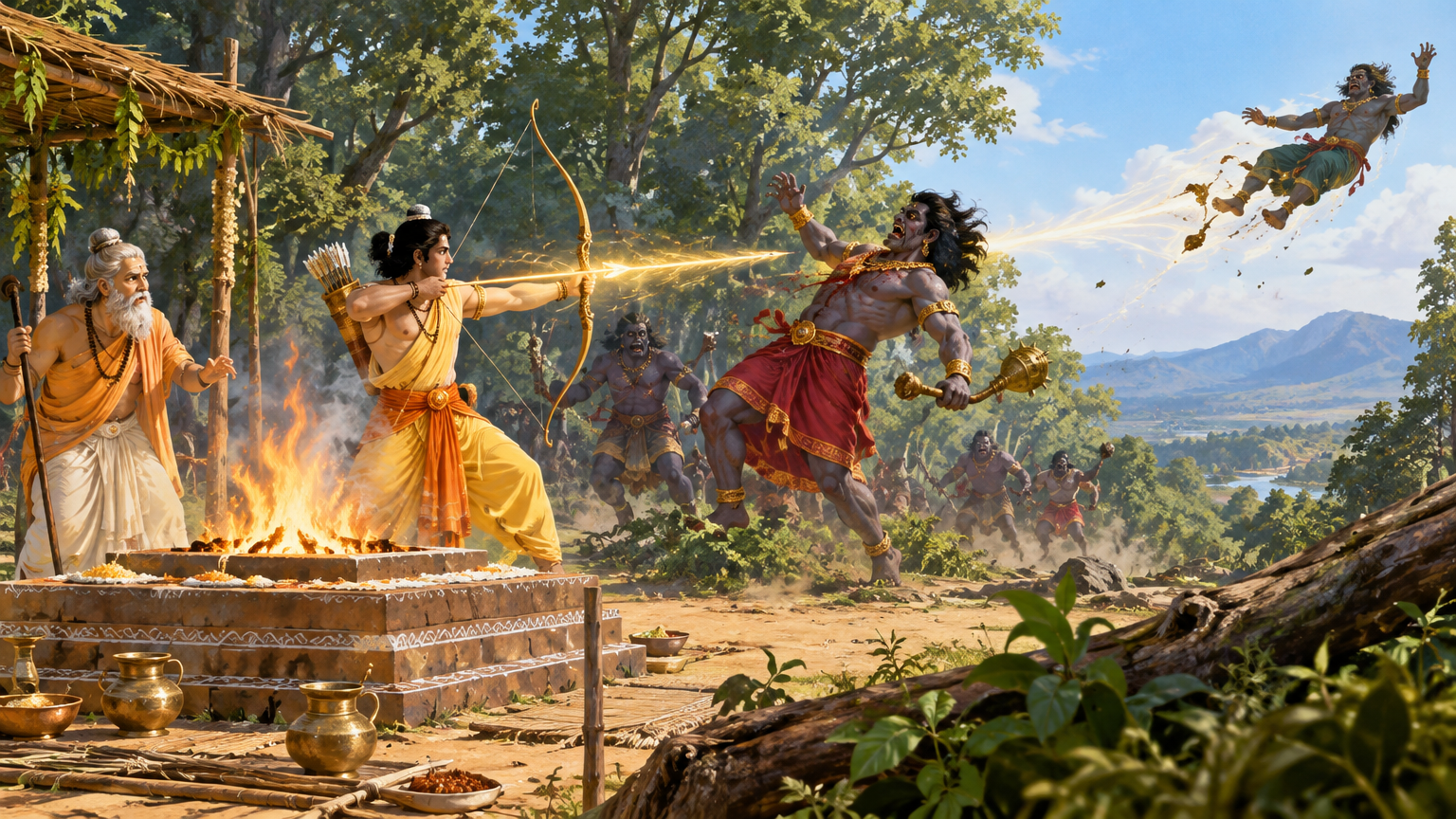
In the Rāmāyaṇa, the sage Viśvāmitra seeks Rāma’s protection for a sacrifice threatened by rākṣasas. The young prince accompanies him and confronts the attackers, including Mārīca and Suvāhu.
Defending the rite places Rāma’s martial strength in the service of sacred activity.
Rāma kills Suvāhu but sends Mārīca far away with a supernatural weapon. Mārīca survives and returns later in the epic, linking this early encounter to the abduction of Sītā.
These different outcomes concern particular opponents, not a shared vulnerability of all rākṣasas.
Rāvaṇa’s Abduction of Sītā
Mārīca later assumes the appearance of a remarkable golden deer. When Sītā asks Rāma to pursue it, the deception draws him away from their dwelling.
Rāvaṇa then arrives disguised as an ascetic, exploiting the appearance of a religious visitor to approach Sītā.
Rāvaṇa reveals his intentions and abducts her, setting the struggle for her rescue in motion. The two disguises work differently: the deer attracts attention, while the ascetic’s appearance conceals a threat.
The episode links supernatural deception to coercion, kinship, and royal conflict.
The Killing of the Rakhas
In “The Killing of the Rakhas,” tale XCV of Cecil Henry Bompas’s Folklore of the Santal Parganas (1909), a man-eating rakhas devastates a kingdom. Its ruler offers his daughter’s hand and half his kingdom to anyone able to destroy the creature.
A mischievous young man named Jhalka boasts that he could kill the rakhas in ten minutes, but he has spoken in jest. The village headman reports his promise to the ruler, who insists that he carry it out despite Jhalka’s protests.
Taking a battle axe, two mirrors, and a box, Jhalka hides in a banyan tree beside the river ford where the creature hunts. When the rakhas appears at dawn, Jhalka pretends that his trembling comes from rage rather than fear.
Jhalka claims that he has already captured other rakhas creatures inside his box. After securing a promise of safety, he displays the mirrors as supposed proof.
The rakhas becomes fascinated by its reflections and repeatedly opens its mouth to examine the apparent rivals.
While the creature remains distracted, Jhalka strikes it down with his axe. He takes its ears, tongue, and toes as evidence, and the king rewards him as promised.
This Santali tale centers on a frightened trickster’s ingenuity, not on the epic genealogy of Rāvaṇa.
Cultural Impact
The Rāmāyaṇa’s rakshasa characters entered public performance as well as literature. UNESCO documents Ramlila, a community theatrical tradition that often dramatizes Rāma’s struggle with Rāvaṇa through dialogue, songs, processions, masks, costumes, and handmade effigies.
These performances give Rāvaṇa a recognizable stage presence and make his confrontation with Rāma a shared event involving performers, artisans, and audiences. Their principal narrative basis is often Tulsidas’s Rāmcharitmānas, rather than a direct staging of the Sanskrit epic.
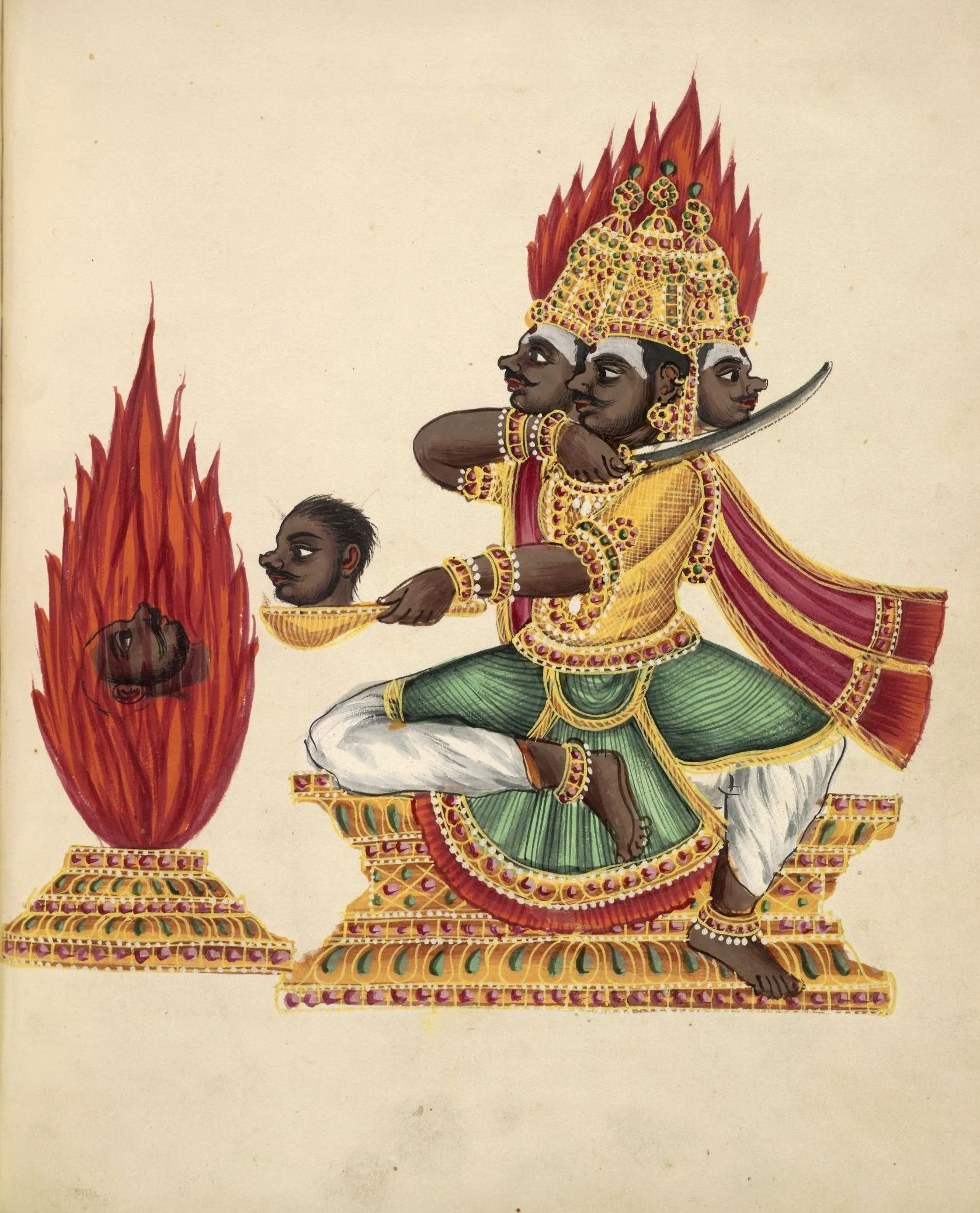
Visual art preserves different regional interpretations. An approximately 1830 gouache painting from Tiruchirappalli, now associated with the British Museum’s collections, shows the three-headed rakshasa Trishiras beside a sacrificial fire.
Its local setting and unusual iconography demonstrate artistic reception beyond Rāvaṇa’s familiar ten-headed form.
Similar Beasts
Aeshma

Aeshma is a Zoroastrian demon associated with wrath, violence, and the disruption of ritual. His opposition to the protective figure Sraosha belongs to a specifically Zoroastrian religious framework.
The strongest comparison is functional: both Aeshma and certain rākṣasa representations threaten sacred order. This resemblance does not establish that their identities or traditions are interchangeable.
Shedim

Shedim are supernatural beings in Jewish tradition whose behavior can be malevolent or protective. They form a category of beings rather than the biography of one uniquely named monster.
They offer a useful comparison for the variability of rākṣasa characterization. Neither category is adequately explained by assuming that every member has identical motives or functions.
Div-e Sepid

Div-e Sepid, the White Demon of Persian epic tradition, is a formidable opponent in the Shahnameh. His narrative role emphasizes supernatural opposition and the testing of heroic strength.
He resembles named epic rākṣasa antagonists through his role in heroic conflict. Unlike rākṣasa, however, Div-e Sepid names an individual rather than a broad category.
Religion/Ritual
Ṛgveda 10.87 invokes Agni against a rakṣas, placing the being within religious language concerned with danger and protection. This is direct evidence of a ritual-textual setting, but it should not automatically be read through the personalities and genealogies of the later epics.
The attack on Viśvāmitra’s sacrifice develops a comparable concern in narrative form. Sacred work requires protection against hostile interference, and Rāma supplies that protection.
The episode represents ritual vulnerability within the epic; it is not, by itself, a manual for ceremonies directed against rākṣasas.
A contrasting association appears in the Uttarakāṇḍa’s origin account, where early rākṣasas are connected with guarding waters. Protection and disruption therefore coexist within the textual record.
These passages do not establish a single, uniform system of offerings, taboos, or worship devoted to all rākṣasas.
Scientific or Rational Explanations
The most useful rational approach is historical and textual rather than zoological. The evidence concerns religious language, epic characterization, legal terminology, and collected tales.
These materials document human representations of supernatural beings, not observations from which a biological species can be reconstructed.
A literary interpretation can examine how particular rākṣasas make threats to order narratively visible. The interruption of sacrifice and the abduction of Sītā concern different kinds of violation.
Their shared category does not erase the distinct religious, ethical, and political problems explored in each episode.
The legal evidence requires a different method. A classification involving marriage by force belongs to the history of law and its interpretation.
Reading it as proof of supernatural attackers would confuse a technical term with a creature account and obscure the human violence under discussion.
Translation also shapes interpretation. An English word such as “demon” offers a convenient approximation, but can suggest assumptions that do not fit every Sanskrit context.
Comparing historical translations with the Sanskrit critical-edition text helps distinguish the underlying narrative from a translator’s preferred religious vocabulary.
Collected folklore introduces another evidentiary filter: an oral performance becomes a published text through selection, transcription, and translation. The Santali tale remains valuable evidence, but its printed form cannot represent every telling.
Differences between it and epic narratives need not be errors requiring reconciliation.
No single explanation should replace these separate histories with a universal origin theory. The supplied evidence does not demonstrate that rākṣasas arose from one animal, illness, or historical population.
The better-supported conclusion is that different communities and texts developed the category for different purposes.
Modern Cultural References
Film, animation, tabletop gaming, and audio entertainment transform selected rakshasa characteristics into new fictional roles. These adaptations reflect their creators’ settings and rules, rather than defining every rākṣasa in South Asian religious tradition.
Horror in the Heights, Kolchak: The Night Stalker (1974)
Reporter Carl Kolchak investigates deaths attributed to a shape-changing rakshasa.
The American horror episode turns the creature’s ability to assume trusted appearances into a source of fear and suspense.
Apple TV episode
Rakshasa, Dungeons & Dragons Monster Manual (2025)
The tabletop role-playing game reimagines the rakshasa as a formidable fiend with disguises, magical resistance, and curses.
Its game-specific powers and infernal setting differ from the category’s varied Sanskrit portrayals.
D&D Beyond creature entry
Cryptid vs. Cryptid, The Secret Saturdays (2009)
In this animated adventure episode, Fiskerton encounters a rakshasa in an underground cryptid fighting operation.
The series adapts the name into a modern creature-combat storyline, rather than retelling a traditional epic episode.
Apple TV episode
Jormungandr v. Rakshasa, Monster V. Monster (2026)
This audio entertainment episode stages a speculative contest between a rakshasa and the Norse world-serpent Jörmungandr.
Its imaginary confrontation belongs to contemporary monster-versus-monster storytelling, not a recorded folklore tradition.
Official episode page
Rakshasa, Odd Compass Studio video game (forthcoming)
An announced first-person role-playing game set in modern India invokes mythological horrors and hidden supernatural forces.
Its Steam listing still marks the game as coming soon, so it should not be described as released.
Official Steam listing
Conclusion
The rakshasa is best understood as a varied category within South Asian religious and literary traditions, not a single monster with a fixed anatomy or temperament. Vedic threats to ritual, the named figures of the Rāmāyaṇa, and regional collected tales belong to related but distinguishable contexts.
Their differences are essential to understanding the tradition. Even a celebrated description such as Rāvaṇa’s many heads characterizes a particular figure rather than establishing the appearance of every rakshasa across texts and periods.
Across these contexts, rakshasas give narrative form to threats against ritual, personal safety, and social order, while their individual stories resist reduction to one symbolic formula. The word’s separate legal application further shows why context matters more than a convenient English label such as “demon.”
Modern horror, animation, podcasts, and games continue to reshape this inheritance. Reading those adaptations alongside epic texts and regional folklore preserves both the category’s enduring imaginative force and the distinctions that make its history intelligible.
Further Reading
The Rāmāyaṇa, Volume Two, Project Gutenberg
Historical English translation with descriptions of Rāvaṇa and other figures; useful alongside, rather than instead of, the Sanskrit text.
Project Gutenberg
Folklore of the Santal Parganas by Cecil Henry Bompas, 1909, Project Gutenberg
Tale XCV, “The Killing of the Rakhas,” recounts Jhalka’s trick with two mirrors and his defeat of a man-eating creature.
Project Gutenberg, complete collection
Ramlila, the Traditional Performance of the Ramayana, UNESCO Intangible Cultural Heritage
Documents communal performances, Rāvaṇa-related dramatic scenes, masks, costumes, and the making of effigies in Ramlila traditions.
UNESCO
Trishiras before a Sacrificial Fire, Trichinopoly Company School, c. 1830, Wikimedia Commons/British Museum record
A historical gouache of the three-headed rakshasa, providing a specific nineteenth-century example of regional religious illustration.
Wikimedia Commons artwork record
Women, Violence, Sovereignty: “Rakshasa” Marriage by Capture in Modern Indian Political Thought, Modern Intellectual History, Cambridge University Press
Peer-reviewed historical study of the legal designation for marriage by capture and its later political interpretations.
The Rāmāyaṇa: Electronic Text of the Critical Edition, Indology.info
Searchable Sanskrit critical-edition resource for checking names, textual forms, and the context of epic episodes.
Indology.info
Uttara Kāṇḍa, Sarga 4: The First Rakshasas, Vedic Kathas
Sanskrit text and transliteration of a specific epic origin account; use cautiously where the translation remains incomplete.
Vedic Kathas
S05E34: Rakshasas, MonsterTalk with Eric Zsebenyi, 2026
An explanatory audio discussion of rakshasa traditions and their popular adaptations, rather than a fictional appearance.
MonsterTalk episode