Divine Protection Ward – an Overview
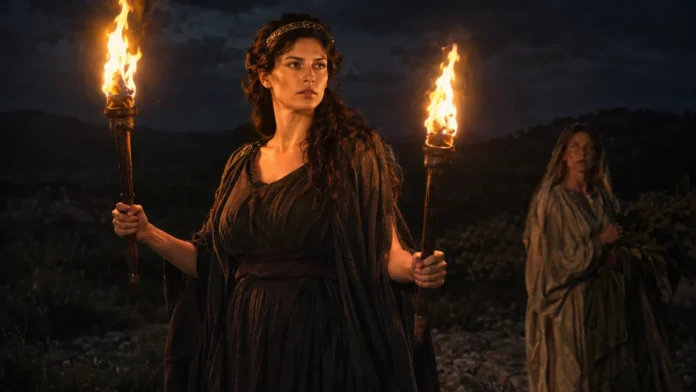
Divine Protection Ward is a comparative label for traditions in which divine agency or sacred status protects a person, place, community, or boundary from specified dangers. It is not a historical universal category.
The label identifies protection as the central function, rather than treating every beneficial supernatural event as equivalent. This distinction depends on historical context, since traditions described protective powers through different concepts.
Ancient communities did not share one technical term corresponding exactly to this modern taxonomy. Classification therefore requires evidence that protection shaped an entity’s recognized role, rather than relying on resemblance alone.
A ward differs analytically from healing, victory, fertility, or general blessing when sources associate it specifically with preventing intrusion, injury, pollution, or disruption. These functions could overlap without becoming interchangeable.
Manifestation and Constraints
How Divine Protection Ward Is Expressed
Historical accounts commonly make protection legible through an outcome: a threatened person survives, a boundary remains secure, or harmful forces fail to cross a protected threshold. Such outcomes establish function, not mechanism.
Images also communicate protective status in some settings. Mesopotamian palace figures placed at entrances, for example, marked and guarded architectural thresholds; their placement connects protective meaning to a specific built environment.
In Egyptian royal representation, the uraeus cobra on a ruler’s crown signified protective sovereignty. Its position makes defense part of kingship’s public image, rather than evidence for a general animal guardian category.
Sources do not always distinguish literal divine intervention from symbolic protection. A historical description may treat an image, divine presence, or political authority as protective without explaining how its effect occurred.
Limits and Conditions
Protective status often applies to a defined person, institution, territory, or boundary. It should not be expanded into universal immunity unless a particular source explicitly supports that broader interpretation.
Divine protection may be conditional upon legitimate authority or proper relations with a deity. Such conditions reflect a tradition’s own moral and political framework, not a uniform rule shared across cultures.
Protection can also be temporary or context-bound in narrative. A figure guarded in one episode may remain vulnerable elsewhere; the evidence does not warrant turning local security into an absolute attribute.
No verified sources describe a single cross-cultural procedure governing this function. Claims about consistent activation, prescribed actions, or universal eligibility would impose a system unsupported by the varied historical evidence.
Mythological Role and Meaning
Symbolic and Cultural Significance
Protective imagery could make political authority appear divinely supported. In ancient Mesopotamian architecture, guardian figures at palace entrances linked royal space with supernatural defense, reinforcing the boundary’s institutional significance.
In Egyptian kingship, the uraeus conveyed a more specifically royal form of defense. Its association with the ruler differs from architectural guardianship because protection was represented through the sovereign’s own insignia.
Protective traditions could also express communal dependence on divine order. This interpretation is strongest where historical evidence connects a deity or sacred place with a named community or territory.
Psychological meanings are harder to establish directly. Modern readers may interpret protective images as reassurance, but surviving ancient evidence rarely permits confident claims about individual emotional experience.
Divine Protection Ward in Myth and Folklore
In narrative traditions, protection can mark a boundary between authorized and dangerous spaces. Its taxonomic importance lies in establishing who or what receives defense, not merely in producing a supernatural event.
Protective figures at entrances show how guardianship could organize access to elite spaces. Their placement distinguishes a threshold function from combat, healing, or other supernatural roles that might appear in stories.
Mythic narratives may associate divine favor with rulers or communities, making protection part of a claim to legitimate authority. The interpretation must remain tied to each text’s historical and cultural setting.
Not every miraculous escape qualifies as a ward. Without evidence that defense is a continuing or defining role, the event is better classified as a particular intervention or narrative outcome.
Beasts with Divine Protection Ward
Lamassu
In ancient Assyria, colossal human-headed winged bulls or lions guarded palace entrances and were associated with protective supernatural beings. They belong here because threshold guardianship defined their architectural role, not simply their composite appearance.
Uraeus
The uraeus, represented as an erect cobra on Egyptian royal crowns, carried protective significance connected with kingship. Without that defensive role, it would be misclassified as merely a serpent image rather than royal protective insignia.
Chinese Guardian Lions
Stone lions placed before buildings in China acquired protective associations in architectural and religious settings. Their classification depends on this guarding function; treating them only as zoological representations would omit their culturally established threshold role.
These examples are not identical creature types. The lamassu is a monumental guardian figure, the uraeus is royal serpent imagery, and Chinese guardian lions are sculptural protectors; their shared category is functional.
Cultural Interpretations and Regional Emphasis
Mesopotamian palace guardianship focused on securing royal architecture and its entrances. Egyptian uraeus symbolism instead attached defense to the sovereign, demonstrating a divergence between protected space and protected ruler.
Chinese guardian lions emphasize the protection of buildings through paired sculptural presence. This differs from the uraeus, whose royal placement identifies kingship rather than a general architectural entrance as its primary context.
These contrasts caution against treating protective beings as manifestations of one shared religion. Similar functions can arise within distinct cosmologies, political structures, and visual conventions without proving historical connection.
Regional meanings also vary within broad cultural labels. The evidence for a specific object, period, or site should take precedence over generalized claims about what an entire civilization believed.
Similar or Related Mythological Functions
Apotropaic protection is closely related because it concerns averting harm through objects, images, or signs. It remains analytically narrower when it describes a protective purpose rather than a divine agent’s role.
Guardianship overlaps with the ward when a being protects a place or boundary. It differs where the guardian’s defining narrative function concerns custody, rather than supernatural defense itself.
Divine favor can include protection, but it may also concern success, status, or prosperity. Classifying favor as a ward requires evidence that defense against danger is central.
Healing addresses injury or illness after their onset, whereas protective function concerns prevention or defense. Historical traditions may connect both, but neither category should absorb the other.
Historical Interpretation and Evidence Limits
Divine Protection Ward is a modern comparative taxonomy, not an attested single ancient doctrine. Its usefulness depends on transparent comparison and careful separation of local terms, images, and narrative functions.
Historical believers may have understood protective powers literally, symbolically, or through interpretations that modern categories cannot recover. Evidence rarely allows a confident choice among these possibilities for every case.
Surviving monuments and texts disproportionately represent rulers, institutions, and literate groups. Domestic or popular protective beliefs may be less visible, making broad conclusions about ordinary practice uncertain.
Images alone do not always establish the precise beliefs attached to them. Placement, inscriptions, archaeological context, and contemporary descriptions can strengthen interpretation, but gaps may remain unresolved.
No verified sources describe a universal doctrine called Divine Protection Ward across the traditions considered here. The term should therefore remain an analytical convenience, not a claim of historical unity.