
Classical
Relevant Beasts

The mythological Satyr, a creature from Greek mythology known for its human-goat hybrid form and association with Dionysian revelry...
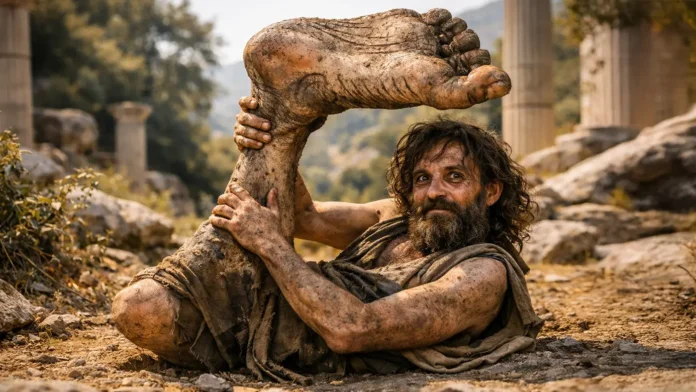
The Monopod (Sciapod) is a legendary one-legged humanoid from Greek and Roman texts, known for using its giant foot...

Lamia from Greek mythology, known for her tragic transformation into a child-eating creature, often depicted with a serpent-like body.
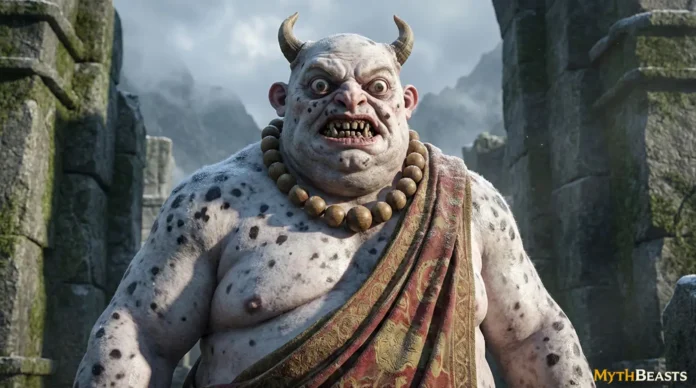
Div-e Sepid, the White Demon in Persian mythology, symbolizes chaos and evil. Known from the epic Shahnameh, it challenges...
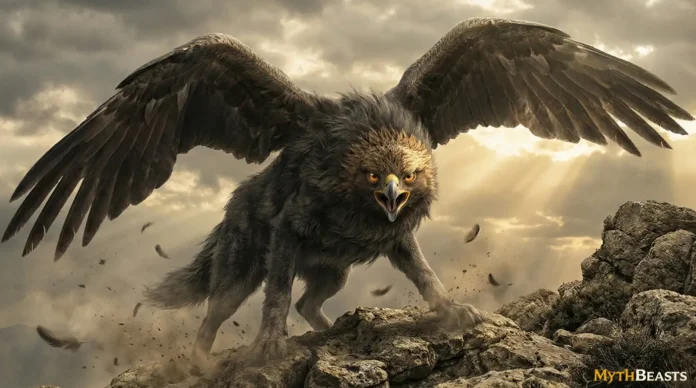
A mighty guardian bird beneath the sacred tree on Mount Alborz that gathers seeds, spreads them across the earth,...

A majestic hybrid of lion and eagle, the Griffin is a legendary guardian from Classical Greece, known for its...
Sub Categories
Aksumite Empire
100 CE - 940 CE. The Aksumite Empire, located in East Africa, was a trading empire connecting the Roman Empire and India. Known for its monumental stelae and early adoption of Christianity, Aksum became a major cultural and economic center.
Byzantine Empire
The Byzantine Empire represents a historical era rich in cultural and religious development, spanning from the late Roman Empire to the fall of Constantinople. Its influence shaped artistic, architectural, and theological expressions.In mythology, the Byzantine Empire symbolizes a period of transition and continuity, integrating diverse traditions. It frames mythological thinking by blending classical heritage with emerging Christian narratives and iconography.
Celtic Tribes
The historical era of Celtic Tribes represents a period marked by tribal societies in ancient Europe, characterized by distinct cultural practices and social structures influencing their mythologies. This era's mythology often emphasizes the connection between nature and the divine, reflecting the tribes' relationship with their environment.In Celtic Tribes' mythological thinking, symbolic meanings often derive from natural elements and cycles, framing a worldview where deities and spirits influence daily life. These belief systems highlight themes of transformation, heroism, and the sacredness of the land, shaping cultural narratives and rituals.
Classical Antiquity
Classical Antiquity refers to a historical era characterized by the flourishing of art, philosophy, and literature. It served as a backdrop for developing complex mythological narratives and belief systems.In mythology, Classical Antiquity symbolizes a period of intellectual and cultural growth. It frames mythological thinking by integrating human experience with the divine, shaping foundational mythological structures.
Classical Greece
500 BCE - 323 BCE. Classical Greece was marked by the development of democracy, philosophy, and the arts, particularly in city-states like Athens and Sparta. Greek mythology flourished during this time, with gods like Zeus, Athena, and Apollo being central to the culture.Mythological beasts such as the Minotaur, Hydra, and Cerberus played important roles in Greek heroic myths, symbolizing the eternal struggle between good and evil. This period also laid the foundation for Western civilization through philosophy, art, and governance.
Classical Mesoamerica
Classical Mesoamerica refers to a historical period marked by advanced civilizations and cultural development, influencing architectural, artistic, and intellectual achievements. It served as a backdrop for rich mythological narratives.The era shaped mythological thinking with complex pantheons and cosmologies, reflecting societal values and natural phenomena. Classical Mesoamerica's myths often explored themes of creation, transformation, and divine influence.
Classical Rome
Classical Rome represents a historical era marked by significant cultural, political, and military achievements. It symbolizes a period of expansion and consolidation, influencing philosophical and mythological thought.In mythology, Classical Rome frames belief systems through its emphasis on order, hierarchy, and divine sanction. This era's myths often reflect Roman ideals, impacting later cultural narratives and interpretations.
Han Dynasty
The Han Dynasty represents a historical era marked by significant developments in governance, culture, and technology. This period often symbolizes stability and prosperity in mythological narratives, influencing societal ideals.In mythology, the Han Dynasty frames belief systems by emphasizing harmony and order. These themes often underpin mythological thinking, shaping stories that reflect the era's values and aspirations.
Hellenistic
The Hellenistic period, following Alexander the Great's conquests, was marked by cultural fusion and expansion. It influenced mythological narratives by introducing diverse symbols, deities, and philosophical thought systems.In mythology, the Hellenistic era emphasized syncretism and multiplicity of gods, reflecting broader cultural exchanges. This period framed mythological thinking with a focus on cosmopolitan ideals and philosophical interpretations.
Kingdom of Funan
The Kingdom of Funan represents an ancient mythological time period often associated with prosperity and maritime trade. It symbolizes a flourishing civilization marked by complex social structures and cultural exchanges.In mythology, the Kingdom of Funan frames thinking through its emphasis on wealth and regional influence. It highlights themes of leadership and innovation, reflecting broader narratives of growth and transformation.
Maurya Empire
The Maurya Empire was a significant historical era in ancient India, marking a time of political unification and economic prosperity. It influenced mythological thinking by emphasizing themes of governance and morality.In mythology, the Maurya Empire symbolizes the balance between power and ethical rule. This era frames belief systems focusing on justice, leadership, and the interplay between human authority and divine principles.
Moche Civilization
The Moche Civilization thrived on the northern coast of Peru from around 100 to 700 CE. It is known for its advanced agricultural practices, impressive architectural achievements, and intricate ceramics.In mythology, the Moche Civilization reflects a complex belief system with deities, ritual ceremonies, and symbolic iconography. This era frames mythological thinking through its emphasis on duality, power, and transformation.
Parthian Empire
247 BCE - 224 CE. The Parthian Empire ruled over Persia and parts of the Middle East, serving as a major center for trade and cultural exchange. They were known for their cavalry and archery, which allowed them to resist Roman expansion.
Sassanian Empire
The Sassanian Empire, spanning from 224 to 651 CE, marked a significant historical era known for its influence on art, culture, and religion. It served as a bridge between ancient traditions and emerging medieval thought.In mythology, the Sassanian Empire symbolizes a period of transformation and synthesis, where diverse belief systems were integrated. This era framed mythological thinking, emphasizing cosmic dualities and the eternal struggle between order and chaos.
Scythians
700 BCE - 300 BCE. The Scythians were a nomadic people known for their skill in horseback archery. They inhabited the vast steppes of Central Asia and had a significant influence on the ancient world, leaving behind intricate gold artifacts and burial mounds.
Xiongnu Confederation
3rd Century BCE - 1st Century CE. The Xiongnu Confederation was a powerful nomadic state in Mongolia, rivaling the Han Dynasty. They were skilled horsemen and warriors, and their interactions with China influenced the construction of the Great Wall.
Zapotec Civilization
500 BCE - 1000 CE. The Zapotec civilization, based in present-day Mexico, is known for its writing system, monumental architecture, and advancements in agriculture. Monte Albán, their capital, was one of the earliest urban centers in Mesoamerica.