Mythical Reptile – Overview
Mythical Reptile is a comparative category for supernatural or culturally significant beings whose defining identity depends on reptilian form, especially serpentine bodies, scaled skin, or snake-like movement.
It is not a single creature or inherited universal belief. The category groups culturally distinct beings only where reptilian morphology is central to their documented mythological identity.
Such beings may guard places, threaten cosmic stability, embody water or fertility, or appear as divine agents. Their functions vary substantially, so shared anatomy does not imply shared meaning.
Defining Characteristics
Physical Form and Morphology
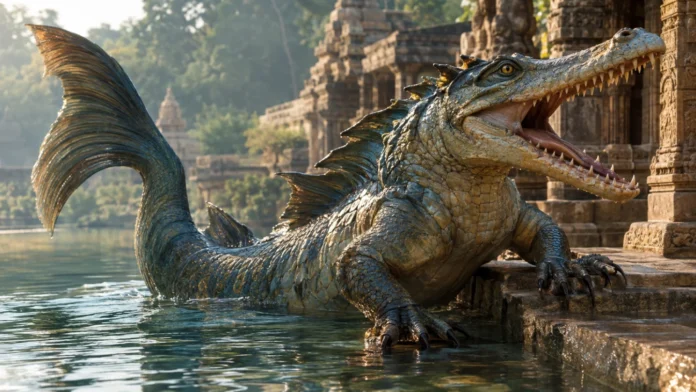
Serpentine shape is the most recurrent form, commonly represented through elongated bodies, scales, fangs, coils, or a capacity for movement without limbs in visual and textual traditions.
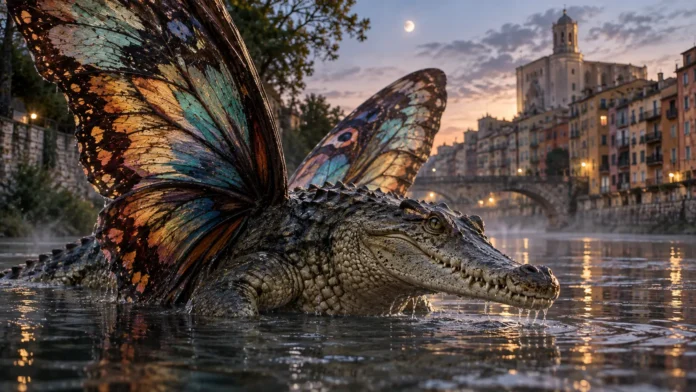
Some examples combine reptilian bodies with wings, horns, feathers, or other animal features. Such additions remain culturally specific and do not establish one standard anatomy for the category.
Ontological Nature
Mythical reptiles may be treated as divine beings, powerful animals, spirits, or hybrid presences. Their classification depends on each tradition’s account of agency and existence.
In some systems, they occupy boundaries between ordinary animal life and supernatural power. This liminality is not universal; particular sources may instead present them as gods or cosmic adversaries.
Their relationship to nature also differs. A serpent may personify a natural force in one context, whereas another reptilian being functions primarily as a named divine personality.
Mythological Role and Function
Place in Mythological Systems
Reptilian beings can connect human communities with cosmic or sacred domains when stories place them at thresholds, beneath the earth, in waters, or within accounts of creation.
Where a deity or cosmic order opposes a serpent, the conflict may articulate a tradition-specific account of order and disruption. This pattern cannot safely be assumed across cultures.
Perception and Meaning
Some traditions portray reptilian beings as dangerous powers requiring restraint or divine opposition. The association reflects particular narratives, not an inherent moral quality shared by reptiles.
Other traditions assign serpentine beings protective, regenerative, or auspicious significance. These meanings emerge from local religious and social frameworks, and should not be collapsed into a single symbolism.
Interpretation therefore requires attention to a being’s own names, relationships, and narrative setting. Reptilian appearance alone cannot establish whether it signifies protection, danger, fertility, or authority.
Distinction from Related Beast Types
Conceptual Boundaries
A mythical reptile is distinguished from an elemental being when its identity depends on a reptilian body rather than an element such as fire, water, or wind.
It differs from an undead entity when sources describe a living, divine, or supernatural reptilian presence rather than a dead human returned to activity.
Humanoid monsters belong elsewhere when human anatomy and social identity define them. Reptilian beings may be hybrid, but their defining classification remains bodily and zoological.
Common Sources of Confusion
Confusion arises because traditional names and translations do not always match modern zoological categories. A term rendered as “dragon” may cover distinct local beings.
Comparative analysis distinguishes examples by original terminology, physical description, narrative role, and historical context. Similar appearance is evidence for comparison, not proof of a shared origin.
Canonical Beasts Associated with This Beast Type
Nāga
Nāgas appear in South Asian Hindu, Buddhist, and Jain traditions as powerful serpent beings, sometimes represented with human features. Their serpentine identity makes reptilian form central to classification.
Apophis
Apophis, also called Apep, is an Egyptian serpent associated with opposition to the sun god’s nightly course. Its serpent body defines its role in Egyptian cosmological imagery.
Python
In Greek tradition, Python is a serpent associated with Delphi and Apollo’s establishment of authority there. Ancient accounts identify its reptilian form as essential to its mythic role.
These examples are well documented but do not represent a universal class recognized by their cultures. The category is a comparative tool, not a shared ancient taxonomy.
Historical Distribution and Cultural Context
Serpent and dragon-like beings occur in records from South Asia, the Mediterranean, East Asia, and ancient Egypt. Their appearances belong to distinct religious histories and literary settings.
Images and accounts survive across long periods, but evidence differs by region, medium, and preservation. A continuous, common tradition linking these examples has not been established.
Reptilian imagery appears in sacred art, cosmological narratives, and literary accounts. Its significance must be assessed locally because historical environments shaped differing religious interpretations.
Scholarly Interpretation and Uncertainty
Variation in Definitions
Some classifications emphasize anatomy, while others prioritize supernatural status or narrative function. These frameworks produce different boundaries, especially for hybrid beings and deified serpents.
Modern comparative categories can clarify recurring forms, but they should not be mistaken for indigenous labels. Historical communities may have classified beings through unrelated conceptual systems.
Limits of Available Evidence
Surviving evidence includes texts, images, and later retellings, whose dates and purposes vary. Some traditions are poorly documented, limiting confident claims about original meanings.
Translation can obscure distinctions among serpents, dragons, and other beings. No verified sources describe this for this context when a particular proposed association lacks specific documentation.
Scholarly interpretations remain strongest when tied to identifiable sources and contexts. Broad claims about universal serpent symbolism exceed what the varied historical record can securely establish.
Mythological Role Across Cultures
Reptilian beings recur partly because snakes and other reptiles are observable animals with distinctive movement and habitats. Mythic interpretation transforms those features within particular cultural frameworks.
Comparative study reveals how communities use reptilian bodies to conceptualize danger, protection, divine power, or cosmic conflict. The meanings differ, making divergence as important as resemblance.
Recognizing this category helps organize evidence without suggesting a single origin or universal doctrine. Its value lies in comparison that preserves each tradition’s specific history.