Introduction
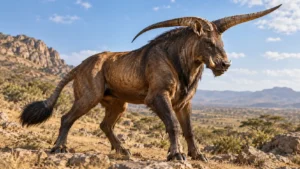
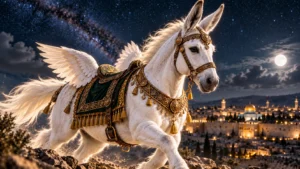
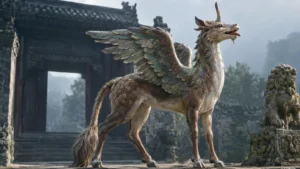
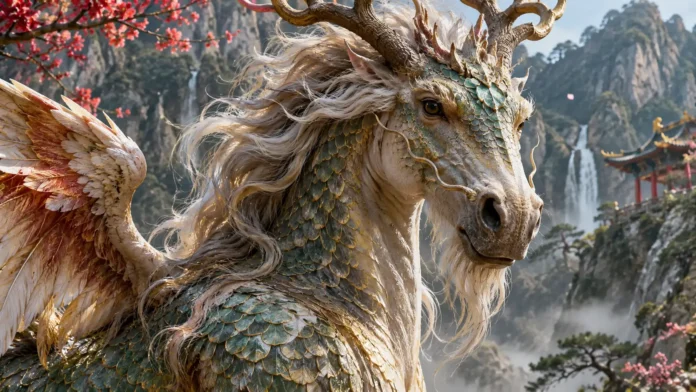
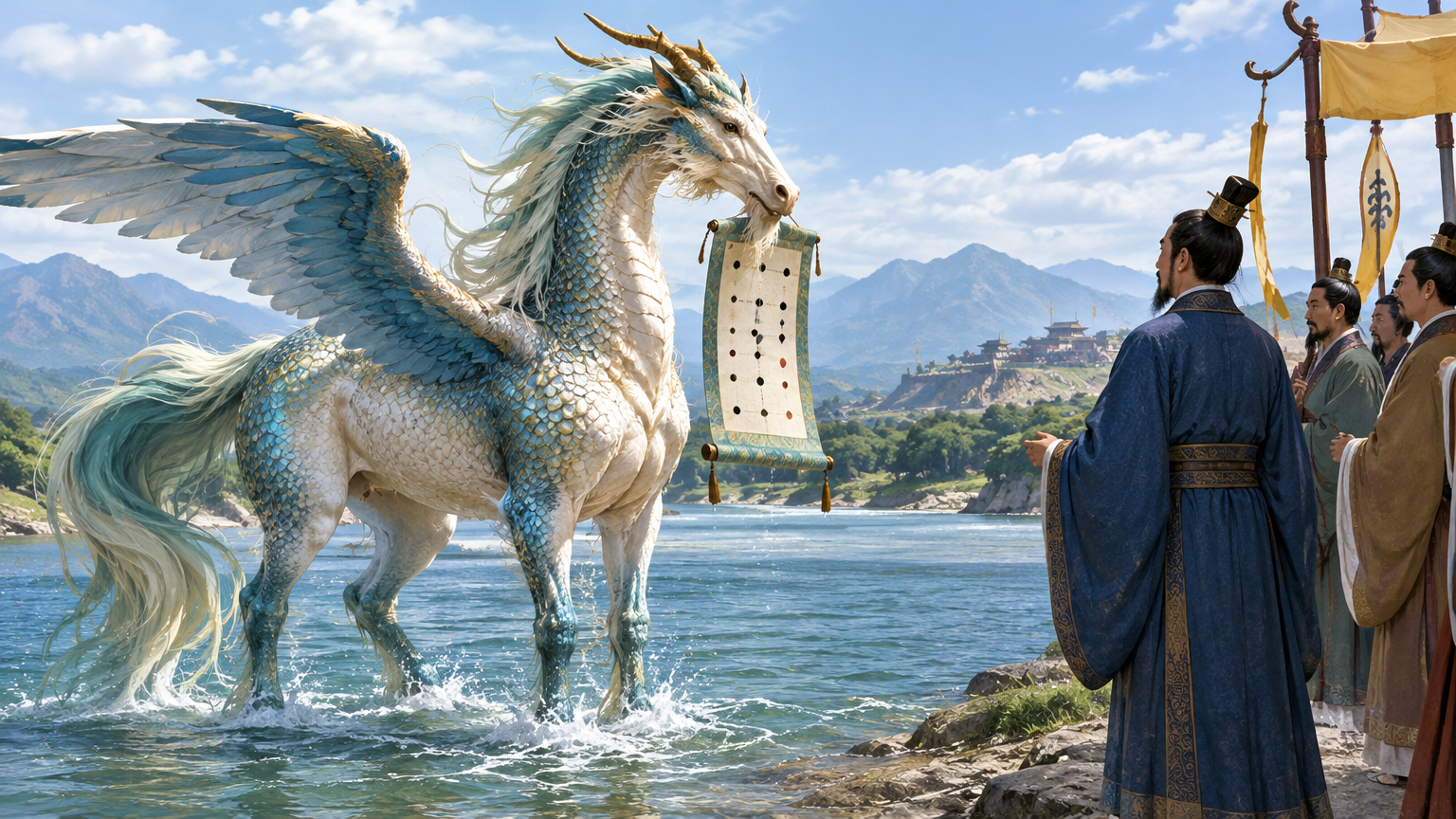
Longma is the dragon-horse of Chinese mythological tradition, best known for carrying the Hetu, or Yellow River Chart. An explicit transmitted description gives it a horse-shaped body, dragon scales, wings, and the ability to walk on water without sinking.
Its importance lies less in combat or adventure than in revelation. Emerging from a river with a meaningful pattern, the dragon-horse connects the natural world with knowledge available to a sage ruler.
Its appearance signals auspicious order rather than an approaching threat.
The best-known account associates the Longma with Fu Xi, who uses the river chart as a model for the trigrams. Other transmitted accounts connect a chart-bearing dragon-horse with Shun.
These are distinct narrative settings, not interchangeable parts of one continuous story.
Neither its appearance nor its role comes from a single, uniform account. The winged, scaled horse is a specifically attested form, while other passages emphasize the chart and portent without detailing anatomy.
Understanding Longma therefore requires attention to both its physical description and its changing textual settings.
History/Origin
The Longma belongs to a broader tradition in which rivers disclose patterns that sages recognize and apply. The Xici, an associated text of the Zhouyi or Book of Changes, states that the Yellow River produced a chart and the Luo River a writing, which sages took as models.
That statement establishes the chart-and-sage framework, but its wording does not itself describe a dragon-horse. The distinction matters: the general tradition of river-born revelation should not automatically be treated as an explicit account of the creature, complete with its later narrative associations.
Received explanations connect the Yellow River Chart with Fu Xi and the formation of the trigrams. A dragon-horse emerges bearing the pattern, and the sage translates this revelation into an ordered system of signs.
The episode links cosmological understanding with the actions of a founding cultural figure.
The compilation 河圖洛書部紀事 preserves excerpts from earlier materials, including the 中候握河紀 tradition, alongside accounts associated with other rulers. Its Shun material includes a dragon-horse presenting a chart at an altar.
This preserves an alternative setting for the portent rather than simply repeating the Fu Xi episode.
The detailed anatomical description is transmitted in commentary attributed to Kong Anguo, discussed by Alan L. Miller in his 1990 study of Chinese sacred-horse traditions. That attribution requires caution: a received commentary and its claimed authorship do not provide an uncomplicated date for every detail it contains.
The historical picture is therefore layered. A classical statement about river revelations, transmitted stories of sage rulers, and explanatory descriptions contribute different elements.
The evidence establishes a documented Chinese tradition, but does not securely identify one moment when every familiar feature of Longma first appeared together.
Name Meaning
Longma is written 龍馬 in traditional Chinese and 龙马 in simplified characters. The compound combines 龍, meaning “dragon,” with 馬, meaning “horse.”
“Dragon-horse” is therefore a direct translation of the name, not an imaginative English label added to the creature.
The Hanyu Pinyin spelling is lóngmǎ, with tone marks indicating the pronunciation of its two syllables. Older English-language scholarship may use lung-ma.
These spellings represent the same Chinese term and should not be read as names for separate creatures or regional species.
The compound also fits the explicit physical description: a horse-shaped being possesses the scales of a dragon. Nevertheless, the name alone does not establish every anatomical detail.
Wings and water-walking belong to the transmitted description, rather than being information contained in the two characters themselves.
Its associated object, the Hetu or 河圖, is a separate term meaning “River Chart,” conventionally understood here as the Yellow River Chart. Keeping the names distinct helps clarify the narrative: Longma is the supernatural bearer, while Hetu is the pattern or revelation it carries.
Appearance
The most specific transmitted description presents Longma as a horse-shaped hybrid covered with dragon scales. Its equine body supplies the basic form, while the scales mark its supernatural nature.
This is more precise than describing it simply as either an ordinary winged horse or a small dragon.
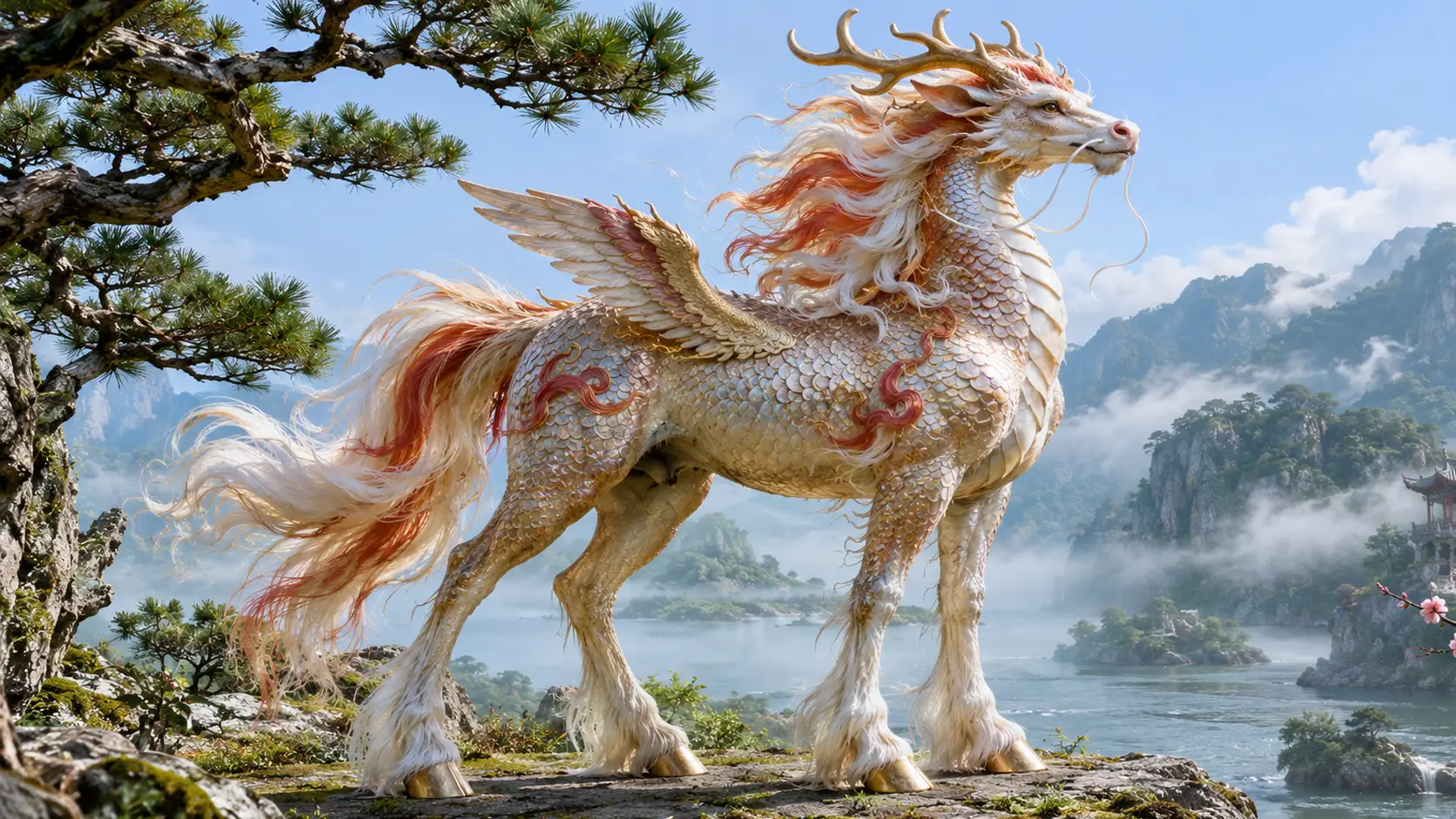
Wings appear at its sides in the description attributed to Kong Anguo and quoted in Miller’s study. They are an attested feature, but not a requirement imposed by every surviving account.
Passages concerned principally with the river chart may leave the creature’s limbs and surface features unspecified.
The same description assigns it a height of eight chi and five cun. These traditional units should not be converted into a supposedly exact modern measurement without establishing the relevant historical standard.
The stated dimensions nevertheless present the creature as an unusually imposing horse-shaped being.
Its ability to walk on water without sinking is another defining detail of that account. This makes its relationship with the river more than a matter of habitat: the creature moves across a surface that would not support an ordinary horse, visibly demonstrating its extraordinary nature.
The chart carried on its back provides the clearest narrative identifier. Traditional-art sculpture documented in Taiwan’s National Culture Memory Bank preserves this chart-bearing image.
Such objects show the continuing importance of the burden itself, alongside whatever sculptural choices give the hybrid its particular appearance.
The evidence does not establish one universal color, horn arrangement, or facial design. Nor should the inscribed, scale-like object mentioned in the Shun tradition automatically become a fixed bodily feature.
A faithful depiction can use the attested horse body, scales, wings, and chart while acknowledging variation between accounts.
Background Story
The Longma’s background is the idea that the world contains an intelligible order which exceptional rulers can recognize. Its river-borne chart makes that order visible.
The creature does not merely announce good fortune; it carries a pattern that can become the basis of human knowledge.
In the Fu Xi tradition, that process leads to the trigrams. The sage’s achievement involves responding to a revealed model rather than inventing signs without reference to nature.
Longma stands at the meeting point between a mysterious river event and the establishment of a cosmological system.
The Shun-associated account gives the revelation a different emphasis through its altar setting and presentation of a chart or inscribed object. Here the appearance also belongs to the world of sage rulership and ceremonial recognition.
These details belong to the Shun episode, not to Fu Xi’s encounter with the river chart.
The paired Hetu and Luoshu traditions broaden this setting. The Yellow River Chart is associated with the dragon-horse, while the Luo River Writing is associated with a supernatural tortoise and Yu.
Their pairing connects different animal bearers and rulers through the shared theme of auspicious revelation.
The horse-and-dragon combination also belongs within wider Chinese sacred-horse traditions. Alan L. Miller’s 1990 study, The Woman Who Married a Horse: Five Ways of Looking at a Chinese Folk Tale, examines connections among horses, dragons, and water, providing a comparative context for the hybrid.
These relationships help explain the coherence of its imagery without proving that every dragon-horse story developed from one original tale.
The chart’s role as a revealed cosmological model gives the Longma religious significance beyond its unusual appearance. That significance does not, by itself, establish a single original Longma ritual or a continuous biography for the creature.
Famous Folklore Stories
The Longma’s best-documented narratives concern the delivery of a supernatural chart to a sage ruler. They survive as episodes in transmitted textual traditions rather than as one fixed folktale.
The descriptive headings below distinguish two accounts whose recipients and settings should remain separate.
Fu Xi receives the river chart
In the Fu Xi-associated account, a dragon-horse emerges from the Yellow River carrying the Hetu, or River Chart. Fu Xi takes its pattern as a model for drawing the trigrams.
The encounter therefore connects a supernatural animal with the revelation of cosmological knowledge.
The chart matters more to this episode than an elaborate description of the creature. The Longma delivers a pattern that the sage can recognize and interpret.
Its narrative role is not that of a conquered monster or a magical riding animal, but a bearer of revelation.
This received account is preserved in excerpts collected under 河圖洛書部紀事. It should be distinguished from the broader statement in the Zhouyi’s Xici tradition that rivers produced a chart and a writing, which sages took as models.
That statement does not itself supply the complete dragon-horse episode.
A dragon-horse presents a chart to Shun
A separate transmitted episode associates the dragon-horse with Shun. Here the creature appears with an inscribed, scale-like object and presents a chart at an altar.
The ceremonial setting gives the encounter a different emphasis from Fu Xi’s interpretation of the river-borne pattern.
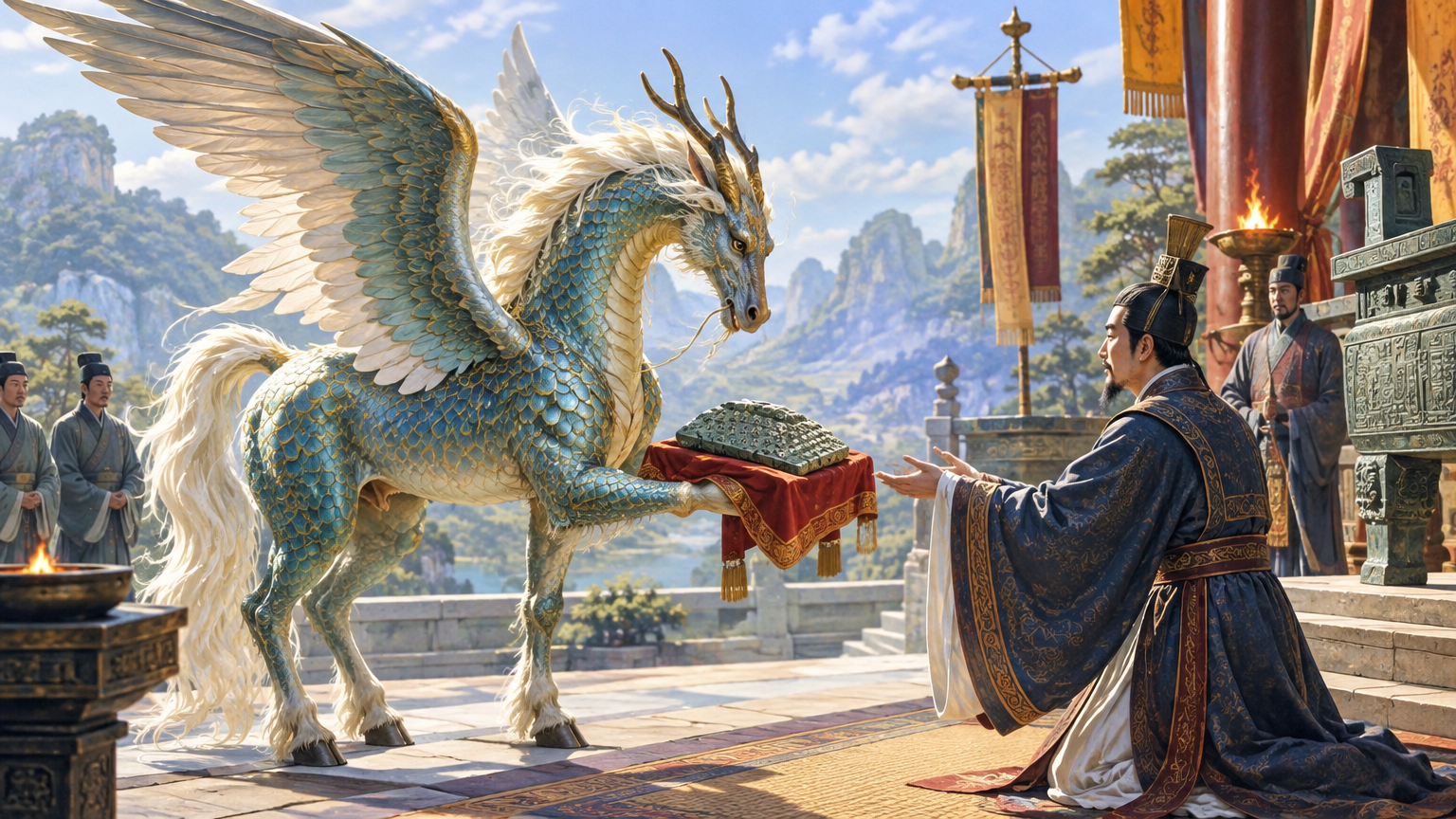
Alan L. Miller discusses this account through the Bamboo Annals tradition, while the collected river-chart materials also preserve a Shun-associated appearance. These are accounts of a mythic encounter, not verified eyewitness testimony or evidence that a single animal visited successive historical rulers.
The shared motif is the arrival of extraordinary knowledge through an auspicious creature. Nevertheless, Shun’s altar episode should not be inserted into Fu Xi’s story as an additional scene.
The different recipients demonstrate how the chart-bearing portent could be associated with more than one exemplary ruler.
Cultural Impact
The Longma gives visible form to a relationship between natural marvels, cosmological knowledge, and legitimate government. Its appearance suggests that exemplary rule corresponds with an ordered universe.
The river does not merely contain the creature: it becomes the setting from which meaningful knowledge reaches human society.
The chart-bearing image also joins revelation with interpretation. The supernatural messenger brings the pattern, but the sage recognizes its significance.
This makes the Longma especially suited to traditions in which human institutions and systems of knowledge are understood as responses to patterns already present in the cosmos.
In traditional art, carrying the chart provides a recognizable narrative attribute even when the animal’s anatomy varies. A Longma sculpture documented in Taiwan’s National Culture Memory Bank preserves this subject.
Such an object represents the river-chart episode rather than establishing a universal visual standard for every dragon-horse.
The pairing of Hetu and Luoshu places the Longma within a larger symbolic arrangement. The Yellow River Chart and Luo River Writing are treated as complementary revelations associated with sage rulers.
Their animal bearers remain distinct, allowing artists and interpreters to connect the traditions without making them identical.
Modern scholarship places the Longma within broader discussions of sacred horses, dragons, and cosmological diagrams. These analytical comparisons help explain its overlapping associations.
They should not be mistaken for proof that every historical audience understood the creature in precisely the same way or assigned it one unchanging significance.
Similar Beasts
Qilin

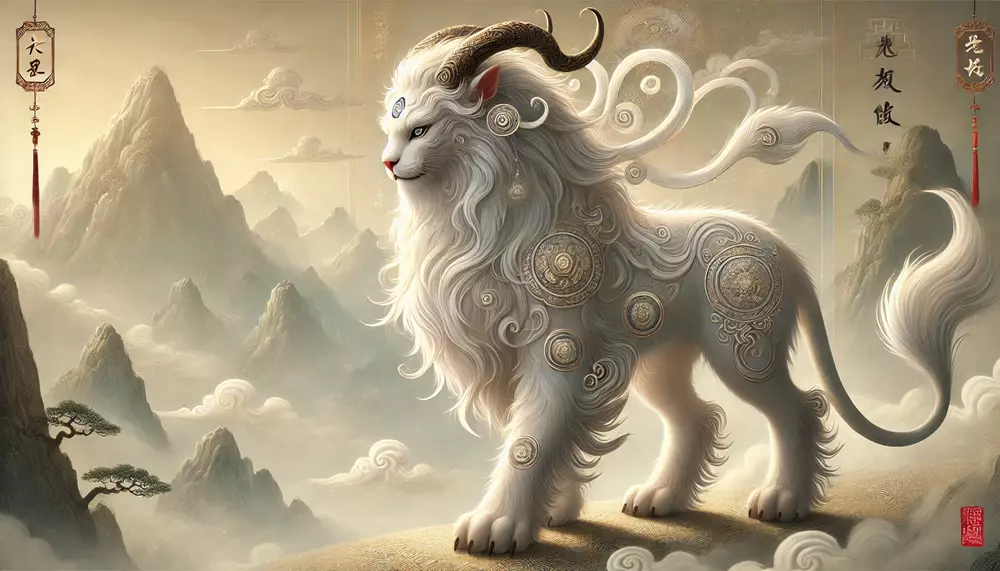
The Qilin is an auspicious creature in Chinese tradition, associated with virtue, prosperity, and the appearance of sages or exemplary rulers. Its composite appearance often includes dragon-like and deer-like features.
Like the Longma, it can signal exceptional moral or political conditions. Its defining role, however, is not the delivery of the Yellow River Chart.
Tianlu
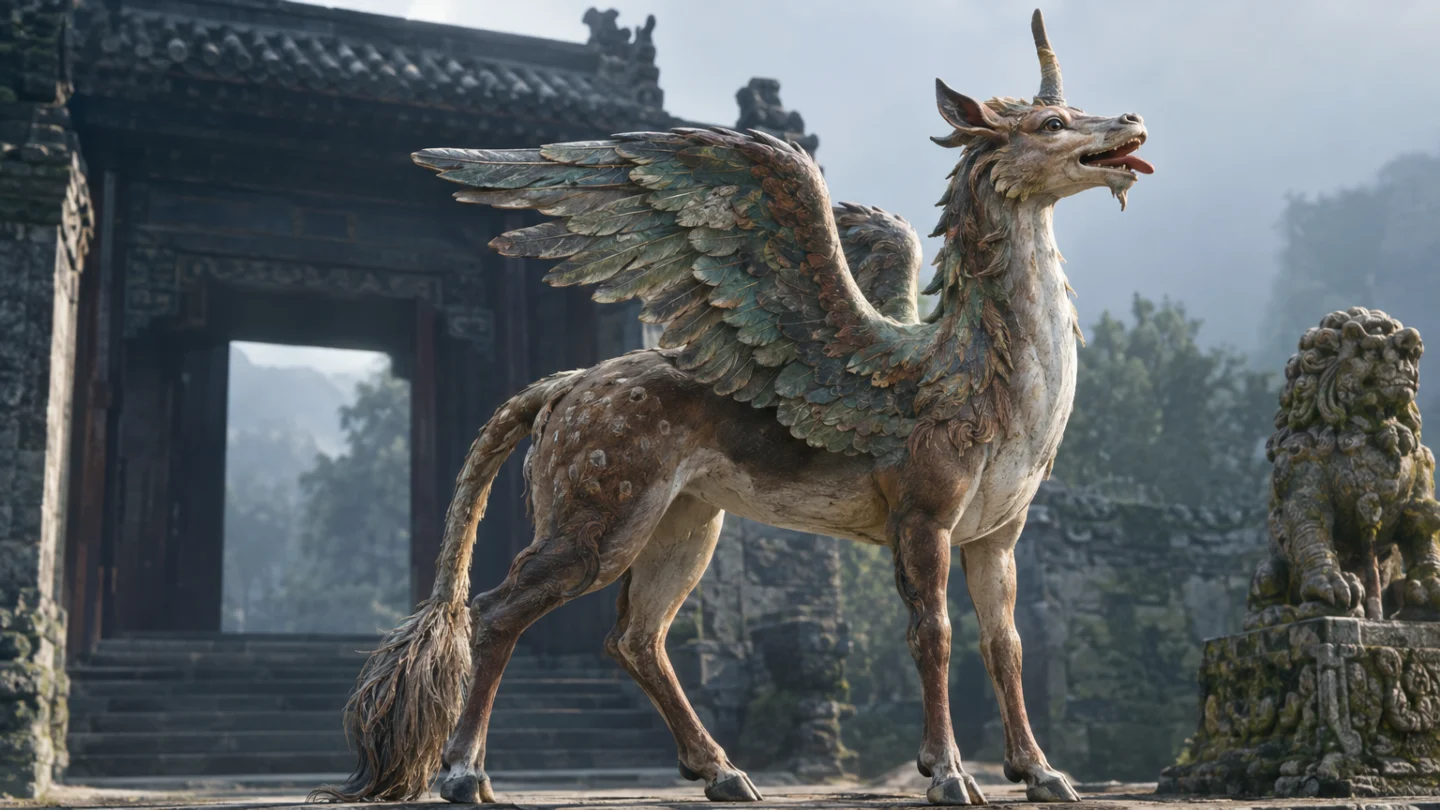
Tianlu belongs to Chinese traditions of auspicious animals and supernatural guardians. Historical commentary, omen literature, and funerary art connect the name with overlapping forms rather than one completely uniform creature.
Its strongest parallel with the Longma is its auspicious significance. Guardian imagery should not obscure the Longma’s more specific function as a bearer of cosmological knowledge.
Lóng (Dragon)
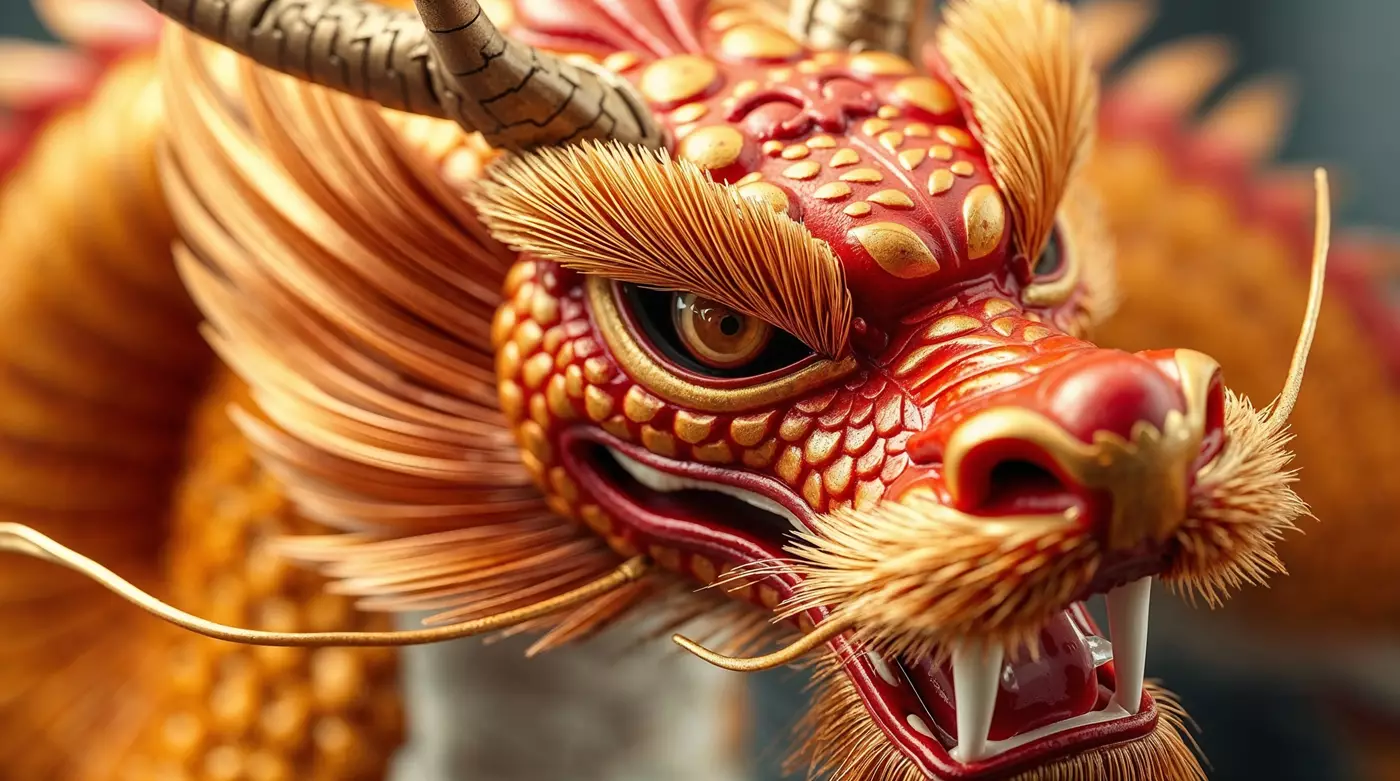
The Chinese dragon is a supernatural being associated with water, storms, fortune, and authority. It belongs to a broader tradition than the particular chart-bearing episodes that distinguish the Longma.
The Longma’s attested dragon scales make the relationship explicit, while its horse-shaped body preserves a distinct hybrid identity. Shared traits do not make the two interchangeable.
Shen tortoise
The supernatural tortoise belongs to the Luoshu tradition, associated in familiar received accounts with Yu and the Luo River Writing. It is the Longma’s closest counterpart as a bearer of revealed patterns.
The comparison is narrative rather than anatomical: each creature carries significant knowledge from a river. The tortoise and Luoshu remain distinct from the dragon-horse and Hetu.
Religion/Ritual
The Longma’s religious importance rests chiefly in its connection with revealed order and auspicious rule. The Hetu is not simply an object transported by a marvelous animal.
It represents a pattern whose arrival links the sage’s understanding with a larger cosmological framework.
The Shun-associated account includes an altar, giving that episode a ceremonial setting. This narrative detail does not establish a general practice of worshipping Longma.
The supplied evidence does not document a standardized Longma cult, prescribed offerings, annual observances, or a distinctive ritual calendar.
The Hetu also appears in specialist discussions of the historical background to Daoist talismans and registers. This places the chart within later religious interpretations of meaningful diagrams.
It does not establish that every use of such diagrams invoked the dragon-horse or reenacted its river emergence.
Scientific or Rational Explanations
The surviving material documents a mythic and cosmological figure, not a zoological species. Its evidentiary value concerns what people transmitted about revelation, animals, and sage rule.
It does not provide a verified animal encounter from which biological identification could reasonably proceed.
A historical interpretation can examine the dragon-horse as an auspicious sign validating exemplary government. Its arrival makes a ruler’s connection with cosmic order visible.
This explains a function of the narrative without requiring the assumption that the account began as a deliberately fabricated political claim.
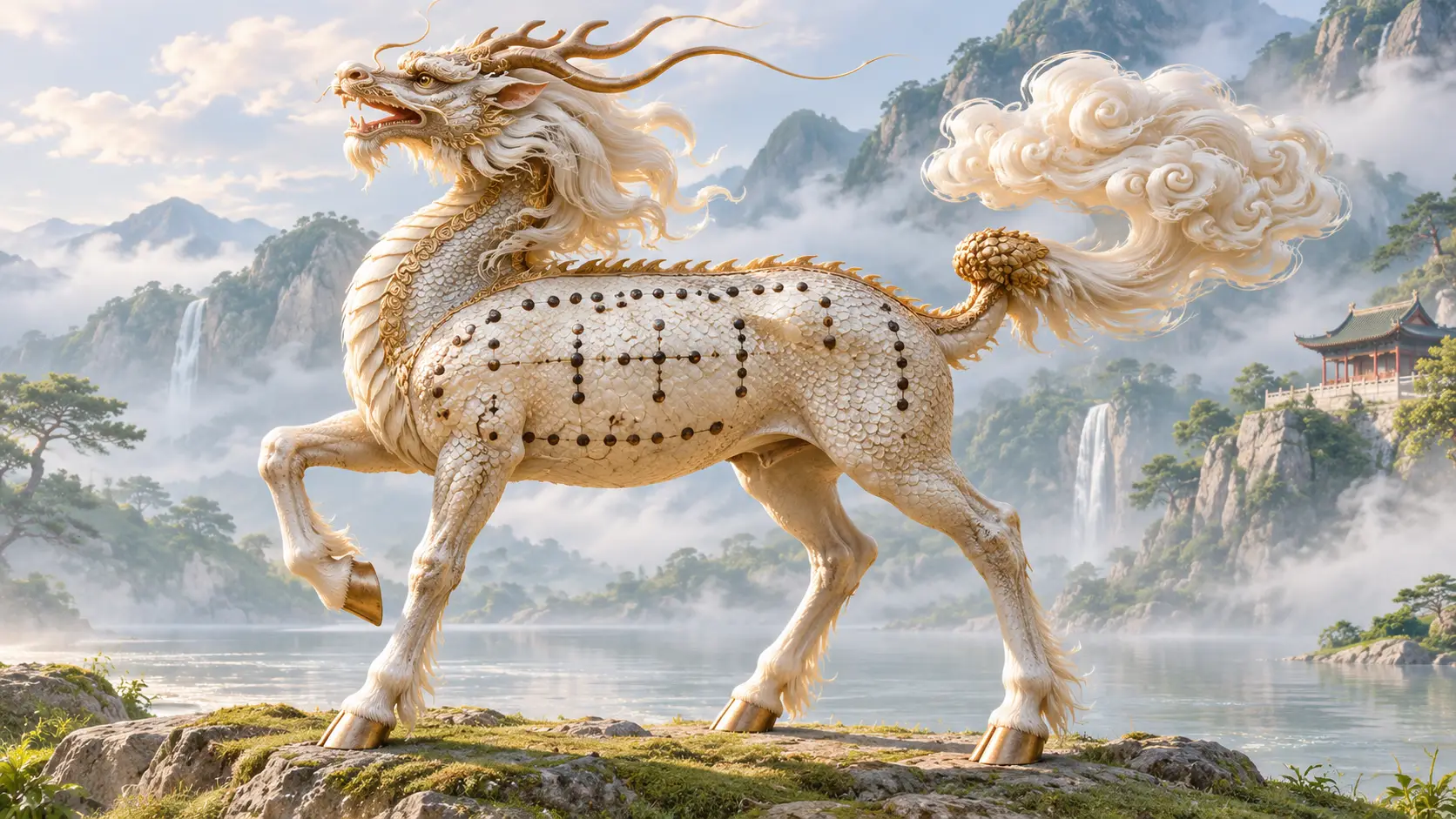
The hybrid body can also be understood through the combination of established mythic associations. Miller’s discussion situates dragon-horse beliefs among sacred-horse motifs and relationships between horses, water, and dragons.
This comparative approach explains connections within tradition rather than identifying a real animal behind the image.
Textual transmission provides another important explanation for variation. An explicit description preserved in commentary attributed to Kong Anguo includes a horse-shaped body, dragon scales, wings, and water-walking.
Other accounts emphasize the chart instead. These differences need not represent conflicting observations of an actual creature.
The most productive rational reading therefore concerns the movement of stories, symbols, and interpretations across texts and images. Differences between Fu Xi and Shun, or between detailed anatomy and sparse portent accounts, reveal the tradition’s flexibility.
They should be preserved rather than reconstructed into one supposedly factual encounter.
Modern Cultural References
Longma Yexing (龙马夜行; “Night Journey of the Dragon-Horse”), 2015
published fiction 2015 A published science-fiction story whose author says she was inspired by the mechanical Long Ma artwork.
The story is listed in a published fiction anthology, 2015中国年度科幻小说, and the author describes its origin in her own account.
(chinasf.com)
Longma, 2013
published fiction 2013 An online My Little Pony fanfiction story centered on Longma characters; the story page identifies the work, author, publication date, and describes the Longma as returning to Equestria.
(fimfiction.net)
Conclusion
The Longma’s importance lies in its role as a bearer of meaningful order, not simply in its combination of horse and dragon. Emerging from the river with the Hetu, it connects the natural world with the knowledge attributed to sage rulers.
An attested description gives it a horse’s body, dragon scales, wings, and the ability to walk on water. These features express its supernatural character, but they should not become a rigid checklist imposed on every surviving account or artistic representation.
The tradition is well documented, although its transmitted versions do not form one seamless story. Fu Xi’s association with the river chart and trigrams must remain distinct from the chart-bearing appearance connected with Shun.
Recognizing those differences preserves the richness of the evidence rather than weakening the creature’s identity. Across textual accounts, traditional imagery, mechanical performance, and modern fiction, the dragon-horse remains recognizable while taking different forms.
Its lasting significance rests on the relationship between extraordinary appearance, auspicious revelation, and cosmological knowledge.
Further Reading
河圖洛書部紀事, quoting 中候握河紀 and other materials, Shidianguji
A dragon-horse emerges from the Yellow River bearing the Hetu; in the received account, Fu Xi models the trigrams on its pattern.
The heading is descriptive, not asserted as a traditional title.
(shidianguji.com)
Alan L. Miller, quoting the Bamboo Annals tradition; also 河圖洛書部紀事, Asianethnology
A collected account describes a dragon-horse appearing with an inscribed, scale-like object and presenting a chart at an altar in the Shun tradition.
This is a distinct transmitted variant, not a detail to merge silently into the Fu Xi episode.
(asianethnology.org)
河圖洛書, 河圖(龍馬負圖), National Culture Memory Bank
Institutional documentation of a traditional-art Longma sculpture and a concise account of its chart-bearing iconography.
(tcmb.culture.tw)