Introduction
Se’irim is a Hebrew biblical term commonly interpreted as goat-like spirits or demons, especially where it appears in connection with prohibited worship. Its identity is not uniform, however: the underlying word also means a he-goat, and some passages can reasonably refer to wild goats.
The principal evidence comes from Leviticus 17:7, 2 Chronicles 11:15, Isaiah 13:21, and Isaiah 34:14. These passages place the term in two different settings: condemned religious activity and poetic landscapes of devastation.
Neither setting supplies a complete description of a distinct supernatural species.
The supernatural interpretation is historically influential and has substantial support in the ritual passages. In Isaiah’s descriptions of ruined Babylon and Edom, the distinction between animals and uncanny inhabitants is less secure.
Translating the word as “goat-demons” or “wild goats” therefore changes the atmosphere of those poems.
Se’irim belongs primarily to the Hebrew Bible and its interpretive history, rather than to a surviving cycle of monster adventures. Its importance lies in the intersection of animal language, religious polemic, and desolation imagery, through which a familiar creature could acquire a supernatural significance.
History/Origin
The earliest surviving evidence for se’irim comes from the Hebrew Bible, although it cannot establish when belief in supernatural hairy beings began. The passages belong to different genres and periods, so their biblical order does not provide a reliable chronology of the tradition.
Leviticus 17:7 prohibits Israelites from offering sacrifices to se’irim, presenting such worship as religious disloyalty. The prohibition strongly supports a cultic or supernatural reading, but says nothing definite about the recipients’ bodies, images, individual identities, or the practices of their worshippers.
“They shall no longer offer their sacrifices to the se’irim.” (Leviticus 17:7, translated from Hebrew)
Second Chronicles 11:15 associates se’irim with Jeroboam’s condemned religious arrangements, reporting priests appointed for high places, se’irim, and calves. The passage reinforces their connection with rival worship, but its polemical perspective cannot independently reconstruct the beliefs of the people it criticizes.
Isaiah places the term in a different setting. In Isaiah 13:21, se’irim dance amid ruined Babylon; in Isaiah 34:14, a singular se’ir calls to its companion in devastated Edom.
These poetic passages allow both animal and supernatural interpretations without defining their anatomy.
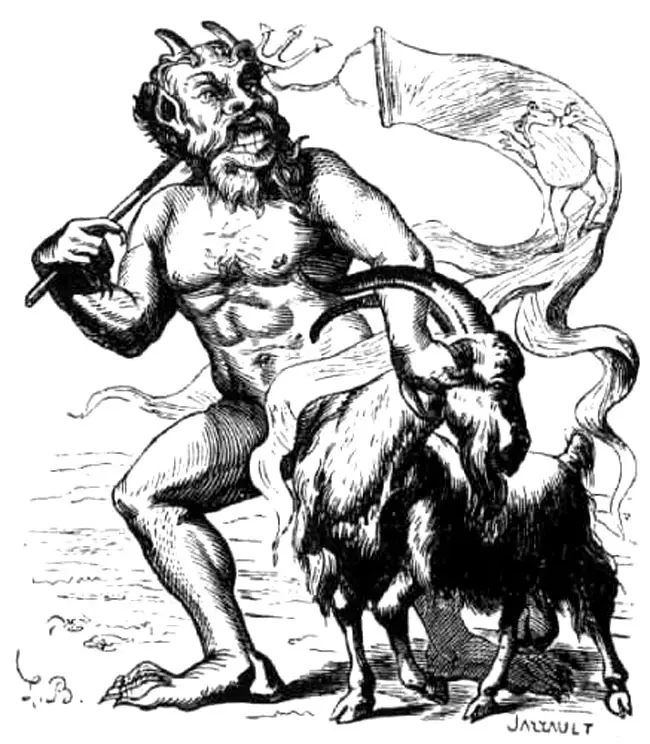
Historical translations preserve this ambiguity. “Devils” and “satyrs” emphasize supernatural possibilities, while “he-goats” and “wild goats” retain the ordinary animal sense.
The word “satyr” also introduces a Greek comparison, not evidence that ancient Hebrew speakers imagined the same hybrid form.
A related but distinct biblical ritual appears in Leviticus 16. On Yom Kippur, lots designate one male goat for the Lord and another for Azazel.
The priest symbolically places Israel’s sins upon the second goat, which is sent into the wilderness.
“He shall put them on the goat’s head and send it into the wilderness.” (Leviticus 16:21, translated from Hebrew)
The text does not explicitly identify Azazel with the se’irim of Leviticus 17:7. Interpreters have variously understood Azazel as a wilderness being, a remote place, or a designation connected with removal.
The scapegoat ritual therefore deserves comparison, not automatic identification.
Medieval Jewish interpretation nevertheless establishes a direct historical link between the passages. In his commentary on Leviticus 16:8, Nahmanides, known as Ramban, explains Ibn Ezra’s cryptic hint about “thirty-three” as pointing thirty-three verses ahead to Leviticus 17:7 and its goat-demons.
Ramban connects Azazel with wilderness spirits associated with the se’irim, but insists that sending the goat is not a sacrifice to an independent deity. The priest acts under divine command, and the distinction matters because Leviticus elsewhere condemns sacrifices to such beings.
Another development appears in 1 Enoch, especially chapters 8–10. Azazel teaches forbidden crafts, including weapons and ornamentation, contributing to human corruption.
God then commands Raphael to bind him beneath sharp stones in Dudael, a wilderness location, until his final judgment.
“Bind Azazel hand and foot, and cast him into the darkness.” (1 Enoch 10:4, R. H. Charles translation)
This fallen-angel narrative gives Azazel a biography absent from Leviticus, but does not describe se’irim as his followers or recount a war before creation. It belongs to a later apocalyptic tradition and cannot establish the original identity of the biblical goat-demons.
A further proposed development appears in 3 Baruch, which describes hybrid figures with goat feet and other animal characteristics. In his 2013 study “How the Devil Got His Hooves and Horns,” Alexander Kulik argues that these may represent se’irim-satyrs in early Jewish literature.
Kulik suggests that 3 Baruch may preserve their only detailed early physical description and the earliest surviving evidence for satyr-like demons. Although the text does not explicitly name se’irim, his interpretation makes it significant evidence, rather than a merely superficial anatomical comparison.
His argument concerns the development of demonic imagery through interacting traditions, including Jewish se’irim and Greco-Roman Pan. It does not recover a fixed biblical anatomy or demonstrate a single origin.
Those distinctions allow the later sources their importance without rewriting the earliest texts.
Name Meaning
Se’irim, also transliterated śeʿîrîm, is the plural of Hebrew śāʿîr, a word associated with hairiness and commonly used for a male goat. “Hairy ones” conveys its underlying sense, while “he-goats” names an ordinary animal rather than necessarily a supernatural being.
The Semantic Dictionary of Biblical Hebrew lists senses such as he-goat, hairy, goat-demon, and satyr. Brown-Driver-Briggs likewise distinguishes familiar goat usage from occurrences interpreted as demons.
These are context-dependent meanings, not evidence that every biblical se’ir represents the same being.
“Goat-demons” adds a supernatural interpretation to the animal association; “wild goats” treats Isaiah’s ruined landscapes as populated by animals. “Satyrs” evokes Greek mythology, shaping readers’ mental image more strongly than the Hebrew noun itself warrants, especially when used to imply human-animal anatomy.
For Isaiah 34:14, the Translation Insights & Perspectives commentary recommends “wild goat” while acknowledging the mythical reading “demons.” The singular se’ir calls to a companion, but neither the grammatical form nor that action alone can determine whether the passage depicts animals or spirits.
The connection to the Yom Kippur ritual is partly linguistic: Leviticus 16 calls its sacrificial animals se’irim in the ordinary sense of male goats. The name Azazel is separate, and its debated meaning cannot establish that those goats were themselves supernatural beings.
The English word “scapegoat” arose from William Tyndale’s sixteenth-century rendering of the goat sent away in Leviticus 16. It later came to mean someone unfairly blamed for others’ wrongdoing.
That familiar expression derives from the ritual, not directly from “goat-demons.”
Appearance
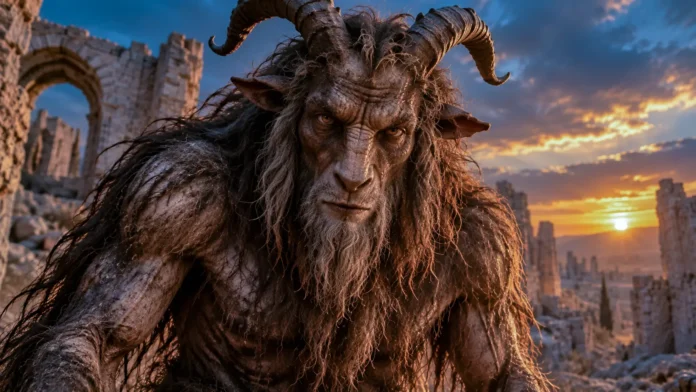
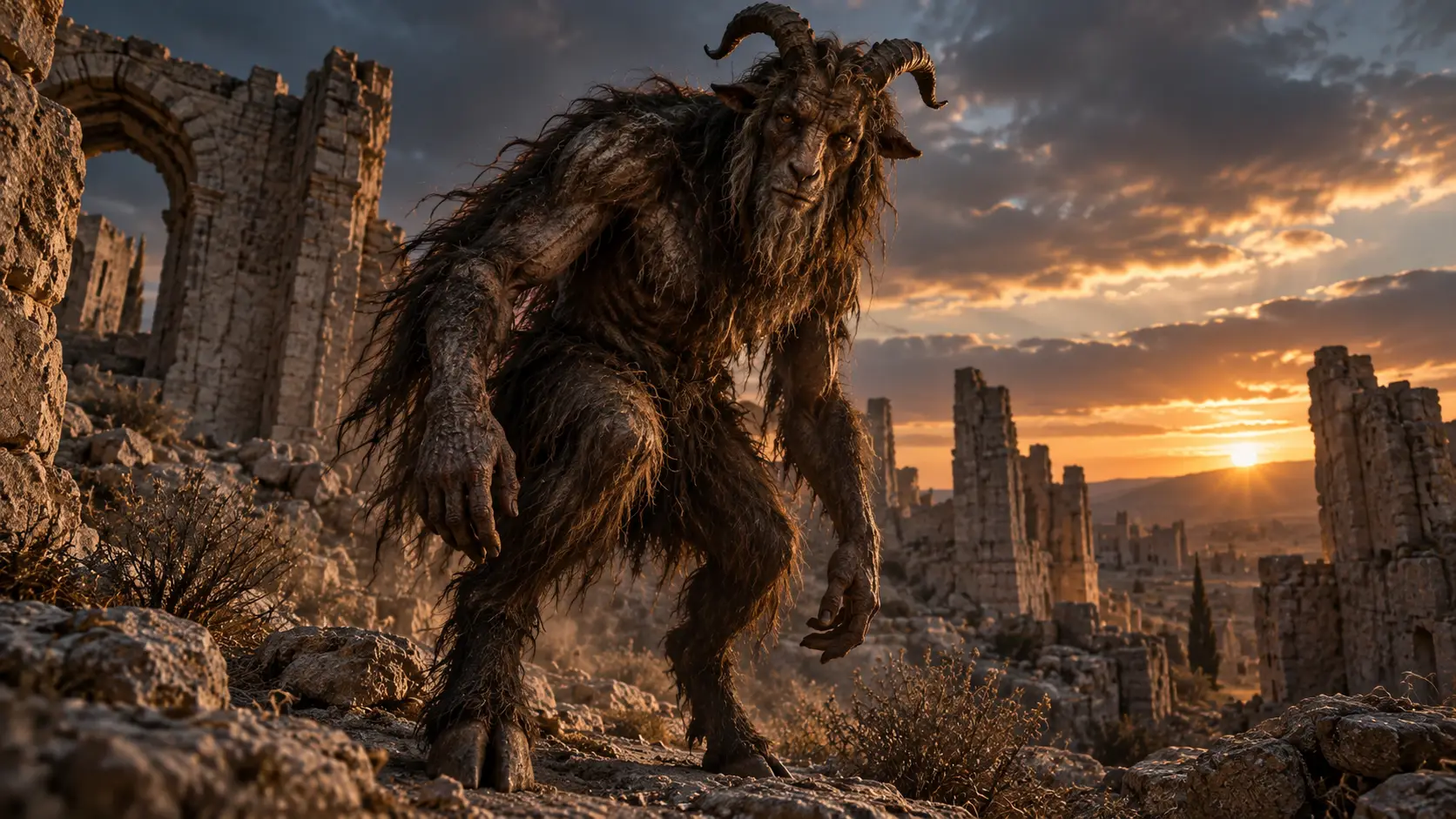
Se’irim have no complete anatomical portrait in the cited biblical passages. Their Hebrew name evokes hairiness and commonly denotes male goats, providing the basis for a shaggy, goat-associated image.
Isaiah 13:21 depicts them dancing in ruined Babylon, but does not describe their bodies.
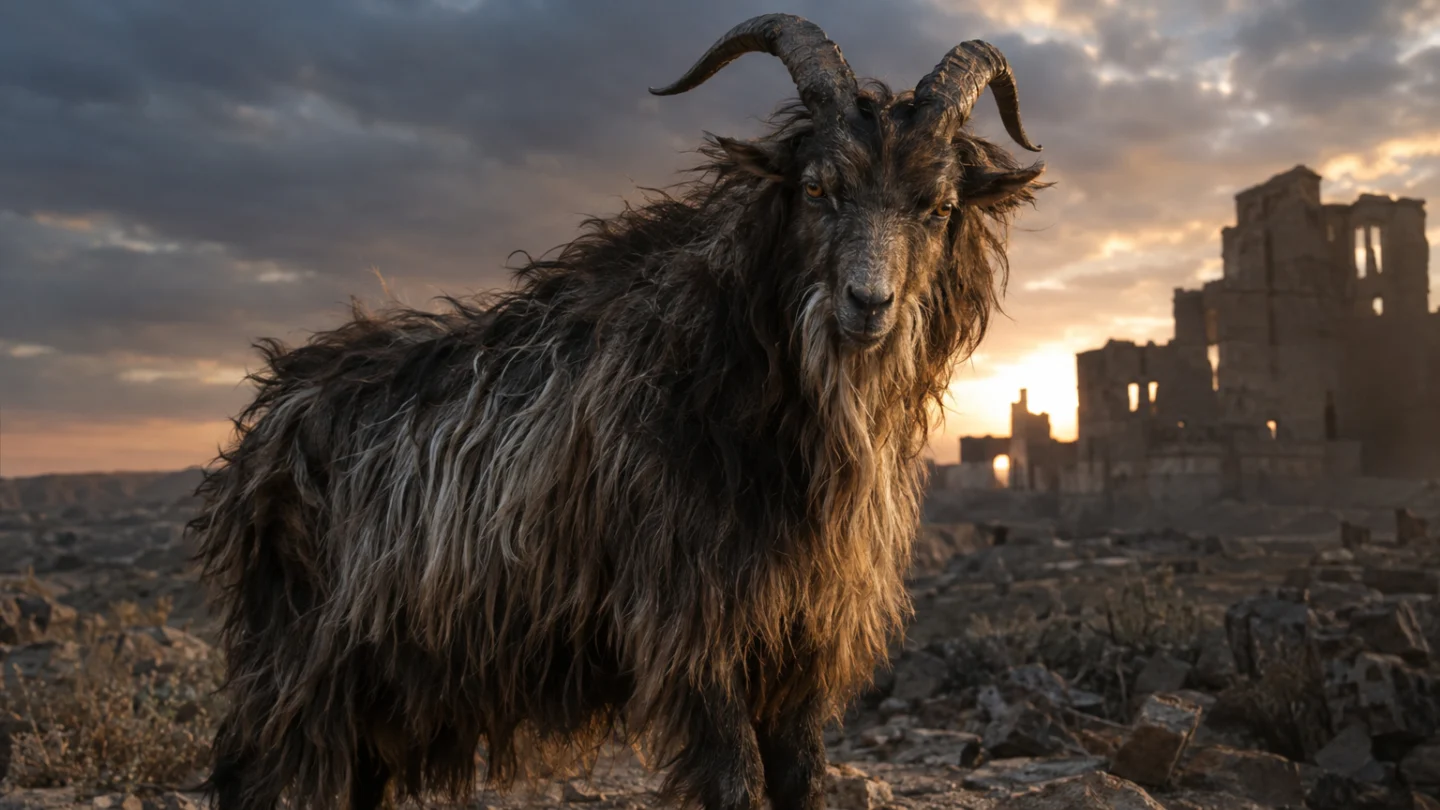
Their appearance depends partly on how the term is understood. An animal reading presents goats occupying abandoned places; a supernatural reading suggests goat-like or hairy beings.
The lexical association supports this imagery, but does not establish a distinct supernatural species with a fixed form.
The biblical passages do not specify horns, cloven hooves, a human torso, body size, coat color, clothing, or facial features as defining supernatural traits. Horns and hooves are natural choices in a depiction of a goat, but their inclusion in a demon’s body remains an interpretation rather than an explicit biblical description.
Likewise, the historical translation “satyr” invites comparison with Greek hybrid figures without proving that the Hebrew beings shared their anatomy or attributes.
Later Jewish literature offers a potentially important development. 3 Baruch describes people with goat feet alongside other animal features, although it does not explicitly name them se’irim.
In his 2013 study, Alexander Kulik argues that this composition may preserve the only physical description and detailed treatment of demonic se’irim-satyrs in early Jewish literature, as well as the earliest surviving evidence of satyr-like demons.
This proposed identification makes the hybrid figures relevant to the history of se’irim imagery, not merely a visual parallel. Their combined anatomy nevertheless belongs to a later literary setting and a scholarly interpretation of its relationship to the tradition.
It cannot establish the original bodily form of the beings mentioned in the Hebrew Bible.
Background Story
Se’irim emerges from the interaction of religious boundary-making and the imagined life of abandoned landscapes. In the ritual passages, the term marks recipients of worship rejected by the biblical writers.
In Isaiah, it helps populate places from which human settlement and political power have disappeared.
The prohibition in Leviticus gives the supernatural interpretation its clearest background. Sacrifice establishes a relationship with a recipient, and the text condemns that relationship as religious disloyalty.
Its concern is the direction of worship, rather than explaining the beings’ creation, hierarchy, or individual activities.
Chronicles supplies a related political setting by linking se’irim with Jeroboam’s cultic arrangements. Their inclusion alongside high places and calves makes them part of a portrayal of illegitimate worship.
This context shapes their negative significance without revealing the full character of the practices being condemned.
In Isaiah’s Babylon poem, the replacement of human inhabitants by creatures expresses the reversal of imperial prosperity. Se’irim participate in that transformed landscape.
Whether understood as goats or demons, their presence contributes to the same fundamental image: a once-powerful city no longer belongs to its human population.
The Edom passage similarly imagines a landscape occupied by nonhuman inhabitants, including a se’ir calling to its companion. An animal reading makes the scene one of wilderness reclaiming settled space.
A supernatural reading adds an uncanny dimension, but the calling itself does not require human speech or a narrated encounter.
These backgrounds explain why the term could remain meaningful without a continuous origin story. Worship, abandonment, and translation supplied different ways of understanding it.
Later comparisons with goat-like supernatural figures expanded that interpretive setting, while the surviving biblical evidence remained brief and dependent on the context of each passage.
Famous Folklore Stories
The surviving material includes biblical poetic episodes rather than authenticated, titled folktales about individual se’irim. Their clearest narrative role is to inhabit places emptied of human life.
The headings below describe documented motifs, not traditional story titles or independent encounter accounts.
Beings Among Babylon’s Ruins
Isaiah 13:21 places se’irim within a vision of Babylon’s desolation. Formerly inhabited spaces become the domain of creatures rather than people, and the se’irim dance there.
Their movement contributes to the reversal: a place of human power becomes a landscape outside human control.
The scene changes character with its translation. Read as wild goats, the se’irim belong to an animal population occupying abandoned ground.
Read as goat-demons, they give the ruins a supernatural presence. Both interpretations concern the same poetic passage, not two separately documented legends.
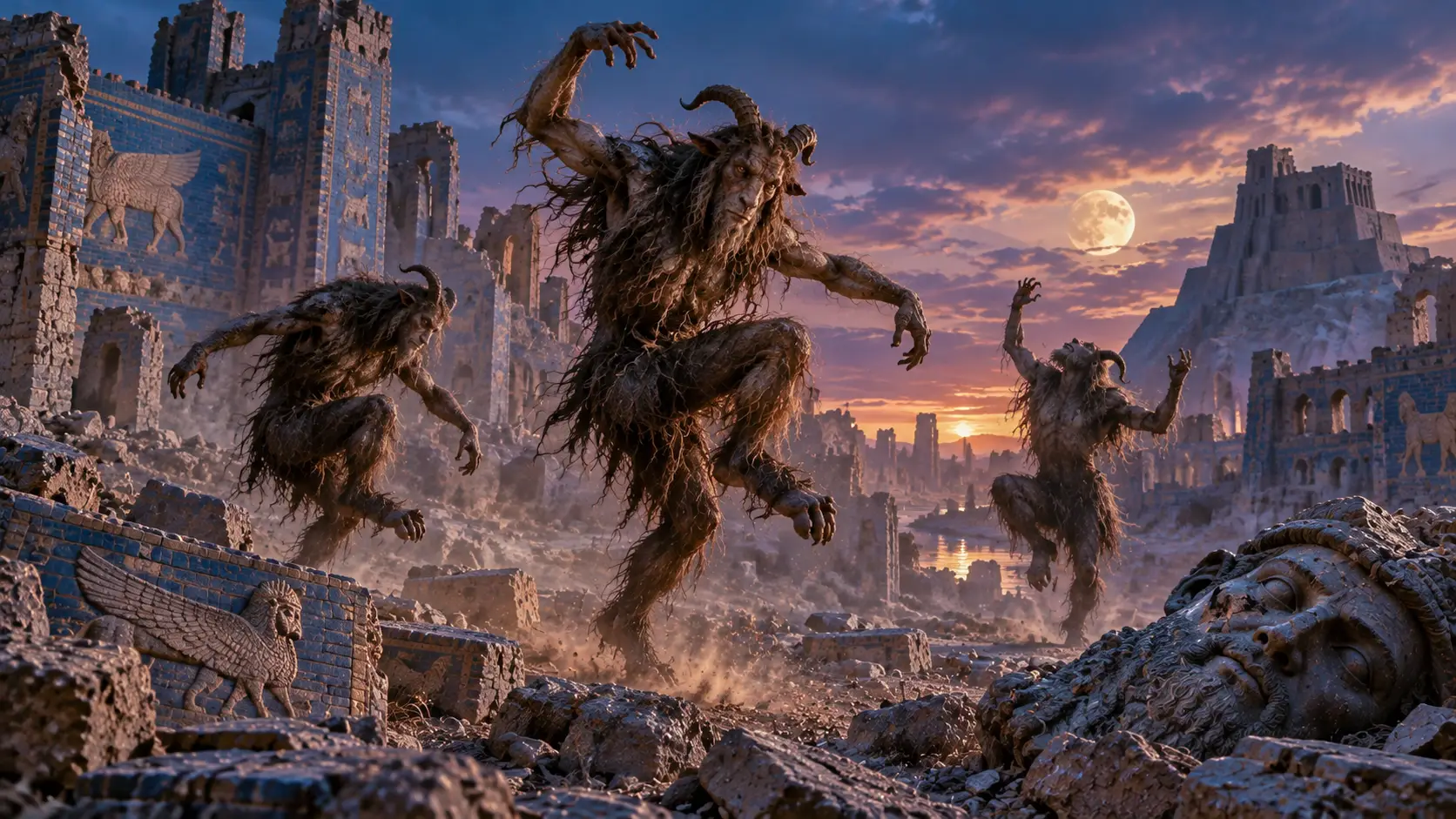
This episode supplies an action and a setting, but no individual protagonist, conversation, or encounter with a traveler. Its importance lies in the image of a ruined city occupied by unfamiliar inhabitants.
It does not establish a wider storytelling tradition about dancing demons.
A Call Across Desolate Edom
Isaiah 34:14 presents a singular se’ir calling to its companion amid the desolation of Edom. The call forms part of a larger catalogue of inhabitants of the devastated landscape.
Unlike an encounter tale, the passage gives no human witness who meets or confronts the being.
The translation dispute is particularly clear here. The Translation Insights & Perspectives commentary recommends “wild goat,” while recognizing that “demons” can convey a mythical interpretation.
An animal calling to another animal and a spirit calling to another spirit produce different impressions without changing the underlying Hebrew term.
The companion establishes a relationship within the scene, but not a developed supernatural society. The text does not explain what the call communicates.
The documented motif is therefore narrow: voices and creatures occupy a landscape from which ordinary human habitation has disappeared.
Cultural Impact
Se’irim acquired much of their later visual identity through translation. The King James Version calls them “satyrs” in Isaiah 13:21, inviting comparison with Greek hybrids.
Other translations choose “wild goats” or “goat-demons,” changing how readers picture the inhabitants of Babylon’s ruins.
Jewish and Christian discussions also connected hairy wilderness beings with broader demonological traditions. Yet shared horns, hooves, and animal features do not establish an uninterrupted lineage.
Historical comparison requires evidence for how specific images or concepts passed between communities and religious writings.
Kulik’s interpretation of 3 Baruch offers a possible early stage in that development. Its hybrid figures, which he proposes identifying as se’irim-satyrs, provide unusually detailed animal-human imagery.
Their significance lies in the history of demonic representation, not a proven biblical portrait.
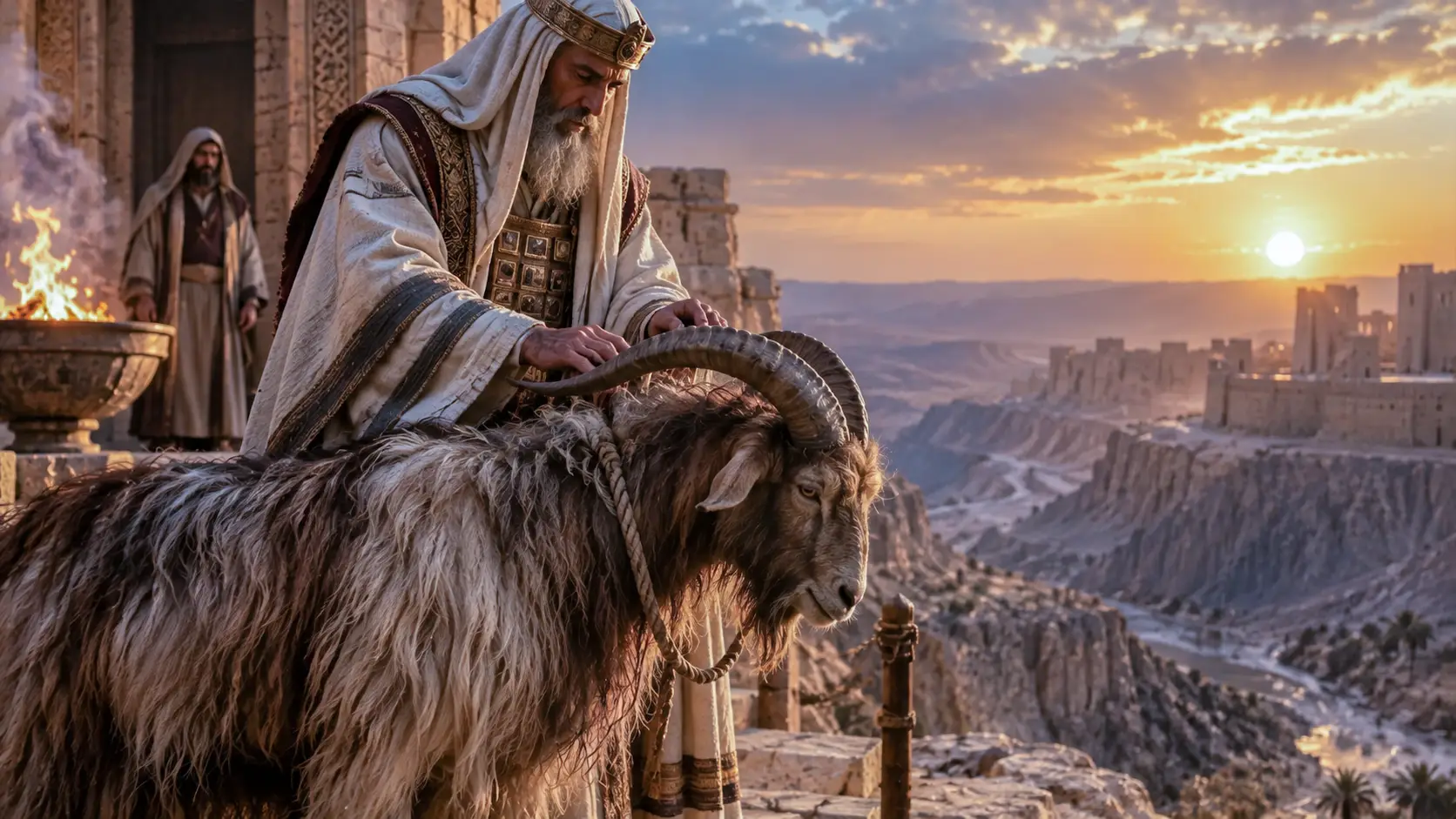
The scapegoat tradition followed another influential path. The Yom Kippur rite became a lasting image of removing communal wrongdoing, while the English word acquired its modern meaning of displaced blame.
Those associations illuminate the broader cultural world of goats and impurity.
Ramban’s interpretation also gave later readers a concrete connection between Azazel and the se’irim, without treating the wilderness goat as an authorized sacrifice to demons. The result is a layered reception history involving ritual, scripture, commentary, and visual imagination, not one uniform monster.
Similar Beasts
Lilith

Lilith is a distinct figure in Jewish interpretive tradition, with a broader later history as a demoness. Her name appears in readings of Isaiah 34:14, although translations differ.
Her strongest connection to se’irim is their shared desolation passage. They remain separate terms, and Lilith’s later characteristics cannot be transferred to the se’ir calling nearby.
Read more about Lilith
Ghoul
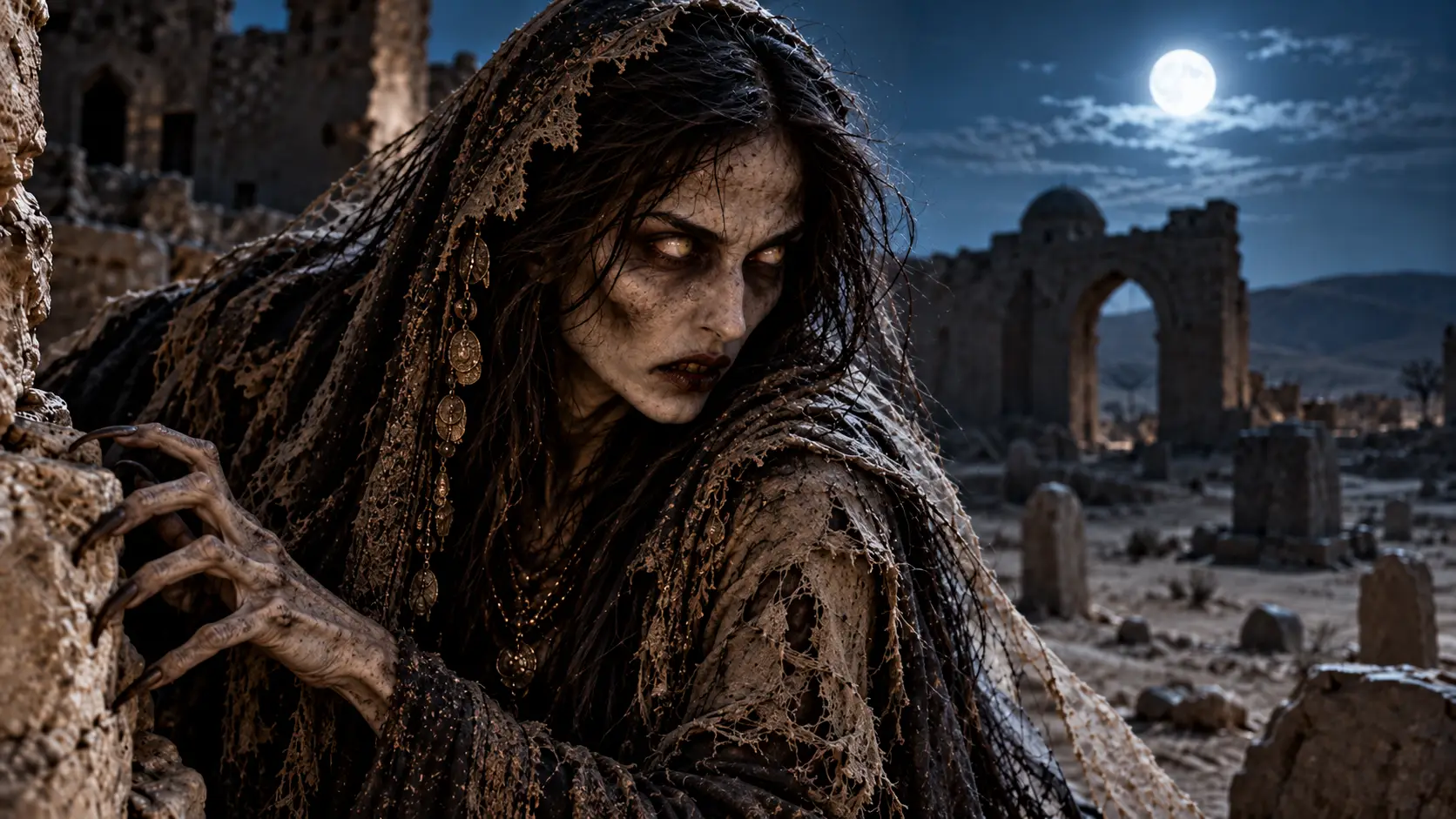
The ghoul is a supernatural being in Arabic folklore associated with wilderness, deception, and danger to travelers. It may change shape, mislead people, and attack them.
Its wilderness association offers a comparison with supernatural readings of se’irim in deserted places. The biblical passages do not attribute the ghoul’s attacks or shapeshifting to them.
Adnei haSadeh

The Adnei haSadeh belong to Hebrew lore about feral humanoids living apart from civilization. They represent wild inhabitants of the landscape rather than creatures integrated into human settlement.
They provide a parallel for beings outside inhabited society. Unlike these wild humanoids, se’irim have no securely established humanlike body, and their biblical contexts also include prohibited worship.
Satyr (Faun)
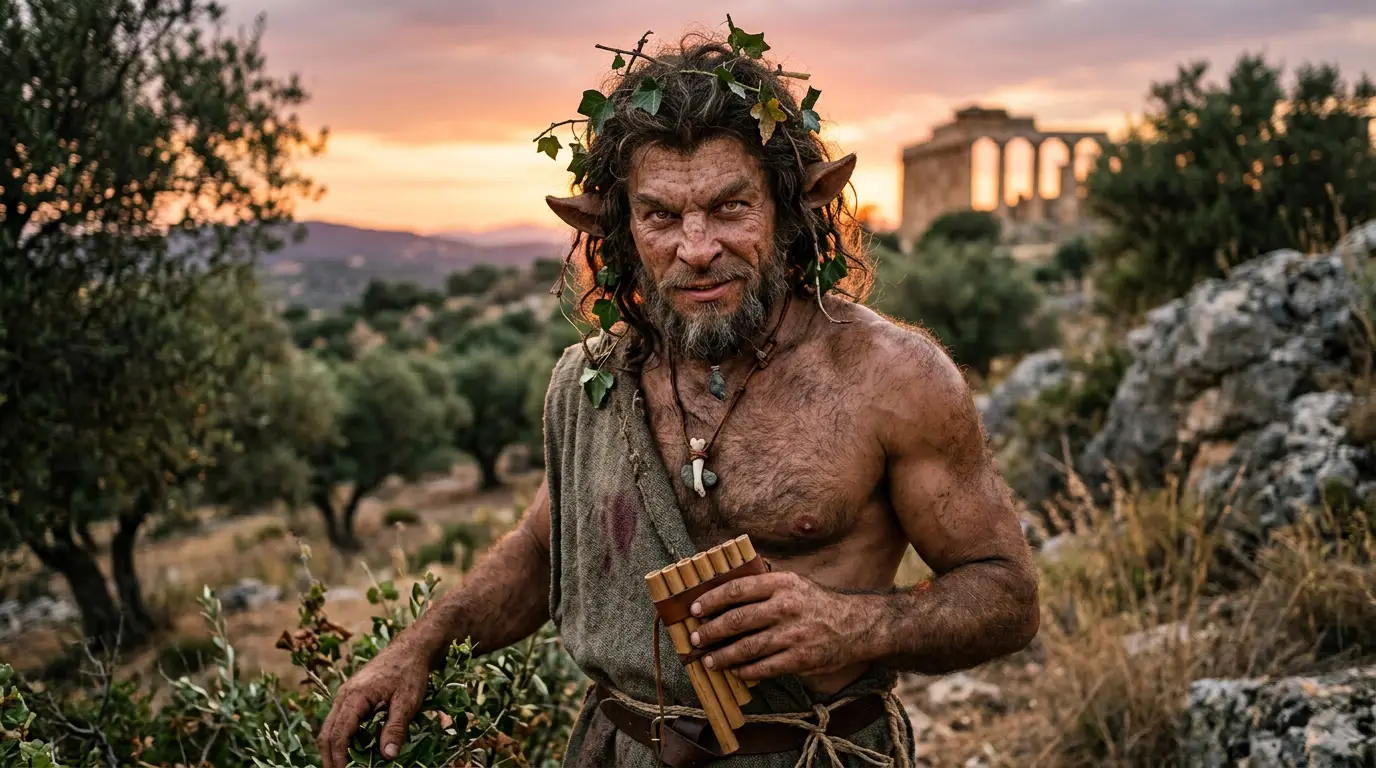
Greek satyrs are a distinct mythological category that became a translation comparison for se’irim. Their established identity in Greek tradition must remain separate from the disputed Hebrew referent.
The comparison helps explain the history of hybrid and demonic imagery. It does not establish shared anatomy, behavior, religious function, or a single origin for both categories.
Religion/Ritual
Leviticus 17:7 directly prohibits sacrifice to the se’irim. This is stronger evidence for a cultic or supernatural interpretation than their appearance in a catalogue of wilderness creatures.
Within this passage, they are recipients of offerings condemned by the biblical religious framework.
The prohibition nevertheless supplies no detailed account of a ceremony devoted to them. It does not establish particular offerings, prayers, ritual equipment, or an annual observance.
A rule against sacrifice documents the religious concern, but cannot by itself reconstruct the practice being rejected.
In 2 Chronicles 11:15, Jeroboam is said to have appointed priests for high places, the se’irim, and calves. This places the term within an account of contested religious institutions.
The passage associates them with a condemned cult without explaining their precise form or identity.
Together, these passages support interpreting se’irim as cultic beings or objects of worship, while leaving significant questions unresolved. They do not establish a connection to the scapegoat ceremony.
In particular, neither passage proves that the goat associated with Azazel was sacrificed to se’irim.
Scientific or Rational Explanations
Se’irim are primarily a problem of textual interpretation, not zoological investigation. No verified animal species corresponds to the supernatural reading, and the cited evidence is not a collection of investigated sightings.
The relevant questions concern vocabulary, literary setting, religious polemic, and historical translation.
A literal goat interpretation is possible in Isaiah because the Hebrew word also denotes a he-goat. The Semantic Dictionary of Biblical Hebrew records both ordinary animal and supernatural senses.
This lexical range makes context essential: the word alone cannot determine which interpretation a passage requires.
The wild-goat reading of Isaiah 34:14 understands the call to a companion as animal behavior within a deserted landscape. The translation commentary’s recommendation supports this interpretation, but does not identify a particular goat species or demonstrate that the supernatural reading is historically insignificant.
A literary explanation focuses on the function of the ruin catalogues. Human inhabitants disappear, while other beings occupy their places.
Whether those beings are animals or spirits, their presence expresses desolation. This approach explains their role in the poems without requiring a fixed monster taxonomy.
The ritual passages require a different assessment. Sacrifice and appointed priests make a purely zoological explanation less adequate there.
A historical reading can examine how the texts reject rival worship, but the polemical accounts do not provide a complete description of what the condemned worshippers believed.
These approaches need not produce one universal definition. The same Hebrew term can carry different meanings across passages and later translations.
Keeping animal imagery, cultic reference, and subsequent demonological interpretation distinct explains the evidence more accurately than treating every occurrence as one fully described supernatural species.
Modern Cultural References
Dominions 6 (2024 Video Game)
In Illwinter Game Design’s fantasy strategy game, Se’irim appear as summonable demonic units.
Blood-magic rituals, including Summon Se’irim, bring Se’ir warriors into play. This adaptation gives a disputed biblical category a defined military role and supernatural abilities that the biblical passages never specify.
Source: https://www.illwinter.com/dom6/dom6manual.pdf
BattleTech: Technical Readout: 3075 (2008 Tabletop Science-Fiction Game)
The BattleTech universe gives the name Se’irim to a stealth-oriented battle armor suit used by the Word of Blake.
The design specializes in ambush tactics. Its connection is explicitly a mythological namesake, not a portrayal of the ancient beings as biological monsters.
Source: https://www.sarna.net/wiki/Se%27irim
Boy Meets Se’irim (2025 Digital Illustration)
Artist SergeantJackass published this concept illustration on Newgrounds in September 2025. The title directly names Se’irim, and the creator’s tags include “goat-demon.”
It demonstrates a contemporary visual interpretation, but the post describes concept art rather than a completed or released narrative series.
Source: https://www.newgrounds.com/art/view/sergeantjackass/boy-meets-se-irim
Se’irim, horror short film (2020)
This released horror short uses the biblical term as its title. A cast listing names Shedim, however, so a visible portrayal of se’irim is not established.
(imdb.com)
Conclusion
Se’irim are best understood through the biblical word and its contexts, rather than as a creature with a settled anatomy or biography. The association with hairiness and he-goats provides the lexical foundation, while passages concerning prohibited sacrifice support a supernatural or cultic reading.
Isaiah’s ruined landscapes leave greater room for disagreement between wild goats and goat-like spirits. Preserving that distinction makes the tradition more intelligible: its uncertainty belongs to the surviving evidence, not simply to gaps in a modern monster catalogue.
The lasting significance of se’irim lies in the meeting of religious boundaries, wilderness imagery, and translation. In ritual passages, the term marks condemned objects of worship; in desolation poetry, it helps evoke places from which ordinary human life has withdrawn.
Later supernatural readings and creative portrayals develop those associations without establishing a single original form. Se’irim therefore remain important less as individually characterized monsters than as an example of how animal language, sacred literature, and demonic interpretation can overlap without becoming interchangeable.
Further Reading
Translation Insights & Perspectives, Isaiah 34:14 commentary, Tips.translation.bible
Isaiah 34:14 places a singular se’ir calling to its companion amid imagery of desolation.
A translation commentary recommends ‘wild goat’ while noting that ‘demons’ is also used to.
(tips.translation.bible)
Boy Meets Se’irim, newgrounds.com
artwork 2025 The creator labels this posted illustration as concept art for a series and tags it “goat-demon”; its title explicitly names Se’irim.
This supports a creative portrayal.
(newgrounds.com)
Se’irim, imdb.com
film 2020 A released horror short uses the exact entity name as its title. Available cast information identifies a character called Shedim, so the available evidence supports the.
(imdb.com)
How the Devil Got His Hooves and Horns: The Origin of the Motif and the Implied Demonology of 3 Baruch, Israeli Research Community Portal
Peer-reviewed specialist study situating Jewish se’irim imagery within a broader literary history of demonic and hybrid forms.
(cris.iucc.ac.il)
śāʿîr (H8163), Semantic Dictionary of Biblical Hebrew, HiperBiblia
Lexical entry that makes visible the word’s overlapping senses, including he-goat, hairy, goat-demon, and satyr.
(hiperbiblia.com)
How the Devil Got His Hooves and Horns: The Origin of the Motif and the Implied Demonology of 3 Baruch by Alexander Kulik, Numen, 2013.
Examines whether the hybrid figures in 3 Baruch preserve an early literary portrayal of demonic se’irim.
https://cris.huji.ac.il/en/publications/how-the-devil-got-his-hooves-and-horns-the-origin-of-the-motif-an-2/
3 Baruch (Greek Apocalypse of Baruch), anonymous ancient Jewish apocalyptic text, GreekDoc.
Original text and English translation of the first-heaven vision describing human figures with mixed animal features.
https://greekdoc.com/DOCUMENTS/pseudepigrapha/3baruch.html
Satyr by Joseph Jacobs and I. M. Casanowicz, The Jewish Encyclopedia, 1901–1906.
Documents historical translations of se’irim and how interpreters connected the Hebrew passages with supernatural beings.
https://www.jewishencyclopedia.com/articles/13223-satyr
śāʿîr (H8163) edited by Reinier de Blois, Semantic Dictionary of Biblical Hebrew, United Bible Societies.
Separates ordinary he-goat meanings from goat-demon readings and illustrates the importance of biblical context.
https://hiperbiblia.com/lexicons/H8163?dict=sdbh
Isaiah 13:21 in Multiple English Bible Translations, Bible Gateway.
Compares historical and modern translations ranging from satyrs to wild goats and goat-demons.
https://search.biblegateway.com/verse/en/Isaiah%2013%3A21
Leviticus 17:7, New Revised Standard Version Updated Edition, Bible Gateway, 2021.
Primary biblical prohibition describing offerings to goat-demons, central to the supernatural interpretation of se’irim.
https://www.biblegateway.com/passage/?search=Leviticus+17%3A7&version=NRSVUE