Poland – an Overview
Poland is treated here as a historical cultural region, not as a timeless, uniform mythology. Its mythological evidence belongs to changing communities within lands later associated with the Polish state.
The relevant record spans early medieval accounts, Christianization, and later documentation of local folklore. These periods differ substantially in source type, so they cannot be combined into one unchanged belief system.
Poland’s importance as a mythological source arises from the documented history of West Slavic communities and their subsequent Christian and regional traditions. The national label is retrospective for earlier periods.
Historical and Environmental Context
Time Frame and Location
Early medieval evidence concerns communities in territories of present-day Poland, especially those incorporated into the Piast polity from the tenth century. It does not establish a single national mythology.
The region lies in central Europe, between the Baltic coast and the Carpathian range, with river basins including the Vistula and Oder. These features contextualize settlement, not specific myths.
Archaeological evidence documents settlement, burial, exchange, and material practices across different periods. Such remains can illuminate social history, but they do not independently identify the meanings of particular supernatural beliefs.
Contact and Cultural Exchange
The Piast polity’s adoption of Christianity, conventionally dated from the baptism of Mieszko I in 966, connected its rulers to Latin Christian institutions and written recordkeeping.
Christianization altered the conditions under which older beliefs were recorded. Medieval accounts were produced within Christian frameworks, so descriptions of non-Christian practices require attention to authorial perspective.
Polish lands also participated in wider European political and commercial connections. Contact is historically demonstrable, but particular mythological borrowings cannot be asserted without evidence identifying their transmission.
Mythological Framework
Spiritual or Supernatural Categories
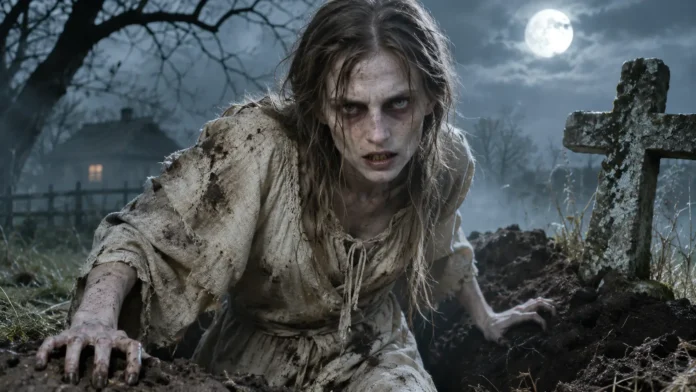
Later Polish folklore records beliefs concerning household beings, revenants, witches, and other supernatural agents. These categories vary by region and date; they do not constitute a securely reconstructed ancient pantheon.
Medieval references to pre-Christian religion are sparse and mediated by Christian writers. They provide limited evidence for particular deities or practices, rather than a comprehensive account of religious organization.
Folklore and Narrative Tradition
Recurring Mythological Themes
Polish folk narratives include accounts of encounters with supernatural beings, explanations of unusual events, and warnings about conduct. Their documented forms are often substantially later than medieval religious evidence.
Such narratives are valuable as records of local social imagination, not direct transcripts of pre-Christian belief. Their dating and interpretation depend on the circumstances of collection and publication.
Transmission and Preservation
Much recorded Polish folklore was transmitted orally before collection by literate observers, particularly during the nineteenth century. Collection preserved variants, but also fixed performances into written forms.
Medieval written evidence differs from folklore collections because clerical authors described religion through Christian categories. Neither source class alone represents every community or period within Poland.
Archaeological objects preserve evidence of material practice, while their specific mythological interpretations remain uncertain unless supported by contextual textual or comparative evidence. Objects should not be assigned meanings automatically.
Internal Variation and Temporal Change
Belief and narrative varied across regions, communities, and historical periods. The surviving record does not justify treating all Polish lands as culturally uniform or assigning every motif one meaning.
Christianization introduced major changes in public religious institutions and written representation. Later folklore nevertheless contains supernatural traditions, although continuity from pre-Christian religion cannot generally be demonstrated motif by motif.
Nineteenth-century collectors recorded folklore amid changing political and intellectual circumstances. Their collections document particular informants and editorial choices, not a complete, unaltered national tradition.
Related Cultural Origins and Myth Sources
Polish evidence belongs within the broader study of West Slavic history, but shared linguistic or regional classification does not prove identical religious beliefs across Slavic communities.
Medieval sources concerning neighboring Bohemian or Rus’ lands arose from distinct political and ecclesiastical contexts. Comparisons can identify parallels, but cannot erase differences in documentation or local history.
Poland is central here because the entry concerns evidence produced within, or specifically about, its historical territories. Removing that context would obscure source provenance and regional variation.
Evidence Limits and Scholarly Uncertainty
Pre-Christian Polish religious evidence is fragmentary, particularly for beliefs held outside elite or literate settings. No surviving record supplies a comprehensive account of cosmology across the region.
Medieval textual descriptions are limited by Christian authorship, selective reporting, and uncertain terminology. Archaeological remains rarely establish supernatural interpretation without corroboration from independent evidence.
Folklore collections document practices and narratives at particular historical moments, but their dates, selection methods, and editorial mediation constrain claims about earlier origins.
Scholars may disagree over whether a recorded motif preserves older religious material or reflects later Christian and local developments. Such interpretations remain contextual rather than conclusive.
No verified sources describe a unified Polish pre-Christian cosmology for this context. Accordingly, this entry distinguishes documented historical settings from reconstructions that the evidence cannot securely establish.