
Why do we go looking for heroes?
What can one person do when an army approaches, a household collapses, or someone beloved dies? Hero stories begin where ordinary power feels insufficient.
They enlarge the possibilities of action. A shepherd can confront a warrior; a grieving fighter can discover that strength cannot restore the dead.
In 1 Samuel 17, David faces Goliath with a sling rather than Saul’s armor. His victory makes military intimidation answerable to an apparently weaker opponent.
The biblical narrative attributes that reversal to Israel’s God. Courage matters, but David’s triumph is not presented simply as the victory of individual self-belief.
Homer’s Iliad offers a harsher reckoning. Achilles kills Hector after losing Patroclus, yet revenge leaves him with a grief no battlefield victory can repair.
When Hector’s father, Priam, enters Achilles’ shelter to ransom the body, their shared mourning briefly interrupts the violence that has made both men bereaved.
These stories offer different possibilities: deliverance from an overwhelming enemy, and recognition of suffering across enemy lines. Neither makes exceptional power a simple blessing.
Across Egypt, Mesopotamia, the Levant, Greece, and Iran, we will encounter heroes who protect, endure, deceive, and destroy. Their differences matter as much as their courage.
The question is not whether every culture needs the same savior. It is what each tradition asks heroic power to accomplish, and at whose expense.
Two answers to loss: Bata and Kirta
Recovering a life is not the same as repairing a household. Bata and Kirta make that distinction vivid, though neither story offers restoration without further trouble.
The Egyptian Tale of Two Brothers, preserved in Papyrus d’Orbiney, begins with a rupture between brothers. Falsely accused by Anpu’s wife after rejecting her advances, Bata flees.
His survival depends on more than his own resourcefulness: divine intervention protects him, and Anpu later revives him by recovering his lost heart.
Bata’s subsequent transformations into a bull and then trees lead to an extraordinary rebirth as a royal child. He eventually becomes king.
This is not simply a return to his former life: survival repeatedly changes his body and ultimately his social position.
The Ugaritic Kirta Epic, preserved on tablets KTU 1.14–1.16, begins instead with a king bereft of family. Following the god El’s instructions, Kirta besieges Udum to obtain Hurriya as his wife.
Rebuilding one royal household puts another under military pressure.
Marriage and children do not end his troubles. His neglected vow to Athirat and subsequent illness expose his dependence on divine favor.
Even after healing, his son challenges his fitness to rule. The surviving narrative breaks off without resolving their confrontation.
These Egyptian and Ugaritic stories therefore offer different measures of recovery: Bata gains a transformed identity and kingship; Kirta rebuilds a dynasty whose authority remains contested. Read together, they ask not merely whether a hero survives loss, but what his restoration changes for everyone around him.
Bata: the survivor who returns transformed
Bata survives by becoming someone, and something, else. In Egypt’s New Kingdom Tale of Two Brothers, preserved in Papyrus d’Orbiney, restoration repeatedly changes his body before it changes his rank.
The crisis begins when Anpu’s wife, rejected by Bata, falsely claims that he propositioned her and beat her when she refused. Accusation turns domestic intimacy into danger: Anpu pursues his innocent younger brother.
Bata appeals to the sun god, who places a crocodile-filled barrier between them. From safety, he explains the deception.
Anpu eventually returns home and kills his wife, while Bata withdraws to the Valley of the Cedar.
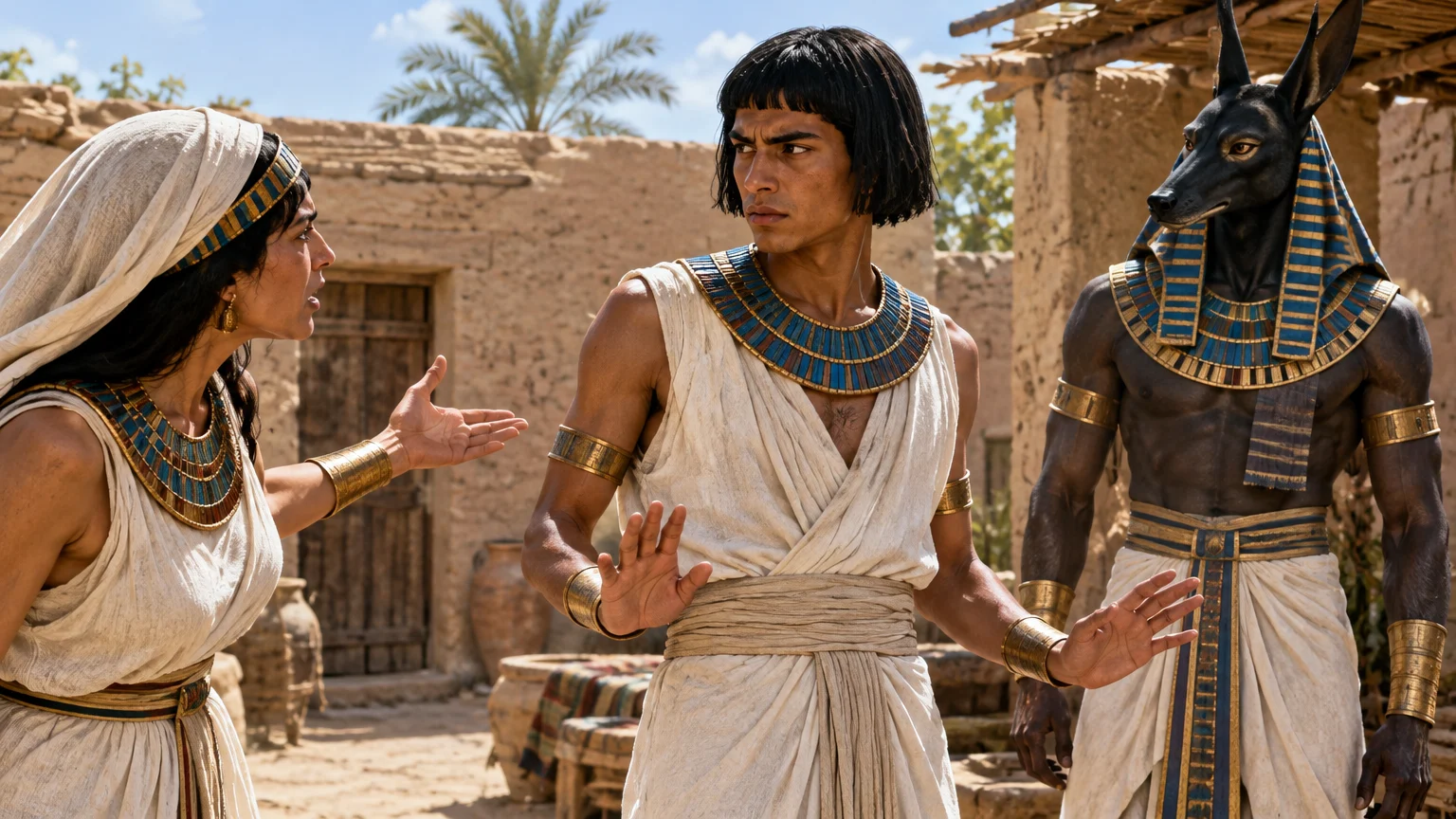
There Bata places his heart on a tree, making his life vulnerable to its destruction. The gods provide him with a wife, but she is taken to Pharaoh’s court and reveals his secret.
At her prompting, the tree is cut down, and Bata dies.
His recovery depends on the brother who once hunted him. Anpu searches for the fallen heart, places it in water, and restores Bata to life.
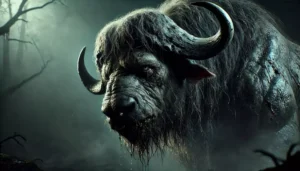
Bata then becomes a magnificent bull and reaches Pharaoh’s court. After he reveals his identity to his former wife, she arranges his slaughter.
Two drops of his blood grow into two persea trees; when she has those felled, a flying splinter enters her mouth, and she conceives.
Reborn as her son, Bata becomes the royal heir and eventually king. He brings his former wife to judgment; Lichtheim’s translation does not specify her punishment.
He appoints Anpu as his successor.
The complete sequence appears in Miriam Lichtheim’s translation of The Tale of Two Brothers. Its ending makes restoration more troubling than a simple homecoming: Bata gains kingship and restores his bond with Anpu, but also uses royal authority to bring his former wife to judgment.
His endurance is extraordinary; whether survival makes him an exemplary ruler is a question readers can still ask.
Kirta: a king’s dangerous vow
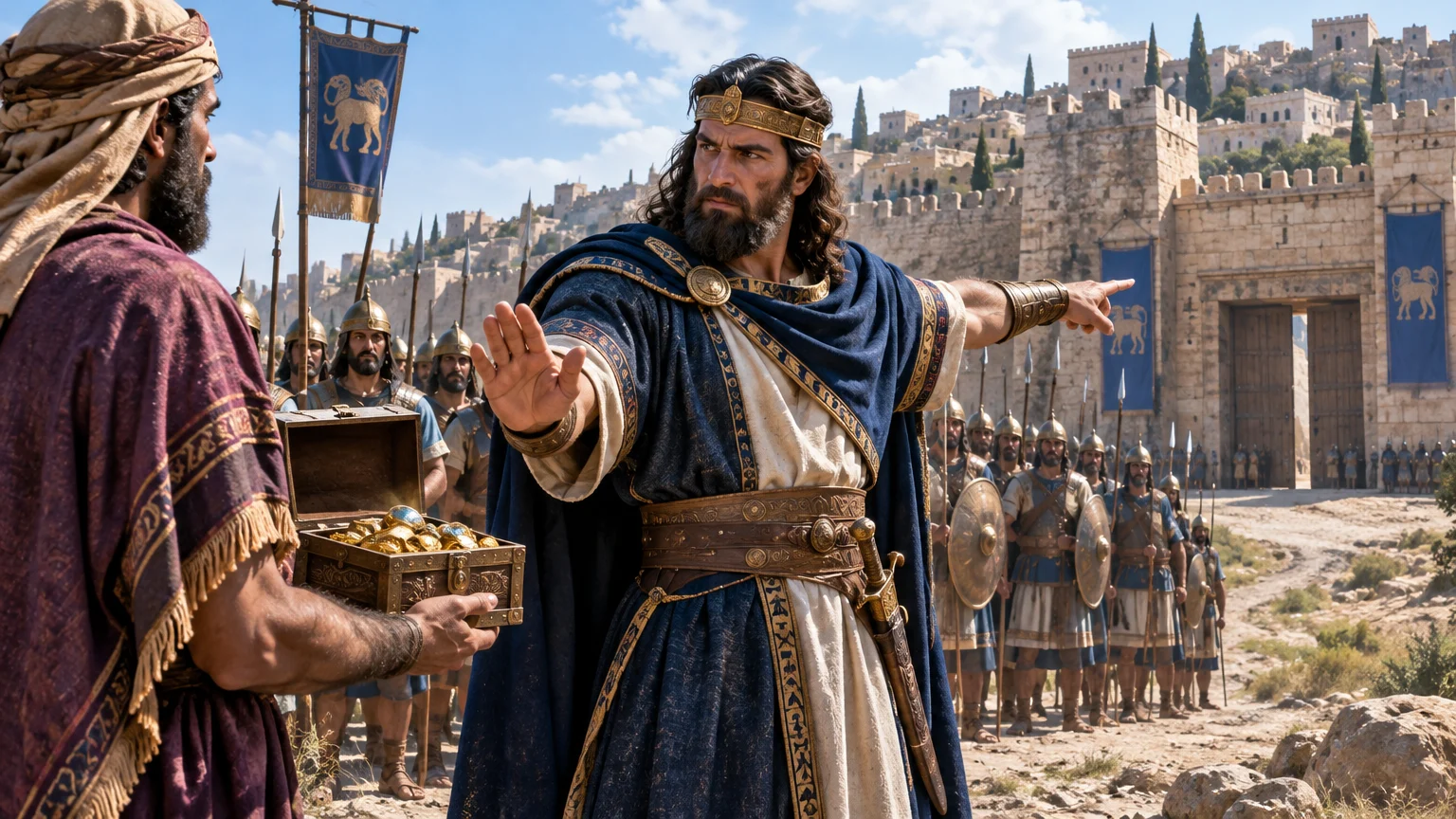
Kirta’s heroism begins in an emptied household. In the Ugaritic epic bearing his name, royal wealth cannot console a king bereft of family.
Preserved on Late Bronze Age clay tablets from Ugarit, on the Syrian coast, his story makes securing descendants a matter of public consequence.
The god El appears in a dream and commands an expedition to Udum. There Kirta must seek Hurriya, daughter of King Pabil.
Kirta marches with an army and besieges the city. Refusing offers of treasure, he demands the princess: his household’s restoration requires another king’s surrender.
Along the way, he vows an offering to the goddess Athirat if he brings Hurriya home. Success follows, but the promised payment goes neglected.
Marriage and children do not secure lasting happiness. Athirat’s anger over the vow shadows the king’s subsequent illness, exposing the fragility beneath royal power.
El eventually creates the healing figure Shatiqatu, who overcomes Kirta’s affliction. Yet bodily recovery does not settle whether he deserves to govern.
His son Yassib accuses him of failing the vulnerable and demands his abdication. Kirta answers with a curse, not a demonstration of justice.
The surviving narrative breaks off without resolving this confrontation. Its hero regains life, but his authority remains contested within the family he struggled to rebuild.
Enkidu: the wild companion who changes the hero
Enkidu enters Mesopotamia’s Epic of Gilgamesh as an answer to royal arrogance: a wild man, shaggy-haired and powerful, created to challenge Uruk’s overbearing king.
His encounter with Shamhat draws him away from animal companionship and into human society. When he meets Gilgamesh, he exercises his strength against him, not beside him.
Their struggle becomes a friendship that redirects the king’s life, giving Enkidu influence no courtier possesses.
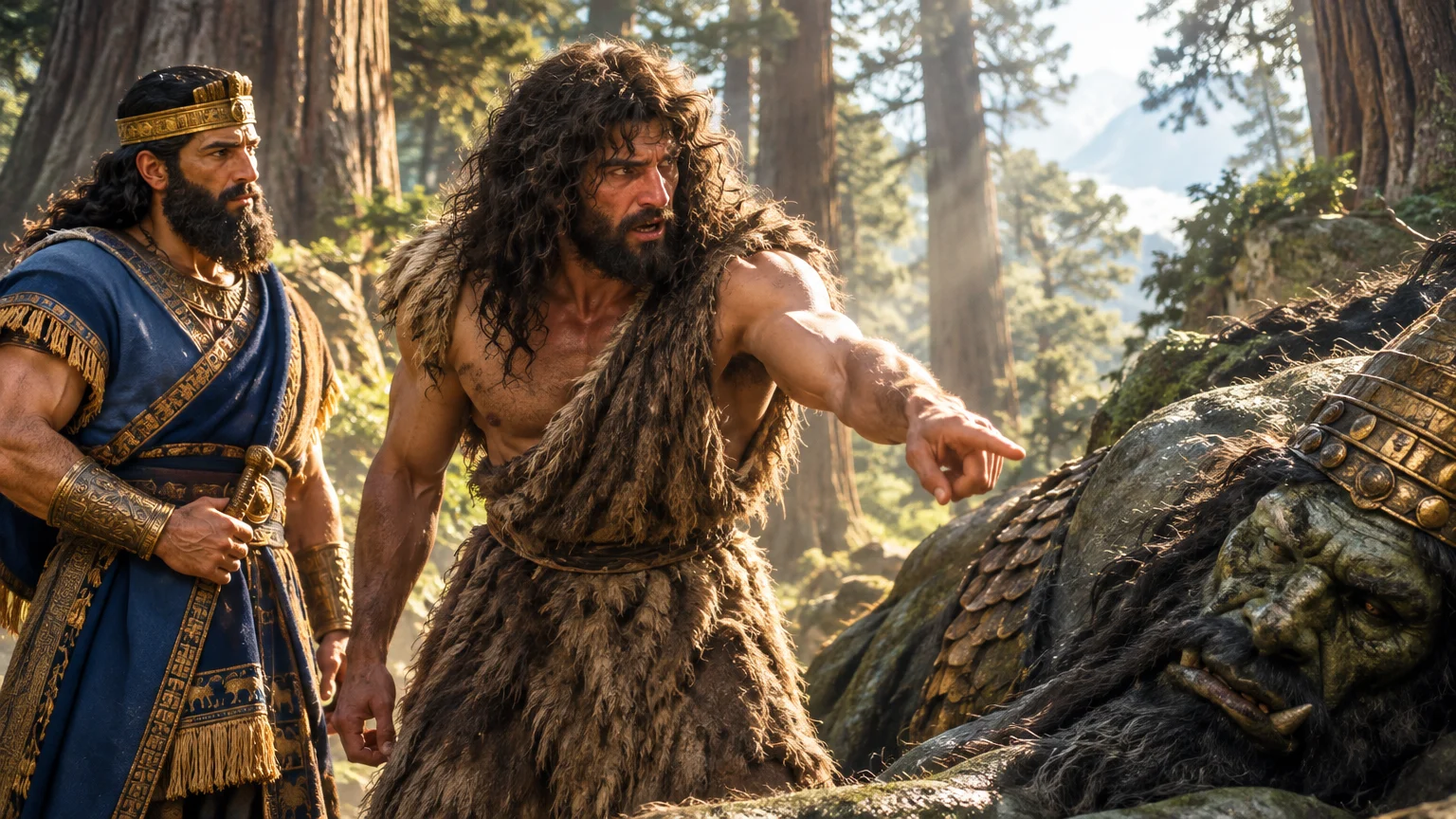
In the epic’s Standard Babylonian version, Enkidu knows the danger awaiting them in the Cedar Forest: Humbaba, its terrifying guardian, appointed by the god Enlil.
Nevertheless, he accompanies Gilgamesh. With the sun god Shamash’s assistance, they overcome Humbaba, but victory leaves a choice: accept the defeated guardian’s plea or kill him.
Enkidu urges death before the gods can intervene. The companion who restrains a king also encourages his violence; loyalty offers no guarantee of wisdom.
Later, when Ishtar sends the Bull of Heaven against Uruk, Enkidu helps Gilgamesh kill it, then hurls part of its carcass toward the goddess.
Divine judgment follows. In a dream, Enkidu hears the gods decree that he must die because the companions have killed Humbaba and the Bull of Heaven.
Stricken with illness, he also dreams of the underworld, a house of dust and darkness where even former kings cannot escape death’s diminished existence. Royal and religious identities remain recognizable, but they offer no return to life.
He dies in bed rather than battle, bitterly conscious of the difference. His ending denies heroic strength the protection its admirers might expect.
Gilgamesh’s grief gives Enkidu’s absence enormous power. The wild companion has become irreplaceable, and his death makes mortality impossible for the surviving hero to ignore.
Rostam: endurance across seven trials
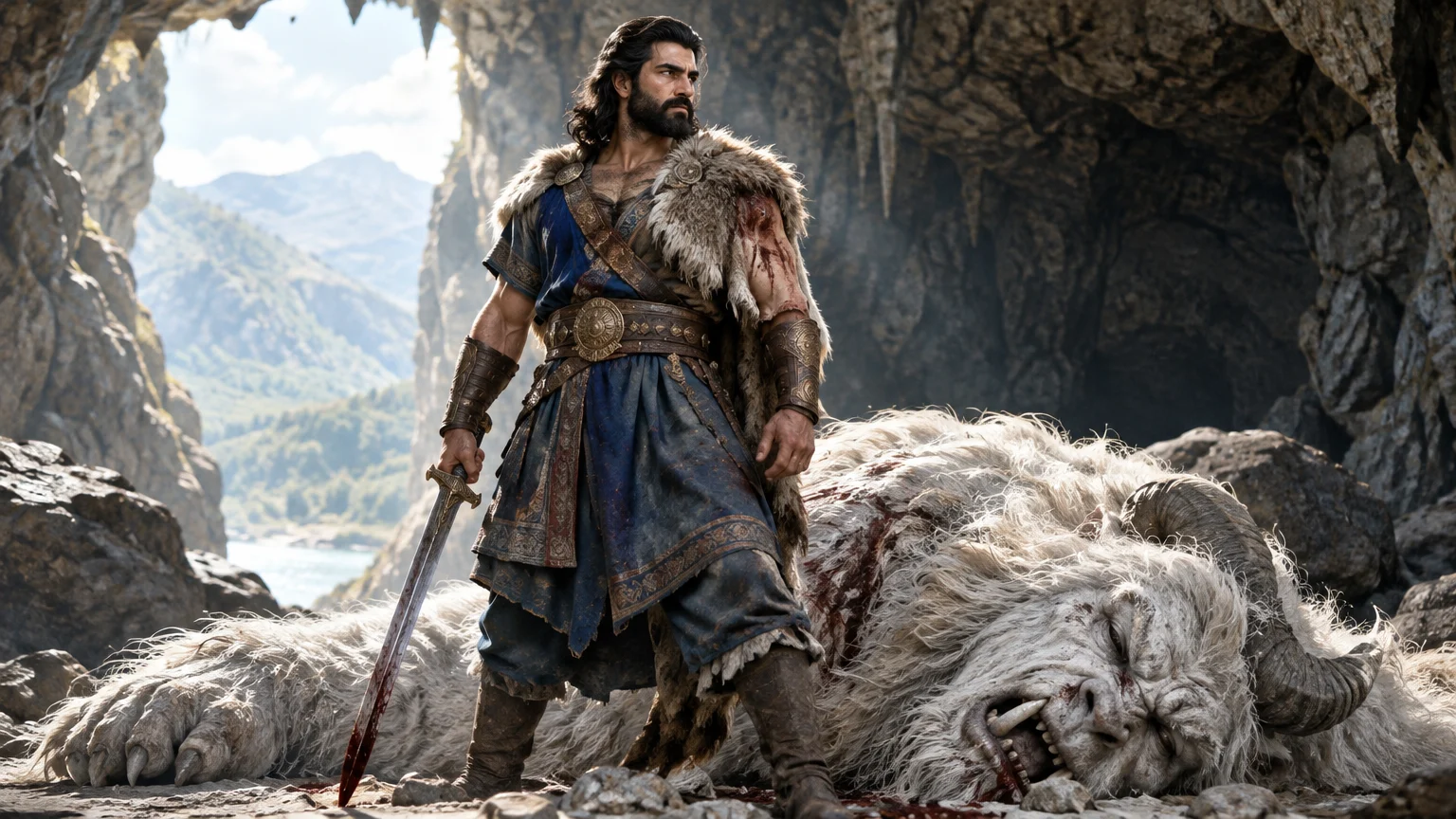
Rostam rides into Mazandaran because King Kay Kavus has marched there recklessly. In Ferdowsi’s Persian Shahnameh, the champion must rescue a ruler defeated by demons.
The seven trials make endurance more than brute strength. Rostam depends on his horse Rakhsh, divine assistance, practical judgment, and enemies compelled to guide him.
First, Rakhsh kills a lion while Rostam sleeps. Then thirst nearly defeats horse and rider, until a ram leads Rostam toward water.
The third trial brings a dragon that repeatedly disappears before Rostam can see it. Warned by Rakhsh, he finally confronts and kills it.
Next, an enchantress approaches disguised as a beautiful woman. Rostam’s invocation of God exposes her nature, turning apparent hospitality into another deadly encounter.
In the fifth trial, he captures Olad and secures his guidance. In the sixth, he kills Arzhang, a demon commander guarding the captive king.
The seventh takes him into the White Demon’s cavern. Rostam kills this formidable opponent; blood from its liver restores the blinded king’s sight.
Rescue does not make kings wise. Rostam’s achievement reveals a recurring political tension: Iran needs a champion to survive the consequences of royal ambition.
Completed in the early eleventh century, Ferdowsi’s epic gives Rostam a much larger, darker story than this triumphant journey alone suggests.
He unknowingly kills his son Sohrab in combat. Eventually, his half-brother Shaghad’s treachery brings his own death in a pit planted with weapons.
Odysseus: the strength of a clever answer
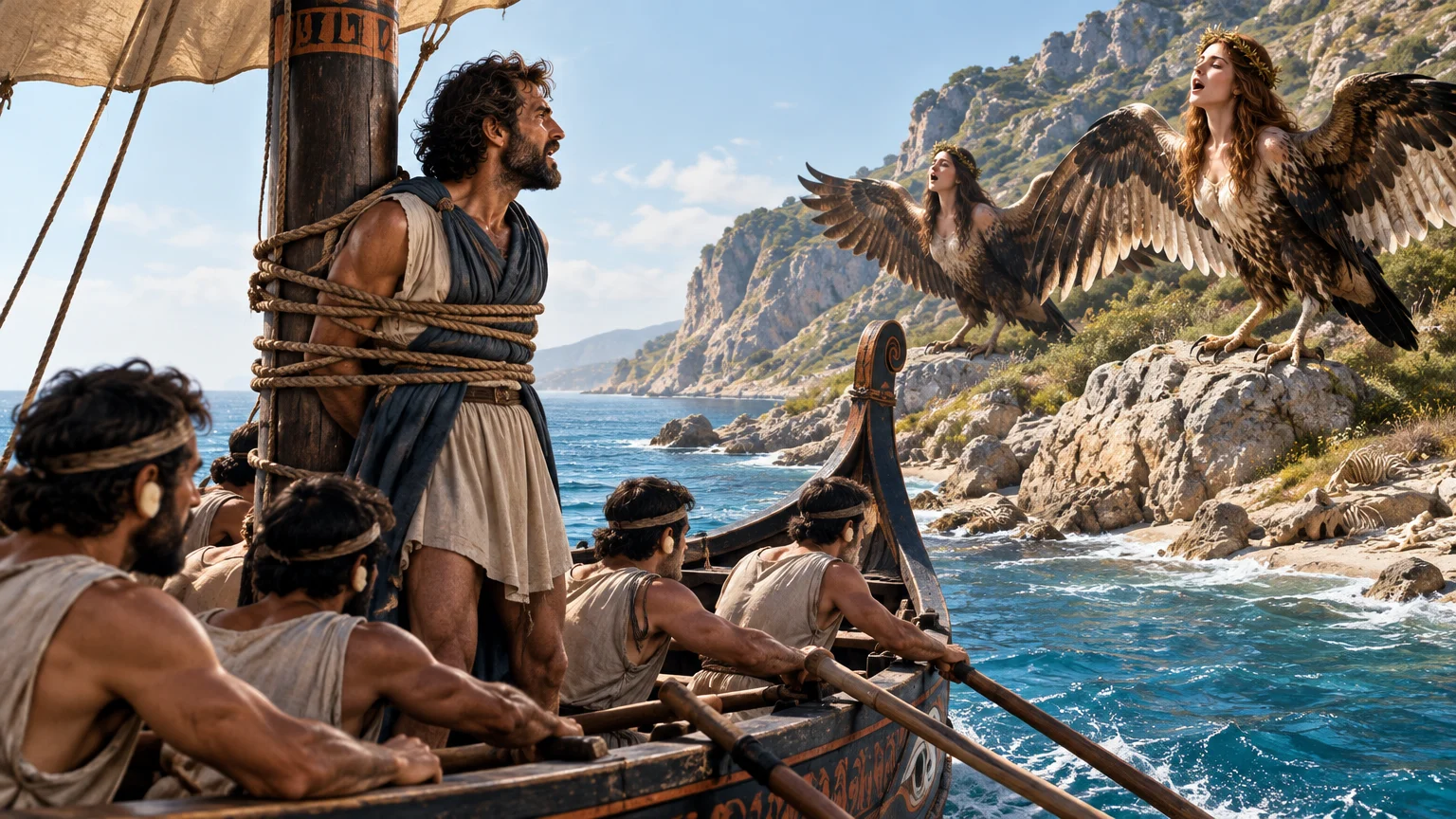
Odysseus, Greek king of Ithaca, survives by making language do what muscle cannot. In Homer’s Odyssey, intelligence saves lives, but pride endangers them.
Inside Polyphemus’s cave, the Cyclops eats several of his companions. Killing their captor outright would leave the survivors trapped behind an immovable stone.
Odysseus offers strong wine and gives his name as Nobody. When the giant sleeps, the men drive a sharpened, heated stake into his single eye.
Polyphemus cries that Nobody is attacking him. His neighboring Cyclopes hear no reason to intervene: a false name has turned a plea into apparent nonsense.
Escape still requires bodies, not merely words. Odysseus lashes companions beneath sheep and clings beneath the great ram, evading the blinded shepherd’s searching hands.
Then cleverness yields to the hunger for recognition. Sailing away, Odysseus shouts his real name; Polyphemus invokes his father Poseidon against the fugitive.
The victory becomes a warning about heroic fame. The name Odysseus concealed to save his companions becomes the instrument through which his enemy seeks revenge.
His homecoming eventually brings reunion with Penelope, but also the slaughter of her suitors. The poem ends with Athena stopping further vengeance.
Survival requires cunning; restoring a household requires limits that even this resourceful hero cannot establish alone.
Aqhat: the bow, the bargain, and the cost
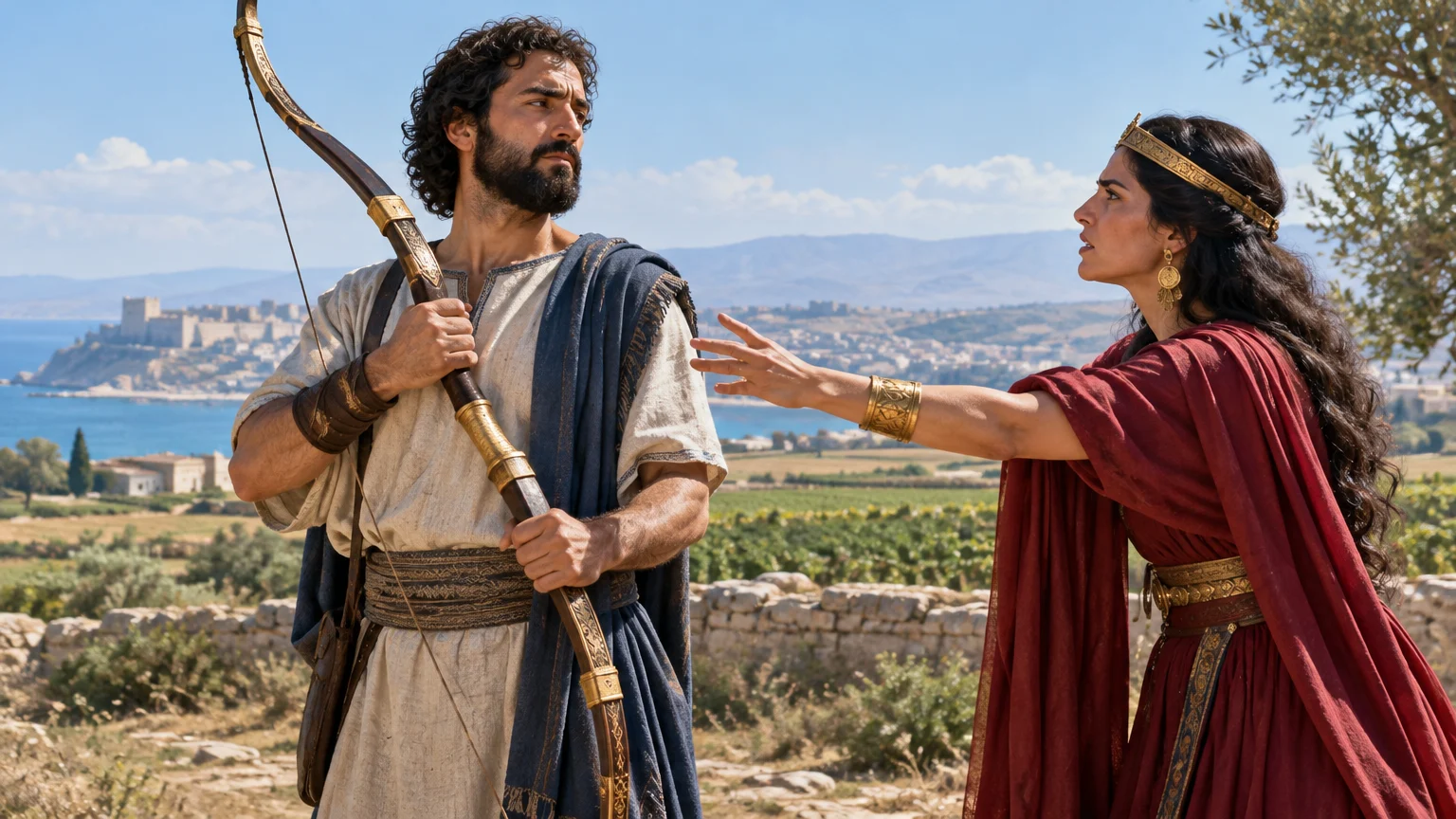
Aqhat’s bow attracts a goddess, but possessing it brings no protection. His Ugaritic story makes heroic distinction dangerously vulnerable to divine desire.
Preserved on fragmentary Late Bronze Age tablets from Ugarit, on today’s Syrian coast, the tale concerns Aqhat, son of the righteous judge Danel.
The craftsman god Kothar-wa-Khasis supplies the extraordinary bow. Anat covets it and offers Aqhat riches, then life beyond the ordinary human span, in exchange.
Aqhat refuses. He distrusts the promise of immortality, insisting that death is humanity’s fate. He also disparages the idea of a woman wielding a bow.
His answer combines clear-eyed mortality with an insult to a warrior goddess. Neither makes his killing just; together, they sharpen the confrontation.
Anat recruits Yatpan, whose attack kills Aqhat. The prize she wanted slips away too: her scheme brings death without securing the bow.
Grief spreads beyond the fallen hunter. Danel mourns, and the narrative connects Aqhat’s loss with drought, making household catastrophe resonate across the cultivated landscape.
His sister Pughat takes up the unfinished struggle. Concealing a warrior’s equipment beneath women’s clothing, she enters Yatpan’s camp and serves him drink.
The surviving text breaks off before vengeance is completed. Aqhat receives no preserved triumphant return; instead, heroic agency passes to a sister whose final success remains unknown.
Lugalbanda: survival in the mountain wilderness
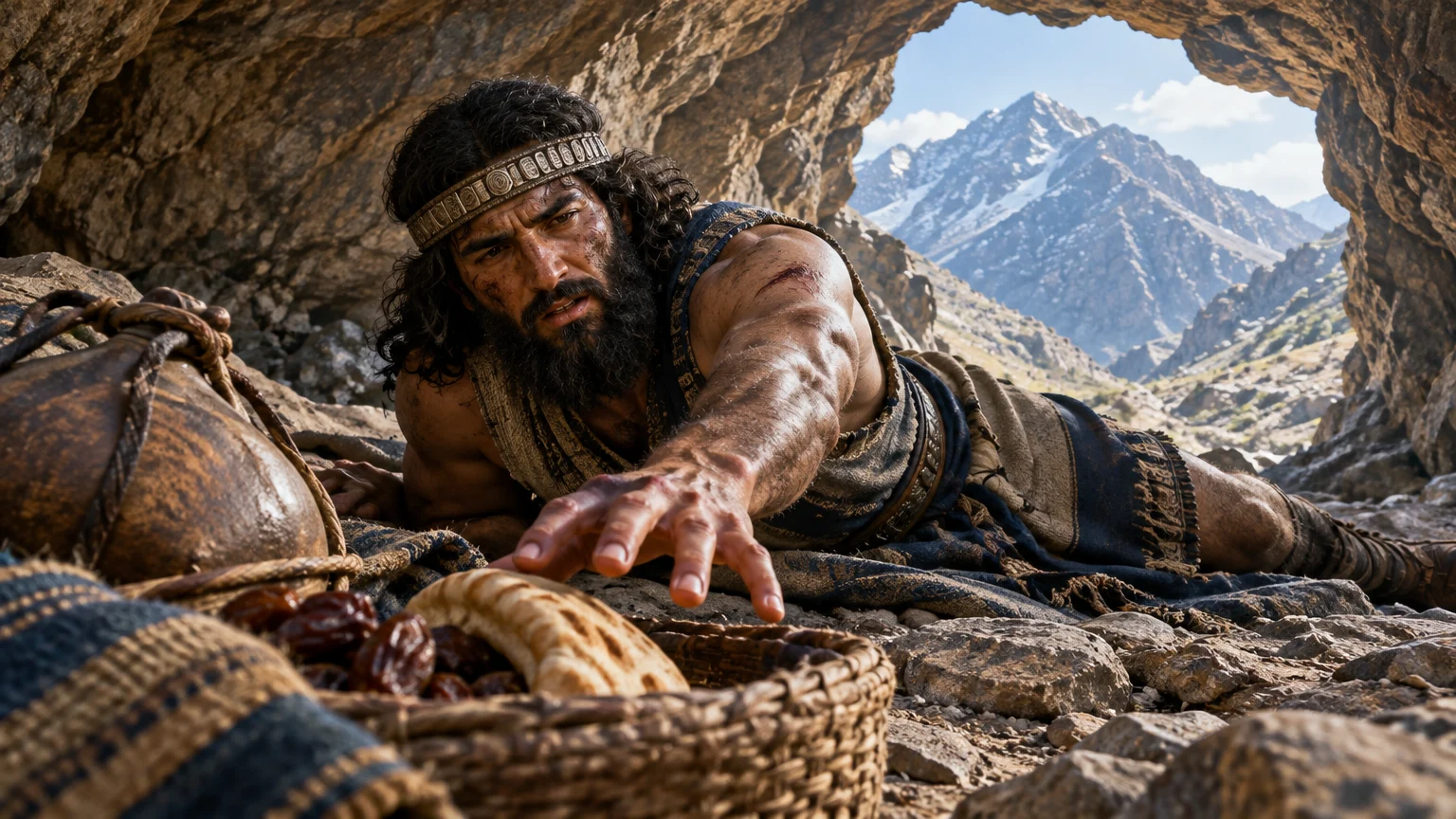
Lugalbanda’s ordeal begins when strength fails. In Sumerian poetry, the future king of Uruk falls gravely ill while accompanying Enmerkar’s expedition toward Aratta.
His companions leave him in a mountain cave with provisions, intending to return. The army marches onward; his struggle narrows to staying alive.
In Lugalbanda in the Mountain Cave, he appeals to divine powers and recovers. Wilderness becomes a place of prayer, nourishment, and renewed agency.
The companion poem, Lugalbanda and the Anzud Bird, turns survival toward an unexpected encounter: Lugalbanda finds the great bird’s nest and feeds its chick.
Instead of killing a monstrous opponent, he cares for a vulnerable creature. The grateful Anzud offers rewards, making generosity the turning point of his adventure.
Lugalbanda chooses extraordinary speed. The gift allows him to cross immense distances, but Anzud instructs him to keep its source secret.
Rejoining the expedition, he becomes the messenger capable of returning to Uruk to seek Inana’s help. Private recovery becomes service to an endangered collective.
These poems do not end with his death. Their surviving narrative gives him a renewed place among others, rather than a final, all-conquering victory.
His distinction lies in that reversal: the man left unable to march becomes the one whose movement everyone else needs.
Heracles: bringing Cerberus back from the dead

Heracles, Greek son of Zeus and the mortal Alcmene, confronts death without dying: his final labor requires bringing back the Underworld’s guardian, Cerberus.
The task comes from Eurystheus, the king whose commands turn extraordinary strength into compulsory service. This time, the quarry stands beyond the living world.
In the Library attributed to Apollodorus, Heracles descends at Taenarum in the Peloponnese. Hades permits the capture, provided he overpowers Cerberus without weapons.
The condition changes the encounter. Heracles cannot simply kill an enemy: he must master a guardian whose place within the divine order remains necessary.
Protected by his lion skin, he grips Cerberus until the creature yields, enduring its serpent-tail’s bite. Even this seemingly impossible victory demands bodily suffering.
He brings Cerberus before Eurystheus, then returns him below. The achievement is a round trip across death’s boundary, not resurrection or death’s permanent defeat.
His own ending exposes that distinction. In Sophocles’ Women of Trachis, Deianira unwittingly sends him a garment poisoned through the centaur Nessus’s deception.
Tormented, Heracles orders a funeral pyre prepared on Mount Oeta. The tragedy ends before his burning, leaving agony rather than triumphant immortality before its audience.
Diodorus Siculus relates his subsequent reception among the gods. These tellings give heroic strength different horizons: unbearable mortal suffering, and eventual divine belonging.
Arash: the arrow that costs a life
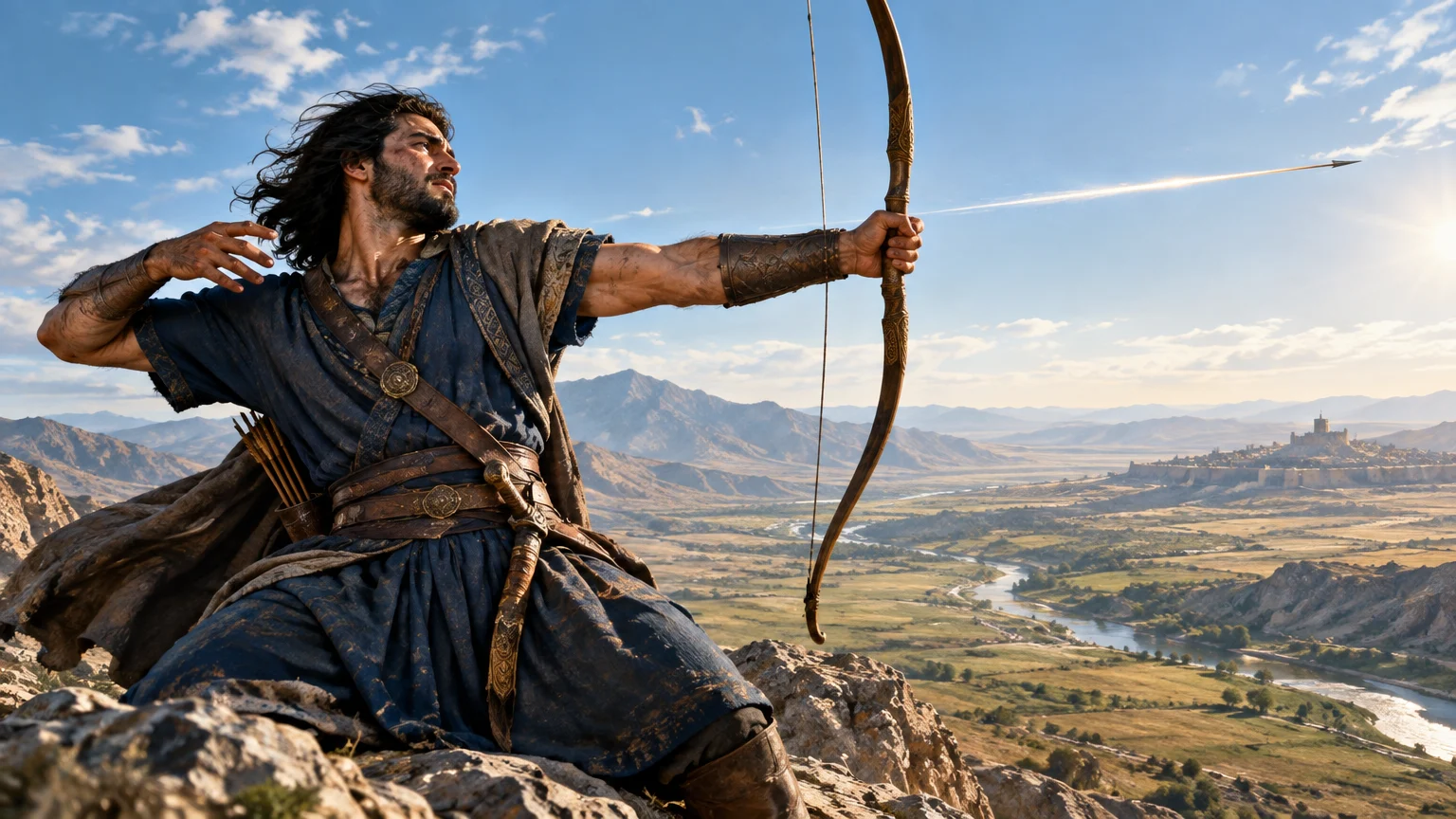
Where Heracles crosses a boundary and returns, Arash secures one by surrendering his life. His battlefield is the distance a single arrow can travel.
In Persian tradition, war between Iran and Turan leaves the disputed frontier dependent on an extraordinary bargain: an archer’s shot will determine the boundary.
Arash takes the bow. In the sacrificial telling, he knows the effort will consume him; the settlement requires more than exceptional accuracy or strength.
His arrow flies far beyond an ordinary shot, winning territory for Iran. When its journey ends, Arash has spent his life securing his people’s future.
The tradition has several layers. The Avestan Tishtrya Yasht remembers the remarkable archer Erekhsha, associated with Arash, without narrating this complete sacrificial ending.
Much later, al-Biruni records the boundary story in connection with Tirgan, including the archer’s fatal exertion. Locations and details differ across retellings.
Those differences matter: this is not a recoverable survey of an ancient frontier. It is a story that makes territorial belonging inseparable from personal sacrifice.
Arash belongs among these heroes because his defining victory benefits others rather than preserving himself. The arrow reaches a future its archer will never inhabit.
The Shipwrecked Sailor: hope after the storm
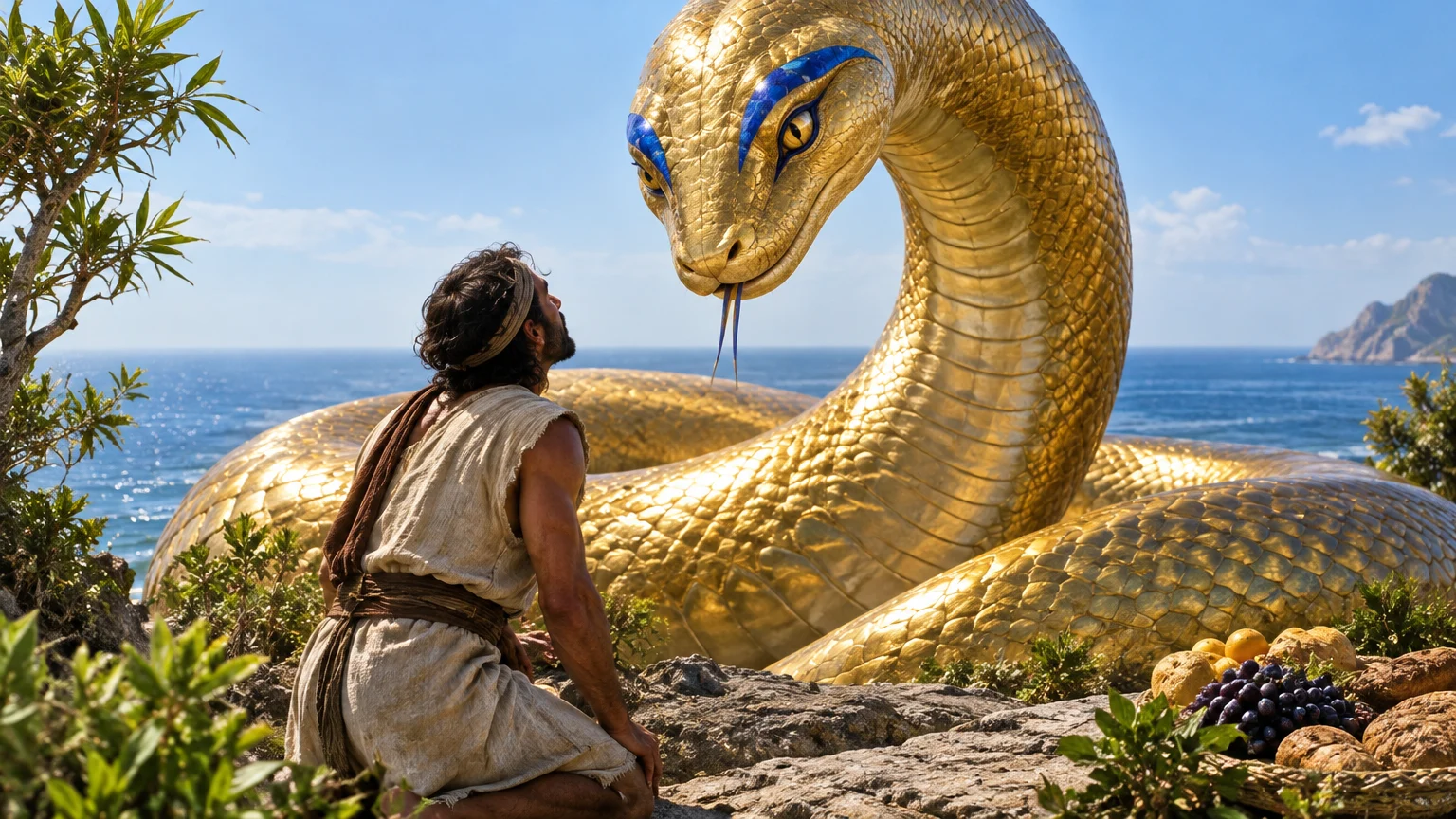
Egypt’s unnamed Shipwrecked Sailor offers another kind of heroism: surviving disaster and finding words for it. His adventure survives in a Middle Kingdom manuscript.
The story begins with an anxious expedition leader facing his sovereign. An attendant offers reassurance by recounting his own catastrophic voyage.
A storm destroys the sailor’s ship and kills his companions. Cast onto an island, he finds food, makes an offering, and encounters something terrifying.
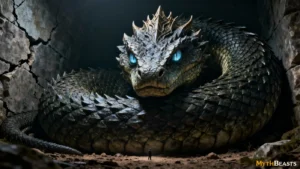
A gigantic serpent approaches, its body covered in gold, its eyebrows of lapis lazuli. It demands an explanation and threatens the trembling stranger.
Yet this apparent monster becomes his protector. The serpent predicts rescue after four months and reveals its own bereavement: a heavenly catastrophe destroyed its kin.
The encounter brings two survivors together. The sailor cannot undo the serpent’s loss, but the serpent can promise that his visitor will embrace his family again.
A ship arrives as foretold. Laden with the serpent’s gifts, including incense and precious goods, the sailor returns to Egypt and receives royal favor.
His victory requires neither conquest nor slaughter. He survives through another being’s generosity, then turns remembered terror into a story intended to help someone else.
But reassurance meets resistance: the expedition leader answers with an image of a bird destined for slaughter. One survivor’s happy ending cannot guarantee another’s.
Conclusion: What Makes a Hero?
The expedition leader’s refusal of easy reassurance leaves us with a sharper question: do heroes promise safety, or help people face its absence?
Across these ten stories, extraordinary power never supplies one answer. Bata and Kirta make restoration and royal security questions to be tested, not assumed.
Enkidu’s death sends Gilgamesh searching for immortality. Read beside Aqhat’s story, that loss challenges any comforting equation between exceptional status and protection.
Rostam’s rescue of a reckless king raises a political problem: strength may preserve a kingdom without making its ruler wise. Service carries its own burdens.
Odysseus and Heracles offer different powers, persuasive intelligence and overwhelming force. Yet neither acts beyond obligation, dependence, or the consequences of his decisions.
Lugalbanda and the Shipwrecked Sailor bring vulnerability into the comparison. Their survival makes receiving help central to heroism, rather than an embarrassment concealed behind victory.
Arash sharpens the distinction between personal survival and communal deliverance. A boundary secured for others need not mean a homecoming for the person who secures it.
These traditions do not prove that every culture needs the same hero. They let audiences weigh what deserves admiration, who pays for greatness, and what victory leaves unresolved.
Further reading
The following sources provide the ancient narratives, historical context, and modern research behind the heroes explored in this article. They include primary texts in translation, museum collections, and scholarly studies.
Some ancient stories survive only in damaged manuscripts, while others developed through centuries of retelling.
Heroism, mortality, and the ancient world
1. The First Book of Samuel, Chapter 17 – Hebrew Bible.
The primary account of David and Goliath.
Essential for examining how the biblical narrative connects courage, divine assistance, military power, and the unlikely victory of an apparently weaker opponent.
https://www.sefaria.org/I_Samuel.17
2. The Iliad, Book 24 – Homer, translated by A. T. Murray.
The closing book of Homer’s epic recounts Priam’s meeting with Achilles and the recovery of Hector’s body.
A foundational text on heroic anger, mortality, compassion, and the limits of vengeance.
https://www.theoi.com/Text/HomerIliad24.html
3. Literature of Ancient Egypt and the Ancient Near East – Susan Tower Hollis (2020).
A scholarly overview of literary traditions across the ancient Near East.
Useful for understanding how different societies developed stories about gods, kings, human vulnerability, and exceptional individuals.
https://onlinelibrary.wiley.com/doi/10.1002/9781119362500.ch16
Egyptian heroes: Bata and the Shipwrecked Sailor
4. Papyrus d’Orbiney: The Tale of Two Brothers – British Museum.
The museum’s record of the original Egyptian manuscript describes Bata’s false accusation, exile, extraordinary transformations, death, rebirth, and eventual kingship.
Essential primary-document evidence for reconstructing his complete story.
https://www.britishmuseum.org/collection/object/Y_EA10183-1
5. The Ancient Egyptian Tale of Two Brothers: A Mythological, Religious, Literary and Historico-Political Study – Susan Tower Hollis (2008).
A detailed scholarly investigation of Bata and Anubis, examining their narrative alongside Egyptian religious beliefs, political symbolism, divine kingship, and the story’s wider literary and historical meanings.
https://www.oxbowbooks.com/9780977409426/the-ancient-egyptian-tale-of-two-brothers/
6. Ancient Egyptian Literature, Volume II: The New Kingdom – Miriam Lichtheim (1976).
A major collection of translated Egyptian literary works, including The Tale of Two Brothers.
Particularly valuable for checking the original narrative sequence rather than relying on abbreviated modern summaries.
https://www.jstor.org/stable/10.1525/j.ctt1ppr00
7. The Tale of the Shipwrecked Sailor – Egypt Exploration Society.
An accessible presentation of the Middle Kingdom Egyptian story, covering the shipwreck, the extraordinary serpent, the prediction of rescue, and the complicated relationship between survival and reassurance.
https://www.ees.ac.uk/resource/the-tale-of-the-shipwrecked-sailor.html
8. Middle Egyptian Literature: The Story of the Shipwrecked Sailor – James P. Allen (2015).
A scholarly translation and examination of the tale preserved in Papyrus Hermitage 1115.
Important for understanding its nested storytelling, Egyptian vocabulary, cultural setting, and ambiguous concluding exchange.
https://www.cambridge.org/core/books/abs/middle-egyptian-literature/story-of-the-shipwrecked-sailor/66BA822F650B9A3D23D01AE95A21ED20
9. Interpreting the Story of the Shipwrecked Sailor – John Baines (1990).
An academic study of the tale’s literary construction and possible meanings.
Useful for evaluating whether the sailor’s successful return offers genuine reassurance or a more complicated lesson.
https://ora.ox.ac.uk/objects/uuid:64b1db32-d763-43a4-82a5-76dd2baf7d07
Ugaritic heroes: Kirta and Aqhat
10. Ugaritic Narrative Poetry – Edited by Simon B. Parker (1998).
An essential scholarly collection containing English translations of the Kirta and Aqhat epics, alongside other Ugaritic narratives.
Provides the strongest starting point for verifying episodes, names, and damaged passages.
https://cart.sbl-site.org/books/061509P
11. The Epic of Kret – K. C. Hanson (2007).
A presentation of the Ugaritic Kirta narrative with transliteration and English translation.
Useful for tracing the king’s family losses, military expedition, vow, illness, and challenge to his authority.
https://www.kchanson.com/ANCDOCS/westsem/kret.html
12. The Epics of Aqhat and Kirta as Social Myths? – František Válek (2024).
A comparative scholarly study examining how these Ugaritic narratives express social concerns.
Particularly relevant to royal legitimacy, family continuity, divine relationships, and the obligations surrounding exceptional individuals.
https://www.ub.edu/ipoa/wp-content/uploads/2024/12/20242Valek.pdf
13. Aqhat Epic Is Composed in Ugarit – EBSCO Research Starters.
A historical and literary introduction to Aqhat’s narrative, including Danel, Anat, the extraordinary bow, and the consequences of refusal.
Useful alongside the primary translation for establishing context.
https://www.ebsco.com/research-starters/literature-and-writing/aqhat-epic-composed-ugarit/
14. Measure for Measure in the Aqhat Epic: Retribution and the Restoration of Justice – Shirly Natan-Yulzary (2026).
A focused investigation of justice and retribution within the Aqhat narrative.
Useful for interpreting the aftermath of Aqhat’s murder and the roles played by surviving family members.
https://www.mdpi.com/2077-1444/17/9/998
Mesopotamian heroes: Enkidu and Lugalbanda
15. The Epic of Gilgamesh – Translated and introduced by Andrew George, Penguin Classics.
A major modern translation of the Mesopotamian epic.
Essential for Enkidu’s origins, his friendship with Gilgamesh, the Cedar Forest expedition, the Bull of Heaven, and his death.
https://www.penguin.co.uk/books/34757/the-epic-of-gilgamesh-by-trans-andrew-george-intro-andrew-george/9780140449198
16. Gilgamesh – The Metropolitan Museum of Art.
A museum essay introducing the legendary king within Mesopotamian history, literature, and material culture.
Provides historical context for understanding how heroic narratives circulated beyond their original settings.
https://www.metmuseum.org/ko/essays/gilgamesh
17. Gilgamesh and Huwawa, Version A – The Electronic Text Corpus of Sumerian Literature, University of Oxford.
An English translation of a Sumerian account of the Cedar Forest confrontation.
Valuable for comparing the earlier Huwawa tradition with the later Babylonian epic’s presentation of heroic violence.
https://etcsl.orinst.ox.ac.uk/section1/tr1815.htm
18. Lugalbanda in the Mountain Cave – The Electronic Text Corpus of Sumerian Literature, University of Oxford.
A translation of the Sumerian poem recounting Lugalbanda’s illness, abandonment in the mountains, and struggle to survive.
The essential primary source for his transformation from helplessness to renewed strength.
https://etcsl.orinst.ox.ac.uk/section1/tr1821.htm
19. Lugalbanda and the Anzud Bird – The Electronic Text Corpus of Sumerian Literature, University of Oxford.
The companion poem follows Lugalbanda’s encounter with Anzud, his care for the bird’s young, and the supernatural gift he receives.
Central to his unusual form of heroism.
https://etcsl.orinst.ox.ac.uk/section1/tr1822.htm
Greek heroes: Odysseus and Heracles
20. The Odyssey, Book 9 – Homer, translated by A. T. Murray.
The primary account of Odysseus and Polyphemus, including the false name, blinding, escape beneath the sheep, and disastrous revelation of his identity.
Essential for examining cunning and pride.
https://www.theoi.com/Text/HomerOdyssey9.html
21. The Odyssey, Book 24 – Homer, translated by A. T. Murray.
The epic’s concluding book follows the aftermath of the suitors’ deaths and the threatened renewal of violence.
Important for understanding how Odysseus’s homecoming finally reaches a settlement.
https://www.theoi.com/Text/HomerOdyssey24.html
22. The Library, Book 2 – Pseudo-Apollodorus.
A mythographical account of Heracles’ adventures, including his descent to the Underworld and capture of Cerberus.
Especially useful for verifying the conditions imposed by Hades and the creature’s return.
https://www.theoi.com/Text/Apollodorus2.html
23. The Women of Trachis – Sophocles, with commentary by R. C. Jebb.
The Greek tragedy explores Deianira’s fatal mistake and Heracles’ suffering from the poisoned garment.
Essential for contrasting the champion’s extraordinary victories with his devastating mortal ending.
https://www.perseus.tufts.edu/hopper/text?doc=Perseus%3Atext%3A1999.04.0027
24. Library of History, Book 4 – Diodorus Siculus.
An ancient account of Heracles’ deeds and ultimate reception among the gods.
Useful for distinguishing traditions about his final suffering, funeral pyre, and transformation into an immortal figure.
https://www.theoi.com/Text/DiodorusSiculus4B.html
Persian and Iranian heroes: Rostam and Arash
25. Shahnameh: The Persian Book of Kings – Ferdowsi, translated by Dick Davis.
A major modern English rendering of Iran’s national epic.
Essential for Rostam’s Seven Labors, his service to kings, the tragedy of Sohrab, and his eventual death.
https://www.penguin.co.uk/books/296485/shahnameh-by-ferdowsi-abolqasem/9780143108320
26. Haft Khwan – Encyclopaedia Iranica, Olga M. Davidson.
A specialist examination of the Seven Labors motif in Persian epic tradition.
Useful for checking Rostam’s individual challenges and distinguishing his exploits from those of other Iranian champions.
https://www.iranicaonline.org/articles/haft-kan/
27. Arash – Encyclopaedia Iranica, Ahmad Tafażżolī and William L. Hanaway.
A scholarly account of the legendary Iranian archer and the development of his story.
Particularly valuable for distinguishing early references to his extraordinary shot from later sacrificial traditions.
https://www.iranicaonline.org/articles/aras-avestan-erexsa/
28. Tishtar Yasht, Yasht 8 – Avesta, translated by James Darmesteter.
An important early Iranian religious text containing a reference to the exceptional archer Erekhsha, associated with Arash.
Crucial for establishing what the earlier tradition actually preserves.
https://www.avesta.org/ka/yt8sbe.htm
29. The Chronology of Ancient Nations – Al-Biruni, translated by C. Edward Sachau (1879).
A medieval historical work preserving later Iranian traditions, including the story associated with Arash and the festival of Tirgan.
Essential for tracing the legend beyond its earlier references.
https://wellcomecollection.org/works/uu2cqa8z
Explore Related Beasts
 CentaurCentaur - a creature from Greek mythology with a half-human, half-horse form, symbolizing the duality of civilization and Key…
 CerberusCerberus, the multi-headed guard of the Underworld, prevented souls from escaping and warded off the living. Known for his…
 CyclopsThe Cyclops are one-eyed giants known for their immense strength and hostility towards humans. Famous for encounters with heroes,…
 DragonDragon, the fire-breathing giant from global myths, symbolizes chaos, power, and treasure guardianship, appearing in countless heroic and dark…