The Gods Who Lived Alongside Yahweh
A family gathers around a small fire in ancient Judah. Children collect wood, men prepare the flames, and women knead dough into cakes intended for the Queen of Heaven.
They believe their offerings may bring prosperity, protection, and food for the coming year.
This is not an invented ritual reconstructed from an anonymous statue. The prophet Jeremiah describes these actions in Jeremiah 7:18, then records an extraordinary confrontation with their worshippers in chapter 44.
The people insist that honoring the goddess once brought them prosperity, while abandoning her preceded disaster.
These families belonged to the world of ancient Judah, the kingdom whose traditions would become central to Jewish history. Yet their religious lives did not always resemble the exclusive monotheism familiar from later Judaism.
Alongside Yahweh, some people honored other divine powers, consulted spirits, or practiced rituals condemned by biblical authors.
The story begins centuries earlier, in the land known as Canaan. Its inhabitants worshipped El, the father of the gods; Baal, master of storms; Athirat, a great mother goddess; Anat, a fierce divine warrior; and numerous other powers associated with fertility, death, protection, and the natural world.
How did a religious culture filled with gods, goddesses, and supernatural beings become the setting for a tradition devoted to one God? And what happened to the older practices when prophets, priests, and kings attempted to abolish them?
The answer is more complicated than the familiar story of Abraham breaking his father’s idols. Ancient Israel did not develop outside the Canaanite world.
It emerged within it, transforming religious language, divine identities, rituals, and beliefs that already belonged to the region.
Canaan Before Israel: A Land of Many Gods
Canaan was not a single empire or a country with permanently fixed borders. During the Bronze Age, the name referred to regions of the southern Levant, including much of present-day Israel and the Palestinian territories and neighboring areas of Lebanon, Syria, and Jordan.
Its inhabitants lived in fortified towns, agricultural villages, ports, and small kingdoms. Many belonged to related Northwest Semitic-speaking communities, sharing languages, trading networks, artistic traditions, and religious concepts while maintaining distinct political and local identities.
One of the most remarkable discoveries came in 1929, when excavations began at Ras Shamra on the Syrian coast. Archaeologists uncovered ancient Ugarit and a collection of clay tablets written in an alphabetic cuneiform script.
These tablets preserve myths, prayers, ritual instructions, offerings, and stories involving supernatural powers. Although Ugarit was not Israel, its surviving literature offers an extraordinary window into the religious world that existed before and alongside the formation of ancient Israelite society.
The texts reveal a divine family arranged around a great patriarch. Gods hold councils, negotiate marriages, establish kingship, fight enemies, demand offerings, and intervene in human affairs.
Their world resembles a supernatural version of the royal courts familiar to the societies that worshipped them.
Religion was not confined to ceremonial temples. Farmers depended on rainfall, families feared infertility and illness, sailors confronted dangerous waters, and rulers needed divine support.
People sought protection through sacrifices, blessings, vows, offerings, and rituals intended to influence invisible powers.
Meet the Canaanite Gods
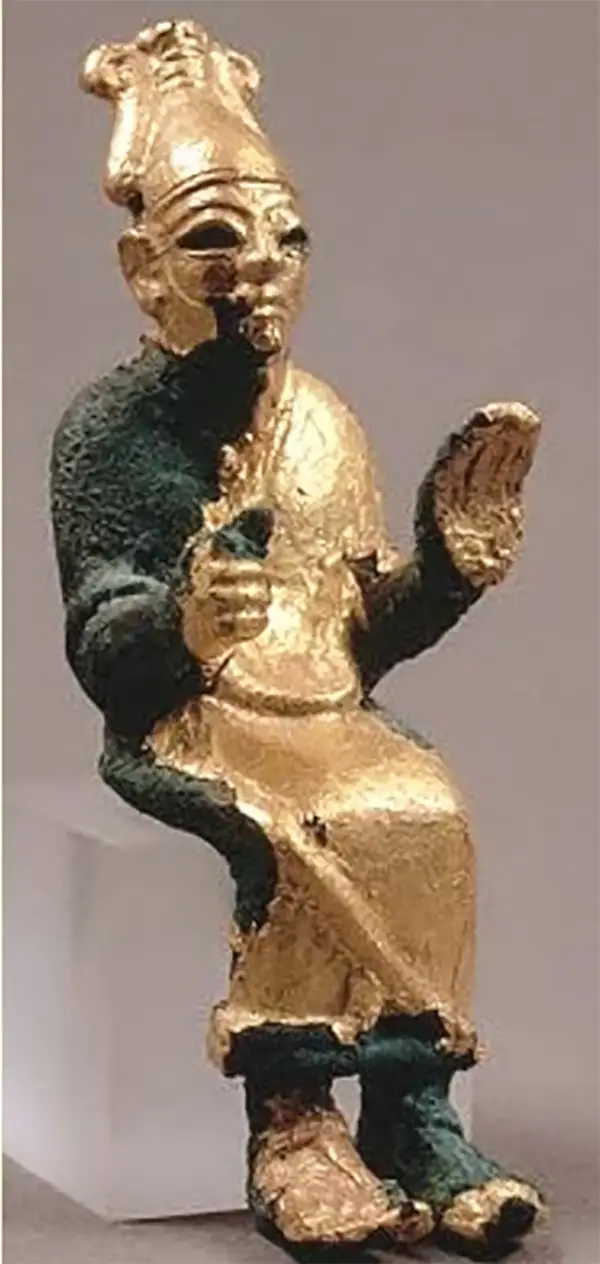
El: Father of the Gods
El stood near the summit of the Canaanite divine hierarchy. At Ugarit, he appears as an elderly patriarch, a source of authority, and the father of a divine family.
His titles emphasize wisdom, seniority, and his commanding position among supernatural beings.
Unlike Baal, who fights dramatic battles, El often exercises power through decisions, meetings, and negotiations. His residence becomes a place where divine messengers seek approval, while the actions of younger gods unfold within a hierarchy he helps maintain.
The name El also means “god” in Northwest Semitic languages, and the distinction between a divine title and an individual deity can depend on context. This linguistic overlap becomes especially important when examining the names used for Israel’s God.
Athirat or Asherah: The Divine Mother
Athirat occupies a prominent place in Ugaritic mythology as El’s consort and a maternal figure associated with the divine family. The Hebrew name Asherah appears in biblical passages describing worship that later writers condemn or seek to remove.
Her precise place in ancient Israelite religion remains disputed. Some scholars propose that certain worshippers understood her as Yahweh’s divine consort after Yahweh became identified with El.
Others argue that particular references concern sacred objects rather than a separate goddess.
Baal: Lord of Thunder and Rain
Baal, often identified more specifically with the storm god Hadad, controlled powers essential to agricultural survival. His lightning and storms made him one of the most important supernatural figures in the religious imagination of the ancient Levant.
In the Baal Cycle, he battles Yam, the divine Sea, and later confronts Mot, Death. These stories connect heavenly conflict with kingship and the precarious natural order upon which human communities depended.
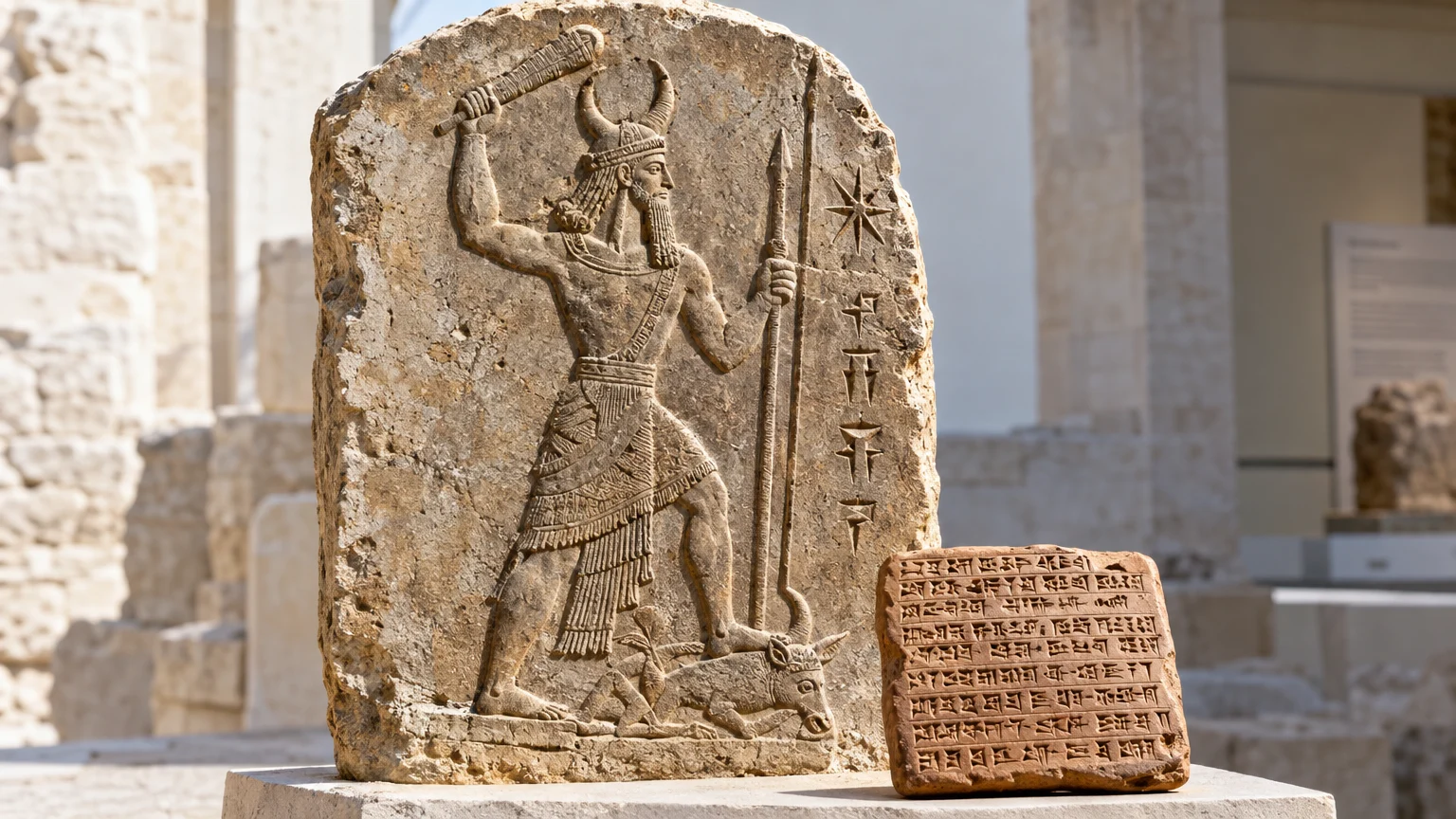
Baal’s title, meaning “lord” or “master,” could also refer to locally distinguished manifestations of divine authority. Biblical references to Baalim, the plural form, therefore require attention to local religious practices rather than assuming one identical cult everywhere.
Anat and Astarte: Divine Power Beyond the Household
Anat appears in Ugaritic literature as a formidable and sometimes violent goddess, associated with warfare and loyalty to Baal. Her actions in the struggle against Mot reveal a supernatural personality capable of devastating enemies and challenging the boundaries of death.
Astarte, or Ashtart, belongs to related Levantine religious traditions and appears in different local settings. Her associations include sexuality, fertility, and martial power, although her identity and functions changed across regions and periods.
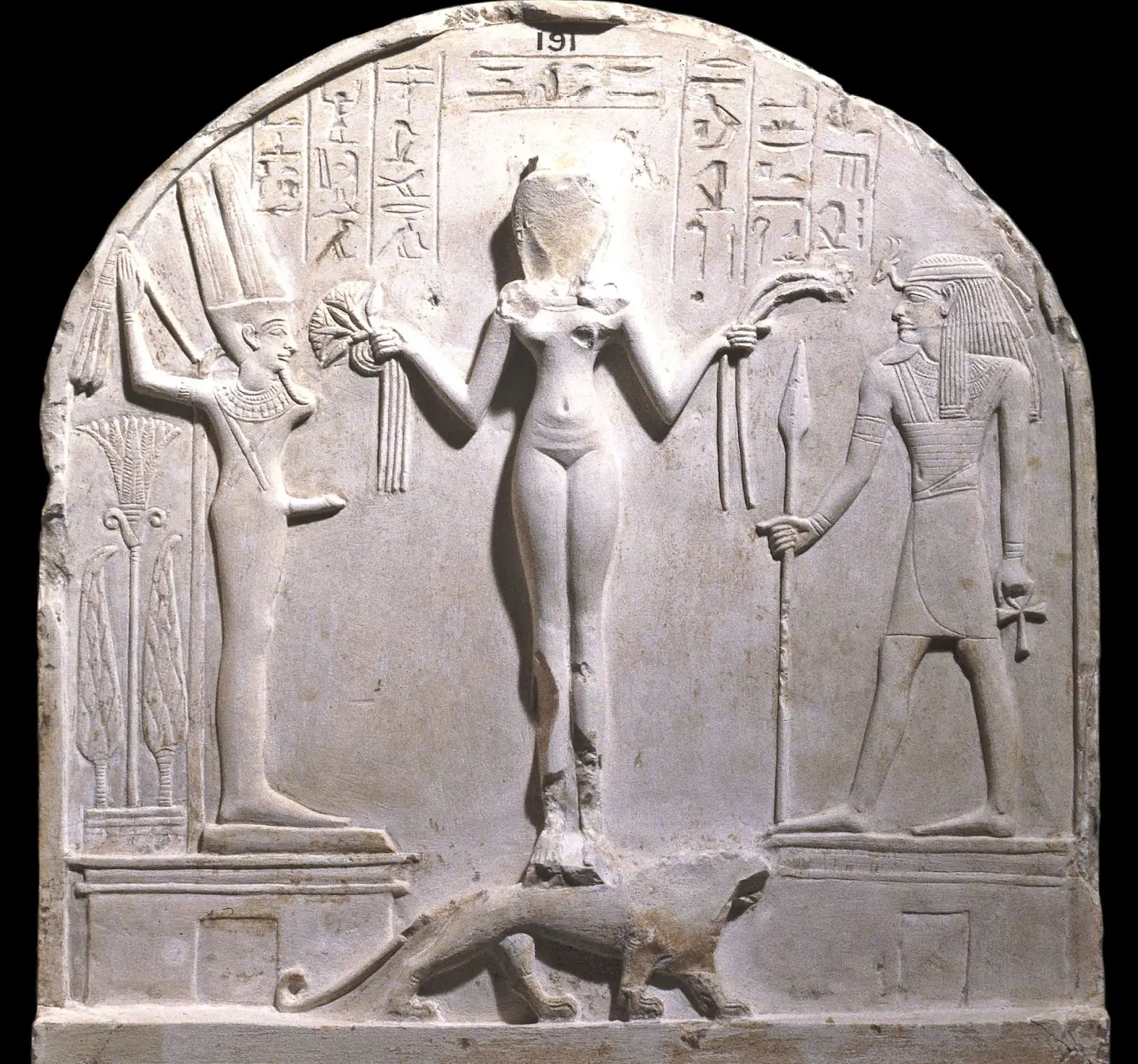
These goddesses should not simply be combined into one universal fertility goddess. Their names, roles, and relationships differ between texts, and later Greek or Roman identifications add further layers that do not necessarily reflect earlier Canaanite beliefs.
Mot, Yam, Resheph, and the Lesser-Known Powers
Mot personifies Death, while Yam embodies the formidable power of the Sea. Resheph appears in Levantine and neighboring traditions with associations that include destructive force, disease, and protection.
The sun goddess Shapshu also performs important roles in Ugaritic narratives.
Other deities supervised particular concerns, communities, or relationships. Ancient religion therefore offered a complex network of supernatural authorities rather than a simple choice between worshipping one great god and rejecting everyone else.
Abraham: The Biblical Beginning and the Older Religious World
The biblical story introduces Abraham as an ancestor called to leave his homeland and travel toward Canaan. Genesis 11 traces his family’s departure from Ur of the Chaldeans to Haran, while Genesis 12 describes God’s command to continue the journey.
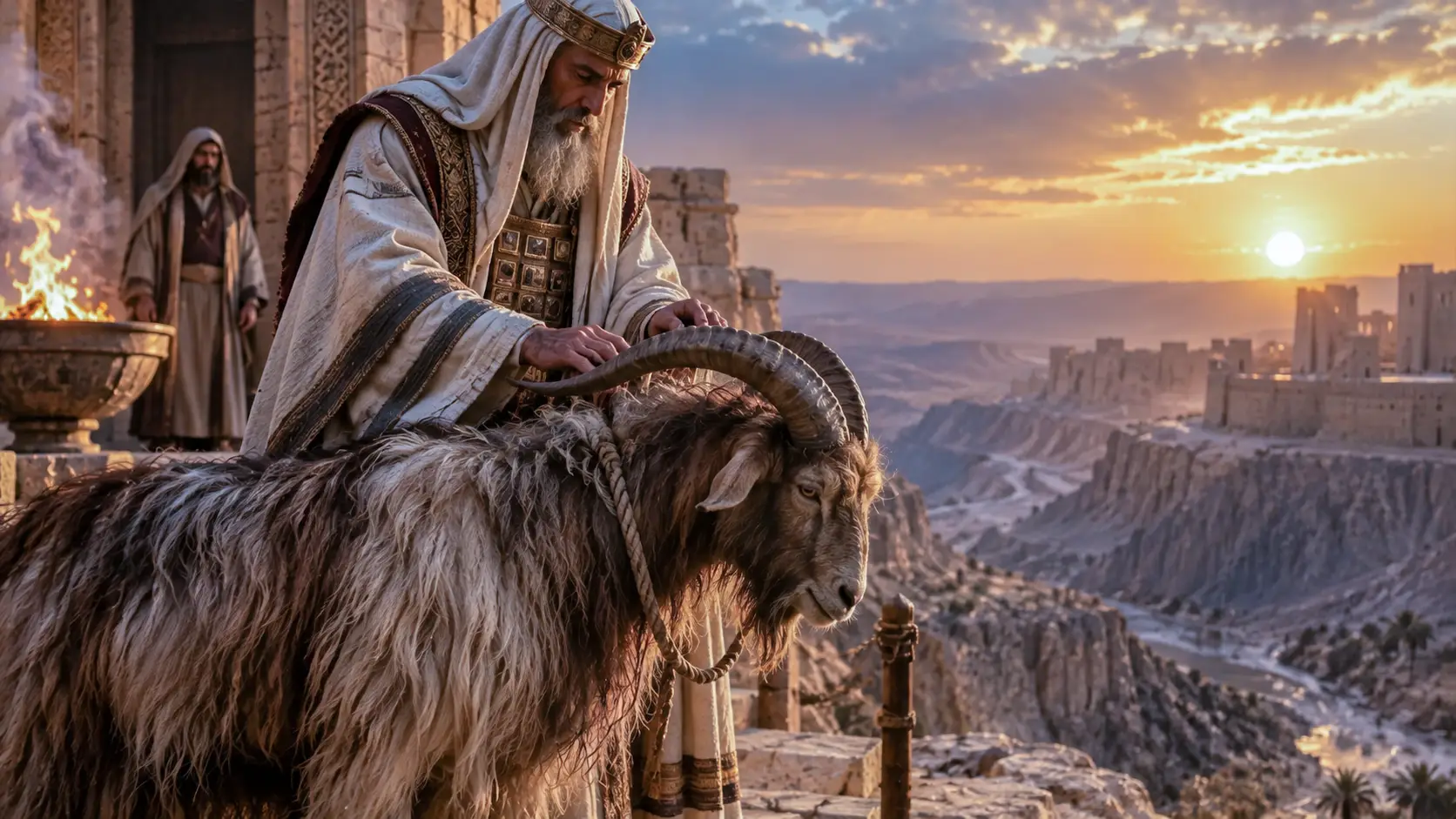
Other biblical passages connect Abraham’s relatives with Aram-Naharaim, a region associated with northern Mesopotamia. These geographical references belong to the Bible’s ancestral narrative and should not be compressed into one securely reconstructed historical birthplace.
Jewish tradition later developed the famous story of Abraham destroying his father’s idols. In Genesis Rabbah 38:13, Abraham breaks the images in Terah’s shop and leaves the weapon with the largest statue, exposing the absurdity of believing that such objects possess independent power.
The scene became an enduring expression of Jewish opposition to idolatry. However, Genesis itself does not contain the episode.
It belongs to later rabbinic storytelling, which interprets Abraham as a courageous opponent of the religious practices surrounding his family.
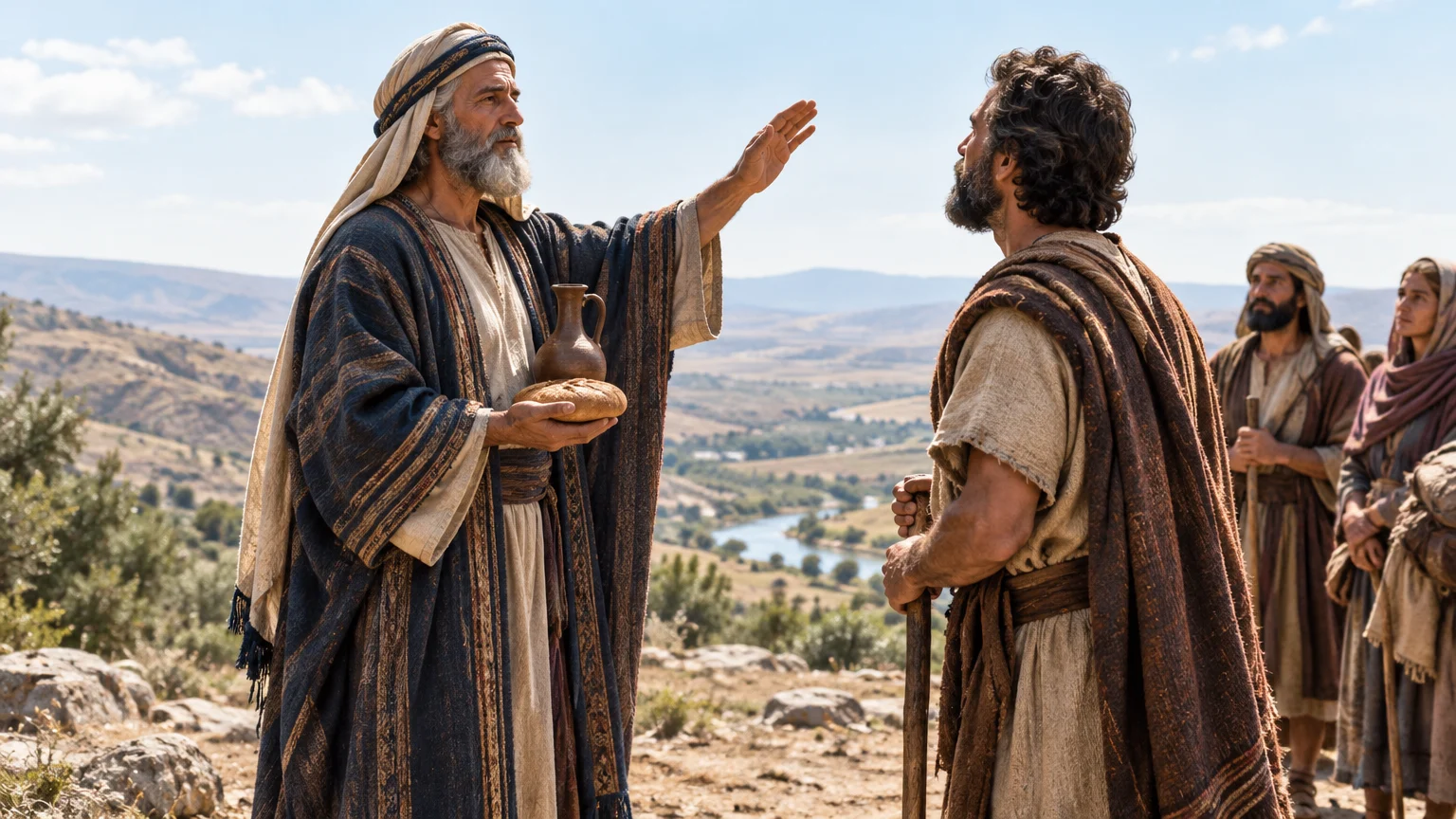
The Genesis narrative presents another important detail. Abraham builds altars in Canaan and encounters Melchizedek, king of Salem and priest of El Elyon, “God Most High,” in Genesis 14.
Melchizedek blesses Abraham in the name of this exalted deity, and Abraham’s subsequent oath connects the divine title with Yahweh in the received Hebrew text. The episode reveals how biblical tradition could employ religious language familiar within the wider Canaanite world.
Abraham’s religious importance is fundamental to Judaism, but historians cannot independently establish him as the moment when monotheism first appeared. The development of exclusive Yahweh worship and later Jewish monotheism unfolded across many centuries.
How Israel Emerged Within Canaan
The biblical narrative follows Abraham’s descendants into Egypt, where Jacob’s family becomes a people. Exodus begins with the Israelites multiplying under Egyptian oppression, before Moses leads them toward liberation and a covenant with Yahweh.
Joshua then describes entry into Canaan through battles, territorial claims, and divine promises. Yet even the Bible preserves a more complicated landscape.
Judges 1 describes communities whose inhabitants Israel did not remove, suggesting prolonged coexistence and incomplete conquest.
Archaeological evidence offers a different perspective on the emergence of Israel. The Merneptah Stele, an Egyptian inscription dating to approximately 1208 BCE, names Israel as a people already present in the southern Levant.
During the early Iron Age, new villages appeared throughout the central highlands. Their pottery, agricultural practices, and domestic architecture show substantial continuity with earlier Canaanite traditions, although archaeologists debate the movement and ancestry of particular communities.
This continuity matters for religion. If many early Israelites emerged from local populations, they did not need to discover Canaanite religious practices after entering an unfamiliar country.
Such traditions could already belong to their families, settlements, and inherited cultural world.
Archaeology cannot reveal the prayers spoken in every household. Nevertheless, the combination of biblical testimony and material evidence makes a clean separation between Israelite religion and its Canaanite surroundings historically difficult to maintain.
El and Yahweh: How Two Divine Traditions Became One
One of the most consequential questions in the history of Israelite religion concerns the relationship between Yahweh and El.
In the Canaanite world, El was the senior god of the divine family. In the Hebrew Bible, El and Elohim appear as divine designations, while names such as Israel, Bethel, and Ishmael preserve the element El.
Genesis frequently portrays the ancestors encountering God through titles such as El Shaddai and El Elyon. Exodus 6:3 then introduces a striking distinction between the name known to the ancestors and the name revealed to Moses.
“I appeared to Abraham, Isaac, and Jacob as El Shaddai, but by My name YHWH I was not known to them.” (Exodus 6:3, translated from Hebrew.)
Scholars disagree about the earliest history behind these traditions. One influential reconstruction, developed by Mark S. Smith, proposes that El belonged to early Israel’s religious inheritance and that Yahweh gradually became identified with him.
Yahweh’s own origins remain uncertain. Some researchers point toward traditions locating his appearance in southern regions such as Seir, Edom, Teman, and Paran.
These references appear in passages including Judges 5:4–5, Deuteronomy 33:2, and Habakkuk 3:3.
Under this reconstruction, Yahweh’s worship developed through contact between different religious communities and inherited divine traditions. Over time, Yahweh acquired the authority, titles, and characteristics of the older high god.
This was not necessarily a moment when priests officially announced that two gods had become one. Religious identities could merge through generations of worship, storytelling, political change, and reinterpretation of familiar divine language.
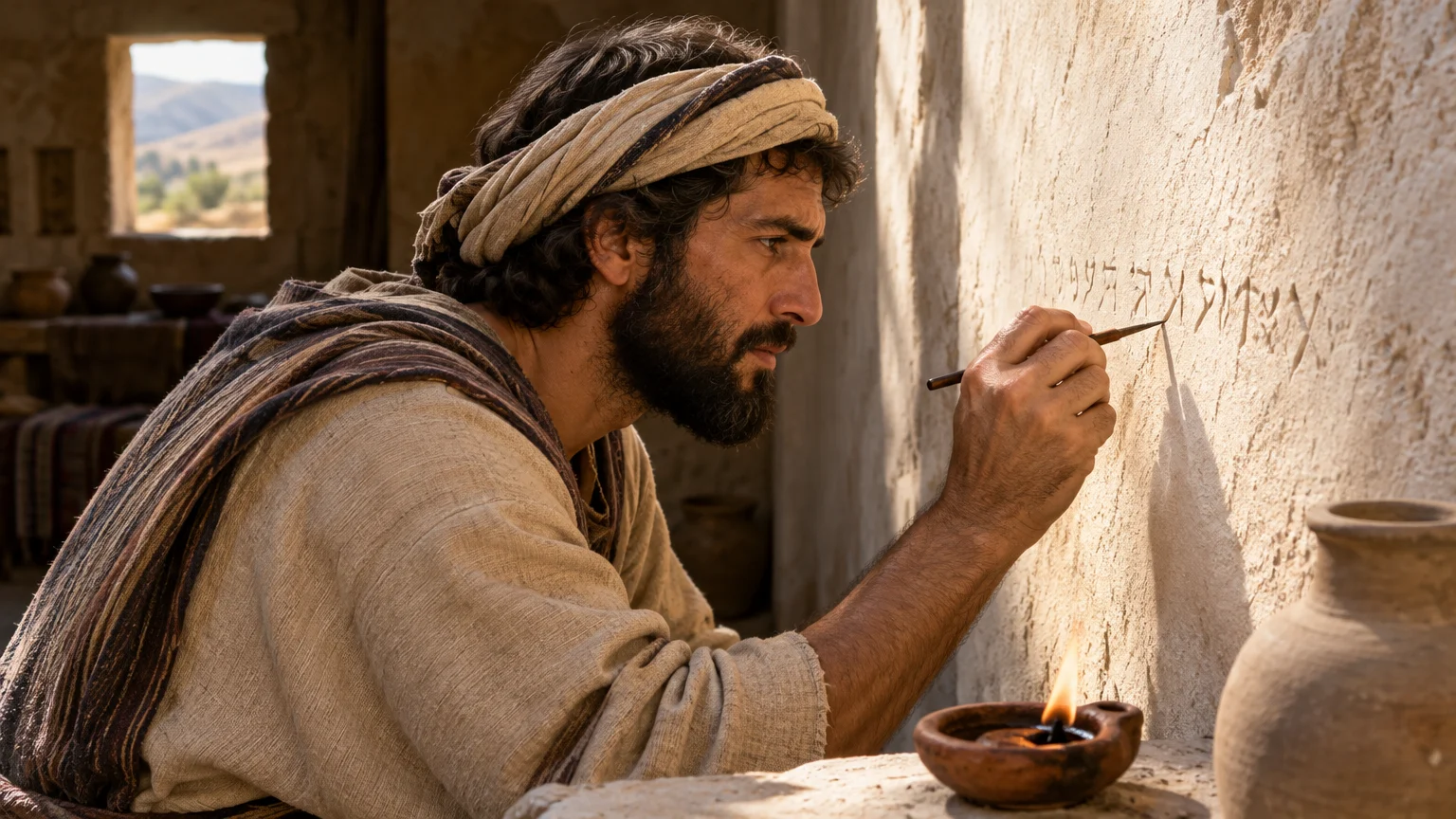
The important conclusion is that Israel’s God did not emerge within a cultural vacuum. The Hebrew Bible preserves traces of a complex process in which older divine titles and concepts became part of Yahweh’s identity.
The Forgotten Divine Council
Another striking connection appears in the image of a heavenly council.
Ugaritic texts describe assemblies involving El and other divine beings. They belong to a supernatural hierarchy that resembles a royal household, with a senior authority, subordinate members, messengers, and competing interests.
Several biblical passages retain related imagery. Psalm 82 presents God standing in a divine assembly and judging beings called gods.
Their failure to protect the weak and vulnerable becomes the reason for divine condemnation.
Deuteronomy 32:8–9 provides a particularly important textual problem. The traditional Masoretic Hebrew version describes the division of nations according to the number of the sons of Israel.
A reading preserved among the Dead Sea Scrolls instead refers to divine beings or sons of God.
The Greek Septuagint also witnesses a form involving heavenly beings, although its surviving readings differ. Many scholars consider this evidence of an older conception in which nations received divine allotments.
In that setting, Israel belongs to Yahweh as his particular portion, while the Most High distributes the peoples. Some scholars see a distinction between El and Yahweh behind the passage; others read the text through different stages of transmission and theological interpretation.
These possibilities are central to understanding how biblical monotheism developed. The heavenly council did not simply disappear. Its members could become subordinate to Yahweh, receive new interpretations, or appear in later traditions as heavenly messengers.
The result was not an entirely new supernatural vocabulary. It was a transformation of the hierarchy: the God of Israel increasingly occupied the position of supreme authority over every other heavenly being.
Why Baal Became Yahweh’s Greatest Rival
The struggle against Baal was especially significant because his traditional powers overlapped with characteristics biblical authors attributed to Yahweh.
Baal brought storms and rain, essential for growing grain, olives, and grapes in the Levant. A family facing drought had immediate reasons to seek favor from a deity whose power seemed connected with the survival of its crops.
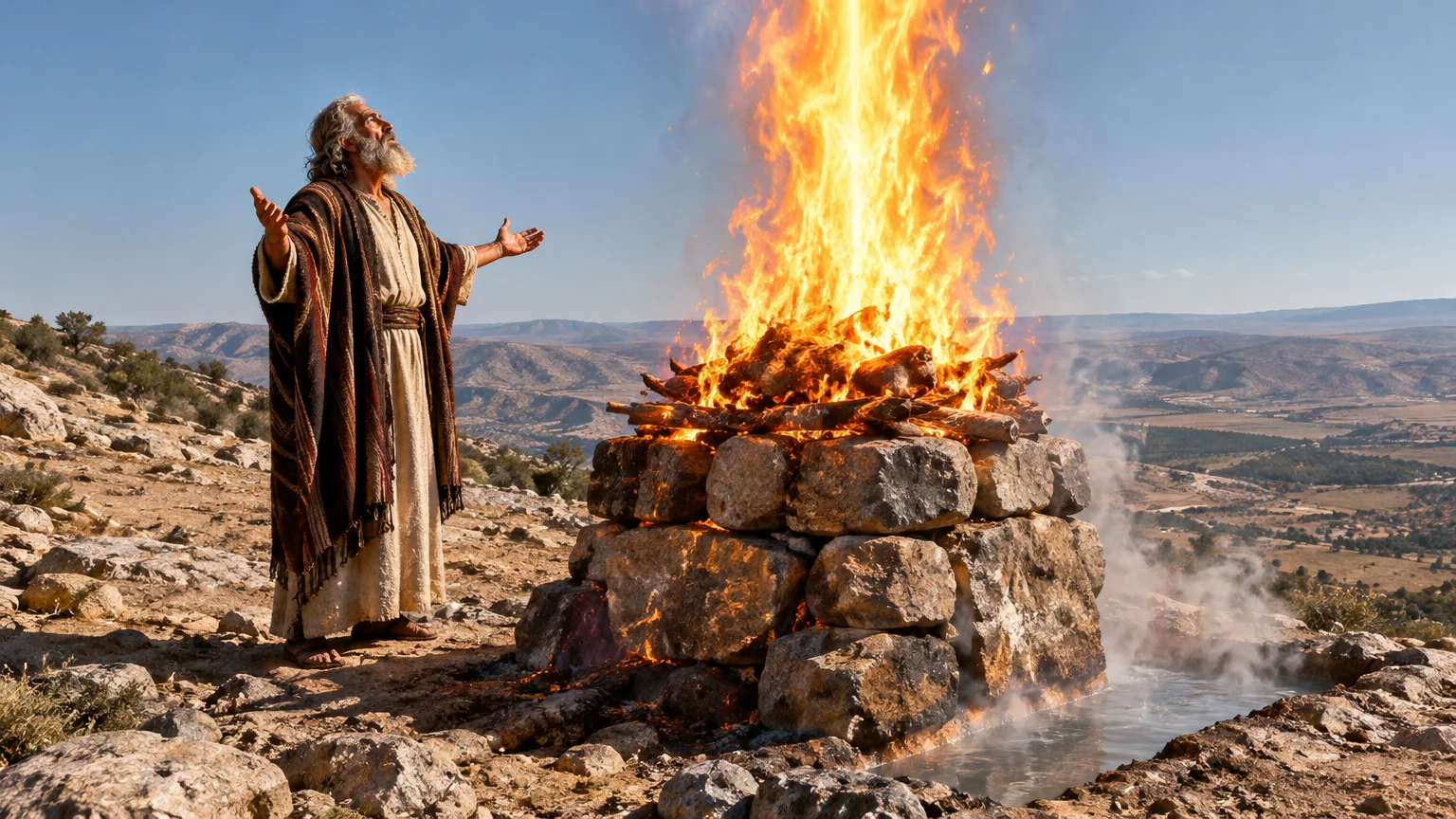
The biblical account of Elijah on Mount Carmel, in 1 Kings 18, stages this competition dramatically. Baal’s prophets call upon their god, while Elijah challenges the assembled people to decide which deity deserves their loyalty.
“How long will you go limping between two opinions?” (1 Kings 18:21, translated from Hebrew.)
The contest ends with Yahweh answering Elijah through fire, followed by the return of rain. Its narrative logic is deliberate: the God of Israel demonstrates command over powers that Baal’s worshippers associated with their own deity.
Other passages show a subtler form of religious transformation. Psalm 29 describes Yahweh’s thunderous voice shaking the wilderness and breaking cedars.
Its imagery resembles the storm-god language familiar from Northwest Semitic religious poetry.
The same phenomenon appears in stories of divine battles against the sea. In Ugaritic tradition, Baal defeats Yam and confronts monstrous powers associated with the waters.
Psalm 74:13–14 describes God breaking sea creatures and crushing Leviathan.
Isaiah 27:1 also invokes the defeat of Leviathan, the twisting serpent. The resemblance to Ugaritic descriptions of the sea monster Lotan has attracted considerable scholarly attention, although the texts differ in purpose and historical setting.
These parallels demonstrate something more important than simple borrowing. Biblical poets could take familiar images of divine kingship and cosmic victory and employ them to proclaim Yahweh’s sovereignty.
The older mythological language survived, but the identity and theological significance of its victorious deity changed.
The Goddess Inside the Israelite Religious World
While prophets attacked Baal worship in public, evidence from inscriptions and households reveals another complicated religious history involving Asherah.
At Kuntillet Ajrud, an eighth-century BCE site in northeastern Sinai, inscriptions invoke Yahweh of Samaria and Yahweh of Teman alongside a disputed phrase commonly translated “his asherah.”
The discovery generated a major scholarly debate. Some researchers interpret the wording as evidence that certain worshippers associated Yahweh with a goddess.
Others argue that asherah refers to a sacred object, wooden symbol, or other cultic feature.
The drawings found near the inscriptions cannot settle the issue. Their relationship to the writing remains uncertain, and scholars disagree about whether the site functioned as a religious sanctuary, a roadside establishment, or an administrative and educational center.
A related inscription from Khirbet el-Qom, near Hebron, contains another reference to Yahweh and an asherah in a blessing associated with a tomb. Its damaged text creates difficulties, but the parallel raises important questions about protective religion in ancient Judah.
The Hebrew Bible itself preserves evidence that Asherah-related worship was not restricted to foreign communities. According to 2 Kings 23, King Josiah removed religious objects associated with Asherah, Baal, and heavenly powers from Jerusalem’s temple.
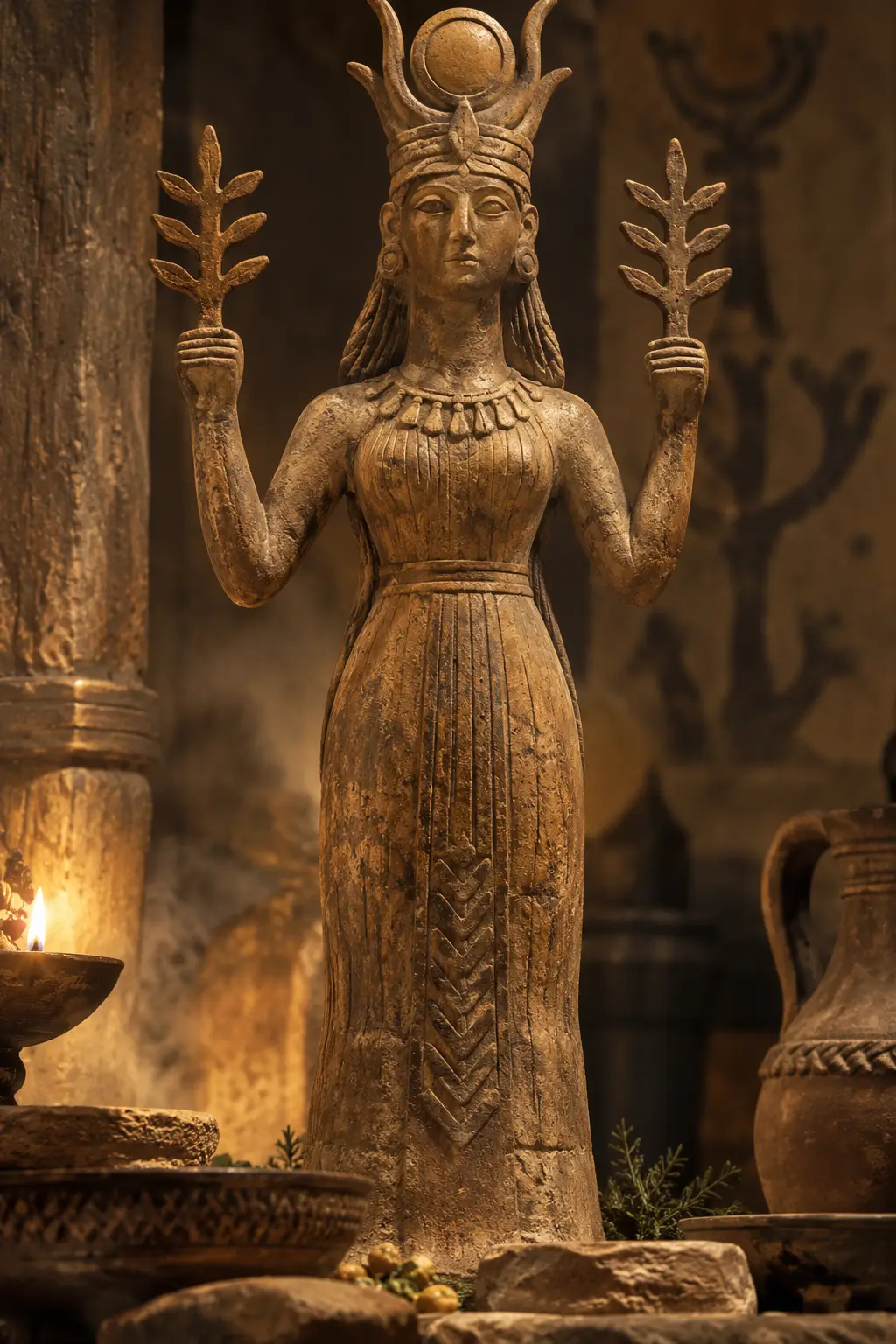
The account portrays their removal as purification. Yet the presence of these objects within the narrative suggests that biblical authors remembered unacceptable forms of worship operating inside Judah’s own religious institutions.
The archaeological and literary records therefore challenge any picture of a population uniformly practicing the later ideal of exclusive monotheism. Worship and religious identity could differ between the royal court, a local sanctuary, and a private home.
Hidden Household Religion: Figurines, Cakes, and Sacred Offerings
Some of the clearest evidence for religious diversity comes from ordinary household environments.
Archaeologists have discovered large numbers of small clay female figures in ancient Judah, particularly from the eighth through early sixth centuries BCE. Many possess prominent breasts and a pillar-shaped lower body.
Researchers have interpreted these Judean pillar figurines in several ways. They may represent a goddess, a protective symbol, a fertility-related object, a votive offering, or a human female figure.
The archaeological evidence does not establish one interpretation for every example.
Their widespread presence nevertheless suggests that religiously meaningful objects could belong to domestic life, beyond the monumental temples and political ceremonies that dominate many written sources.
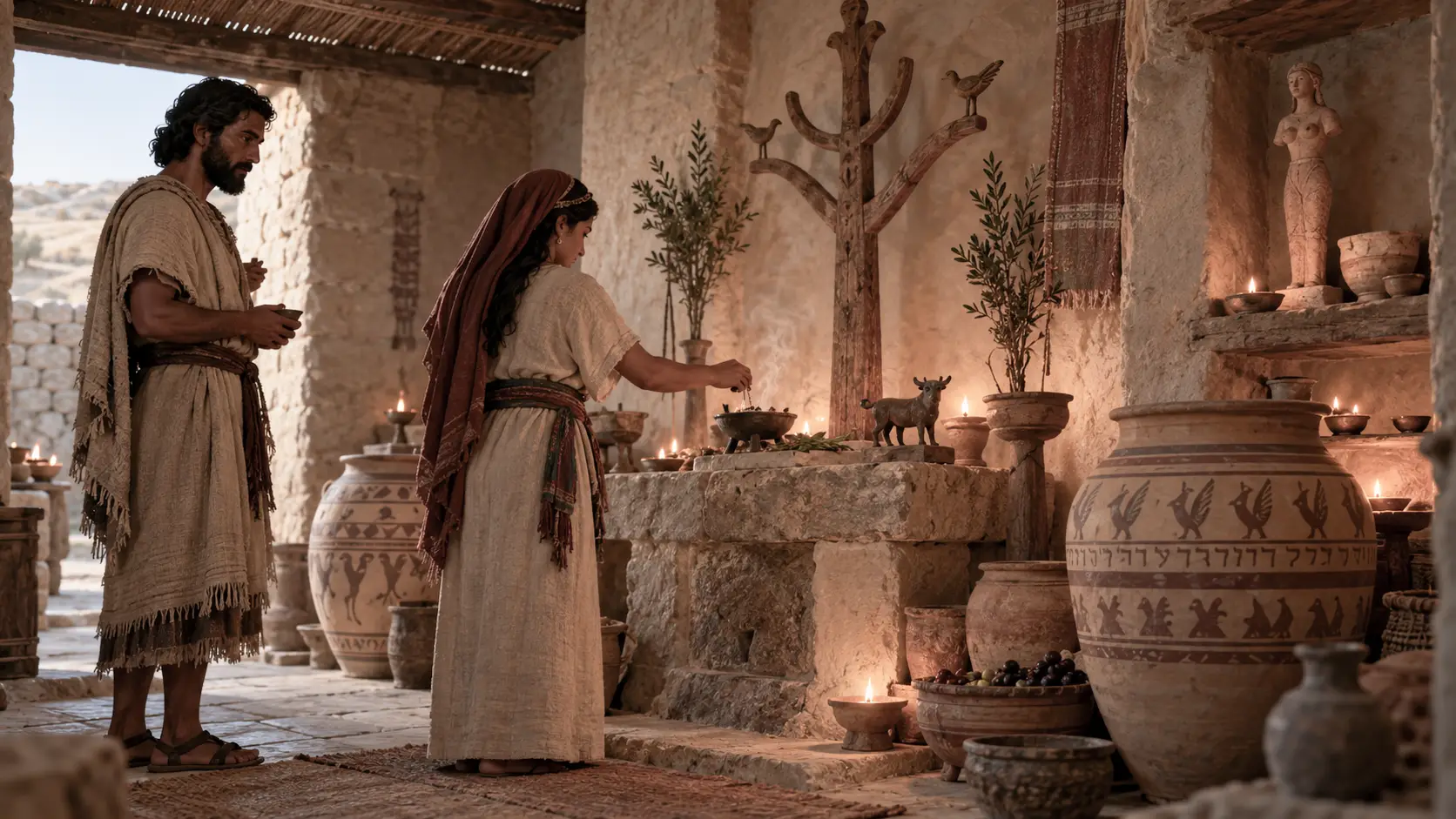
Jeremiah offers an even more personal glimpse into household worship. In Jeremiah 7:18, children gather fuel, fathers prepare fire, and women make cakes for the Queen of Heaven.
The scene describes a family cooperating in ritual activity. It also demonstrates that women played important roles in religious practices, although surviving texts often preserve their actions through the hostile judgment of prophetic authors.
Jeremiah 44 records an especially revealing argument among Judean refugees in Egypt. The worshippers claim that when they honored the Queen of Heaven, they enjoyed abundance.
Since stopping, they say, they have suffered hunger and disaster.
Their reasoning reverses the prophet’s accusation. Jeremiah blames their troubles on forbidden worship; they blame their misfortune on abandoning the goddess.
The Queen of Heaven’s precise identity remains debated. Scholars have proposed connections with Astarte and other prominent goddesses of the ancient Near East.
The text does not securely identify her with Asherah.
What it does establish is an important fact about biblical religious conflict: people understood their offerings as meaningful acts that protected households and promoted prosperity, even when the prophetic tradition rejected those beliefs.
Real Ritual Magic in the Ancient Levant
Ancient Canaanite religion included more than temples, sacrifices, and public mythology. Surviving texts document ritual practices intended to confront dangerous supernatural influences, heal afflictions, and seek assistance from divine powers.
At Ugarit, tablets catalogued as KTU 1.100 and KTU 1.107 preserve incantations associated with snakebite. They invoke supernatural figures including Shapshu, the sun goddess, and Horanu, a deity connected with protective magical action.
Their purpose was practical: people feared poisonous snakes and sought protection through words and divine intervention. These texts demonstrate that ritual magic formed part of the religious world of the ancient Levant.
Other Ugaritic incantations address harmful supernatural forces or suspected sorcery. Their complicated language sometimes combines divine names, appeals, repetition, and ritual actions whose precise meanings remain disputed.
Such texts provide genuine evidence of ancient magical practices. They do not establish that the supernatural claims were objectively effective, but they reveal what people attempted, which powers they invoked, and what dangers concerned them.
The Dead Who Could Still Influence the Living
The dead occupied an important place in some Northwest Semitic ritual traditions. Ugaritic texts refer to the Rapi’uma, commonly associated with exalted ancestral dead and royal figures.
Certain ritual and poetic texts describe feasts or invitations involving these beings. Scholars debate their exact status and the nature of the ceremonies, but the sources demonstrate that ancestors could remain significant beyond ordinary burial and remembrance.
The marzeah or marzeh was another form of ritual association involving feasting and drinking. Its practices varied across regions and periods; some scholarly interpretations connect particular gatherings with the dead, while others emphasize their social or religious functions.
The Hebrew Bible contains a dramatic episode involving communication with the dead. In 1 Samuel 28, King Saul secretly visits a woman at Endor who claims the ability to consult spirits.
Saul has previously suppressed such specialists, but fear of impending military defeat drives him to seek the deceased prophet Samuel. The woman performs the consultation, and the narrative describes Samuel delivering a devastating prediction.
The episode is especially revealing because the practice takes place within Israel’s own story. It is prohibited and feared, yet its existence remains imaginable enough for the biblical author to construct a detailed encounter around it.
Deuteronomy 18 explicitly condemns various forms of divination, sorcery, and consultation with the dead. These prohibitions reveal religious boundaries, although they cannot establish how commonly every prohibited activity occurred.
Temples, Incense, and an Extraordinary Discovery at Arad
Ancient religious practices also survive through substances left on ritual objects.
At Tel Arad, archaeologists uncovered a small Judahite sanctuary with two limestone altars. Researchers later examined dark residues preserved on their surfaces, using chemical methods to identify substances burned during ritual activity.
A 2020 study by Eran Arie, Baruch Rosen, and Dvory Namdar identified cannabis-related compounds on the smaller altar and frankincense compounds on the larger one. The altars belonged to an eighth-century BCE ritual setting.
The findings provide unusually direct evidence for materials used in an ancient Judahite religious setting. They indicate that cannabis and frankincense were burned on the altars, rather than merely appearing in an unrelated archaeological deposit.
The study cannot reconstruct the full ceremony, identify every participant, or establish the precise experience of those present. Nevertheless, it reveals an aspect of religious practice rarely accessible through biblical narratives alone.
Another important discovery lies at Tel Moza, only a few kilometers from Jerusalem. Archaeologists identified a substantial temple complex dating to Iron Age IIA, with cultic vessels, figurines, and architectural features familiar from broader Levantine religious traditions.
The temple’s existence demonstrates that worship in Judah was not always confined to Jerusalem’s sanctuary. Its precise divine dedication remains uncertain, and archaeology alone cannot establish whether its worship was regarded as legitimate by contemporary religious authorities.
Together, Arad and Moza reveal a religious landscape more varied than an exclusive focus on Jerusalem’s temple might suggest. Neither site’s existence alone establishes the worship of multiple gods, but both help distinguish actual religious practice from ideals of centralized worship.
From Many Divine Powers to One God
The biblical command against other gods appears in Exodus 20:3 as a demand for exclusive allegiance. It does not, by itself, offer a philosophical explanation of whether other divine beings exist.
Scholars distinguish between worship directed exclusively toward one deity and a fuller monotheistic claim that no other deity exists. These categories help describe changes in Israelite religion, although they should not become rigid stages followed by every community.
The eighth through sixth centuries BCE brought enormous political upheaval. Assyria conquered the northern kingdom of Israel in the late eighth century BCE, while Babylon eventually conquered Judah and destroyed Jerusalem’s temple in 587/586 BCE.
These disasters demanded new answers. If a nation’s god protected its land, what did conquest mean? Had its deity lost to foreign powers, or could the catastrophe itself form part of divine judgment?
Biblical writers developed powerful responses. Some interpreted destruction as punishment for disloyalty, while exilic prophetic texts strongly emphasized Yahweh’s authority over foreign kingdoms and the entire world.
Political catastrophe was an important setting for these arguments, not a sufficient explanation of monotheism’s origins on its own.
Isaiah 45, within a portion of Isaiah widely associated with the sixth-century BCE Babylonian exile, gives this claim a particularly explicit form:
“I am the LORD, and there is no other.” (Isaiah 45:5, translated from Hebrew.)
The chapter names the Persian ruler Cyrus as Yahweh’s anointed agent, presenting even a foreign conqueror as an instrument of Israel’s God. Its proclamation goes beyond demanding exclusive worship: it denies that any rival is God.
This is evidence of an explicitly monotheistic theology, not proof that every Judean community adopted it at once. Scholars debate the timing and course of that wider transformation.
As the tradition developed, inherited supernatural imagery continued appearing in new forms. Divine councils, angels, sea monsters, and heavenly assemblies remained within Jewish religious literature, but their roles and relationship to the one God were interpreted in different ways.
Ancient Israel’s religious world had not disappeared without a trace. Its language and imagery had become part of a different theological vision.
What Survived in Judaism, and What Did Not?
The question of survival is especially complicated because religious practices can continue while changing their explanations, symbols, and purposes.
Jewish festivals preserve connections with the agricultural cycle of the ancient Levant. Passover belongs to the spring season, Shavuot includes harvest associations, and Sukkot coincides with the ingathering of produce.
These seasonal settings resemble the wider agricultural world in which Canaanite communities conducted their rituals. Yet similarity does not establish that a particular Jewish festival directly continues the worship of Baal, Asherah, or another Canaanite deity.
The Torah and later Jewish interpretation gave these observances distinctive meanings connected with the Exodus, covenant, revelation, and historical remembrance. Their development involved both regional cultural inheritance and specifically Israelite religious reinterpretation.
A more direct example of Jewish magical practice appears in late-antique Mesopotamia. Archaeologists have recovered Aramaic incantation bowls containing protective formulas, divine names, biblical passages, and appeals against harmful supernatural forces.
Some bowls clearly belong to Jewish religious environments. Others combine expressions and supernatural names associated with several neighboring traditions.
They demonstrate that Jews participated in a broader magical culture even after monotheism had become central to Jewish identity.
One particularly striking bowl in the British Museum includes a list of pagan deities alongside evidence that its scribe was Jewish. It offers material proof of religious interaction, not merely a later scholar’s theory about cultural blending.
The Cairo Geniza preserves another body of evidence. Among its many manuscript fragments are magical recipes, amulets, protective texts, and instructions associated with attempts to influence health, love, danger, and personal fortune.
These manuscripts document real practitioners and real practices across medieval Jewish communities. Their supernatural effectiveness is not established, but their existence reveals a religious world richer than formal prayers and legal writings alone.
Later Jewish mysticism also developed traditions involving sacred names, angels, protective formulas, and hidden knowledge. Some forms of practical Kabbalah circulated within restricted settings or among specialists, although their history differs considerably from Bronze Age Canaanite worship.
The important distinction concerns historical continuity. Jewish amulets and magical manuscripts demonstrate long-lived traditions of ritual protection and supernatural belief.
They do not establish that the same Canaanite ceremonies survived unchanged for three thousand years.
Were Ancient Canaanite Rituals Preserved in Secret?
Biblical authors certainly describe practices carried out away from approved religious institutions. The woman of Endor operates under a prohibition, while Jeremiah condemns household offerings that their participants defend as essential to prosperity.
These are genuine examples of contested religious activity, and some took place within relatively private settings. However, not every private ceremony was secret, and biblical condemnation does not prove the existence of a continuous underground religion.
In later Jewish history, restricted mystical learning and practical magical traditions also appear in manuscripts and historical accounts. Some practitioners guarded their knowledge, while others sold amulets or supplied religious services openly.
Modern Jewish communities continue to use various protective symbols, blessings, and customs associated with spiritual safety. Their origins differ, and many developed through medieval or later cultural exchanges rather than direct transmission from Canaanite antiquity.
Living communities also preserve ancient biblical ritual forms. For example, the Samaritans continue their Passover sacrifice on Mount Gerizim, maintaining a distinct Israelite religious tradition.
This practice is public and documented, not evidence of a hidden Canaanite pagan ceremony.
Claims that particular modern rituals secretly preserve the worship of Baal, Asherah, or Anat require traceable historical connections: names, texts, participants, ceremonies, and evidence connecting one period with the next.
No credible evidence currently establishes a continuous, unchanged Canaanite cult secretly operating within Judaism today. That does not diminish the documented history of ritual inheritance, adaptation, and magical practices.
It makes the surviving evidence more valuable by distinguishing what historians can demonstrate from what remains speculation.
Conclusion: The Religious World That Never Entirely Disappeared
The emergence of Judaism cannot be understood as the sudden disappearance of Canaanite religion. Ancient Israel developed within a cultural landscape filled with divine families, storm gods, protective goddesses, sacred places, ancestral rituals, and supernatural fears.
The Hebrew Bible preserves some of that world openly, rejects other parts with extraordinary force, and transforms familiar imagery into new expressions of Yahweh’s sovereignty. Archaeology reveals religious diversity that biblical ideals alone cannot fully describe.
El’s titles, the heavenly council, storms and sea monsters, household figurines, sacred offerings, and contested rituals all illuminate the complex formation of Israelite religion. Their significance lies not in revealing a single hidden secret, but in documenting centuries of change.
The later history of Jewish magic adds another dimension. Incantation bowls, mystical manuscripts, amulets, and protective practices demonstrate that belief in supernatural intervention continued within Jewish societies long after explicit monotheism became central.
These practices do not all descend directly from Canaan. Instead, they show how religion evolves through inheritance, argument, contact, prohibition, and reinterpretation.
Abraham’s destruction of his father’s idols remains a powerful Jewish story about rejecting false gods. The historical development of the religion associated with his descendants was far longer, more complicated, and in many respects more fascinating.
Further Reading
The Origins of Biblical Monotheism: Israel’s Polytheistic Background and the Ugaritic Texts by Mark S. Smith, Oxford University Press, 2001.
Major academic study examining El, Yahweh, divine councils, and the development of biblical monotheistic theology.
Source: https://academic.oup.com/book/12858
The Origins of Biblical Monotheism by Mark S. Smith, Bible Interp, 2001.
Accessible scholarly explanation of Israel’s early religious diversity and its transformation into exclusive monotheistic worship.
Source: https://bibleinterp.arizona.edu/articles/MSmith_BiblicalMonotheism
The Sons of Israel or God? Deuteronomy 32:8 by TheTorah.com, 2023.
Analyzes the Dead Sea Scrolls, Greek Septuagint, and traditional Hebrew readings of the divine-council passage.
Source: https://www.thetorah.com/article/the-sons-of-israel-or-god-deuteronomy-32-8
Religion at Kuntillet ʿAjrud, Religions, 2019.
Peer-reviewed interpretation of the site’s inscriptions, scribal practices, religious imagery, and debated sacred function.
Source: https://www.mdpi.com/2077-1444/10/3/211
Kuntillet ‘Ajrud, Sacred Trees and the Asherah by Nadav Na’aman and Nurit Lissovsky, Tel Aviv, 2008.
Presents an alternative scholarly reconstruction connecting inscriptions, sacred trees, and the worship of Asherah.
Source: https://doi.org/10.1179/tav.2008.2008.2.186
What Are Clay Female Figurines Doing in Judah During the Biblical Period? by Aaron Greener, TheTorah.com, 2016.
Reviews archaeological evidence and competing interpretations of domestic figurines, fertility symbolism, and religious protection.
Source: https://www.thetorah.com/article/what-are-clay-female-figurines-doing-in-judah-during-the-biblical-period
Lechem Hapanim: Bread in the Presence of YHWH by TheTorah.com, 2022.
Examines ancient bread offerings, including Jeremiah’s description of cakes prepared for the Queen of Heaven.
Source: https://www.thetorah.com/article/lechem-hapanim-bread-in-the-presence-of-yhwh
Incantations and Anti-Witchcraft Texts from Ugarit by Gregorio del Olmo Lete, reviewed by Bryn Mawr Classical Review, 2015.
Scholarly discussion of genuine Ugaritic magical texts, incantation formulas, and parallels with Mesopotamian ritual literature.
Source: https://bmcr.brynmawr.edu/2015/2015.05.26/
“Shapshu Cries Out in Heaven”: Dealing with Snake-Bites at Ugarit by Baruch A. Levine and colleagues, 1988.
Academic study of Ugaritic ritual texts KTU 1.100 and 1.107 and their protective incantations.
Source: https://www.jstor.org/stable/44088926
From Ugarit to Madaba: Philological and Historical Functions of the marzēah, University of Haifa, 2016.
Traces ritual feasting associations across Northwest Semitic cultures and examines their changing social and religious functions.
Source: https://cris.haifa.ac.il/en/publications/from-ugarit-to-madaba-philological-and-historical-functions-of-th/
The Iron IIA Judahite Temple at Tel Moza by Shua Kisilevitz, Tel Aviv, 2015.
Archaeological study of a temple near Jerusalem with cultic vessels and artifacts belonging to broader Levantine traditions.
Source: https://doi.org/10.1179/0334435515Z.00000000052
Cannabis and Frankincense at the Judahite Shrine of Arad by Eran Arie, Baruch Rosen, and Dvory Namdar, Tel Aviv, 2020.
Chemical analysis identifying substances burned on two altars in an eighth-century BCE Judahite religious sanctuary.
Source: https://doi.org/10.1080/03344355.2020.1732046
A Babylonian Jewish Aramaic Incantation Bowl with a List of Deities and Toponyms by Dan Levene and Gideon Bohak, 2012, British Museum Collection.
Material evidence of a Jewish scribe incorporating names of other deities into a late-antique magical text.
Source: https://www.britishmuseum.org/collection/object/W_1957-0925-1
Geniza Magical Documents by Ortal-Paz Saar, 2019, Utrecht University Research Repository.
Scholarly introduction to Jewish magical manuscripts, protective formulas, amulets, curses, and the Cairo Geniza.
Source: https://research-portal.uu.nl/ws/files/70521159/Saar2019_Article_GenizaMagicalDocuments.pdf
Abraham and the Idols, Genesis Rabbah 38:13, Sefaria Library.
Primary rabbinic source for Abraham breaking Terah’s idols, distinguishing later Jewish interpretation from the Genesis narrative.
Source: https://www.sefaria.org/Bereshit_Rabbah.38.13