Overview of the Post-Colonial Africa Period
Post-colonial Africa refers broadly to the period following African countries’ achievement of political independence, beginning chiefly in the mid-twentieth century. It describes diverse national histories, not one uniform cultural era.
Its societies inherited older kingdoms, communities, and religious traditions alongside colonial institutions and new states. This setting affected how people transmitted and interpreted folklore, without creating a single continent-wide mythology.
Independence did not mark the beginning of African mythological traditions. Many narratives, spiritual practices, and ideas about nonhuman beings predated colonial rule by centuries, surviving through changing languages, communities, and historical circumstances.
Folklore remained culturally significant because stories could communicate shared values, explain misfortune, and express relationships with local environments. Their meanings varied by community and cannot be reduced to one post-independence experience.
Cultural and Religious Worldviews
Dominant Belief Systems
Religious life across post-colonial Africa included Indigenous traditions, Christianity, Islam, and combinations shaped by particular histories. Their relative prominence differed considerably among regions, countries, and local communities.
Many Indigenous cosmologies describe relationships among humans, ancestors, spirits, and a creator or other powerful beings. Specific concepts and practices vary, so these categories should not imply a shared continental theology.
Christian and Muslim communities also interpreted supernatural realities through distinct religious teachings and institutions. Their presence sometimes accompanied reinterpretations of existing beings, but outcomes differed across historical settings.
Natural and supernatural domains were not necessarily understood as separate. In documented traditions, spiritual agency could be associated with illness, fertility, land, or social relations, although explanations remain culturally specific.
Role of Myth in Daily Life
Folktales could teach expectations concerning generosity, obedience, caution, or responsible conduct. The lessons depended on a narrative’s local context rather than a universal African moral code.
Stories about ancestors and spirits could support community identity by connecting present generations with remembered predecessors. Their authority and social use varied among families, religious communities, and regions.
Ritual practice belongs to particular traditions and cannot be inferred solely from the appearance of supernatural figures in stories. Where documentation is absent, claims about associated rites remain unwarranted.
Mythological Beasts and Supernatural Entities
Common Types of Mythical Creatures
Folklore across the continent includes accounts of animals with extraordinary capacities, human-spirit figures, water beings, and harmful or protective presences. These are broad comparative categories, not interchangeable entities.
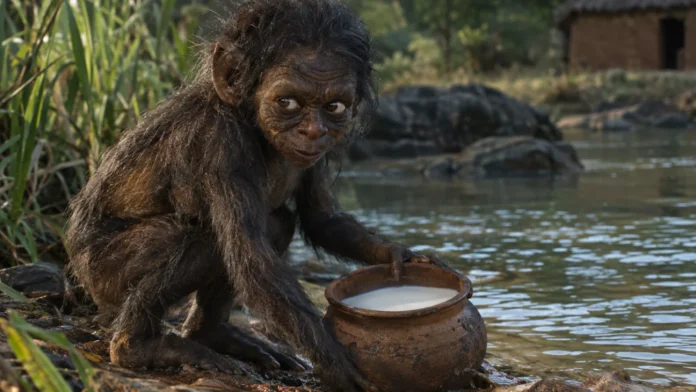
Animal figures may speak, transform, or display unusual intelligence in particular tale traditions. Such narrative roles do not establish that communities classified these figures as literal supernatural species.
Water-associated beings occur in several African traditions, but their names, attributes, and religious significance differ. No verified sources describe one common water-being system for post-colonial Africa as a whole.
Accounts of witches, spirits, and ancestors likewise require specific cultural attribution. Their meanings may involve moral concerns or misfortune, but broad summaries cannot establish uniform beliefs or diagnoses.
Symbolism and Meaning
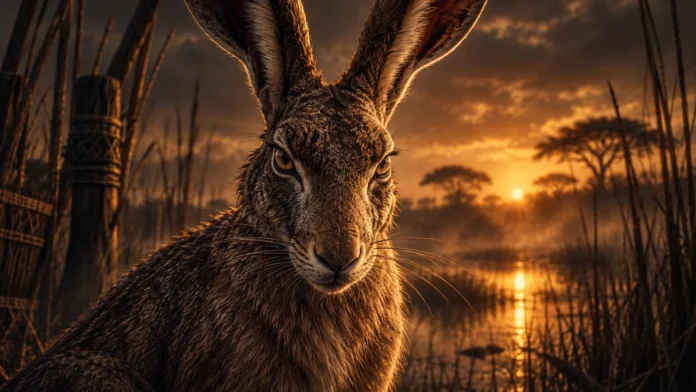
Animals in folktales can represent social qualities through their actions, including cunning or power. Interpretation requires attention to the specific narrative, since identical animals may carry different meanings elsewhere.
Spirit beings may express culturally specific understandings of danger, obligation, or relations with place. Assigning a single psychological meaning to them would exceed what the varied evidence supports.
Some supernatural figures enforce boundaries within stories by marking prohibited conduct or risky settings. This narrative function does not prove that every audience understood them as moral enforcers.
Folklore Traditions and Storytelling
Oral and Written Transmission
Oral performance remained an important means of transmitting tales after independence. Narrators could adapt wording and emphasis, making variation part of transmission rather than evidence of a fixed original version.
Written collections, translations, and recordings also preserved selected narratives. Their contents reflect choices by collectors and publishers, so they cannot represent every community’s storytelling practices comprehensively.
Christian scripture and Islamic textual traditions shaped religious life, but they should not be confused with written records of every Indigenous folktale. Documentation differs substantially by place and period.
Inscriptions and manuscripts provide evidence for particular historical contexts, not a general archive of post-colonial beast lore. No verified sources describe comprehensive continent-wide recording of these traditions.
Regional Variations
West African traditions, including Yoruba religious worlds, have distinctive accounts of divine and spiritual beings. These belong to specific histories and should not be treated as representative of all western regions.
Among Akan-speaking communities, Anansi appears in well-documented story traditions as a spider-associated trickster figure. His narrative role differs from that of deities or spirits in other cultural systems.
Southern African communities have varied traditions concerning ancestors and other spiritual presences. These cannot be collapsed into Yoruba or Akan categories merely because all include nonhuman agents.
Regional difference is therefore substantive: a trickster tale may foreground clever negotiation, whereas another tradition’s spiritual account may concern ancestral relations. Comparisons require evidence from each context.
Relationship Between Humans and the Mythical World
Fear, Protection, and Reverence
Supernatural beings could be regarded as dangerous within particular accounts, especially where narratives linked them with illness or misfortune. Such associations do not establish uniform fear across communities.
Other beings could receive respect because of their connection with ancestors, deities, or sacred places. Reverence in one tradition should not be generalized to similarly named figures elsewhere.
Protective roles appear in some cultural settings, but protection is not an inherent attribute of mythical creatures. It must be established through tradition-specific evidence rather than inferred from classification.
Influence on Art and Material Culture
Mythological motifs appear in some African sculpture, textiles, architecture, and other material forms. Identifying a motif’s meaning requires local historical evidence, since resemblance alone cannot establish supernatural significance.
Craft objects may communicate religious or social meanings within particular communities. Their interpretation depends on provenance and use; a creature-like form cannot automatically be classified as a mythical beast.
Printed books and illustrations expanded some audiences’ access to folklore during the post-colonial period. These media represent modern transmission, not proof that their images reproduce ancient designs.
Transition and Legacy of the Post-Colonial Africa Period
Folklore continued to change through migration, schooling, urban life, religious conversion, and broadcasting. These influences affected transmission unevenly, without demonstrating that older traditions simply disappeared.
Some narratives entered contemporary literature and public cultural expression through adaptation. Such works are modern interpretations and should be distinguished from evidence about earlier community beliefs.
Christian and Muslim settings sometimes incorporated local concepts into new explanatory frameworks, while other communities maintained different boundaries. Historical outcomes require case-specific study rather than a single account of religious change.
Historical Reliability and Interpretation
Evidence comes from oral accounts, ethnographic records, historical documents, and material culture, each shaped by conditions of collection. None offers transparent access to every past belief or performance.
Colonial-era documentation may reflect outsiders’ categories and purposes, while later records also select particular voices. Researchers therefore assess provenance before treating descriptions as representative community testimony.
A story’s supernatural events are evidence of narrative and belief traditions, not independent verification that such events occurred historically. This distinction preserves cultural significance without confusing it with factual proof.
Scholarly interpretations remain uncertain when evidence is sparse, translated, or contested. No verified sources describe a unified post-colonial African system of mythical beasts, making regional classification essential.