Introduction
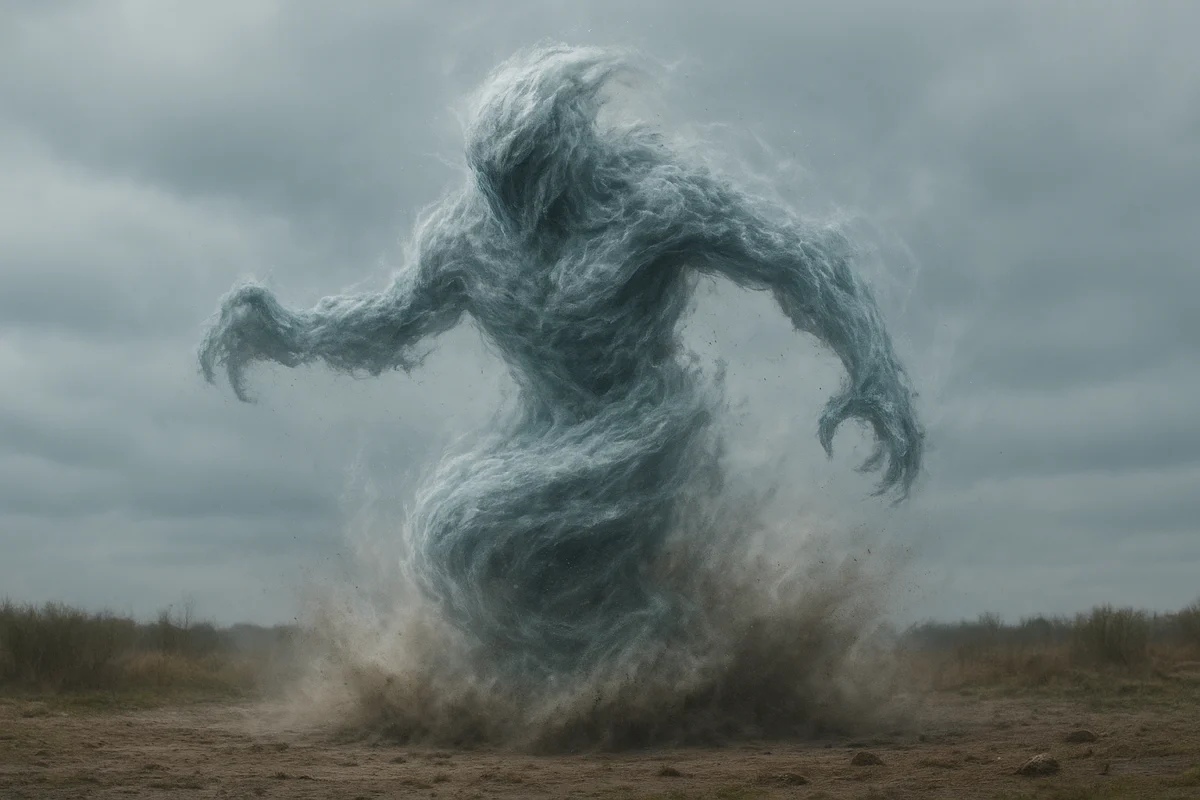
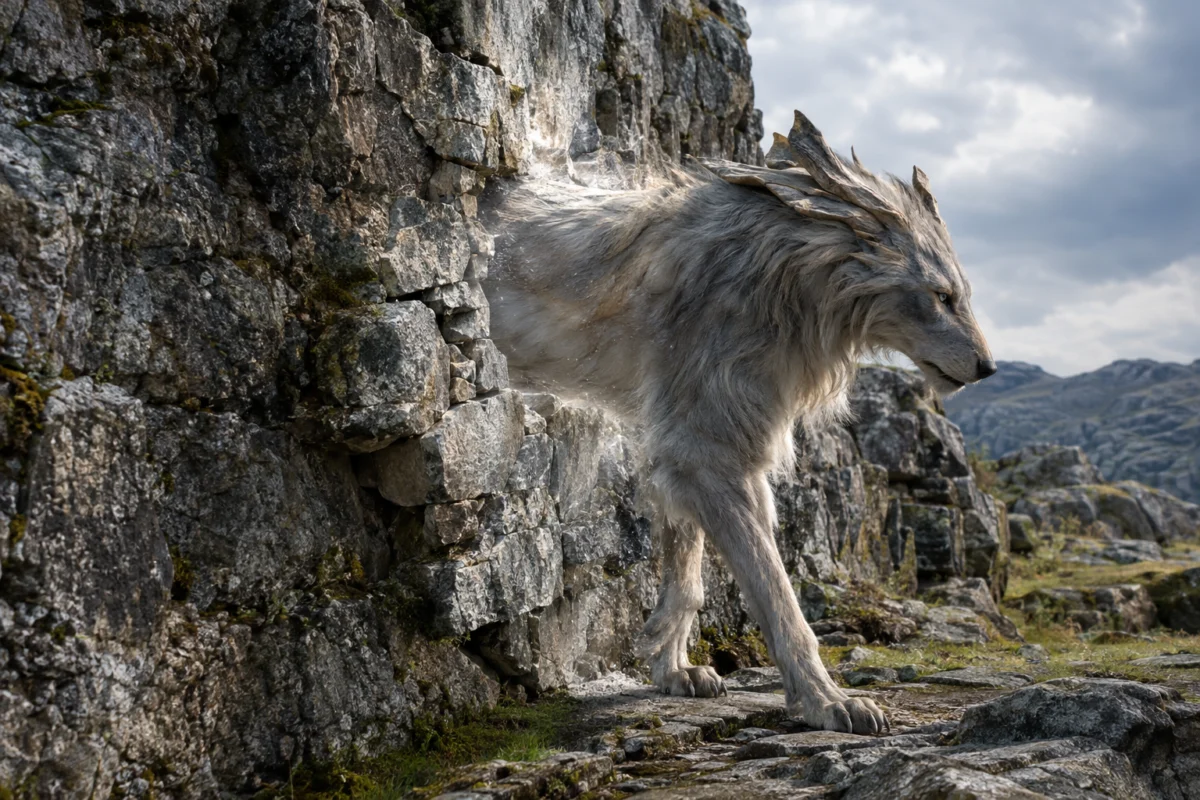
A gnome is an earth-associated, humanlike being whose clearest early identity belongs to the sixteenth-century elemental system of Paracelsus. In that account, gnomes are small mountain people who inhabit the earth, make homes within mountains, and move through solid stone.
They belong to a larger classification of beings associated with earth, water, air, and fire. Their defining characteristic is therefore not a particular costume or temperament, but their relationship with the earth as an inhabited environment rather than merely a surface beneath human feet.
The mountain interior is their proper dwelling place, and rock does not restrict them as it restricts humans.
This historical identity differs from the familiar red-capped garden figure. Small stature has an early textual basis, but the genial ornamental dwarf should not determine how the older being is understood.
The mountain-dwelling elemental provides the firmer historical starting point, while the garden figure represents a later cultural image.
Gnomes also stand at the meeting point of learned speculation and broader supernatural traditions. Paracelsus brought varied names and beings into an organized scheme rather than simply recording one uniform folk species.
Their history therefore requires distinguishing his classification from wider traditions of dwarfs, kobolds, and mountain spirits, even where later vocabulary allows those categories to overlap.
Modern German usage reflects that overlap. Gnom can refer to a kobold or dwarf and can also be used colloquially for a very small person.
These meanings show how far the word has traveled beyond its more specific role in the elemental account.
History/Origin
The strongest historical foundation for the gnome is Paracelsus’s sixteenth-century treatise generally known as Liber de nymphis, sylphis, pygmaeis et salamandris et de caeteris spiritibus. Its subject is a world populated by different kinds of beings whose homes correspond to the four elements.
Within this arrangement, the earth-dwellers are called Pygmäen, while the mountain people are also called Gnomen. These overlapping names matter: the gnome enters the historical record here as part of an organized account of elemental inhabitants, not as an isolated character with a single adventure or as a universal name for every small underground spirit.
The treatise appeared in print after Paracelsus’s death. The specialist bibliography preserved through Theatrum Paracelsicum records an early printing in 1566.
That date belongs to the work’s publication history and should not be mistaken for the beginning of every belief about supernatural mountain inhabitants. It establishes an early printed setting for the term and classification, not the age of every tradition incorporated into them.
The distinction between naming and inventing is essential. Paracelsus’s use of the term establishes a documented connection among gnomes, mountains, and earth.
It does not establish that he originated all the underlying traditions, or that earlier mountain spirits already possessed his precise elemental identity. Nor does it prove that every later being called a gnome preserves all the characteristics found in his account.
Anke Kramer’s specialist discussion emphasizes Paracelsus’s combination of heterogeneous literary, mythological, and popular traditions. The resulting classification is a synthesis: it gathers differing materials into a common framework and assigns them places in an ordered elemental world.
It therefore cannot be treated as the unchanged survival of one ancient or universally shared German belief.
This synthesis also explains why several names appear around the earth-associated category. Terms for pygmies and mountain people coexist with the name gnome inside the system.
Their coexistence is evidence of classification and combination, not proof that the labels had always been exact equivalents in oral tradition.
The historical baseline is consequently narrower than the modern image but more precise. A gnome in this early documented context is one of Paracelsus’s small earth-dwelling mountain people.
Broader claims about a timeless European gnome race go beyond what this evidence establishes.
Name Meaning
The origin of the word gnome is uncertain. Duden associates the German Gnom with Paracelsus’s sixteenth-century coinage but explicitly leaves its derivation unresolved.
A secure historical association with an author is not the same thing as a demonstrated explanation of a word’s components.
A proposed connection with Greek words relating to earth and dwelling is sometimes offered. It remains a suggestion rather than an established derivation.
The tempting fit between that proposal and the creature’s earthly habitat does not remove the lexicographic uncertainty.
The name’s meaning within the elemental account is clearer than its etymology. It designates the mountain people associated with earth.
Calling these beings earth-dwellers accurately summarizes their role, but that description should not be presented as a proven literal translation of their name.
The German text uses Bergleute for these mountain inhabitants and places them alongside Pygmäen. The coexistence of these terms shows how several labels operate within the classification.
It does not establish that they were interchangeable throughout German-speaking folklore or that every figure known by one of those broader labels was historically a gnome.
Modern German usage is wider. Gnom can mean a kobold or dwarf, reflecting overlap among familiar categories of small supernatural beings.
Duden also records a colloquial application to a very small person. These dictionary senses describe later and broader usage; they do not erase the more specific earth-associated identity found in the Paracelsian account.
Appearance
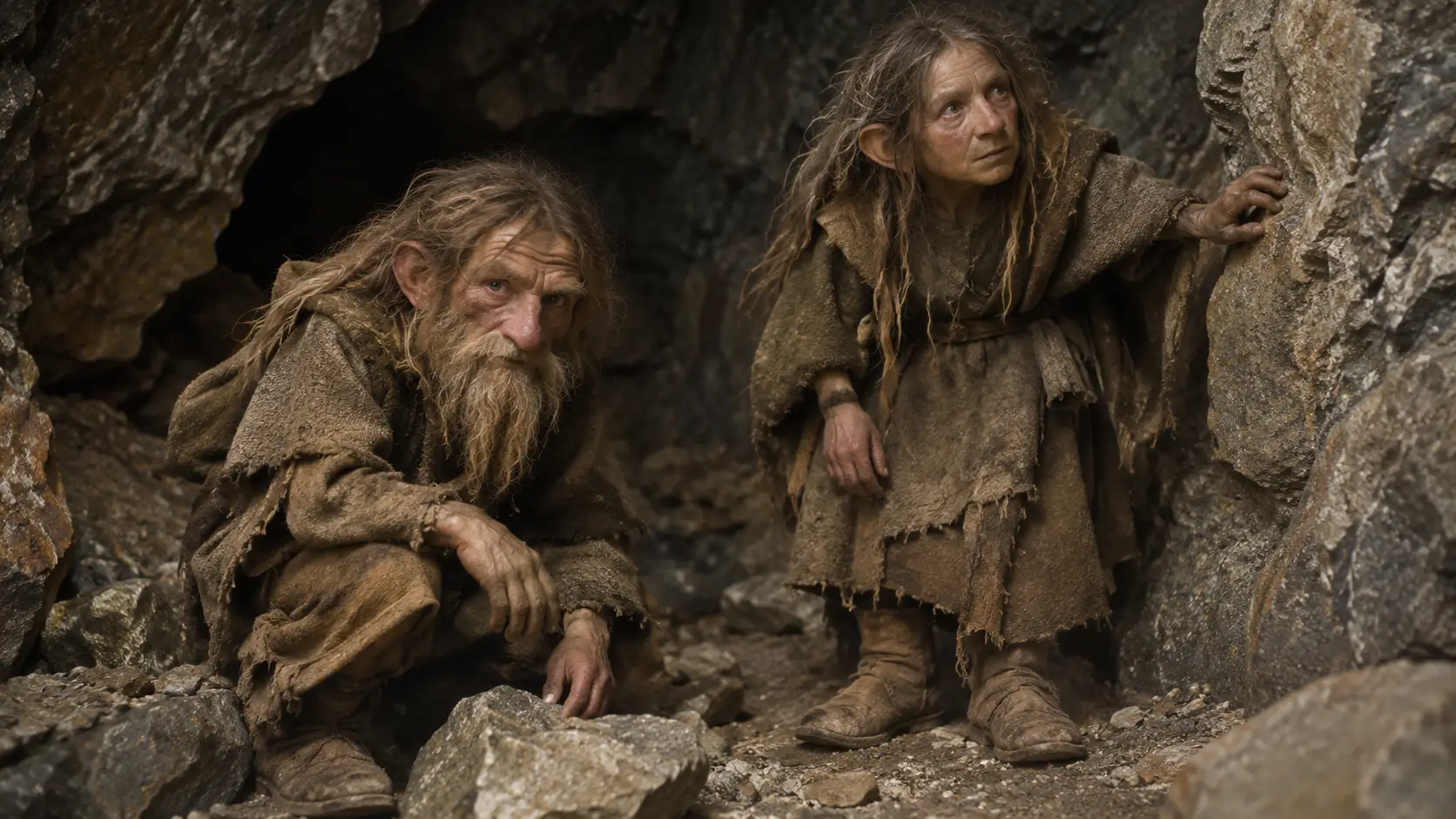
The early textual gnome is small and humanlike. In Paracelsus’s account, the mountain people resemble diminutive people rather than animals or shapeless apparitions.
Their bodily resemblance to humans is paired with an extraordinary relationship to their surroundings, especially their ability to move through stone.
One passage gives their size as approximately two spans. This is a source-specific estimate, not a universal measurement for every being later called a gnome.
A span is itself a body-based measure rather than a perfectly fixed modern unit, so preserving the original approximation is more faithful than converting it into a supposedly exact height.
Their setting supplies another important identifying feature. These are inhabitants of mountains and the earth’s interior, with dwellings made within the mountain.
A rocky or subterranean environment therefore expresses their early identity more accurately than a garden setting, however familiar the latter has become.
The ability to pass through walls, rocks, and stones complicates their otherwise humanlike appearance. They can look like small people while behaving in ways that ordinary human bodies cannot.
Their earth association is thus expressed through both habitat and movement: stone is at once their home and a medium through which they travel.
This feature prevents the early gnome from being reduced to a miniature human living in a cave. A cave would still be an open space bounded by rock, whereas these beings pass through the rock itself.
Their supernatural character lies partly in that different physical relationship with the mountain.
The supported description does not provide a detailed uniform, fixed facial features, or a complete catalogue of equipment. A red pointed cap is not established as a defining feature of this account, and the later garden figure’s complete appearance should not be projected backward onto it.
A historically grounded depiction would therefore emphasize a small humanlike figure, a mountain or subterranean setting, and an unusual ease of movement through stone. Details beyond those features belong to later interpretation unless separately documented.
Background Story
The background of the gnome is a way of organizing the inhabited world rather than a personal biography. Earth, water, air, and fire each provide a place for distinctive beings.
The mountain people occupy the terrestrial part of this larger arrangement of life and environment.
Alongside them stand water-associated nymphs, air-associated sylphs, and fire-associated salamanders. These are separate categories within the same system, not alternative forms of the gnome.
Their relationship helps explain why the gnome’s earthly home matters more than incidental details of dress or facial expression.
Within that framework, the mountain is a dwelling place rather than merely a barrier. The beings make their homes inside it and pass through rock and walls.
Their environment is therefore habitable on terms different from those governing ordinary human experience. What appears solid and inaccessible to a person can contain domestic space for the mountain people.
The account creates a parallel geography within familiar terrain. Humans see a mountain’s exterior and encounter the resistance of stone; gnomes inhabit its interior and cross its rocky boundaries.
This contrast gives imaginative form to the possibility of an unseen population occupying the same world under different physical conditions.
The account also belongs to a Christian understanding of creation and divine purpose. These beings are considered within an explanation of the world’s order, not simply introduced as entertaining monsters.
That theological setting helps distinguish the treatise from a collection devoted only to local supernatural encounters.
Yet this Christian framework does not make the gnomes objects of worship. It places them within a created order and uses them in reflection on what kinds of beings the world might contain.
The surviving material does not establish a gnome-specific cult, ceremony, or devotional role.
At the same time, the classification draws on diverse literary, mythological, and popular materials. Its mountain people connect with a broader field of dwarf and mining-spirit traditions without making every such being a gnome.
The historically distinctive result is a small earth-dweller given a defined place within a learned elemental system.
Famous Folklore Stories
The early evidence for gnomes preserves descriptions and beliefs rather than a securely documented, titled folktale. In Paracelsus’s account, two closely connected motifs stand out: movement through solid stone and the existence of inhabited spaces within mountains.
These are descriptive motifs, not separate traditional stories with established plots.
Passing Through Stone
The mountain people can pass through walls, rocks, and stones. This ability distinguishes them from ordinary small humans: barriers that confine human movement do not prevent their passage.
Their connection with earth therefore involves more than living in caves or using underground passages.
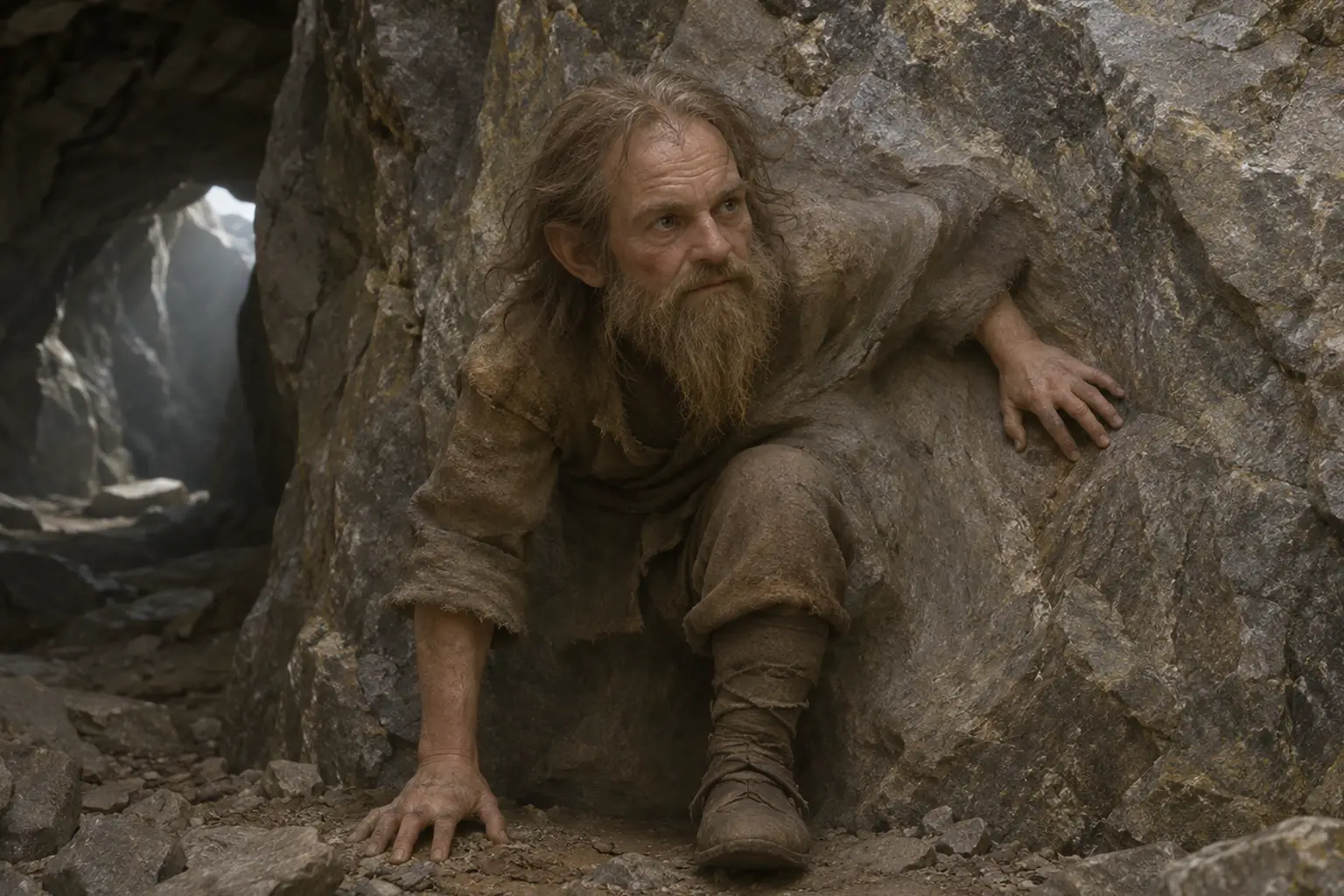
The motif presents the mountain as an environment suited to beings with different bodily capacities. It does not supply an encounter sequence involving a named witness, a bargain, a threatened abduction, or a punishment.
Adding such events would turn a documented description into an invented tale.
Dwellings Within Mountains
The mountain people also make their homes within the mountain. This domestic detail gives the subterranean world an inhabited character rather than presenting it merely as an empty region through which supernatural beings travel.
Humanlike residents occupy a place inaccessible to ordinary human life.
Read alongside their passage through rock, these dwellings suggest a parallel mode of existence within familiar terrain. The account supports hidden habitation, but not an elaborate underground kingdom with named rulers, treasure chambers, or a narrated history of conflict with human visitors.
These motifs are important because they preserve what is distinctive in the early account without disguising description as narrative. No specific titled gnome tale with a complete sequence of actions and consequences is established by the evidence used here.
Cultural Impact
The gnome’s cultural history connects learned explanations of nature with later imaginative storytelling. In Paracelsus’s elemental system, small mountain beings occupied the earth-associated category alongside water nymphs, air sylphs, and fire salamanders.
This arrangement brought varied literary, mythological, and popular traditions into a shared framework rather than preserving one uniform folk species.
An early printing of the treatise in 1566, after Paracelsus’s death, gave that synthesis a documented place in print. The date marks the circulation of his written classification, not the beginning of every tradition about supernatural mountain inhabitants.
Its importance lies in the organization and transmission of those materials.
Later vocabulary shows the name’s broader reach. In modern German, Gnom overlaps with Kobold and Zwerg, linking it with familiar categories of small supernatural beings.
This overlap permits wider uses of the word without establishing that every kobold or dwarf originally belonged to Paracelsus’s earth-dwelling category.
A concrete example of later reinterpretation is Gnomes, the book by Wil Huygen and Rien Poortvliet that became the basis for an animated television special. Directed by Jack Zander, the hour-long adaptation first aired on CBS on November 11, 1980.
Here, gnomes belong to a fictional cast rather than serving primarily as inhabitants of an elemental classification.
The movement from book to television demonstrates cultural transmission through different media. It also marks a change in emphasis: a category used in a learned account of nature becomes material for character-based entertainment.
That adaptation documents a modern creative use of gnomes, not proof that its portrayal preserves an unchanged historical tradition.
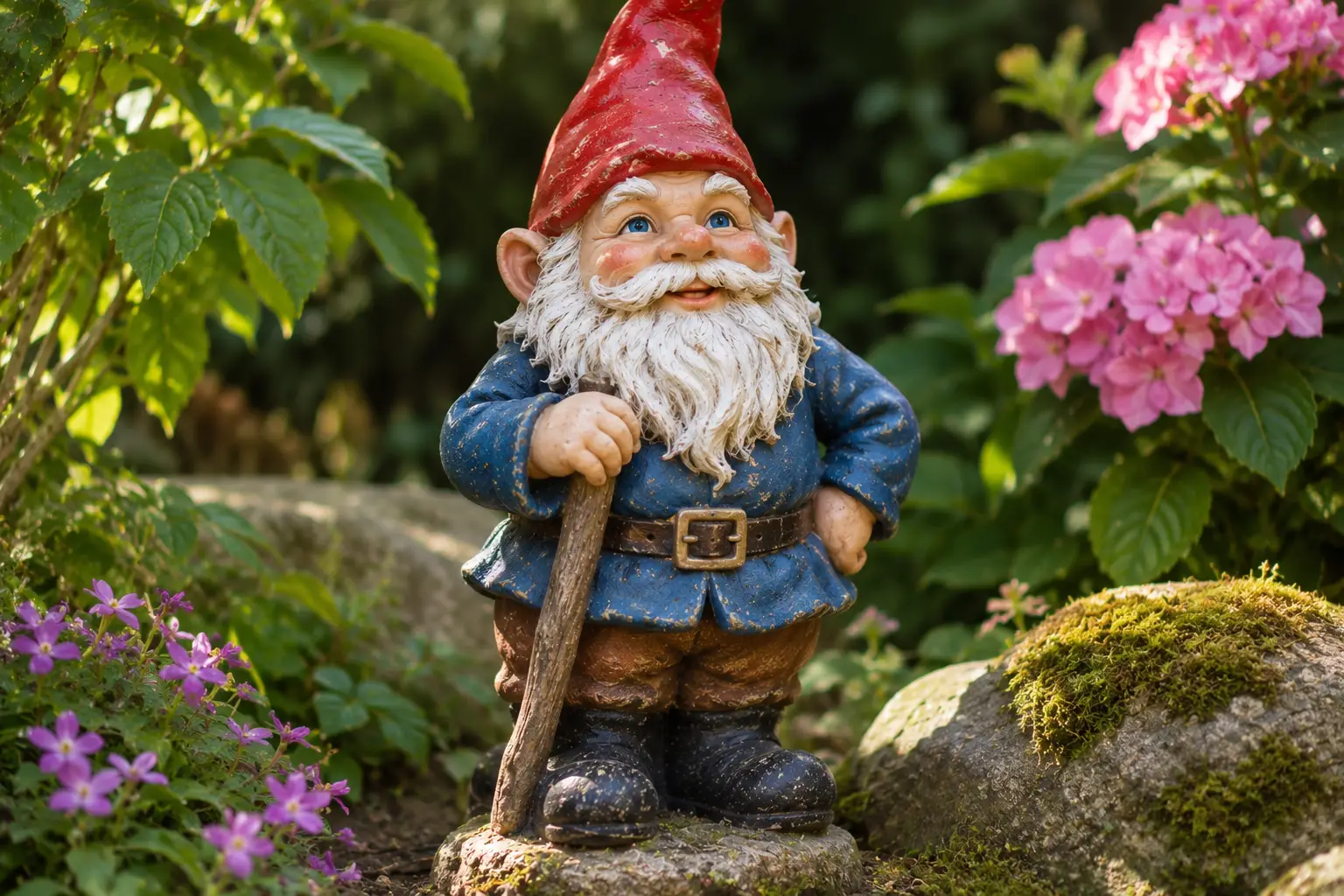
The familiar red-capped garden figure represents another later visual identity. Together, ornamental imagery and fictional adaptations give the name meanings beyond the mountain-dweller that moves through solid stone.
The gnome’s cultural range rests on these successive uses, but the elemental being, broader dwarf-like figures, garden ornament, and fictional character remain distinguishable parts of that history.
From Mountain Spirits to Red-Capped Gnomes
During the nineteenth century, German manufacturers popularized decorative garden dwarfs with long beards, pointed red caps, and colorful clothing. These figures drew upon wider European traditions of little people but differed considerably from the sparsely described mountain inhabitants of Paracelsus.
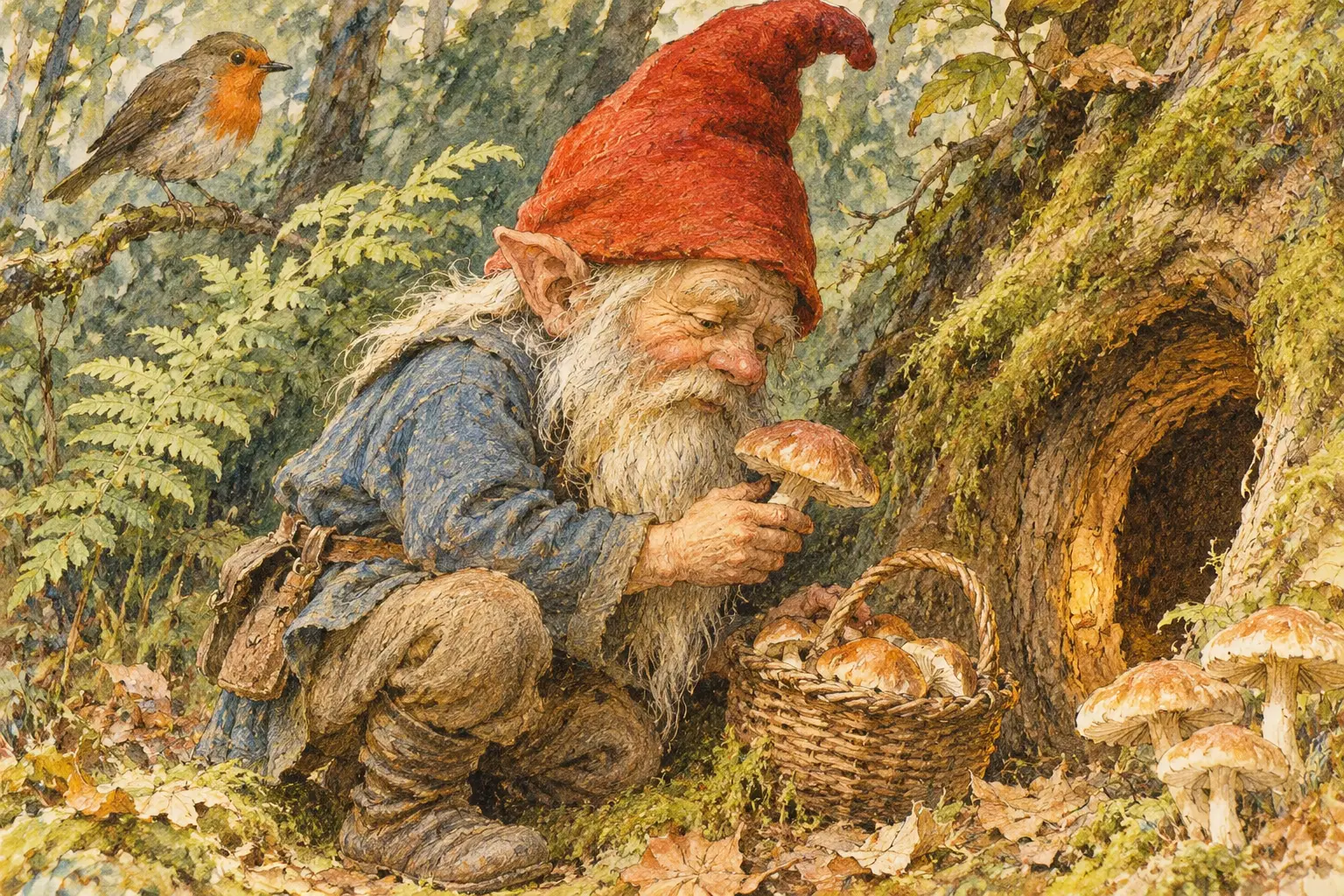
Children’s literature and illustrated fantasy later reinforced this familiar appearance. Wil Huygen and Rien Poortvliet’s Gnomes, first published in the 1970s, helped introduce richly illustrated, red-capped gnomes to international audiences, further distinguishing modern popular imagery from earlier elemental descriptions.
Similar Beasts
Nymph
Within Paracelsus’s elemental classification, nymphs are associated with water. This particular use belongs to his system and should not replace the broader meanings of nymph in other traditions.
Nymphs provide a direct structural parallel: they occupy the water-associated category where gnomes occupy the earth-associated one. They are counterparts within the classification, not alternative names for gnomes.
Sylph
Sylphs are the air-associated beings in the same four-part system. Their place demonstrates that the classification depends on elemental environment rather than on all its inhabitants sharing one appearance or mode of behavior.
The sylph is distinct from the gnome because air and earth define different categories. The comparison is useful precisely because both belong to the same structure while remaining separate kinds of beings.
Salamander (elemental)
The elemental salamander belongs to fire in the same scheme. It is a supernatural category, not simply the ordinary amphibian treated as an unusual animal species.
Its relationship with the gnome rests on elemental classification rather than shared appearance. Fire and earth distinguish their respective places within the larger system.
Religion/Ritual
The religious setting of the early gnome account is Christian. Paracelsus places elemental beings within an account of creation and divine purpose, making them part of a world whose unusual inhabitants can be considered through theological as well as natural questions.
This framework does not establish a gnome cult or customary ceremony. The documented material supplies no gnome-specific offering, festival, invocation, or protective observance.
Practices associated with other household or landscape spirits should not be transferred to gnomes merely because their names sometimes overlap.
Scientific or Rational Explanations
The strongest supported explanation is historical rather than zoological: the documented gnome category emerged within a learned organization of supernatural traditions. This accounts for how different inherited figures and names could be grouped together without requiring that they originated in sightings of a single unidentified creature.
The four-element structure is essential to that interpretation. Earth, water, air, and fire provide an organizing principle for the beings.
Their arrangement reveals the conceptual framework of the account rather than supplying the kind of independently tested classification used in modern biology.
The system begins from correspondences between beings and environments. Once earth has its characteristic inhabitants, the gnome’s mountain home and unusual movement through stone become intelligible within that framework.
This is internal explanatory consistency, not physical verification.
The ability to pass through intact stone likewise belongs to the supernatural description. It is not evidence of an organism adapted to subterranean conditions.
Ordinary biological adaptation does not account for passage through solid walls and rock, so treating the motif as a literal zoological report would discard the terms of the source without producing a supported alternative.
Language offers another explanation for apparent uniformity. When gnome, dwarf, and kobold acquire overlapping meanings, readers may gather distinct traditions under one familiar label.
Such grouping can make the resulting creature appear more consistent across periods and sources than the historical evidence actually supports.
Visual familiarity can have a similar effect. Repeated exposure to the garden figure may lead modern audiences to assume that its cap, temperament, and outdoor setting define every historical gnome.
The earlier evidence instead emphasizes a small humanlike form, an interior mountain habitat, and supernatural passage through stone.
A careful rational reading therefore separates textual classification, overlapping vocabulary, and later imagery. The evidence supports studying how the figure was assembled, circulated, and reinterpreted; it does not support choosing an undocumented environmental cause, medical explanation, or unknown animal as the origin of gnome belief.
Modern Cultural References
Sherlock Gnomes – garden-gnome detective and protector, animated film
After garden gnomes disappear in London, Gnomeo and Juliet enlist Sherlock Gnomes, a detective and protector of the city’s garden gnomes, to investigate.
The story also features Watson as his sidekick.
Source
Sherlock Gnomes investigates the disappearance of Gnomeo and Juliet’s friends and family. The trailer depicts the animated garden-gnome detective and his adventure beyond the garden.
Gnomeo & Juliet – ceramic garden gnomes reenact Romeo and Juliet, animated film
In the animated film Gnomeo & Juliet, ceramic garden gnomes from two neighboring houses recreate the story of Shakespeare’s Romeo and Juliet.
Source
Gnome Alone – living garden gnomes defend a house and neighborhood, animated film
In the animated film Gnome Alone, Chloe discovers that the garden gnomes at her new home are alive.
They defend the house, its inhabitants, and the neighborhood from attacks by Troggs.
Source
Chloe discovers that the garden gnomes at her new home are alive and need help. The trailer shows the animated gnomes and the conflict threatening them.
Wallace & Gromit: Vengeance Most Fowl – Norbot, the smart garden gnome, animated film
In the animated film Wallace & Gromit: Vengeance Most Fowl, Wallace invents Norbot, a pre-programmed robot gnome designed to help with gardening.
Norbot appears to develop an evil mind of its own, prompting Gromit to confront the danger.
Source
Gnomes – the Gnome Queen and her living garden-gnome horde, TV series
In the Australian horror-comedy series Gnomes, awakening the Gnome Queen unleashes a horde of living, killer garden gnomes on the town of Nompton.
Source
Conclusion
The gnome’s strongest documented historical identity is the small, humanlike earth-being within Paracelsus’s sixteenth-century elemental scheme. These mountain people inhabit stone and move through it, expressing an imagined relationship between living beings and the hidden interior of the earth.
That account brings together varied traditions rather than preserving a single, unchanged folk species.
Later portrayals make the gnome familiar in different ways, but the genial garden figure should not replace the earlier mountain-dweller when explaining its history. The name’s uncertain derivation likewise cautions against treating an attractive explanation as established fact.
The clearest interpretation keeps etymology, elemental classification, broader dwarf traditions, and modern imagery related but distinct.
Read across those distinctions, the gnome connects ideas about concealed natural worlds with the creative freedom of later storytelling. Its lasting cultural relevance rests not on one unbroken and uniform tradition, but on the adaptability of a small humanlike being associated with the earth.
Further Reading
Liber de nymphis, sylphis, pygmaeis et salamandris et de caeteris spiritibus (German text), verlag-dr.de
Provides readable German passages on the names, elemental homes, appearance, and reported behavior in Paracelsus’s account.
(verlag-dr.de)
Cultural History of the Four Elements, Springer / pageplace preview
Specialist discussion of Paracelsus’s elemental beings, textual history, and synthesis of traditions.
(api.pageplace.de)