
Introduction
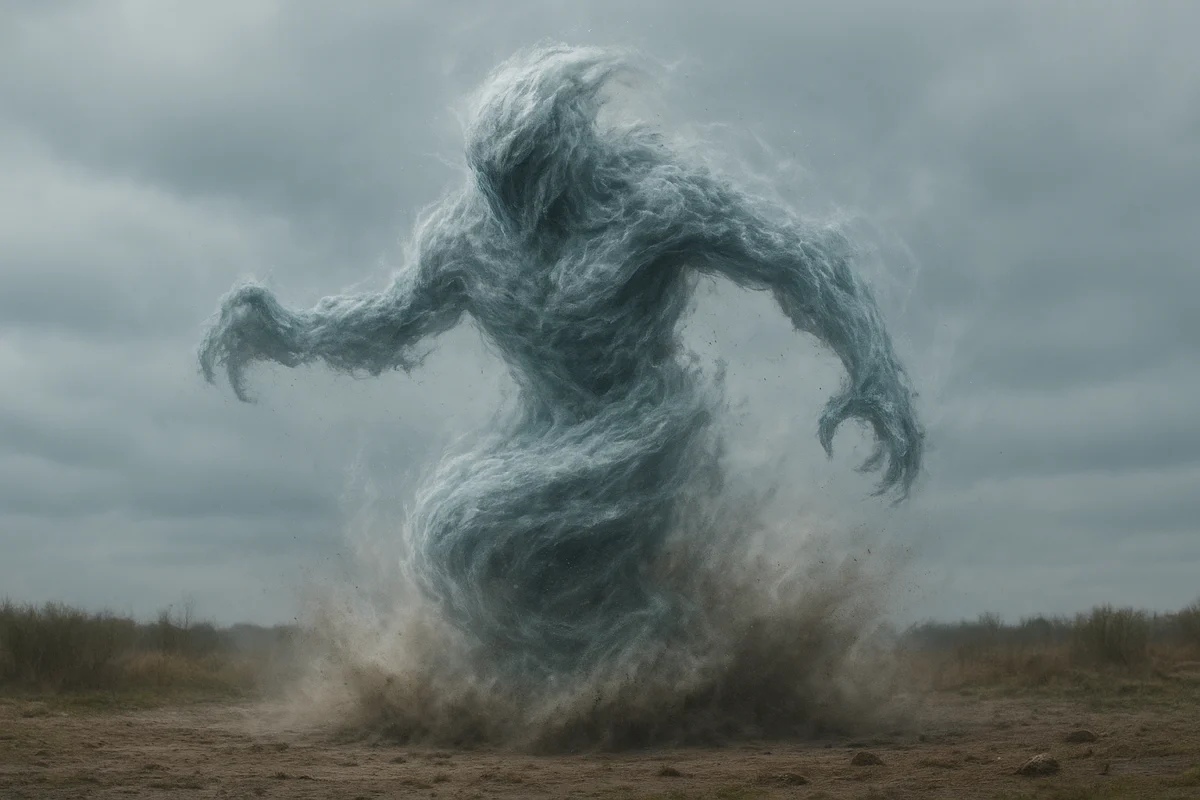
A sylph is an air-dwelling elemental being in the sixteenth-century system of Paracelsus, the Renaissance physician and writer. Its defining feature is its association with air, rather than a particular anatomy, costume, or role in a single traditional story.
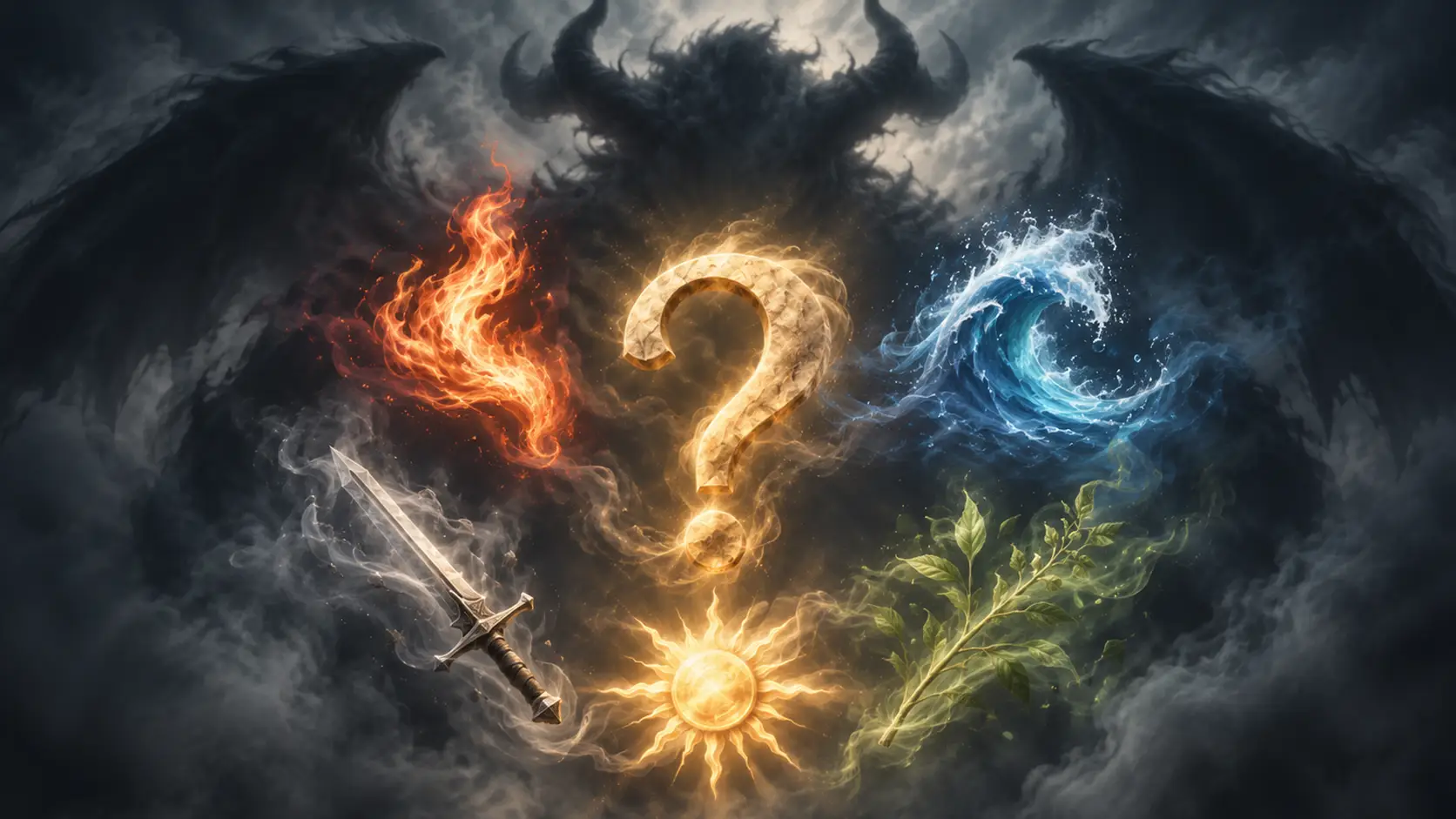
Sylphs belong to a fourfold arrangement of supernatural inhabitants: nymphs occupy water, pygmies earth, and salamanders fire. Within this scheme, the elements are not merely substances.
They are also environments inhabited by distinct kinds of beings, each associated with its own domain.
Later European literature transformed this framework into a flexible imaginative tradition. A major turning point came with Le Comte de Gabalis in 1670, which reworked elemental beings for French readers.
Subsequent literary sylphs should therefore be distinguished from their Paracelsian predecessors.
The sylph matters as a meeting point between Renaissance natural philosophy and later literary fantasy. Its history traces how an account of nature’s hidden inhabitants became material for imaginative writing, while its changing representations resist reduction to one universally accepted form.
History/Origin
The foundational account is Paracelsus’s Liber de nymphis, sylphis, pygmaeis et salamandris et de caeteris spiritibus, generally rendered in English as A Book on Nymphs, Sylphs, Pygmies, and Salamanders, and on the Other Spirits. The treatise was published posthumously in 1566.
Its elemental assignments are explicit: nymphs inhabit water, sylphs air, pygmies earth, and salamanders fire. This arrangement supplies the clearest historical basis for identifying a sylph.
The creature belongs first to a structured account of elemental life, rather than to an independently documented cycle of adventures.
Paracelsus’s treatment extended beyond naming four categories. It considered their habitats, ways of life, and interactions with humans.
His elemental beings combined bodily existence with extraordinary capacities, placing them in an unusual position between familiar living creatures and the supernatural inhabitants of a theological universe.
A decisive literary transformation followed in 1670, when Montfaucon de Villars published Le Comte de Gabalis. This work introduced the creatures into French literature through a reimagining of the elemental framework.
It represents a new literary stage, not simply an unchanged reproduction of the earlier treatise.
Sylphs and sylphides subsequently became recurring figures in eighteenth-century French writing. Their development is therefore best understood through two connected histories: the Paracelsian classification that established their elemental identity, and the later literary tradition that repeatedly adapted their appearance, significance, and relations with human characters.
Name Meaning
In its historical mythological sense, “sylph” means a being or spirit supposed to inhabit the air. This definition preserves the essential Paracelsian association.
It identifies a category of elemental inhabitant without requiring a particular sex, bodily shape, or narrative function.
The word’s etymology is uncertain. Its established meaning should not be confused with a securely demonstrated linguistic derivation: knowing that sylphs inhabit air does not establish that their name originally meant “air,” “wind,” or any other atmospheric term.
Paracelsus’s terminology was not entirely uniform. Alongside the form represented in his Latin title as sylphi, the alternate designation sylvestres appears for the air-dwellers.
These overlapping labels belong to the history of his classification; they do not by themselves settle the origin of the English word.
English later developed a separate figurative sense: a graceful, slender woman or girl. The historical dictionary records this usage in the nineteenth century, including examples from 1835–1838.
That later human comparison should not be read backward as a complete description of the original elemental being.
Appearance
The earliest framework does not establish the sylph as a tiny winged figure or a transparent body made of wind. Its strongest identifying characteristic is elemental habitat.
Air association tells us where the being belongs within the system, but does not supply a detailed anatomy.
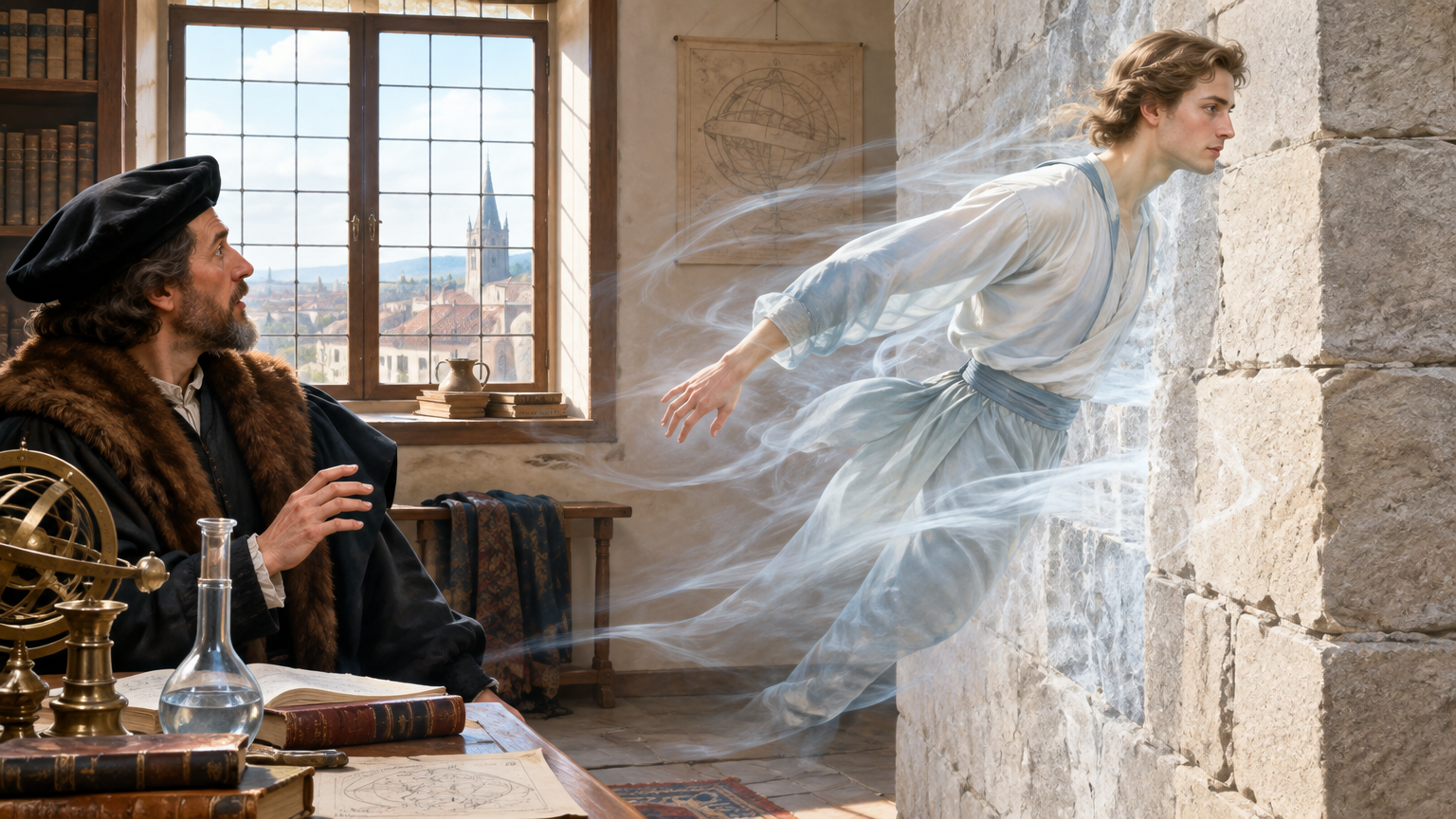
In Paracelsus’s account, elemental beings possess flesh and blood like humans. This description applies to the elemental inhabitants collectively, rather than constituting an exclusive portrait of sylphs.
Nevertheless, it makes embodiment central to the early framework and complicates any assumption that they were simply immaterial presences.
These bodies also possess supernatural capacities. Paracelsus’s elemental beings can, for example, pass through walls, despite their flesh-and-blood character.
Their resemblance to human life therefore does not make them ordinary humans, nor does their extraordinary movement mean that their bodies must be imagined as transparent.
The later Le Comte de Gabalis also presents elemental inhabitants in human-like terms. This resemblance belongs to a particular literary reworking, however, and should not become a universal visual rule.
The continuity lies in recognizable person-like beings, while individual representations remain dependent on their textual setting.
No single canonical combination of wings, gender, clothing, size, or coloration follows from this evidence. A human-like air spirit is a defensible general representation, provided it remains an interpretation.
Atmospheric surroundings can communicate its elemental identity without being mistaken for documented features of its body.
Background Story
The sylph’s background is a conception of nature populated by beings beyond ordinary human experience. Paracelsus organized these inhabitants through four elemental environments.
Within that structure, air was not empty space but a domain with its own inhabitants, corresponding to the populations of water, earth, and fire.
This framework joined questions about nature to questions about creation. In Paracelsus’s treatise, elemental beings were God’s creations, yet they did not share every attribute of humanity.
His account gave them bodies resembling human bodies while withholding the soul that distinguished human spiritual existence.
The resulting combination is important to their mythological identity: bodily resemblance did not imply complete equivalence with humans. Sylphs belonged to another order of creation.
Their habitats, capacities, and encounters with people formed parts of that account, rather than episodes in the biography of one individual creature.
The later literary tradition changed the setting in which these ideas operated. With Le Comte de Gabalis and subsequent French writing, elemental inhabitants became adaptable literary figures.
Their history consequently involves reinterpretation as well as transmission: a later sylph can inherit the air association without preserving every feature of Paracelsus’s scheme.
There is no single canonical sylph adventure established by these accounts. The figure’s background instead lies in the movement between natural philosophy, theological speculation, and literature.
Keeping those layers distinct explains both the stability of its elemental identity and the variability of its later characterization.
Famous Folklore Stories
The best-documented sylph narratives belong to learned and literary writing rather than a securely established collection of traditional oral tales. They include accounts of elemental beings encountering humans and a specific aerial-lover episode preserved in the later literary treatment, Le Comte de Gabalis.
Encounters Across Elemental Boundaries
In Paracelsus’s treatise, elemental beings have habitats and ways of life, yet can also interact with humanity. These encounters belong to his explanation of an inhabited creation, not to a single adventure with a named sylph hero or a fixed sequence of trials.
His elemental beings possess flesh and blood while displaying abilities beyond ordinary human limits, including passage through walls. This combination makes their encounters distinctive: they are embodied inhabitants of another order of nature, rather than simply the returning ghosts of dead people.
The Aerial Lover in Le Comte de Gabalis
Published in 1670, Montfaucon de Villars’s Le Comte de Gabalis recasts elemental encounters through conversations about secret knowledge. Its fifth conversation mentions a sylph who assumes the appearance of the lover of a young woman of Seville and thereby becomes immortal.
This is a literary episode, not an authenticated traditional folktale with an independently established title. Its essential movement is nevertheless clear: the sylph adopts a particular human likeness, enters an intimate human relationship, and gains a condition unavailable to it before that union.
The surrounding discussion connects elemental lovers, secret children, and the pursuit of immortality through relationships with humans. These details belong to Villars’s particular elaboration.
They should not become universal rules governing every sylph, nor evidence that historical communities experienced the events as narrated.
Cultural Impact
The sylph’s major cultural transformation was from a figure in Renaissance natural philosophy into a flexible literary character. Eighteenth-century French writing developed sylphs and sylphides across an extended tradition, allowing the elemental being to become a vehicle for romance, fantasy, and speculation about hidden worlds.
Le Comte de Gabalis was a crucial point in that transition. Its conversational treatment made elemental beings available outside a systematic account of nature.
The aerial lover could now carry questions about desire, identity, and immortality within an entertaining literary setting.
Later reception also gave sylph-associated literature a visible material form. An 1896 edition of Alexander Pope’s The Rape of the Lock featured illustrations by Aubrey Beardsley.
This documents the poem’s illustrated afterlife, rather than preserving an authoritative Renaissance design for an air-dwelling being.
Nineteenth-century English usage increasingly associated the sylph with feminine slenderness and grace, with figurative examples recorded from 1835–1838. That development reveals a selective cultural inheritance: qualities of delicacy became prominent, while the earlier philosophical framework became less necessary to understanding the image.
Contemporary artists continue to reinterpret the elemental association. DDArianne’s Sylph, dated 2022, presents a creative portrayal identified with an air spirit.
It demonstrates the continued usefulness of the name for imaginative character design, not the survival of one unchanged historical appearance.
Annie Stegg Gerard’s The Sylph, dated 2023, likewise depicts a wind spirit, accompanied by two feathered companions. The work retains the aerial connection while supplying its own visual setting.
Such choices belong to modern artistic invention rather than mandatory features of the older being.
Similar Beasts
Undine
An undine is a water-associated elemental being within the Paracelsian tradition. The foundational fourfold arrangement also uses the designation nymph for inhabitants of water, distinct from air-dwelling sylphs.
The relationship is direct: both belong to an elemental account of inhabited nature. Their different environments matter more than later illustrations that make them look alike.
Fossegrim
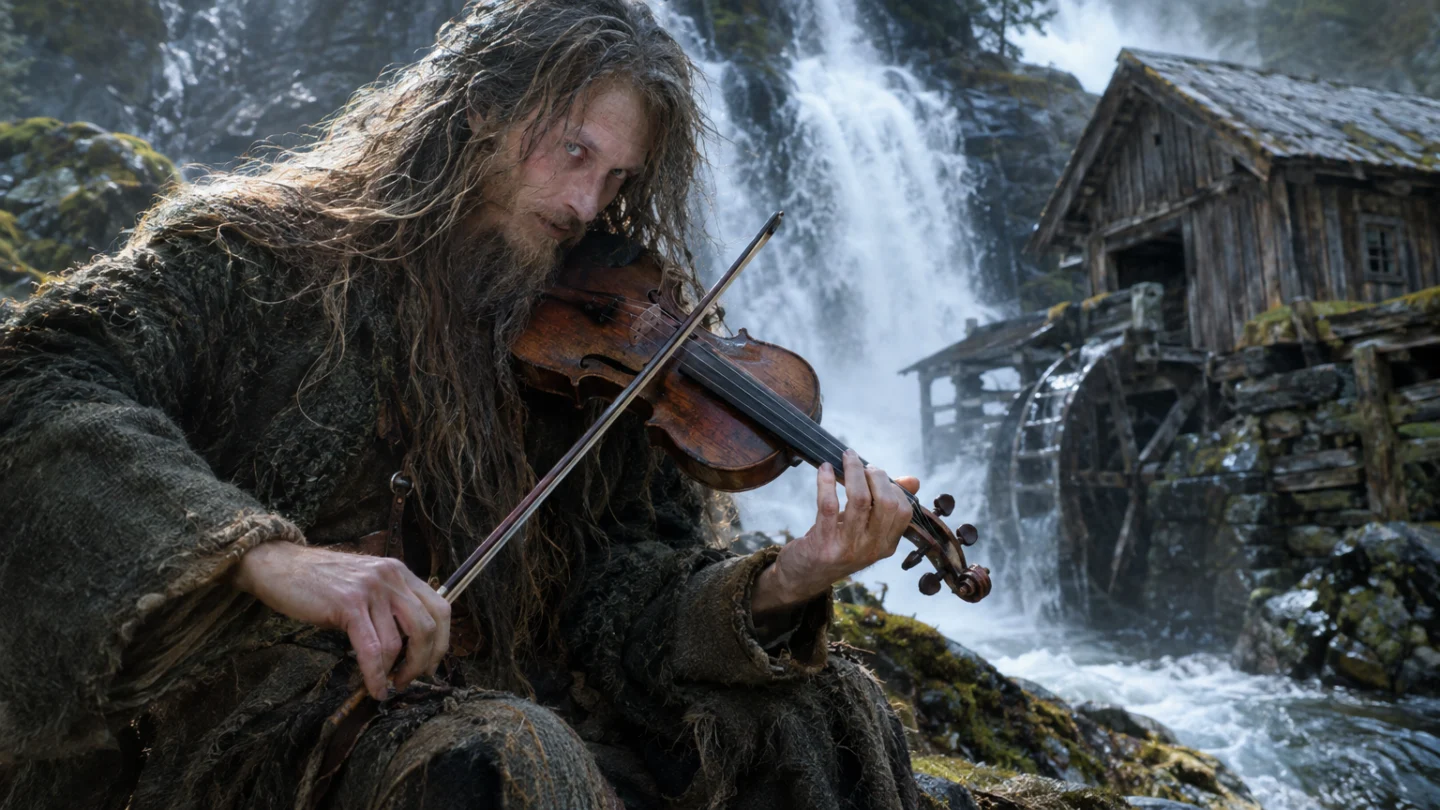
Fossegrim is a Scandinavian waterfall spirit associated with music and flowing water. Its supernatural identity is closely connected with a natural environment rather than an ordinary animal species.
Like a sylph, Fossegrim gives a natural setting a supernatural inhabitant. The comparison concerns habitat and spirit identity, not membership in the same historical tradition.
Boto Cor-de-Rosa

Boto Cor-de-Rosa is the pink river dolphin of Amazonian folklore, renowned for taking human form and appearing as a seducer. Its stories connect aquatic existence with human relationships.
Its resemblance is strongest to Villars’s aerial lover: a nonhuman being assumes human appearance in an intimate encounter. This narrative parallel does not establish shared origins.
Read more about Boto Cor-de-Rosa
Religion/Ritual
Paracelsus placed elemental beings within a creation governed by God, while distinguishing them from humans through their spiritual condition. In his account, their lack of a soul makes them a theological problem as well as inhabitants of particular natural environments.
No specific sylph worship ceremony, annual observance, or established offering practice is documented in this historical material. Villars’s treatment of immortality through human union is a literary and theological motif, not sufficient evidence for a marriage ritual or a practiced religious institution.
Scientific or Rational Explanations
Sylphs are best examined historically as beings within a speculative explanation of nature. Their elemental habitat gives them a place in an ordered cosmos, but that conceptual arrangement is not equivalent to observation, biological classification, or experimental evidence for an unknown organism.
Paracelsus’s descriptions combine bodily characteristics with extraordinary capacities. Specialist scholarship characterizes this treatment as imaginative rather than empirical.
Flesh and blood make the beings intelligible through human comparison, while abilities such as passing through walls separate them from the constraints of ordinary physical life.
Literary transmission provides a documented explanation for changes in the sylph’s character. A being discussed in a philosophical treatise could become an aerial lover in a later work.
That change can be studied through texts without assuming that either version records a physical encounter.
The later association with feminine grace offers another traceable process: selective reinterpretation. Writers, readers, and artists could emphasize lightness or elegance without retaining the original account’s embodied nature and theological distinctions.
Different representations therefore need not be competing descriptions of one supposedly observed species.
A meteorological or psychological explanation would require specific testimony to explain. The documented material here does not justify identifying sylphs with unusual clouds, optical effects, hallucinations, or misidentified animals.
The strongest rational account concerns intellectual history and literary adaptation, rather than a reconstructed cause for unrecorded sightings.
Modern Cultural References
Sylph, artwork (2022)
DDArianne’s artwork presents a contemporary interpretation of the sylph. Discussion accompanying the image identifies its subject as an air spirit, retaining the being’s defining elemental association within modern illustration.
(newgrounds.com)
The Sylph, artwork (2023)
Annie Stegg Gerard’s artwork depicts a wind spirit in the sky with two feathered companions.
Its explicitly aerial subject connects this contemporary portrayal to the sylph’s historical elemental identity.
(artworkarchive.com)
Conclusion
The sylph is best understood first as an air-dwelling elemental being within Paracelsus’s sixteenth-century system, rather than as a creature with one universal appearance or a fixed cycle of folk adventures. Its association with air provides continuity across otherwise varied interpretations.
The distinction between that foundational account and later literary elaborations matters: physical qualities, relationships with humans, and spiritual possibilities belong to particular versions, not automatically to every being called a sylph. Even the name’s derivation remains unsettled.
The figure’s lasting significance lies in the movement between natural philosophy and imaginative literature. Air becomes an inhabited realm, while the sylph gives writers and artists a way to explore beings both human-like and separate from humanity.
Later French literature and contemporary artworks demonstrate different uses of that premise without establishing a single authoritative design. Read in this way, the sylph represents not an unchanged survival from remote antiquity, but a documented supernatural concept repeatedly reshaped through literary and artistic interpretation.
Further Reading
Sylphs and sylphides in eighteenth-century French literature (1670–1801), University of Oxford Research Archive
Specialist study tracing Paracelsus’s elemental scheme and the later literary development of sylphs and sylphides.
(ora.ox.ac.uk)
Sylphs and Other Elemental Beings in French Literature since Le Comte de Gabalis (1670), PMLA / Cambridge Core
Specialist literary study with references to early reception and interpretations of the elemental scheme.
(cambridge.org)
Le Comte de Gabalis; ou, Entretiens sur les sciences secrètes, Internet Archive / IAPSOP
This digitized edition of Villars’s text provides primary evidence for the later elaboration of sylphs: the fifth entretien describes an aerial lover, secret children, and the sylphs’ quest for immortality through union with humans.
It can support a chapter on how the 1670 narrative recast elemental beings as romantic and reproductive figures.
(iapsop.com)
Sylph, World English Historical Dictionary
Historical lexicographic entry documenting the air-spirit sense, dated examples, and competing etymological proposals.
(wehd.com)
Liber de nymphis, sylphis, pygmaeis et salamandris, Theatrum Paracelsicum
A specialist Paracelsus-work record for the original source tradition: it identifies the treatise, its language, place within Philosophia Magna, and six-part structure.
Use it to anchor claims about the early elemental-being framework, while checking the treatise text itself for specific claims.
(theatrum-paracelsicum.com)
A Book on Nymphs, Sylphs, Pygmies, and Salamanders, and on the Other Spirits, Wellcome Collection
A research-library catalogue record for the English translation with Henry E. Sigerist’s introduction. It supports a bibliography note identifying the translation and its scope, and offers a route to the Paracelsian primary text; the record itself is bibliographic rather than testimony about sylphs.
(wellcomecollection.org)