Introduction
Aswang is a broad category of supernatural beings and feared people in Philippine folklore, rather than a single monster with a fixed appearance. Its meanings vary across communities, encompassing corpse-eating ghouls, vampire-like predators, entrails-suckers, human-animal shapeshifters, and people believed to practise harmful sorcery.
These forms should not be combined into one creature possessing every reported power. A corpse-eater threatening a funeral vigil and a living person accused of witchcraft belong to different expressions of the tradition, even when both are called aswang.
The geographical picture is equally varied. Capiz, on the island of Panay, has a prominent association with aswang belief, but that reputation is contested locally.
It does not establish the province as the birthplace or exclusive homeland of the tradition.
The aswang matters both as a subject of storytelling and as a label with consequences for real people. Historical accounts connect it with protecting the dead, while field studies show how supernatural suspicion can enter everyday relationships within particular communities.
History/Origin
Aswang belief appears in Philippine accounts from the Spanish colonial period, but the surviving documents do not identify a single beginning. Reports from different places describe corpse-eating beings, flying predators, animal transformations, and feared sorcery, sometimes through the assumptions of outside observers.
Miguel de Loarca’s 1582 account of Visayan mourning customs describes fires and armed guards around the dead. He applied a European term for witches, while later folklorists noted that the reported threat more closely resembles local traditions concerning corpse-eating beings.
An account attributed to the Augustinian priest Tomás Ortiz, preserved through a 1906 publication of earlier material, describes an asuang flying near a house during childbirth. Its extraordinarily thin tongue reaches a child, giving early documentary support to a distinct predatory form.
These descriptions concern different circumstances. Loarca’s narrative centers on protecting a corpse, whereas Ortiz records danger during childbirth.
Neither establishes that all Aswang shared a woman’s appearance, wings, a detachable body, or the same targets in every Philippine community.
The manuscripts attributed to José María Pavón and dated 1838–1839 add a specific claim about an aswang eating different organs according to a deceased person’s age. However, historians have challenged the manuscripts’ authenticity, so this detail cannot stand as secure nineteenth-century testimony.
Maximo Ramos quoted that passage in his 1968 study of corpse-eating beings and noted questions about the manuscripts. William Henry Scott, a different scholar, conducted substantial source criticism of the Pavón materials.
Confusing their roles creates a misleading chain of authority.
Francis X. Lynch’s 1949 work on Bicol belief further distinguished flying Aswang that retained their bodies from forms that separated during flight. Ramos later organized the wider complex into comparative categories, while field studies showed the social consequences of accusing real people.
These records offer different perspectives on evolving traditions, not a complete inventory of every community’s beliefs. Their dates establish when collectors documented particular claims, rather than when the traditions began, and their descriptions must remain connected to their local and historical settings.
Name Meaning
Aswang also appears in the recorded spellings asuang and asuwang. These forms identify the name in different written sources, but they do not, by themselves, establish its original linguistic components or explain how its supernatural meanings developed over time.
A reliable derivation cannot be established from the evidence considered here. The word’s documented uses are clearer than its etymology: it can designate several kinds of supernatural predator, as well as a person suspected of possessing dangerous occult powers.
Consequently, English terms such as “ghoul,” “vampire,” and “sorcerer” function as contextual descriptions rather than interchangeable literal translations. “Ghoul” suits the corpse-eating role in the funeral-vigil account; “sorcerer” better conveys the human figure accused of supernatural harm in other settings.
The name therefore requires attention to context. Knowing that a figure is called an aswang does not alone reveal its appearance, its victim, or whether the account concerns a monstrous being or an accusation directed at a living person.
Appearance
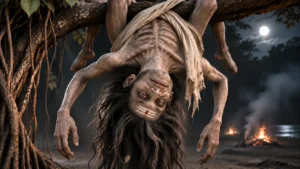
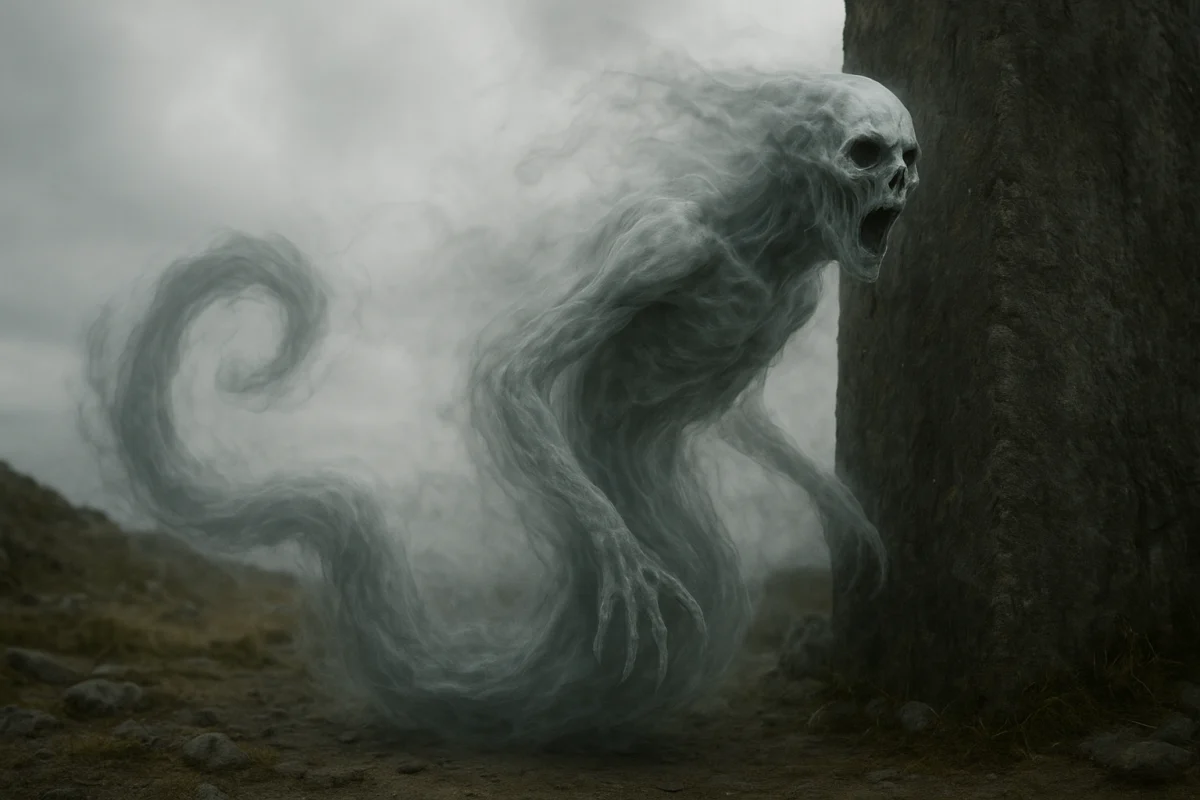
The Aswang does not have one universally accepted appearance. Philippine accounts describe supernatural predators, suspected sorcerers, animal shapeshifters, and beings identified by how they feed.
Some look human until nightfall; others are known chiefly through their actions rather than physical descriptions.
Maximo Ramos organized this complex into five comparative types: vampire, viscera sucker, man-eating weredog, witch, and ghoul. These labels help readers navigate the material, but they do not mean that every community recognizes identical creatures or that their characteristics can be combined.
Human and Animal Forms
Some Aswang appear indistinguishable from their neighbors during ordinary life. Accounts of suspected witches emphasize social identity rather than visible monstrous features, while other traditions describe people changing into predatory animals.
Neither description establishes a fixed face, body shape, or sex.
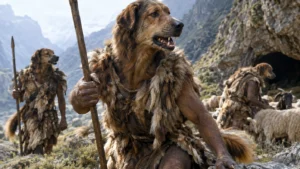
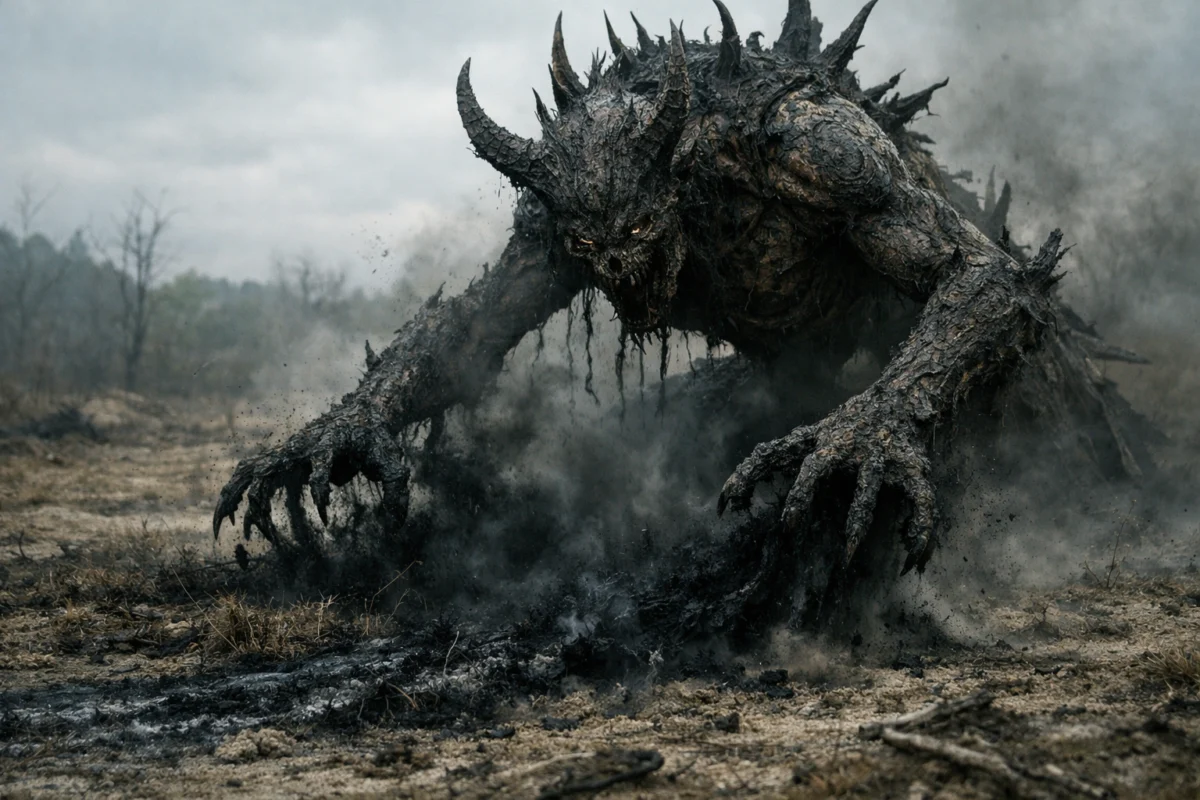
The animal-transforming forms may resemble dogs or other threatening creatures, depending on the locality and the account. Their horror depends on the uncertainty of recognizing the predator: someone encountered in human form may later be feared as the creature attacking nearby households.
The Manananggal: A Flying Upper Body
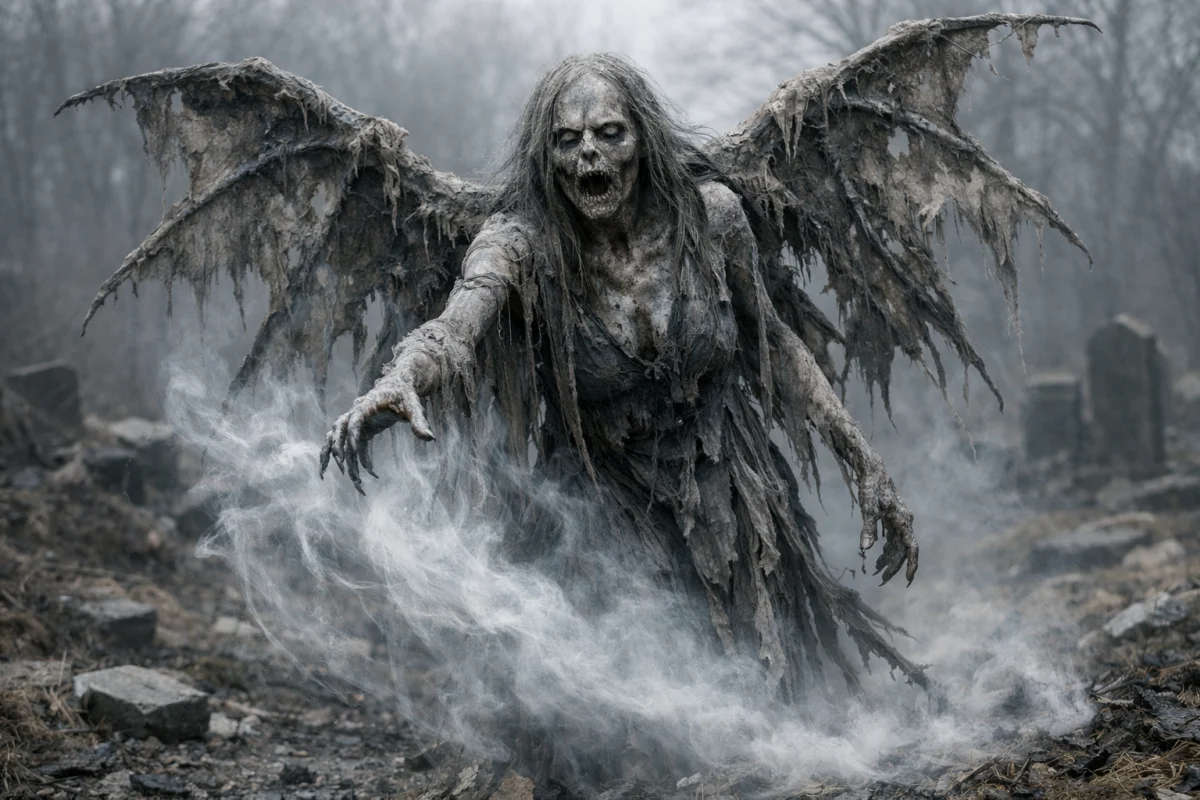
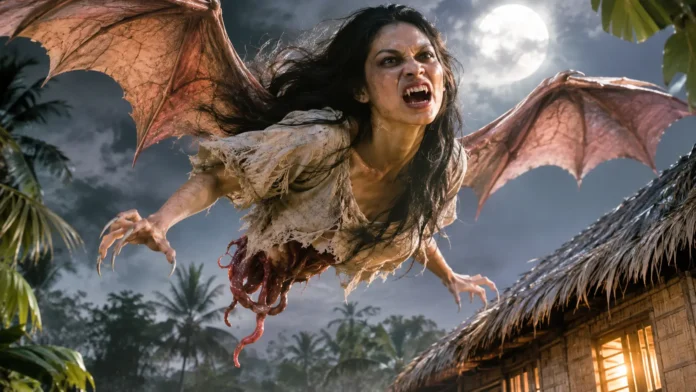
The Manananggal, often grouped within the wider Aswang complex, is the familiar waist-separating viscera sucker. Common descriptions portray a person, frequently a woman, whose upper body breaks away from the lower half and flies at night, sometimes supported by bat-like wings.
Its abandoned lower body remains hidden while the flying half searches for victims. Many accounts give this form a long, narrow, tubular tongue used to take blood or internal organs.
The creature must return to its lower body before daybreak in some traditions.
The Flying Head and Entrails
A lesser-known group of regional accounts describes separation at the neck instead. In descriptions from parts of Bicol and the Visayas, the flying head carries dangling internal organs.
This is not the same anatomy as a winged upper torso, despite overlapping names.
Francis X. Lynch’s account of Bicol belief distinguishes the asuwang na layog, which flies without abandoning its body, from a local anananggal form whose head and entrails leave the trunk behind. These names and transformations should remain tied to their specific settings.
Flying Aswang Without Separation
Not every flying Aswang abandons part of its body. Some Bicol accounts describe a complete human figure taking flight through supernatural means.
This form differs from the Manananggal’s separation at the waist and from the regional accounts of a detached flying head.
An early eighteenth-century description attributed to Tomás Ortiz places a flying asuang near a house during childbirth, using a tongue as thin as a thread. It supports the long-tongue motif, but does not establish bat wings or bodily separation in that particular account.
Ghouls and Other Human-Like Forms
Corpse-eating versions of the Aswang may be recognized by their feeding habits rather than by a distinctive silhouette. Historical funeral-vigil material names vulnerable bodies and protective watchers, but offers no reliable portrait of the predator’s hair, claws, wings, or proportions.
The human side of the tradition also requires careful distinction. In anthropological studies from Capiz, someone accused of being an Aswang remains a real person within a community.
Such accounts concern social identification, not an independently witnessed transformation into a supernatural monster.
A reliable illustration therefore needs a declared interpretation: a waist-separating Manananggal, a flying head in a regional account, an intact flying predator, or a ghoul. Combining all of these into one monster would misrepresent the diversity of the tradition.
Background Story
The aswang has no single background narrative that explains all its forms. Its documented contexts instead include death and mourning, fears of bodily predation, accusations of sorcery, and local reputations.
These settings help explain why the name can encompass both monsters and feared neighbours.
In the funeral-vigil account, the central relationship is between a vulnerable corpse and those keeping watch over it. The threat gives their presence a protective purpose: remaining with the dead prevents an imagined predator from gaining access to the body.
Early accounts describe supernatural dangers surrounding death and childbirth, but not the same monster in every case. A sixteenth-century Visayan report describes armed funeral watches, while an eighteenth-century account portrays a flying attacker approaching a house where childbirth is taking place.
Other expressions of the tradition take shape within social relationships. A person may be regarded as an aswang by others in the community, making supernatural suspicion part of ordinary interaction.
The Capiz field studies show why this dimension cannot be reduced to a monster’s fictional biography.
Regional reputation adds another layer. Capiz’s association with aswang has prompted both repetition of the label and resistance to it.
That disagreement concerns how a community is represented; it is not evidence that every local resident shares one belief or accepts one account of its origins.
These contexts connect otherwise different manifestations without making them identical. The corpse-eater expresses danger surrounding the dead, while the accused sorcerer brings feared supernatural harm into human relationships.
Their coexistence helps explain the breadth of the aswang category better than a single invented origin story would.
Famous Folklore Stories
Aswang folklore survives through reported encounters, protective customs, and accounts of supernatural danger rather than one continuous narrative. The following episodes represent two historically documented belief patterns.
Their descriptive titles are editorial, not names supplied by the original narrators.
The Night Watch Against the Corpse-Eater
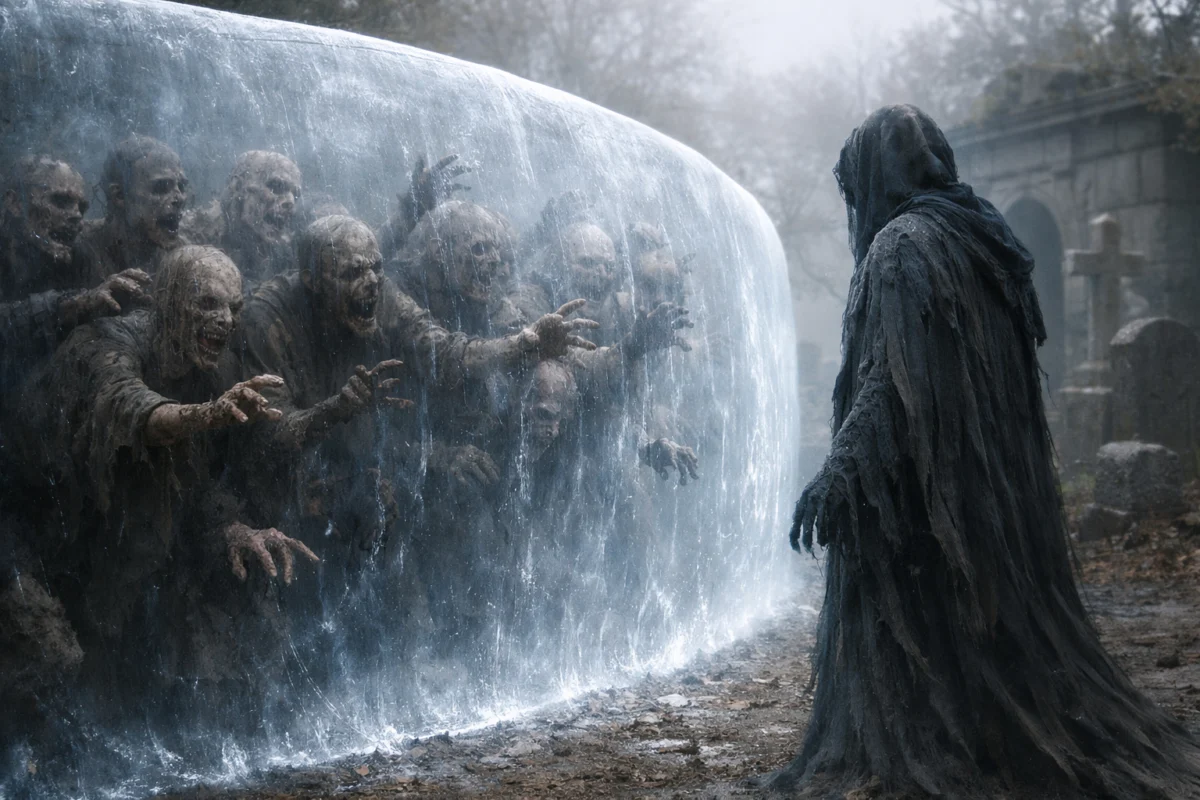
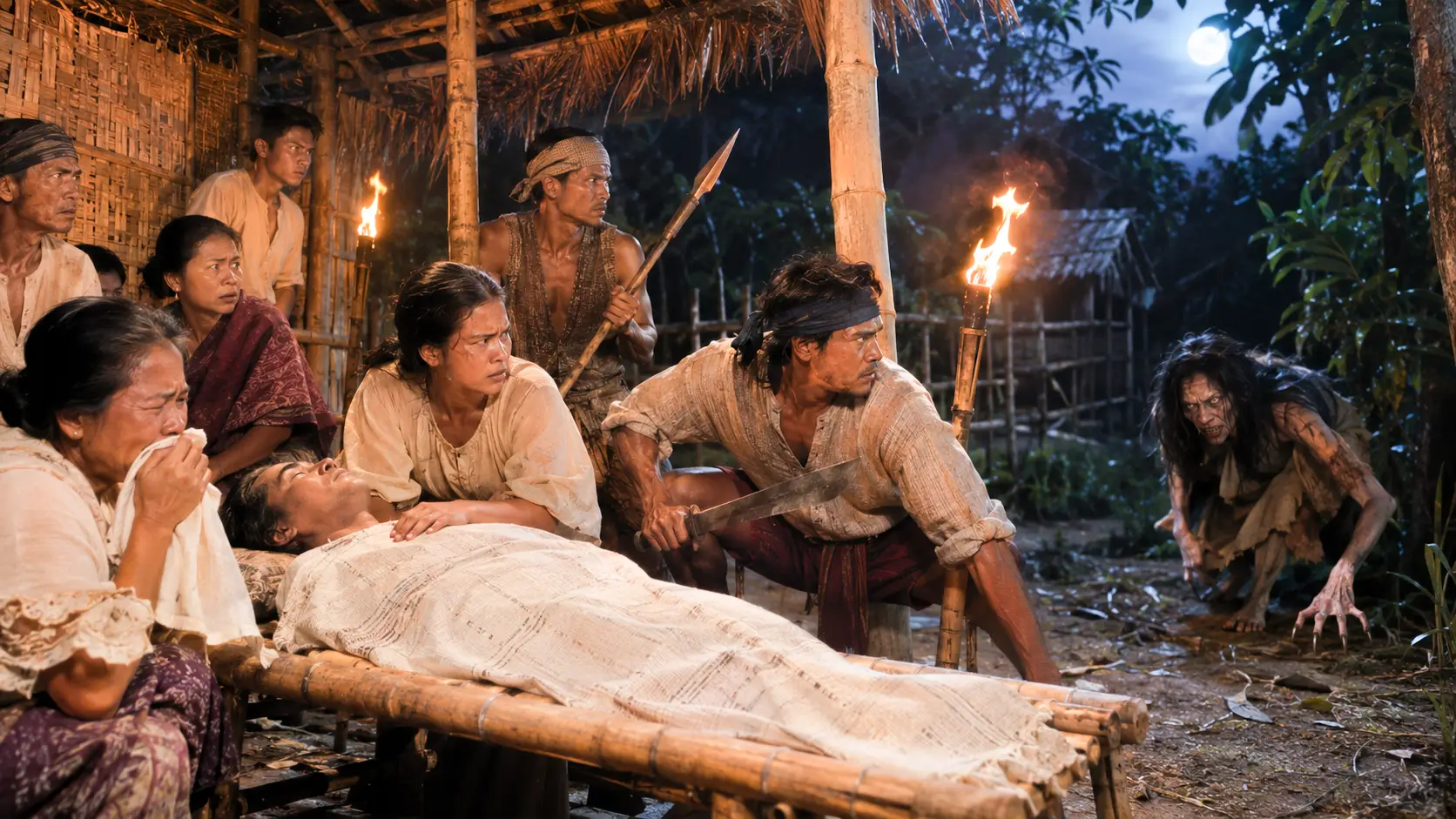
The guardians at a Visayan funeral had reason to fear what might arrive after dark. According to Miguel de Loarca’s account from 1582, mourners maintained fires near the house while armed men remained alert beside the dead, anticipating a dangerous supernatural visitor.
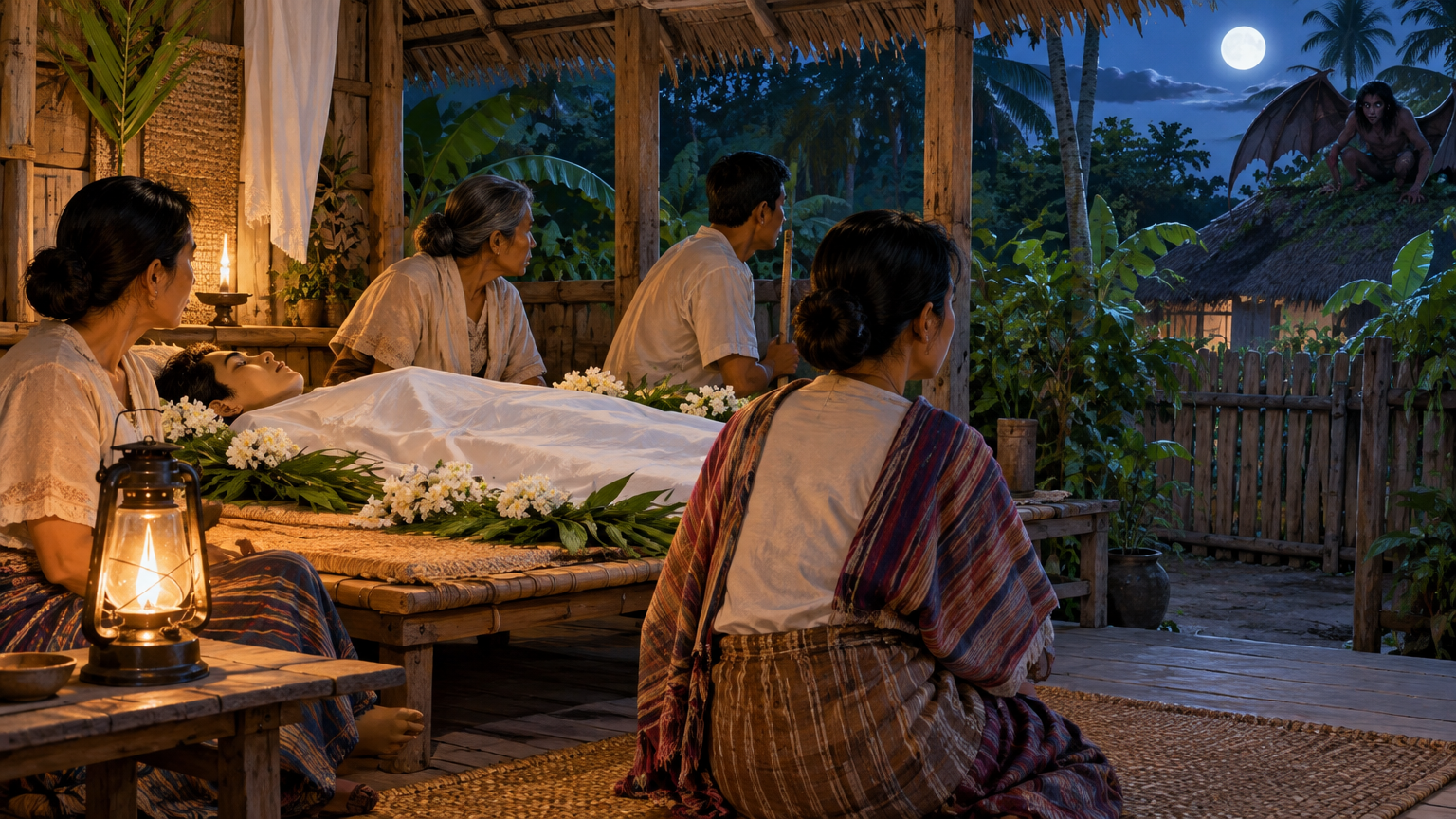
Loarca described the beings through the Spanish language of witchcraft, but his brief account did not provide a detailed portrait. The threat centered on an unguarded corpse and the belief that harmful visitors might approach it during the vulnerable hours of mourning.
“armed men go about at night keeping guard over the coffin” (Miguel de Loarca, Relación de las Yslas Filipinas, 1582, translated in The Philippine Islands, Volume V)
The gathering did not unfold as a tale with a named hero or defeated monster. Instead, the recurring action was the vigil itself: household members watched, tended fires, and stayed together.
The danger remained expected rather than described through a completed attack.
Maximo Ramos later interpreted such protective watching within the wider history of corpse-eating ghoul beliefs. His comparative approach helps explain why this episode belongs in the Aswang complex, but Loarca’s original terminology should not be silently replaced with a modern classification.
Because this testimony dates from the sixteenth century, it offers stronger historical grounding than the disputed Pavón material. Yet it cannot prove that every Visayan wake followed identical customs, or that a single named creature appeared in every regional telling.
The Witch Above the Childbirth House
The report attributed to Tomás Ortiz describes a frightening possibility near a household awaiting childbirth. A bird called tictic appears as an accomplice or signal, while the asuang approaches the house.
Rather than confronting anyone openly, the creature uses stealth.
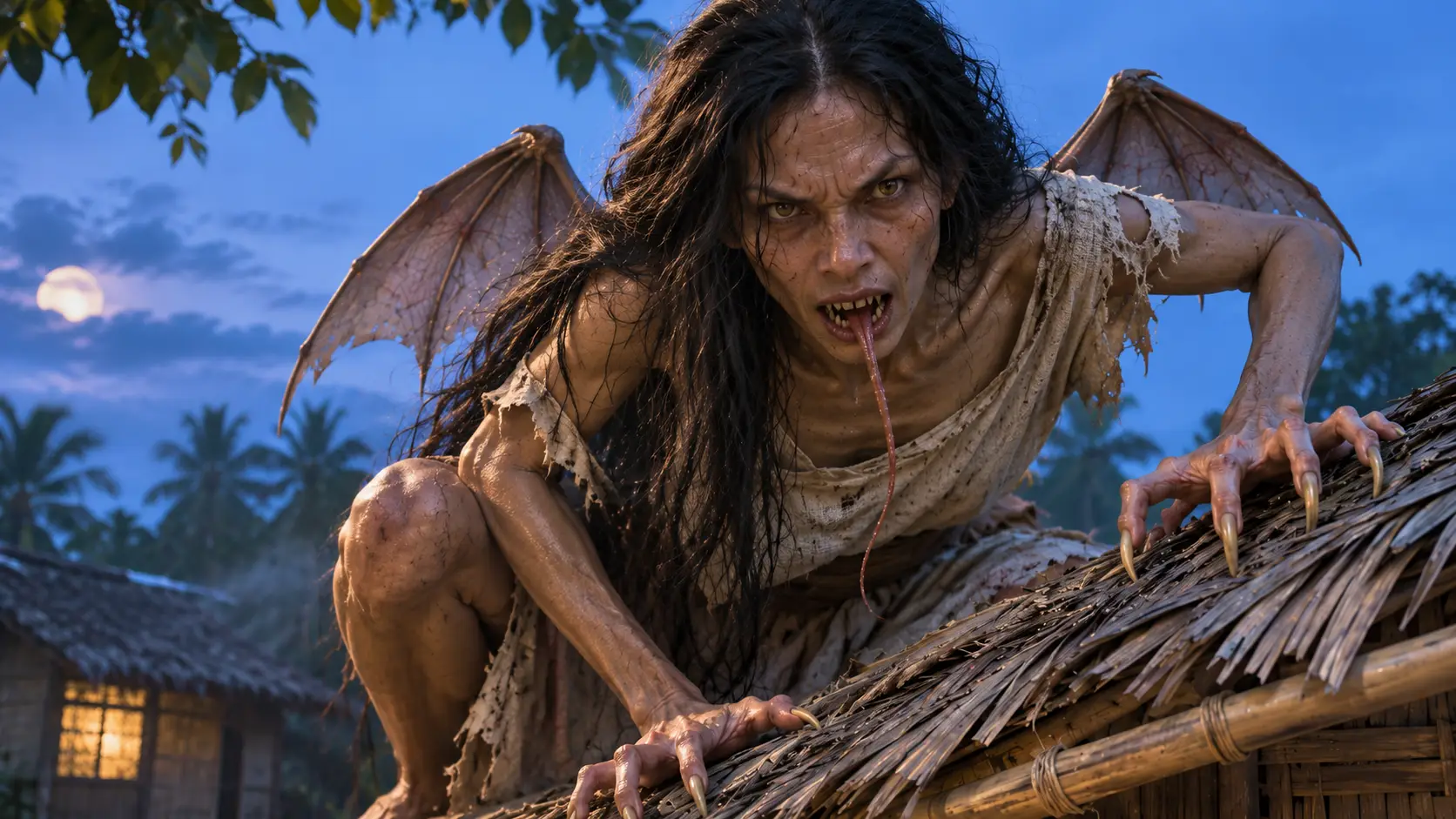
According to the account, the attacker positions itself on a neighboring roof and reaches toward a child with an impossibly long, slender tongue. Its prey is the child’s internal organs, making the threat distinct from accounts about ghouls haunting burial grounds.
“extends its tongue in the form of a thread” (Tomás Ortiz, La Práctica del Ministerio, 1713, reproduced in Fletcher Gardner, Philippine (Tagalog) Superstitions, 1906)
Ortiz also reported that the being might assume animal forms, including a dog, cat, or cockroach. Such transformations broaden the danger beyond the roof itself.
A creature that changes appearance could remain near its victims without being recognized as supernatural.
The text is a record of what Ortiz said local people believed, not eyewitness documentation of an actual attack. The priest wrote from a missionary perspective, so his account preserves important folklore while also filtering its meaning through colonial religious concerns.
This account supports the thin-tongue and flying motifs, but not an exact shape for the wings or a detached head. Those anatomical features belong to other documented traditions.
Separating the versions allows readers to understand why different Aswang images can have different sources.
Cultural Impact
The funeral-vigil account places the aswang within the responsibilities surrounding death. The feared danger is the violation of an unguarded body.
Keeping watch therefore links fear of supernatural predation with care for the deceased.
The tradition also carries consequences beyond storytelling. In field observations from one Capiz village, accusations and rumors helped justify discrimination and exclusion.
These findings describe a particular social setting, not an attitude that can be attributed indiscriminately to Filipino communities.
Calling someone an aswang can turn a supernatural category into a judgment about a living person. Kentaro Azuma’s 2002 study of a woman bearing that label shows why the subject belongs to the study of everyday relationships as well as folklore.
Capiz has acquired a prominent association with the aswang, but that reputation is contested. Some residents resist its identification as the creature’s homeland, while tourism debates give the association another public role.
Prominence in popular imagination does not establish an exclusive place of origin.
Similar Beasts
Rakshasa
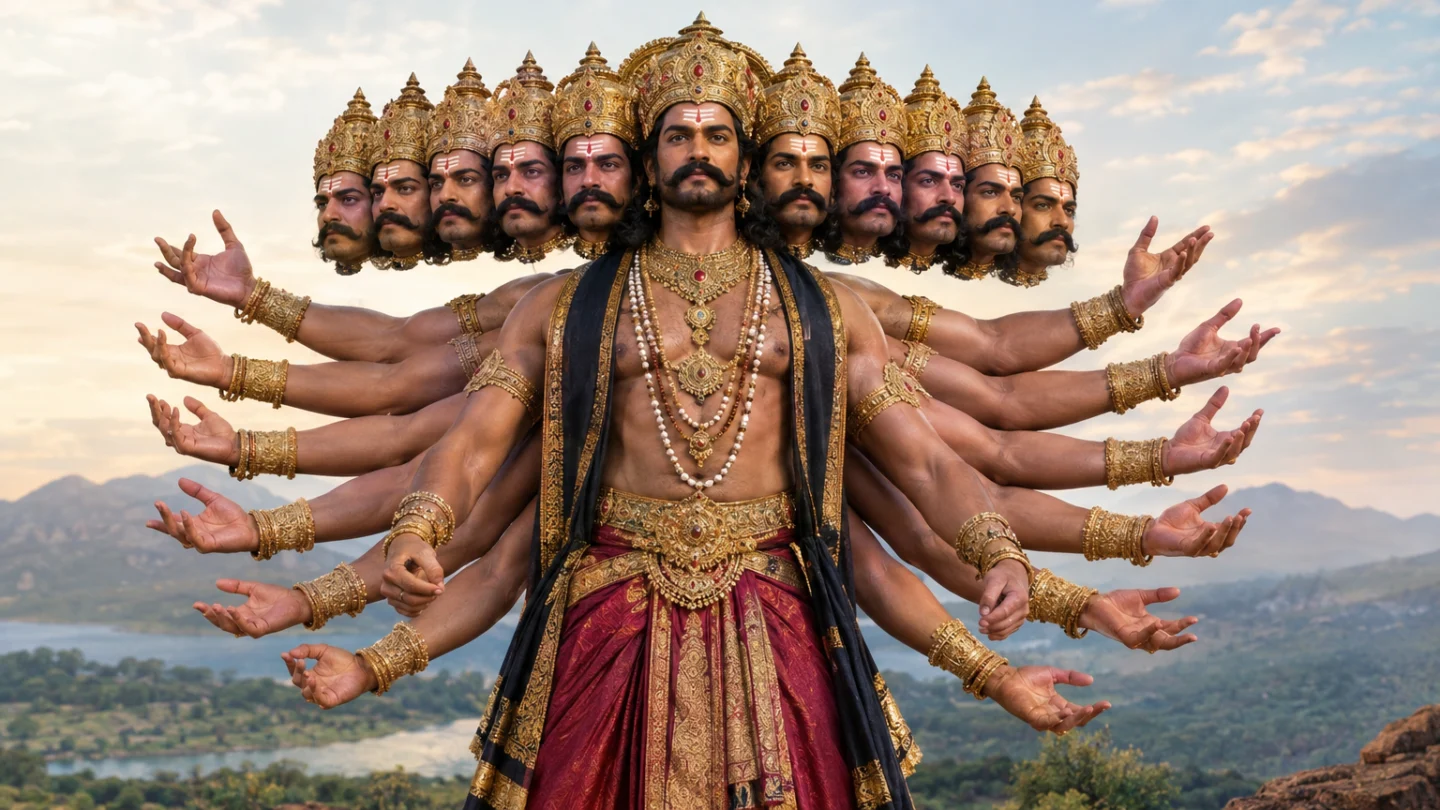
Rakshasas are supernatural beings in Hindu tradition, prominent in ancient Indian literature including the Ramayana. Often portrayed as dangerous adversaries, they possess powers of transformation, disguise, and illusion, and may threaten humans or disrupt sacred rites.
Their deceptive transformations resemble shapeshifting aswang forms, particularly where an apparently ordinary figure conceals a supernatural threat. Rakshasas nevertheless belong to a distinct religious and literary tradition; their epic roles do not define the Philippine aswang category or its corpse-eating and vampiric forms.
Skinwalker

In Diné (Navajo) tradition, skinwalkers are understood as malevolent witches capable of assuming animal form. They belong to culturally specific beliefs about harmful witchcraft rather than a general category of animal spirits.
The strongest resemblance concerns a human practitioner associated with harmful magic and animal transformation. This comparison applies to witch and shapeshifter forms of aswang, not automatically to corpse-eaters, revenants, or every being grouped under the aswang name.
Strzyga

The strzyga is a dangerous figure in Polish and wider Slavic folklore, commonly described as a female revenant that attacks the living at night and drinks blood. Accounts vary, combining vampire, witch, and birdlike demonic traits.
Nocturnal attacks and blood-drinking provide a close parallel to vampire-like aswang forms. The strzyga’s revenant identity is an important difference: an aswang need not be a returning corpse, and neither tradition has one universal anatomy.
Adze

The adze is a vampiric being in Ewe traditions of present-day Ghana and Togo. It is described as taking firefly form and feeding on people at night, combining supernatural predation with an inconspicuous animal appearance.
The adze brings together two traits found in some aswang accounts: transformation and nocturnal vampiric feeding. Its characteristic firefly form distinguishes it from Philippine accounts of larger animal transformations and from the aswang category’s separate corpse-eating and sorcerous forms.
Manananggal
The Manananggal is a self-segmenting, viscera-sucking being in Philippine folklore, commonly included within the broader aswang complex. Its flying upper torso separates from the lower body at the waist.
This is a relationship within the aswang complex rather than merely a resemblance between separate traditions. The Manananggal exemplifies one particular bodily transformation, not an ability shared by every aswang.
Related regional accounts of detached heads with dangling entrails should likewise not be treated as universal aswang anatomy.
Religion/Ritual
Beliefs concerning the Aswang intersect with death rituals most clearly through the funeral watch. Miguel de Loarca reported that Visayan mourners maintained fires and armed guards near the deceased.
His sixteenth-century description documents a protective response without establishing a universal Philippine practice.
Maximo Ramos later suggested that loud gatherings and other aspects of wakes could preserve older defenses against corpse-eating supernatural beings. This is a folklorist’s interpretation, not a demonstrated explanation for every contemporary wake or for the customs of every region.
Other Aswang traditions concern pregnancy, illness, and feared sorcery rather than funerals. Their protective customs must be examined separately.
Neither the flying-head form nor the Manananggal should automatically receive rituals from unrelated accounts, and none of these narratives establishes Aswang worship.
Scientific or Rational Explanations
The documented evidence establishes the existence of stories, protective behavior, and accusations, not supernatural predators. Anthropological analysis therefore asks how beliefs operate within communities: what dangers they express, how people interpret them, and what consequences follow when a person receives the aswang label.
One supported social interpretation concerns exclusion. In the Capiz field setting discussed by Kentaro Azuma, supernatural suspicion could help legitimize discriminatory treatment.
This explains one possible effect of belief without assuming that every narrator intends harm or that every community responds in the same way.
The case of a woman called an aswang also separates an accusation from the person accused. Studying her everyday circumstances does not confirm supernatural powers.
Instead, it makes the label itself an object of investigation, including its relationship to ordinary social life.
Historical reports require careful source criticism. Loarca and Ortiz describe beliefs, not observed supernatural attacks, while the materials attributed to Pavón have serious authentication problems.
These differences shape what each document can establish about folklore, protective behavior, and the history of a particular motif.
Finally, regional diversity makes a single explanation inadequate. A corpse-eating ghoul, a harmful sorcerer, and an animal shape-shifter represent different claims and narrative functions.
Treating them separately is more accurate than diagnosing the entire tradition through one disease, animal identification, or psychological mechanism.
Modern Cultural References
Anak ng Aswang, short fiction (2025)
Lerah Mae Barcenilla’s story follows a young girl’s coming of age through Filipino folklore.
Its supernatural framework explicitly incorporates the aswang as a mythical shapeshifting being.
(wasafiri.org)
Ang Batang Aswang, novel (2014)
Segundo Matias Jr.’s juvenile fantasy reimagines Philippine mythological creatures in an extensively illustrated narrative.
Aswang belong to its fictional world, bringing the folklore into children’s literature.
(laup.launion.gov.ph)
Aswanglaut, novel (2020)
Allan N. Derain’s novel incorporates supernatural transformation into its protagonist’s story. The transformation explicitly involves becoming an aswang, making the being part of the narrative itself.
(bookshop.org)
Conclusion
Aswang is best understood as a varied category within Philippine folklore, not a single monster with an agreed anatomy or biography. Corpse-eating ghouls, dangerous shapeshifters, and feared sorcerers belong to overlapping accounts whose meanings depend on community and context.
The historical funeral-vigil motif captures one aspect of this tradition, while broader classifications reveal its diversity. Preserving those distinctions makes the folklore more intelligible than combining every reported feature into an imaginary standard creature or treating one region as its exclusive homeland.
The aswang’s significance also extends beyond supernatural danger. Beliefs about threatening beings can express concern for the dead and vulnerability within a community, but accusations can have consequences for living people.
That distinction matters: documenting a belief does not validate either supernatural claims or the exclusion of those it targets. Contemporary fiction continues to reinterpret the aswang through transformation, fantasy, and coming of age.
These adaptations demonstrate its narrative flexibility without replacing the regional traditions and social histories that give the category its meaning.
Further Reading
Frank Xavier Lynch, S.J., “Ang mga Aswang: A Bicol Belief”
Reviews Lynch’s foundational Bicol study, summarizing documented aswang beliefs, practices, and typologies and explaining its influence on later scholarship.
Source
In Search of Aswang: A Ghost Story, Monster and Sorcerer in Philippine Society
Ethnographic account of aswang beliefs and stories, their regional forms, their association with Capiz, and their effects on community life, stigma, and popular media.
Source
The Aswang complex in Philippine folklore
Book page for Maximo D. Ramos’s dedicated study describes its focus on the aswang belief and its illustrative accounts in vernacular texts and translations.
Source
De/Mitolohisasyon ng Aswang: Isang Pagbasa(g) sa Mito Bilang Sakit ng Lipunan
Studies aswang traits in folk belief alongside their representation in a Filipino film, interpreting the creature’s social role in relation to fear and intimidation.
Source
Queer Aswang Transmedia: Folklore as Camp
Analyzes the aswang as a Filipino folkloric figure across literature, film, and digital media, including its gendered representations and queer reinterpretations; also discusses historical accounts and regional variations.
Source
Ang “aswang” at “tama(w)o” bilang sinematikong kaalamang-bayan at diyalektika ng bansa at rehiyon
Examines aswang as Philippine filmic folklore, analyzing how regional horror films use the creature to express regional and national histories and identities.
Source
Witchcraft in Daily Life of Living as a Witch: The Case of “aswang” in L. Village, Capiz, Panay in the Philippines
Anthropological case study of a woman locally called an aswang in Capiz, describing how the belief shapes everyday relationships and livelihood.
Source
Aswang and other kinds of witches: a comparative analysis
University of the Philippines library catalog record identifies Kathleen Nadeau’s journal article comparing aswang and other kinds of witches, with folklore and gender-related subject headings.
Source