Introduction
Monoceros is a name for a one-horned animal in Greek textual tradition, rather than a single mythological character with a fixed biography. Its history connects ancient reports of unfamiliar animals, Greek biblical translation, and the later unicorn imagery of Byzantine and medieval Christianity.
The defining feature is one horn, but the creature’s identity changes with its setting. Ancient accounts include reports of horses and asses associated with India.
Biblical usage belongs to a different context, while later illustrations present a horse-bodied creature within a symbolic encounter.
These differences matter because the familiar unicorn does not explain every occurrence of the name. A report about an animal’s supposedly protective horn and an image of a creature approaching a virgin belong to related traditions, but they are not interchangeable accounts.
Monoceros is therefore best understood through its changing descriptions and uses. Its importance lies less in a canonical adventure than in the movement of a one-horned animal between natural history, scripture, and religious storytelling, where its appearance and significance could develop differently.
History/Origin
The surviving evidence does not establish a single moment when Monoceros originated. Instead, it reveals several textual settings for one-horned animals.
Greek biblical language and accounts of distant fauna provide distinct historical strands, neither of which should automatically be treated as the source of every later unicorn tradition.
The Septuagint, the Greek translation of Jewish scripture, uses the word μονόκερως. A documented example occurs in Job 39:9, in a question about whether the animal will serve a human or remain at a manger.
This is biblical animal imagery, not a narrated unicorn adventure.
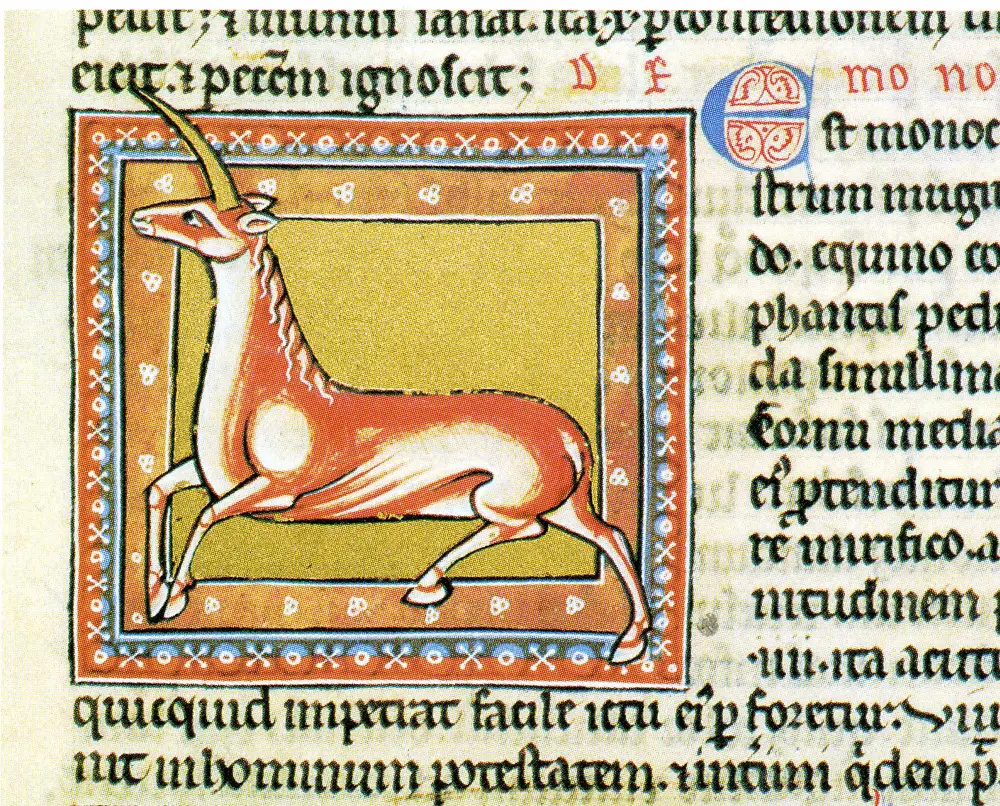
In the third century CE, Aelian’s On the Nature of Animals, Book 3.41, reports that India produces horses and asses with a single horn. His wording presents received information rather than an eyewitness observation, placing these creatures within ancient literary accounts of foreign animals.
The same passage associates the horns with protection against poisoning. Drinking vessels made from them supposedly render a deadly poison harmless to the drinker.
This gives the reported animals a remarkable property without supplying an individual creature, a named hero, or an extended narrative.
Byzantine treatments preserve further differences. In the material associated with Cosmas Indicopleustes, the animal has a horse-like body and an exceptionally long horn. V.
Christides distinguishes this relatively animal-like presentation from the more overtly magical and folkloric forms found elsewhere in the tradition.
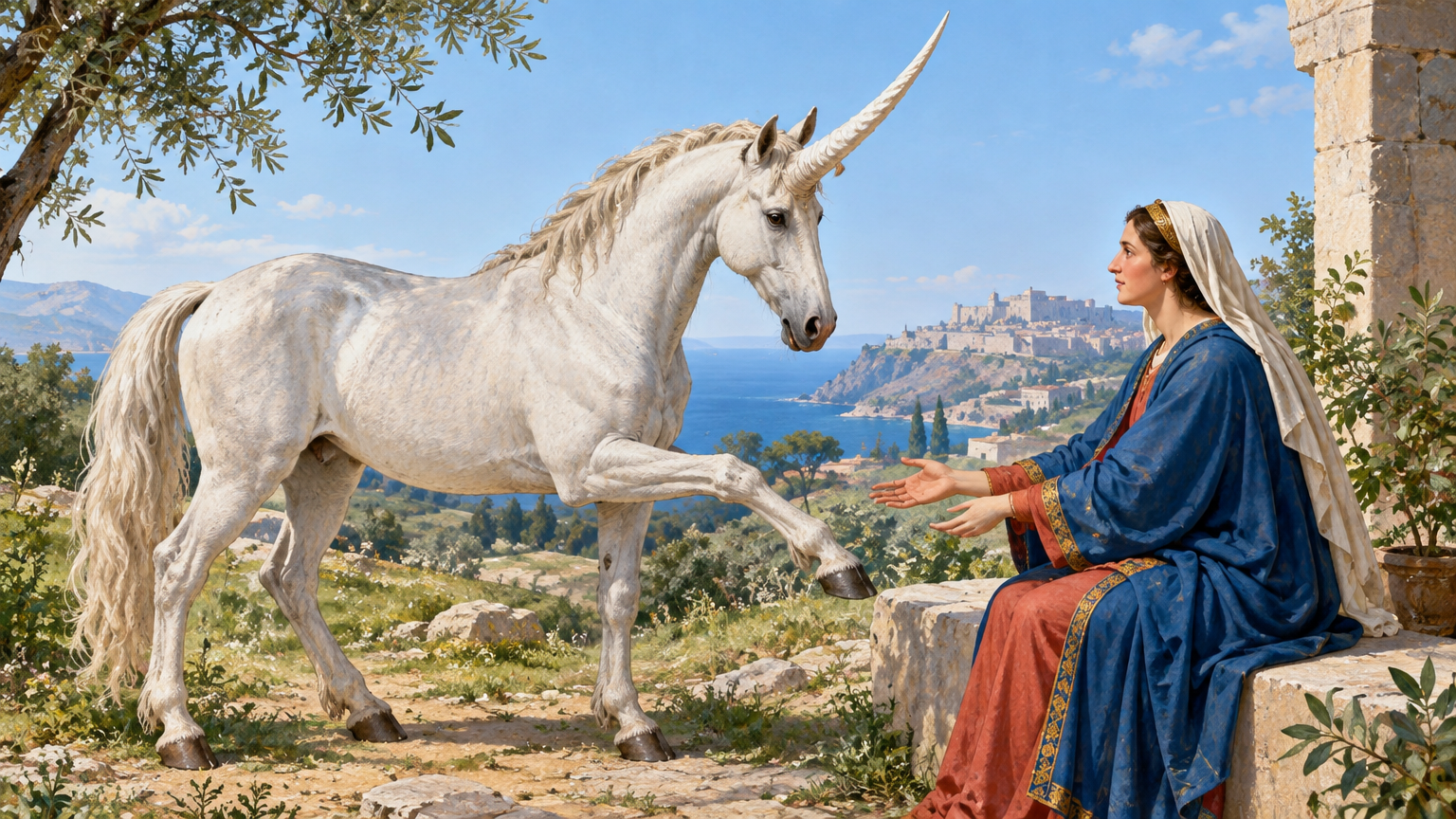
A ninth-century illumination in the Moscow Chloudov Psalter presents another development: a horse-bodied monoceros extending a foot toward a seated woman. Connected with the virgin-capture motif, this image belongs to the creature’s Byzantine reception, not to a universal scene underlying every ancient reference.
Name Meaning
The Ancient Greek word μονόκερως, transliterated as monókerōs, means “with but one horn.” Its lexical meaning is descriptive: it identifies a feature of an animal rather than establishing a personal name, a particular species, or a complete mythological identity.
Monoceros is the Latinized form of that Greek word. Although capitalization makes it convenient as an article subject, the underlying term need not designate an individual being.
Reading it as a proper name throughout antiquity would make the tradition appear more unified than the evidence allows.
The documented occurrence in Job 39:9 demonstrates the word’s use in a biblical setting. That occurrence establishes the Greek designation, but the designation alone does not settle the identity of the animal intended in the underlying biblical passage or prescribe its appearance.
“Unicorn” is a useful later English equivalent, provided its limitations remain clear. It can suggest the familiar horse-bodied creature even where an ancient passage offers a different animal description.
Translation should therefore preserve the distinction between a shared one-horned feature and a fully shared identity.
Appearance
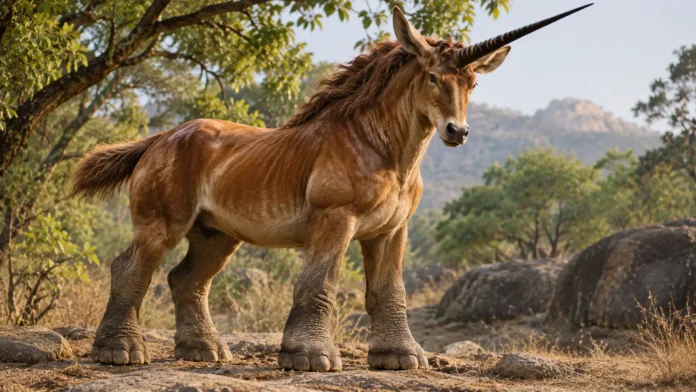
A single horn is the most consistent feature across the Monoceros material. Beyond that, the evidence does not support one universal body plan.
The Greek term specifies horn number, while particular texts and images supply the animal’s remaining features in their own ways.
Aelian’s account includes both one-horned horses and one-horned asses in India. Those descriptions should remain separate rather than being combined into a new hybrid.
The quoted passage does not establish a common coat color, precise stature, or standard horn shape for both kinds of animal.
The portrayal associated with Cosmas Indicopleustes is more visually specific. It has a horse-like body and an unusually prominent, upturned horn.
In Christides’ discussion, the exaggerated horn is the principal extraordinary feature; the accompanying treatment does not give it the full magical character of later forms.
The ninth-century Chloudov Psalter illumination also shows a horse-bodied animal with a conspicuous single horn. Its pose is particularly distinctive: it stretches one foot toward a seated woman, who extends her hands toward it in a gesture of welcome or embrace.
That interaction belongs to the composition of a particular manuscript image. The woman is not a permanent companion appearing in every Monoceros account, and the pose does not establish the creature’s ordinary behavior.
It expresses a later narrative motif through the relationship between the two figures.
A horse-bodied unicorn can therefore represent a documented Byzantine interpretation, but not every ancient use of the name. Keeping the variants separate preserves an important visual distinction: a descriptive word for one-horned animals eventually also supported recognizable scenes with human participants and symbolic meaning.
Background Story
Monoceros has no single canonical background adventure in the evidence assembled here. Its development instead reflects the intersection of animal reporting, scriptural interpretation, and later religious imagery.
These settings explain why the same defining feature could support different descriptions, powers, and narrative roles.
In the ancient animal-reporting strand, India provides the geographical setting for Aelian’s horned horses and asses. The protective drinking vessels connect unusual animal anatomy with human vulnerability to poison.
Here the horn matters as a supposedly useful material, not simply as an identifying visual feature.
The biblical strand gives the creature a different literary function. In Job, the question concerns whether the animal will submit to human service.
Its presence within scripture also helped make the one-horned creature available to later Christian interpretation, independently of the Indian animal report.
Later Byzantine and Physiologus-linked tradition introduces the virgin-capture motif. This shifts attention from an animal’s anatomy or useful horn to an encounter between creature and human.
The Chloudov image preserves an approach and welcoming gesture, without itself providing a complete sequence or outcome.
These strands should be understood as related contexts rather than chapters in one creature’s life. The relatively earthy animal associated with Cosmas, Aelian’s poison-protecting horns, and the later virgin encounter show how one-horned imagery could acquire different meanings without becoming a single, consistent mythology.
Famous Folklore Stories
The surviving evidence does not preserve a canonical adventure centered on a single character named Monoceros. Instead, the tradition appears through natural-history reports and recurring unicorn motifs.
Two documented episodes are particularly important, although neither is an authenticated named folktale.
One-Horned Animals and Poison-Proof Vessels
In the third century CE, Aelian reported that India produced both one-horned horses and one-horned asses. He presented the information as received testimony rather than personal observation, making the passage an ancient animal report rather than a narrative about an individual mythical creature.
The same passage claims that drinking vessels made from these animals’ horns could neutralize deadly poison. This belief became one of the most enduring motifs associated with unicorn horn, but Aelian provides no quest, capture scene, named owner, or tested example of the vessel’s supposed protection.
The account therefore belongs between natural history and marvel literature. It records what ancient readers might accept about distant animals and valuable substances, while offering no zoological confirmation.
Later unicorn traditions expanded the protective horn into a broader symbol of purification and healing.
The Monoceros and the Seated Virgin
A ninth-century Byzantine illumination in the Moscow Chloudov Psalter presents a more recognizably narrative image. A horse-bodied monoceros with a conspicuous horn stretches one foot toward a seated woman, while she extends her hands toward the approaching animal.
The scene has been connected with the broader virgin-capture motif found in Byzantine and later bestiary tradition. In that pattern, an otherwise elusive or dangerous one-horned beast can be approached through a virgin, turning the encounter into a moralized image rather than an ordinary hunt.
The available discussion does not establish what happens next in this particular illumination. It should not be expanded into an invented capture or death scene.
Its importance lies in showing that the monoceros had acquired a relationship with the virgin motif by the Byzantine period.
Cultural Impact
The monoceros influenced European culture less as a fixed Greek character than as a flexible image transmitted between languages and genres. Natural-history reports, biblical translation, manuscript illustration, and bestiary teaching each preserved different aspects of the one-horned animal.
Its appearance in the Greek Septuagint gave the term a place in biblical interpretation. As those scriptures circulated in Christian communities, the one-horned creature moved beyond reports about Indian wildlife and became available for theological commentary, moral symbolism, and religious art.
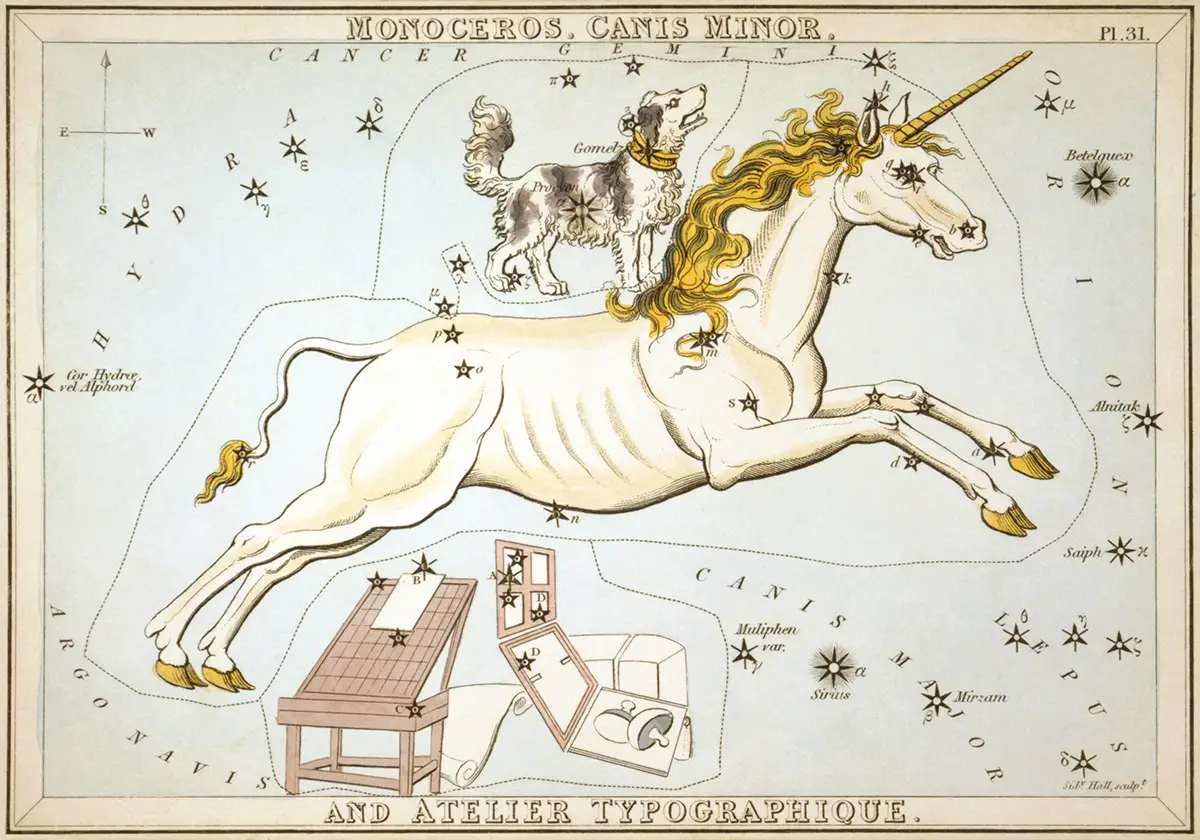
Byzantine images helped establish the horse-bodied form familiar from later unicorn art. Cosmas Indicopleustes depicted an animal distinguished principally by its exceptionally long, upturned horn, while later imagery placed a similarly formed creature within the more elaborate virgin-capture tradition.
The virgin encounter proved especially influential because it converted an elusive beast into a moral and visual narrative. Medieval artists and bestiary writers could use the animal’s wildness, singular horn, and submission to a woman as elements within Christianized interpretations of purity and sacred mystery.
Modern scholarship treats these developments as connected but historically distinct. The biblical monoceros, Aelian’s reported Indian animals, Cosmas’ relatively ordinary horse-like beast, and the later magical unicorn should not be merged into one timeless species with a single established biography.
Similar Beasts
Rhinoceros
The rhinoceros is a real, heavy-bodied ungulate distinguished by one or two nasal horns, depending on species, and known to ancient writers through reports and encounters.
Its prominent horn makes it a possible comparison for some one-horned descriptions, but it is neither an alias nor a settled identification of Monoceros.
Yale
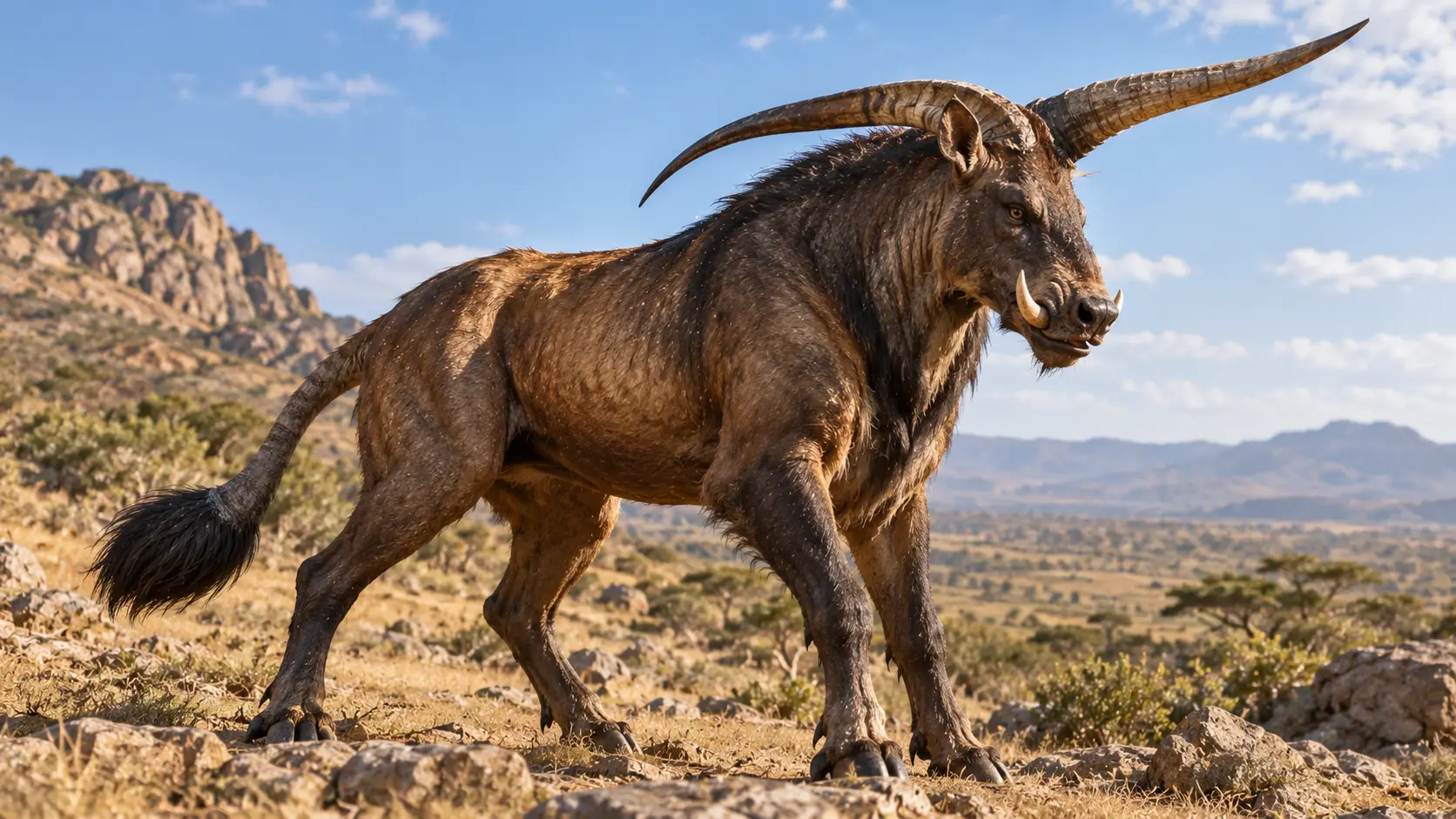
The Yale is an antelope-like legendary animal from classical and medieval bestiary traditions, distinguished by two long horns that were sometimes said to swivel during combat.
Like Monoceros, it reflects European fascination with exotic horned animals, although its paired movable horns and combat role make it a separate creature.
Shadhavar

The Shadhavar is a unicorn-like creature in Persian literary tradition whose branching horn was believed to produce music when wind passed through its hollow projections.
Both creatures are defined by extraordinary horns, but the Shadhavar’s musical power differs from the poison-resisting and virgin-capture motifs attached to Monoceros.
Pard
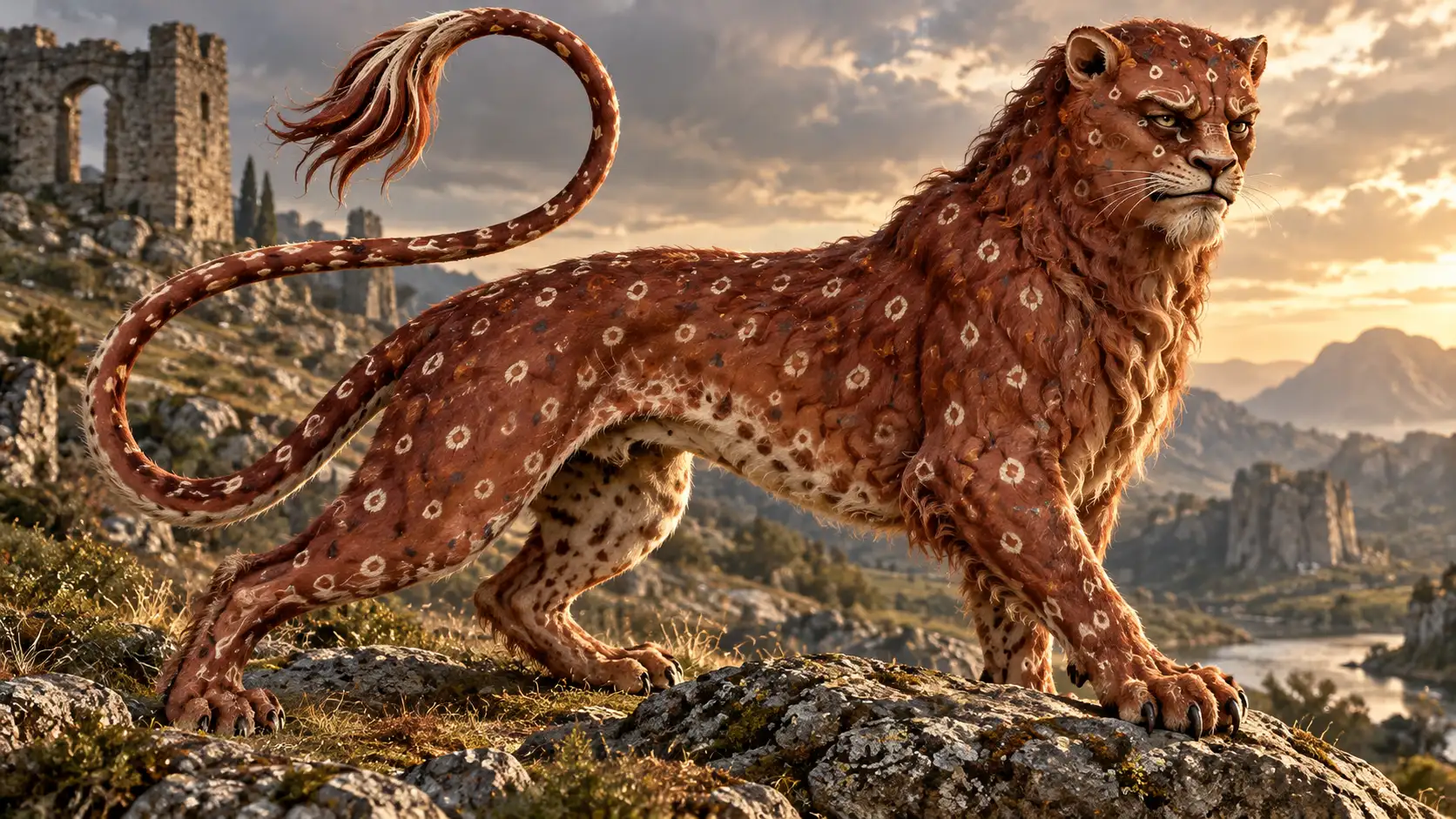
The Pard is a swift and fierce feline of classical animal lore and medieval bestiaries, commonly associated with exotic predators such as panthers or leopards.
It resembles Monoceros through its transmission from ancient animal writing into bestiaries, not through anatomy, religious meaning, or any shared narrative identity.
Religion/Ritual
The Greek word for the one-horned animal appears in the Septuagint, including Job 39:9. This textual presence gave the monoceros religious significance within later Christian interpretation, although it does not show that ancient worshippers treated the creature as a deity or cult animal.
Byzantine and medieval Christian traditions developed symbolic readings around the creature, especially through the virgin-capture image. Those interpretations belong to manuscript art, moralized natural history, and biblical reception rather than to a verified public ceremony dedicated to Monoceros.
No reliable evidence establishes sacrifices, offerings, annual festivals, protective invocations, or local Greek rituals specifically associated with the creature. The supposed poison-neutralizing use of horn vessels is better classified as a medical or protective belief than as a documented religious rite.
Scientific or Rational Explanations
Ancient references to one-horned horses and asses are literary testimony, not preserved zoological specimens or independently verified observations. Aelian’s wording openly presents the claim as something reported by others, leaving the identity and reliability of the original informants uncertain.
Distant geography shaped the account. India frequently appeared in Greek and Roman writing as a source of unfamiliar animals, valuable substances, and natural wonders.
Genuine reports could therefore circulate alongside misunderstanding, exaggeration, translation problems, and inherited marvel traditions.
Rhinoceroses offer one possible zoological background because they are large Asian animals with prominent horns. Nevertheless, that comparison does not explain every source, especially descriptions of horse-like or ass-like bodies.
No single known species securely accounts for the entire changing tradition.
Another possibility is that separate animals were grouped under a descriptive word meaning one-horned. A rhinoceros, an antelope seen in profile, a malformed domestic animal, and an imagined equine could all produce different reports without requiring one concealed species behind them.
The poison-proof horn is unsupported by modern toxicology. Its persistence can instead be understood through the historical value assigned to rare animal materials.
Once reputed unicorn horn became prestigious, claims of medical protection increased its desirability and encouraged continued acceptance of the belief.
Manuscript artists also worked within inherited conventions rather than scientific field observation. A horse body offered a familiar and visually elegant framework, while one enlarged horn made the creature immediately identifiable.
Such images document cultural interpretation, not the anatomy of an observed animal.
The most economical explanation is therefore historical rather than zoological. Monoceros joined reports about unusual wildlife, a Greek biblical translation choice, and increasingly symbolic medieval imagery.
Its apparent consistency results partly from later readers combining sources that originally described different animals and ideas.
Modern Cultural References
The Neigh Sayer, Sir Henry Charles Philip Turner as the white working unicorn and monoceros, short film
In this 2018 short film, Sir Henry Charles Philip Turner leads an imaginary men’s-rights activist movement as a white working unicorn.
The film explicitly recasts the monoceros myth through this character.
Source
Conclusion
Monoceros is best understood not as one named Greek monster with a fixed biography, but as a changing label for one-horned animals. Ancient reports of Indian horses and asses, Septuagint translation choices, Byzantine manuscript imagery, and later unicorn lore belong to connected but distinct contexts.
Their differences explain why no single appearance or story can represent the entire tradition. The defining horn remains constant, while the creature’s body, location, behavior, and symbolic meaning change with each literary or artistic setting.
Its lasting importance lies in that adaptability. A descriptive Greek word moved between natural history, biblical interpretation, Christian symbolism, manuscript art, and later folklore, gradually contributing to the familiar horse-bodied unicorn.
The virgin-capture motif expresses a later religious and moralized development rather than a universal ancient adventure. Treating these stages separately preserves both the historical evidence and the creature’s symbolic richness, revealing how translation and transmission can transform an uncertain animal report into an enduring legendary image.
Further Reading
The Horn of the Unicorn, Antiquity / Cambridge Core
Historical research on Septuagint usage and the Christian reception of the unicorn.
(cambridge.org)
V. Christides, “Sailing in the Red Sea and the Indian Ocean,” discussing the Moscow Chloudov Psalter, Mfa
A ninth-century Byzantine illumination discussed by Christides shows a horse-bodied monoceros stretching a foot toward a seated woman who reaches toward it.
The scholar connects the image with the broader virgin-capture motif; the available passage does not narrate further actions or an outcome for this particular image.
(mfa.gr)
Aelian: On the Nature of Animals, Book 3, Attalus
Readable translation of the ancient passage about one-horned Indian horses and asses.
(attalus.org)
μονόκερως, Hellas Alive Ancient Greek-English Dictionary
Lexicographic gloss and a cited Septuagint example for the Greek term.
(hellas.bab2min.pe.kr)