Introduction
The pard is a swift, spotted feline of classical natural history and medieval bestiaries. Its most recognizable medieval form is a fierce, mottled cat that attacks with a powerful leap.
It belongs to the history of animal knowledge as much as to the history of fabulous beasts.
Its identity was never entirely stable. The Latin word pardus could designate a male panther or an animal understood as a leopard.
Medieval writers nevertheless sometimes distinguished the pard from the leopard, treating them as separate kinds within an inherited account of big-cat breeding.
In that account, a lioness and a pard produced a leopard. This supposed parentage, repeated in influential medieval texts, gave the pard a place in explanations of the natural world.
It was a historical belief about animals, not an accurate account of leopard ancestry.
The pard therefore resists a simple label. Calling it an entirely imaginary monster overlooks its connection with real cats; identifying every occurrence as an ordinary leopard erases medieval distinctions.
Its interest lies in the changing relationship between animal names, descriptions, images, and inherited authority.
History/Origin
The pard’s documented background reaches into ancient Mediterranean natural history rather than beginning with medieval storytelling. Pliny the Elder’s first-century CE Natural History discusses pardi among accounts of large cats.
These passages connect the name with animals, hunting behavior, and supposed relationships between different feline kinds.
Ancient terminology does not map neatly onto modern species. Names translated as panther, pard, or leopard could overlap, and a distinction in vocabulary did not necessarily indicate a separate animal.
This linguistic instability is essential to understanding how later writers inherited and reorganized the material.
A particularly influential medieval formulation appears in Isidore of Seville’s seventh-century Etymologiae. In Book XII, the pard is mottled, exceedingly swift, and eager for blood.
Its method of killing is described through a sudden rush or leap, giving the entry a compact and memorable predatory character.
Isidore then distinguishes the leopard through its supposed birth from a lioness and a pard. The sequence matters: the pard is treated as a recognizable animal before becoming one parent in an explanation of another.
Its identity is therefore not simply that of a hybrid monster.
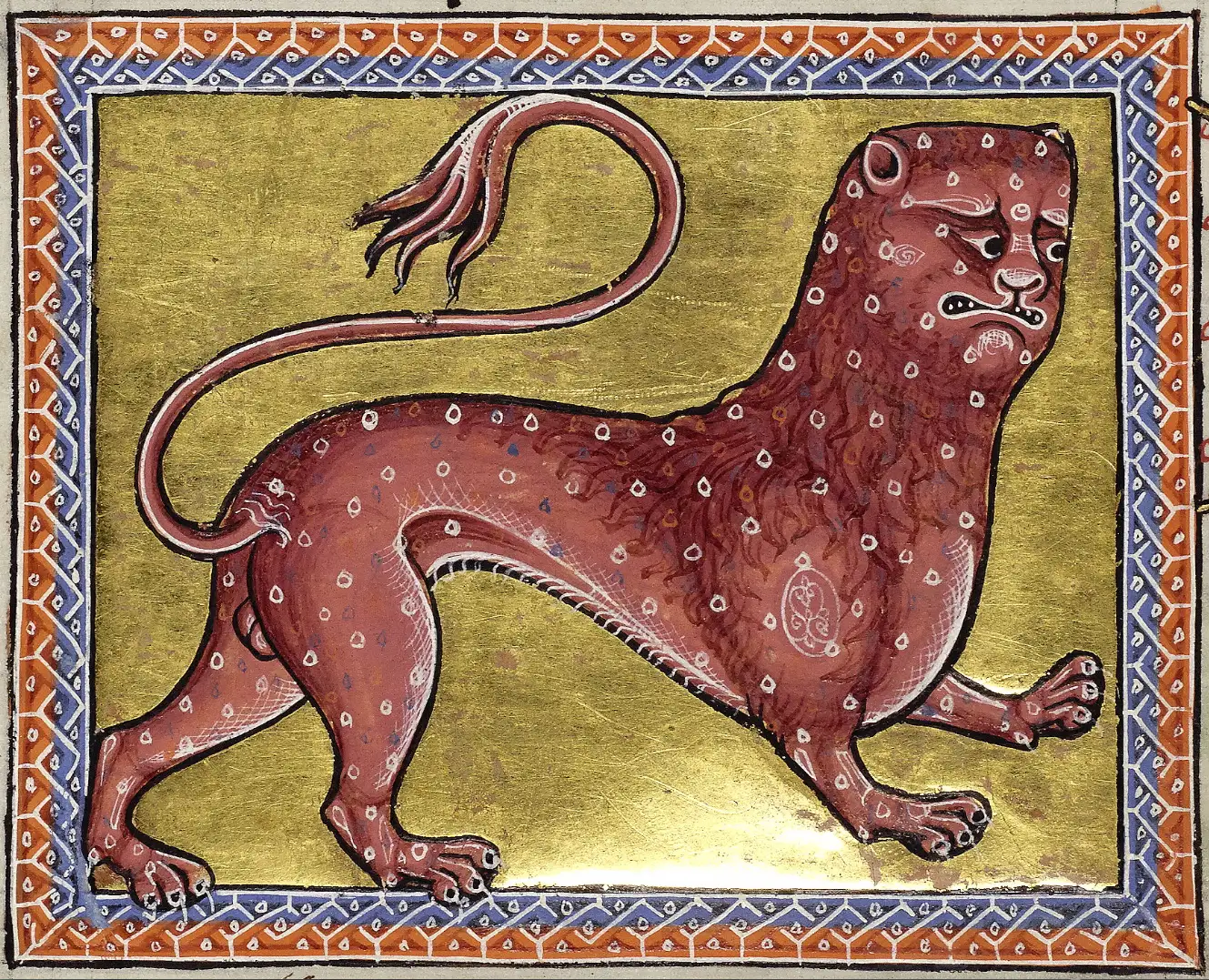
The Aberdeen Bestiary, made around 1200, preserves the pard description and the leopard-parentage belief. Its testimony shows the continuing transmission of this account centuries after Isidore.
The recurrence belongs to a manuscript tradition of animal learning, rather than establishing independent observations of the alleged breeding.
Across this transmission, descriptions and illustrations did not become perfectly uniform. A short inherited text could remain recognizable while images varied substantially.
The resulting pard was a durable literary animal category, but not a consistently defined species with one agreed anatomy throughout antiquity and the Middle Ages.
Name Meaning
English pard belongs to the word family represented by Latin pardus and Greek pardos, written πάρδος. These are historical animal names, not a securely established magical title.
Their linguistic background connects the creature directly with the vocabulary used for spotted large cats.
Lewis and Short’s Latin dictionary glosses pardus as a male panther and supplies classical examples. That definition is important because it preserves a straightforward animal-name meaning.
A Latin occurrence should not automatically be read as evidence for a distinct supernatural species or a specifically medieval creature.
The relationship between pard and leopard also shaped medieval explanation. The name leopard was understood through the combination of lion and pard, matching the claim that the animal came from a lioness and a pard.
Word structure and supposed biological origin thus reinforced one another.
That medieval explanation must remain separate from modern zoology. It tells us how writers interpreted a name and organized animal kinds, not how leopards actually originated.
Nor does the evidence establish a separate folklore-specific meaning for pard beyond its changing use as a feline name.
Appearance
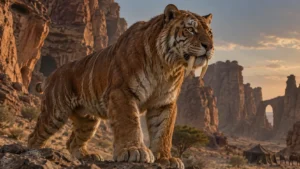
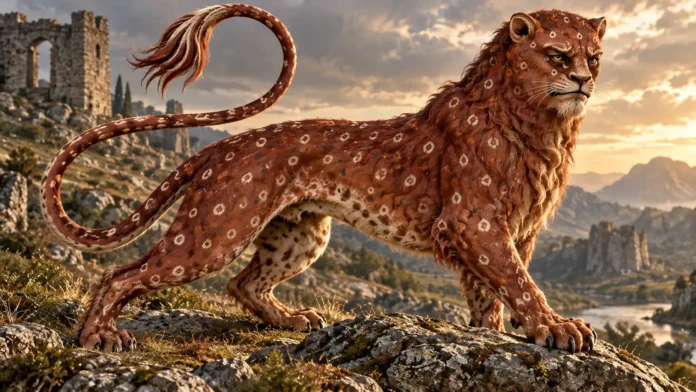
The pard’s most securely supported visual feature is its mottled or spotted coat. Its basic form is feline and four-footed, belonging to the broad appearance of a large predatory cat.
The early descriptions do not supply a precise, universally applicable pattern of markings or bodily proportions.
In Isidore’s account, appearance and behavior work together: the varied coat identifies the animal visually, while speed and appetite for blood define its character. This is not a detailed anatomical description.
The reader encounters a dangerous predator through a few concentrated traits rather than a measured physical portrait.
The leap is especially important to its imagined movement. Bestiary descriptions present the pard as killing through a forceful bound or sudden attack.
An image of an agile spotted cat in motion therefore fits the textual tradition better than an elaborate creature assembled from unrelated animal parts.
Manuscript depictions nevertheless vary, and their differences should not be converted into one canonical design. Individual images may resemble different large cats or use strongly stylized proportions.
Such variation belongs to the pard’s visual history without establishing that every unusual feature was an essential attribute of the animal.
The leopard-parentage account does not require the pard itself to look half lion and half leopard. It identifies the pard as a supposed parent, not the offspring.
Wings, horns, human features, or other supernatural additions have no basis in the core descriptions considered here.
Background Story
The pard was shaped by the meeting of observed animals, inherited names, and explanatory literature. Its background is not a biography with a birth, quest, or death.
Instead, it emerges from attempts to classify predators and explain why related-looking cats possessed different names and appearances.
The supposed union of a lioness and a pard supplied one such explanation. Within this scheme, the leopard became a third kind produced from two others.
Isidore and the later bestiary tradition treated this as animal knowledge, giving an improbable breeding claim the authority of a learned description.
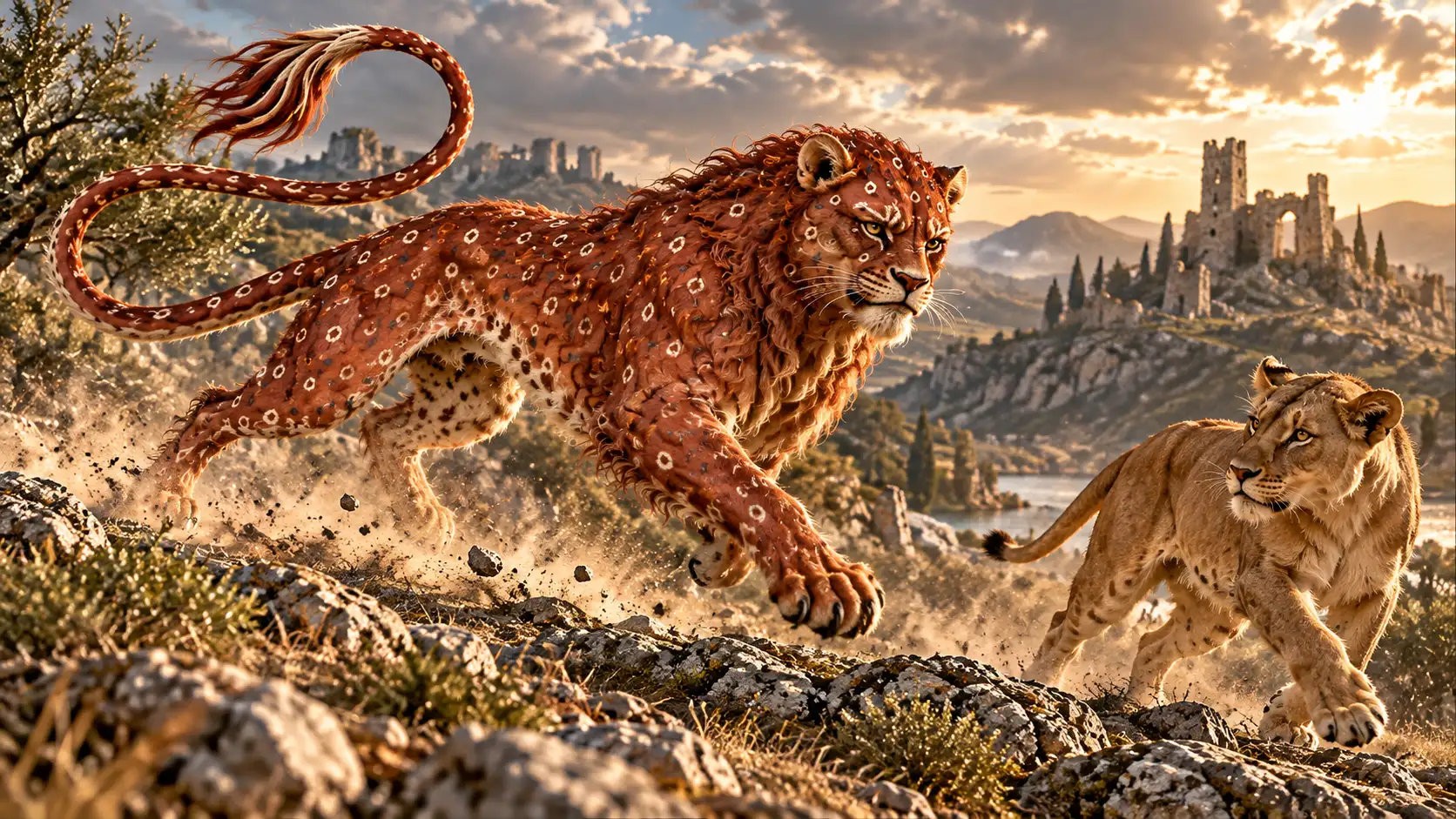
The resulting offspring could be characterized as a lesser or degenerate kind. Such language reflects historical judgments about mixture and the preservation of animal kinds, rather than modern biological classification.
The account did more than propose parentage: it also ranked the relationship between the supposed parents and their offspring.
Predatory behavior supplied another organizing theme. Speed, blood-seeking appetite, and the killing leap made the pard a concentrated image of animal ferocity.
These traits helped a short entry remain distinctive even when its terminology overlapped with other cats and its illustrated body changed between manuscripts.
The medieval Christian bestiary provided the broader setting for this material. Animals could be discussed as parts of a meaningful created world, with inherited descriptions available for moral interpretation.
The pard’s development is consequently best understood through textual transmission and interpretation, not through an assumed cycle of independent adventure tales.
Famous Folklore Stories
The pard survives chiefly through short natural-history accounts rather than an established cycle of named folktales. Its best-documented narrative motifs concern the supposed ancestry of the leopard and the pard’s sudden attack on prey.
The headings below describe those motifs, not traditional story titles.
The Pard and the Lioness
A union between a male pard and a lioness supposedly produced the leopard. Isidore of Seville records this explanation in the seventh-century Etymologiae, and the Aberdeen Bestiary repeats it around 1200.
These versions distinguish the pard from the animal it allegedly fathers.
The offspring is presented as a third or degenerate kind, language belonging to historical ideas about animal generation and mixed parentage. This is not a tale about a named pair of animals, nor does it supply a sequence of courtship, conflict, or adventure.
The distinction matters because classical terminology was less stable. Where pardus could designate a panther or leopard, the medieval breeding account assigns the pard a separate genealogical role.
Its narrative interest lies in explaining an animal category, not in describing a supernatural transformation.
The Killing Leap
The second recurring motif presents the pard as an exceptionally swift predator, eager for blood and capable of killing by rushing or springing upon its quarry. In Isidore’s account, movement and appetite are central characteristics rather than incidents in an extended story.
Bestiary descriptions preserve this compact image of a dangerous cat in action. The leap gives the entry a narrative moment: a predator closes the distance and overwhelms its prey.
No named hunter, human witness, or particular victim belongs to the documented motif.
This behavior should not be enlarged into a power of impossible speed or magical flight. The surviving description concerns forceful predation.
Its later symbolic possibilities depend on that recognizable animal behavior, even where the surrounding classification and breeding beliefs depart from modern zoology.
Cultural Impact
The pard’s clearest historical importance lies in the transmission of animal knowledge. Medieval bestiaries preserved its spotted coat, speed, and supposed relationship to the leopard, allowing a short description inherited from earlier writing to remain recognizable across centuries of copying and illustration.
Manuscript pictures did not establish one fixed anatomy. Different depictions could make the pard resemble different large cats, while retaining a broadly feline form.
This variability is part of its cultural history, not evidence that every illustration represents a separate regional species or tradition.
Literary usage gave the word a life beyond animal catalogues. In Shakespeare’s As You Like It, the soldier is described as “bearded like the pard.”
The comparison works as a compact animal image rather than a reference to a developed pard legend.
Keats’s Ode to a Nightingale similarly places “pards” in the imagined company of Bacchus’s chariot. Here the word participates in classical poetic imagery.
Neither this appearance nor Shakespeare’s comparison requires readers to accept the medieval account of a pard fathering a leopard.
Modern discussion often treats the pard as an example of unstable historical animal categories. That interpretation is more useful than calling it simply an invented monster: its cultural identity combines recognizable feline characteristics, inherited claims about reproduction, manuscript imagery, and the changing meanings of an animal name.
Similar Beasts
Panther
The panther belongs to classical animal lore and medieval bestiaries as a large feline. Historical uses of the name overlap with other big-cat terms rather than consistently identifying one modern species.
This is one of the pard’s closest connections: Latin pardus could mean a male panther. Medieval accounts could nevertheless distinguish the two, so their relationship depends on the particular text.
Leopard
The leopard is a real spotted big cat whose origins received an inaccurate explanation in medieval animal lore. Bestiary accounts presented it as the offspring of a lioness and a pard.
The leopard is therefore directly connected to the pard through supposed parentage and overlapping terminology. In that breeding account, the pard is a parent, not itself a hybrid offspring.
Mishipeshu

Mishipeshu is a powerful water spirit in Anishinaabe tradition, often represented with feline and serpent features. Its aquatic nature carries associations with danger, destruction, and abundance.
The feline resemblance offers a visual comparison, not a shared identity or historical relationship. Mishipeshu’s spiritual role differs fundamentally from the pard’s place in inherited natural history.
Jackalope
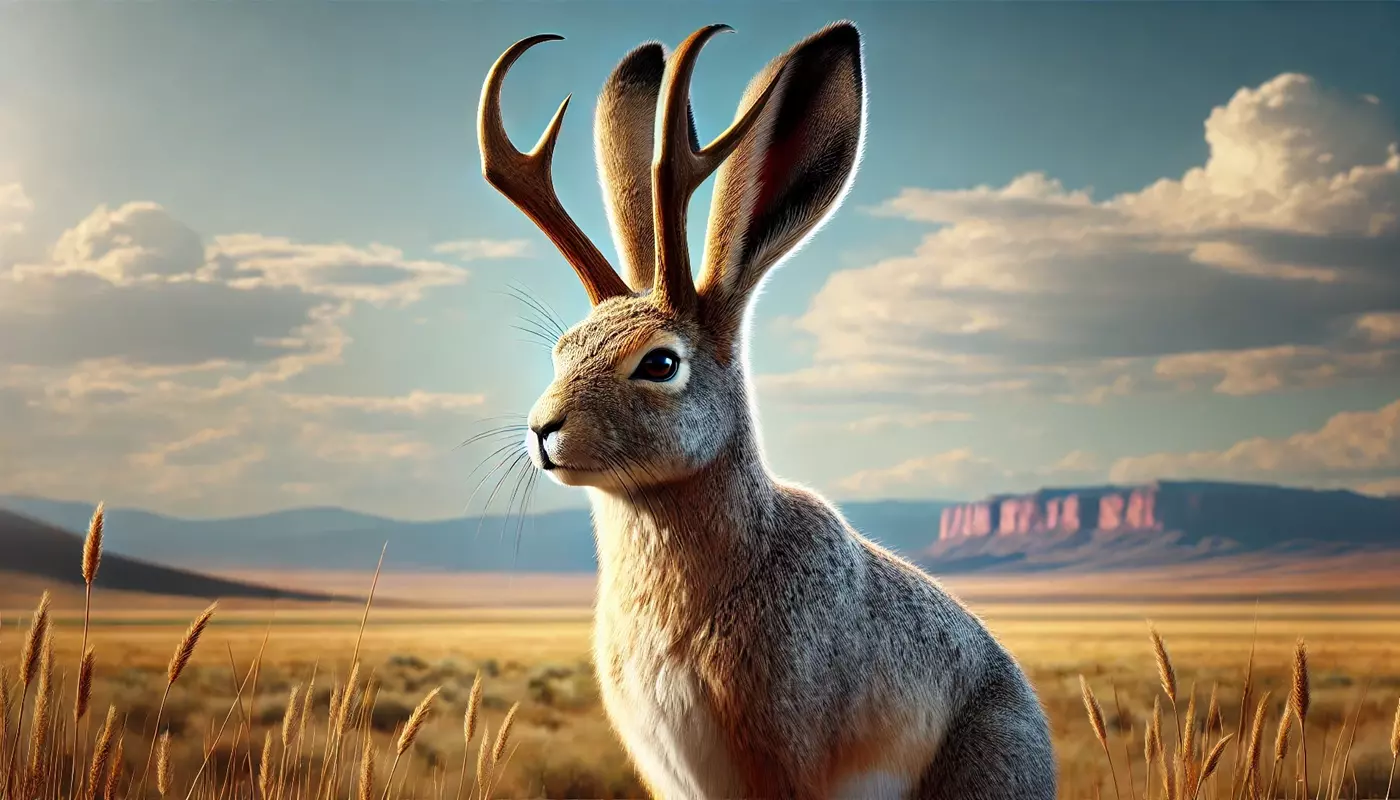
The Jackalope is a legendary North American rabbit with antelope-like horns. Its familiar animal body combined with unusual anatomy makes it visibly distinct from an ordinary rabbit.
Both illustrate how recognizable wildlife can become part of legendary animal lore. The distinction matters: the Jackalope has composite anatomy, while the pard’s supposed union with a lioness explains the leopard’s ancestry.
Religion/Ritual
The pard appears in the medieval Christian bestiary tradition, where animal descriptions could carry moral and religious meaning. Its entry nevertheless preserves inherited natural-history claims: a mottled coat, great speed, a killing leap, and the supposed production of a leopard through mating with a lioness.
The Aberdeen Bestiary calls this union adultery, giving the breeding account morally charged language without making the pard itself a spirit or demon.
A Christian manuscript setting does not establish one universal symbolic meaning for every pard description or image. The sources considered here do not document pard-specific offerings, ceremonies, festivals, or taboos.
They support a place in religiously framed animal literature, not an established tradition of worship or ritual observance.
Scientific or Rational Explanations
The most useful explanation begins with terminology rather than a search for an undiscovered animal. Ancient and medieval names for large cats do not map neatly onto modern species.
A word could remain in circulation while its definition and relationship to neighboring animal names changed.
Lewis and Short’s Latin dictionary glosses pardus as a male panther, while Pliny’s discussions use pardi within accounts of animals understood as leopards. These usages complicate any claim that every historical pard was intended as a separate fabulous species.
The medieval distinction nevertheless deserves to be preserved. In the leopard-parentage account, pard and leopard occupy different positions within an explanation of animal origins.
Translating both automatically as the same modern species would conceal the reasoning of the historical text rather than clarify it.
The claim that a leopard comes from a lioness and a pard is not accepted zoology. Leopards constitute a species, not the routine offspring of that proposed pairing.
The historical account belongs to inherited natural philosophy and should not be confused with evidence about actual breeding.
Other elements require no extraordinary explanation. A mottled coat, rapid movement, and an attack by a bound are recognizable feline characteristics.
Their presence supports the connection with real large cats, although these broad traits alone cannot identify the precise animal intended in every passage or picture.
Illustrations also require caution. Differences among manuscript images establish variation in representation, not biological variation in a discovered species.
Read together, the texts and pictures reveal a changing animal concept: grounded in known predators, but shaped by textual inheritance, classification, and symbolic interpretation.
Modern Cultural References
The pard’s later reception includes literary comparisons, fantasy transformations, and unrelated fictional namesakes. These examples should not be treated as a continuous tradition of adaptations: some preserve the old feline vocabulary, while others use “Pard” for characters with no established connection to medieval bestiaries.
As You Like It, play
William Shakespeare’s play compares a soldier’s beard to a pard. This is a literary use of the feline name, not a dramatization of a bestiary narrative.
(atlasobscura.com)
Ode to a Nightingale, poem (1819)
John Keats’s poem invokes pards in its image of Bacchus’s chariot. The reference preserves an older name for large cats rather than describing the medieval bestiary creature.
(atlasobscura.com)
Ada, or Ardor: A Family Chronicle, novel (1969)
Vladimir Nabokov’s novel includes a comparison between handmaids and pards.
Its relevance lies in the animal name’s literary survival, not an adaptation of a traditional pard story.
(atlasobscura.com)
“Pard,” science-fiction novelette (1972)
F. Paul Wilson’s novelette features an alien symbiont named Pard. Despite sharing the name, this science-fiction character is not a portrayal of the spotted medieval bestiary feline.
(repairmanjack.com)
The Jargoon Pard, fantasy novel (1974)
Andre Norton’s fantasy follows Kethan, whose magical belt enables a predatory feline transformation.
The catlike portrayal is documented, but a direct adaptation of the bestiary pard is unestablished.
(openroadmedia.com)
Double Threat, novel (2021)
F. Paul Wilson’s supernatural thriller features a symbiotic character called Pard. This is another fictional namesake, not evidence that the medieval feline appears in the novel itself.
(repairmanjack.com)
Conclusion
The pard is best understood as a swift, spotted feline whose identity changed as animal knowledge passed between classical natural history and medieval bestiaries. Its name could overlap with panthers and leopards, yet medieval writers also distinguished it through the supposed parentage of the leopard.
Neither a wholly invented monster nor a securely defined zoological species, it occupies the boundary between observed animals and inherited explanation. That unstable position is central to its historical significance.
Its symbolic force rests on the qualities repeatedly emphasized in the tradition: mottling, speed, predatory violence, and an association with morally charged accounts of animal nature. Variable illustrations and changing terminology prevent a single definitive reconstruction, but they also reveal how adaptable the creature became in writing and art.
Later literary allusions preserve its name more clearly than any continuous independent folklore. Reading the pard carefully therefore means keeping its documented medieval character distinct from modern biological categories and unrelated fictional namesakes.
Further Reading
pardus, Lewis and Short Latin Dictionary, Scaife ATLAS
Provides the Latin lexical definition and classical citations that clarify the word’s animal-name usage.
(atlas.perseus.tufts.edu)
The Natural History, Book VIII, Perseus Digital Library
Provides an accessible edition of Pliny’s ancient natural-history discussion of lions and related big-cat terminology.
(perseus.tufts.edu)
Isidore of Seville, Etymologiae XII.2.11; Aberdeen Bestiary entry as transcribed by Medieval Bestiary
Isidore and medieval bestiary texts report that a leopard is born from a lioness and a pard, describing the resulting animal as a third or degenerate kind. This.
(bestiary.ca)
As You Like It, atlasobscura.com
play Atlas Obscura identifies a line using “pard” as a comparison for a soldier’s beard; this is a literary use of the animal name, not a retelling of.
(atlasobscura.com)
The Jargoon Pard, openroadmedia.com
novel 1974 A fantasy novel in which Kethan’s magical belt transforms him into a predatory catlike form.
The publisher’s description confirms the narrative portrayal; it does not establish.
(openroadmedia.com)