Introduction
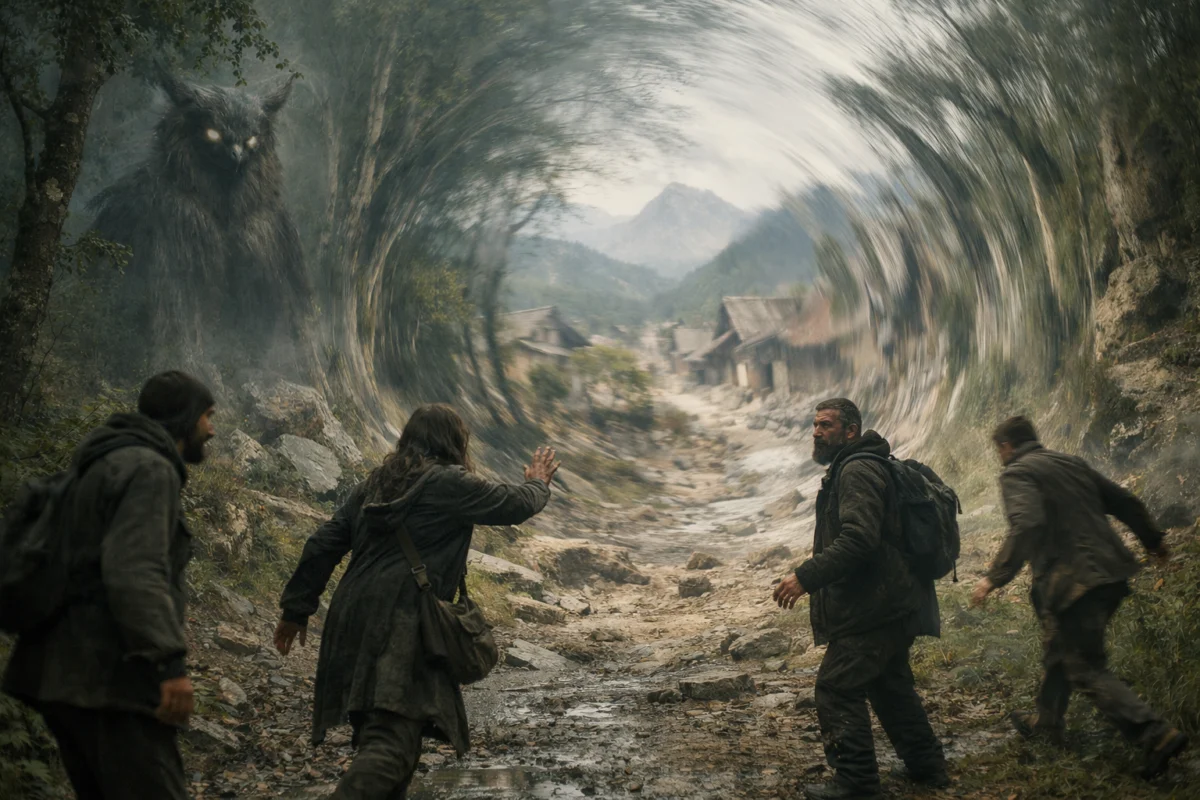
The leshy is a forest spirit in Russian folklore, often understood as the master of the woods. He governs a space beyond ordinary human control, where paths become confusing, familiar voices prove deceptive, and encounters with an apparently ordinary stranger can turn uncanny.
His character varies between regional accounts. He can mislead travelers, influence forest animals, or take people into the woods.
These activities make him dangerous, but reducing him to an entirely evil monster obscures his broader role as an independent authority within the forest.
The strongest evidence concerns a variable figure of folk belief, not a securely documented ancient deity worshipped throughout the Slavic world. Printed dictionaries, collected tales, and ethnographic descriptions preserve different versions rather than the fragments of one clearly recoverable religious system.
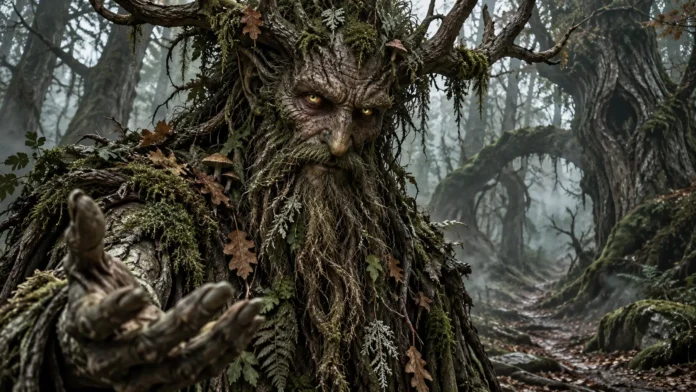
His appearance is similarly unsettled: humanlike in some encounters, extraordinarily large or small in others. This flexibility is central to his identity.
The leshy makes the forest seem inhabited by a will that can hide itself behind familiar sights and sounds.
History/Origin
The beginnings of leshy belief cannot be dated securely. Oral traditions may precede their surviving printed records, but those records establish when particular beliefs were documented, not when they originated.
Claims of an unchanged survival from prehistoric Slavic religion therefore exceed the available evidence.
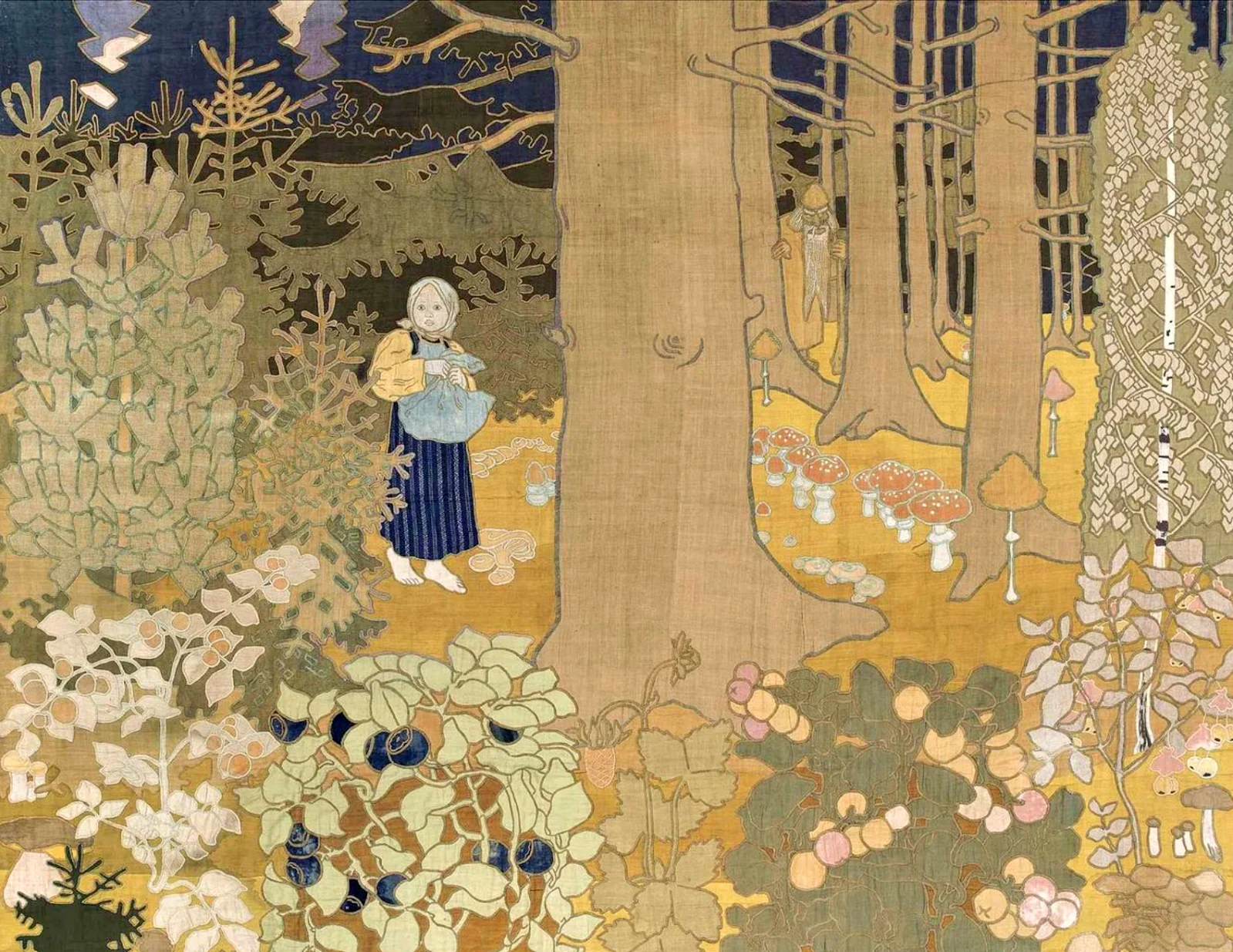
Mikhail Chulkov’s 1782 dictionary of Russian superstitions provides an early printed reference to leshy-related belief. Its historical importance lies in demonstrating that the figure was already a subject of collection in the eighteenth century, before the better-known nineteenth-century publications of Russian folklore.
During the nineteenth century, collectors brought local supernatural narratives into larger printed collections. This changed their audience and setting: accounts associated with particular communities could now circulate as examples of Russian folklore, alongside fairy tales and comparative discussions of mythology.
William Ralston’s 1873 English-language collection includes an Afanasyev-sourced tale involving a hunter, a Leshy, and a priest’s missing daughter. It documents the figure’s place in collected storytelling while also showing how Russian material reached readers through translation and editorial explanation.
Sergey Maksimov’s 1903 account preserves a broader ethnographic picture, including regional names, descriptions, encounters, and protective customs. Its variations matter: the leshy was not everywhere imagined in precisely the same way, even when collectors gathered these beliefs under a single heading.
The 2025 study The Invention of Leshy, by Majkowski, Kozyra, and Prokopek, examines how literary and encyclopedic reconstruction helped produce a more unified Slavic mythological figure. That distinction separates the history of local beliefs from the later history of their organization into mythology.
Name Meaning
The name leshy belongs to the Russian word family associated with les, meaning “forest.” Its basic sense is forest-associated or belonging to the forest.
The name identifies the being through his environment rather than through a unique personal name or genealogical title.
English spellings include leshy, leshiy, and lyeshy, reflecting different ways of transliterating Russian леший. These spellings do not identify separate creatures.
Capitalization also varies in English, sometimes making a designation for a kind of spirit look like the name of one individual.
Related names include lesovik and leshak, both recorded in Maksimov’s collection. They belong to the same forest-centered vocabulary, although a collector’s grouping of names should not erase local differences in the beliefs attached to them.
Shared terminology does not guarantee identical traditions.
Ralston’s nineteenth-century explanation likewise connects the name with the Russian word for forest. The descriptive expression “master of the forest” conveys the spirit’s authority rather than a literal translation of his name.
It explains his relationship to woodland territory, animals, and human visitors.
Appearance
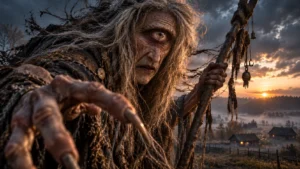
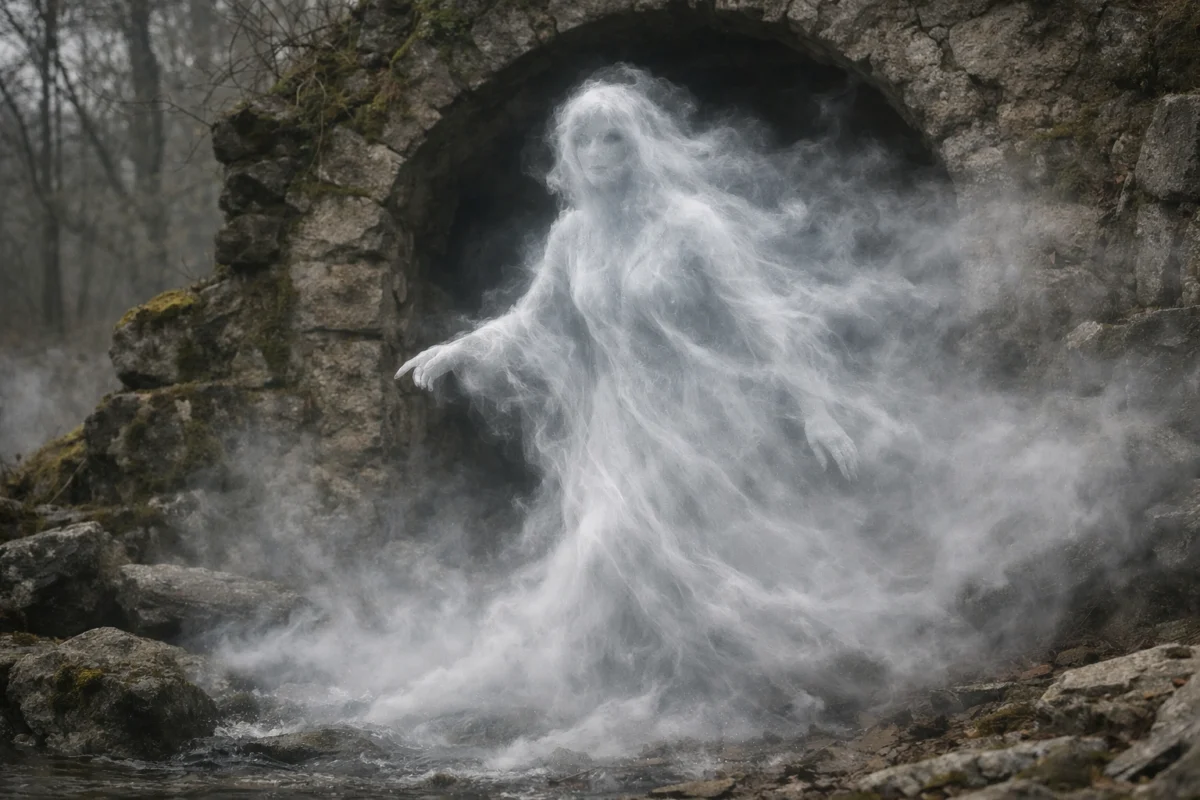
The leshy has no single canonical body. Collected accounts frequently give him a humanlike appearance, but this can be a temporary or deceptive form rather than his permanent shape.
Recognizing him depends on something unusual within an otherwise recognizable encounter.
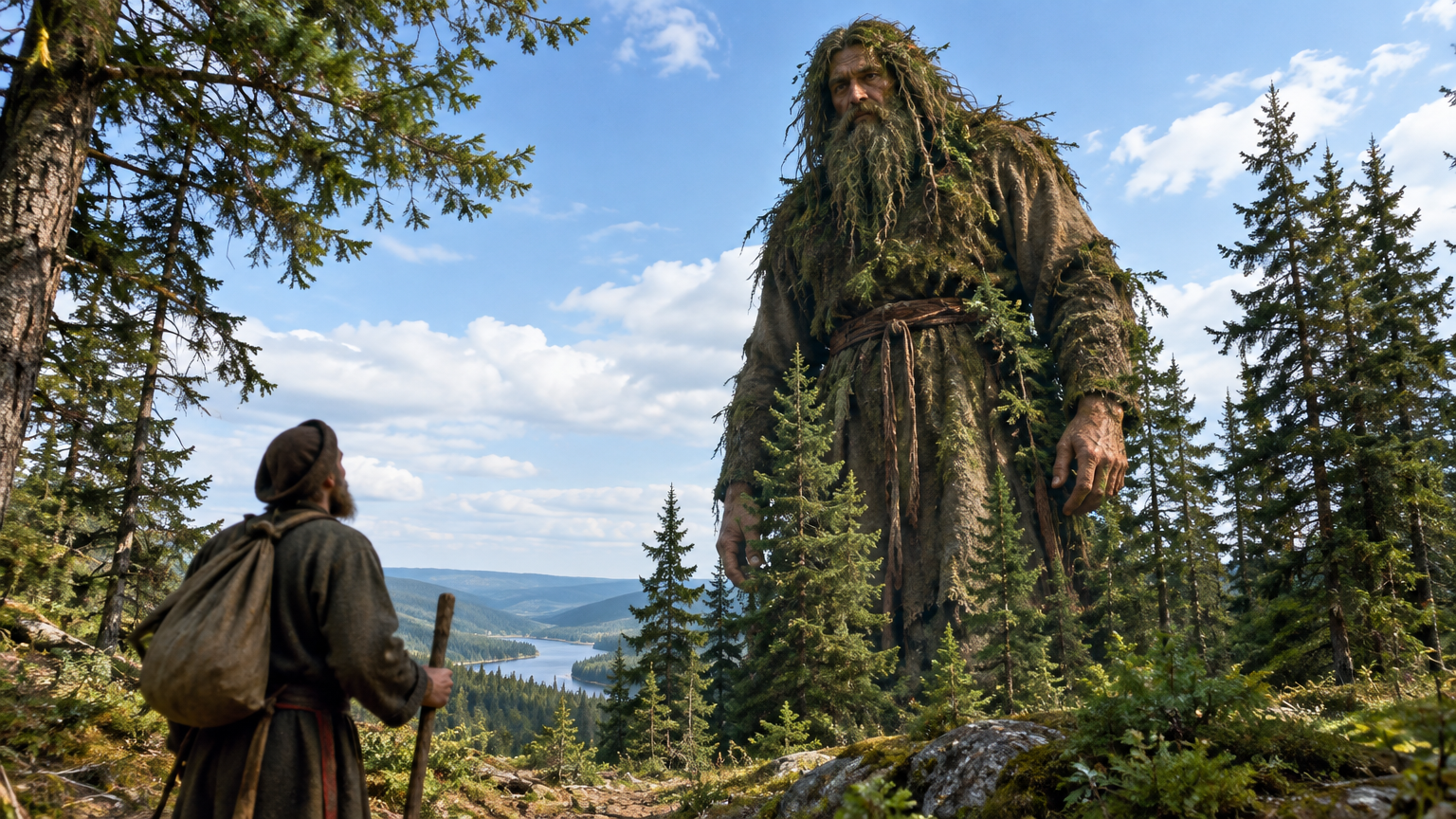
Clothing provides one set of clues. Regional descriptions preserved by Maksimov include garments worn in unfamiliar or improper ways.
Such details place the figure close to ordinary village life while marking him as someone who does not quite follow its everyday rules.
Hair and eyes also distinguish particular descriptions, but they should not be assembled into a compulsory portrait. A feature reported in one locality need not belong to every leshy.
The historical material supports a range of appearances rather than one standard combination of colors and features.
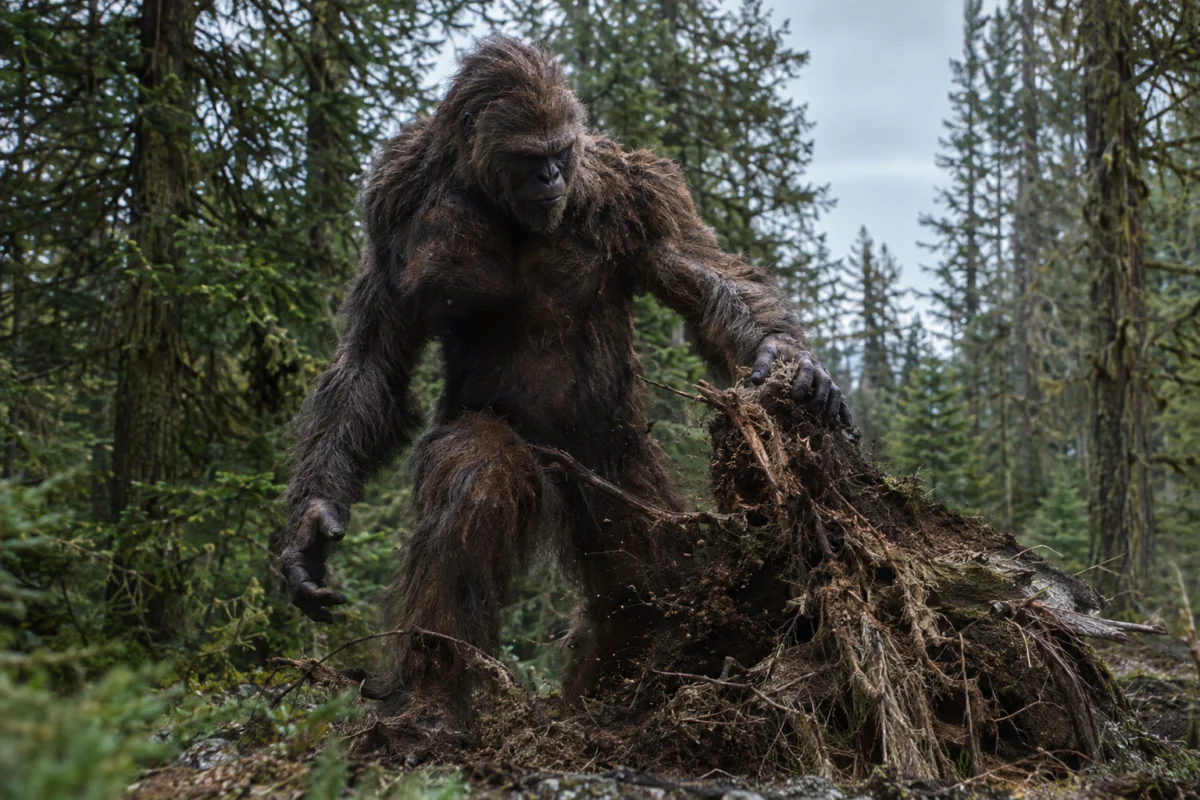
Changes of size are among his more striking characteristics. In collected descriptions, he can become immense in relation to the trees or diminish toward the scale of low vegetation.
His proportions respond to the surrounding landscape instead of remaining within the limits of a human body.
Appearance alone does not define an encounter. Misleading voices and forest sounds can suggest his presence without revealing a stable figure at all.
A person may experience his agency through disorientation before identifying any visible being responsible for what is happening.
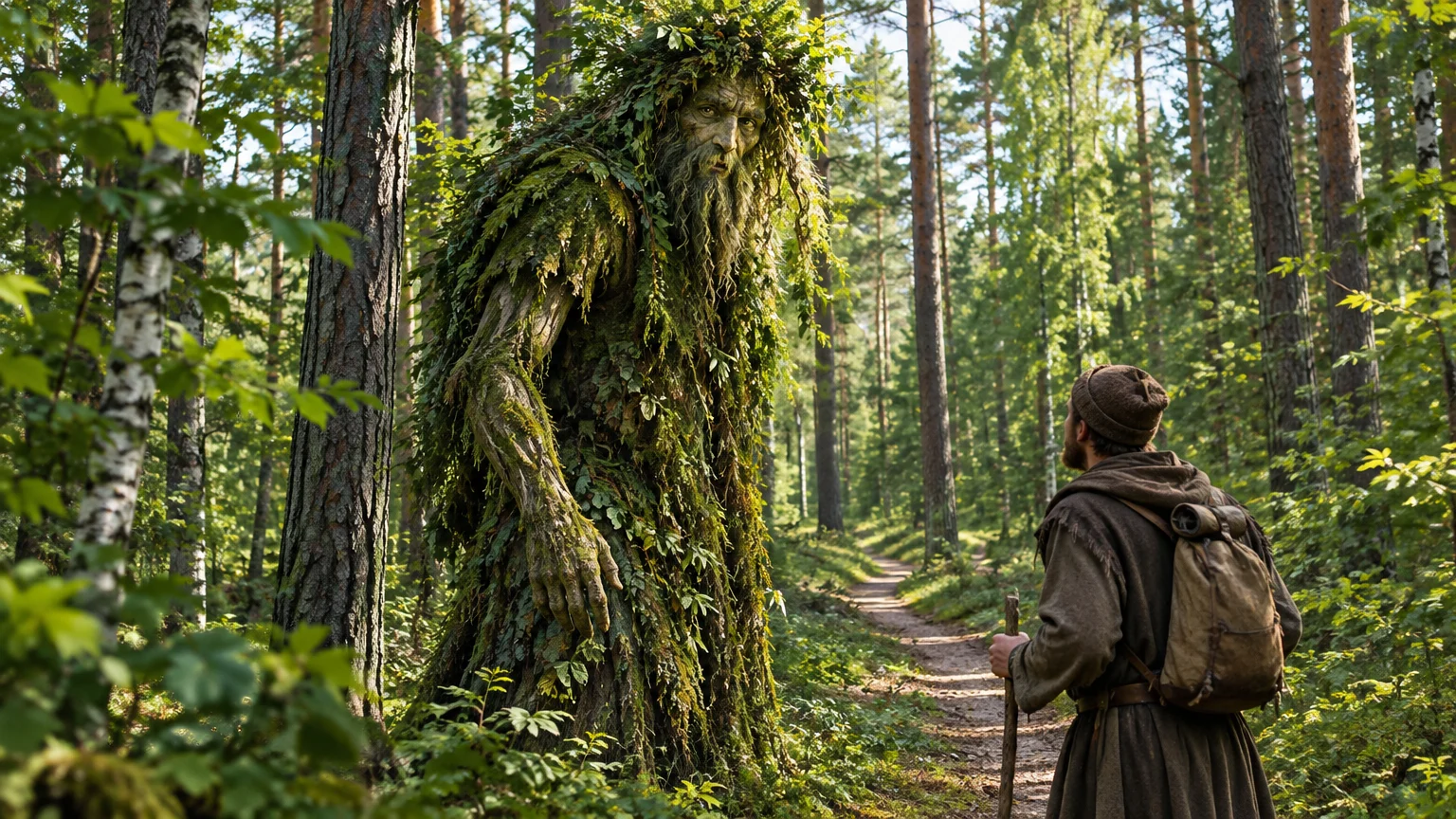
These variations are part of the tradition, not gaps that require a definitive reconstruction. An illustration emphasizing an unusual woodland man would represent one aspect; an immense figure towering among trees would represent another.
Neither should be treated as the exclusive historical form.
Background Story
The leshy’s background is not a personal biography but a relationship between human communities and woodland territory. Calling him its master gives supernatural expression to the idea that the forest has an authority of its own, distinct from the arrangements governing settled life.
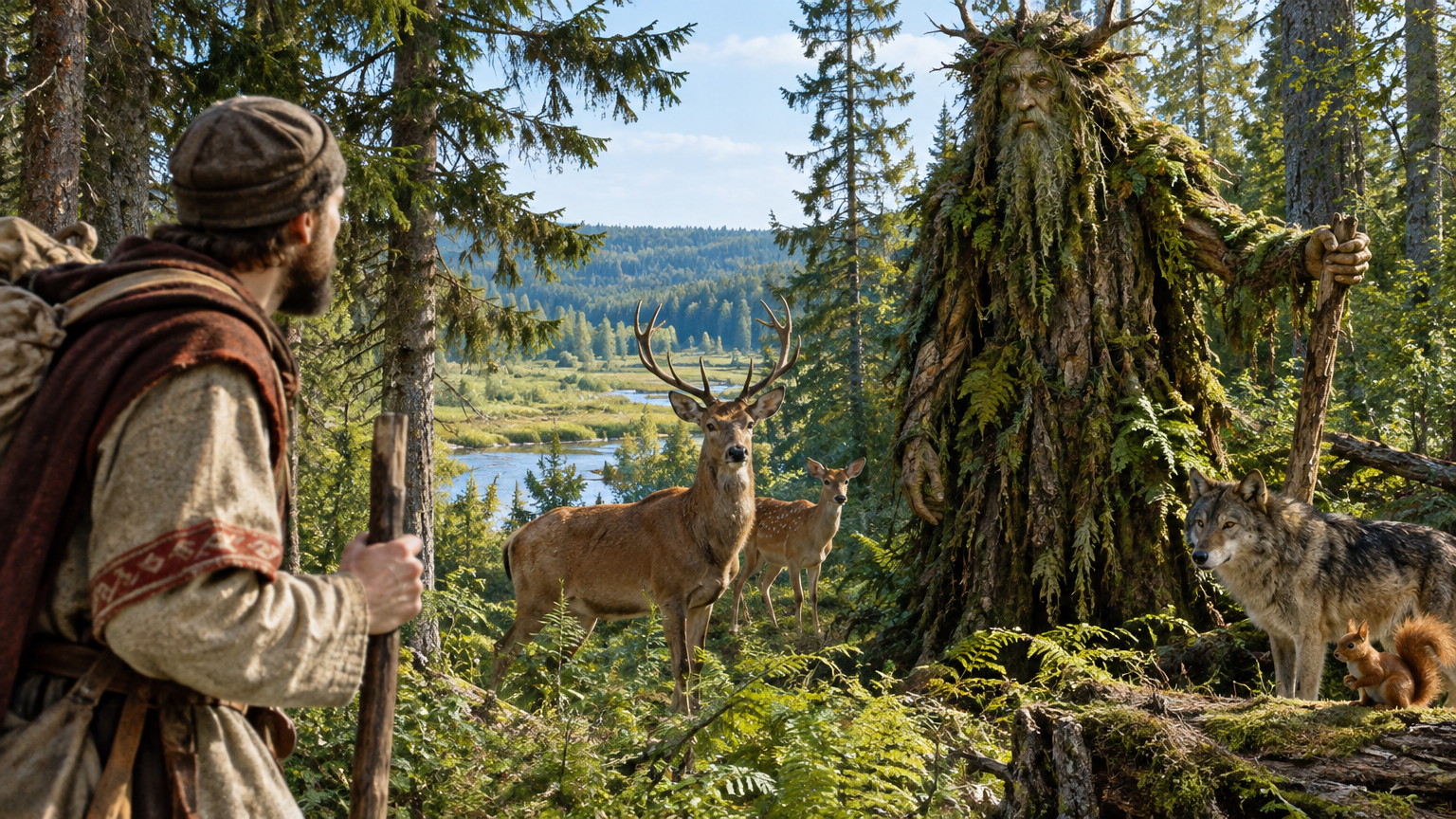
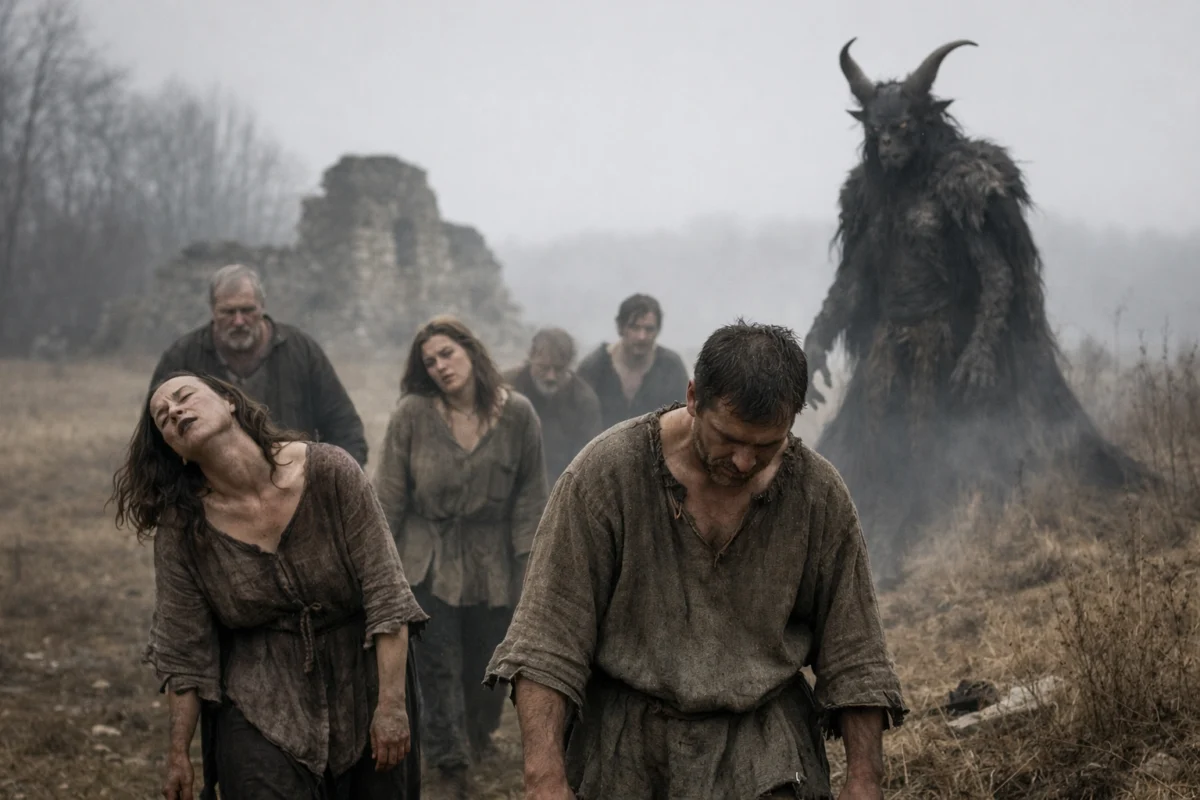
Human access to that territory is therefore uncertain. Travelers can lose their way, hunters can encounter an unfamiliar presence, and people can disappear beyond the inhabited landscape.
Leshy narratives connect these experiences without requiring every misfortune to follow the same plot or explanation.
Deceptive sound is especially important in this narrative setting. A voice that seems helpful may draw someone farther into confusion.
The disturbance lies in the failure of ordinary recognition: hearing something familiar no longer guarantees that its source is familiar or trustworthy.
His influence over animals reinforces the distinction between visiting the woods and possessing authority there. Humans enter a space whose inhabitants may answer to another master.
This helps explain why the leshy is more than a wandering monster encountered accidentally among the trees.
The traditions also developed within a Christian cultural environment. Maksimov records Christian prayers and the sign of the cross alongside other protective responses.
These combinations show how woodland beliefs were understood within lived religious practice, rather than preserved separately as an untouched pre-Christian system.
Different genres subsequently shaped this material in different ways. A collected tale gives an encounter a plot, while an ethnographic account gathers descriptions and customs.
Modern lexicographical research, including Ansimova and Golubkova’s 2015 study, treats these varied records together without making them one continuous life story.
Famous Folklore Stories
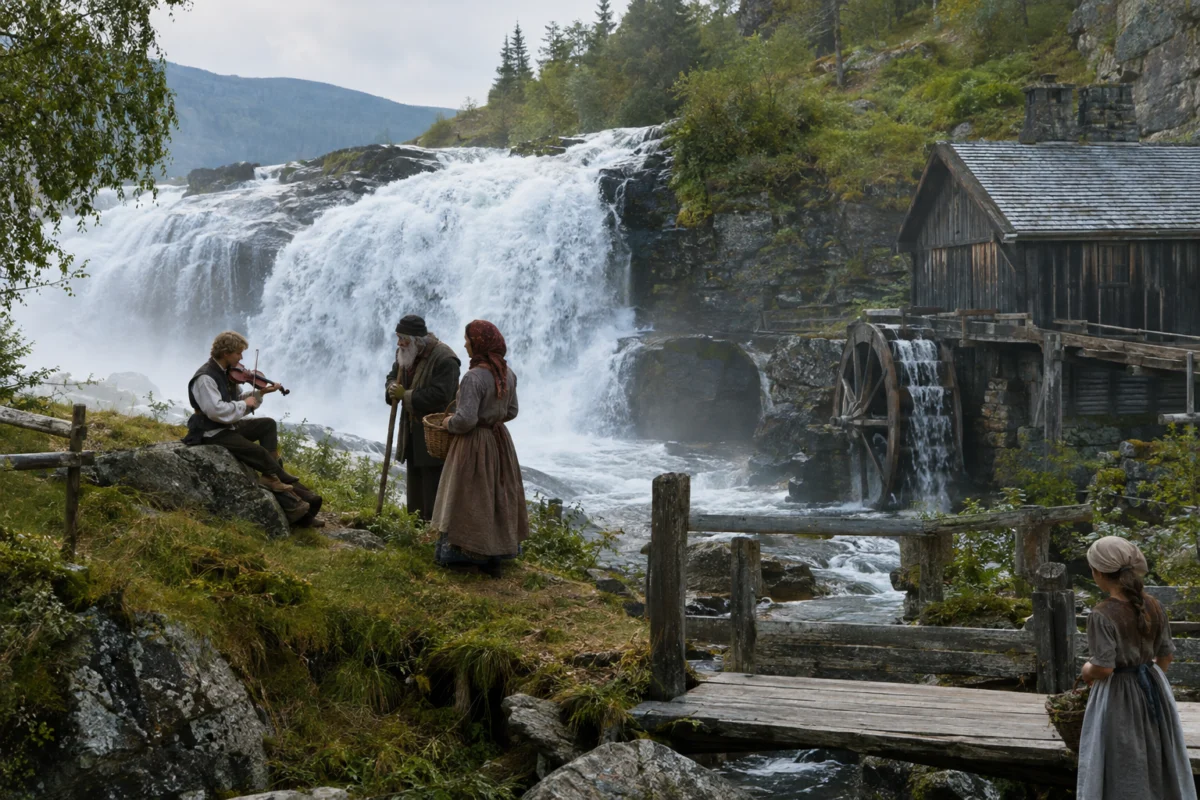
Leshy traditions survive in collected folktales and shorter accounts of uncanny woodland encounters. Some give the forest spirit a place in an extended adventure; others center on a single disturbing experience, such as losing a familiar path or following a deceptive voice.
The headings below describe these episodes and motifs rather than traditional tale titles.
A hunter and a missing priest’s daughter
An Afanasyev-sourced tale in William Ralston’s 1873 collection connects a hunter’s encounter with a leshy to the disappearance of a priest’s daughter in the forest. Here, the woodland spirit belongs to a particular story of disappearance and discovery, rather than simply explaining a traveler’s confusion.
The hunter and the missing daughter are characters in this version, not fixtures of every leshy story. Their presence does not establish a universal tradition of abducting priests’ daughters or keeping a household of human captives.
Being led astray
In recurring encounter accounts, people lose their way in the woods and attribute their bewilderment to the leshy. Even familiar surroundings become difficult to navigate: the forest’s master has interfered with the traveler’s ability to find a route.
Regional protective customs include turning clothing inside out or reversing footwear. These responses connect the encounter narrative with practical folk belief, showing what a lost person might do to escape supernatural misdirection.
They are not episodes in one fixed story with a standard ending.
Misleading voices and forest sounds
Other encounters begin with sound rather than a visible figure. A seemingly familiar voice or an ambiguous forest noise draws someone away from a reliable route.
Following what appears recognizable can deepen the traveler’s confusion instead of bringing help.
The leshy need never appear for such an encounter to feel threatening. Its central danger is failed recognition: a person can no longer trust that a familiar sound has a familiar source.
These accounts vary in their details rather than sharing one fixed speaker, message, or destination.
Cultural Impact
Leshy gave a recognizable agent to dangers associated with entering the forest. Getting lost, hearing deceptive sounds, and encountering unpredictable animals could become connected experiences within a shared narrative framework.
The woods were represented as a place where human familiarity did not guarantee control.
The title “master of the forest” expresses authority over a particular environment rather than membership in a securely documented divine hierarchy. Its cultural force lies in making the forest seem inhabited and governed, not merely empty land available for unrestricted human use.
Printed collections carried these local narratives beyond their original storytelling settings. Translation widened that circulation further: Ralston’s English-language collection presented a Leshy tale to readers outside Russian-speaking communities.
Such publication preserved material while placing it within the broader literary category of the fairy tale.
Modern scholarship distinguishes this varied record from the more unified figure found in later mythological summaries. The 2025 study The Invention of Leshy argues that literary and encyclopedic reconstruction helped produce a coherent “Slavic” character.
That interpretation cautions against treating later consistency as evidence of ancient uniformity.
Similar Beasts
Caipora

Caipora is a forest spirit in Brazilian folklore associated with protecting wild animals and confronting people who threaten them. Humanoid representations connect the figure closely with woodland encounters.
The strongest parallel is authority within the forest, especially influence over animals. This functional resemblance does not establish a shared origin or identical moral character.
Vodyanoy

Vodyanoy is a water spirit in Slavic folklore, associated with rivers and ponds. Accounts connect the being with a dangerous temper, supernatural trickery, and the capture of unwary travelers.
Like Leshy, Vodyanoy makes a hazardous environment personally governed. Their domains differ: water belongs to Vodyanoy, while Leshy’s authority centers on the forest.
Hulder

Hulder is a forest-associated supernatural figure in Scandinavian folklore, particularly Norwegian tradition. Accounts emphasize encounters with humans and the danger of being lured away into the wild.
Hulder offers a close comparison through woodland habitat and deceptive encounters. The similarity concerns narrative function, not an interchangeable identity or a demonstrated historical connection.
Religion/Ritual
Protective practices recorded in Sergey Maksimov’s 1903 account combine Christian actions with other folk responses. Prayers and the sign of the cross appear alongside measures directed at escaping supernatural misdirection.
These are collected regional practices, not components of a single standardized Leshy ritual.
Turning clothing inside out or reversing footwear was reported as a response to becoming lost. Such actions belong specifically to the problem of being led astray.
They should not be presented as necessary preparations for every forest journey or as universally recognized protections.
The reversal of ordinary dress can be interpreted as a symbolic answer to disrupted orientation: familiar arrangements are deliberately changed when familiar routes fail. That is an interpretation of the practice’s form, however, not proof that everyone performing it understood its purpose identically.
Christian protection places these encounters within the religious world of the communities recording them. It does not, by itself, establish an earlier organized cult.
The available evidence supports vernacular protective customs more securely than claims about temples, priesthoods, or a pan-Slavic forest deity.
Scientific or Rational Explanations
The historical evidence establishes that people told Leshy stories and reported related beliefs. It does not establish the spirit’s existence.
A rational discussion therefore asks how experiences were interpreted and transmitted, rather than treating every collected narrative as an observation requiring a zoological explanation.
Environmental interpretation is particularly relevant to accounts of losing direction. Woodland travel can provide uncertain landmarks and ambiguous sounds.
These conditions offer a plausible setting for stories of supernatural misdirection, although the surviving narratives rarely contain enough independent detail to reconstruct a particular incident.
Misleading voices likewise invite explanations involving uncertain sound identification. A listener’s expectations may influence whether an unfamiliar noise seems ordinary, human, or supernatural.
This remains a general possibility, not a demonstrated diagnosis of the encounters preserved in the folklore collections.
From an anthropological perspective, calling the spirit a forest master gives environmental uncertainty a social form. Misfortune becomes an encounter with another agent’s authority.
This reading helps explain the figure’s narrative usefulness without assuming that belief was merely a disguised lesson in practical woodland safety.
Variation also matters. Ansimova and Golubkova’s 2015 lexicographical study brings together folklore, ethnographic, and modern materials, supporting attention to differences across the record.
A changing body of descriptions is better approached as a belief tradition than as consistent testimony about one biological species.
Literary transmission supplies another explanatory layer. Collectors, translators, and later mythological writers selected and organized material for new audiences.
Distinguishing those editorial settings from local encounter accounts helps explain apparent consistency without erasing the genuine historical record of diverse beliefs about the forest.
Modern Cultural References
Leshy: The Slavic Lord of the Forest, television episode (2020)
This Monstrum episode, hosted by Emily Zarka, examines the figure’s folklore.
It presents the forest spirit as the direct subject of a modern educational program.
(pbs.org)
Leshy (Lesapán), film (2015)
Pavel Soukup’s Czech short follows a gamekeeper pursuing a creature awakened by poachers. Its woodland antagonist creatively adapts the traditional forest spirit for contemporary horror.
(filmcenter.gov.cz)
Inscryption, video game (2021)
Daniel Mullins Games places players within the mysterious Leshy’s cabin. The character reimagines the folkloric name and forest associations within a dark card-based narrative.
(devolverdigital.com)
Leshy Prelude, video game (2024)
This action-adventure game presents Leshy as a forest guardian and antagonist. The portrayal translates the spirit’s authority over woodland territory into an interactive confrontation.
(steampowered.com)
A Whisper in the Woods, published fiction (2025)
Elise Nelson’s fictional narrative makes the Leshy a central character.
Its premise uses the woodland being as an active presence rather than merely decorative folklore.
(books.google.com)
The Leshy, artwork (2025)
Corinne Hamer’s original acrylic painting depicts the woodland spirit through contemporary visual art. The work demonstrates the figure’s continuing appeal beyond literature, film, and games.
(artfinder.com)
Conclusion
The Leshy is best understood as a variable forest spirit rooted in Russian regional folklore, not as a securely documented pan-Slavic deity with one fixed mythology. Collected traditions portray a master of woodland space who can mislead travelers, influence animals, imitate sounds, change appearance, or punish disruptive behavior.
Such differences are essential to the figure’s identity. They show how local experience, oral narrative, Christian protective practice, and the hazards of forest travel combined without producing a single canonical form.
Its enduring symbolic power comes from the uncertain boundary between inhabited land and uncontrolled woodland. The Leshy embodies disorientation, territorial authority, and the possibility that familiar surroundings can suddenly become deceptive.
Later literature, scholarship, television, film, games, fiction, and visual art have made the character more unified and recognizable than many historical accounts suggest. Reading those modern portrayals beside early printed and ethnographic records preserves both sides of its legacy: a diverse body of regional belief and an adaptable figure of modern imagination.
Further Reading
Нечистая, неведомая и крестная сила, «Леший», Wikisource; Sergey Maksimov
A substantial collected ethnographic account with regional variants, narrative motifs, and protective customs; pages 68–77 of the cited edition.
(ru.wikisource.org)
Словарь русских суеверий (Dictionary of Russian Superstitions), M. D. Chulkov text transcription
Early printed reference cited in the research trail; useful as evidence of recorded belief, not its origin date.
(mir.k156.ru)
Russian Fairy Tales: A Choice Collection of Muscovite Folk-lore, William Ralston; digitized public-domain edition
English-language collection includes an Afanasyev-sourced tale explicitly naming the Leshy.
(upload.wikimedia.org)
A Lexicographical Solution for Forest Mythological Creatures Description in the Russian Folk Beliefs, Humanitarian Sciences in Siberia / Siberian Branch of the Russian Academy of Sciences
University and research-institute authors synthesize folklore, ethnographic, and modern materials on leshy beliefs.
(sibran.ru)
The Invention of Leshy, Games and Culture / SAGE
Specialist academic study of the figure’s literary history, reconstruction as Slavic mythology, and later cultural reception.
(journals.sagepub.com)