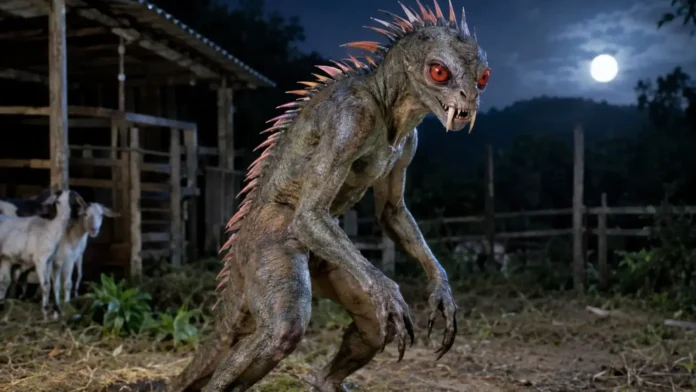
Introduction
The Chupacabra is a modern folklore figure associated with attacks on livestock and the alleged drinking of their blood. Its securely documented history begins in Puerto Rico in 1995, where reports of an unfamiliar predator developed into a widely circulated monster legend.
The earliest prominent image was an upright, spiny creature with red eyes and fangs. This Puerto Rican form differs substantially from the hairless, doglike animals later called chupacabras in parts of the mainland Americas, especially Texas and northern Mexico.
Its Spanish name is conventionally translated as “goat-sucker,” expressing the behavior attributed to it rather than identifying a recognized species. Although witnesses and livestock owners reported encounters and losses, those reports do not establish the existence of an unknown blood-drinking animal.
The figure belongs to contemporary legend rather than a securely documented ancient mythology. Its importance lies partly in how quickly a local livestock mystery acquired a recognizable monster, then crossed borders while changing appearance through storytelling, news coverage, and interpretations of unfamiliar animals.
History/Origin
The strongest historical starting point is the Puerto Rican outbreak of reports in 1995. Canóvanas became an important center of the story, linking accounts of livestock attacks with sightings of a creature that witnesses considered unlike an ordinary local predator.
Madelyne Tolentino’s reported encounter in August 1995 became especially influential in establishing the upright, spiny image. Her testimony survives through interviews, including one recorded in 1996, making it important to distinguish the reported encounter date from the dates when her descriptions were collected.
By December 1995, the episode had reached national United States newspaper coverage. Karl Ross’s contemporary Washington Post report recorded livestock owners’ claims, descriptions of the supposed attacker, and public reactions.
It provides evidence of the legend’s early circulation, not independent zoological confirmation.
Among the witnesses in that report was Misael Negrón of Canóvanas, who attributed an attack on a family goat to a strange creature. His description included red eyes, fangs, and spines, showing that the distinctive monster image was already circulating during the original outbreak.
Claims of much older Indigenous or New Mexican origins require greater caution. Investigator Benjamin Radford has challenged such retrospective histories because their historical provenance is inadequate.
The documented 1995 emergence should therefore remain separate from later assertions that the same named creature belonged to ancient traditions.
Subsequent circulation gave the legend regional lives beyond Puerto Rico. Folklore holdings and newspaper references indexed by the University of Texas Rio Grande Valley document its presence in the borderlands.
Later mainland reports increasingly applied the name to unfamiliar-looking quadrupeds rather than the original upright monster.
Name Meaning
Chupacabras combines the Spanish verb chupar, “to suck,” with cabras, “goats.” The conventional English rendering, “goat-sucker,” captures the creature’s defining accusation: that it attacks domestic animals to consume their blood.
The name describes an alleged feeding habit, not its shape.
Both Chupacabra and Chupacabras circulate as names for the creature. In Spanish, the final s in the compound chupacabras does not necessarily indicate several monsters: el chupacabras can refer to a single being.
English usage commonly adopts the shorter form chupacabra.
The Diccionario de americanismos records chupacabras in its folkloric sense across several American countries. This regional lexical recognition documents the name’s establishment in popular usage, but it should not be mistaken for evidence that every community preserves an identical description or origin account.
The name also helps explain continuity between otherwise dissimilar reports. An upright, spiny monster and a hairless canid share little anatomy, yet both can receive the label when associated with livestock attacks.
Their connection rests chiefly on the role assigned to them in the legend.
Appearance
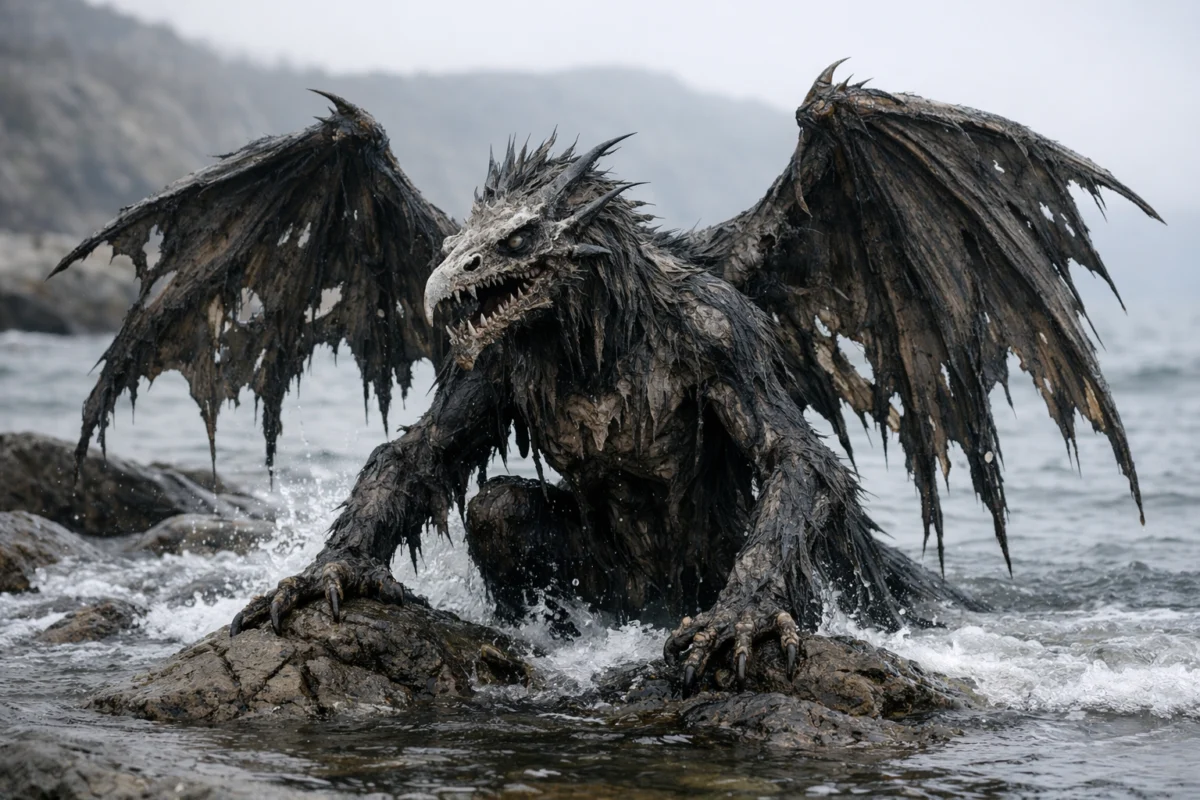
The representative early Puerto Rican Chupacabra is an upright, nonhuman predator, not simply a bald dog. A description published in 1995 placed its height at roughly three to four feet and combined conspicuous eyes, fangs, unusual skin, and spines into a striking silhouette.
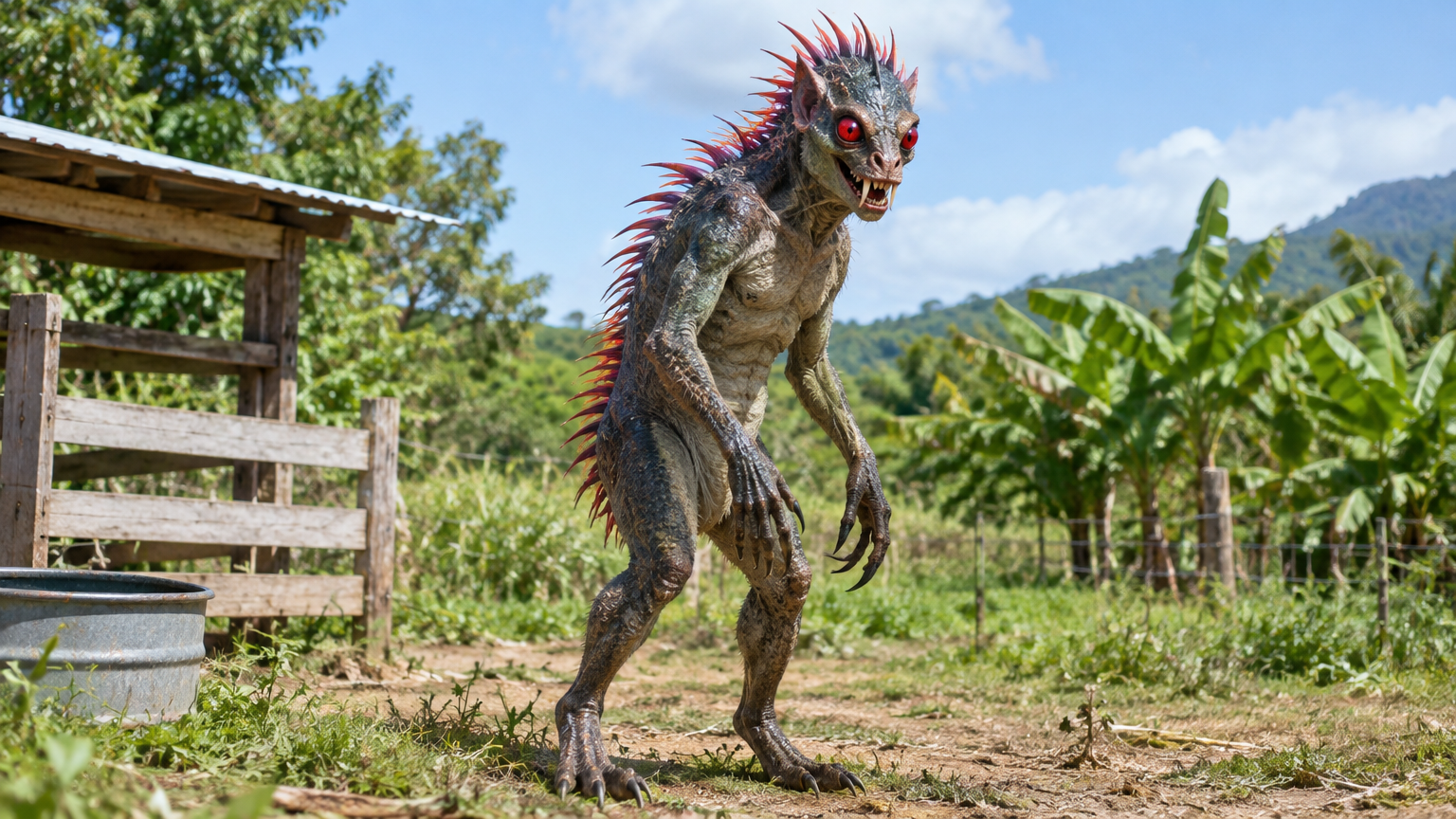
Red eyes and prominent fangs emphasized its threatening face. Dinosaur-like skin supplied a reptilian comparison, while colored spines contributed to its unfamiliar appearance.
These are reported features within an encounter narrative, rather than anatomical observations verified through examination of a specimen.
Spines along the head and back became especially important to the early image. Together with the upright stance, they distinguished the creature from ordinary livestock predators.
“Humanoid” describes this general posture and outline; it does not mean witnesses consistently described an otherwise human body.
The early descriptions should not be forced into a single exact model. Tolentino’s influential account and Negrón’s newspaper-reported encounter belong to the same emerging legend, but they are separate testimonies.
Details from one should not automatically be assigned to every Puerto Rican sighting.
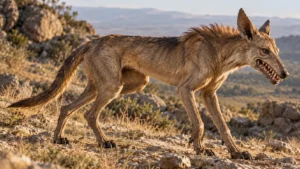
Later reports from Texas and northern Mexico frequently concern four-legged, hairless or sparsely furred animals resembling dogs or coyotes. This mainland variant differs in basic body plan from the spiny biped.
Presenting both as one stable creature would obscure an important change in the tradition.
Severe mange can explain the unfamiliar appearance of many later animals identified as chupacabras. Hair loss exposes skin, while remaining fur can produce an unusual ridge.
This veterinary explanation concerns particular animal identifications; it does not establish mange as the source of the original upright image.
Background Story
The Chupacabra’s background is a cluster of reported attacks and competing explanations, rather than a single account of its birth or ancestry. Livestock deaths supplied the immediate problem, while the belief that victims had been drained of blood supplied the monster’s distinctive feeding role.
This blood-drinking motif separates the legendary accusation from a straightforward report of predation. An animal’s death and the explanation attached to that death are different kinds of evidence.
The folklore joins them by imagining a specialized attacker whose appetite accounts for the supposed loss of blood.
The Puerto Rican episode developed through interaction among residents, local officials, and news coverage. Contemporary reporting recorded both alarm and dispute.
Consequently, the legend should not be understood as a belief shared uniformly across the island: testimony, speculation, skepticism, and sensational presentation existed together.
Alien and laboratory-origin explanations offered modern answers to the creature’s supposed existence. These claims placed the unfamiliar predator within narratives of extraterrestrial life or experimentation.
They were explanations circulating around the sightings, not established facts about the creature’s ancestry or biological nature.
Popular cinema may also have shaped its early appearance. Benjamin Radford argues that Tolentino’s description was influenced by the creature in the 1995 film Species.
This is a specialist interpretation of one influential account’s provenance, not proof that every encounter originated with that film.
As the name traveled, new encounters could be interpreted through an already familiar legend. The later association with hairless canids shows that the alleged livestock-predator role could persist even when the body changed.
The resulting tradition combines a recognizable name with substantially different regional images.
Famous Folklore Stories
The best-documented Chupacabra narratives are reported encounters and livestock-attack accounts, rather than traditional tales with established titles. The descriptive headings below identify particular testimonies and a recurring motif.
They do not represent inherited names for folktales or confirm the events as described.
Madelyne Tolentino’s Canóvanas Encounter
Madelyne Tolentino’s reported encounter in Canóvanas, Puerto Rico, in August 1995 became central to the upright, spiny Chupacabra image. This is an eyewitness encounter account, not a named traditional folktale.
Its importance lies in the distinctive visual description that later became widely associated with the creature.
The account survives through interviews, including one documented in 1996 and another conducted by investigator Benjamin Radford in 2010. Those different recording dates matter: the reported encounter, its early preservation, and later discussion are separate stages in the history of the narrative.
Tolentino’s testimony belongs to the early Puerto Rican strand of the legend. It should not be retold as an encounter with the hairless, four-legged animal familiar from later mainland reports.
Combining those forms would obscure a significant change in the creature’s popular identity.
Misael Negrón’s Backyard Encounter
Misael Negrón of Canóvanas described another encounter during the 1995 outbreak. In Karl Ross’s contemporary Washington Post report, Negrón said that he had seen a creature with red eyes, fangs, and spines, and attributed an attack on a family goat to it.
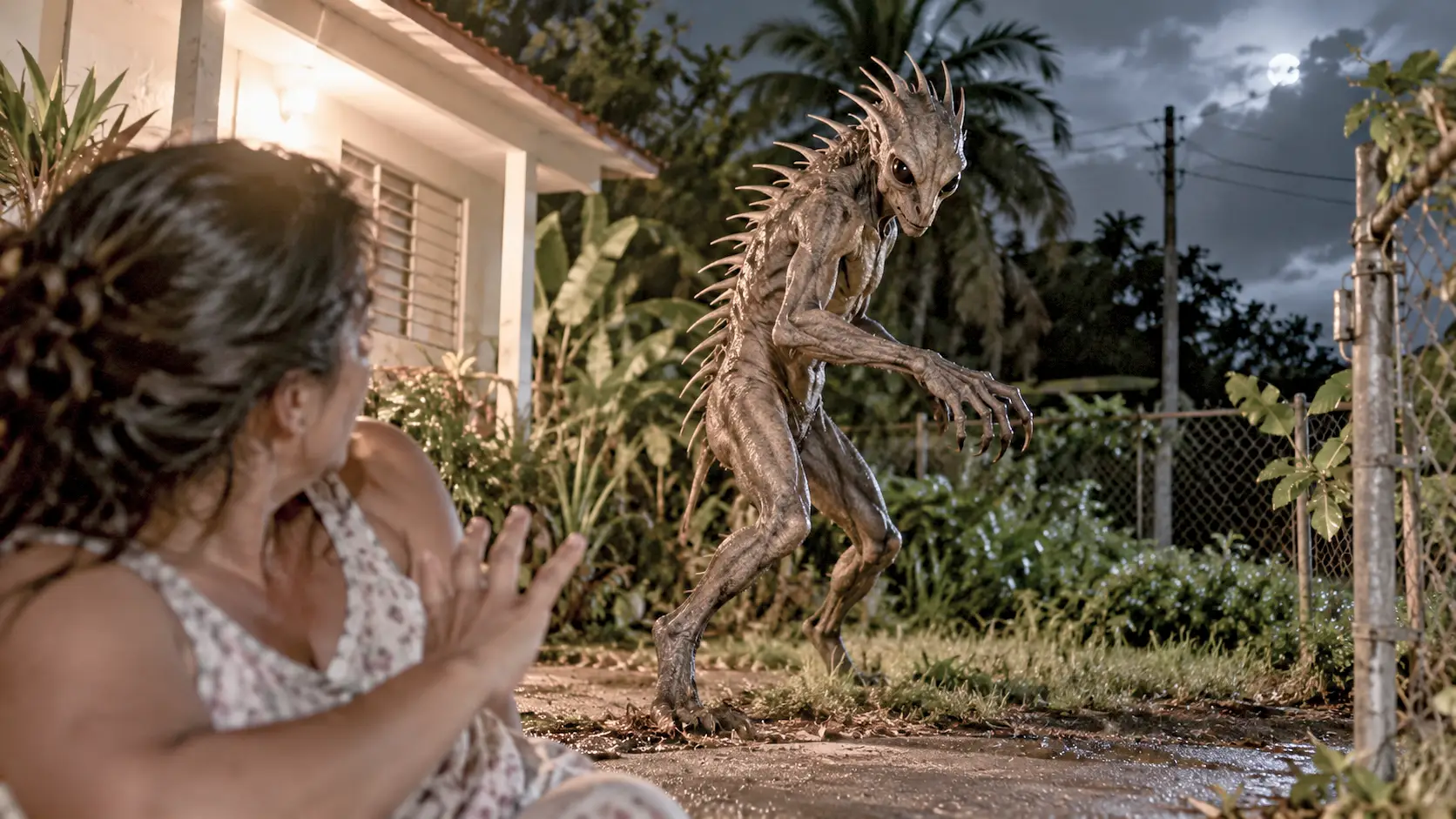
This account joins an extraordinary sighting to a household’s livestock loss. The connection is part of Negrón’s testimony, not an independently established identification of the attacker.
Its near-contemporary publication nevertheless makes it valuable evidence for what people were reporting during the legend’s emergence.
Compared with later recollections, this newspaper account preserves an early snapshot of the story in circulation. Its spiny, alien-like predator resembles the original Puerto Rican image more closely than the canid-like animals subsequently called chupacabras in Texas and northern Mexico.
Livestock Allegedly Drained of Blood
A recurring narrative pattern links livestock deaths with the belief that an unfamiliar predator has drained the victims’ blood. This motif gives the Chupacabra its defining role: the creature is not simply an unusual animal, but an explanation offered for disturbing losses among domestic animals.
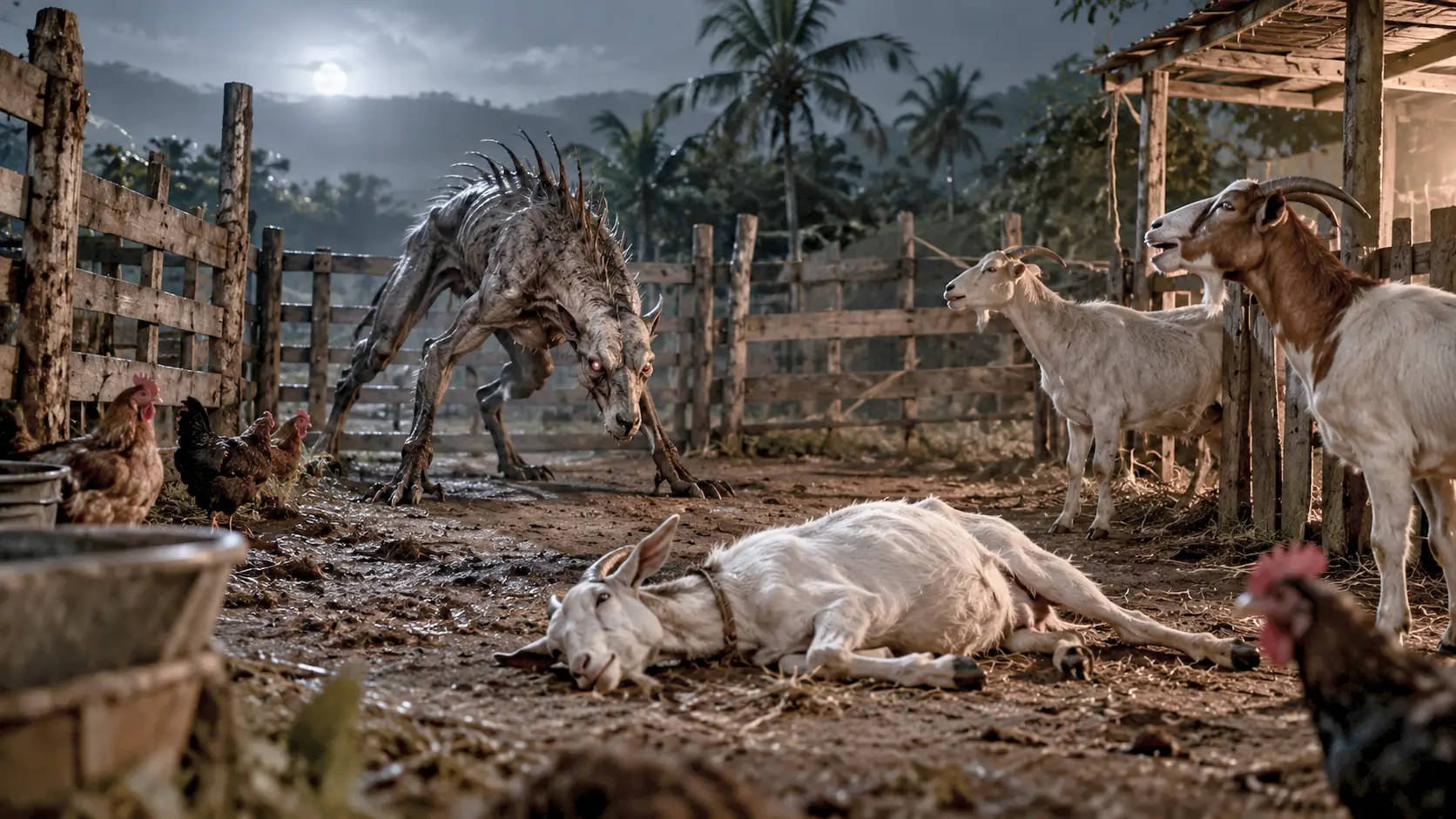
The motif can persist even when descriptions of the supposed attacker change. An upright, spiny being and a hairless quadruped may occupy the same role in different accounts.
Their shared association with alleged blood-drinking does not establish that witnesses encountered one biological species.
Cultural Impact
The Chupacabra quickly became more than a report of an unknown predator. By late 1995, songs, television spoofs, and commercial products were already drawing on the story.
Public anxiety and entertainment developed alongside one another, rather than belonging to separate stages of the legend.
That early mixture complicates any simple division between believers and skeptics. A frightening livestock-attack story could also become a joke or a marketable image.
The existence of humorous treatments does not establish how every participant understood the underlying reports.
As the name spread beyond Puerto Rico, it became a flexible label for a feared livestock predator. Its recognition across several American countries is reflected in regional Spanish lexicography.
This geographic reach should not be mistaken for evidence of one uniform description or an ancient shared tradition.
In the Lower Rio Grande Valley, the creature also entered a regional record of newspaper coverage and collected folklore. Holdings identified through the University of Texas Rio Grande Valley show that its cultural history includes local storytelling and preservation, not merely widely circulated monster imagery.
Modern investigation has focused partly on how the legend changes through reporting, recollection, and reinterpretation. The contrast between the early spiny humanoid and later canid-like forms is especially revealing: a recognizable name and threatening role can survive substantial changes in appearance.
Similar Beasts
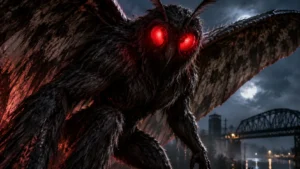
Mothman
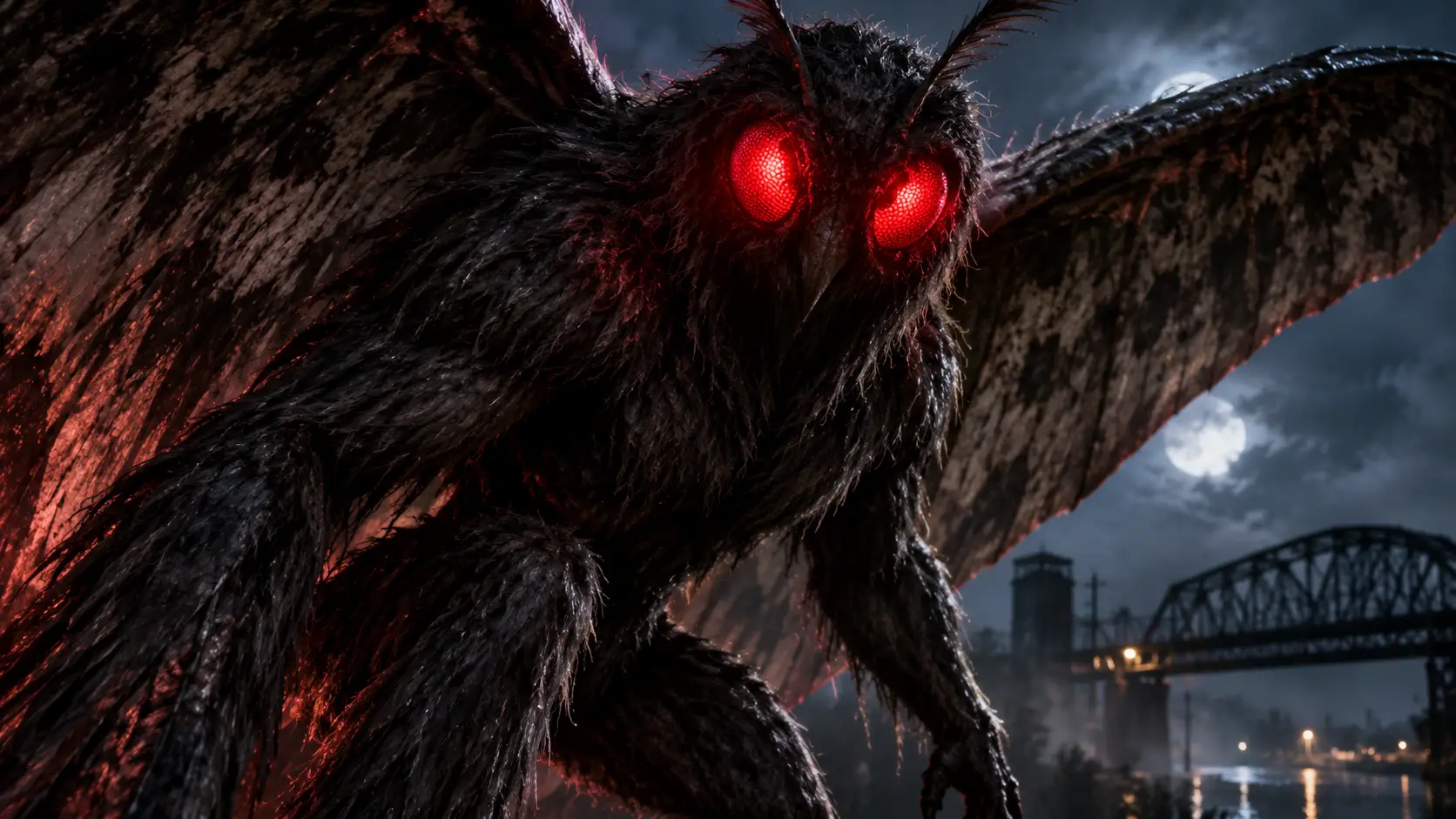
Mothman is a winged humanoid associated with Point Pleasant, West Virginia, and reports beginning in 1966. Its red-reflecting eyes and unusual silhouette make it a useful visual comparison.
Both figures became recognizable through modern encounter narratives. Mothman’s flight and later disaster associations distinguish it from the Chupacabra’s livestock-predator role.
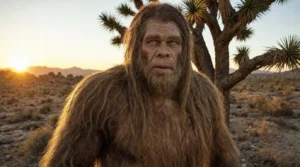
Borrego Sandman
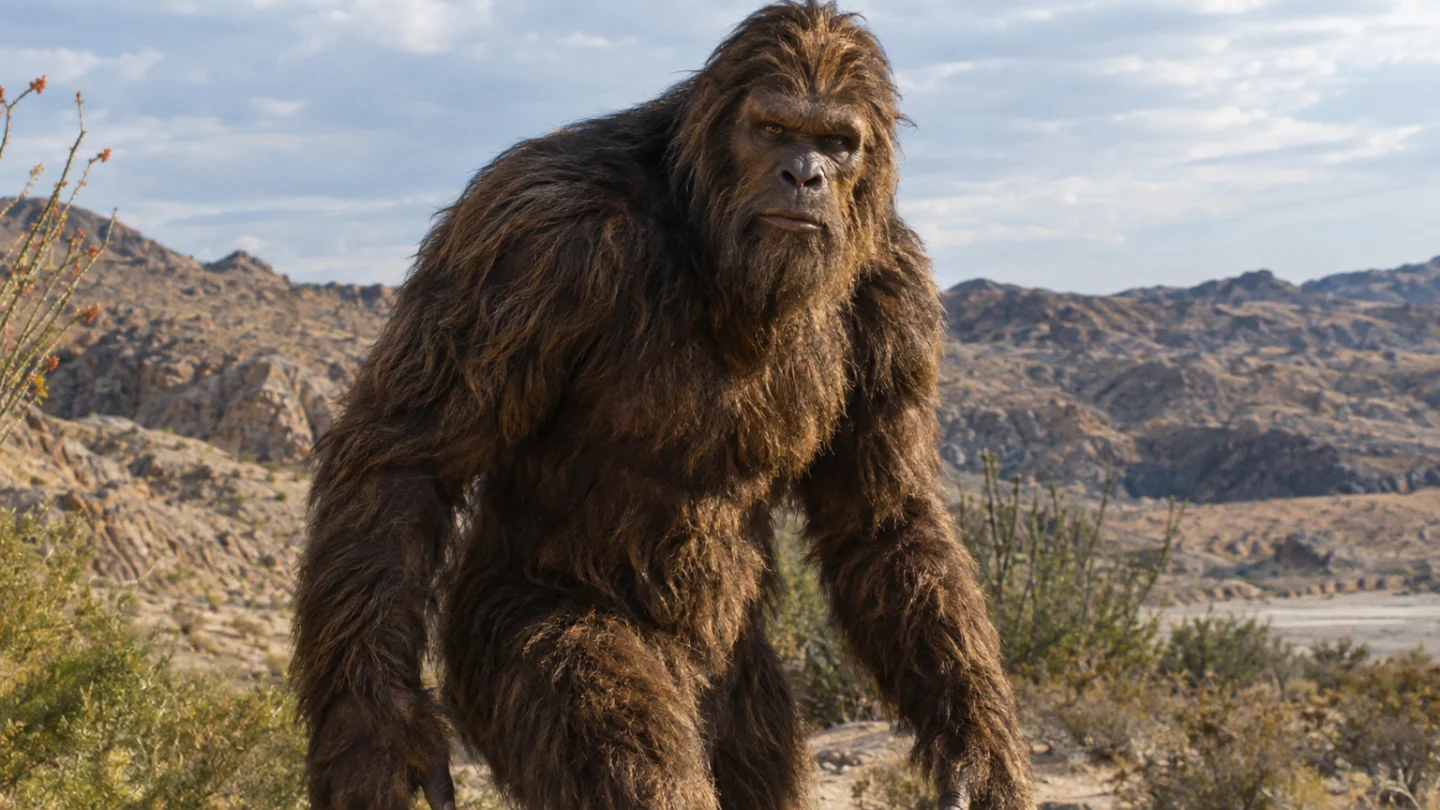
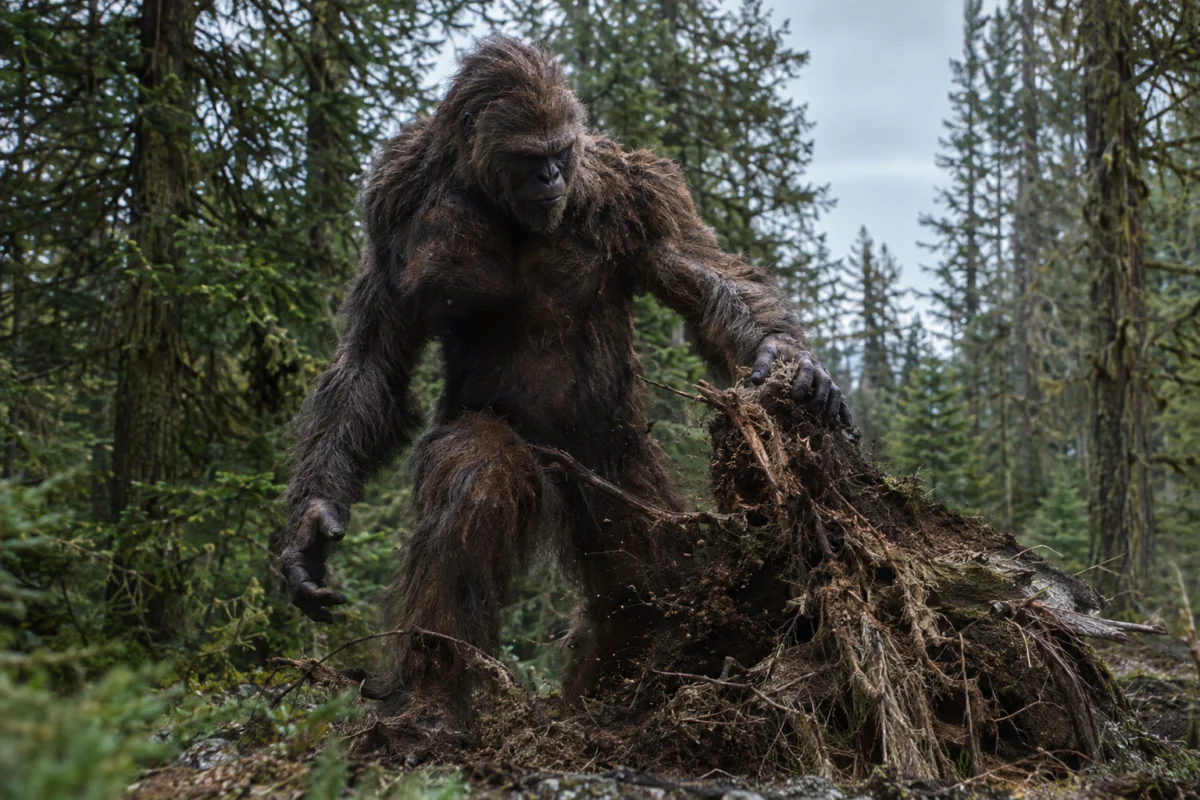
The Borrego Sandman is a Bigfoot-like figure in Southern California desert folklore, associated with mysterious tracks. It belongs to the broad field of elusive humanoids reported in modern cryptid accounts.
The comparison concerns the early Chupacabra’s upright form and reported encounters, not blood-drinking. The Sandman’s wild-man character remains distinct from the spiny Puerto Rican predator.
Read more about Borrego Sandman
Cù-Sìth

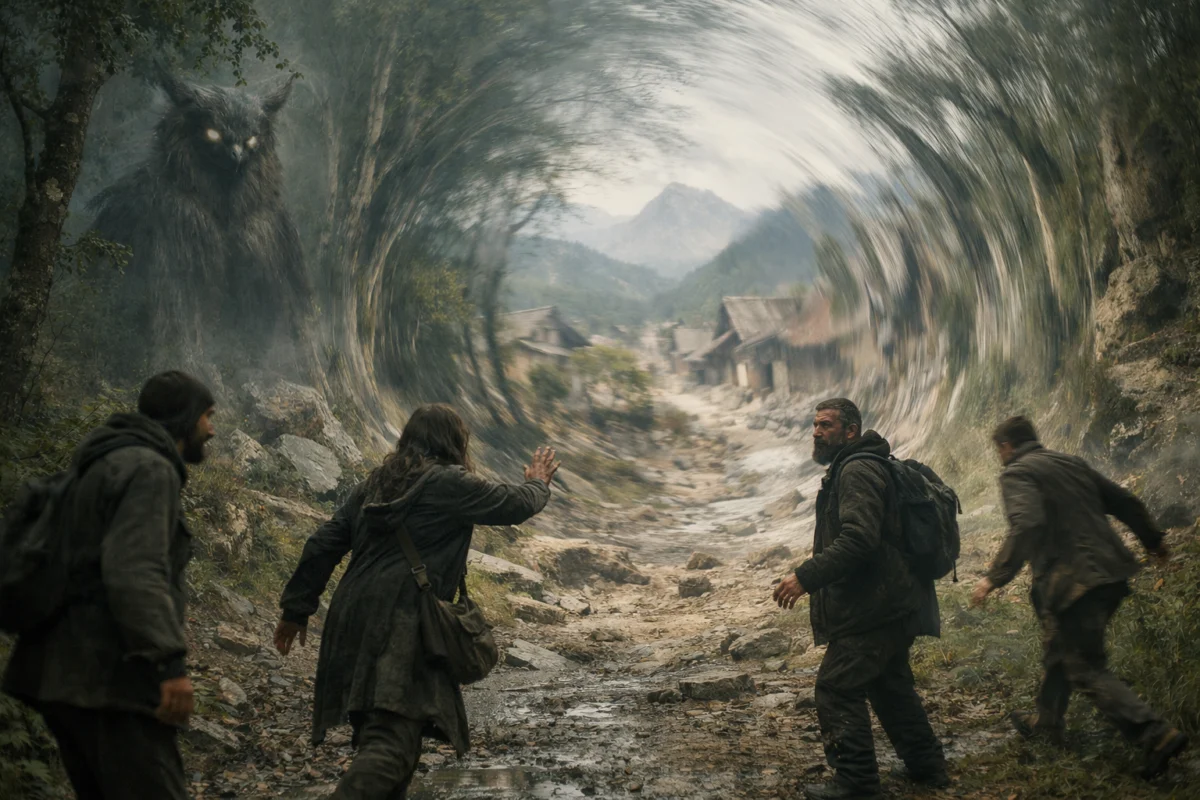
The Cù-Sìth is a giant supernatural hound in Scottish lore, known for three barks that foretell death. It represents an ominous canine being rather than an ordinary dog.
Its canine form offers a comparison with later mainland Chupacabra imagery. Its death-omen function differs from allegations of livestock attacks and blood-drinking.
Scientific or Rational Explanations
Different kinds of Chupacabra claims require different explanations. An eyewitness description, a livestock death, and an unfamiliar animal’s body are separate evidentiary problems.
Explaining one does not automatically explain the others, particularly when the reported creatures have substantially different body forms.
Severe mange provides a concrete explanation for many later canid-like identifications. Veterinary and wildlife specialists at Texas A&M explain that affected coyotes can lose much of their fur, exposing skin and changing the familiar outline by which observers ordinarily recognize the animal.
Uneven remaining hair can also produce a ridge-like appearance, making a diseased animal look unusually strange. This explanation fits many reports of hairless, four-legged creatures.
It should not be presented as though it directly accounts for the original upright, spiny Puerto Rican description.
For that early image, Benjamin Radford proposes a different explanation: influence from the creature in the 1995 film Species. His interpretation concerns the provenance of Tolentino’s description.
It is not settled proof that every witness borrowed a cinematic image or that every report had the same cause.
The interview chronology also requires care. A reported 1995 experience, an interview recorded in 1996, and a later recollection are not interchangeable evidence.
Distinguishing them allows investigators to examine what was reported early without treating every later detail as equally close to the event.
Claims that livestock were drained of blood likewise require examination beyond the storytelling itself. An account establishes that blood loss was alleged, not that it was demonstrated.
The documented existence of the folklore and the proposed existence of an unknown blood-drinking animal remain separate questions.
Modern Cultural References
Chupa, film (2023)
Directed by Jonás Cuarón, this Netflix family adventure features a young chupacabra as a central character. It reimagines the feared livestock predator within a family-oriented story.
(media.netflix.com)
Chupacabra Terror, film (2005)
This horror film centers on a captured Chupacabra brought aboard a cruise ship. Its creature preserves the legend’s threatening role while moving the action away from rural livestock attacks.
(sonypictures.com)
Curse of the ChupaCabra, novel (2013)
Rudolfo Anaya’s young-adult thriller follows a professor researching folklore who encounters the creature.
The narrative makes the Chupacabra both a subject of inquiry and an immediate danger.
(unmpress.com)
The Chupacabras of the Río Grande, children’s novel (2020)
Adam Gidwitz and David Bowles’s illustrated adventure belongs to The Unicorn Rescue Society series.
Its characters travel to help legendary chupacabras, recasting the feared creatures as beings needing assistance.
(penguinrandomhouseretail.com)
Episode 20: Chupacabra, podcast episode (2020)
This installment of Unspookable investigates the creature’s legends and origins through a dedicated audio discussion.
It treats the Chupacabra as its direct subject rather than a passing reference.
(podcasts.apple.com)
Texas Chupacabra, television episode (2025)
This Expedition X episode follows investigators searching for a creature reportedly terrorizing eastern Texas.
It presents the Chupacabra through contemporary investigation television rather than an explicitly fictional narrative.
(discovery.com)
Conclusion
The Chupacabra is best understood as a modern folkloric figure whose documented emergence belongs to Puerto Rico in 1995, not to a securely established ancient tradition. Its early upright, spiny appearance and later hairless, canine variants show how one name can gather substantially different images.
The continuing connection is the alleged livestock attack: an unsettling event given a memorable predator, even when the evidence does not establish an unknown animal or substantiate claims of blood-drinking.
Its symbolic force lies in making unexplained losses tangible while leaving the supposed attacker elusive. Investigation, local storytelling, news coverage, and entertainment have each helped shape that image, but they do not carry the same evidentiary weight.
Distinguishing reported encounters from demonstrated animal identifications preserves both scientific clarity and the legend’s cultural significance. Whether portrayed as a dangerous monster or a vulnerable fictional creature, the Chupacabra illustrates how quickly a contemporary fear can become recognizable folklore across communities and media.
Further Reading
Skeptical Inquirer, Benjamin Radford, “Chupacabra Revisited: Dueling Origin Stories of the Hispanic Vampire”, Skepticalinquirer
Tolentino’s reported 1995 encounter became the best-known source for the upright, spiny Chupacabra image.
A specialist article says she gave an interview in 1996 and was interviewed again.
(skepticalinquirer.org)
The Washington Post, Karl Ross, “Mystery Creature Ravages Puerto Rican Livestock”, Washingtonpost
In a December 1995 newspaper account, Negrón of Canóvanas said he saw a creature with red eyes, fangs, and spines, and attributed an attack on a family goat.
(washingtonpost.com)
Diccionario de americanismos: chupacabras, ASALE
A regional Spanish-language dictionary entry documenting the folkloric sense and its geographic usage.
(temporalweb.asale.org)
¡El Chupacabra! The Science Behind a Latin American Mystery, Texas A&M AgriLife Extension
Wildlife and veterinary specialists explain why mange can make canids resemble later reported forms.
(texnat.tamu.edu)
LRGV Folktales & Legends: Chupacabra, University of Texas Rio Grande Valley
A regional university guide points to folklore-archive holdings and local newspaper coverage.
(utrgv.libguides.com)