Introduction
The crocotta is a reported beast of ancient Greek and Roman natural history, associated chiefly with Ethiopia. Its earliest recoverable descriptions present an animal intermediate between a dog and a wolf, with extraordinary biting power, rather than a monster with one universally agreed anatomy.
Other ancient accounts give it different identities. A separate Roman description makes it the offspring of a hyena and an Ethiopian lioness, while a later Greek account identifies it as an Indian hyena.
These variations belong to the historical tradition and should remain distinct.
Its most unsettling attribute is an alleged ability to imitate human speech. In surviving accounts, the beast learns names or copies familiar voices, drawing people away from safety.
Yet skepticism accompanied this claim in antiquity: some writers preserved the report while questioning its credibility.
The crocotta therefore occupies a boundary between reported wildlife and fabulous animal lore. Its importance lies not in a single canonical form, but in the ways ancient writers combined descriptions of distant predators, extraordinary physical abilities, and stories about dangerously deceptive intelligence.
History/Origin
The earliest recoverable textual strand connects the crocotta with northeastern African animal reports. In Strabo’s Geography, the description is attributed to the earlier geographical writer Artemidorus.
The animal appears as a mixture of wolf and dog within a discussion of the region’s wildlife.
Diodorus Siculus, writing in the first century BCE, likewise includes the crocotta among Ethiopian animals. His account emphasizes its formidable teeth and digestive powers.
Here the creature belongs to a geographical description of unusual fauna, not to a continuous heroic narrative or divine genealogy.
The speech motif was already circulating in this early material. Diodorus mentions claims that the animal could imitate human speech, but explicitly rejects them as incredible.
The surviving evidence therefore does not support a simple progression from entirely realistic early descriptions to exclusively fabulous later ones.
Pliny the Elder preserves two materially different presentations in the first century CE. Natural History 8.72 includes an Ethiopian dog-wolf animal called crocota.
At 8.107, a corocotta is instead produced by a hyena and an Ethiopian lioness and is credited with imitating voices.
These separate passages show that competing classifications could coexist even within one compilation. The second account should not silently replace the first, nor should their features be assembled into a supposedly standard ancient species.
Pliny preserves variation rather than resolving it.
By the second and third centuries CE, the voice-luring motif received fuller narrative treatment in Aelian’s On the Nature of Animals. Porphyry subsequently used an Indian-hyena identification in On Abstinence from Animal Food.
These accounts extend the beast’s literary settings without establishing a separate, demonstrable point of origin.
Name Meaning
Crocotta belongs to a group of ancient spellings rather than to one consistently standardized name. Greek forms are represented in transliteration as krokottas or crocuttas, while Latin accounts include crocota and corocotta.
The familiar English form is one rendering of this variable textual name.
The surviving passages used here do not establish a secure literal meaning or linguistic derivation. In particular, the description “dog-wolf mixture” explains how some writers classified the animal; it is not a demonstrated translation of the word crocotta itself.
Spelling alone also cannot settle the animal’s identity. Pliny’s differently spelled entries occur in passages with different parentage claims, but the broader tradition does not provide a dependable rule assigning each spelling to a separate species.
Context matters more than superficial consistency.
The similar name leucrocotta requires particular care. Pliny treats that creature separately, with its own description, so it should not be presented merely as another spelling of crocotta.
Distinguishing the names prevents details belonging to a neighboring fabulous animal from entering the crocotta’s appearance.
Appearance
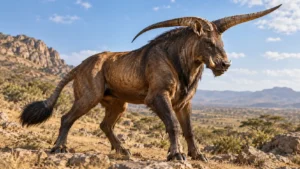
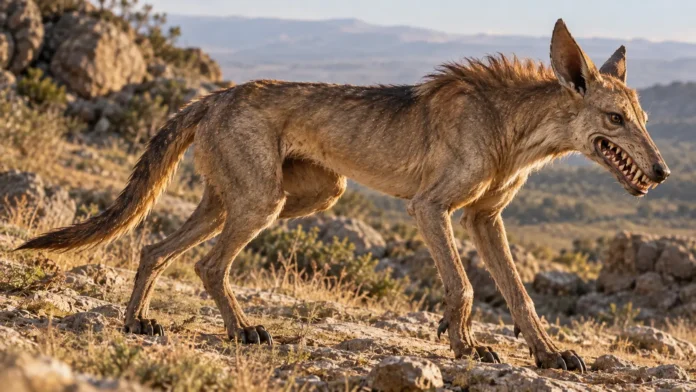
The best-supported starting point is a doglike or wolflike quadruped. Early descriptions characterize the crocotta through comparison with familiar animals, but do not specify a complete arrangement of borrowed body parts.
A restrained canid-like outline fits this evidence better than an elaborate composite monster.
Its teeth provide the strongest distinctive physical emphasis. Diodorus describes exceptional biting power together with an ability to digest what the animal consumes.
The resulting impression is of a predator whose jaws and digestion overcome unusually resistant material, rather than one distinguished primarily by decorative features.
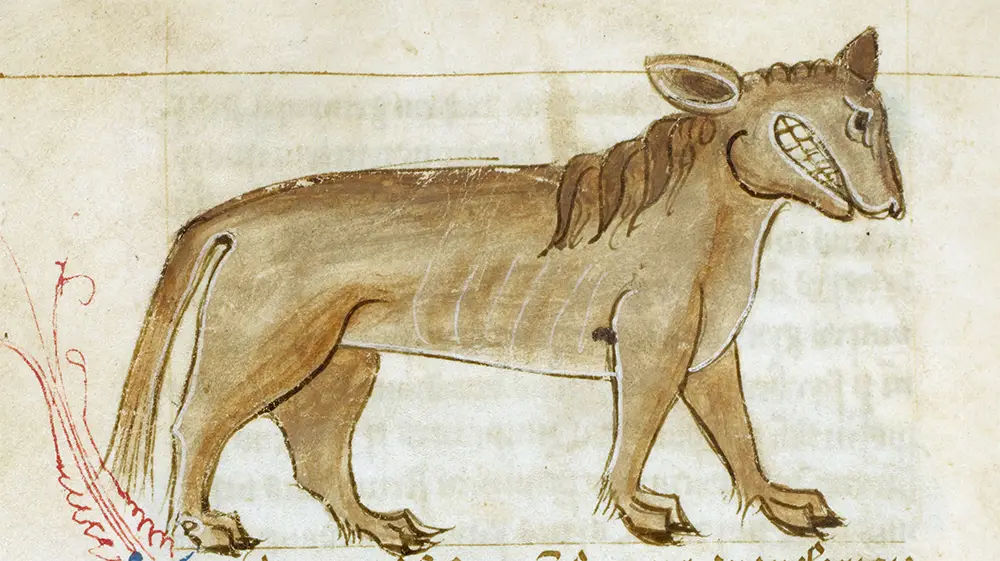
The hyena-and-lioness parentage belongs specifically to Pliny’s separate corocotta account. It suggests a different conception of the animal, but does not supply a complete visual design.
It would therefore be misleading to turn that genealogy into a fixed combination of lion head, hyena torso, and canid limbs.
Porphyry’s identification as an Indian hyena offers another zoological comparison rather than confirmation of the earlier dog-wolf description. It changes both the animal category and geographical setting.
These accounts can be compared, but their differences should remain visible instead of disappearing into a single reconstructed body.
Humanlike speech is a behavioral marvel, not an anatomical feature. The surviving descriptions do not require a human face or mouth to explain it.
Likewise, the early dog-wolf passages establish no consistent coat pattern, coloration, or measurements, leaving the beast’s precise visual appearance less defined than its predatory abilities.
Background Story
The crocotta’s background is the ancient literature of distant animals, where geographical description could preserve both observations and marvels. Ethiopia supplies the principal early setting.
The surviving accounts are Greek and Roman literary representations, however, rather than direct records of a clearly identified local storytelling community.
Animal comparison provided a way to describe an unfamiliar predator. Calling it intermediate between dog and wolf made its general form intelligible through known creatures.
The alternative hybrid genealogy explains unfamiliarity differently, through supposed parentage rather than resemblance. These are distinct ancient approaches to classification.
The voice-luring tradition gives the predator a more intimate advantage over humans. Strength alone does not secure its prey: the animal exploits recognizable speech.
Read as a narrative motif, this makes ordinary acts of trust, such as answering one’s name, the means of exposure to danger.
Aelian’s version places that danger near working woodcutters. The animal listens to their exchanges, learns a man’s name, and calls him away from his companions before killing and eating him.
Aelian nevertheless allows that the account may be fabulous, preserving uncertainty within the narrative itself.
Porphyry’s version changes the social setting: the crocotta imitates someone dear to its intended victim and draws people from their homes. The shared mechanism is recognizable, but the details differ.
Workplace familiarity in one account becomes personal attachment and domestic vulnerability in the other.
These episodes elaborate a speech claim that Diodorus had already rejected centuries earlier. The tradition was therefore shaped by both fascination and criticism.
Its surviving background is not a continuous biography, but a set of animal descriptions and predatory motifs repeatedly reconsidered by different ancient writers.
Famous Folklore Stories
The Crocotta’s surviving narratives are episodes embedded in ancient animal literature, rather than independently titled folktales. Two accounts develop its most distinctive motif: a predator that uses human speech to overcome ordinary caution.
The headings below describe those episodes, not traditional story titles.
The woodcutter lured away
In Aelian’s encounter account, the corocottas listens to woodcutters speaking together and learns their names. Concealed nearby, it calls to one worker in a humanlike voice.
The danger begins not with an attack, but with an apparently recognizable summons from outside the group.
The animal repeatedly calls the selected man, drawing him away from his companions. Once he has been separated from them, it kills and eats him.
Its hunting strategy depends on listening and deception, giving the beast a disturbing intelligence beyond simple physical strength.
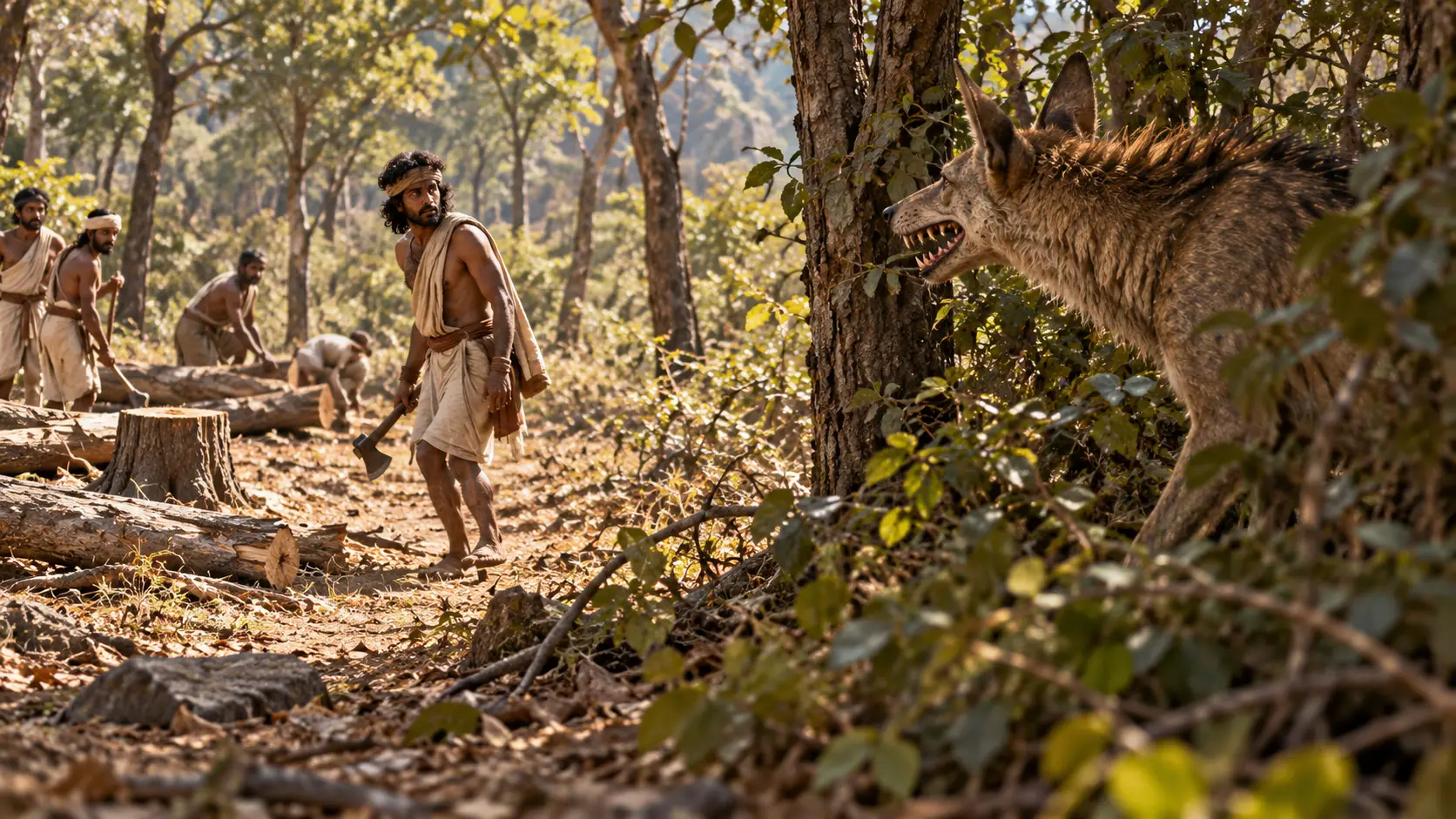
This is a reported encounter narrative, not an authenticated eyewitness testimony or a named traditional folktale. Aelian expressly allows that it may be fabulous.
That qualification matters: the surviving account preserves both the compelling story and an ancient reservation about whether it deserves belief.
The familiar voice outside the home
In Porphyry’s version, the crocotta is an Indian hyena that imitates the voice of someone dear to its intended victim. Rather than learning a woodcutter’s name at a workplace, it exploits a familiar relationship to call a person out of the home.
The victim leaves the shelter of the house in response to the deceptive voice and is killed. This version shifts the narrative emphasis from isolation among workers to misplaced trust in a loved one’s voice.
The common mechanism remains recognition turned into vulnerability.
The Indian setting and explicit hyena identification distinguish this account from the earlier Ethiopian dog-wolf descriptions. They should remain features of Porphyry’s version, not corrections imposed on every account.
The shared voice-luring motif does not establish that all writers imagined an identical animal.
Cultural Impact
The Crocotta occupied the uncertain boundary between reported wildlife and marvelous storytelling. Its presence in geographical and natural-history writing shows that ancient readers encountered it among descriptions of animals and distant regions, rather than only within narratives openly presented as myth.
Its deceptive voice also made it more than an unusually fierce predator. In the surviving episodes, human speech ceases to guarantee human company.
Read as a narrative motif, the animal threatens the trust through which people recognize companions, respond to calls, and move beyond safety.
The name also entered accounts of Roman spectacle. The late antique Historia Augusta reports that animals called corocottae appeared at games under Antoninus Pius.
This documents the name in an imperial entertainment context, but supplies neither an anatomical description nor independent confirmation of the fabulous behaviors.
That distinction limits what the spectacle reference can establish. An animal exhibited under a familiar exotic name need not have possessed every quality attached to that name in literature.
The report cannot settle whether the displayed creatures matched the dog-wolf description or a hyena-associated variant.
For modern interpretation, the Crocotta is therefore useful as an example of unstable ancient animal classification. Its cultural significance lies partly in the coexistence of observation, inherited report, and skepticism.
Treating it as one standardized fantasy species obscures that more complicated historical record.
Similar Beasts
Leucrocotta
The Leucrocotta is a separate marvelous animal listed among Ethiopian beasts in Pliny’s Natural History. Its description combines bodily features and includes an alleged ability to imitate human voices.
Voice imitation makes it the closest comparison here, but Pliny lists the creatures separately. Its more elaborate anatomy should not be transferred to the Crocotta.
Pard
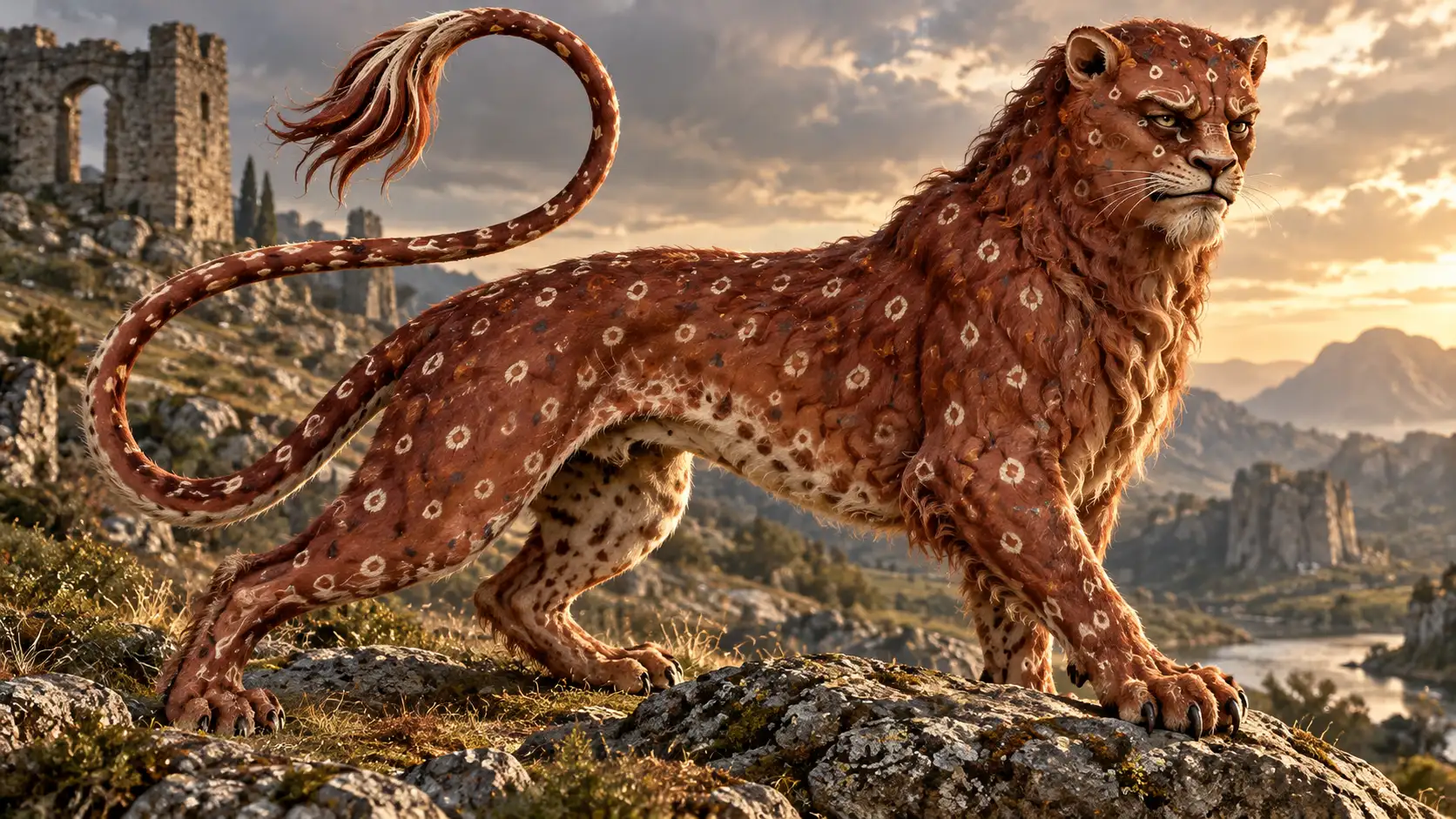
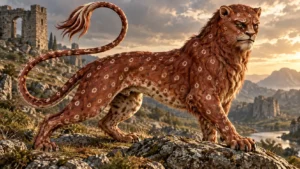
The Pard is a fierce, swift feline of classical animal lore and medieval bestiaries, often associated with the panther or leopard and with literary representations of exotic predators.
Like the Crocotta, it belongs to animal lore where reported wildlife and marvelous qualities overlap. The comparison concerns literary classification, not shared anatomy or voice-luring behavior.
Hulder

The Hulder is a forest spirit of Scandinavian folklore whose encounters with humans involve supernatural attraction and luring. It belongs to a different tradition from Greco-Roman accounts of exotic animals.
Its relevant parallel is the movement of people into the wild through deception or attraction. This resembles the woodcutter episode structurally, without implying a historical connection.
Cù-Sìth

The Cù-Sìth is a giant mythic hound in Scottish lore, associated with death foretold through three barks. Its canine form and dangerous sound provide two points of comparison.
Unlike the Crocotta’s imitated human voice, the hound’s barking functions as an omen. Their similarity concerns threatening animal sound, not an identical power or narrative role.
Scientific or Rational Explanations
A basis in reports of real animals is plausible, but no single zoological identification is securely established by these accounts. The earliest recoverable descriptions present an Ethiopian dog-wolf mixture.
That wording is the starting point for interpretation, not proof of either a recognized species or literal hybrid ancestry.
Descriptions through familiar animals can communicate resemblance without supplying a precise classification. Calling an unfamiliar beast doglike and wolflike may have helped readers imagine it.
Nevertheless, interpreting the wording as comparison rather than parentage remains an explanatory possibility, not something the ancient record conclusively resolves.
The hyena connection has direct ancient support, but belongs to particular versions. Porphyry explicitly calls the animal an Indian hyena, while Pliny separately gives a hyena-and-Ethiopian-lioness parentage.
Neither passage justifies silently replacing the earlier dog-wolf descriptions with a universally accepted hyena identity.
Literal hyena-lion breeding is not a credible zoological explanation. The hybrid account is better retained as evidence of ancient animal lore than treated as a biological pedigree.
Equally, the reports of extraordinary teeth and digestion do not identify a species without more diagnostic evidence.
Skepticism about human speech was already part of the ancient discussion. Diodorus rejected the claim as unbelievable, while Aelian preserved his encounter with an explicit reservation.
Their responses show that fabulous behavior did not pass unquestioned simply because it appeared within an account of animals.
The voice-luring episodes can also be interpreted as narratives about misrecognition and dangerous trust. That reading explains their structure, not their historical origin.
Without further evidence, neither deliberate human-speech imitation nor a specific natural sound mistaken for speech should be presented as an established explanation.
Modern Cultural References
The Crocotta appears in modern folklore podcasts, fantasy gaming, and fiction, but these adaptations should not be treated as evidence for ancient beliefs. Their connections range from direct retellings of the predatory mimic to the use of its name for a game enemy.
Myth Monsters: “Crocotta”, podcast episode (2023)
This dedicated Myth Monsters episode was released on November 16, 2023. It brings the Crocotta into contemporary folklore storytelling, making the ancient reported beast its central subject.
(metacast.app)
Freaky Folklore: “CROCOTTA – The Carnivorous Shapeshifting Deceiver”, podcast episode (2024)
Carman Carrion’s episode was published on April 1, 2024.
It presents Crocotta folklore through horror-oriented storytelling, although its shapeshifting title should not be mistaken for an agreed ancient characteristic.
(podcasts.apple.com)
Final Fantasy III, video game (1990)
This fantasy role-playing game includes an enemy named Crocotta in the Flame Cave, also called the Molten Cave.
The appearance carries the ancient animal’s name into a fictional bestiary.
(shrines.rpgclassics.com)
MetaZoo Trading Card Game: “Crocotta”, trading card
An independent Base Set checklist identifies card 070 as Crocotta. This documents the creature’s inclusion in the trading card game, without establishing its release date or detailed portrayal.
(zeek-the-geek.com)
CROCOTTA: A Story of Fear, Faith, and Redemption, novel (2026)
Patrick Shay Beard’s historical novel is recorded in a 2026 paperback listing.
Its description centers on an ancient terror called the Crocotta, making the creature a fictional narrative subject.
(abebooks.com)
Conclusion
The Crocotta is best understood as an ancient reported Ethiopian animal whose earliest recoverable descriptions compare it to a mixture of dog and wolf. Its surviving tradition does not establish a single, consistent species or composite anatomy.
Later accounts introduce different identities, including Pliny’s hyena-lioness offspring and Porphyry’s Indian hyena. Preserving those distinctions reveals something more interesting than a standardized monster: an animal name around which observations, distant reports, marvelous explanations, and predatory stories accumulated without ever becoming one fully coherent tradition.
Its most memorable symbolic role emerges in the voice-luring episodes, where familiar speech becomes a means of deception rather than reassurance. The danger lies not simply in encountering a predator, but in trusting what sounds human.
Yet ancient skepticism belongs to this legacy too: the speech claims were questioned, not universally accepted. Modern retellings and games continue to reuse the Crocotta, while its historical importance rests in that unresolved boundary between animal description and fabulous narrative, and between reported knowledge and the appeal of an extraordinary story.
Further Reading
Aelian, On the Nature of Animals 7.22, Attalus
Aelian says the animal learns workers’ names and speech, calls one man repeatedly in a humanlike voice, leads him away from his companions, and kills and eats him.
(attalus.org)
Porphyry, On Abstinence from Animal Food 3, Tertullian
Porphyry describes an Indian hyena called crocotta that imitates the voice of someone dear to its intended victim and calls people out of their homes, where they are.
(tertullian.org)
Natural History, Book 8, LacusCurtius, University of Chicago
Provides Pliny’s Latin text and shows the dog-wolf passage and the separate hyena-lioness account in context.
(penelope.uchicago.edu)
Geography, Book 16, Chapter 4, LacusCurtius, University of Chicago
Presents Strabo’s passage attributing the wolf-dog description to Artemidorus.
(penelope.uchicago.edu)
Library of History, Book 3, Chapters 35–48, LacusCurtius, University of Chicago
Gives Diodorus’ Ethiopian account and his explicit skepticism about human-speech claims.
(penelope.uchicago.edu)