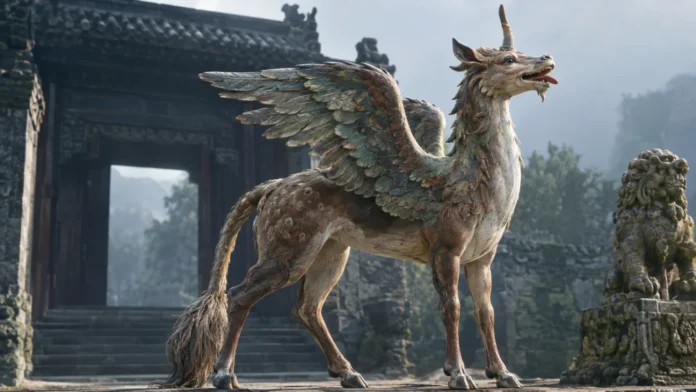
Overview of the Ancient China Period
Ancient China is not a single fixed period; historians commonly use the term for early Chinese states from the Shang dynasty through the Han empire, although boundaries vary by scholarly convention.
For mythological history, the Shang, Zhou, Qin, and Han periods provide important evidence because inscriptions, bronzes, and written works document changing religious ideas across several centuries.
Shang civilization, dated approximately 1600–1046 BCE, left oracle-bone inscriptions that record divination concerning ancestors, royal decisions, weather, and warfare, making it central to early Chinese religious evidence.
Zhou rule followed the Shang, while later states developed competing philosophical and ritual traditions; Qin unification and Han government subsequently supported wider circulation of shared cultural concepts.
Myth and supernatural belief mattered within these societies because people interpreted political authority, ancestry, natural forces, and human misfortune through relationships between visible life and unseen powers.
Cultural and Religious Worldviews
Dominant Belief Systems
Shang inscriptions attest to divination directed toward ancestral powers and high divine forces, offering historical evidence for religious practices without documenting a single, uniform system of belief.
During Zhou and later periods, concepts such as Heaven and ancestral authority informed political and ethical thought, though their meanings changed across texts, communities, and historical circumstances.
Yin-yang and correlated cosmological schemes became influential in early imperial thought, organizing relationships among natural processes; they should not be treated as a complete description of every community’s beliefs.
Daoist, Confucian, and other intellectual traditions developed in distinct historical settings, and later religious institutions cannot be projected unchanged onto Shang or early Zhou society.
Role of Myth in Daily Life
Mythic accounts could explain origins, dynastic authority, or unusual natural events, but surviving sources rarely reveal how ordinary people understood any particular story in daily life.
Ancestor practices connected family continuity with obligations to the dead, as indicated by Shang divination records; this evidence supports a specific historical connection rather than a universal belief.
Stories about exemplary rulers and culture heroes later helped frame ethical conduct, especially in transmitted classical literature, although the dates and earlier forms of many narratives remain uncertain.
Mythological Beasts and Supernatural Entities
Common Types of Mythical Creatures
Chinese traditions contain dragons associated with rain, water, and authority, but their meanings differ across sources and periods rather than forming one stable ancient definition.
Birdlike beings, including the phoenix tradition, appear in auspicious and cosmological contexts; surviving references do not establish one consistent creature description for all ancient communities.
Texts and later compilations describe anomalous animals, spirits, and transformed beings, reflecting interest in boundaries between human, animal, and supernatural categories rather than a standardized bestiary.
The taotie motif on Shang and Zhou bronzes is often discussed as an animal-like mask, but its identity and meaning remain disputed among scholars.
Ancient China is essential to classifying these motifs because their documented forms arise within Chinese archaeological objects and textual traditions; removing that context would obscure their specific historical evidence.
Symbolism and Meaning
Dragon imagery acquired associations with water and rain in multiple Chinese contexts, making it relevant to environmental powers; particular meanings must still be established from each source.
Some literary and political settings connect dragons with rulers or extraordinary authority, but this association developed historically and cannot safely be assigned to every dragon image.
Auspicious creatures could mark ideal order or favorable omens in certain texts, while their appearance in art alone does not prove a specific shared interpretation.
The taotie’s repeated presence on ritual bronzes shows its formal importance, yet no verified sources describe a single universally accepted explanation of its symbolism.
Folklore Traditions and Storytelling
Oral and Written Transmission
Oral transmission almost certainly shaped early narratives, but the surviving record rarely identifies individual storytellers or preserves the exact performance settings of ancient tales.
Oracle-bone inscriptions provide contemporary evidence for divination, not a comprehensive collection of myths; their brief records differ substantially from later literary narratives.
Texts compiled or transmitted in later periods preserve stories about ancient rulers and supernatural events, requiring researchers to distinguish narrative content from the date of surviving evidence.
Bronze inscriptions and archaeological imagery offer material evidence for religious concepts, but they cannot independently recover the spoken explanations attached to particular motifs.
Regional Variations
Early Chinese regions differed in political organization and local religious practice, so mythological evidence from the Central Plains cannot automatically represent every community.
Chu-associated poetry preserves distinctive divine and spirit imagery, contrasting with the bureaucratic and ancestral emphasis prominent in some other surviving materials.
Regional comparison remains constrained by uneven preservation: texts and artifacts survive in some areas more abundantly, leaving many local traditions poorly documented.
Relationship Between Humans and the Mythical World
Fear, Protection, and Reverence
Supernatural powers could be approached through divination when rulers sought guidance about uncertain events, as Shang inscriptions specifically document royal consultation with ancestral forces.
Protective interpretations of creatures occur in particular historical contexts, but images cannot by themselves establish whether viewers regarded them as guardians, threats, or decorative symbols.
Unusual beings in narrative literature could express moral or cosmological concerns, although interpretations depend on each text’s date, genre, and transmission history.
Influence on Art and Material Culture
Animal-like motifs on Shang and Zhou bronzes demonstrate that supernatural or symbolic imagery entered elite material culture, especially in objects associated with formal ancestral settings.
Archaeological designs should not be treated as direct illustrations of written myths, since many objects predate surviving literary descriptions or lack explanatory inscriptions.
Later imperial art expanded established creature imagery across objects and buildings, but such evidence belongs to changing historical contexts rather than one continuous ancient style.
Transition and Legacy of the Ancient China Period
Han-era writing gathered and adapted older traditions, helping preserve narratives whose earlier forms are often inaccessible to historians today.
As religious institutions and philosophical schools changed, supernatural beings acquired new interpretations; continuity therefore coexisted with substantial reinterpretation across successive periods.
Later Chinese folklore inherited ancient creature names and motifs, but the persistence of a figure does not demonstrate unchanged belief from Shang times onward.
Historical Reliability and Interpretation
Evidence comes from uneven sources, including inscriptions, excavated objects, and texts transmitted later; each source type answers different questions about ancient belief.
Oracle bones document particular divinatory acts, whereas literary works preserve developed narratives; neither source category provides transparent access to every community’s worldview.
Scholars distinguish historical evidence for a belief from proof that a supernatural event occurred, since inscriptions document claims and practices rather than verifying supernatural causes.
Creature identifications remain uncertain when images lack explanatory labels, and no verified sources describe this for every motif or regional context.
Responsible interpretation therefore treats ancient Chinese mythology as historically situated evidence, separating documented traditions from later reconstructions and acknowledging gaps where surviving sources cannot resolve meaning.