Introduction
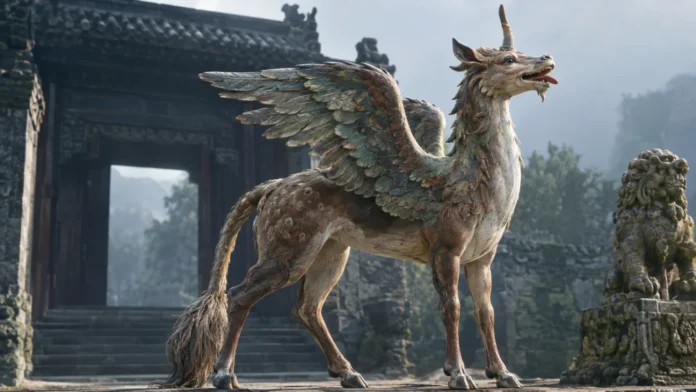
Tianlu is an auspicious creature in Chinese tradition, associated with deer-like supernatural animals and horned guardian beasts. Its name appears in historical commentary, omen literature, and discussions of funerary art.
These traditions overlap, but they do not describe one completely uniform creature with a single appearance or biography.
The clearest early textual classification identifies Tianlu as the one-horned form of an animal called taoba or fuba, described as resembling a deer with a long tail. This distinction belongs to Meng Kang’s commentary on the Book of Han, rather than to the historical account itself.
A Han bronze catalogued as Tianlu provides a concrete artistic counterpart: a deer-like quadruped with one horn and wings. Related stone tomb guardians can look more feline or leonine, although their identification as Tianlu, Bixie, or Qilin remains disputed in specialist scholarship.
Tianlu therefore matters both as a favorable supernatural sign and as part of China’s protective animal imagery. Understanding it requires separating textual descriptions from modern sculpture labels, while keeping the auspicious deer tradition distinct from the winged guardian form and later associations with Pixiu.
History/Origin
An important textual foundation lies in the Western Regions account of the Book of Han, completed around the early second century CE. Its description of Wuyishanli includes taoba among the region’s products or animals.
The passage places the animal within geographical reporting, not within a developed mythological story.
The explicit Tianlu classification comes from Meng Kang, a commentator of the Wei period in the third century. His explanation describes taoba, also called fuba, as deer-like and long-tailed, suggesting that the one-horned form may be Tianlu and the two-horned form may be Bixie the one-horned form Tianlu and the two-horned form Bixie.
The distinction thus belongs to a later interpretive layer.
This chronology prevents the commentary from being treated as the original wording of the Han account. It also leaves the creature’s ultimate origin unresolved: an animal reported from a western region and a supernatural guardian represented in Chinese art are connected here through interpretation, not through a documented origin narrative.
Material evidence supplies another strand. A Han-dynasty bronze unearthed at Jiaozuo, Henan, in 1989 is catalogued by the Henan Museum as a Tianlu with carved linear designs.
Its single horn, wings, and deer-like form support that identification, although the catalog title is a modern interpretation of an ancient object.
Winged guardian beasts also appear in Han and Southern Dynasties funerary sculpture. By the Southern Dynasties, from the fifth to sixth centuries, monumental animal figures formed part of tomb approaches.
Their surviving forms are well documented, but assigning the names Tianlu, Bixie, and Qilin consistently has proved difficult.
The uncertainty affects individual discoveries as well as broad classifications. A National Museum of China study of a Han tomb sculpture from Ya’an, Sichuan, questions its conventional Tianlu-Bixie identification and proposes paired Azure Dragon imagery instead.
Similar-looking supernatural beasts therefore cannot automatically be assigned the same historical identity.
Name Meaning
The spelling 天禄 combines tian, meaning “heaven” or “heavenly,” with lu, meaning an emolument or stipend. “Heavenly emolument” and “heavenly stipend” are therefore useful literal translations.
They convey a favorable association with provision or reward, rather than specifying the creature’s anatomy.
Another spelling, 天鹿, replaces the second character with the word for “deer,” also pronounced lu. This form can be translated as “heavenly deer.”
It is especially relevant to the deer-like creature of omen literature, but should not become the sole English definition for every historical use of Tianlu.
The two written forms share a pronunciation while expressing different meanings. That overlap helps explain why descriptions of a heavenly deer and an auspicious guardian can be discussed together.
It does not establish that every author or sculptor understood them as precisely the same being.
Likewise, the emolument gloss does not by itself prove an ancient wealth-attracting function. In Meng Kang’s classification, the decisive feature is one horn, contrasted with Bixie’s two.
Neither the name’s favorable meaning nor its deer spelling justifies identifying Tianlu automatically with the modern Pixiu wealth charm.
Appearance
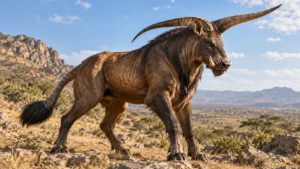
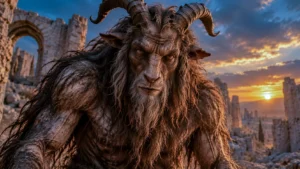
The strongest starting point is a deer-like, long-tailed animal distinguished by a single horn. This is the Tianlu form within Meng Kang’s explanation of taoba or fuba.
The description is brief: it provides a basic comparison and a horn-count distinction, rather than a detailed inventory of supernatural features.
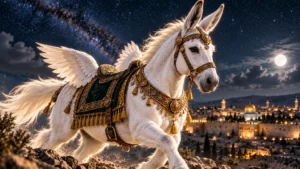
The Han bronze catalogued by the Henan Museum adds wings to that deer-like body. Its head is raised, its eyes are open, and its tongue protrudes; a tail hangs downward.
These details belong to a particular surviving representation, making it a firmer visual reference than a generalized modern composite.
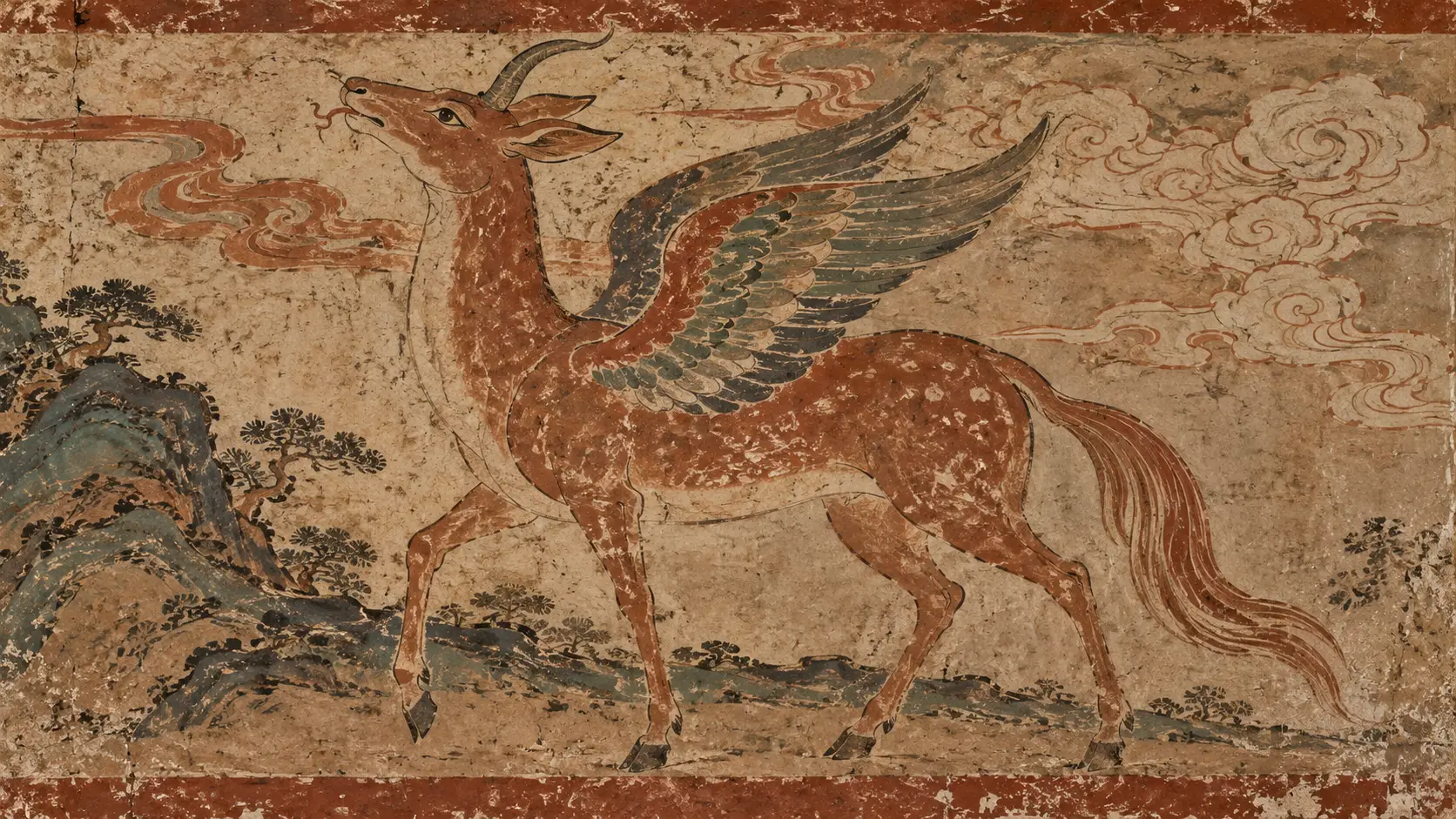
The combination of wings and one horn marks this representation as something beyond an ordinary deer. Its alert head and exposed tongue also distinguish it from a simple naturalistic animal figure.
However, the sculpture alone does not establish narrative powers, such as particular methods of flight or combat.
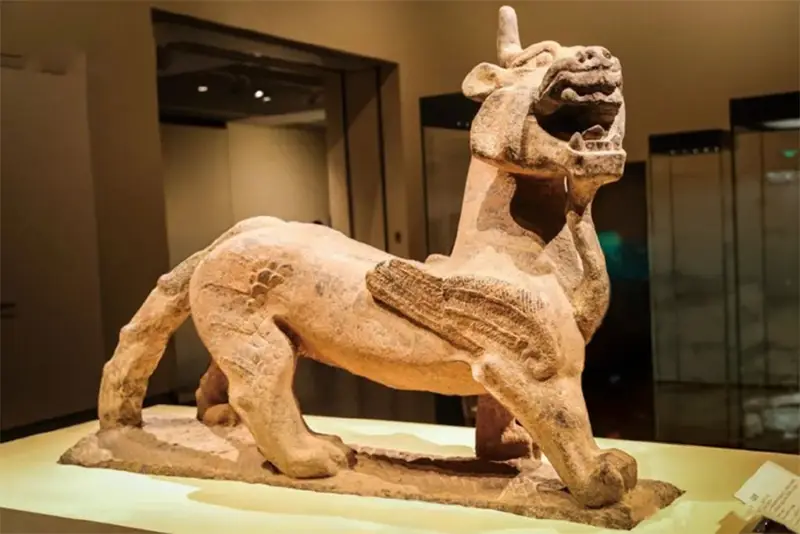
Related stone guardians introduce a different visual emphasis. Some are more feline or leonine than the catalogued bronze, while retaining wings and horns.
Specialist discussion of Southern Dynasties tomb sculpture records competing Tianlu, Bixie, and Qilin identifications, so horn count cannot serve as an infallible rule across all surviving monuments.
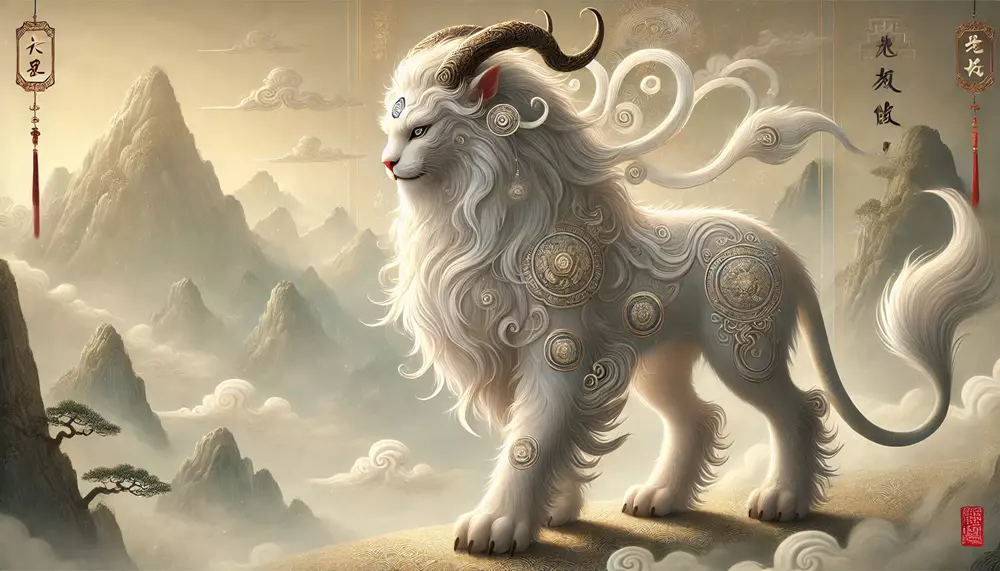
Omen literature preserves another appearance tradition, presenting Tianlu as a pure or benevolent auspicious animal, sometimes associated with a white deer. That coloration belongs to the omen-text variant.
It should not be transferred automatically to bronze or stone guardians, whose identification rests on different kinds of evidence.
Background Story
Tianlu’s background is better understood through cultural roles than through a personal life story. No securely attested early encounter tale or named narrative episode was verified in the available evidence.
The figure instead emerges through geographical commentary, auspicious-animal descriptions, and the interpretation of protective objects.
The guardian tradition connects Tianlu with vulnerable boundaries. Gates and tomb approaches were places where protective animal imagery could ward off harmful influences.
In this context, a horned, winged beast expressed supernatural protection at an entrance, rather than acting as a character in a sequence of adventures.
The omen tradition gives the creature a different significance. Passages preserved from the Song shu and Ruiying tu associate Tianlu with purity, benevolence, and a ruler’s virtue.
Its appearance functions as a favorable sign of moral government, rather than simply as the arrival of an unusual animal.
These roles share an auspicious character without becoming interchangeable. A tomb guardian protects a particular threshold, whereas an omen animal signifies favorable conditions in the political and moral world.
Their coexistence helps explain the name’s broad associations, but does not prove a single original myth behind every representation.
Later popular accounts often merge Tianlu with Pixiu and attach a story about punishment by the Jade Emperor, gold consumption, and an inability to excrete. That narrative is not established as an early Tianlu tradition by the historical evidence considered here.
The better-supported background remains auspicious symbolism and supernatural guardianship.
Documented Tianlu Traditions
No securely attested named Tianlu folktale was verified in the available evidence. The surviving material instead preserves auspicious appearances and protective imagery.
These are documented motifs, not episodes from a continuous biography, and the textual deer tradition should remain distinguishable from the sculptural guardian tradition.
The Auspicious Animal under Virtuous Rule
In omen literature, Tianlu appears as a pure or benevolent creature whose presence signifies virtuous government. The narrative pattern concerns the relationship between moral authority and the natural world: an extraordinary animal becomes a visible indication that a ruler’s conduct accords with a larger order.
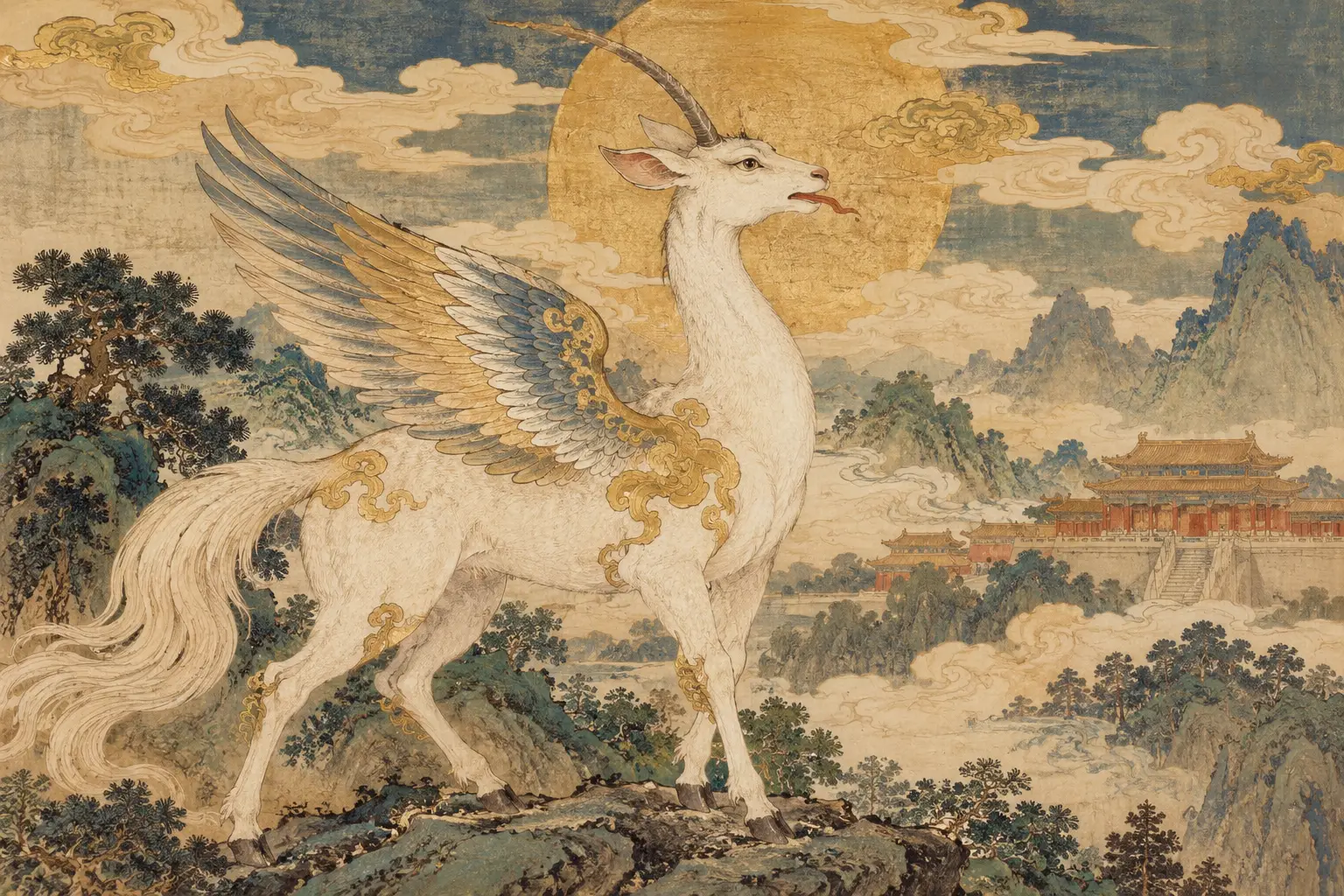
Passages preserved from the Song shu and quotations attributed to the Ruiying tu associate this auspicious being with purity and, in some versions, a white deer. These brief notices establish an omen motif, rather than a detailed encounter involving named witnesses or a developed plot.
The Beast Guarding an Entrance
A separate protective motif belongs to gates and tomb approaches. Here, the supernatural animal’s role is to ward off harmful forces at an entrance.
Its significance rests chiefly in placement and appearance, rather than in a surviving story about a particular battle or rescue.
The Han bronze catalogued as Tianlu by Henan Museum provides a concrete example of the winged, horned guardian interpretation. It supports discussion of protective imagery, but does not supply an accompanying folktale.
A sculpted guardian should not be treated as evidence for an otherwise unattested adventure.
Cultural Impact
Tianlu’s historical importance is especially visible in material culture. A supernatural animal could express protection and auspiciousness without requiring an extensive narrative.
Bronze objects and monumental guardian sculpture made such meanings tangible, allowing the creature to function through its form and setting.
In funerary settings, the guardian interpretation placed supernatural protection beside the commemorative purpose of a tomb. The approach to the burial became more than an ordinary passageway.
Its animal imagery communicated that the entrance belonged to a space requiring special protection.
The omen tradition gave Tianlu a different cultural role: it connected extraordinary animal appearances with the quality of government. This was not simply a promise of individual good luck.
The creature’s auspiciousness concerned a ruler’s virtue and the condition of the wider political order.
Modern scholarship has complicated familiar museum and heritage labels. In his survey of Southern Dynasties tomb sculpture, Xu Zhiqiang discusses competing Tianlu, Bixie, and Qilin identifications.
Such disagreement matters because a convenient modern name can conceal uncertainty about what an ancient sculpture originally represented.
Modern popular usage sometimes merges Tianlu with Bixie and Pixiu, emphasizing wealth attraction over the older textual and funerary distinctions. This is a reinterpretation, not a reliable guide to every ancient object.
Historical comparison remains most useful when names, periods, and functions are considered separately.
Similar Beasts
Qilin

The Qilin is an auspicious Chinese creature associated with prosperity, gentleness, and virtuous leadership. Its composite appearance often combines a deer-like body with antlers and dragon-like features.
It resembles Tianlu through auspicious symbolism and overlapping sculpture labels. Nevertheless, identifying a particular tomb beast as Qilin rather than Tianlu remains a historical question.
Bixie
Bixie is Tianlu’s explicitly named counterpart in Meng Kang’s commentary transmitted with the Book of Han. That classification distinguishes two-horned Bixie from the one-horned Tianlu form.
Both names also occur in discussions of funerary guardians. Their close relationship does not make horn count a universally dependable identification rule for surviving sculptures.
Fenghuang

The Fenghuang is a Chinese mythological bird associated with harmony and virtue. Its cultural significance concerns auspicious order, rather than the horned quadrupedal form represented by Tianlu.
The comparison is symbolic rather than anatomical: both can express benevolent order. It does not establish shared origins, identical ritual functions, or interchangeable historical names.
Bai Ze
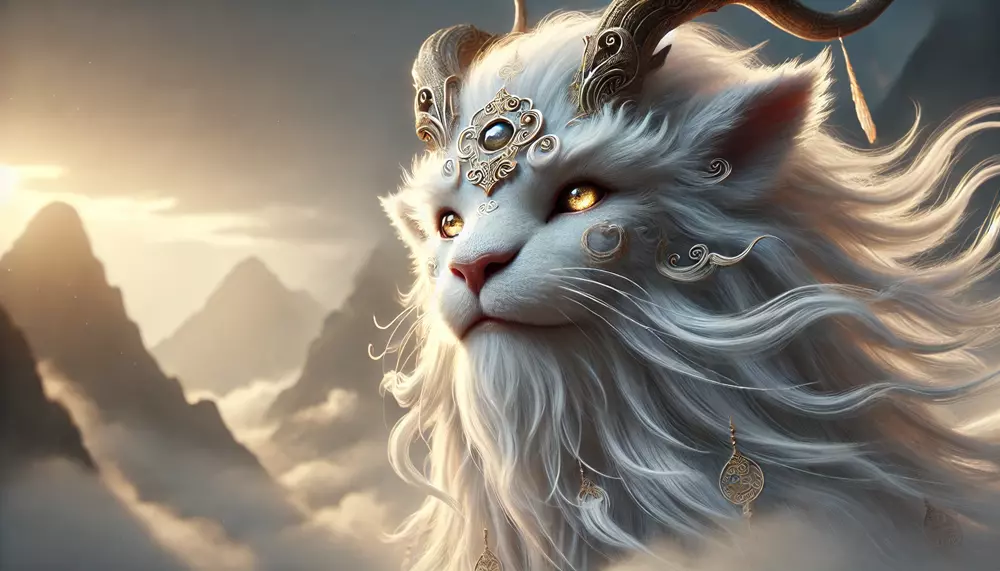
Bai Ze is a wise supernatural beast in Chinese tradition, associated with knowledge of otherworldly beings and advice for warding off evil. Its appearance is often lion-like.
Its protective role offers a useful parallel to Tianlu’s guardian imagery. Bai Ze emphasizes supernatural knowledge, whereas Tianlu’s documented protection is expressed through guardian placement.
Azure Dragon (Qinglong)
The Azure Dragon is a distinct celestial and directional guardian in Chinese symbolism. It belongs to a different representational framework from the auspicious beast named Tianlu.
A National Museum of China study reinterprets paired beasts from a Ya’an Han tomb as Azure Dragon imagery, questioning their conventional Tianlu-Bixie identification.
Religion/Ritual
The clearest supported religious function is protective placement at gates or tomb approaches. In this context, Tianlu belongs to imagery intended to ward off evil.
That function is more securely documented than any standardized sequence of prayers, offerings, or ceremonies devoted specifically to the creature.
The auspicious-deer tradition belongs to the interpretation of omens. An appearance associated with complete royal virtue could be understood as a favorable sign.
This differs from placing a guardian beside an entrance: one interprets an extraordinary occurrence, while the other gives protection a durable material form.
The available record does not establish a uniform Tianlu cult or a common system of offerings, festivals, and taboos. Protective objects and auspicious-animal notices demonstrate religious significance, but they should not be expanded into an organized worship tradition without direct evidence.
Scientific or Rational Explanations
Tianlu is a mythological and art-historical subject, not a zoologically verified species. The most productive rational questions concern how the name was used, how supernatural animals were represented, and why particular forms acquired protective or auspicious significance within different historical settings.
Textual layering explains part of the apparent inconsistency. The Book of Han mentions taoba in its Western Regions account, while Meng Kang’s later commentary supplies the Tianlu-Bixie horn distinction.
Treating these as one contemporaneous statement would obscure how the classification was transmitted.
A related problem arises when textual descriptions are used to identify sculptures. A rule distinguishing one horn from two can be valuable evidence, but it cannot automatically settle every image.
The disagreement surrounding Southern Dynasties guardians shows that visible resemblance and historical naming are separate questions.
The Ya’an sculpture study illustrates a more contextual method. Its proposed Azure Dragon interpretation challenges an inherited Tianlu-Bixie label through iconographic comparison.
The substantive lesson is not that all such guardians are dragons, but that individual objects require investigation rather than identification by familiar name alone.
Real animals and circulating artistic forms may have contributed to supernatural-beast imagery. However, the evidence does not establish a single natural prototype for Tianlu.
A deer-like description or feline-looking sculpture is insufficient by itself to prove descent from one species or one imported model.
The omen tradition also admits a historical interpretation: extraordinary animals supplied a language for expressing moral judgments about rulership. This explains their political significance without requiring zoological confirmation.
It remains distinct from explaining tomb guardians, whose protective meaning depended on their placement and visual presentation.
Modern Cultural References
You Shou Yan (Fabulous Beasts / 有兽焉), comic
The Chinese comic You Shou Yan makes Tianlu, nicknamed Pipi, one of its major recurring characters.
The series deliberately identifies him as a Pixiu, illustrating the modern tendency to merge Tianlu with the broader Pixiu tradition rather than preserve older distinctions.

The official Bilibili Manga catalogue contains numerous Tianlu-centered chapters, including “Tianlu’s Growth,” “Tianlu Saves Himself,” and later stories involving Tianlu and his brother Bixie. The character therefore represents one of Tianlu’s most substantial appearances in contemporary popular storytelling.
Official Bilibili Manga series
Shenxian Dao 3 (神仙道3)
In 2026, the role-playing game Shenxian Dao 3 introduced One-Horned Tianlu as a new spirit companion.
The developers explicitly describe it as an auspicious, wealth-associated beast and emphasize the single horn, directly reusing one of Tianlu’s oldest distinguishing characteristics.
The adaptation combines that historical physical feature with the much later popular interpretation of Tianlu as a bringer of fortune, rank, and prosperity. It provides a clear example of ancient iconography being blended with contemporary Chinese wealth symbolism.
Official Shenxian Dao 3 announcement
Zao Meng Wushuang (造梦无双)
The action role-playing game Zao Meng Wushuang introduced Tianlu as an obtainable auspicious mount in 2024.
Its official announcement also pairs Tianlu directly with Bixie and presents Bixie as an altered form derived from the Tianlu mount.
This treatment loosely echoes the historical relationship between the two names while transforming it into a fantasy-game evolution system. It should therefore be understood as creative adaptation rather than evidence for an ancient belief that Tianlu literally transformed into Bixie.
Official Zao Meng Wushuang announcement
Gardenscapes, Chinese edition
The Chinese edition of Gardenscapes introduced a pair of Pixiu-themed pets during its 2024 Lunar New Year material.
The official announcement names the male Pixiu Tianlu and the female Bixie, deliberately presenting the two historical beast names as paired modern characters.
This example clearly demonstrates contemporary popular conflation. Rather than maintaining the cautious Tianlu-Bixie distinctions found in historical commentary and archaeological scholarship, the game incorporates both names into the familiar modern Pixiu tradition of wealth protection and good fortune.
Official Gardenscapes announcement
Crystal Mythical Creature, Tianlu, Commander of Peace
LIULI Crystal Art created Tianlu, Commander of Peace, a contemporary crystal sculpture centered explicitly on the mythical creature.
The company presents Tianlu through modern feng shui symbolism, connecting the beast with auspiciousness, confidence, harmony, protection, and favorable cosmic order.
Its interpretation belongs to contemporary decorative culture rather than ancient textual evidence. That distinction makes the sculpture especially useful for showing how Tianlu continues to evolve visually and symbolically while retaining its broad association with protection and favorable fortune.
LIULI Crystal Art Tianlu sculpture
Conclusion
Tianlu is best understood as a historically attested Chinese auspicious being whose identity developed across textual and visual traditions. Meng Kang’s commentary distinguishes a one-horned Tianlu from a two-horned Bixie, while a catalogued Han bronze gives the name a concrete, winged, deer-like form.
Yet this classification cannot identify every surviving guardian sculpture automatically. The separate omen tradition, including the auspicious deer, further shows that the name carried more than one related conception rather than a single fixed appearance or biography.
The figure’s lasting importance lies in its association with protection, auspiciousness, and ideals of beneficial order. Tomb guardians and favorable omens express these themes differently, while modern comics and artworks reshape them for new audiences.
Recognizing those differences makes Tianlu more intelligible, not less significant. Its documented history should remain distinct from unsupported claims that every Tianlu is simply a Pixiu or that later wealth-charm narratives explain its ancient origins.
The continuing appeal of the name rests alongside, rather than erases, its historical ambiguity.
Further Reading
Book of Han (Hanshu), Western Regions, Ban Gu and Ban Zhao, completed 111 CE, Chinese Text Project.
Primary source for taoba and Meng Kang’s later commentary connecting horn number with Tianlu and Bixie.
Book of Song (Song shu), Treatise on Auspicious Signs, Shen Yue, 488 CE, Chinese Text Project.
Primary omen source describing Tianlu as a radiant spiritual beast appearing when a ruler’s Way is complete.
Book of Song, Auspicious Signs
Yiwen Leiju, Volume 99: White Deer, Ouyang Xun and collaborators, 624 CE, Chinese Text Project.
Preserves the Ruiying tu tradition linking Tianlu, pure goodness, white deer, and benevolent government.
Divine Beast Tianlu with Carved Linear Designs, Henan Museum, 2022.
Museum catalogue for the Han bronze Tianlu, including provenance, measurements, form, wings, horn, and guardian interpretation.
Henan Museum Tianlu
一九五四年洛阳孙旗屯出土石兽的定名与年代 by Li Chongrong, National Museum of China, 2020.
Examines the Sunqitun winged beasts, Tianlu-Bixie naming systems, inscriptions, and their Eastern Han dating.
National Museum Sunqitun study
四川雅安汉墓出土“双兽搏斗”石雕及相关问题 by Wang Yu, National Museum of China Journal, 2012.
Reassesses Ya’an funerary sculptures and demonstrates why traditional Tianlu-Bixie labels require contextual archaeological analysis.
National Museum Ya’an study