Overview of the Ancient Israel Period
Ancient Israel commonly denotes the Iron Age communities and kingdoms of Israel and Judah, especially from approximately the twelfth through sixth centuries BCE. Boundaries vary across historical usage.
These societies developed within the southern Levant, a region connected to Egypt, Phoenicia, Aram, and Mesopotamian powers. Such contact helps contextualize shared imagery without making neighboring traditions identical.
Political change included Israelite kingdoms, Assyrian expansion, Babylonian conquest, and displacement from Judah. These events shaped surviving textual traditions, although written accounts do not document every community’s beliefs.
Mythic language mattered because people interpreted weather, animals, illness, fertility, and political danger through religious frameworks. Surviving evidence reveals selected expressions, not a complete inventory of popular belief.
Cultural and Religious Worldviews
Dominant Belief Systems
Judahite and Israelite religious traditions increasingly centered exclusive devotion to Yahweh, as represented in biblical writings. The timing and social reach of this development remain subjects of scholarly debate.
Archaeological evidence indicates religious practice was not always uniform. Inscriptions and figurines provide evidence of varied devotion, but their precise meanings and relationship to official traditions remain uncertain.
The biblical cosmos includes heavens, earth, and a domain of the dead. This structure reflects theological language preserved in texts, rather than a single systematically documented ancient cosmology.
Sea and wilderness imagery could represent forces beyond ordinary human control. Biblical poetry sometimes depicts divine authority over these forces, drawing on regional imagery while assigning it distinct theological roles.
Role of Myth in Daily Life
Stories about origins, ancestors, and divine judgment helped communities express shared identity. Their use in everyday settings is difficult to reconstruct because evidence rarely records ordinary storytelling directly.
Legal and prophetic texts connect conduct with communal consequences, including justice, loyalty, and social responsibility. These writings disclose normative ideals, not proof that every person followed them consistently.
Seasonal dependence on rain and harvest gave natural processes practical importance. Biblical appeals concerning drought or fertility show theological interpretation of environmental vulnerability, without documenting every associated local custom.
Mythological Beasts and Supernatural Entities
Common Types of Mythical Creatures
Leviathan appears in biblical poetry as a formidable sea creature beyond human mastery. Its imagery draws on broader ancient Near Eastern sea-combat motifs, though biblical texts reshape their theological emphasis.
Behemoth, described in Job, represents immense terrestrial animal power. The passage’s poetic form complicates identification with a specific zoological species, and no single interpretation is established.
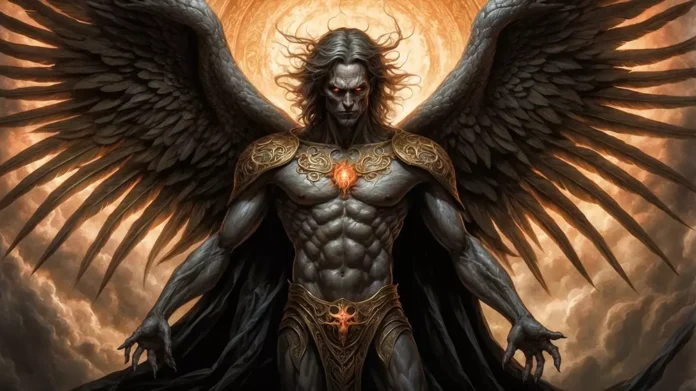
Seraphim appear in Isaiah’s vision as heavenly beings associated with divine presence. Their depiction belongs to a textual visionary setting, so it should not be treated as ordinary zoological description.
Other biblical passages refer to spirits or harmful supernatural forces, but terminology and context differ. Translating these terms into one stable creature category can obscure their varied textual functions.
Symbolism and Meaning
Leviathan’s sea setting makes it an image of power inaccessible to human control. In some passages, divine mastery over it communicates cosmic sovereignty rather than a natural history claim.
Behemoth’s enormous strength emphasizes the limits of human understanding in Job. The text places the creature within an argument about creation, rather than identifying it simply as an enemy.
Seraphim signify proximity to holiness within Isaiah’s vision. Their presence marks the scene as an encounter with divine majesty, not evidence for a widespread popular beast tradition.
Folklore Traditions and Storytelling
Oral and Written Transmission
Oral performance probably contributed to the formation and circulation of Israelite stories, but specific performers and transmission settings are seldom recoverable. Claims about exact routes remain uncertain.
Biblical writings preserve poetry, law, narrative, and prophetic material that underwent composition and transmission over time. Their surviving forms are literary witnesses, not unmediated transcripts of oral performance.
Inscriptions from the region offer evidence for names, language, and religious expression. They rarely provide detailed beast narratives, limiting comparisons between epigraphic evidence and biblical literary imagery.
Later manuscript copies preserve biblical texts beyond the Iron Age. They are crucial witnesses to textual transmission, but cannot automatically establish the wording or interpretation of every earlier period.
Regional Variations
Israel and Judah shared linguistic and religious traditions, yet their political histories and local practices differed. Evidence is uneven, making precise regional maps of folklore difficult to establish.
Phoenician and Aramaean communities had their own religious vocabularies and visual traditions. Similar regional motifs do not prove identical meanings, so comparisons require attention to each culture’s evidence.
Mesopotamian and Egyptian accounts provide broader comparative contexts for cosmic monsters and divine power. Their stories belong to distinct literary settings and should not be classified as Israelite folklore.
Relationship Between Humans and the Mythical World
Fear, Protection, and Reverence
In biblical poetry, dangerous creatures can express threats that exceed human capacity. Their literary function varies by passage, so they cannot all be classified as protective or hostile beings.
Visionary beings such as Isaiah’s seraphim evoke reverence through their association with divine presence. This textual role differs from a guardian figure protecting an ordinary household or traveler.
Some biblical passages condemn divination or consultation with spirits, revealing concern about supernatural practices. Such prohibitions document authors’ boundaries and anxieties, not the prevalence of every prohibited activity.
Influence on Art and Material Culture
Levantine material culture includes composite and animal imagery, but identifying a particular figure as an Israelite mythological beast requires contextual evidence. Motif resemblance alone is insufficient.
Ivories, seals, and architectural decoration from the region display varied visual conventions. Their images may reflect courtly, commercial, or religious settings, and interpretation often remains contested.
Biblical descriptions offer textual evidence for supernatural imagery, whereas archaeological objects rarely provide captions explaining their meaning. Linking objects directly to named beings therefore requires caution.
Transition and Legacy of the Ancient Israel Period
Exile and Persian-period developments reshaped Judean religious life and textual preservation. The transition was neither uniform nor instantaneous, and continuity varied among communities and institutions.
Jewish writings of later periods expanded and reinterpreted earlier supernatural vocabulary. Such developments belong to distinct historical contexts, rather than demonstrating that every later conception existed in Iron Age Israel.
Christian traditions inherited Israelite scriptures and reinterpreted their imagery within new theological frameworks. This reception history is influential, but it should remain distinct from ancient Israelite beliefs.
Historical Reliability and Interpretation
Biblical texts are central sources for Israelite supernatural imagery, yet their genres and composition histories vary. Poetry, narrative, and prophecy cannot be read as equivalent historical records.
Archaeology can illuminate settlement, objects, and inscriptions, but it seldom verifies a supernatural event. Material evidence supports historical context rather than proving theological claims as factual occurrences.
Scholars compare Israelite texts with neighboring traditions to identify shared motifs and distinctive adaptations. Similarities indicate cultural contact or common regional patterns, but do not establish direct borrowing automatically.
No verified sources describe every community’s beliefs about mythical creatures for this context. Interpretations must distinguish explicit textual evidence, archaeological inference, and unresolved questions about ordinary religious practice.