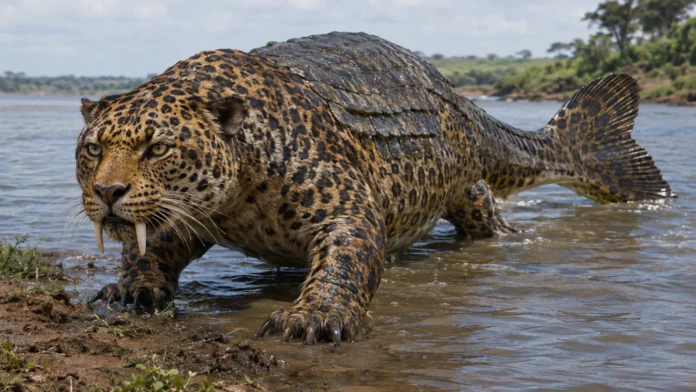
Armored Skin – an Overview
Armored Skin is a comparative taxonomy label for traditions in which a being’s resistant outer covering determines its identity or narrative function. It is not an established universal category in historical religious terminology.
The classification applies narrowly to bodily surfaces represented as protective barriers, such as an invulnerable hide or a shell whose defensive character matters to the account. Ordinary supernatural resilience alone does not qualify.
Historical sources rarely classify beings through a general concept equivalent to Armored Skin. The label therefore organizes documented motifs for comparison; it should not be mistaken for a shared ancient doctrine.
Manifestation and Constraints
How Armored Skin Is Expressed
In Greek accounts of Heracles’ encounter with the Nemean lion, the animal’s hide resists weapons. That resistance is observable through failed attacks, rather than through an explained transformation process.
Where a narrative marks a covering as impervious, the body’s exterior becomes the relevant evidence. A taxonomy entry must distinguish such explicit resistance from artistic depictions of scales or shells alone.
Limits and Conditions
The Nemean lion’s protection is specific to its hide within the Greek labor narrative. The account does not establish that every divine or monstrous body possesses comparable resistance.
Some accounts make protection conditional or incomplete, but such conditions must be stated only when the source supplies them. No verified sources describe universal rules governing Armored Skin across traditions.
Mythological Role and Meaning
Symbolic and Cultural Significance
The Nemean lion’s hide signifies an obstacle that ordinary force cannot overcome within Heracles’ labor. Its protective meaning arises from the narrative’s stated resistance, not from a universal symbolism.
Comparative interpretation may connect resistant coverings with bodily boundaries, but this remains an analytical reading. It cannot establish that historical communities shared a single moral or psychological meaning.
In the Greek labor cycle, overcoming the lion marks successful completion of a divinely assigned task. The hide consequently participates in recognition of achievement, rather than expressing protection as moral virtue.
Armored Skin in Myth and Folklore
The Nemean lion episode structures a conflict around the limits of weapons. Its hide makes the task distinct from a conventional contest of strength or hunting skill.
The narrative also links bodily resistance with a later sign of Heracles’ accomplishment. This role is specific to the Greek story and should not be generalized to unrelated protective beings.
Beasts with Armored Skin
Nemean Lion
In Greek mythology, the Nemean lion is the clearest qualifying beast: its hide resists weapons in accounts of Heracles’ labor. Without that resistance, its defining obstacle and narrative identity disappear.
Other Proposed Beasts
Several legendary dragons are portrayed with scales, but scales alone do not verify protective function. No verified sources describe a second beast meeting this entry’s strict identity criterion.
The Hindu cosmic tortoise Kurma supports Mount Mandara during the churning of the ocean in accounts of the episode. Its shell is not established there as the defining armored defense.
Fafnir in the Old Norse Völsunga saga is a dragon whose defeat involves a vulnerable bodily region. That detail does not establish his identity as an armored-skin creature.
Cultural Interpretations and Regional Emphasis
Greek evidence centers on an adversary whose impervious hide obstructs Heracles’ labor. The episode frames protection as a practical narrative barrier, not as a general cosmological foundation.
In Hindu accounts, Kurma’s role concerns support during a cosmic undertaking, rather than resistance to weapons. This divergence prevents equating a supporting shell with the Nemean lion’s resistant hide.
These examples demonstrate different narrative functions, not a common cultural belief in Armored Skin. Similar bodily imagery does not establish shared symbolism, historical contact, or equivalent classification.
Similar or Related Mythological Functions
Invulnerability is adjacent because it concerns resistance to harm. It is broader than Armored Skin, since a source may describe protection without locating it in an outer covering.
Protective shells and divine coverings also approach this category. They qualify only when a source makes their defensive bodily function central, rather than merely mentioning surface appearance.
Transformation differs because it concerns a change of form, not necessarily a resistant exterior. A transformed being belongs here only when the resulting covering independently meets the evidence criterion.
Historical Interpretation and Evidence Limits
Classical Greek literary accounts support the specific claim that the Nemean lion’s hide resists weapons. They do not document an ancient taxonomic category named Armored Skin.
Surviving mythic narratives are literary evidence, not transparent records of uniform popular belief. Their versions may differ, and later retellings can reshape details relevant to classification.
Descriptions of hard surfaces may be literal within a narrative, symbolic in interpretation, or both. The surviving evidence often cannot determine how historical audiences understood that distinction.
Accordingly, this entry treats Armored Skin as a modern comparative label applied cautiously to documented motifs. No verified sources describe a single cross-cultural doctrine or complete creature group for this context.