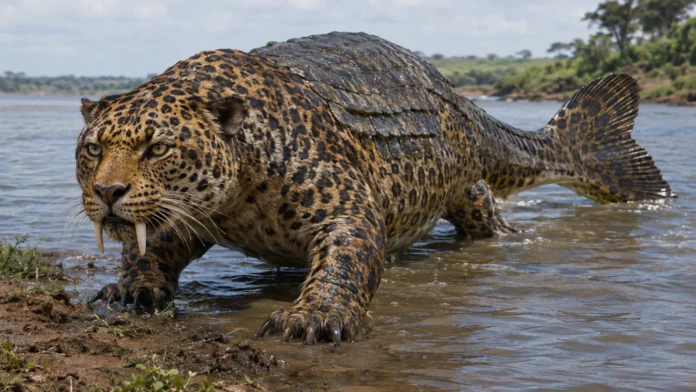
Powerful Swimmer – an Overview
Powerful Swimmer is not a documented historical category shared by named mythologies. Here it can only serve as a modern comparative label for aquatic movement central to an attested tradition.
That distinction prevents the label from being mistaken for an indigenous title, supernatural ability, or established scholarly classification. No verified sources describe this for this context.
A defensible classification would require evidence that swimming itself structures a being’s identity or narrative role, rather than merely describing its habitat or anatomy.
Traditional systems did distinguish aquatic beings, water deities, and dangerous currents, but these categories depended on local cosmologies. They do not establish one transregional swimmer function.
Accordingly, this entry examines the proposed label’s limits and tests possible examples against documented traditions. It does not claim historical recognition as a separate category.
Manifestation and Constraints
How Powerful Swimmer Is Expressed
In historical accounts, movement through water becomes observable through an entity’s aquatic setting, crossings, or associations with waterways. Such details alone do not prove swimming defines identity.
Greek accounts of Poseidon associate him with the sea and earthquakes, but do not establish powerful swimming as his distinctive mythological function.
In the Mahabharata’s account of Matsya, Vishnu’s fish form participates in Manu’s preservation during a flood. Its importance concerns preservation, not a classified swimming capacity.
These examples show why observable water movement must be separated from its narrative consequence. The latter, rather than imagined physical technique, supports historical interpretation.
Limits and Conditions
Water beings belong to particular accounts and environments; their significance cannot be expanded into unrestricted command over every body of water without evidence.
In Greek tradition, Poseidon’s sea authority is one aspect of a broader divine domain. This context does not make swimming its governing principle.
Matsya’s flood episode concerns a specific cosmological crisis in Hindu tradition. It does not establish that every aquatic manifestation carries the same moral or cosmic limits.
No verified sources describe universal conditions governing a distinct Powerful Swimmer category. Any such rules would exceed what these separate traditions document.
Mythological Role and Meaning
Symbolic and Cultural Significance
Aquatic movement may matter within a story because water marks passage, danger, or survival. Those interpretations require evidence from each tradition, not a universal symbolism.
In Matsya’s narrative, preservation during the flood gives the fish form a specific cosmological significance. It should not be reduced to swimming as an abstract symbol.
Greek maritime traditions assign Poseidon authority over sea-related domains. That divine jurisdiction differs from a narrative focused on preserving life through a flood.
The contrast is analytical: one tradition locates significance in divine domain, while the cited Hindu episode emphasizes preservation amid cosmic disruption.
Psychological readings of swimming as resilience or freedom are modern interpretations unless a historical source supports those meanings in a particular context.
Powerful Swimmer in Myth and Folklore
Mythic narratives may use aquatic settings to establish boundaries between human communities and unfamiliar environments. Such framing does not itself establish a swimmer taxonomy.
Matsya’s role in the flood account links a divine manifestation with the continuity of life. The narrative function is preservation, not athletic or physical prowess.
Poseidon’s associations help define divine authority over maritime space in Greek tradition. His classification rests on that authority, not on swimming action.
These cases show distinct narrative functions rather than one shared mechanism. Transferring a single label across them would conceal their different cosmological frameworks.
Beasts with Powerful Swimmer
Matsya
Matsya, Vishnu’s fish manifestation in Hindu tradition, is associated with a flood narrative and preservation. Available evidence does not make powerful swimming its defining identity.
Makara
The makara appears in South Asian religious art and traditions as an aquatic composite being. Its documented identity is not reducible to a swimming function.
Hippocamp
The Greek hippocamp is a sea creature represented with equine and fish features. Its maritime form is documented, but swimming is not established as a distinct function.
These examples are included as boundary tests, not confirmed instances. No verified sources describe them as members of a historical Powerful Swimmer category.
Cultural Interpretations and Regional Emphasis
South Asian traditions provide aquatic divine forms and composite beings within varied religious settings. Their roles must be read through local narratives and iconography.
Greek sources instead associate Poseidon with maritime authority and other divine responsibilities. This differs from Matsya’s specific role in a flood and preservation account.
Those differences are not variations of one established swimmer doctrine. They reflect separate systems of divine authority, narrative purpose, and cosmological concern.
Regional emphasis therefore cautions against grouping water-associated figures solely by presumed physical capacity. Historical classification follows attested functions, not superficial resemblance.
Similar or Related Mythological Functions
Aquatic deity is a related category because it identifies divine association with water. It remains distinct from a proposed function centered specifically on swimming.
Flood-savior is another adjacent analytical description, illustrated by Matsya’s role in the cited Hindu narrative. Its defining concern is preservation during catastrophe.
Sea sovereignty, associated with Poseidon in Greek tradition, concerns authority over maritime domains. It does not require swimming to explain the deity’s classification.
These terms are useful only when tied to their sources and contexts. None supplies historical evidence for a universal Powerful Swimmer function.
Historical Interpretation and Evidence Limits
Historical interpretation must distinguish an ancient category from a modern label applied comparatively. No evidence establishes Powerful Swimmer as a named traditional classification.
Surviving narratives and images can support claims about aquatic settings, divine authority, or particular transformations. They cannot automatically establish a shared function across cultures.
Literal readings may describe a being’s form or actions within a narrative. Symbolic readings require separate argument and should not replace documented narrative details.
Source survival is uneven, and images may not explain their own meanings. Missing context limits certainty about how particular communities classified aquatic beings.
The label is therefore best treated as a cautious modern research question, not an inherited mythological taxonomy. Further claims require specific, traceable historical evidence.